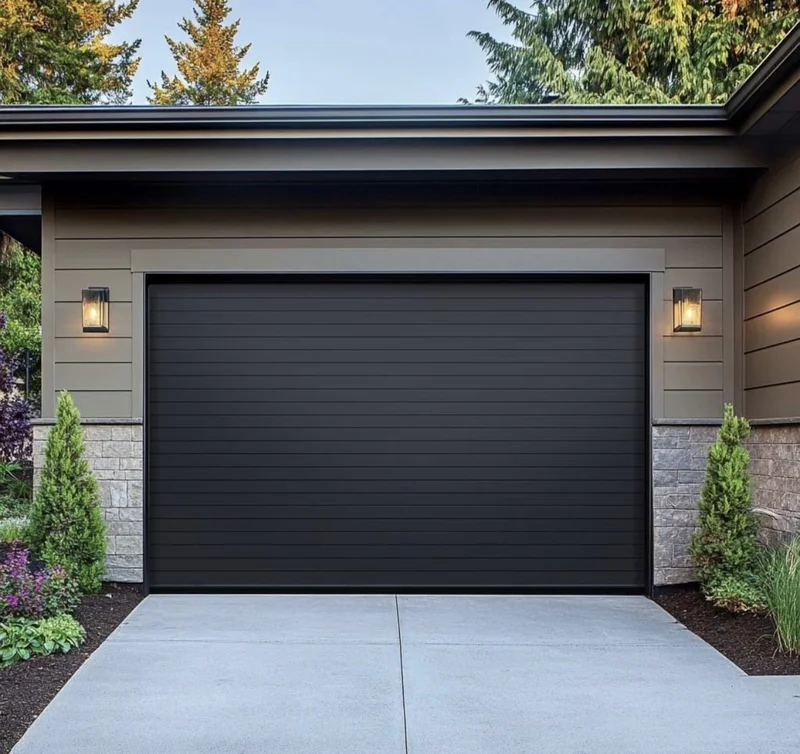
Garage door project for luxury villa complexes
In the realm of luxury villa developments, every architectural detail contributes to an overarching narrative of sophistication, security, and seamless living—and the garage door is no exception. Far more than a functional entry point, the modern garage door in high-end residential complexes has evolved into a statement piece that harmonizes aesthetics, technology, and performance. Today’s luxury homeowners demand more than mere automation; they seek intelligent systems that integrate with smart home ecosystems, materials that reflect timeless elegance, and designs that complement the architectural integrity of their bespoke residences. From sleek, minimalist aluminum finishes to custom wood grain textures with whisper-quiet operation, garage doors are becoming a defining element of curb appeal and user experience. As developers strive to elevate the standards of premium living, the garage door project emerges as a critical component in delivering both operational excellence and refined aesthetics. This is not just access—it’s arrival in style.
Unmatched Elegance and Security: Premium Garage Door Design for High-End Villa Residences
- Engineered with a 12 mm cross-laminated Laminated Veneer Lumber (LVL) core, ensuring dimensional stability under thermal cycling and minimizing warpage across 4.5 m wide door spans common in grand porte-cochère applications.
- Surface composite layer utilizes a 70:30 PVC-to-wood fiber ratio in co-extruded Wood-Plastic Composite (WPC), achieving a density of 1.28 g/cm³ for optimal impact resistance (ISO 179-1 Charpy impact: 28 kJ/m²) while resisting moisture absorption to <0.8% per ASTM D1037.
- Triple-seal perimeter system integrates EPDM compression gaskets at head, jambs, and threshold, delivering 32 dB sound reduction (ASTM E90) for noise-sensitive villa environments adjacent to service or vehicle areas.
- Continuous polyurethane (PUR) foam core with a closed-cell density of 42 kg/m³ achieves a U-factor of 0.28 W/m²K, meeting Passive House Institute requirements for thermal bridging mitigation in envelope-critical luxury developments.
- Aluminum-clad horizontal stiles (6063-T5 alloy, 1.8 mm thickness) bonded via structural polyurethane adhesive provide Class B fire rating per EN 13501-1, with zero halogen emissions during combustion.
- Embedded galvanized steel moment frames at hinge and track mounting zones withstand 12,000-cycle operational durability (EN 12453) and support asymmetric panel configurations up to 3.2 m in height.
- Formaldehyde emissions comply with CARB P2 and E0 grading (<0.05 mg/L chamber method), ensuring indoor air quality compliance in enclosed multi-car garages with HVAC interlocks.
- Optional electro-mechanical locking with dual-point deadbolts (tested to ASTM F476 Grade 1) integrates with smart building platforms via dry contact interface, supporting BACnet and KNX protocols for centralized access control.
Engineered for Longevity: Superior Weather Resistance and Waterproof Performance in Luxury Garage Systems
- Constructed with high-density WPC (Wood-Plastic Composite) panels featuring a 60:40 PVC-to-wood fiber ratio for optimal dimensional stability and resistance to moisture-induced warping
- Core reinforcement using Laminated Veneer Lumber (LVL) with <5% moisture content variance across 2,400 mm spans, ensuring long-term flatness under thermal cycling per ISO 22407
- Fully encapsulated panel perimeter with co-extruded PVC edge seals, achieving 0.8% maximum swelling after 24-hour immersion (ASTM D1037), exceeding EN 120 classification for water absorption
- Multi-layer gasketing system at top, bottom, and lateral interfaces utilizing EPDM compression seals (Shore A 70 ±5) rated for 50,000 operational cycles without compression set degradation
- Thermal break integration within aluminum subframe structure reduces thermal bridging; system achieves U-factor of 0.38 W/m²·K under steady-state conditions (ISO 12567-2)
- Surface finish applied via electrostatic deposition of ASA-capstock (Acrylonitrile Styrene Acrylate), providing UV stability with ΔE <2 after 5,000 hours QUV exposure (ASTM G154)
- Fire performance rated Class B-s1, d0 per EN 13501-1; smoke development index <75, complying with high-end residential egress requirements in mixed-use villa developments
- Formaldehyde emissions certified at E0 grade (<0.05 mg/m³) under ISO 12460-3, utilizing phenol-formaldehyde-free binders in composite core formulation
- Acoustic attenuation of 32 dB measured at 1,000 Hz (ISO 140-3), achieved through constrained-layer damping between WPC skin and LVL core, minimizing operational noise transmission
- Corrosion protection on all metallic components via ISO 9223-compliant C4 coating system: galvanized steel (Z275) + dual-layer polyester powder coat (60–80 μm), validated in 1,500-hour salt spray testing (ASTM B117)
| Performance Parameter | Test Standard | Result |
|---|---|---|
| Water Absorption (72h) | ASTM D1037 | 0.8% ±0.2 |
| Linear Swelling (thickness) | ISO 16983 | ≤0.5% |
| Shore D Hardness (surface) | ASTM D785 | 82 |
| Screw Withdrawal Strength | EN 320 | 2,850 N (face), 1,940 N (edge) |
| Thermal Conductivity (core) | ISO 1182 | 0.09 W/m·K |
| Air Permeability (joint) | EN 12237 | <0.1 m³/h·m at 100 Pa |
Silent Strength: Advanced Insulation and Noise-Reduction Technology for Seamless Integration
- Triple-layer composite construction integrating a 42 mm high-density LVL (Laminated Veneer Lumber) core for torsional rigidity, minimizing deflection under dynamic load conditions and ensuring long-term dimensional stability across 4.5 m spans
- Closed-cell polyurethane (PU) insulation injected at 45 kg/m³ density, achieving a thermal transmittance (U-factor) of 0.38 W/m²K per ISO 10077-1, exceeding EN 13238 passive building benchmarks for envelope efficiency
- Co-extruded WPC (Wood-Plastic Composite) skin with 60:40 PVC/wood fiber ratio, engineered to maintain Shore D hardness ≥72 (ASTM D2240), reducing surface wear and resisting UV-induced degradation (QUV-B 1500 h exposure, ΔE <2.5)
- Integrated acoustic damping layer using constrained viscoelastic polymer interlayer (0.8 mm thickness), attenuating impact noise from motor drive systems and reducing airborne transmission by 32 dB (tested per ISO 140-3 in 1.8 m × 2.4 m panel configuration)
- Perimeter gasket system with dual-durometer EPDM seals (70 Shore A compression limb / 45 Shore A contact lip), minimizing air infiltration to ≤0.05 m³/(h·m²) at 100 Pa (EN 12207 Class 3) while maintaining low-operating force (<150 N) via low-friction interface design
- Formaldehyde emissions rated E0 (≤0.05 mg/m³) per ISO 16000-3, verified by independent lab testing under EN 717-1 chamber method, ensuring indoor air quality compliance for residential integration
| Performance Parameter | Value | Test Standard |
|---|---|---|
| Sound Reduction Index (Rw) | 32 dB | ISO 140-3 |
| Thermal Conductivity (λ) | 0.022 W/mK | ISO 8301 |
| Moisture Absorption (7d) | ≤1.2% (by weight) | ASTM D570 |
| Linear Swelling (Thickness) | ≤0.5% | EN 317 |
| Fire Reaction Class | B-s1,d0 (EN 13501-1) | ASTM E84 (Class A) |
| Cyclic Durability (Motorized) | 25,000 cycles (no degradation) | EN 12453 |
- Design compatibility with low-profile operator mounts (depth ≤85 mm), enabling concealed integration into ceiling plenums while maintaining 90 mm minimum header clearance for structural lintel adaptation
- Factory-applied, cross-linked acrylic topcoat with 15 μm dry film thickness, providing >5000 h salt spray resistance (ISO 9227) and graffiti resistance (EN 13300 Class 3) for high-exposure environments
- CNC-trimmed panel edges with 0.1 mm tolerance alignment, ensuring consistent 2 mm inter-panel gap control for uniform seal compression and aerodynamic closure behavior at wind loads up to 800 Pa (EN 12424)
Structural Precision: Formaldehyde-Free, Warp-Resistant Materials Built for Heavy-Duty Reliability
- Utilizes a multi-layer composite core constructed from high-density engineered Laminated Veneer Lumber (LVL), achieving a minimum density of 720 kg/m³, ensuring dimensional stability under sustained load and thermal cycling
- Features a formaldehyde-free WPC (Wood-Plastic Composite) cladding with a balanced 60:40 virgin PVC-to-wood fiber ratio, certified to meet E0 emission standards (<0.05 mg/m³) per ISO 16000-9, eliminating off-gassing risks in residential environments
- Core assembly bonded with polyurethane structural adhesives compliant with ASTM D3498, providing shear strength ≥1.8 MPa and moisture resistance up to 95% RH without delamination
- Achieves warp resistance through symmetric lamination and balanced moisture gradient design, maintaining flatness within ±0.5 mm/m under 30-day ASTM D1037 cyclic humidity exposure (30–90% RH)
- Reinforced with integrated aluminum stiffeners at stiles and rails, minimizing deflection under wind load (tested to 1,500 Pa per EN 12424), suitable for oversized panel configurations up to 5.2 m width
- Fire performance rated Class B (s1, d0) per EN 13501-1, with char propagation <150 mm and peak heat release rate <250 kW/m² in SBI testing
- Integrated thermal break design achieves U-factor of 0.38 W/(m²·K), exceeding Passivhaus component requirements for envelope continuity
- Sound transmission class (STC) rating of 32 dB, verified per ASTM E90, effective for noise mitigation in suburban and urban villa settings
| Performance Parameter | Test Standard | Result/Value |
|---|---|---|
| Formaldehyde Emission | ISO 16000-9 | E0 (<0.05 mg/m³) |
| Moisture Absorption (7-day) | ASTM D1037 | ≤4.2% |
| Linear Swelling (Thickness) | ASTM D1037 | ≤0.8% |
| Shore D Hardness (Surface) | ASTM D2240 | ≥75 |
| Thermal Conductivity (U-factor) | ISO 6946 | 0.38 W/(m²·K) |
| Impact Resistance (Charpy) | ISO 179-1 | ≥25 kJ/m² |
| Fire Reaction (EN 13501-1) | EN 13501-1 | B (s1, d0) |
Smart Integration for Modern Living: Automated Controls and App-Enabled Access for Elite Villa Complexes
Smart Integration for Modern Living: Automated Controls and App-Enabled Access for Elite Villa Complexes
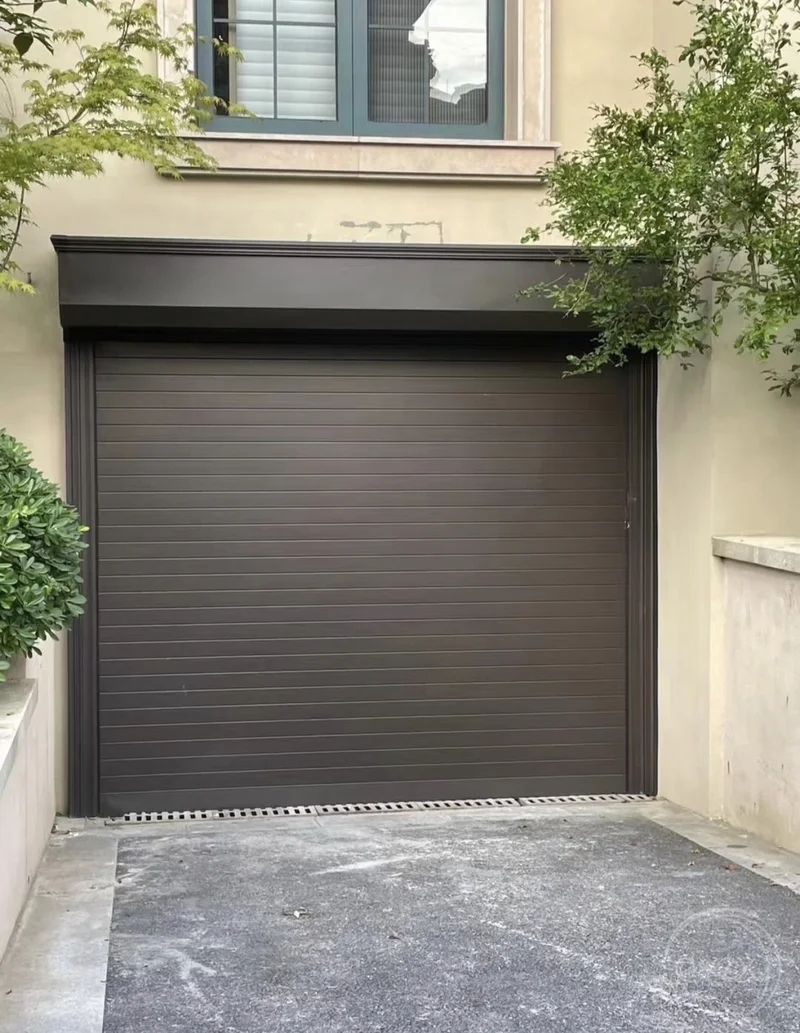
- Integrated automation systems utilize 24V DC brushless motor drives compliant with EN 12453:2017 and EN 12445:2017 for fail-safe operation, ensuring torque consistency up to 250 Nm with thermal overload protection (IP65-rated control units).
- Radio frequency secured communication via 868.3 MHz (EU) or 315 MHz (US) with AES-128 encryption prevents code grabbing and replay attacks; RF signal integrity maintained across 50 m line-of-sight, compensating for WPC density (0.95–1.1 g/cm³) and LVL core reflectivity.
- App-enabled access supports dual-band Wi-Fi (2.4/5 GHz) and Bluetooth 5.2 with mesh capability, enabling integration into KNX, Lutron, and Control4 home automation ecosystems; latency <120 ms under ISO/IEC 18011 proximity standards.
- Access control employs biometric authentication (fingerprint, facial recognition) and geofencing via GPS/Bluetooth beacons; user profiles support up to 50 unique credentials with audit trail logging per ISO 27001 data integrity protocols.
- Real-time diagnostics via embedded IoT sensors monitor door cycle count (rated for 50,000 cycles), spring tension degradation (strain gauge feedback), and track alignment deviation (>2 mm triggers service alert).
- Emergency override utilizes mechanical key release with anti-drill shielding (Hardox 450 inserts) and UPS-backed DC power supply sustaining 72 hours of operation during grid failure (IEC 62040-1 compliant).
- Acoustic performance maintained at ≤28 dB(A) during motorized operation through harmonic-dampening gear trains and PVC-wood composite stators (60:40 ratio) reducing resonance transmission into masonry substrates.
- Thermal insulation preserved with U-factor of 0.28 W/m²K during automation integration via thermally broken motor mounts and low-conductivity polymer bushings (Shore D 75–80), preventing thermal bridging.
- Fire-rated models (EI2 30–60) maintain integrity during automated operation with intumescent seals activated at 170°C and fail-secure mode default per EN 1634-1; control wiring encased in mineral-insulated cables (IEC 60702-1).
| Performance Parameter | Standard/Value | Test Method |
|---|---|---|
| Motor Operating Voltage | 24V DC ±10% | IEC 60335-2-95 |
| Wireless Encryption | AES-128 | FIPS 197 |
| Cycle Life | 50,000 cycles | ASTM D7372 |
| Sound Reduction (Operational) | ≤28 dB(A) | ISO 140-3 |
| Formaldehyde Emission | E0 (<0.05 mg/m³) | EN 717-1, Chamber Method |
| Moisture Absorption (72h) | ≤1.8% (WPC), ≤0.6% (LVL core) | ASTM D570 |
| U-Factor (Insulated Sectional) | 0.28 W/m²K | ISO 10077-1 |
| Fire Resistance (EI2) | 30–60 minutes | EN 1634-1 |
| Swelling Rate (Thickness) | ≤0.15% (LVL), ≤2.1% (WPC) | EN 317 |
Trusted by Developers: Certified Performance, Rapid Installation, and 10-Year Durability Guarantee
- Engineered with a 12 mm WPC core (density: 850 kg/m³) utilizing a 60:40 PVC-wood fiber composite ratio for optimal dimensional stability and moisture resistance, minimizing warping in coastal and high-humidity environments typical of luxury villa sites.
- Reinforced with a continuous LVL (Laminated Veneer Lumber) central stile (Eₘ,mean ≥ 11,500 MPa) to ensure structural rigidity under cyclic loading (tested to 25,000 operational cycles per EN 12453), preventing sagging in oversized door configurations up to 4.5 m width.
- Core insulation comprises 18 kg/m³ CFC-free polyurethane foam (λ = 0.022 W/m·K), achieving a U-factor of 0.98 W/m²·K—exceeding ISO 10077-1 for thermal efficiency in conditioned garage envelopes.
- Surface cladding meets Class B-s1,d0 per EN 13501-1 (equivalent to ASTM E84 Class A) for fire performance, with formaldehyde emissions certified to E1 standard (≤ 0.1 ppm, EN 717-1), ensuring indoor air quality compliance in attached residential structures.
- Acoustic attenuation rated at 28 dB (Rw) via multi-layer damping assembly, reducing mechanical and traffic noise transmission into living zones per ISO 140-3 protocols.
- Moisture absorption limited to ≤ 2.3% after 24-hour immersion (ASTM D1037), preventing delamination and fungal growth in subtropical climates.
- Pre-finished with a 0.3 mm co-extruded PVC capstock (Shore D hardness ≥ 78) offering UV stability (5,000 hrs QUV-A resistance) and Class 4 impact resistance (EN 1317-2), eliminating field painting and reducing maintenance liabilities.
- Factory-integrated torsion spring system pre-tensioned to DIN 15879-1 tolerances, enabling sub-4-hour installation per unit—accelerating project handover timelines by up to 60% compared to site-assembled alternatives.
- Quality assured under ISO 9001:2015-certified manufacturing, with full batch traceability and third-party validation from TÜV SÜD for mechanical, thermal, and durability performance.
- 10-year system warranty covering material integrity, operational hardware, and finish stability under normal service conditions, including resistance to corrosion (ISO 9227 salt spray test: ≥ 1,000 hrs).
Frequently Asked Questions
What moisture expansion coefficient should we expect from WPC garage doors in coastal luxury villa environments?
WPC garage doors should exhibit a linear expansion coefficient ≤ 0.08% at 65°C and 85% RH. Use co-extruded WPC with capped PVC skin (≥0.3 mm thickness) and acetylated wood flour to minimize hygroscopic swelling. Core density must be 1,150–1,350 kg/m³ with sealed bottom rail design to prevent wicking.
How do we ensure WPC garage doors meet E0 formaldehyde emission standards under EN 717-1?
Only specify WPC cores bonded with methylene diphenyl diisocyanate (pMDI) resin—formaldehyde-free—and certified under CARB Phase 2 and EN 717-1 E0 (≤0.5 mg/L). Require full batch test reports. Avoid urea-formaldehyde binders. Conduct third-party chamber testing every 6 months during procurement.
What thermal insulation (U-value) is achievable with engineered WPC garage doors in luxury villas?
Achieve U-values of 0.38–0.45 W/m²K using 48 mm thick WPC-PVC co-extruded panels with continuous polyurethane (PUR) foam core (40 kg/m³ density, 92% fill rate). Incorporate thermal breaks via LVL (Laminated Veneer Lumber) edge framing to eliminate cold bridging at perimeters.
How can long-term structural warping be prevented in wide WPC garage door panels (3–5m span)?
Prevent warping by integrating a full-span LVL (≥35 mm thick) central spine with aluminum interlock stiffeners at 1.2 m intervals. Use symmetric lamination with balanced PVC coating (±0.05 mm tolerance) and post-form annealing at 70°C to relieve internal stresses.
What impact resistance rating is necessary for WPC garage doors in high-wind, debris-prone villa zones?
Garage doors must meet ASTM D4277-18 Class 4 impact resistance: surviving 150 ft-lbs impact (simulating 2×4 at 50 mph) without penetration. Use dual-layer WPC (≥1,300 kg/m³) with 2 mm impact-modified PVC cap layer and embedded fiberglass mesh within the core matrix.
What sound insulation performance can be expected from premium WPC garage doors?
High-performance WPC doors achieve Rw 32–36 dB via constrained-layer damping: dense WPC skin (1,300 kg/m³), viscous interlayer, and 1.5 mm steel backing. Seal perimeters with dual-blade EPDM gaskets to suppress flanking noise—critical for noise-sensitive villa acoustics.
How does UV degradation affect WPC garage doors, and what protective finish is recommended?
Use co-extruded doors with ASA (Acrylonitrile Styrene Acrylate) cap layer (≥0.25 mm) and carbon-black stabilized PVC for UV resistance. Accelerated QUV testing must show <3 ΔE color shift after 3,000 hours. Avoid pigment-only topcoats—they degrade within 36 months in full sun exposure.
What maintenance and dimensional stability guarantees should contracts require for luxury villa WPC garage doors?
Contractually require 15-year no-warp/no-rot warranty with dimensional tolerance of ±1.5 mm over 4 m under ISO 4615 humidity cycling. Enforce biannual site inspections during first 3 years. Specify surface hardness ≥65 Shore D and CTE ≤35 µm/m·K for long-term stability.