Bulk Steel Doors for Apartment Complex Developments
In the competitive landscape of apartment complex development, every detail contributes to the final equation of value, durability, and resident satisfaction. While often overlooked, the entry point—the door—is a critical component that speaks volumes about a project’s quality and long-term viability. This is where the strategic specification of bulk steel doors becomes a transformative decision for developers and property managers. Far beyond mere access points, these robust installations offer an unparalleled combination of security, fire resistance, and acoustic performance, directly addressing core concerns of modern multifamily living. Procuring in bulk not only ensures consistent aesthetics across your development but also unlocks significant economies of scale, streamlining procurement and simplifying installation logistics. This article explores how integrating bulk steel doors is a forward-thinking investment that fortifies your asset, enhances resident safety, and protects your bottom line from the first impression onward.
Engineered for High-Traffic Durability: The Structural Integrity of Our Bulk Steel Doors
The structural integrity of a bulk steel door is defined by its composite construction, where each material layer is engineered to manage specific mechanical and environmental stresses. The core is not merely a filler but a critical structural component. We utilize a stabilized, high-density particleboard or mineral core, rigorously tested for dimensional stability under fluctuating humidity (≤8% thickness swelling per EN 317) to prevent warping and maintain consistent engagement with the frame and hardware over decades of use.
The steel facings are typically 20-24 gauge cold-rolled steel, phosphatized and primed for corrosion resistance before finishing. This skin provides the primary impact resistance and forms a continuous bond with the core via industrial adhesives, creating a monolithic, torsion-resistant panel. The perimeter is reinforced with a full-perimeter steel channel frame, spot-welded for rigidity, and the hinge edge is reinforced with additional steel or a continuous hinge preparation to withstand cyclic loading.
Functional Advantages of the Composite Structure:
- Distributed Load Management: The steel-composite-steel sandwich structure distributes impact forces across the entire door face, preventing localized denting and maintaining aesthetic integrity.
- Long-Term Hardware Alignment: A stable core ensures screw-holding power for hinges, closers, and locks remains constant, eliminating sagging and misalignment that lead to premature hardware failure and security gaps.
- Resistance to Operational Fatigue: The reinforced perimeter and monolithic construction resist the flexing and racking forces induced by thousands of open-close cycles, wind pressure, and accidental impacts common in high-traffic corridors.
For fire-rated applications (e.g., 20/45/60-minute integrity per EN 1634-1 or ASTM E119), the core material and intumescent seal system are certified as an assembly. The seal expands at critical temperatures to insulate the perimeter gap, while the non-combustible core maintains its structural role to prevent collapse and flame passage.
| Performance Parameter | Test Standard | Typical Performance Range | Engineering Implication |
|---|---|---|---|
| Surface Hardness | ASTM D2240 (Shore D) | 75 – 85 | High resistance to abrasion, scratching, and vandalism from carts, keys, and general corridor traffic. |
| Dimensional Stability (Swelling) | EN 317 | ≤ 8% thickness increase after 24h water immersion | Predicts long-term performance in high-humidity environments (e.g., basements, laundries), ensuring doors do not bind in frames. |
| Sound Transmission Class (STC) | ASTM E90 | 30 – 35 dB (standard core) | Provides measurable acoustic separation between common areas and private units, contributing to occupant comfort and privacy. |
| Thermal Transmittance (U-Factor) | EN ISO 8990 / ASTM C1363 | 1.5 – 2.5 W/m²·K | Contributes to the building envelope’s energy efficiency, particularly for doors leading to unheated spaces or exterior applications. |
This engineered approach ensures the door functions as a complete system. The result is a product that meets not only the initial specification but performs reliably throughout the extended lifecycle of a multi-unit residential building, minimizing operational disruptions and total cost of ownership.
Cost-Effective Security Solutions: Streamlining Procurement for Large-Scale Projects
For large-scale apartment developments, true cost-effectiveness is measured over the building’s lifecycle, not just at the point of purchase. Streamlined procurement of bulk steel doors directly impacts project timelines and budgets, but must not compromise on the technical specifications that ensure long-term performance, safety, and resident satisfaction. A standardized, volume-optimized product line, backed by rigorous quality assurance, is the engineering solution to this challenge.
Core Technical Advantages of a Streamlined Bulk Offering:
- Unified Material & Performance Specifications: A single, high-performance steel grade (typically cold-rolled, minimum 0.8mm thickness for leaves) and consistent core infill (high-density mineral wool or honeycomb composite) across all unit types ensure predictable structural integrity, fire resistance, and acoustic performance. This eliminates specification errors and simplifies on-site handling.
- Predictable Fire & Safety Compliance: Bulk procurement allows for pre-certification of door assemblies to relevant standards (e.g., EN 1634-1 / ASTM E2074 for fire integrity, typically achieving 30/60/90-minute ratings). This guarantees compliance for the entire project, streamlining the approval process with building regulators.
- Optimized Acoustic and Thermal Performance: Standardized engineering enables precise performance metrics. Bulk doors can be reliably specified with a Sound Transmission Class (STC) rating of 30-35 dB and a thermal insulation U-factor below 1.5 W/m²K, contributing directly to building code compliance and energy efficiency targets.
- Reduced Complexity in Hardware Integration: A standardized door leaf and frame design allows for pre-engineered, multi-point locking system (e.g., 3-5 point locksets) compatibility and seamless integration of hinges, closers, and access control systems. This reduces installation time and ensures uniform security performance across all units.
Procurement & Quality Streamlining Parameters:
A disciplined approach to bulk specification locks in both cost and quality. The following table outlines key technical parameters that should be standardized and verified through mill certificates and third-party testing.
| Parameter | Standard/Target Value | Importance for Bulk Projects |
|---|---|---|
| Sheet Steel Thickness | 0.8 – 1.2 mm (leaf), 1.5 mm (frame) | Structural rigidity, resistance to forced entry, and durability. |
| Core Material Density | Mineral Wool: ≥ 80 kg/m³ | Critical for achieving specified fire resistance (FRR) and acoustic (STC) ratings. |
| Fire Resistance Rating (FRR) | EI 30 / EI 60 (EN 13501-2) | Non-negotiable for life safety and compartmentation; must be certified for the complete assembly. |
| Sound Reduction (STC) | ≥ 30 dB | Meets typical building code requirements for residential separations and enhances livability. |
| Thermal Transmittance (U-factor) | ≤ 1.5 W/m²·K | Contributes to building envelope efficiency and reduces thermal bridging at thresholds. |
| Finish System | Electrocoated primer + polyester powder coat (70-80 μm DFT) | Provides superior corrosion resistance (e.g., salt spray test >500 hours) and consistent color match across large batches. |
| Quality Management | ISO 9001:2015 Certified Manufacturing | Ensures process control, traceability, and consistent quality across thousands of units, reducing defect rates. |
Logistical and Lifecycle Cost Engineering:
Bulk ordering facilitates just-in-time delivery sequencing, directly reducing on-site storage costs and handling damage. From a total cost of ownership perspective, the inherent durability of a properly specified steel door—with its resistance to warping, moisture, and impact—minimizes call-backs and replacement costs over the decades-long lifespan of the development. The engineering focus must remain on specifying a product whose performance is verifiable and consistent, turning the procurement of a critical building component from a recurring project risk into a standardized, reliable process.
Fire-Rated and Weather-Resistant: Ensuring Safety and Longevity in Multi-Unit Buildings
For multi-unit residential buildings, the primary entry door is a critical component of the passive fire protection system and the first line of defense against environmental degradation. A bulk steel door’s performance in these areas is determined by its composite construction, material specifications, and manufacturing quality control.
Fire-Rated Performance: Compartmentalization and Integrity
The core function of a fire-rated steel door is to provide a certified barrier, compartmentalizing fire and smoke to protect egress routes and limit property damage. Performance is not inherent to steel alone but is engineered through specific assembly.
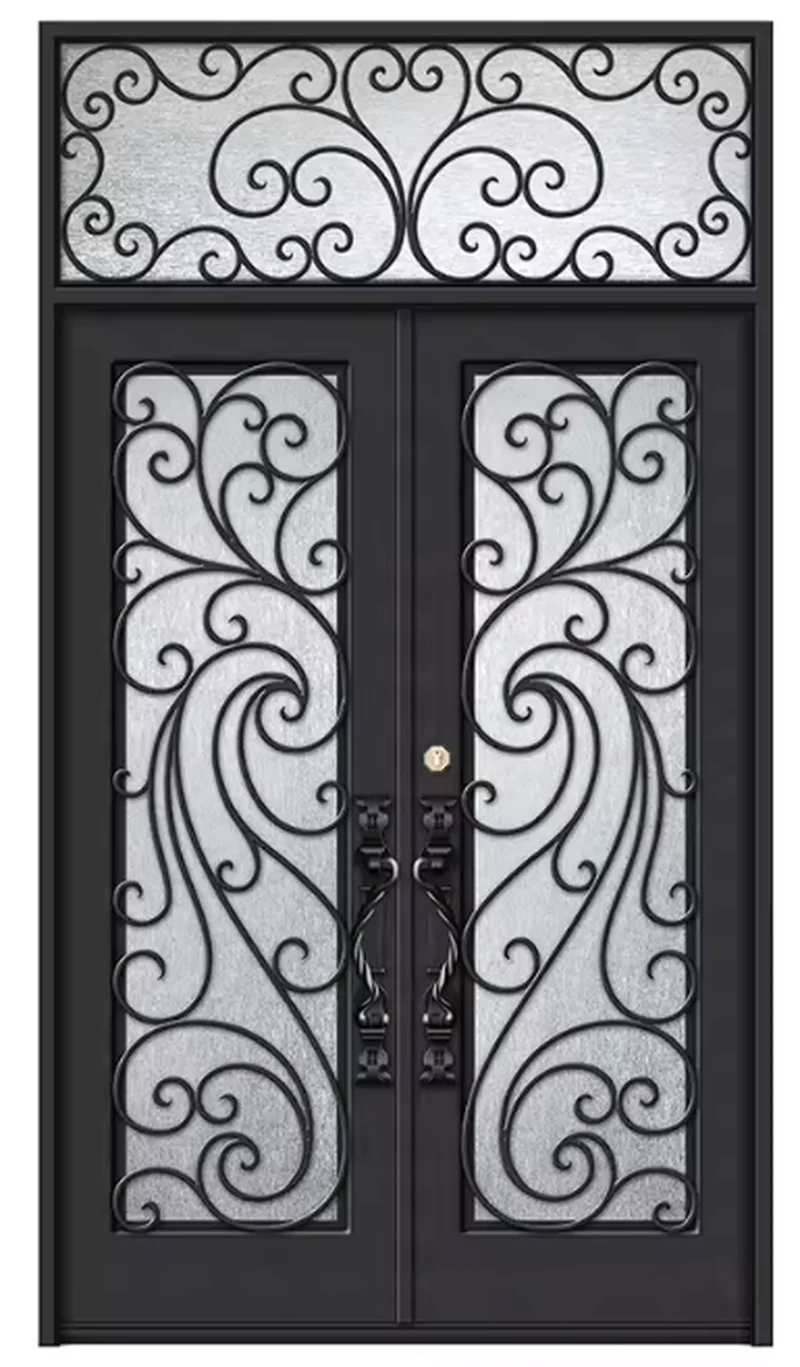
- Core Material & Stability: The internal core is typically a mineral-based, non-combustible board or a stabilized, fire-retardant-treated honeycomb structure. This core must maintain dimensional stability under intense heat to prevent door leaf warping, which compromises the seal.
- Intumescent Seal Integration: Perimeter intumescent seals are essential. At approximately 200°C, these seals expand volumetrically (often 5-10x) to fill gaps between the door leaf and frame, preventing the passage of smoke and hot gases. Seal composition and expansion rate are critical to achieving the declared rating (e.g., 30, 60, 90 minutes).
- Certification & Compliance: Doors must be tested as a complete assembly (leaf, frame, hardware, glazing) to recognized standards. Look for full-scale furnace testing certification to:
- ASTM E119 / UL 10C: Standard test methods for fire tests of door assemblies.
- EN 1634-1: European standard for fire resistance tests for door and shutter assemblies.
- Ratings should be provided by an independent, accredited laboratory.
Weather-Resistant Engineering: Durability Against Environmental Stress
Exterior steel doors face constant thermal cycling, UV exposure, and moisture. Long-term performance hinges on substrate preparation, coating technology, and sealing.
- Substrate Preparation & Corrosion Resistance: Cold-rolled steel sheets are phosphatized to create a microcrystalline layer that dramatically improves paint adhesion and corrosion resistance. The backside of the exterior skin should receive an equivalent protective coating to prevent internal corrosion.
- Polymer Coating Systems: Superior to standard paint, baked-on polyester (PE) or polyurethane (PU) powder coatings provide a consistent, durable finish. Key parameters include:
- Film Thickness: Typically 60-80 microns for robust impact and scratch resistance.
- Adhesion: Rated Class 0 (best) per ASTM D3359 cross-cut test.
- Weathering Resistance: Tested per ASTM G154 for UV stability and colorfastness.
- Thermal Break & Condensation Resistance: For climates with significant temperature differentials, a thermally broken frame is mandatory. A polyamide or reinforced polymer barrier within the frame profile separates interior and exterior metal, reducing thermal bridging. This maintains the interior frame surface temperature above the dew point, preventing condensation and mold growth.
- Sealing System Efficacy: A multi-stage seal is required:
- Primary Seal: A compression bulb gasket on the door stop.
- Intermediate Seal: A kerf-in or magnetic seal along the meeting stile.
- Threshold Seal: An adjustable automatic drop seal or compression threshold.
This system is rated for air infiltration (ASTM E283) and water penetration resistance (ASTM E547).
Technical Performance Data for Specification
| Performance Category | Test Standard | Typical Performance Value | Importance for Multi-Unit Buildings |
|---|---|---|---|
| Fire Resistance | ASTM E119 / UL 10C | 20, 45, 60, 90+ minute ratings | Defines safe egress time and compartmentalization. |
| Forced Entry Resistance | ASTM F476 | Grade 40 (Commercial) or higher | Enhances tenant security and asset protection. |
| Sound Transmission (STC) | ASTM E90 | STC 30-35 (with seals & proper installation) | Reduces corridor-to-unit noise transmission. |
| Structural Performance | ASTM E330 | Positive & Negative Pressure @ 3000 Pa | Ensures integrity under high wind loads. |
| Water Penetration | ASTM E547 | Pass @ 15% of design pressure (e.g., 450 Pa) | Prevents water ingress, protecting interior finishes. |
| Air Infiltration | ASTM E283 | ≤ 0.3 cfm/sq.ft. @ 75 Pa | Improves energy efficiency and occupant comfort. |
Specification Checklist for Architects & Contractors:
- Require third-party certification labels for fire ratings from approved agencies.
- Specify a full perimeter intumescent seal and smoke seal combination.
- Demand test reports for air/water/structural performance, not just manufacturer claims.
- For exterior applications, mandate a thermally broken frame and a multi-point locking system with stainless steel bolts.
- Ensure hardware (hinges, closers) is rated for the door’s size, weight, and frequency of use.
Customizable Design Options: Enhancing Aesthetics and Functionality for Modern Developments
Customizable steel door systems for multi-unit residential buildings are engineered to meet stringent performance criteria while offering architects and developers a high degree of design flexibility. The core material—cold-rolled steel sheet (typically 0.8mm to 1.2mm)—provides the structural integrity, but the true customization lies in the applied finishes, core infill, glazing, and hardware integration. This allows for the creation of a cohesive architectural language across a development without compromising on the essential requirements of security, fire safety, and acoustic separation.
Core Performance & Material Specifications
The performance envelope of a custom steel door is defined by its composite construction. The steel faces are bonded to a stabilized core, with options selected based on the primary performance driver for the application.
| Core Infill Type | Primary Application | Key Performance Parameters | Relevant Standards |
|---|---|---|---|
| Mineral Wool | Fire & Acoustic Rated Doors | Fire Integrity/Insulation: EI 30/60/90; Sound Reduction (Rw): Up to 52 dB; Density: 80-120 kg/m³ | EN 1634-1, EN ISO 717-1, ASTM E814 |
| Honeycomb Paper | Standard Internal/ Lightweight Doors | Weight Reduction: ~40% lighter than solid core; Flatness Stability; Cost-effective for non-rated applications | ISO 9001 (Manufacturing Control) |
| Polyurethane Foam (PUR) | Thermal Insulation & Entry Doors | Thermal Insulation (U-factor): As low as 0.8 W/m²K; Excellent dimensional stability across humidity cycles | EN 12428, ASTM C518 |
Aesthetic Customization & Finish Durability
Surface finishes transform the functional steel substrate into an architectural element. The selection is critical for long-term durability in high-traffic common areas.
- Powder Coating: Provides a uniform, durable finish with exceptional color consistency. High-quality polyester or epoxy-polyester hybrids offer a Shore D hardness >80, excellent UV resistance (QUV testing >1000 hours), and minimal color shift. Available in any RAL or custom color, including metallics and textured finishes.
- Wood Veneer Laminates: For projects requiring a warm, natural aesthetic. Engineered veneers (typically 0.6mm thick) are bonded under high pressure and finished with a catalyzed varnish system, achieving moisture absorption rates of <8% and surpassing the wear resistance of natural solid wood.
- High-Pressure Laminate (HPL): The optimal solution for extreme abrasion and impact resistance. With a thickness of 0.7mm or greater, HPL panels offer Class 1 fire ratings (EN 13501-1), exceptional resistance to chemicals and graffiti, and are available in unlimited woodgrain, solid color, or photographic designs.
Functional & Architectural Enhancements
Customization extends beyond appearance to integrated functionality that addresses specific project challenges.
- Acoustic Performance: Systems achieving Rw 45 dB and above utilize specialized perimeter seals (magnetic or compression bulb), acoustic threshold systems, and often a combination of mineral wool core with mass-loaded vinyl decoupling layers.
- Fire Rating Integrity: Custom fire door sets (FD30/FD60) are supplied as complete, tested assemblies. Critical elements include certified intumescent seals (expanding at ~200°C), non-combustible cores, and fusible link mechanisms for any integrated glazing.
- Accessibility & Hardware Integration: Doors can be pre-engineered to accommodate a full range of access control systems—from simple mechanical locks to integrated RFID, biometric, or Bluetooth readers. Reinforced hardware prep areas ensure reliable operation of heavy-duty closers and hinges, rated for over 2 million cycles.
- Glazing Options: Vision panels can be incorporated with double-glazed insulated glass units (IGUs) for thermal performance, or with certified fire-rated and laminated acoustic glass. Frame profiles are designed for structural glazing, maintaining sightline aesthetics.
Technical Specifications and Compliance: Meeting Industry Standards for Apartment Complexes
Material & Construction Specifications
- Steel Sheet: Minimum 20-gauge (0.036″/0.91mm) cold-rolled, galvanized steel (G90 coating) for faces, providing a durable substrate for finishes and superior resistance to impact and deformation compared to lighter gauges.
- Core: High-density, mineral-infused fire-retardant core or polyurethane foam. The core is critical for achieving mandated fire ratings, acoustic performance, and thermal insulation. Polyurethane cores offer superior thermal resistance (lower U-factor).
- Edge & Stile Construction: Full-perimeter, welded steel frame with reinforced, interlocking seams at corners. Stiles and rails are internally reinforced to prevent sagging and ensure consistent latching over the door’s lifecycle.
- Hardware Preparation: Reinforced, multi-gauge steel hinge and lock preparation plates are welded into the frame. Standard preparation aligns with ANSI/BHMA A115 series for heavy-duty usage, supporting 3+ hinges per door.
- Finish: Primer-coated (electrocoated or powder-coated) for corrosion resistance. Top-coat options include polyester powder coatings (typical) or fluoropolymer coatings (PVDF) for enhanced UV and chemical resistance in harsh environments.
Performance Standards & Compliance
- Fire Rating: Doors are tested and certified to meet or exceed relevant standards for fire-protection and fire-exit hardware. Common certifications include:
- UL 10C: Standard for Positive Pressure Fire Tests of Door Assemblies.
- UL 10B: Standard for Fire Tests of Door Assemblies.
- NFPA 80: Standard for Fire Doors and Other Opening Protectives.
- ASTM E2074: Standard Test Method for Fire Tests of Door Assemblies, Including Positive Pressure Testing.
- Forced Entry & Security: Designed to resist common burglary tools. Performance is often validated against:
- ASTM F476: Standard Test Methods for Security of Swinging Door Assemblies.
- UL 1034: Standard for Burglary-Resistant Electric Locking Mechanisms.
- Acoustic Performance: Sound Transmission Class (STC) ratings are achieved through core density, perimeter sealing, and construction. Standard apartment-grade doors typically achieve STC 30-35, with upgraded acoustic packages available for STC 40+.
- Thermal Insulation: U-factor performance is primarily a function of the core material and perimeter sealing. Polyurethane foam cores provide superior insulation, with typical U-factors ranging from 0.20 to 0.30 Btu/(hr·ft²·°F).
- Durability & Cycle Testing: Compliance with heavy-duty commercial standards ensures longevity.
- ANSI/BHMA A250.13: Tests for 1,000,000 cycles for hinges and 500,000 cycles for locksets, far exceeding residential traffic demands.
- Quality Management: Manufacturing under ISO 9001 certified processes ensures consistent quality, traceability, and adherence to specified technical parameters.
Key Functional Advantages for Apartment Complexes
- Life Safety & Code Compliance: Engineered to meet stringent building and fire codes for multi-family residential structures, providing critical compartmentalization.
- Reduced Lifecycle Cost: Superior durability and minimal maintenance requirements compared to wood or composite alternatives, with no warping, cracking, or moisture absorption issues.
- Enhanced Security: The inherent strength of steel, combined with reinforced hardware mounting, provides a robust barrier against forced entry.
- Consistent Performance: Dimensional stability across varying temperature and humidity conditions ensures reliable operation and sealing year-round.
- Acoustic Privacy: Effective sound dampening contributes to resident comfort and satisfaction by reducing noise transmission between units and common areas.
Standard Performance Data Table
| Parameter | Test Standard | Typical Performance Range | Notes |
|---|---|---|---|
| Fire Rating | UL 10C / ASTM E2074 | 20-Minute to 90-Minute | Labeled and listed assemblies required. |
| Sound Transmission Class (STC) | ASTM E90 / E413 | 30 – 35 (Standard) | Higher ratings (40+) require specialized sealing systems. |
| Thermal Transmittance (U-Factor) | ASTM C1363 / NFRC 102 | 0.20 – 0.30 Btu/(hr·ft²·°F) | Dependent on core type and glazing. |
| Structural Performance | ANSI/BHMA A250.13 | Grade 1 (Heavy Duty) | Tested for 1,000,000 cycles. |
| Forced Entry Resistance | ASTM F476 | Level B (or higher) | Resists prying, impact, and cross-boring. |
| Surface Hardness | ASTM D3363 (Pencil) | >9H | Powder coat finish resistance to marring. |
Trusted by Developers Nationwide: Case Studies and Warranty Assurance
Proven Performance in High-Density Residential Projects
Our 1.2mm cold-rolled, galvanized steel skins are formed over a mineral wool or composite core, creating a unitized structure that exceeds the deflection and impact resistance requirements of ANSI/BHMA A250.13. The following case studies demonstrate system integrity under demanding conditions.
Case Study A: 400-Unit Coastal High-Rise, Southeast Region
- Challenge: Mitigate salt spray corrosion and 140 mph wind-load pressures while maintaining acoustic privacy per FSTC 45.
- Solution: Doors fabricated with a 0.8 mil polyester powder-coat finish over a zinc phosphate pre-treatment, achieving 1,000-hour salt spray resistance (ASTM B117). A high-density (90 kg/m³) mineral wool core provided a Sound Transmission Class (STC) of 42 and a U-factor of 0.45 Btu/(hr·ft²·°F).
- Result: Zero door leaf replacements after 5 years. Post-installation testing confirmed sustained performance, with air infiltration rates below 0.3 cfm/ft² (ASTM E283).
Case Study B: 650-Unit Urban Mid-Rise, Northeast Corridor
- Challenge: Achieve a 90-minute fire-rating (UL 10C / NFPA 252) and meet stringent local smoke and sound codes for party wall applications.
- Solution: Integration of 20-gauge steel frames with intumescent seals and a proprietary, ceramic-based composite core. The assembly passed simultaneous fire-endurance and hose-stream tests.
- Result: Full certification achieved, enabling faster permitting. The project utilized over 2,200 fire-rated door assemblies without a single fabrication-related failure.
Engineering Specifications & Comparative Performance
Our standard bulk door specifications are engineered for lifecycle cost-efficiency, not just initial compliance. The table below details key performance parameters for our two primary core material options.
| Parameter | Test Standard | Mineral Wool Core | Composite (WPC) Core | Notes |
|---|---|---|---|---|
| Core Density | ASTM C167 | 90 kg/m³ | 750 kg/m³ | Higher density correlates directly to improved acoustic and impact performance. |
| Fire Rating | UL 10C / NFPA 252 | Up to 90 minutes | Up to 90 minutes | Rating is for the complete assembly (leaf, frame, hardware). |
| Sound Reduction (STC) | ASTM E90 | 40-42 | 38-40 | Mineral wool core provides superior broadband damping. |
| Thermal Insulation (U-Factor) | ASTM C518 | 0.45 Btu/(hr·ft²·°F) | 0.52 Btu/(hr·ft²·°F) | Lower U-factor indicates better insulating value. |
| Hinge Reinforcement | ANSI/BHMA A250.13 | 12-gauge steel, 3-hole pattern | 12-gauge steel, 3-hole pattern | Standard for high-cycle commercial applications (500k+ cycles). |
| Moisture Absorption | ASTM D1037 | < 0.5% by volume | < 1.2% by volume | Critical for dimensional stability in humidity-controlled corridors. |
Warranty Assurance Backed by Material Certification
Our 10-year limited warranty on door leaf integrity is not a marketing promise but a function of documented material science and controlled manufacturing. Coverage is validated by providing project-specific certification packages that include:
- Material Mill Certificates: Traceability for all cold-rolled steel sheet to ASTM A1008 standards, confirming yield strength and galvanized coating class.
- Finish Performance Data: Independent lab reports for coating adhesion (ASTM D3359), corrosion resistance (ASTM B117), and colorfastness (ASTM D2244).
- Core Material Analysis: Certificates of compliance for fire-retardant additives and formaldehyde emissions meeting E1 (< 0.1 ppm) and CA Section 01350 standards.
- Quality Management: Full manufacturing traceability under our ISO 9001:2015 certified quality management system, ensuring batch-to-batch consistency for projects of any scale.
Frequently Asked Questions
What are the critical specifications for preventing warping in bulk steel doors in humid climates?
Opt for doors with a minimum 0.7mm galvanized steel skin and a reinforced LVL (Laminated Veneer Lumber) core. The core must have a moisture content below 8% and the assembly should use a full-perimeter thermal break. This combats differential expansion, ensuring dimensional stability and preventing seal failure over decades.
How do we ensure steel doors meet stringent indoor air quality standards for apartments?
Specify doors with E0-grade (<0.5 mg/L formaldehyde) or EN-standard-compliant composite cores and adhesives. Verify third-party certification for all interior materials. For finishes, insist on powder coatings with low VOC content. This directly addresses health regulations and resident safety concerns in sealed building envelopes.
What thermal performance should we require for energy-efficient apartment complexes?
Target doors with a polyurethane foam-injected core achieving a U-value ≤ 1.0 W/m²K. The thermal break must be a continuous, non-metallic barrier. Combined with magnetic perimeter seals, this minimizes thermal bridging and condensation, directly contributing to the building’s overall energy efficiency and occupant comfort.
How can we guarantee impact resistance and durability for high-traffic common area doors?
Select doors with a minimum 1.0mm thick steel face and a high-density (≥750 kg/m³) WPC or solid core. Reinforce hinge areas with 3mm steel plates and specify a minimum 12mm PVC coating on the bottom rail. This construction withstands repeated impacts from carts and furniture without denting or degrading.
What sound insulation rating is necessary for apartment entrance doors to ensure privacy?
Require laboratory-tested STC (Sound Transmission Class) ratings of 35-40 dB. This is achieved through a combination of mass (steel faces), damping (viscoelastic core), and airtight sealing (multi-point locks with compression gaskets). This performance level effectively muffles conversational noise, meeting critical residential privacy standards.
What are the best corrosion protection methods for steel doors in coastal or harsh environments?
Beyond standard galvanization, specify a multi-stage pretreatment including phosphating, followed by a polyester powder coating with a minimum 80μm thickness. For severe environments, an additional anti-corrosive primer is essential. This system provides superior resistance to salt spray, UV radiation, and chemical pollutants.
How do we manage procurement logistics and quality control for large-scale door deliveries?
Implement a batch-testing protocol: require pre-shipment samples for core density, finish adhesion, and hardware fit. Stipulate staggered, just-in-time deliveries with protective packaging. Use a digital checklist aligned with your master specification to audit every shipment on-site, preventing installation delays and ensuring consistency across hundreds of units.