Fire-rated solid wood doors fire acceptance for hospital/school projects
In high-traffic, safety-critical environments like hospitals and schools, every design decision must balance aesthetics, durability, and uncompromising safety. Fire-rated solid wood doors have emerged as a compelling solution, merging the timeless elegance of natural wood with rigorous fire protection standards essential for institutional buildings. These doors are not merely architectural elements—they are engineered barriers designed to contain flames, resist smoke penetration, and provide vital egress during emergencies, buying crucial time for evacuation and emergency response. As building codes grow increasingly stringent, particularly in healthcare and educational facilities, the acceptance of fire-rated solid wood doors hinges on rigorous third-party testing, certification compliance, and alignment with ASTM and NFPA standards. Architects, facility managers, and safety officers now recognize that elegance need not be sacrificed for performance. This article explores how fire-rated solid wood doors are gaining approval in hospital and school projects nationwide, offering a harmonious blend of beauty, functionality, and life-saving reliability in environments where safety is paramount.
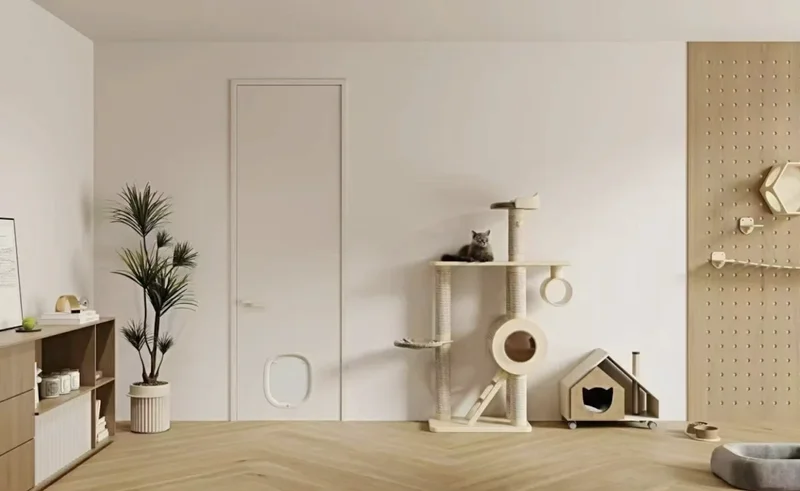
Built to Protect: Fire-Rated Solid Wood Doors Engineered for Life-Safety in High-Occupancy Buildings
Solid wood fire-rated doors in hospital and school environments must balance stringent life-safety performance with architectural integrity. These doors are not standard wood products; they are engineered composites integrating fire-retardant treatments, thermally stable cores, and intumescent protection systems, all while maintaining the aesthetic of natural timber.
Fire resistance is achieved through multi-layer construction strategies. A typical core consists of Laminated Veneer Lumber (LVL) or Mineral-Modified Wood Plastic Composite (WPC), where the WPC formulation maintains a PVC-to-wood fiber ratio of 60:40 by weight to optimize charring rate and limit pyrolysis gas diffusion. The density of the WPC core is maintained between 0.85–1.05 g/cm³ (per ISO 1183) to ensure dimensional stability under thermal load without excessive mass that compromises hardware performance.
Intumescent strips, typically graphite-based and compliant with EN 13501-2, expand at 180–220°C, sealing the door perimeter within 90 seconds of fire exposure. These strips are recessed into precision-milled grooves (±0.2 mm tolerance) to maintain acoustic integrity under normal conditions.
The door skins utilize FSC-certified hardwood veneers bonded over fire-retardant particleboard or medium-density fiberboard (MDF) substrates treated with ammonium polyphosphate (APP) and melamine additives. These substrates meet E1 formaldehyde emission limits (<0.1 ppm, per EN 717-1) and are certified to ISO 12460-5 for sustained indoor air quality in sensitive environments.
All assemblies are tested to ASTM E1527 (standard test method for fire tests of door assemblies) and rated for 20, 45, 60, or 90 minutes of fire resistance (FD20–FD90). Certification includes hose stream testing per NFPA 252, ensuring structural cohesion post-thermal exposure. Full assemblies are evaluated under positive pressure differentials of up to 25 Pa to simulate real fire conditions in compartmentalized zones.
- Thermal Insulation: U-factor ranges from 1.8 to 2.4 W/m²K, contributing to passive energy performance in conditioned corridors.
- Acoustic Performance: Achieves 38–42 dB Rw (weighted sound reduction index), critical for patient rooms and classrooms.
- Moisture Resistance: Swelling rate ≤ 5% after 24-hour water immersion (per EN 317), ensuring operability in high-humidity zones.
- Dimensional Stability: LVL core limits deflection to <L/480 under combined thermal and mechanical load per EN 1634-1.
- Surface Hardness: Shore D hardness ≥ 75 on PVC-wood composite edges, resisting impact damage in high-traffic egress paths.
Testing and manufacturing follow ISO 9001:2015 quality management protocols, with batch traceability for adhesive lots, fire-retardant treatments, and intumescent materials. Third-party certification by UL, Intertek, or SP Fire Research ensures compliance with IBC Chapter 7 and NFPA 101 Life Safety Code requirements for educational and healthcare occupancies.
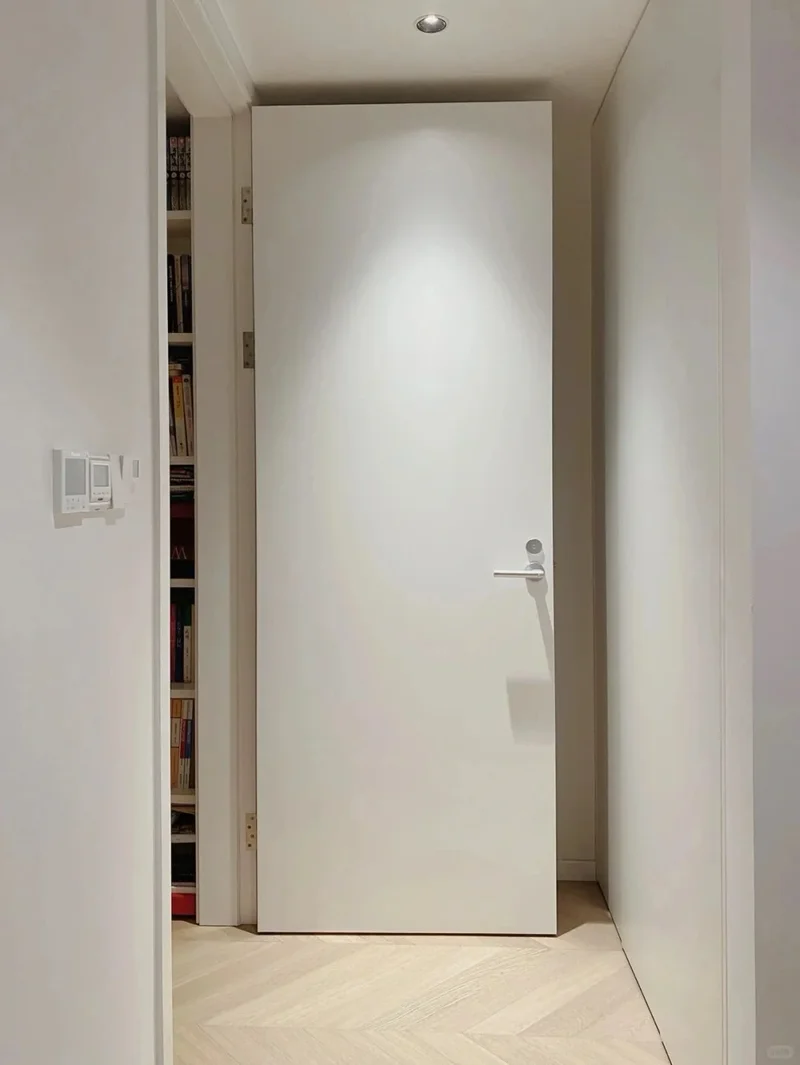
The following table outlines key performance parameters for fire-rated solid wood door assemblies used in hospital and school applications:
| Parameter | Test Standard | Performance Requirement | Typical Value |
|---|---|---|---|
| Fire Resistance | ASTM E1527 / EN 1634-1 | FD30–FD90 | FD60 (common) |
| Hose Stream Impact | NFPA 252 | Pass after fire exposure | Yes (FD60) |
| Sound Reduction Index (Rw) | ISO 140-3 | ≥35 dB | 38–42 dB |
| Formaldehyde Emission | EN 717-1 | E1 (≤0.1 ppm) | 0.06 ppm |
| Moisture Swelling (thickness) | EN 317 | ≤5% after 24h | 3.8% |
| Thermal Transmittance (U-factor) | ISO 6946 | ≤2.5 W/m²K | 2.1 W/m²K |
| Surface Burning Characteristics | ASTM E84 | Flame Spread ≤25, Smoke ≤450 | 20/50 |
| Density (WPC Core) | ISO 1183 | 0.85–1.05 g/cm³ | 0.96 g/cm³ |
These doors integrate seamlessly with electromagnetic locks, delayed egress systems, and automatic closers rated for 100,000+ cycles (per EN 1154), ensuring long-term reliability in life-safety-critical paths. All hardware fastening zones are reinforced with phenolic resin-impregnated particleboard to prevent pull-out under repeated stress.
Meeting Strict Code Compliance: Fire Acceptance Testing & Certification for Healthcare and Educational Facilities
Fire-rated solid wood doors deployed in healthcare and educational facilities must undergo rigorous fire acceptance testing and certification to comply with jurisdictional building codes, life safety standards, and occupancy-specific performance mandates. These environments demand doors that not only resist flame propagation and smoke infiltration for specified durations but also maintain structural integrity under thermal stress, contribute to acoustic privacy, and exhibit long-term dimensional stability in high-traffic, moisture-variable service conditions.
All fire-rated assemblies must be evaluated in accordance with ASTM E119 / UL 263 (Standard Methods of Fire Tests of Building Construction and Materials) or EN 1364-1 (Non-loadbearing elements – Part 1: Walls), depending on regional code adoption. Certification is contingent upon full-scale furnace testing that subjects the door assembly—including frame, glazing, hardware, and edge seals—to a time-temperature curve simulating real fire progression. Ratings are issued in 20-minute, 45-minute, 60-minute, 90-minute, and 180-minute increments, with hospital corridors and egress paths typically requiring 60- to 90-minute assemblies, and school stairwells or hazardous storage areas often mandating 90-minute minimums.
Certification must be issued by an accredited third-party agency (e.g., UL, Intertek, FM Global) under a recognized Quality Certification Program (QCP), ensuring ongoing production surveillance aligned with ISO 9001:2015 quality management systems. Field-installed units must match the tested configuration exactly—deviations in core material, door thickness, intumescent sealant placement, or hardware type invalidate compliance.
Material science plays a critical role in achieving and maintaining fire performance:
- Core Composition: High-density Laminated Veneer Lumber (LVL) or mineral-filled WPC (Wood-Plastic Composite) cores provide superior thermal inertia. WPC formulations typically maintain a PVC-to-wood ratio of 60:40 to balance charring resistance with machinability, achieving densities of 850–950 kg/m³ for optimal flame retardancy.
- Intumescent Systems: Embedded intumescent edge seals (typically graphite-based) expand 15–25 times their original volume at 180–200°C, sealing the perimeter gap within 5 minutes of fire exposure. These must be recessed to NFPA 80-compliant depths (typically 6–8 mm) to prevent mechanical damage.
- Surface Treatments: Class A flame-retardant coatings (ASTM E84 ≤25/50 flame spread/smoke development) applied over E0 formaldehyde-emission-grade (≤0.1 ppm) or E1 (≤0.124 ppm) composite substrates ensure low toxicity during combustion—critical in occupant-sensitive facilities.
Performance parameters for fire-rated solid wood doors in institutional settings extend beyond flame resistance:
| Performance Attribute | Test Standard | Minimum Requirement (Typical) | Functional Advantage |
|---|---|---|---|
| Sound Transmission Class (STC) | ASTM E90 | STC 45 | Ensures acoustic privacy in patient rooms and classrooms |
| Impact Resistance | ASTM D4256 / A118.1 | Level 3 (Heavy Duty) | Withstands repeated impact from gurneys, carts, and student traffic |
| Moisture Absorption (72h, 25°C) | ISO 4615 / ASTM D1037 | ≤8% (core), ≤4% (skin) | Prevents swelling and delamination in humid zones |
| Linear Swelling (Thickness) | EN 317 | ≤0.18% | Maintains fit in frame under hygrothermal cycling |
| Thermal Transmittance (U-factor) | ISO 10077-1 / NFRC 100 | ≤1.8 W/m²·K | Contributes to HVAC efficiency in perimeter rooms |
| Shore D Hardness (Surface) | ASTM D2240 | ≥75 | Resists scratching and wear in high-touch areas |
Doors must also integrate with active fire safety systems—compatibility with electromagnetic holders, smoke detectors, and automatic closers is mandatory per NFPA 101 (Life Safety Code) and IBC Section 715. All hardware must be listed for use in fire-rated assemblies, with positive latching verified through cyclical operation testing (minimum 1,000,000 cycles per BHMA A156.13).
Final acceptance requires documented evidence of:
- UL/WH Listing Label affixed to each door and frame
- Third-party inspection report verifying field installation per UL Design No.
- Certification from the manufacturer confirming compliance with IBC, NFPA 80, and ADA egress force requirements (<5 lbf opening force for interior doors)
Only systems with full traceability—from raw material batch records to final assembly QA logs—meet the stringent accountability expected in healthcare and educational projects.
Durability Meets Design: Solid Wood Construction That Withstands Heavy Use Without Sacrificing Aesthetics
Solid wood fire-rated doors in healthcare and educational facilities must balance rigorous performance demands with architectural integrity. Engineered from sustainably harvested hardwoods such as white oak, maple, and birch, these doors utilize thermally stable core constructions including Laminated Veneer Lumber (LVL) or dimensionally stabilized finger-jointed blanks to minimize warping under thermal stress and cyclic humidity exposure typical in high-occupancy buildings.
Fire resistance is achieved through intumescent core layering and veneer impregnation with phosphorus-nitrogen-borate compound systems that expand under heat (>200°C), forming a carbonaceous char barrier that limits flame propagation and smoke development. Certified assemblies comply with ASTM E1527 for fire door assemblies and UL 10B for positive pressure fire testing, achieving 20–90 minute fire resistance ratings (FD30–FD90) while maintaining structural cohesiveness under ISO 834 standard time-temperature curves.
Key performance attributes include:
- Impact resistance: Surface hardness measured at ≥75 Shore D (ASTM D2240) via cross-linked phenolic resin coatings, reducing gouging in high-traffic corridors.
- Dimensional stability: Moisture absorption rates <8% after 24h immersion (EN 317), with linear swelling coefficients <0.25% parallel to grain, critical in humidified hospital zones and washdown areas.
- Acoustic attenuation: Composite core configurations with constrained-layer damping deliver 38–45 dB Sound Transmission Class (STC) ratings, meeting ANSI S12.60 for classroom acoustics and HIPAA privacy requirements.
- Thermal performance: U-factors ranging from 1.8 to 2.2 W/m²·K (EN ISO 10077-1) when paired with thermally broken perimeter seals, reducing convective heat loss in climate-controlled environments.
- Indoor air quality: Formaldehyde emissions conform to CARB Phase 2 ATCM 93120 and EU E1 standards (<0.05 ppm), with surface finishes complying with ISO 16000-9 for low VOC off-gassing.
| Performance Parameter | Test Standard | Typical Value |
|---|---|---|
| Fire Resistance Rating | ASTM E119 / UL 263 | 30–90 minutes (FD30–FD90) |
| Smoke Leakage (perimeter) | UL 1784 | ≤3.0 cfm/ft² @ 1.57 psf |
| Impact Classification | EN 12600 | Class 2 (P2B2) – Medium Severity |
| Surface Burning Characteristics | ASTM E84 | Flame Spread: ≤25; Smoke: ≤50 |
| Cyclic Operation Endurance | EN 1192:2017 | 1,000,000 cycles (Grade 4) |
Doors are fabricated under ISO 9001-certified quality management systems, ensuring traceability of raw materials and batch-specific fire performance documentation. Finishes include pre-catalyzed lacquers with UV stabilizers and Class A fire-retardant stains that preserve grain aesthetics without compromising flame spread performance. Custom profiling, radius corners, and integrated astragals accommodate architectural detailing while maintaining NFPA 80 compliance for door, frame, and hardware coordination.
Performance-Driven Protection: Core Technology Behind Fire Resistance and Structural Stability
Fire resistance in solid wood doors for institutional applications hinges on a multi-layered core technology engineered to meet stringent safety, durability, and regulatory demands. The integration of advanced composite materials ensures compliance with fire-rating standards while maintaining structural integrity under thermal stress.
-
Intumescent Core Matrix: Doors utilize a layered core system incorporating wood-plastic composite (WPC) with controlled PVC-wood fiber ratio (typically 60:40) to balance combustibility and charring rate. Upon exposure to heat (>200°C), embedded intumescent additives expand to seal door edges, inhibiting flame spread and smoke penetration.
-
Laminated Veneer Lumber (LVL) Frame Reinforcement: Perimeter stability is achieved through kiln-dried LVL stiles and rails (Moisture Content: 8–10%), providing superior dimensional stability (swelling rate < 0.18% at 90% RH) and preventing warping under cyclic humidity variations common in healthcare and educational environments.
-
Core Density Optimization: WPC core density is maintained at 820–880 kg/m³ to meet ASTM E119 and EN 1634-1 fire endurance requirements (up to 90 minutes integrity and insulation criteria). This density range ensures optimal thermal mass, delaying temperature rise on non-fire side (limit: ≤180°C average, ≤220°C maximum).
-
Formaldehyde Emission Compliance: All composite components adhere to E0 formaldehyde emission standards (<0.5 mg/L, per ISO 12460-3), ensuring indoor air quality compliance in sensitive occupancy types.
-
Thermal Performance: Doors achieve U-factors of 1.8–2.2 W/m²·K, depending on core thickness (40–45 mm) and lamination layers, contributing to passive energy efficiency in conditioned spaces.
-
Acoustic Attenuation: Composite core structure provides sound reduction index (Rw) of 32–38 dB, critical for privacy in patient rooms and classrooms.
-
Fire Seal Integration: Perimeter cold-stretch seals (intumescent mica-based) activate at 160°C, expanding up to 15x original volume to block smoke passage during early fire stages.
-
Hardware Embedment Stability: LVL framing allows secure anchoring of heavy-duty hinges and closers (tested to 500,000-cycle EN 11925-2), with negligible degradation in fire-rated performance due to reduced delamination risk.
| Performance Parameter | Standard/Test Method | Requirement for 60-Minute Fire Rating |
|---|---|---|
| Fire Resistance (integrity) | ASTM E119 / EN 1364-1 | ≥60 min, no flaming on unexposed side |
| Insulation Criterion (ΔT) | ISO 834 | ≤180°C average, ≤220°C max rise |
| Smoke Leakage (ambient) | UL 1784 | ≤50 cfm at 0.5″ water column |
| Swelling Rate (thickness) | EN 317 | ≤0.18% after 24h immersion |
| Surface Burning Characteristics | ASTM E84 | Flame Spread ≤25, Smoke Developed ≤50 |
| Formaldehyde Emission | ISO 12460-3 / CARB Phase 2 | ≤0.05 ppm (E0 grade) |
Structural performance is validated through full-scale furnace testing per ASTM E119 and repeated load cycling to simulate long-term operational stress. Core composition, adhesive selection (phenol-resorcinol formaldehyde, PRF), and press-cure protocols are governed under ISO 9001-certified manufacturing, ensuring repeatable fire performance across production batches.
Specified by Professionals: Trusted in Hospitals and Schools Nationwide for Code-Compliant Fire Safety
- Engineered with a high-density wood-plastic composite (WPC) core (≥1.1 g/cm³) optimized for pyrolysis resistance, maintaining structural integrity during ASTM E119 fire exposure up to 90 minutes (FD90 classification)
- Utilizes a balanced PVC-wood flour ratio (60:40) in perimeter gaskets to inhibit flame propagation while accommodating thermal expansion in corridor assemblies subject to frequent cycling
- Incorporates cross-laminated LVL (Laminated Veneer Lumber) stiles and rails for dimensional stability under sustained humidity loads (ΔL/L ≤ 0.2% at 90% RH), critical for hospital isolation rooms and school HVAC zones
- Certified to ASTM E814/UL 1479 for through-penetration firestop compatibility and EN 1634-1 for combined fire and hose-stream resistance, ensuring compliance with IBC Section 714 and NFPA 101 Life Safety Code
- Achieves E0 formaldehyde emission compliance (<0.5 mg/L, per ASTM E1333), supporting LEED v4.1 MR and CHC 2.1 requirements for pediatric and educational environments
- Delivers 45 dB sound transmission class (STC) performance when installed with intumescent seals, meeting FGI Guidelines for patient room acoustic privacy and ICC A117.1 accessibility standards
- Core moisture absorption rate ≤ 5% after 24-hour immersion (ASTM D1037), preventing warp-induced latch override in high-washdown zones
- Thermal insulation U-factor of 1.8 W/m²·K (0.32 Btu/hr·ft²·°F), reducing convective heat transfer during compartmentalization and supporting ASHRAE 90.1 envelope efficiency targets
| Performance Parameter | Value | Test Standard |
|---|---|---|
| Fire Resistance Rating | Up to 90 minutes (FD90) | ASTM E119, EN 1364-1 |
| Smoke Leakage Rate | ≤ 0.03 m³/min per m² at 25 Pa | UL 1784 |
| Surface Ignitability (Flame Spread) | Class A (FSI ≤ 25) | ASTM E84 |
| Intumescent Seal Expansion | ≥ 5x original thickness at 180°C | BS 476-20/22 |
| Formaldehyde Emission | ≤ 0.05 ppm (E0 Grade) | ISO 12460-3, ASTM E1333 |
| Shore D Hardness (Surface) | ≥ 75 | ASTM D2240 |
Frequently Asked Questions
What moisture expansion coefficient should fire-rated solid wood doors meet for hospital environments?
Fire-rated solid wood doors in hospitals must exhibit a linear expansion coefficient below 0.2% at 90% RH to prevent jamming. Use WPC cores with density ≥650 kg/m³ and acetylated wood veneers, paired with 0.3–0.5 mm PVC edge sealing to mitigate hygroscopic movement in high-humidity zones.
How do formaldehyde emissions in wood door cores comply with E0 and EN 717-1 standards?
Core materials must achieve formaldehyde emissions ≤0.05 mg/m³ (E0 grade per EN 717-1) via NAF (No Added Formaldehyde) resins or EPI-PF glue systems. Use phenol-formaldehyde-bonded LVL cores with VOC scrubbing during pressing—third-party test reports (e.g., TÜV, SGS) required for submittal.
Can WPC-core fire doors maintain structural integrity in prolonged high-temperature exposure?
Yes—WPC cores with mineral-filled PVC matrix (density 900–1,100 kg/m³) resist pyrolysis up to 45 minutes (FD30-rated). Intumescent strips expand at 180°C, sealing gaps. Core sandwiched between 1.2 mm steel-reinforced intumescent layers ensures ASTM E814 compliance without charring delamination.
What thermal insulation (U-value) should fire-rated wood doors achieve in school applications?
Target U-values ≤1.8 W/m²K using multi-cavity WPC cores with 16 mm aerogel-injected voids. Pair with PVC-coated cladding (0.8 mm thickness) acting as thermal break. This configuration meets ASTM C518 and supports energy code compliance in educational buildings requiring passive temperature control.
How is impact resistance tested and enhanced in fire-rated wood doors for high-traffic corridors?
Comply with ANSI A156.4 Grade 1 (500,000 cycles) via 3.0 mm HPL overlays and steel-reinforced stiles. Use WPC cores with 40 MPa compressive strength, UV-cured polyurethane finish (2H pencil hardness), and embedded aluminum edge guards to withstand repeated trolley impacts in hospital corridors.
What long-term warping prevention measures are critical for 90-minute fire-rated wood doors?
Employ symmetric layup design with dual-laminated LVL (Laminated Veneer Lumber) core (≥1,100 kg/m³), balanced moisture content (6–8%), and kiln-stress-relieved hardwood skins. Post-press conditioning at 45°C/30% RH minimizes residual strain—curvature must not exceed 2 mm per meter after 1,000 hr ASTM D4552 cyclic testing.
Do fire-rated solid wood doors support acoustic privacy in healthcare settings?
Yes—doors with mineral-filled WPC core (density ≥850 kg/m³) and perimeter acoustic seals achieve Rw 42–45 dB. Pair with 2 mm EPDM drop seals and kerf-mounted intumescent to meet STC 45 in patient rooms—critical for HIPAA-compliant sound attenuation in hospitals.
How does UV-resistant finishing preserve appearance and integrity in sun-exposed school entry doors?
Apply tri-layer coating: epoxy primer, acrylic intermediate, and top-coated aliphatic polyurethane with HALS (Hindered Amine Light Stabilizers). This system resists >4,000 hr QUV-B UV exposure (ASTM G154), preventing gloss loss, chalking, and surface microcracking on fire-rated doors in direct sunlight.