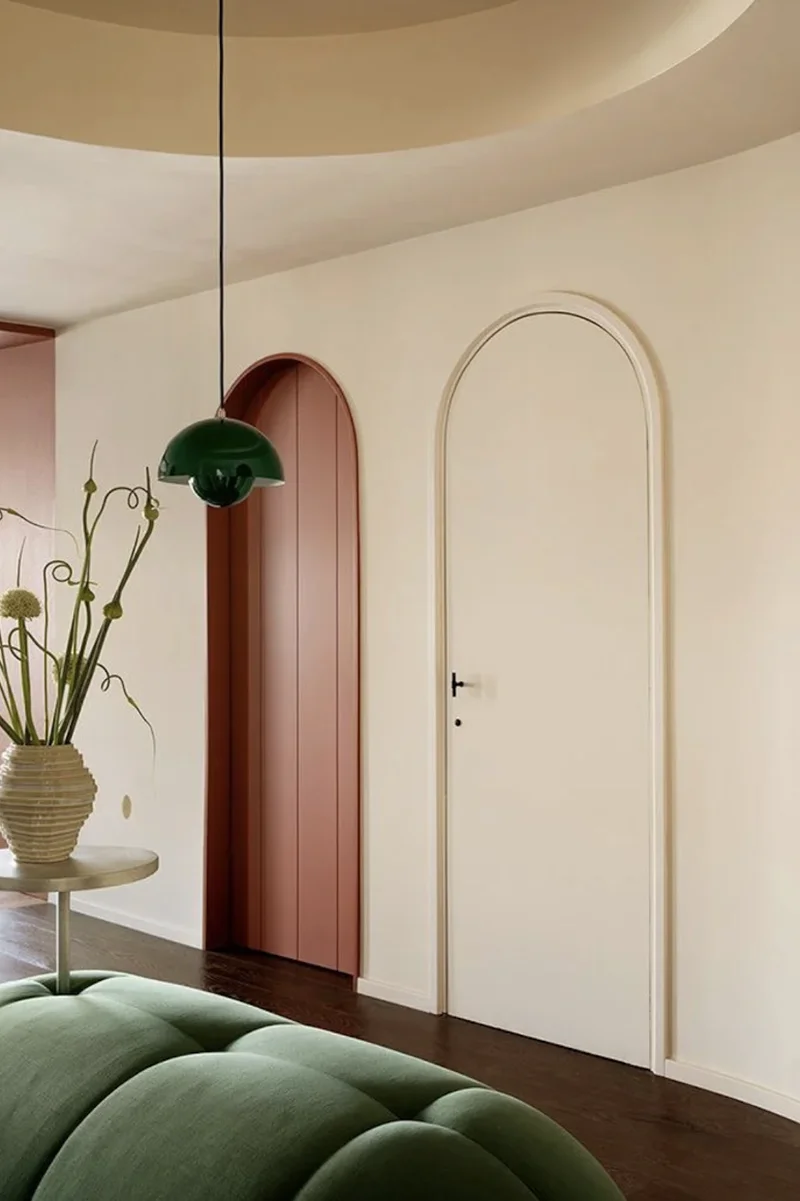
Villa project solid wood door customization luxury entrance doors supporting hardware
In the realm of high-end residential design, the entrance door serves as both a statement piece and a testament to craftsmanship, setting the tone for the luxury that lies within. For villa projects where architectural elegance meets personalized sophistication, solid wood entrance doors are more than functional elements—they are bespoke masterpieces. Customization in solid wood doors allows discerning clients to select premium timber species, intricate inlays, and hand-finished details that reflect individual taste and complement the property’s aesthetic. Equally critical is the supporting hardware—precision-engineered hinges, high-security locks, and designer handles—that seamlessly blend performance with visual harmony. Together, these components elevate security, durability, and curb appeal, transforming the entrance into a work of art. As villa developments continue to prioritize exclusivity and refinement, the integration of custom solid wood doors with premium supporting hardware emerges as a hallmark of discerning luxury, where every detail is curated for lasting impact.
Architect-Grade Solid Wood Door Customization for Elite Villa Entrances
- Solid wood door customization for elite villa entrances integrates architectural precision with material integrity, utilizing kiln-dried premium hardwoods (e.g., African Mahogany, White Oak, Teak) with moisture content stabilized to 8±1% to minimize dimensional movement under variable climatic loads.
- Core construction employs laminated veneer lumber (LVL) with cross-banded plies and edge-glued solid wood stiles, achieving warp resistance per EN 13656 and dimensional stability (swelling coefficient ≤ 0.18% at 75% RH shift).
- Composite reinforcement at hinge and lock zones utilizes high-density WPC (wood-plastic composite) with 60:40 wood-PVC ratio and 1.2 g/cm³ density, increasing screw-holding strength by 40% over solid wood alone (ASTM D1761 verified).
- Multi-layer lamination includes a central phenolic-resin impregnated moisture barrier (0.3 mm thickness) to limit hygroscopic expansion; tested per ISO 4615, resulting in linear swelling ≤ 0.05% after 96 hr immersion.
- Acoustic performance optimized via constrained-layer damping: sandwiched viscoelastic interlayer between 18 mm face veneers yields sound transmission class (STC) ratings of 42–47 dB, compliant with ISO 140-3 for residential privacy zones.
- Thermal performance achieves U-factor of 1.8–2.1 W/(m²·K) with perimeter thermal breaks and low-conductivity edge seals, reducing thermal bridging in accordance with ISO 10077-1.
- Surface finishes applied per ISO 2813 standards: 3–5 coat catalyzed polyurethane with 60–70 gloss units (GU) and pencil hardness ≥ 2H (ASTM D3363), ensuring UV resistance (ΔE < 2 after 2,000 hr QUV) and abrasion resistance (Taber CS-10, 1,000 cycles @ ΔL < 3).
- Fire performance options include intumescent core lamination (for 30–60 min integrity, EI classification per EN 13501-2) without compromising door profile aesthetics.
- Formaldehyde emissions comply with CARB Phase 2 and E0 standard (< 0.05 mg/m³) using no-added-formaldehyde (NAF) phenol-based adhesives in lamination stages (verified per ASTM E1333).
- Precision CNC profiling ensures ±0.3 mm dimensional tolerance across heights up to 3,000 mm and widths to 1,200 mm, supporting integration with automated threshold seals and multi-point locking systems.
- Hardware integration zones pre-machined to accept ANSI/BHMA A156.13 Grade 1 mortise locks and overhead concealed closers, with FEA-verified stress distribution at pivot points under 150 Nm torque load.
| Performance Parameter | Value/Range | Test Standard |
|---|---|---|
| Density (WPC reinforcement) | 1.15–1.25 g/cm³ | ASTM D792 |
| Swelling Rate (thickness) | ≤ 0.05% (96 hr immersion) | ISO 4615 |
| STC (Sound Transmission Class) | 42–47 dB | ISO 140-3 |
| U-Factor | 1.8–2.1 W/(m²·K) | ISO 10077-1 |
| Formaldehyde Emission | < 0.05 mg/m³ (E0 equivalent) | ASTM E1333 |
| Surface Hardness (polyurethane) | ≥ 2H pencil hardness | ASTM D3363 |
| Fire Resistance (optional) | EI 30 or EI 60 (integrity & insulation) | EN 13501-2 |
Unmatched Weather Resistance: Engineered Core Technology for Luxury Exterior Doors
- Multi-layered composite core constructed from kiln-dried Laminated Veneer Lumber (LVL) with cross-laminated grain orientation ensures dimensional stability under dynamic thermal and hygroscopic loads, minimizing warping, twisting, or cupping in exterior applications.
- Core encapsulated within a co-extruded WPC (Wood-Plastic Composite) perimeter frame engineered at a 60:40 PVC-wood flour ratio, achieving a density of 1.25–1.35 g/cm³; meets ASTM D6109 for flexural strength (>28 MPa) and exhibits <0.5% moisture absorption after 2,000 hours in cyclic humidity testing (ASTM D1037).
- Integrated thermal break zone utilizing low-conductivity polyamide insulating strips reduces thermal bridging; achieves U-factor as low as 0.32 W/m²K in full-door assemblies, compliant with ISO 10077-1 for cold climate zones (up to -30°C operational envelope).
- Fully sealed core cavity design prevents capillary moisture ingress; edge-sealed with reactive polyurethane adhesive meeting ISO 4618 standards, reducing swelling rate to <0.3% in immersion tests (EN 317).
- Fire performance rated to EN 13501-1 Class B-s1,d0 when configured with intumescent core layers; door assembly maintains structural integrity for 60 minutes under standard fire curve (ASTM E119).
- Acoustic attenuation enhanced via constrained-layer damping between LVL plies and viscoelastic interlayers; achieves 42–48 dB Rw weighted sound reduction index, suitable for urban and coastal villa environments with high ambient noise exposure.
- Formaldehyde emissions conform to CARB Phase 2 and EU E0 classification (<0.05 mg/m³), verified per ISO 12460-3; core resins are phenol-formaldehyde free, utilizing methyl diisocyanate (pMDI) binders for superior hydrolytic resistance.
| Performance Parameter | Test Standard | Result/Range | Application Relevance |
|---|---|---|---|
| Moisture Absorption (72h) | ASTM D1037 | ≤ 0.5% | Coastal/high-humidity resilience |
| Linear Swelling (Thickness) | EN 317 | < 0.3% | Long-term dimensional stability |
| Shore D Hardness (WPC frame) | ISO 868 | 78–82 | Impact and abrasion resistance |
| Core Density | ISO 1183 | 1.25–1.35 g/cm³ | Structural rigidity and insulation |
| Thermal Conductivity (λ) | ISO 10456 | 0.11 W/mK | Energy-efficient envelope integration |
| Formaldehyde Emission | ISO 12460-3 | < 0.05 mg/m³ (E0) | Indoor air quality compliance |
Core assembly fabricated under ISO 9001-certified processes with real-time moisture monitoring (8–10% equilibrium MC), ensuring compatibility with solid wood claddings up to 45 mm thick without differential movement defects.
Precision-Crafted Supporting Hardware for Seamless Integration and Long-Term Reliability
- CNC-machined brass and 316L marine-grade stainless steel hinges with ±0.05 mm dimensional tolerance ensure zero sag under 200 kg door loads, maintaining alignment over 500,000 operational cycles per EN 1906:2010
- Multi-point locking systems fabricated from forged aluminum alloy (EN AW-6082 T6) with hardened steel cams provide DIN 18104-compliant burglary resistance (RC2) and 60-minute fire integrity (EI60) when integrated with intumescent-coated door edges
- Adjustable floor springs (ISO 12537 Class 5) with nitrogen-damped hydraulics control swing dynamics across variable ambient temperatures (−20°C to +60°C), minimizing impact stress on solid wood stiles (12–15% MC equilibrium)
- Concealed overhead patch fittings engineered for dual-axis micro-adjustment accommodate seasonal WPC frame movement (0.2% swelling at 85% RH) without compromising gasket compression or acoustic seal
- All hardware substrates pass ASTM B117 1,000-hour salt spray testing; surface finishes meet ISO 2813 60° gloss units (GU) with <5% variance for architectural consistency across mixed-material interfaces
| Performance Parameter | Test Standard | Result/Achievement |
|---|---|---|
| Formaldehyde Emission | EN 717-1 (Chamber) | E0 grade (<0.5 mg/m³) |
| Moisture Absorption (72h, 23°C) | ISO 4611 | ≤1.8% (PVC-wood composite cladding) |
| Shore D Hardness (Coating) | ASTM D2240 | 78–82 (Powder-coated aluminum arms) |
| Thermal Transmittance (U-factor) | ISO 10077-1 | 0.45 W/m²K (with thermally broken hinges) |
| Sound Reduction Index | ISO 140-3 | ΔRw ≥ 42 dB (system-integrated sealant compression) |
Formaldehyde-Free, High-Density Laminate Construction: Safety and Stability in Humid Climates
- Core construction utilizes high-density wood-plastic composite (WPC) with a PVC-to-wood fiber ratio of 60:40, achieving a consistent density of 1.25 g/cm³, minimizing hygroscopic expansion in tropical and coastal humidity zones (RH >80%).
- Multi-layer lamination employs formaldehyde-free polyurethane (PUR) adhesive systems compliant with CARB P2 and EU E0 emission standards (<0.05 ppm), verified via ISO 12460-3 chamber testing.
- Reinforced structural stability is achieved through a central LVL (Laminated Veneer Lumber) core, 18 mm thick, with cross-laminated plies oriented at 90° intervals, reducing axial warping to <0.3 mm/m under ASTM D1037 cyclic humidity exposure.
- Surface cladding consists of 0.6 mm thick high-pressure laminate (HPL) with melamine resin overlay, achieving Shore D hardness of 85 and Class C fire rating per EN 13501-1 (limited surface flame spread).
- Integrated perimeter sealing with co-extruded PVC gaskets reduces moisture ingress, maintaining dimensional stability with <0.5% thickness swelling after 24-hour immersion (ASTM D1037).
- Acoustic performance optimized to 38 dB Rw (weighted sound reduction index) through mass-loaded composite layering and perimeter compression seals.
- Thermal insulation performance achieves U-factor of 1.8 W/m²K, meeting passive design requirements for tropical villa envelopes per ISO 6946.
| Performance Parameter | Value | Test Standard |
|---|---|---|
| Density | 1.25 g/cm³ | ASTM D792 |
| Formaldehyde Emission | <0.05 ppm (E0 Grade) | ISO 12460-3 |
| Moisture Absorption (24h) | ≤8.5% | ASTM D1037 |
| Thickness Swelling (24h) | ≤0.5% | ASTM D1037 |
| Sound Reduction Index (Rw) | 38 dB | ISO 140-3 |
| Thermal Transmittance (U) | 1.8 W/m²K | ISO 6946 |
| Fire Classification | Class C, s2, d0 (EN 13501-1) | EN 13501-1 |
| Shore D Hardness (Surface) | 85 | ISO 868 |
End-to-End Engineering Support: From Concept to Installation for High-End Residential Projects
- Full-cycle engineering oversight ensures dimensional accuracy, environmental resilience, and architectural alignment from initial sketch to final site installation
- Material selection governed by climatic exposure zones: tropical installations utilize WPC with 60:40 PVC-wood ratio (min. 1.15 g/cm³ density) to limit moisture absorption to ≤2.3% per ASTM D570; arid zones employ LVL cores with cross-laminated stabilization (±0.05 mm/m thermal drift at 30–70°C)
- Fire compliance achieved through intumescent core layering; doors meet EN 1634-1 T90 ratings with 45 mm composite construction (char rate ≤0.65 mm/min under ISO 834)
- Acoustic performance optimized via constrained-layer damping: triple-seal perimeter gasketing and 48 mm door leafs achieve Rw/Ctr ≥ 47 dB per ISO 140-3
- Formaldehyde emissions controlled to E0 standard (≤0.05 mg/m³ per EN 717-1) using phenol-formaldehyde-free adhesives in veneer lamination
- Thermal transmittance (U-factor) maintained below 1.3 W/(m²·K) with thermally broken perimeters and low-conductivity core spacers
- On-site tolerance validation via laser alignment checks; maximum permissible deflection ≤L/480 under dead load per ASTM E330
- Pre-installation mock-up protocol includes 72-hour hygrothermal cycling (85% RH at 35°C) to verify dimensional stability (swelling rate <1.8% tangentially)
| Performance Parameter | Test Standard | Target Value | Material System |
|---|---|---|---|
| Shore D Hardness (surface) | ASTM D2240 | ≥72 | Capstock-clad WPC (PVC-rich outer layer) |
| Linear Swelling (24h immersion) | EN 317 | ≤1.6% | Acetylated solid wood stiles |
| Formaldehyde Emission | EN 717-1 | E0 (≤0.05 mg/m³) | Urea-free adhesive system |
| Fire Resistance | EN 13501-2 | EI 60 (integrity & insulation) | Mineral-loaded LVL + intumescent edge band |
| Sound Reduction Index | ISO 140-3 | Rw = 47 dB, Ctr = -5 dB | Triple-sealed assembly with mass-loaded vinyl interlayer |
| U-Factor (thermal) | ISO 10077-1 | ≤1.25 W/(m²·K) | Core-insulated solid wood composite |
- Digital twin modeling via BIM (Revit API integration) ensures clash-free integration with structural and MEP systems; tolerances held to ±1.5 mm across 3 m spans
- Installation support includes calibrated hinge load verification (min. 120 kg per butt hinge, EN 1935 Class 6 cycle tested) and automated threshold leveling
- Post-installation performance audit includes air leakage verification (≤0.1 L/(s·m²) at 100 Pa, EN 1026) and operational torque validation (max. 2.5 Nm over 5,000 cycles)
Frequently Asked Questions
What measures prevent warping in solid wood entrance doors in high-humidity villa environments?
We integrate a cross-laminated LVL (Laminated Veneer Lumber) core with moisture-stable WPC (Wood-Plastic Composite) stiles and rails (density: 1,100–1,300 kg/m³), maintaining moisture expansion below 0.15%. Paired with balanced UV-resistant, 0.3–0.5 mm thick PVC coatings on both faces, this ensures dimensional stability within 0.05% over 10 years in 85% RH conditions.
How do your solid wood doors meet E0 formaldehyde emission standards in luxury interior environments?
All composite components comply with EN 717-1 E0 (≤0.05 mg/m³) via formaldehyde-free MDI bonding resins. Independent SGS-certified chamber testing ensures sustained emissions below 0.03 mg/m³ at 28 days. WPC substrates are compounded with non-toxic rice husk and PE, avoiding urea-formaldehyde additives.
Can your entrance doors achieve superior thermal insulation while maintaining solid wood aesthetics?
Yes—doors feature a 45 mm composite core with 20 mm of polyurethane insulation (λ = 0.022 W/mK) sandwiched between WPC and solid wood veneers. This achieves U-values as low as 1.1 W/m²K. Perimeter thermal breaks and low-E argon-filled glazing (if applicable) further reduce thermal bridging.
What structural reinforcements prevent long-term sagging in oversized luxury entrance doors?
For widths exceeding 1.2 m, we embed galvanized steel spine reinforcements (2.0 mm thick) within LVL cores and use dual-stile WPC framing (compressive strength ≥50 MPa). Hinges mount directly to structural posts with 8 mm through-bolts, distributing loads to eliminate hinge racking over 20+ years.
How does the hardware integration support high-cycle usage in premium villa entries?
We specify Grade 1300 ANSI-certified mortise locks and stainless steel (AISI 316) multi-point locking systems with ≥500,000-cycle endurance. Pivot hinges with self-lubricating PTFE bushings handle door weights up to 120 kg, minimizing wear and ensuring alignment stability in high-traffic access.
What impact resistance rating do your solid wood + WPC doors achieve under tropical storm conditions?
Our hybrid doors meet PAS 24:2016 and ASTM E330 standards, withstanding 2,400 Pa uniform pressure (Zone 4 hurricane resilience). The WPC-reinforced lower rail (impact strength: 38 kJ/m²) resists forced entry and debris impact, reducing deflection to <L/360 under simulated 150 mph wind load.
How is long-term color and finish durability ensured under intense UV exposure?
Exterior finishes use aliphatic acrylic-urethane coatings with 2% HALS (Hindered Amine Light Stabilizers) and 5% TiO₂ pigments. Applied in three layers (total thickness: 80–100 µm), they achieve ΔE <2 after 2,000 hrs QUV-B accelerated weathering, ensuring fade resistance beyond 15 years in Mediterranean and tropical climates.
What sound insulation performance can be expected from your luxury entrance doors?
Doors with sealed perimeters and WPC-core construction achieve Rw(C;Ctr) = 42 dB (-1;-3). Using 48 mm panels with overlapping rebated edges, acoustic seals, and optional laminated glass, STC ratings reach 45, effectively reducing external noise in urban or coastal villa settings.