Garage door long-term supply for property developers
For property developers, every detail contributes to the lasting value and market appeal of a project. The garage door, often a property’s largest moving component, is far more than a functional entry point; it is a critical design element and a long-term investment in durability and resident satisfaction. Securing a reliable, long-term supply partnership for these essential fixtures is a strategic decision that transcends simple procurement. It ensures consistent quality across multiple developments, streamlines project timelines through predictable logistics, and provides access to evolving innovations in security, insulation, and smart technology. This foundational partnership not only safeguards against construction delays but also fortifies your brand’s reputation for quality, making it a cornerstone of efficient, forward-thinking development strategy.
Maximize Project ROI with Consistent, High-Quality Garage Door Supply for Large-Scale Developments
Consistent, high-quality garage door supply is a critical path item for protecting the capital expenditure and long-term asset value of large-scale developments. Inconsistent quality or specification drift across phases leads to escalating lifecycle costs, warranty claims, and aesthetic degradation that directly undermine project ROI. A technically governed supply chain, anchored in material science and performance certification, transforms garage doors from a commodity into a durable, low-maintenance building envelope component.
Core Technical Pillars for Asset Protection:
- Material Integrity & Predictable Aging: The long-term dimensional stability and appearance of door sections are dictated by core material composition. For composite doors, the Wood-Plastic Composite (WPC) density (≥ 1.25 g/cm³) and precise PVC-to-wood flour ratio ensure minimal water absorption (<0.8%) and prevent warping. For steel doors, the stability of the laminated veneer lumber (LVL) core is paramount; it must be kiln-dried to ≤10% moisture content and bonded with phenolic resins to prevent delamination under thermal cycling.
- Certified Performance Envelope: Garage doors are a significant thermal and acoustic bridge. Specifying doors with independently tested U-factors (e.g., ≤ 1.0 W/m²K for insulated models) and sound reduction ratings (e.g., 28-32 dB for composite sections) contributes directly to the building’s overall energy performance and occupant comfort, supporting compliance with broader sustainability benchmarks.
- Regulatory & Safety Compliance by Design: Fire-rated assemblies for separating garages from habitable spaces require doors certified to standards such as EN 16034 or ASTM E119, with all components—including seals and glazing—as part of the tested system. For indoor air quality, all composite materials and adhesives must meet stringent formaldehyde emission grades (E0 or CARB Phase 2 Compliant).
- Manufacturing Process Control: ISO 9001 certification is the baseline for quality assurance. For long-term supply, evidence of Statistical Process Control (SPC) for critical parameters—like panel thickness, coating weight, and hinge reinforcement weld integrity—is non-negotiable to guarantee batch-to-batch consistency over a multi-year project timeline.
Functional Advantages of a Technically Managed Supply Program:
- Eliminates Costly Call-Backs: Predictable material performance reduces site failures. High Shore D hardness (>75) on bottom seals and abrasion-resistant polyester powder coatings (≥80μm, QUV tested) withstand cyclical use without premature degradation.
- Streamlines Procurement & Installation: A locked specification with pre-vetted technical submittals accelerates tender processes. Dimensional tolerances held to ±1mm on panel width and reveal alignment ensure rapid, fault-free installation across all trades.
- Future-Proofs Maintenance Budgets: Standardization on a single, high-performance hardware system (e.g., spring cycle rating >25,000) and consistent panel profiles across phases simplifies spare parts inventory and reduces long-term operational expenditure for facility managers.
Technical Performance Comparison: Standard vs. Engineered Long-Term Supply
| Parameter | Standard Commodity Supply | Engineered Long-Term Supply Program | Impact on Project ROI |
|---|---|---|---|
| Panel Dimensional Stability | Swelling rate up to 1.5% (24h water immersion) | Swelling rate ≤0.8% (24h water immersion) | Eliminates seasonal binding/operational failures, reduces warranty claims. |
| Surface Coating Durability | Standard polyester, 60-70μm | High-resilience polyester/polyurethane, ≥80μm, QUV 1000h+ | Maintains aesthetic uniformity for decades; negates repainting costs. |
| Thermal Insulation (U-Factor) | Often unrated or estimated (~1.5 W/m²K) | Independently tested, certified U ≤ 1.0 W/m²K | Contributes to building energy certification, reduces HVAC load on adjacent spaces. |
| Critical Component Certification | Components may be self-certified | Full assembly certifications (fire, safety, performance) to EN/ASTM standards | Mitigates liability, ensures regulatory compliance without retrofit. |
| Batch-to-Batch Consistency | Variable based on raw material cost | Governed by SPC and raw material specifications (e.g., galvanization class Z275) | Guarantees identical fit, finish, and function across all project phases. |
Implementing a long-term supply agreement based on these engineering parameters de-risks the construction schedule and locks in lifecycle cost predictability. It ensures that the garage door asset performs as a reliable, maintenance-efficient component of the building envelope for its full design life, directly safeguarding the developer’s return on investment.
Engineered for High-Traffic Durability: The Structural Integrity of Our Garage Door Solutions
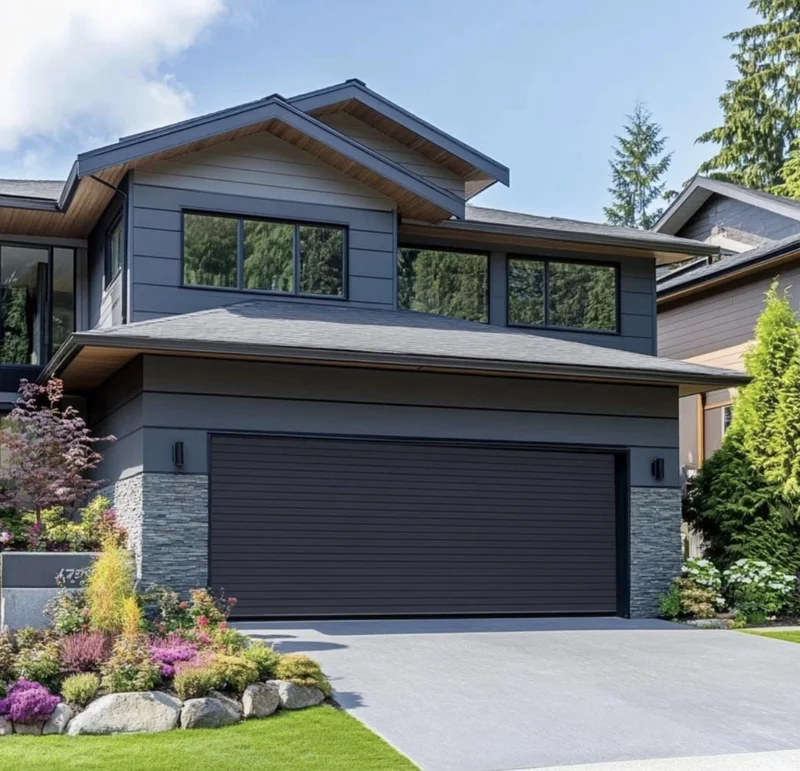
Our garage door systems are engineered as structural building envelopes, designed to withstand the mechanical fatigue and environmental stress typical of high-traffic residential and multi-family developments. The core philosophy is to move beyond commodity hardware to a performance-engineered component, where material selection, composite design, and manufacturing precision dictate long-term operational integrity and reduced lifecycle cost.
Core Material Science & Composite Construction
Structural integrity originates at the material level. Our solutions utilize advanced composites and engineered woods, selected for their predictable performance and resistance to deformation.
- High-Density Wood-Plastic Composite (WPC) Cladding: We specify WPC with a minimum density of 1.25 g/cm³, ensuring superior impact resistance and dimensional stability compared to standard PVC or low-density composites. The optimized wood fiber-to-polymer ratio (typically 60:40) balances natural material aesthetics with the moisture and UV resistance of engineering polymers.
- Laminated Veneer Lumber (LVL) Core Framework: The internal structural framework is constructed from LVL, not solid timber. LVL’s engineered layering eliminates natural defects (knots, grain irregularities), providing consistent tensile strength and dramatically reducing warping, twisting, and sagging under load over time. This guarantees panel alignment and smooth operation for the door’s service life.
- Steel Reinforcement & Hardware Integration: All critical stress points—hinge plates, track brackets, and spring anchor points—are reinforced with galvanized or powder-coated steel substrates. Hardware is not merely attached; it is integrated into the structural design, with load paths calculated to transfer operational forces directly into the reinforced frame.
Performance Specifications & Technical Standards
Compliance with international standards provides the baseline; our specifications consistently exceed them to ensure durability in real-world conditions.
| Parameter | Specification | Standard / Test Method | Performance Implication |
|---|---|---|---|
| Surface Hardness | ≥ 75 Shore D | ASTM D2240 | Resists denting from impacts and abrasion. |
| Moisture Absorption (24h) | ≤ 0.8% | EN 317 (WPC) | Minimal swelling ensures consistent operation in all climates. |
| Dimensional Stability | ≤ 0.2% linear change | EN 15534-1 | Critical for maintaining weather seals and panel alignment. |
| Fire Performance | Class B-s1, d0 / Class A | EN 13501-1 / ASTM E84 | Meets stringent building codes for attached garages in multi-family units. |
| Formaldehyde Emission | E0 (≤ 0.065 ppm) | EN 16516 / JIS F**** | Ensures indoor air quality compliance for projects with stringent environmental criteria. |
| Acoustic Insulation | Up to 28 dB Rw | EN ISO 10140-2 | Reduces operational noise, a key consideration for high-density developments. |
| Thermal Insulation (U-Factor) | As low as 0.7 W/m²K | EN ISO 8990 | Contributes to the building’s thermal envelope, reducing energy transfer. |
Functional Advantages for High-Traffic Scenarios
- Reduced Maintenance Liability: The combination of moisture-resistant composites, stable LVL cores, and corrosion-protected hardware minimizes call-backs for adjustments, lubrication, or panel replacement due to environmental degradation.
- Consistent Operational Performance: Precision-engineered tracks and rollers, paired with a rigid, non-warping door structure, ensure smooth, quiet, and reliable operation through thousands of cycles, preventing binding or misalignment.
- Long-Term Aesthetic Retention: High-density materials and advanced coating systems resist fading, scratching, and surface degradation, maintaining curb appeal and protecting the developer’s brand reputation throughout the warranty period and beyond.
- Integrated Quality Assurance: Manufacturing under ISO 9001:2015 controls ensures every component, from panel profiles to hardware batches, meets the documented material and performance specifications, providing consistency across large supply contracts.
Streamlined Logistics and Just-in-Time Delivery for Seamless Construction Timelines
A robust long-term supply agreement is fundamentally an integrated logistics and materials management protocol. For property developers, the critical path dependency of garage door installation necessitates a delivery system engineered for precision, not just bulk transportation. Our logistics framework is built on advanced material forecasting and a just-in-time (JIT) delivery model, synchronized with your construction phases to eliminate on-site storage, reduce handling damage, and protect material integrity from environmental exposure.
Core Logistics & Material Synchronization Advantages:
- Phased Delivery Scheduling: Doors are batch-produced and shipped in sequence with your building completion schedule (e.g., Block A, Levels 1-5). This prevents site congestion and ensures each unit arrives at optimal installation readiness.
- Climate-Controlled & Protected Transit: Composite materials (WPC, PVC-wood blends) and engineered wood cores (LVL) are sensitive to uncontrolled humidity and UV exposure during storage. Our specialized packaging and direct-load logistics maintain factory-fresh conditions, preserving dimensional stability and surface finishes.
- Real-Time Supply Chain Visibility: Integrated tracking provides real-time data on production status, container shipment, and final-mile delivery, allowing your site managers to adjust labor scheduling dynamically.
- Reduced On-Site Liability: Eliminating prolonged on-site storage minimizes risks of theft, accidental impact damage, and exposure to moisture that can compromise core materials—particularly critical for maintaining specified fire ratings and structural tolerances.
Technical Integrity Preserved Through JIT Delivery:
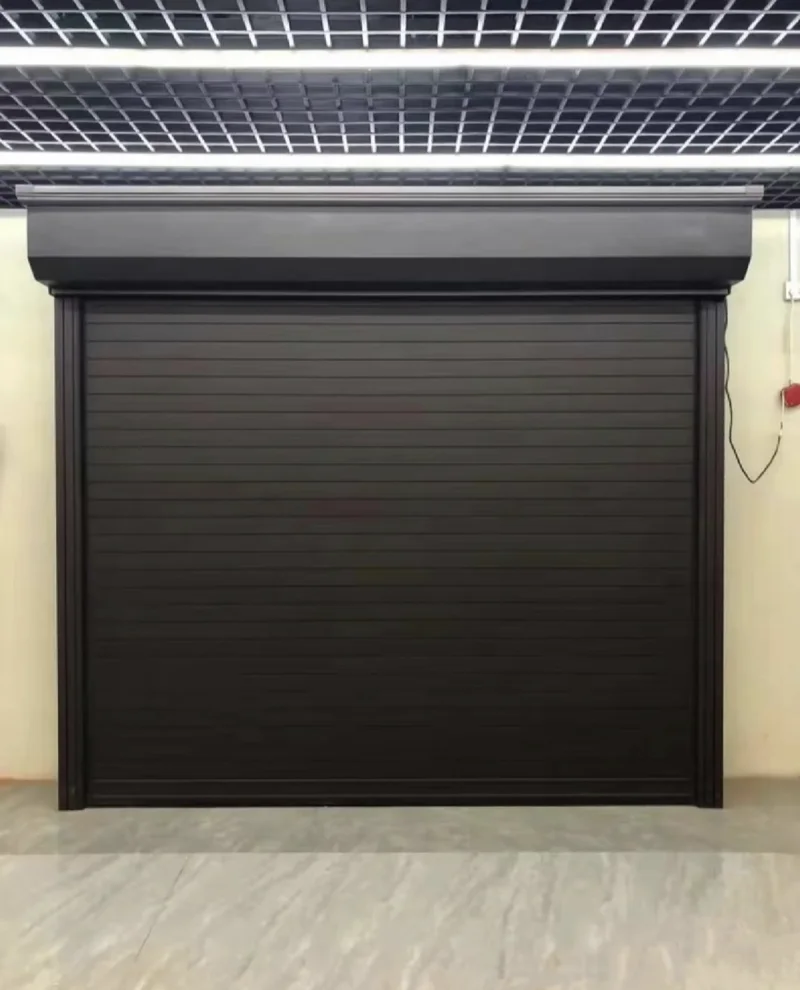
The performance specifications guaranteed at the factory can be degraded by improper storage. Our JIT system ensures delivered products meet the certified technical parameters:
| Parameter | Concern with Prolonged On-Site Storage | JIT Delivery Assurance |
|---|---|---|
| Moisture Content & Swelling | Wood composites (WPC) and LVL cores can absorb ambient moisture, leading to dimensional swelling (>0.1% can affect operation) and potential mold. | Doors delivered at equilibrium moisture content (typically 8-12%), directly to point of installation. |
| Formaldehyde Emission Class | E0/E1 certified panels can off-gas in unventilated storage, affecting indoor air quality benchmarks upon installation. | Sealed packaging and reduced storage time ensure emissions remain within certified (EN 16516, ASTM D6007) limits. |
| Thermal Insulation (U-Factor) | Compression of insulation battts or separation of thermal breaks in sectional doors due to improper stacking degrades designed U-factor. | Vertical transport racks and immediate installation maintain panel alignment and insulation integrity. |
| Surface Finish Durability | UV degradation, abrasion, and contact with solvents or cement dust on site can mar finishes. | Protective films and minimal exposure preserve factory-applied coatings and their protective qualities. |
| Fire Rating Integrity | Damaged seals or intumescent strips on fire-rated doors (e.g., EN 16034) invalidate certification. | Controlled handling ensures all critical fire-stopping components arrive intact and functional. |
Operational Workflow Integration:
The process is initiated by sharing your master construction timeline. Our logistics team then maps material lead times—factoring in core material curing (for composites), coating processes, and quality assurance testing—against your milestones. A dedicated account manager serves as the single point of contact for any schedule adjustments, ensuring the supply chain responds in real-time to accelerate or decelerate delivery in line with site progress, without compromising the technical validation of each unit. This closed-loop system transforms garage doors from a storage problem into a sequenced installation asset.
Advanced Weatherproof and Fire-Resistant Materials for Long-Term Property Protection
For property developers, the garage door is a primary building envelope component, not merely an access panel. Its long-term performance directly impacts occupant safety, building integrity, and lifecycle maintenance costs. Advanced composite and engineered materials now offer solutions that exceed the limitations of traditional steel or solid wood, providing engineered predictability in weatherproofing and fire resistance.
Core Material Technologies for Durability and Stability
The shift is toward homogeneous, engineered materials that eliminate the inherent weaknesses of natural products and simple metal assemblies.
- Wood-Plastic Composite (WPC) Cladding: High-density WPC (≥ 1.2 g/cm³) with a optimized polymer-wood flour matrix provides dimensional stability unattainable with solid timber. The encapsulated wood fibers resist moisture ingress, while the polymer binder (typically PE or PVC) provides flexibility and impact resistance. This results in a near-zero maintenance cladding that does not warp, split, or require painting.
- PVC-Wood Hybrid Profiles: These extrusions use a rigid PVC shell co-extruded over a reinforced wood-composite core. The ratio is critical: a 60/40 PVC-to-composite ratio optimizes weatherability (UV-stabilized, color-fast PVC surface) with the structural rigidity and fastener-holding power of the core. The fully capped system prevents water wicking into the core material.
- Engineered Core Materials: LVL & HDF: For structural sections and insulated panel cores, Laminated Veneer Lumber (LVL) and High-Density Fiberboard (HDF) offer superior stability. LVL’s cross-laminated veneers neutralize wood’s anisotropic swelling tendencies, providing a predictable, high-strength substrate. HDF cores, when certified to E0 or E1 formaldehyde emission grades (EN 13986), offer exceptional surface flatness for laminates and consistent thermal properties.
Engineered Fire Resistance: Beyond Surface Treatments
Fire performance must be an intrinsic material property, not a coating that can degrade or be damaged. Modern systems achieve this through non-combustible cores and intumescent technology.
- Intumescent Seals & Barriers: Integrated into door perimeter and section joints, these seals expand volumetrically (up to 10x) when exposed to heat >120°C, forming a stable, insulating char that seals gaps to prevent smoke and flame passage for a rated period (e.g., 30/60/90 minutes).
- Mineral Core Insulation: Insulated door sections utilize non-combustible cores such as rock wool (stone wool) with melting points exceeding 1000°C. This provides both thermal insulation (improving U-factors) and a critical fire barrier, compartmentalizing heat within the garage space.
- Fire Rating Compliance: Systems are tested and classified as complete assemblies per EN 16034 (Fire resisting and/or smoke control characteristics) and supporting product standards (e.g., EN 13241). Look for certified EI (integrity & insulation) ratings for garage doors, which confirm the door’s ability to maintain a barrier against flame, hot gases, and heat transmission.
Integrated Performance Advantages
| Performance Parameter | Advanced Composite (WPC/PVC-Wood) | Traditional Steel (Insulated) | Solid Timber |
|---|---|---|---|
| Moisture Absorption Rate | <1% (by volume, per ASTM D570) | Not Applicable (corrosion risk) | 8-12% (leading to swelling/warp) |
| Linear Swelling (Δ at 85% RH) | ≤ 0.3% | Not Applicable | ≥ 2.0% |
| Surface Hardness | 70-75 Shore D (scratch-resistant) | 80-85 Shore D (prone to denting) | 50-60 Shore D (soft) |
| Sound Reduction (Approx.) | 28-32 dB (damped, composite structure) | 20-25 dB (drum effect) | 25-28 dB |
| Inherent Fire Resistance | Good (char-forming, slow pyrolysis) | Poor (conducts heat, loses strength) | Poor (combustible fuel source) |
- Superior Weatherproofing: The system approach—from hydrophobic composite surfaces to thermally broken profiles and compression seals—ensures long-term resistance to driving rain, UV degradation, and salt spray. This eliminates rot, corrosion, and aesthetic degradation over the asset’s lifespan.
- Thermal Efficiency: The combination of thermal-break profiles and high-efficiency core insulation (PUR foam or mineral wool) results in U-factors as low as 0.7 W/(m²K), contributing to the building’s overall energy performance and preventing cold bridging at a significant opening.
- Lifecycle & Maintenance: These materials are engineered for a 25+ year service life with minimal intervention. They do not require periodic painting, sealing, or anti-corrosion treatments. This translates to predictable, low long-term cost of ownership for the development.
Customizable Design Options to Enhance Curb Appeal and Meet Developer Specifications
Customization in garage door supply is not merely aesthetic; it is a precise engineering process that aligns material properties, performance standards, and architectural intent. For long-term supply contracts, the focus is on replicable quality and specification adherence across hundreds of units.
Core Material Platforms & Technical Specifications
The selection of material platform dictates the fundamental performance envelope. We engineer doors across three primary systems:
| Material System | Core Composition & Density | Key Performance Parameters | Optimal Application Context |
|---|---|---|---|
| Composite (WPC) | Wood-Plastic Composite, 650-750 kg/m³ density. High wood flour content (≥60%) in PVC matrix. | Moisture absorption <0.8% (ASTM D570). Swelling rate ≤0.15% (24h immersion). Shore D hardness: 65-75. Fire Class: B-s2,d0 (EN 13501-1). | Coastal climates, high-humidity zones, projects requiring wood aesthetic with minimal maintenance. |
| Insulated Steel | Galvanized steel skins (AZ 150 min), polyurethane-injected core (≥42 kg/m³). | Thermal Insulation U-factor: 0.35-0.45 W/m²K. Sound reduction: 25-28 dB. Structural stability tested to ANSI/DASMA 108. | High-rise residential, commercial projects, regions with extreme thermal cycling, noise-sensitive areas. |
| Aluminum Glazed | Thermally broken 6063-T5 alloy frames, double-glazed units (argon fill, low-E coating). | U-factor (glazed section): 1.1-1.6 W/m²K. Air infiltration Class 4 (EN 12425). Mullion deflection < L/175 under design wind load. | Luxury developments, modernist architecture, lobby or amenity building entries requiring natural light. |
Architectural Integration & Functional Advantages
- Precision Color Matching: Powder-coating systems (Qualicoat Class 2 or GSB Master) allow for exact RAL or Pantone matching to façade cladding, with a guaranteed ΔE < 1.5 for color consistency across batches.
- Panel Design & Embossing: Steel and composite panels can be roll-formed or molded with deep-grain wood textures, linear grooves, or flush designs. Tooling is developed to match specific architectural styles (e.g., Victorian, Brutalist, Minimalist).
- Glazing & Lite Kits: Laminated or tempered glass options in clear, frosted, or tinted finishes. Frames are engineered for structural silicone glazing (SSG) or captured gasket systems to meet curtain wall continuity specs.
- Hardware Integration: Pre-engineered reinforcement for specified automation systems (e.g., jackshaft motors for high-headroom applications). Concealed track systems and low-profile hardware maintain clean sightlines.
Compliance & Quality Assurance for Volume Supply
- Formaldehyde & VOC Control: All composite materials and adhesives are certified to E0 (≤0.5 mg/L) or E1 (≤1.5 mg/L) formaldehyde emission grades (EN 717-1). Low-VOC finishes are standard.
- Batch Traceability: Full material traceability via ISO 9001:2015 controlled processes. Each door component is linked to its raw material batch, coating lot, and production line data.
- Performance Documentation: Third-party certified test reports are provided for: wind load resistance (EN 12424), operating cycle endurance (≥25,000 cycles, EN 12453), and security (RC2/RC3, EN 1627).
Comprehensive Technical Specifications and Compliance for Building Code Assurance
Material Specifications & Performance Data
The structural integrity and longevity of a garage door system are determined by its core material composition. We specify engineered materials that exceed the performance of traditional solid timber, offering predictable behavior and superior resistance to environmental stressors.
Core Material Science:
- Wood-Plastic Composite (WPC) Doors: Engineered with a high-density polymer matrix (typically >0.9 g/cm³) and a controlled wood-flour ratio (usually 60:40 wood-to-polymer). This formulation minimizes capillary action, resulting in a moisture absorption rate of <1% (per ASTM D570), effectively eliminating rot, warping, and biological degradation.
- PVC-Foam & Steel-Laminate Doors: Feature a rigid, closed-cell PVC foam core (density ~55 kg/m³) laminated between steel skins. The core acts as a continuous thermal break and provides inherent resistance to denting and corrosion.
- LVL (Laminated Veneer Lumber) Core Flush Doors: Utilize cross-laminated veneers with phenolic resins under heat and pressure. This process ensures dimensional stability, with a swelling coefficient of <0.3% per 10% change in relative humidity, and provides a consistent substrate for finishes.
Performance Parameter Table:
| Parameter | WPC Sectional Door | PVC-Steel Sectional Door | LVL Core Flush Door | Test Standard |
| :— | :— | :— | :— | :— |
| Panel Density | ≥ 0.92 g/cm³ | Core: 55 kg/m³ | Core: ≥ 650 kg/m³ | ASTM D792, ISO 1183 |
| Thermal Insulation (U-value) | 1.1 – 1.4 W/m²K | 0.8 – 1.0 W/m²K | 1.3 – 1.6 W/m²K | EN 12428, ASTM C1363 |
| Sound Reduction (Rw) | 28 – 32 dB | 25 – 28 dB | 30 – 35 dB | EN ISO 10140-1 |
| Fire Reaction | Class B-s1, d0 | Class B-s1, d0 | Class B-s1, d0 (core) | EN 13501-1 |
| Formaldehyde Emission | E0 (<0.05 ppm) | Not Applicable | E0 (<0.05 ppm) | EN 16516, JIS A 1460 |
| Surface Hardness | 75 Shore D | 75 Shore D (steel) | 85 Brinell (substrate) | ASTM D2240, ISO 6506 |
Mechanical & Acoustic Engineering
Door operation must be reliable, quiet, and safe over a 20,000+ cycle minimum service life. This is achieved through precision-engineered hardware and sealed panel designs.
- Hardware Specifications: All torsion springs, cables, and rollers are rated for a minimum of 25,000 cycles (EN 13241-1). Torsion systems are preferred for balanced operation and reduced horizontal track wear.
- Sealing & Acoustics: Full-perimeter EPDM or thermoplastic seals with a Shore A hardness of 60±5 ensure weatherproofing. Interlocking panel joints with integrated seals are critical for achieving the stated Rw sound reduction values by mitigating flanking transmission.
- Wind Load & Structural Integrity: Door assemblies are designed and tested to withstand specified wind load pressures (e.g., EN 12424 Wind Load Class 2-5). Deflection of horizontal sections must not exceed 1/180 of the span under design load.
Compliance & Quality Assurance Framework
Our supply chain and product validation are structured to provide documented assurance for regulatory submissions and long-term liability management.
Certifications & Factory Production Control (FPC):
- Quality Management: ISO 9001:2015 certified manufacturing, ensuring traceability and consistent batch quality.
- Product Standards: Full compliance with EN 13241-1 for industrial/commercial doors, covering safety, performance, and durability. Products carry the CE marking where applicable.
- Material Health: All composite materials and adhesives are certified to E0 or E1 formaldehyde emission grades. Voluntary certifications such as Blue Angel or FSC® are available for specified product lines.
- Fire Performance: Doorsets can be supplied with supporting assessments for fire reaction (Euroclass) and, where required, resistance (EI30 / EI60) classifications per EN 13501-2, supported by notified body involvement.
Documentation for Developers:
We provide a comprehensive technical dossier for each project, including:
- Material Data Safety Sheets (MSDS)
- Declarations of Performance (DoP) per EN 13241-1
- Independent test reports for critical performance criteria (thermal, acoustic, structural)
- Installation specifications and maintenance protocols to preserve warranty validity.
Frequently Asked Questions
How do you prevent long-term warping in high-humidity regions?
Select garage doors with WPC density exceeding 1,200 kg/m³ and an LVL core. The engineered wood core provides dimensional stability, countering moisture. Ensure the panel’s moisture expansion coefficient is below 0.1%. This technical specification is critical for coastal or tropical developments to maintain perfect operation and aesthetics.
What are the formaldehyde emission standards for multi-unit residential projects?
Insist on certified E0 or EN 717-1 Class E1 standards. These stringent classifications ensure formaldehyde emissions are ≤0.5 mg/L, safeguarding indoor air quality. This is non-negotiable for residential complexes, where occupant health and compliance with green building certifications (like LEED) are paramount.
How is thermal insulation performance quantified and guaranteed?
Request doors with a polyurethane foam core of ≥40 kg/m³ density and a thermal conductivity (k-value) below 0.025 W/(m·K). This creates an effective thermal barrier, reducing energy costs for climate-controlled parking areas. Verified third-party test reports should accompany the product data.
What specifications ensure impact resistance for high-traffic commercial use?
Opt for doors with a reinforced steel frame (≥1.2mm thickness) and high-impact PVC coating (≥200 microns). The panel substrate should be high-density WPC. This combination withstands minor vehicle contact and resists denting, which is essential for logistics hubs or high-occupancy residential towers.
How do you achieve effective sound insulation for underground or attached garages?
Specify doors with a multi-layer sandwich construction incorporating acoustic dampening foam. Target a sound transmission class (STC) rating of 40-45 dB. This significantly reduces vehicle noise transmission into living spaces, a critical comfort factor in luxury or high-density urban developments.
What finishing process ensures long-term color stability and weather resistance?
The finish must involve a multi-stage process: chromate pretreatment, electrostatic primer, and UV-cured polyester topcoat. This provides superior resistance to fading, chalking, and corrosion, maintaining aesthetic integrity for over 15 years without significant maintenance, even in high-sunlight environments.
How is panel joint integrity maintained to prevent drafts and water ingress?
Critical design features include interlocking panel joints with integrated EPDM gaskets. The sealing system must be tested to IP44 standards for water and dust resistance. This engineering detail is vital for maintaining a clean, dry, and energy-efficient garage environment in all weather conditions.