Garage doors export to EU with CE certification
Venturing into the European Union market presents a significant opportunity for garage door manufacturers seeking to expand their global footprint. However, success in this sophisticated and highly regulated marketplace hinges on one critical requirement: CE certification. This mark is far more than a simple label; it is a manufacturer’s declaration that their products meet the EU’s stringent health, safety, and environmental protection standards. For garage doors, this involves rigorous testing against essential requirements covering aspects from mechanical strength and safety in use to noise emissions and durability. Navigating this process is not merely a regulatory hurdle but a strategic advantage, demonstrating a commitment to quality that builds trust with distributors, specifiers, and end-users across Europe. Achieving CE certification is, therefore, the essential first step in unlocking the door to this lucrative and demanding market.
Meeting EU Market Standards: How Our CE-Certified Garage Doors Ensure Compliance and Safety
CE certification under the Construction Products Regulation (EU) 305/2011 is a legal prerequisite for placing garage doors on the EU market. It is not merely a label but a verified declaration of performance against harmonized European standards, primarily EN 13241-1:2003+A1:2011 for industrial, commercial, and garage doors. Our certification process, underpinned by ISO 9001 quality management, ensures every product batch delivers consistent, documented safety and durability.
Core Compliance: Essential Requirements & Verified Performance
The CE mark attests to conformity with core regulatory requirements. For garage doors, the critical assessments are:
- Mechanical Resistance & Stability (EN 12604): Doors are tested for operational endurance (e.g., 50,000 cycles minimum), resistance to wind load (Class 1-5 as per EN 12424), and manual force for operation. Our designs utilize Laminated Veneer Lumber (LVL) cores and reinforced steel hardware, providing exceptional dimensional stability and torsional rigidity to maintain alignment and function over the product lifecycle.
- Safety in Use (EN 12453, EN 12445): This covers critical safety devices. Our doors integrate:
- Entrapment Protection: Non-contact bottom edge sensors and constant pressure on the control unit.
- Auto-Reverse: Upon contact with an obstruction (<400 N force), the door immediately reverses.
- Emergency Release: Manual operation capability is standard.
- Fire Safety (Reaction to Fire): While not fire doors, materials are classified per EN 13501-1. Our composite materials achieve favorable Euroclass ratings (e.g., D-s2,d0), with low smoke production and no flaming droplets.
- Hygiene, Health & Environment: We enforce strict E1 formaldehyde emission standards (≤0.124 mg/m³ per EN 16516), ensuring indoor air quality. All surface treatments and coatings are REACH/SVHC compliant.
Material Science & Technical Superiority
Compliance is the baseline; performance differentiation is achieved through advanced material engineering.
Wood-Plastic Composite (WPC) & PVC-Based Sections:
Our engineered profiles are formulated for the European climate, prioritizing low maintenance, impact resistance, and thermal efficiency.
- High-Density WPC Formulation: We target a density range of 1.25-1.35 g/cm³, achieved through a precise wood flour/PVC ratio and advanced extrusion. This results in superior structural integrity, reduced thermal expansion, and a higher Shore D hardness for scratch resistance.
- Moisture Management: Critical for dimensional stability. Our WPC exhibits a water absorption rate of <0.8% over 24 hours (per ASTM D570), and a thickness swelling rate of <0.5%, preventing warping and seal failure.
- Surface Durability: UV-stabilized polymer caps or co-extruded layers provide consistent colorfastness and resistance to biological degradation.
Performance Data Summary
| Parameter | Test Standard | Performance Range | Implication for EU Compliance & Use |
|---|---|---|---|
| Wind Load Resistance | EN 12424 | Class 2 to Class 4 | Certified structural integrity for specified geographical zones. |
| Thermal Insulation (U-value) | EN ISO 8990 | 1.2 – 0.8 W/m²K | Contributes to building envelope energy performance. |
| Sound Reduction (Rw) | EN ISO 10140-1 | 25 – 30 dB | Mitigates external noise, a key urban planning consideration. |
| Operational Endurance | EN 12425 | ≥50,000 cycles | Validates long-term mechanical safety and reliability. |
| Formaldehyde Emission | EN 16516 | E1 Grade (≤0.124 mg/m³) | Meets stringent EU indoor air quality and health standards. |
Architectural & Functional Advantages for Specifiers
- Thermal Efficiency: Insulated panels with PU foam cores achieve U-factors as low as 0.8 W/m²K, contributing to the building’s overall energy performance.
- Acoustic Performance: Multi-layer constructions, including dense cores and sealed perimeter gaskets, provide sound reduction ratings (Rw) up to 30 dB.
- Aesthetic & Structural Integrity: The stability of LVL and high-density composites ensures that large sectional door panels remain true, with minimal deflection, preserving clean sight lines and reliable sealing.
- Full Documentation: We provide the Declaration of Performance (DoP), detailed installation manuals (EN 12635), and maintenance logs, ensuring traceability and simplifying your compliance documentation for building authorities.
In summary, our CE-certified garage doors represent a fully documented, engineered solution. From material formulation to final assembly, each parameter is controlled and verified to meet both the mandatory legal standards and the high-performance expectations of European architects, contractors, and end-users.
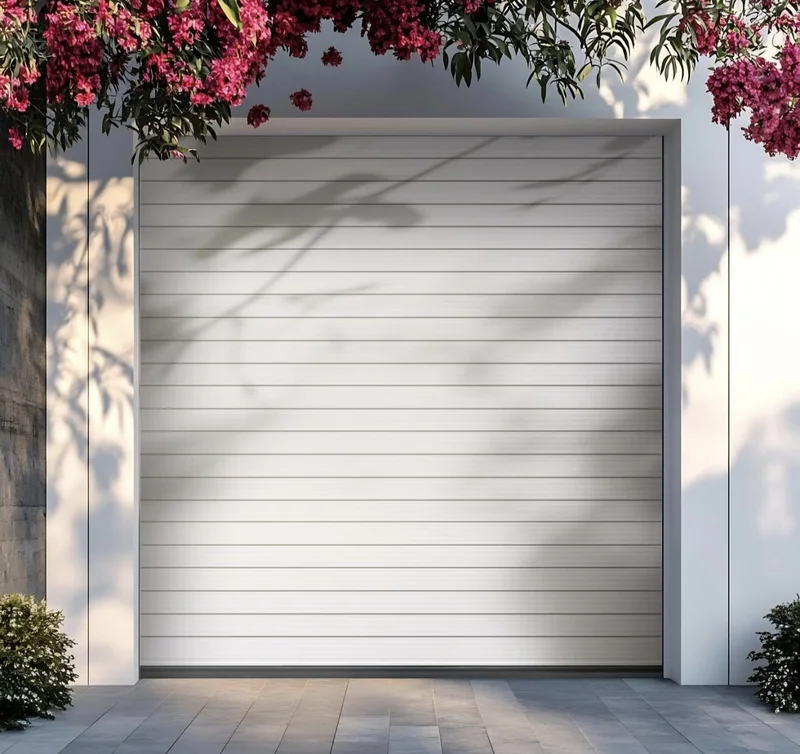
Engineered for European Climates: Superior Weather Resistance and Durability in Garage Doors
European garage door performance is fundamentally dictated by material selection and composite engineering to withstand specific regional challenges: North Atlantic salt spray, Alpine freeze-thaw cycles, Mediterranean UV intensity, and Central European humidity fluctuations. CE marking under the Construction Products Regulation (CPR) mandates declared performance for essential characteristics including durability, thermal resistance, and dangerous substance emissions.
Core Material Engineering for Climatic Resilience
- High-Density WPC (Wood-Plastic Composite) Cladding: Engineered with a wood flour to polymer (typically PVC or PE) ratio optimized for dimensional stability. Densities exceeding 1.2 g/cm³ minimize water absorption (<0.5% by volume after 24h immersion per EN 317) and provide inherent resistance to rot, fungi, and insect infestation. The encapsulated wood component eliminates grain-raising and checking.
- LVL (Laminated Veneer Lumber) Core Structural Insulation: Utilizes cross-banded veneers with phenolic resins, creating a core with exceptional dimensional stability and load-bearing capacity. Swelling rates are controlled to <0.3% in high humidity (90% RH), preventing panel warping and ensuring smooth operation. LVL provides a consistent substrate for insulation foams and external cladding.
- Co-Extruded PVC-U Sections: For sectional doors, multi-chamber profiles are formulated with high-impact modifiers (e.g., CPE, ASA) and UV stabilizers. The surface cap layer provides a minimum Shore D hardness of 75 for scratch resistance, while the core layer ensures structural rigidity. Titanium dioxide (TiO₂) pigmentation offers superior UV reflectance, maintaining color fastness (ΔE<2.0 after 3000 hours QUV testing per ASTM G154).
- Cold-Rolled, Galvanized Steel: Steel components, including tracks and reinforcement, are hot-dip galvanized to a minimum Z275 coating (275 g/m²) per EN 10346. This provides a sacrificial anode protection against corrosion, essential for coastal and de-icing salt environments.
Performance Parameters & Certified Standards
| Characteristic | Test Standard | Performance Grade / Typical Value | Application Relevance |
|---|---|---|---|
| Thermal Insulation (U-value) | EN ISO 8990 | ≤ 1.0 W/m²K (for insulated models) | Compliance with regional building energy codes (e.g., Germany EnEV). Achieved via polyurethane (PUR) foam with a minimum density of 40±2 kg/m³, foamed-in-place to LVL core. |
| Fire Reaction Class | EN 13501-1 | B-s2, d0 (for non-combustible core/PVC) | Critical for integrated garage designs and multi-family residential buildings. Low smoke production (s2) and no flaming droplets (d0). |
| Formaldehyde Emission | EN 16516 | E1 Grade (≤ 0.1 ppm) or E0 (≤ 0.065 ppm) | Mandatory for indoor air quality. Verified for all wood-based components (LVL, WPC) and adhesives. |
| Sound Reduction (Rw) | EN ISO 10140-1, -2 | 28-32 dB (for insulated sectional doors) | Attenuates street noise and mechanical operation sound, important for residential comfort. |
| Wind Load Resistance | EN 13241-1 | Class 2 to 4 (up to 1200 Pa) | Validated via structural calculation and testing for region-specific wind pressure maps (EN 1991-1-4). |
| Operating Endurance | EN 13241-1 | ≥ 20,000 cycles (Residential) / ≥ 50,000 cycles (Commercial) | Cycle testing of the complete door system, including hardware, under controlled climatic conditions. |
Architectural & Functional Advantages
- Sealed Thermal Break: Full perimeter EPDM or TPE gasketing with a Shore A hardness of 60±5 ensures a consistent seal, preventing thermal bridging and water ingress. The bottom seal features a flexible bulb design for contouring uneven floor slabs.
- Corrosion-Resistant Hardware: Hinges, rollers, and springs are manufactured from stainless steel (AISI 304 minimum) or zinc-plated steel with a supplementary polyester powder coat (minimum 80µm thickness) for maximum corrosion resistance (≥ 500 hours neutral salt spray test per ISO 9227).
- Moisture-Managed Design: Panel interlocking joints are engineered with a labyrinth seal and drainage channels to direct condensation and driven rain away from the interior and insulation layer.
- Impact Resistance: The composite material construction provides high resistance to denting and impact from hail or debris, maintaining aesthetic integrity with minimal maintenance.
Manufacturing under a certified ISO 9001 quality management system ensures batch-to-batch consistency in these material properties and performance characteristics. The resulting product delivers predictable, long-term performance across all EU climate zones, with minimal degradation in thermal efficiency, structural integrity, or aesthetic appearance over its service life.
Streamlined Export Solutions: Efficient Logistics and Documentation for EU Distribution
Efficient EU distribution is contingent upon logistics and documentation protocols engineered to protect the structural and performance integrity of the product from factory to installation site. For garage doors, this is not merely a shipping concern but a materials science imperative. Improper handling or environmental exposure during transit can compromise dimensional stability, surface finishes, and sealed assemblies, directly impacting CE-marked performance claims.
Logistics Engineering for Material Integrity
Our logistics framework is designed around the critical physical properties of modern door compositions:
- Climate-Controlled Containers: Mandatory for doors with WPC (Wood-Plastic Composite) and solid timber elements to prevent moisture absorption beyond the specified ≤12% rate and subsequent swelling or warping. Stable humidity maintains the engineered PVC-wood ratio in WPC, preserving its dimensional stability and surface finish.
- Specialized Cradling & Bracing: Non-negotiable for doors with LVL (Laminated Veneer Lumber) cores or full-length glass panels. Custom bracing prevents torsion and deflection during transit, ensuring the LVL core stability and panel flatness required for smooth operation and consistent thermal break performance.
- White-Glove Handling Protocols: Essential for preserving factory-applied finishes (powder-coat, wood stains) and the integrity of pre-assembled hardware and sealing gaskets (EPDM, PVC) which directly contribute to the certified dB sound reduction and thermal insulation U-factors.
Documentation & Regulatory Compliance
Accurate documentation is the legal and technical dossier of your shipment, providing traceability and proof of conformity.
- CE Documentation Package: Includes the Declaration of Performance (DoP) listing essential characteristics (e.g., EN 13241-1 for performance, EN 13501-1 fire classification, EN 14351-1 for pedestrian doors if applicable), the technical file summary, and instructions for installation, use, and maintenance.
- Material Certificates: Batch-specific certificates for:
- Formaldehyde Emissions: E1 or E0 grade certification for all wood-based components (particleboard, MDF, LVL), compliant with EN 13986.
- Fire Reaction: Test reports per EN 13501-1 for complete door assemblies or critical components.
- Metallic Components: Mill certificates for steel and aluminum, specifying grade, coating type (e.g., Galfan), and thickness, relevant for structural calculations and corrosion resistance.
- Commercial & Logistics Documents: Precisely aligned with the CE documentation, including the Commercial Invoice, Packing List (with HS codes, e.g., 8302.10 00 for metal doors), Bill of Lading/Air Waybill, and Certificates of Origin.
Technical Packaging Specifications
Packaging is the first line of defense for product integrity. Our specifications are derived from material performance data.
| Component | Packaging Specification | Engineering Rationale |
|---|---|---|
| WPC & Timber Panels | Sealed PE film wrap, desiccant packs. | Controls ambient humidity to maintain moisture content within ≤12% tolerance, preventing swelling. |
| Powder-Coated Steel Sections | Protective corner guards, non-abrasive separators. | Prevents scratching that compromises corrosion protection; maintains Shore D hardness of coating. |
| Insulated Panels (PU/PIR Foam Core) | Rigid perimeter framing, no-stack zones. | Prevents core compression or shear, preserving declared U-factor (W/m²K) and structural R-value. |
| Tempered Glass Units | Custom A-frame racks, isolated from metal contact. | Manages vibrational stresses and point-load impacts to prevent nickel sulfide inclusion failure. |
| Hardware & Seals | PVC-bagged, compartmentalized in master carton. | Prevents loss, corrosion, and deformation of critical components affecting operation and sealing. |
Supply Chain Integration
We operate on integrated ISO 9001:2015 quality management systems, ensuring documentation accuracy and logistical consistency from raw material sourcing to final delivery. This includes:
- Advanced Shipping Notices (ASN) with digital DoP links for customs pre-clearance.
- Real-time container tracking with temperature/humidity logging for climate-sensitive shipments.
- Palletization optimized for EU standard pallets (800x1200mm) and warehouse handling equipment, minimizing on-site handling damage.
For the contractor or specifier, this engineered approach to export eliminates technical risk upon delivery. The door system arrives on site with its certified performance characteristics—be it a Class C fire resistance rating, a 32 dB sound reduction index (Rw), or a 0.8 W/m²K U-factor—fully intact and verifiable, ready for installation as specified.
Advanced Technical Specifications: Material Quality and Structural Performance Details
Material Composition & Core Engineering
The structural integrity and longevity of a garage door are determined by its core material composition and manufacturing precision. For the EU market, compliance with harmonized standards under the Construction Products Regulation (CPR) is non-negotiable.
- Laminated Timber & Engineered Wood Cores: Solid wood is prone to warping. We utilize kiln-dried, finger-jointed laminates or Laminated Veneer Lumber (LVL) cores, stabilized to a moisture content of 8-12%. This process, governed by EN 14080, ensures dimensional stability, uniform load distribution, and resistance to torsional stress across all panel sections.
- Advanced Composite Materials (WPC): Wood-Plastic Composite formulations are engineered for maximum durability. Our specification mandates a minimum density of 1.25 g/cm³ and a wood flour-to-polymer (typically PVC) ratio optimized for structural rigidity and low thermal expansion. The result is a material with superior resistance to moisture, fungi, and UV degradation compared to standard PVC or low-density composites.
- Steel Section Fabrication: Cold-rolled steel sections for frames and reinforcements have a minimum yield strength of 280 MPa and are galvanized with a Z275 coating (≥275 g/m²) per EN 10346, ensuring complete resistance to red rust. Critical stress points are reinforced with internal steel struts or full-width back structures.
Performance Certification & Testing Data
CE marking for garage doors (EN 13241-1) is validated through rigorous testing in notified laboratories. The following table summarizes key performance parameters for our standard product range.
| Performance Characteristic | Test Standard | Performance Grade / Value | Technical Implication |
|---|---|---|---|
| Wind Load Resistance | EN 12424 | Class 3 (≥800 Pa) | Suitable for most geographical areas in the EU, including coastal regions. |
| Thermal Transmittance (U-value) | EN ISO 8990 | 1.2 – 0.8 W/m²K | Core-dependent. Polyurethane-injected sandwich panels (≥40mm) achieve the lowest values, contributing to building energy efficiency. |
| Sound Reduction (Rw) | EN ISO 717-1 | 28 – 35 dB | Critical for attached garages. Achieved through mass-loaded layers, sealed perimeter gaskets (EN 1634 for air permeability), and damped hardware. |
| Mechanical Durability (Cycles) | EN 12425 | Class 4 (≥20,000 cycles) | Validates the endurance of hinges, rollers, and springs under repeated use, far exceeding residential demand. |
| Fire Reaction (Surface Spread of Flame) | EN 13501-1 | Class B-s2, d0 (Composite) / Class D-s2, d0 (Wood) | Low contribution to fire; no dripping. Essential for compliance with national building codes. |
| Formaldehyde Emission | EN 16516 | E1 Grade (≤0.1 ppm) | All wood-based components comply with the strictest EU emission standards for indoor air quality. |
| Shore D Hardness (Facing) | ASTM D2240 | ≥75 (Composite) | Quantifies resistance to impact and abrasion on door surfaces. |
| Dimensional Stability (Swelling) | EN 317 (for WPC) | ≤0.5% (24h water immersion) | Demonstrates minimal water absorption, preventing panel deformation and seal failure. |
Architectural & Functional Advantages
- Seismic & Wind Load Performance: Integration into the building envelope requires predictable behavior under stress. Our designs are validated via Finite Element Analysis (FEA) to ensure load paths are efficiently transferred to the reinforced frame and building structure, meeting the essential requirement for Mechanical Resistance and Stability (CPR Annex I).
- Long-Term Weathertightness: Beyond initial testing, long-term performance is ensured by:
- EPDM perimeter seals with a minimum service life rating of 15 years.
- Powder-coated finishes (QUALICOAT Class 2 or GSB Class 4) applied over phosphatized substrates, providing >1,000 hours of salt spray resistance (EN ISO 9227).
- Stainless steel (AISI 304) hardware for all coastal or high-humidity installations.
- Quality Management: Continuous material batch testing and production control are mandated under our ISO 9001:2015 certified system. This provides full traceability from raw material sourcing to final assembly, a critical requirement for CE certification (Factory Production Control, EN 13241-1).
Building Trust with European Partners: Certifications, Testimonials, and Support Services
Certifications: The Technical Foundation of Compliance
CE marking is not a singular certificate but a declaration of conformity with a complex framework of EU harmonized standards (hENs). For garage doors, the core standard is EN 13241-1, which mandates rigorous testing for essential characteristics including mechanical resistance, durability, and safety. Trust is built by transparently detailing compliance with the specific product standard relevant to your door type (e.g., EN 12424 for wind load resistance, EN 12425 for water tightness). Beyond the CE mandate, adherence to complementary standards demonstrates a deeper commitment to quality and performance.
- Material & Manufacturing Integrity: ISO 9001 certification is a baseline expectation, verifying a controlled production process. For material-specific claims, certification to ISO 14001 (environmental management) and chain-of-custody certifications like FSC® or PEFC™ for wood components are increasingly critical.
- Fire Performance: For projects requiring regulated fire resistance, doors must be tested and classified per EN 13501-2. Clearly state the achieved class (e.g., EI30, EI60) and the accredited laboratory used for testing.
- Emissions & Indoor Air Quality: Compliance with the EU Construction Products Regulation (CPR) requires declaration of Dangerous Substances. For any composite wood materials (e.g., LVL cores, panel inserts), specifying E1 (≤0.124 mg/m³ formaldehyde) or E0 (≤0.065 mg/m³) emission grades per EN 16516 is essential for residential and commercial specifications.
- Insulation & Energy Performance: Thermal transmittance (U-factor) must be determined per EN 12428. Provide certified U-values (W/m²K) for the complete door assembly, not just the core material. Sound insulation performance, measured in dB reduction (Rw), should be tested according to EN ISO 10140 series.
Technical Testimonials & Project Evidence
Case studies should move beyond aesthetic praise to document technical performance and problem-solving. Reference projects should include:
- Environmental Challenge: Installation in a high-humidity coastal region (e.g., North Sea), with data on long-term dimensional stability and absence of corrosion or swelling.
- Performance Validation: Use by a logistics firm with high-cycle requirements, demonstrating mean time between failures (MTBF) and maintenance cost savings.
- Architectural Integration: Collaboration on a project with specific acoustic or thermal requirements, with pre- and post-installation performance measurements.
Engineering-Led Support Services
Trust is maintained through lifecycle support, not just transactional sales. Key services include:
- Pre-Sales Technical Consultation: Joint review of architectural specifications, local building codes (e.g., German Musterbauordnung), and load calculations to ensure the selected door model meets all structural and performance parameters.
- Certification Dossier Provision: Supply of a comprehensive technical file, including:
- Declaration of Performance (DoP)
- Test reports from notified bodies (e.g., for safety devices per EN 12453)
- Detailed material datasheets and maintenance protocols
- Logistics & Installation Planning: Provision of certified static load diagrams, BIM objects (with LOD 400 detail), and installation manuals compliant with EN 12445 for safe mounting and adjustment.
Material & Performance Specifications
The following table outlines key material parameters that underpin performance claims and differentiate product tiers for informed specification.
| Component | Key Parameter | Standard Test Method | Performance Range / Grade | Engineering Impact |
|---|---|---|---|---|
| WPC Panel | Density | ASTM D792 | 1.25 – 1.45 g/cm³ | Higher density correlates to improved impact resistance and screw-holding power. |
| Moisture Absorption (24h) | EN 317 | < 0.8% | Low absorption ensures dimensional stability and prevents warping in variable climates. | |
| PVC-Based Composite | PVC/Wood Flour Ratio | Internal Spec | 60/40 to 70/30 | Higher PVC content enhances moisture and UV resistance; higher wood flour improves rigidity. |
| Shore D Hardness | ASTM D2240 | 75 – 85 | Optimizes balance between surface scratch resistance and panel flexibility. | |
| LVL Core | Formaldehyde Emission | EN 16516 | E0 or E1 Class | Mandatory for indoor air quality compliance and occupant health. |
| Bending Strength | EN 789 | ≥ 28 N/mm² | Critical for the structural integrity of large sectional door panels. | |
| Seal System | Compression Set (22h, 70°C) | ISO 815 | ≤ 25% | Low compression set guarantees long-term weather sealing and thermal efficiency. |
| Full Assembly | Thermal Transmittance (U-factor) | EN 12428 | 0.8 – 1.5 W/m²·K | Validates insulation claims for energy-regulated projects. |
| Sound Reduction Index (Rw) | EN ISO 10140-2 | 25 – 35 dB | Quantifies acoustic insulation for residential or noise-sensitive applications. |
Frequently Asked Questions
What are the critical material standards for garage doors to achieve CE certification for the EU market?
To achieve CE marking, doors must comply with harmonized standards like EN 13241. This mandates rigorous testing for performance characteristics including wind load resistance (EN 12424), thermal transmittance (U-value), and essential safety requirements. Documentation via a Declaration of Performance (DoP) is legally required for market entry.
How do you ensure dimensional stability and prevent warping in exported garage doors?
We engineer doors with low moisture expansion coefficients using materials like high-density WPC (≥ 700 kg/m³) or LVL-core reinforced sections. Precision extrusion and controlled acclimatization post-manufacturing ensure stability. This prevents warping and ensures consistent operation in diverse European climates.
What formaldehyde emission standards must composite garage door materials meet for EU import?
Materials must comply with the E1 emission class per EN 13986, which is legally binding. For superior indoor air quality, we specify E0-grade or CARB Phase 2 compliant cores and adhesives. This is critical for attached garages and is verified through accredited laboratory testing reports.
What are the key factors for thermal insulation in garage doors destined for Northern Europe?
High performance hinges on insulated panels with polyurethane foam cores (PUR/PIR) achieving U-values as low as 0.7 W/m²K. Thermally broken frames and perimeter seals are essential. We validate insulation integrity through whole-door testing, not just material R-values, to meet regional energy efficiency directives.
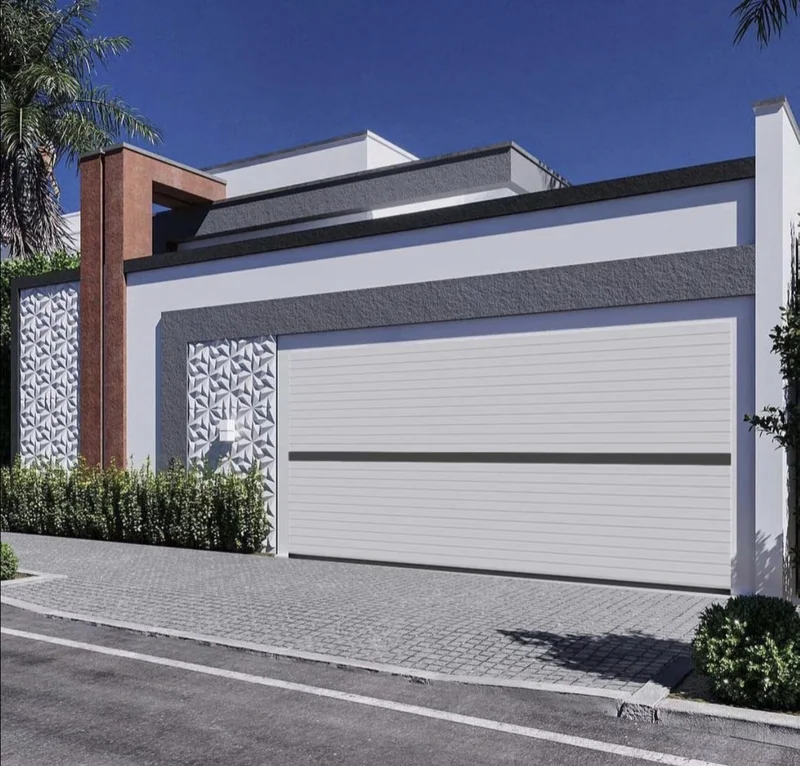
How is impact resistance and durability validated for CE-certified garage doors?
Resistance is validated per EN 12604 for mechanical strength. We utilize impact-modified PVC coatings (≥ 200µm) on steel or composite substrates. Testing includes cyclic operation, soft/hard body impact, and hail simulation. This ensures longevity against accidental impacts and harsh weather conditions.
What specifications guarantee long-term weather and UV resistance for exterior doors?
A multi-layer finish is critical. We apply a minimum 25µm polyester powder coat on steel, followed by a UV-resistant topcoat for composites. For WPC, integrated UV stabilizers and cap-stock profiles prevent fading and degradation. This system withstands prolonged exposure per EN 927 weathering standards.
How do you address sound insulation in garage doors for residential applications?
We achieve sound reduction (up to 40 dB Rw) through dense, laminated composite constructions, often incorporating a mineral wool acoustic layer within the panel core. Sealing integrity is paramount; we use dual-density perimeter seals to block airborne noise paths, a key concern for integrated living spaces.