Garage doors export to Middle East with heat resistance
As the Middle East continues to experience significant infrastructural growth and extreme climatic demands, the export of specialized building materials presents a substantial opportunity. Among these, high-performance garage doors engineered for exceptional heat resistance are moving from a premium feature to a critical requirement. The relentless sun and soaring temperatures of the region demand more than standard solutions; they require doors constructed with advanced, thermally stable materials and innovative insulation technologies that ensure durability, energy efficiency, and reliable operation. This article explores the burgeoning market for exporting these specialized garage doors, examining the technical specifications that meet the harsh environmental challenges, the key import hubs driving demand, and the strategic considerations for manufacturers and exporters aiming to secure a successful and sustainable presence in this dynamic and lucrative region.
Engineered for Extreme Heat: How Our Garage Doors Withstand Middle Eastern Climates
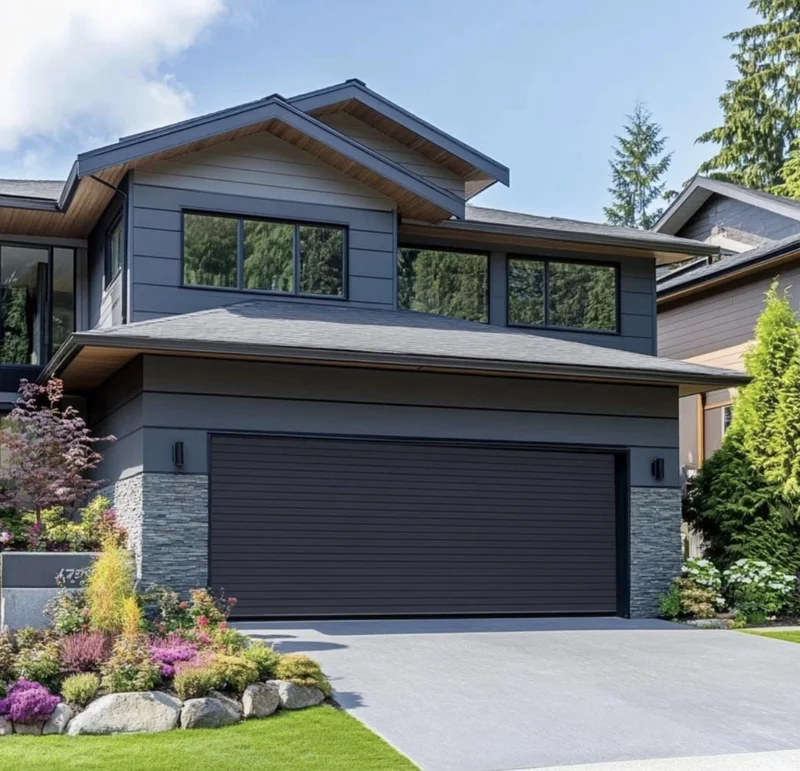
Our garage doors are engineered from the substrate out to perform under prolonged thermal load and intense solar radiation, with material selection and composite design targeting three primary failure modes in extreme heat: structural warping, surface degradation, and thermal transfer.
Core Material Stability: The Foundation of Heat Resistance
Structural integrity begins with the core. Our doors utilize a proprietary composite of Wood Plastic Composite (WPC) and a laminated veneer lumber (LVL) framework, engineered for minimal thermal expansion and high dimensional stability.
- High-Density WPC Cladding: Formulated with a controlled wood-to-PVC ratio and high polymer density (>1.3 g/cm³), this material exhibits a near-zero moisture absorption rate (<0.5%), eliminating the swelling and contraction cycles that weaken traditional materials. Its low coefficient of thermal expansion is critical for maintaining panel alignment and seal integrity.
- Engineered LVL Core: The internal framework is constructed from cross-banded LVL with a phenolic resin binder. This creates a core with uniform strength, superior resistance to warping under thermal stress compared to solid timber, and inherent stability for heavy-duty hardware mounting.
Surface & Insulation Systems: Deflecting Heat and UV Radiation
The external surface and insulation layer are designed as an integrated thermal barrier.
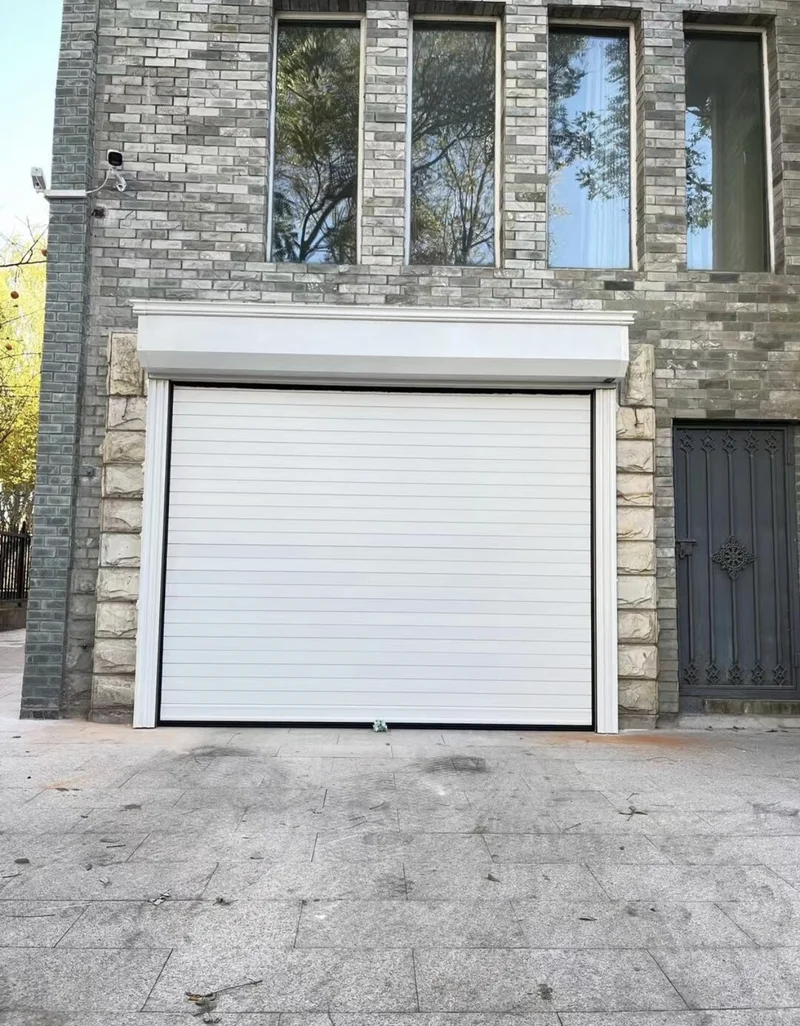
- Advanced Coating System: A multi-layer coating process is applied, including a UV-resistant topcoat with a Total Solar Reflectance (TSR) index >80. This significantly reduces surface temperature gain and prevents fading, chalking, and loss of gloss. The finish meets ASTM D6578 / EN 13523-9 standards for accelerated weathering and colorfastness.
- Polyurethane Foam Insulation: Injected as a closed-cell, high-density foam (≥42 kg/m³), it provides a continuous insulation layer with a low U-factor (≤0.7 W/m²K). This barrier minimizes conductive heat transfer into the garage space, reducing interior temperature rise and cooling load.
Performance Specifications & Compliance
All materials and final assemblies are validated against international standards relevant to thermal, fire, and environmental performance.
| Parameter | Specification | Test Standard | Relevance to Heat Performance |
|---|---|---|---|
| Thermal Insulation (U-Factor) | ≤ 0.7 W/m²·K | ASTM C518 / EN 12667 | Measures rate of heat transfer; lower value indicates superior insulation. |
| Fire Reaction Class | Class B-s1, d0 / ASTM E84 Class A | EN 13501-1 / ASTM E84 | Evaluates surface flammability and smoke development under heat. |
| Formaldehyde Emission | E0 / CARB Phase 2 Compliant | EN 717-1 / ASTM E1333 | Ensures low VOC off-gassing, which can accelerate under high temperatures. |
| Surface Hardness | ≥ 75 Shore D | ASTM D2240 | Indicates coating resistance to denting and impact in high-temperature softened states. |
| Dimensional Stability | ≤ 0.5% linear change (24h @ 70°C, 95% RH) | EN 317 / ASTM D1037 | Quantifies swelling/movement under high heat and humidity. |
Functional Advantages for the Middle Eastern Climate
- Warp-Resistant Operation: The stable LVL and WPC composite ensures smooth, reliable operation of the door system without binding or jamming, even after prolonged exposure to direct sunlight.
- Energy Efficiency: The high-performance insulation core directly contributes to reduced thermal gain in adjacent spaces, supporting building energy management goals.
- Long-Term Aesthetic Durability: UV-stable coatings and fade-resistant materials maintain architectural intent and curb appeal without frequent maintenance.
- Acoustic & Environmental Control: The dense composite structure and sealed design provide sound reduction (≥28 dB Rw) and act as a barrier against dust and sand ingress.
Our manufacturing process is certified to ISO 9001:2015, ensuring consistent application of these material specifications and performance criteria across every production run for guaranteed reliability.
Durability and Performance: The Structural Advantages of Heat-Resistant Garage Doors
The structural integrity of a garage door in the Middle Eastern climate is a direct function of its material composition and engineering. Standard doors fail due to thermal expansion, UV degradation, and moisture ingress from high humidity. Our heat-resistant doors are engineered from the core outward to resist these forces, ensuring long-term dimensional stability, security, and performance.
Core Material Stability: The Foundation of Durability
The primary structural advantage lies in the composite core and skin systems, designed to outperform traditional materials.
- High-Density WPC (Wood-Plastic Composite) Cores: Engineered with a precise wood flour to polymer (typically PVC or PE) ratio, achieving densities of 1.2-1.4 g/cm³. This high density minimizes thermal expansion (<0.5% linear change at 70°C) and provides inherent resistance to warping, rotting, and insect infestation. The composite structure does not absorb moisture, eliminating the swelling and delamination common in solid wood.
- LVL (Laminated Veneer Lumber) Reinforced Cores: For higher load-bearing requirements, LVL cores offer exceptional strength-to-weight ratios. The cross-laminated veneers, bonded with phenolic resins, create a dimensionally stable panel with uniform strength, resisting torsional stress from wind loads and thermal cycling.
- Co-Extruded PVC/ASA Skins: Door panels are clad in co-extruded sheets featuring a UV-stabilized ASA (Acrylic Styrene Acrylonitrile) cap layer over a rigid PVC substrate. ASA provides superior colorfastness and resistance to embrittlement under intense solar radiation, while the PVC substrate contributes to impact resistance and structural form.
Performance Under Thermal and Environmental Load
| Parameter | Standard Door Performance | Our Heat-Resistant Door Performance | Test Standard |
|---|---|---|---|
| Linear Thermal Expansion | Up to 2% at 60°C | ≤ 0.5% at 70°C | ASTM D696 |
| Moisture Absorption (24h) | 5-8% for wood composites | < 1% for high-density WPC | ASTM D570 |
| Swelling Rate (Thickness, 24h) | ≥ 3% | ≤ 0.8% | EN 317 |
| Surface Hardness | ~70 Shore D (PVC) | ~80 Shore D (Reinforced Composite) | ASTM D2240 |
| Fire Reaction Class | Typically unrated | Class B-s2, d0 / Class 1 (ASTM E84) | EN 13501-1 / ASTM E84 |
Functional Advantages Derived from Structural Integrity
- Permanent Alignment & Seal Integrity: The low coefficient of thermal expansion ensures guide rollers operate smoothly in tracks year-round, maintaining a consistent seal against dust and sand ingress. This prevents motor strain and security gaps.
- Sustained Insulative Value: A stable core preserves the integrity of polyurethane foam insulation cells. This maintains a consistent thermal insulation U-factor (as low as 0.5 W/m²K) and reduces thermal bridging, directly impacting interior climate control costs.
- Acoustic Damping: The high-density, layered composite structure acts as an effective sound barrier, achieving sound reduction ratings of 28-32 dB, mitigating external noise.
- Low Maintenance & Longevity: Resistance to UV, humidity, and corrosion eliminates the need for frequent painting or sealing. The materials meet E0/E1 formaldehyde emission grades (EN 13986), ensuring indoor air quality and are manufactured under ISO 9001 quality management systems for consistent performance.
Conclusion for Specification: The durability is not an additive feature but an intrinsic property of the material science. Specifying doors with quantified performance in thermal expansion, moisture resistance, and structural stability is critical for projects where lifecycle cost, reliability, and reduced maintenance are paramount.
Technical Specifications: Materials and Design for Optimal Heat Resistance and Export
Core Material Specifications for Extreme Heat Resistance
The primary structural and insulating components are engineered to withstand sustained temperatures exceeding 50°C (122°F) and resist UV degradation, ensuring dimensional stability and performance integrity.
- Composite Panel Core (LVL – Laminated Veneer Lumber): Utilizes cross-laminated veneers with phenolic resins, providing superior dimensional stability (<0.5% linear expansion at 65°C/80% RH) compared to solid timber. The core is certified to E0 (<0.5 mg/l HCHO) formaldehyde emission grade, ensuring indoor air quality.
- Facing Laminate (WPC – Wood Plastic Composite): Engineered with a high-density (≥1.2 g/cm³) formulation of wood flour and polymer matrix (typically HDPE/PP with UV stabilizers). This offers a Shore D hardness of >75, a moisture absorption rate of <1.5% (ASTM D570), and a Class B fire rating (EN 13501-1). The PVC-wood ratio is optimized for minimal thermal expansion.
- Insulation Core: Polyurethane (PUR) foam with a minimum density of 40 kg/m³, injected under high pressure. Achieves a thermal insulation U-factor of ≤0.8 W/m²K, significantly reducing thermal bridging and condensation risk.
- Steel Components: All internal struts, hinges, and reinforcement brackets are fabricated from galvanized steel (minimum Z275 coating) with a powder-coated finish rated for >1,000 hours salt spray resistance (ASTM B117).
Design & Performance Parameters for Export Durability
The assembly is designed for structural integrity during maritime transit and long-term performance in coastal, arid climates.
| Parameter | Specification | Test Standard / Rationale |
|---|---|---|
| Thermal Stability Range | -20°C to +80°C | Operational guarantee for storage, transit, and service. |
| Panel Swelling Rate | ≤ 1.2% (24h immersion) | ASTM D1037; critical for humidity resistance. |
| Sound Reduction Index (Rw) | ≥ 28 dB | EN ISO 10140-2; for acoustic comfort. |
| Wind Load Resistance | Up to Class 3 (≥ 800 Pa) | EN 13241-1; for regional sandstorm conditions. |
| Overall System Fire Rating | Class B-s2, d0 | EN 13501-1; non-combustible foam, self-extinguishing facings. |
- Sealing System: Triple perimeter seal using EPDM gaskets (temperature range -50°C to +130°C) and a thermally broken threshold to prevent hot air ingress and dust penetration.
- Hardware Compatibility: Pre-drilled reinforcement zones for heavy-duty export-rated automation systems, designed for sustained use in high ambient temperatures.
- Packaging for Export: Units are crated using desiccant-loaded, weather-resistant barrier film to prevent moisture absorption and condensation damage during sea freight to Middle Eastern ports.
Quality Assurance & Compliance Framework
Manufacturing is governed by an integrated Quality Management System (ISO 9001:2015), with critical control points for material sourcing, lamination pressure/temperature, and foam density.
- Material Traceability: Full batch traceability for core LVL, WPC compounds, and steel profiles.
- Performance Certification: Third-party validated test reports for fire reaction, thermal transmittance (U-factor), and mechanical durability are available for project submission.
- Export Documentation: Comprehensive packings lists, CE/UKCA DoP (Declaration of Performance) per EN 13241-1, and material safety data sheets (MSDS) accompany all shipments.
Trust and Reliability: Certified Quality and Export Support for Middle East Markets
Our garage doors are engineered to meet the exacting demands of Middle Eastern climates and construction standards. Trust is built on verifiable material performance and certified quality control systems, ensuring long-term reliability for architectural projects.
Material Integrity & Certification
- Core Stability: LVL (Laminated Veneer Lumber) cores are certified to E0/E1 formaldehyde emission standards (EN 13986). Their cross-laminated structure provides superior dimensional stability, with a swelling rate of <12% under 24-hour water immersion (EN 317), critical for resisting seasonal humidity shifts.
- Composite Performance: Our WPC (Wood Plastic Composite) sections are engineered for a minimum density of 1.3 g/cm³. The precise PVC-to-wood flour ratio is optimized for a Shore D hardness of >75 and a moisture absorption rate of <0.5% (ASTM D570), preventing warping and decay.
- Fire Safety: Critical for commercial and multi-family residential projects, door assemblies achieve defined fire resistance ratings (e.g., EI30/EI60) tested per EN 13501-2 or ASTM E119 standards. Full certification documentation is provided.
Technical Performance Data
Key parameters for thermal and acoustic insulation are quantified and validated through independent testing.
| Performance Characteristic | Test Standard | Typical Value Range | Benefit for Middle East Climate |
|---|---|---|---|
| Thermal Insulation (U-factor) | EN ISO 8990 / ASTM C1363 | 0.7 – 1.2 W/m²K | Reduces heat ingress, lowering cooling load and energy costs. |
| Sound Reduction (Rw) | EN ISO 10140-1 | 28 – 35 dB | Attenuates street and machinery noise for residential complexes. |
| Fire Resistance Rating | EN 13501-2 | EI30 / EI60 | Contains fire and smoke for prescribed durations (30/60 mins). |
| Formaldehyde Emission | EN 16516 / ISO 12460-5 | E0 (<0.065 mg/m³) / E1 (<0.124 mg/m³) | Ensures superior indoor air quality and occupant safety. |
Export & Logistics Support for the Middle East
- Pre-Shipment Conditioning: Doors undergo staged acclimatization in humidity-controlled environments prior to crating, minimizing material stress upon arrival.
- Packaging Protocol: Units are packed in anti-condensation, vapor-barrier wraps and reinforced crates designed to withstand long-haul maritime transit and high-temperature port storage.
- Documentation & Compliance: We manage full certification dossiers, including Certificate of Origin, Mill Certificates for raw materials, and compliance statements for GCC (Gulf Cooperation Council) customs requirements.
- Technical Project Support: We provide detailed submittal packages for architect and consultant approval, including material datasheets, installation drawings, and maintenance manuals in English and Arabic.
Custom Solutions: Tailoring Garage Doors to Meet Specific Heat and Durability Needs
Custom engineered solutions address the critical intersection of extreme thermal loading, UV radiation, and particulate abrasion common to Middle Eastern climates. Success hinges on material specification, composite engineering, and validated performance data, moving beyond generic “heat-resistant” claims to project-specific integrity.
Core Material Specifications for Thermal & Structural Integrity
The substrate and skin materials define the fundamental performance envelope. Customization involves selecting and testing combinations from the following:
- High-Density WPC (Wood-Plastic Composite): Density targets of ≥1.3 g/cm³ are non-negotiable for thermal dimensional stability. The polymer-wood fiber ratio is engineered to minimize moisture absorption (<0.8% per 24h, ASTM D570) while maximizing the Heat Deflection Temperature (HDT). A higher quality polymer matrix directly correlates to reduced thermal expansion coefficient and superior UV inhibitor retention.
- Engineered LVL (Laminated Veneer Lumber) Core: For sectional doors requiring high load-bearing capacity, LVL cores must be specified with phenolic resins and cross-laminated veneers to prevent warping. Core moisture content must be stabilized below 8% prior to encapsulation, with a focus on shear strength retention at sustained temperatures above 50°C.
- Advanced PVC Compound Formulations: For roll-up doors, PVC compounds are customized with titanium dioxide (TiO2) stabilizers and impact modifiers. The critical metric is Shore D hardness (target 75-80) maintained after QUV accelerated weathering testing (ASTM G154) simulating 5+ years of Gulf sun exposure. Formaldehyde emission must conform to E0 grade (≤0.5 mg/L, JIS A 1460).
- Metal Skin Treatments: Steel or aluminum skins require a multi-stage process: zinc phosphate pre-treatment, epoxy cathodic electrocoating, and a final polyester powder coat with ceramic microbeads for IR reflectance. Total dry film thickness should exceed 120µm. For coastal regions (e.g., UAE, Qatar), a minimum of 1,000 hours salt spray resistance (ASTM B117) is standard.
Performance-Driven Design Configurations
Functional advantages are engineered through system design:
- Thermal Break & Insulation Systems: For conditioned spaces, polyurethane-injected panels with a minimum density of 40kg/m³ achieve U-factors as low as 0.5 W/m²K. Thermal break profiles in the frame section are critical, using polyamide bars with a low thermal conductivity of ≤0.3 W/mK to prevent condensation and heat ingress.
- Sealing & Pressure Management: High-temperature EPDM gaskets (serviceable to 120°C) with magnetic or compression seals create an air-tight barrier against dust and hot winds. The system is designed to maintain a positive pressure differential in the garage to minimize dust infiltration.
- Acoustic & Fire Performance: Composite layering with mineral wool cores can provide both sound reduction (up to 40 dB, ASTM E90) and enhanced fire resistance. Materials can be specified to meet international classifications such as EN 13501-1 Class B-s1,d0 or ASTM E84 Class A.
Technical Specification Table for Custom Configurations
The following table outlines key performance parameters for standard custom solution paths.
| Specification Parameter | Performance Grade 1 (Standard Commercial) | Performance Grade 2 (High-Thermal Coastal) | Performance Grade 3 (Premium Residential/High-Security) | Test Standard |
|---|---|---|---|---|
| Panel Core Type | Polyurethane Foam (32kg/m³) | Polyisocyanurate Foam (PIR, 38kg/m³) | Composite Sandwich (PIR + MgO Board) | N/A |
| Thermal Transmittance (U-Factor) | ≤0.9 W/m²K | ≤0.6 W/m²K | ≤0.4 W/m²K | ISO 8990 |
| Surface Heat Build-Up Reduction | 15-20°C below ambient | 25-30°C below ambient | 30-35°C below ambient | ASTM D4803 |
| Dimensional Stability (48h @ 90°C) | ΔL ≤ 2.0% | ΔL ≤ 1.2% | ΔL ≤ 0.8% | ASTM D1037 |
| Fire Reaction Class | EN 13501-1 Class E | EN 13501-1 Class B-s2,d0 | EN 13501-1 Class B-s1,d0 | EN 13501-1 |
| Operating Cycle Endurance | 25,000 cycles | 35,000 cycles | 50,000 cycles | EN 12453/12444 |
Validation & Compliance
All custom solutions are validated via a Design FMEA (Failure Mode and Effects Analysis) prior to prototyping. Final product verification includes:
- Material Certificates: ISO 9001 mill certificates, E0/E1 formaldehyde reports, and fire test summaries.
- Performance Testing: Third-party reports for thermal cycling, operational endurance, and wind load (up to Class 4, EN 12424).
- Climatic Simulation: Accelerated weathering testing (Xenon arc per ISO 4892-2) specifically calibrated for the solar spectrum of the Arabian Peninsula.
The deliverable is a fully documented system, with as-installed performance data, ensuring the garage door operates as a reliable, integrated component of the building envelope for its designed service life.
Frequently Asked Questions
What are the critical thermal insulation specifications for garage doors in extreme Middle Eastern heat?
Optimal insulation requires a polyurethane foam core with a minimum density of 40 kg/m³ and an R-value exceeding 8.0. Doors must incorporate thermal breaks in aluminum frames and low-E glass coatings to reflect radiant heat, maintaining significant temperature differentials between the exterior and interior garage environments.
How do you prevent structural warping and moisture expansion in composite garage doors?
We engineer doors using WPC profiles with a moisture expansion coefficient below 0.3% and a density over 1,200 kg/m³. The core is often reinforced with LVL (Laminated Veneer Lumber) for dimensional stability. A multi-layer UV-cured acrylic or PVC coating (≥200µm) seals the material against humidity and solar degradation.
What formaldehyde emission standards are mandatory for interior-attached garage doors?
For health and safety, doors must comply with the stringent E0 (≤0.5 mg/L) or EN 717-1 Class E1 standards. We use only ultra-low-emitting composite boards and adhesives, with third-party certification, to ensure indoor air quality is not compromised when the garage is integrated with living spaces.
What impact resistance is required for garage doors in regions with frequent sandstorms?
Doors should withstand high-velocity particulate impact. We specify 24-gauge (≥0.6mm) galvanized steel skins or reinforced fiberglass panels. The substrate is backed by a high-density core, and the finish must be a textured, abrasion-resistant coating to mitigate pitting and surface erosion from sustained sand abrasion.
How is long-term UV resistance achieved for exterior finishes?
A minimum 3-coat system is essential: a primer, a polyester or fluoropolymer-based color layer, and a clear UV-inhibitor topcoat. This system undergoes accelerated weathering testing (≥2,000 hours QUV) to guarantee minimal chalking and color fade (Delta E <3) under intense solar exposure.
What sound insulation performance can be expected from a heat-resistant garage door?
A properly insulated door can achieve a Sound Transmission Class (STC) rating of 28-35 dB. This is accomplished through a combination of a dense, sound-dampening core, airtight perimeter seals with magnetic or bulb gaskets, and insulated glass options to reduce external noise infiltration.
Are your garage door systems compatible with automated smart home integrations common in the Middle East?
Yes. Our doors are pre-equipped with universal mounting brackets for major motor brands (e.g., LiftMaster, Sommer). The system supports integration with Wi-Fi hubs and security protocols for operation via smartphone apps, aligning with the region’s demand for connected home automation and security.