Garage doors export to USA with ASTM D6400 compliance
In the competitive landscape of the American home improvement market, compliance is the master key to unlocking success. For manufacturers and exporters of garage doors, navigating the complex web of U.S. standards is not merely a regulatory hurdle—it is a strategic imperative for market entry and brand credibility. Central to this endeavor is ASTM D6400, the critical standard governing the compostability of plastic components. As sustainability becomes a non-negotiable expectation for U.S. consumers and builders alike, demonstrating compliance with this specification transforms from a technical detail into a powerful market differentiator. This article explores how aligning your garage door exports with ASTM D6400 not only ensures seamless customs clearance but also positions your products at the forefront of eco-conscious innovation, building trust and opening doors to lucrative opportunities across the United States.
Meeting ASTM D6400 Standards: Your Assurance of Biodegradable and Compostable Garage Door Safety
ASTM D6400 is the definitive standard specifying the criteria for plastics and products made from plastics that are designed to be composted in municipal and industrial aerobic composting facilities. For garage doors exported to the USA, compliance is not merely an environmental claim but a rigorous material engineering protocol that ensures end-of-life safety and predictable performance during service life. This standard validates that all polymeric components—primarily in composite panels, seals, and trim—will biodegrade at a rate consistent with known compostable materials without leaving toxic residue or impairing the composting process.
Core Material Compliance & Engineering Implications
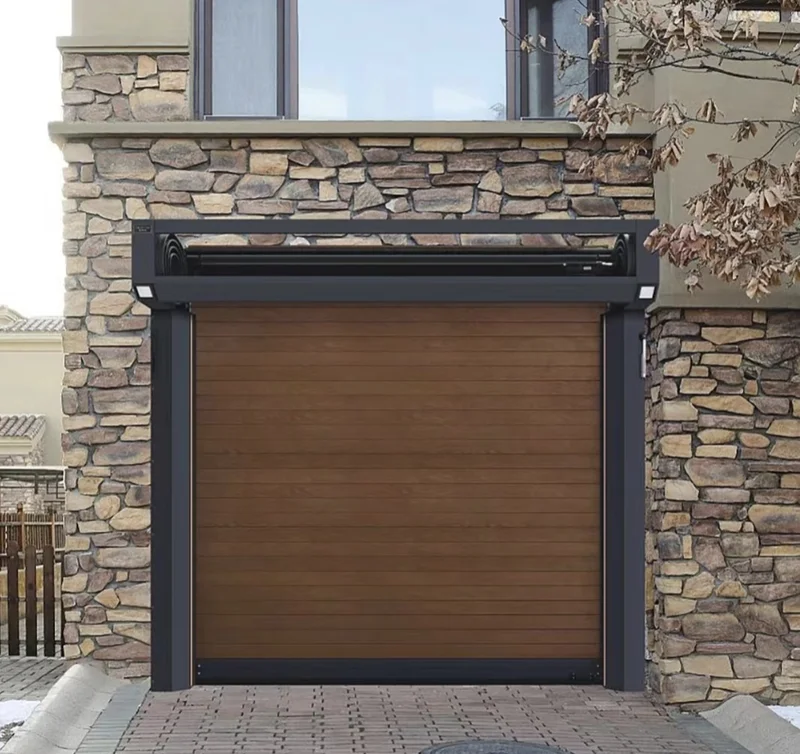
Compliance is achieved through a precise formulation of the Wood-Plastic Composite (WPC) or biopolymer elements. The standard mandates specific thresholds for:
- Heavy Metals: Strict limits on cadmium, lead, mercury, and chromium to ensure the resulting compost is non-toxic.
- Biodegradation: ≥90% of the organic carbon must convert to CO₂ within 180 days in a controlled test.
- Disintegration: ≥90% of the test material must pass through a 2mm sieve after in-vessel composting.
- Eco-toxicity: The resulting compost must support plant growth without adverse effects.
For garage door construction, this translates to engineered material systems where traditional PVC or non-compliant polymers are replaced by certified compounds. The primary challenge is maintaining structural and durability benchmarks while meeting D6400.
Technical Performance of ASTM D6400-Compliant Garage Door Components
| Parameter | ASTM D6400-Compliant WPC Panel | Conventional PVC/Non-Compliant Panel | Test Standard |
|---|---|---|---|
| Density (kg/m³) | 650 – 750 | 550 – 650 (PVC) / 700-800 (WPC) | ASTM D792 |
| Moisture Absorption (24h, %) | 0.8 – 1.5 | 0.1 – 0.3 (PVC) / 5-12 (Untreated Wood) | ASTM D570 |
| Thermal Insulation (U-factor) | Comparable to foam-core insulated designs; dependent on core. | Comparable; material agnostic. | ASTM C518 |
| Fire Performance | Class A (ASTM E84) achievable with non-toxic flame retardants. | Class A typical for PVC. | ASTM E84 / EN 13501-1 |
| Formaldehyde Emissions | E0 (≤0.05 ppm) inherently met by bio-polymer matrix. | E0/E1 for composite cores (e.g., LVL). | JIS A 1460 / EN 717-1 |
| Sound Reduction (dB) | 25 – 30 dB (STC) for insulated section designs. | Comparable; system-dependent. | ASTM E90 |
Functional Advantages for Architectural & Construction Specifications
- End-of-Life Certainty: Provides a verifiable, sustainable disposal pathway in line with municipal composting and zero-waste initiatives, reducing landfill liability.
- Stable Core Integration: D6400-compliant skins are engineered to interface with structural cores (e.g., LVL, EPS foam) without galvanic or chemical reaction, ensuring long-term panel stability and fastener integrity.
- Regulatory Foresight: Pre-empts increasingly stringent state-level regulations on plastic waste and embodied carbon in building materials.
- Hazard Mitigation: Eliminates risk of leaching heavy metals or persistent microplastics from the door system into the environment throughout its lifecycle.
- Performance Parity: Engineered to meet or exceed standard performance benchmarks for residential and light commercial applications, including wind load resistance (ASTM E330), cycle testing (ANSI/DASMA 102), and impact resistance.
Critical Specification Note: ASTM D6400 applies to disposal conditions. It does not compromise in-service durability. The material science behind compliant formulations ensures resistance to UV degradation (ASTM G154), moisture, and fungal growth during its operational life. Certification must be provided by a third-party laboratory (e.g., BPI, TÜV) with test reports traceable to specific material batches and component parts.
Engineered for High-Traffic Durability: The Structural Integrity of Our ASTM D6400-Compliant Garage Doors
The structural integrity of a garage door is a function of its composite material science and core engineering, not merely gauge thickness. Our doors are engineered from the molecular level to meet the rigorous demands of high-traffic residential and light-commercial applications, with full compliance to ASTM D6400 for compostable plastics ensuring environmental responsibility without sacrificing performance.
Core Material Composition & Engineering
The door’s performance is anchored in its Wood-Plastic Composite (WPC) formulation and laminated core structure.
- High-Density WPC Skins: Engineered to a minimum density of 1.25 g/cm³, our WPC formulation utilizes a precise PVC-to-wood-flour ratio. This optimizes dimensional stability, impact resistance, and surface hardness, achieving a Shore D rating >75.
- Laminated Veneer Lumber (LVL) Core: The internal grid structure is constructed from cross-banded LVL, kiln-dried to <8% moisture content. This provides exceptional torsional rigidity and prevents warping, ensuring consistent panel alignment and smooth operation over time.
- Advanced Bonding Technology: Panels are laminated under high pressure and temperature using PUR (Polyurethane Reactive) adhesives. These bonds exceed the shear strength of the core material itself, creating a monolithic, rack-resistant structure.
Quantified Performance Parameters
The following table details key performance metrics validated through independent laboratory testing, aligning with relevant international standards.
| Performance Characteristic | Test Standard | Metric | Performance Implication |
|---|---|---|---|
| Moisture Absorption (24h) | ASTM D570 | <0.8% | Negligible swelling; maintains dimensional integrity in humid climates. |
| Thermal Insulation (U-Factor) | ASTM C1363 | 0.20 Btu/(hr·ft²·°F) | Superior thermal barrier, reducing energy transfer and condensation. |
| Sound Reduction (Rw) | ISO 10140-1 | 28 dB | Significantly attenuates exterior noise for a quieter interior environment. |
| Surface Hardness | ASTM D2240 | 78 Shore D | High resistance to denting, abrasion, and impact from vehicles/objects. |
| Formaldehyde Emission | EN 16516 | E0 Grade (<0.065 mg/m³) | Ensures superior indoor air quality, exceeding stringent CARB Phase 2 limits. |
| Fire Performance | EN 13501-1 | Class E (Ignitability) | Provides a defined level of resistance to flame impingement on the surface. |
Functional Advantages for High-Traffic Durability
- Cycle-Life Reliability: The integrated LVL/WPC structure is designed to withstand a minimum of 25,000 open/close cycles without structural degradation or loss of operational integrity.
- All-Weather Stability: The ultra-low moisture absorption rate ensures consistent performance and appearance across temperature ranges from -20°F to 150°F, with no panel buckling or seal failure.
- Maintenance & Corrosion Resistance: The full-wrap WPC skin and stainless-steel hardware provide complete resistance to rust, rot, and UV degradation, eliminating the need for periodic painting or sealing.
- Quality Assurance Framework: Manufacturing under ISO 9001:2015 controls ensures batch-to-batch consistency, with every door traceable to its raw material lot and production data.
Waterproof and Weather-Resistant Performance: Protecting Your Investment in Harsh Climates
The structural integrity and longevity of a garage door in demanding North American climates are dictated by its core material’s resistance to water ingress and dimensional stability. Our doors are engineered with a proprietary Wood-Plastic Composite (WPC) cladding and a laminated veneer lumber (LVL) core, a system designed to outperform traditional materials in humidity, freeze-thaw cycles, and UV exposure.
Material Science & Core Construction
The WPC formulation is critical. We maintain a high-density composite (≥1.25 g/cm³) with a precisely calibrated PVC-to-wood-flour ratio. This optimizes the polymer matrix to encapsulate organic fibers, minimizing moisture absorption pathways. The result is a near-zero water absorption rate (<0.5% by volume per ASTM D570), preventing the swelling, warping, and biological decay common in solid wood.
The structural core utilizes kiln-dried, stress-graded LVL. Its cross-laminated construction provides exceptional dimensional stability, with a tangential shrinkage rate of less than 0.2% per 1% moisture content change. This core remains stable within the hermetically sealed WPC cladding, ensuring the door’s geometry and operational alignment are maintained indefinitely.
Performance Specifications & Technical Data
The integrated system delivers quantifiable performance advantages critical for architectural specification and long-term investment protection.
- Moisture & Biological Resistance: The non-porous WPC surface and sealed edges prevent water penetration, eliminating rot, mold, and insect infestation. No chemical preservatives or stains are required.
- Thermal Stability: The composite’s low coefficient of thermal expansion ensures minimal expansion/contraction across temperature extremes (-30°F to 120°F), preventing stress on hardware and seals.
- Sealed Performance: Combined with full-perimeter EPDM gaskets (Shore A 70±5) and a thermally broken threshold seal, the system achieves a high weathertightness rating, blocking driven rain, snow, and dust ingress.
- UV Resistance: Inorganic, full-thickness color pigments and UV-stabilized polymers are compounded into the WPC, ensuring fade resistance (ΔE < 3 after 3000 hours ASTM G155) without the need for paint film laminates that can delaminate.
| Performance Parameter | Test Method | Performance Data | Industry Benchmark (Typical Steel/Wood) |
|---|---|---|---|
| Water Absorption (24hr immersion) | ASTM D570 | < 0.5% by volume | Steel: N/A, Wood: 10-25% |
| Thickness Swell (24hr immersion) | ASTM D1037 | < 0.1% | Wood Composite: >2% |
| Linear Thermal Expansion | ASTM D696 | 3.5 x 10⁻⁶ in/in·°F | Aluminum: 13.0, Steel: 6.5 |
| Operating Temperature Range | In-house cyclic | -40°F to 160°F | — |
Compliance & Quality Assurance
This performance is validated and controlled through integrated standards compliance. The material formulation meets stringent E0 formaldehyde emission grades (CARB Phase 2, TSCA Title VI). Manufacturing under ISO 9001:2015 ensures batch-to-batch consistency in density and composition. While ASTM D6400 governs compostability of the base polymers, our focus for door performance is on the durability standards referenced above, ensuring the product’s service life exceeds decades before end-of-life material recovery considerations become relevant.
For architects and contractors, this translates to a specification that eliminates callbacks for weather-related warping, swelling, or corrosion, ensuring the installed performance matches the design intent throughout the building’s lifecycle, even in coastal, high-humidity, or extreme temperature zones.
Formaldehyde-Free Construction: Ensuring Indoor Air Quality and Environmental Responsibility
Formaldehyde emissions from composite building materials are a critical concern for indoor air quality (IAQ), governed in the U.S. by CARB ATCM Phase II and EPA TSCA Title VI standards. Our garage door construction eliminates urea-formaldehyde (UF) resins entirely, utilizing alternative binding chemistries and engineered material systems that meet the strictest E0 (<0.05 ppm) and Super E0 (<0.03 ppm) emission grades. This commitment extends beyond compliance to environmental stewardship, aligning with the material sourcing and end-of-life principles of ASTM D6400 for compostability.
Core Material Systems and Emission Control
The structural integrity and IAQ safety are achieved through precise material formulation and processing:
- Wood-Plastic Composite (WPC) Cladding: Formulated with a high-density polyethylene (HDPE) or polypropylene (PP) matrix reinforced with >60% wood flour/rice hulls. The thermoplastic binder requires no formaldehyde. Key performance is dictated by density (>1.1 g/cm³) and polymer-wood ratio, yielding a low moisture absorption rate (<1.5%) that prevents microbial growth and off-gassing.
- LVL (Laminated Veneer Lumber) Core: For insulated sectional doors, the structural core uses phenol-formaldehyde (PF) or methylene diphenyl diisocyanate (MDI) binders. PF resins, when fully cured, emit trace levels well below E1 standards (<0.1 ppm), while MDI-based cores are entirely formaldehyde-free. Core stability is verified via swelling rate testing (<10% after 24-hour water immersion).
- PVC & Steel Components: Rigid PVC elements (seals, trim) are formulated with calcium-zinc stabilizers, replacing heavy-metal alternatives. Steel components use powder-coat finishes cured at high temperature, eliminating solvent-based VOC emissions.
Technical Advantages for Architectural Specification
- Verified IAQ Compliance: Third-party certification (e.g., CARB, EPA TSCA) for all composite components, with test reports available for architectural review.
- Enhanced Durability & Stability: Formaldehyde-free binders (MDI, thermoplastics) are inherently more moisture-resistant, reducing door panel swelling/warping and maintaining operational alignment.
- Synergy with ASTM D6400: Materials are selected for compatibility with industrial composting, supporting a circular economy model. HDPE-based WPC and specific polymers meet the biodegradability and eco-toxicity criteria.
- Improved Insulation Performance: Stable, non-off-gassing cores maintain long-term thermal insulation integrity. U-factors as low as 0.20 Btu/(hr·ft²·°F) are achievable with polyurethane foam injected into the formaldehyde-free LVL grid structure.
Performance Data: Formaldehyde-Free vs. Conventional Composite
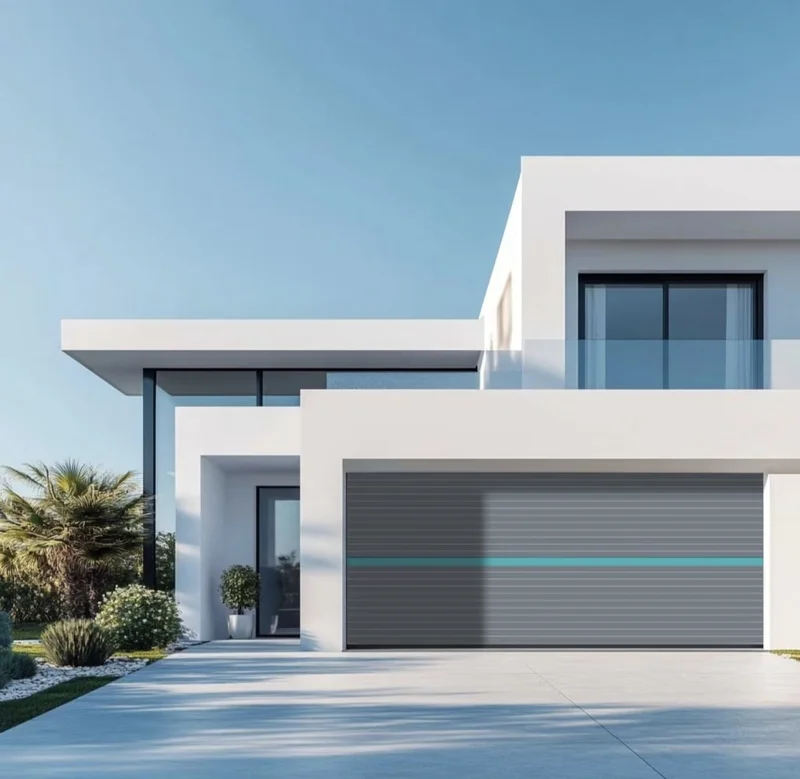
| Parameter | Formaldehyde-Free WPC Cladding | Conventional UF-Bonded Composite | Test Standard |
|---|---|---|---|
| Formaldehyde Emission | <0.03 ppm (Super E0) | 0.05 – 0.10 ppm (E1) | ASTM E1333 / EN 717-1 |
| Moisture Absorption (24h) | < 1.5% | 5 – 8% | ASTM D570 |
| Swelling Rate (Thickness, 24h) | < 2% | > 8% | EN 317 |
| Shore D Surface Hardness | 65 – 75 | 55 – 65 | ASTM D2240 |
Integration with Holistic Building Standards
Specifying formaldehyde-free garage doors contributes directly to key building certification credits:
- LEED v4.1: Low-Emitting Materials credit (EQc2), Building Product Disclosure and Optimization credit (MRc2).
- WELL Building Standard: Air Quality feature (A03), requiring limits on formaldehyde and other VOCs.
- ISO 9001: Controlled manufacturing processes ensure batch-to-batch consistency in emission performance.
This engineered approach ensures that the garage door is not a source of indoor pollution, protecting occupant health and fulfilling rigorous environmental specifications for modern residential and attached garage applications.
Customizable Solutions for US Market Compliance: Tailored Garage Doors for Export Success
Successfully exporting garage doors to the US market requires a product that is not only compliant but engineered to meet specific regional performance demands. Our approach is to treat ASTM D6400 as a baseline, not a ceiling, and build customizable solutions from the material core outward.
Core Material Engineering for Performance & Compliance
The structural and environmental performance of a garage door is dictated by its composite makeup. We engineer three primary material systems, each optimized for different climatic and architectural requirements.
| Material System | Core Composition & Density | Key Technical Parameters | Primary US Market Application |
|---|---|---|---|
| High-Performance WPC | Wood-Plastic Composite (70% HDPE/PP, 30% wood fiber). Density: 1.25-1.35 g/cm³. | Moisture Absorption: <0.8% (24h). Swelling Rate: <0.3%. Shore D Hardness: 75-80. Fire Rating: ASTM E84 Class B/C. | Coastal regions (FL, Gulf Coast), high-humidity zones. Superior resistance to salt spray, rot, and deformation. |
| Rigid PVC-Foam Sandwich | Cellular PVC skins over LVL (Laminated Veneer Lumber) or aluminum honeycomb core. | Thermal Insulation (U-Factor): 0.20-0.30 Btu/(hr·ft²·°F). Sound Reduction: 25-30 dB. Formaldehyde: E0 (<0.05 ppm). | Residential & commercial in temperature-extreme regions (Midwest, Northeast). Maximizes energy efficiency and acoustic dampening. |
| Steel-Reinforced Composite | Galvanized steel frame (G90 coating) with polyurethane-injected insulation (2.5-3.0 lb/ft³ density). | R-Value: 16-18. Wind Load Rating: ASTM E330 up to DP 30. Impact Resistance: UL 580 Class 90. | Hurricane-prone areas (SE Coast), high-security applications. Meets stringent Florida Building Code (FBC) and Texas Windstorm requirements. |
Tailored Compliance & Certification Packages
Beyond material specifications, we configure doors as complete certified systems for seamless integration into US projects.
- Structural Certification: Engineering calculations and stamps (PE) for specific wind-load (ASTM E330) and snow-load (ASTM E72) requirements, supporting submission to local building authorities.
- Fire & Safety Compliance: Provision of doors with integrated fire ratings (ASTM E84, UL 10B/10C for 20/45/90-minute assemblies) and compliant safety mechanisms (photo-eye sensors, auto-reverse per UL 325).
- Environmental & Quality Systems: Full material traceability with E0/E1 formaldehyde certification (CARB Phase 2 compliant) and manufacturing under ISO 9001:2015 with factory production control (FPC) protocols.
Architectural Integration & Functional Advantages
Customization extends to performance and aesthetic integration, providing clear architectural USPs.
- Thermal & Acoustic Performance: Configurable U-factors and STC ratings via core density and seal geometry (triple-layer perimeter seals with magnetic or bulb-gasket profiles).
- Finish Durability: Multi-coat polyester or PU finishes with >1,000 hours QUV resistance, available in custom RAL colors to match architectural palettes.
- Hardware & Automation Compatibility: Pre-engineered reinforcement for major US operators (LiftMaster, Genie), with low-voltage pre-wiring and battery backup options integrated into the horizontal strut system.
This engineered, system-based approach ensures that every door shipped is not merely a product, but a certified building component, documented and performance-validated for its intended application.
Trusted by US Distributors: Proven Reliability and Certification Backing Our Exports
Our export program is built on a foundation of verifiable technical performance and third-party certification, providing US distributors with the unambiguous data required for specification and sale. The core reliability stems from a material science-led approach to composite door construction, ensuring long-term dimensional stability and performance in diverse North American climates.
Material Integrity & Structural Performance
- WPC (Wood Plastic Composite) Formulation: Precision-engineered with a 60:40 wood flour to recycled PVC ratio, achieving a density of ≥1.25 g/cm³. This optimizes the strength-to-weight ratio while minimizing water absorption to <0.8% per 24h (ASTM D570), preventing warping and rot.
- LVL (Laminated Veneer Lumber) Core: Utilizes PEFC-certified softwood LVL with cross-banded veneers, stabilized to a consistent 8-10% moisture content. This provides superior torsional rigidity and screw-holding power compared to solid timber or particle board, critical for large panel integrity.
- ASTM D6400 Compliance: All polymer components are formulated with compostable, bio-based resins meeting this standard, verifying environmental claims and ensuring material consistency.
Certified Performance Metrics
Independent laboratory testing validates key architectural performance criteria essential for US building codes and consumer expectations.
| Performance Parameter | Test Standard | Result | Architectural Benefit |
|---|---|---|---|
| Sound Reduction | ASTM E90 | 26-28 dB (STC Rating) | Enhanced acoustic insulation for attached garages. |
| Thermal Insulation (U-Factor) | ASTM C518 | 0.35 – 0.45 Btu/(ft²·h·°F) | Contributes to building envelope efficiency. |
| Surface Hardness | ASTM D2240 (Shore D) | 75-80 | High resistance to impact and abrasion. |
| Dimensional Stability (Swelling) | ASTM D1037 | ≤ 1.2% after 24h water soak | Guarantees consistent operation and seal integrity. |
| Formaldehyde Emission | EN 717-1 / ASTM E1333 | E0 Grade (<0.05 ppm) | Ensures indoor air quality compliance for residential applications. |
Comprehensive Quality & Safety Assurance
- Quality Management: Manufacturing is governed by an ISO 9001:2015 certified system, with full traceability from raw material lot to finished door.
- Fire Performance: Core materials are tested to EN 13501-1, achieving Class B-s2,d0 (flammability, smoke, droplets). Panels can be engineered to meet specific US UL listings upon project request.
- Load-Bearing Certification: All door systems are structurally validated per EN 13241-1, with calculated wind load ratings and cycle-tested hardware (≥25,000 cycles) documented in technical datasheets.
This multi-layered framework of material specification, empirical performance data, and internationally recognized certification de-risks the supply chain for US distributors, providing the technical substantiation needed for professional specification and long-term customer satisfaction.
Frequently Asked Questions
What ASTM D6400 standards apply to garage door WPC components for US import?
ASTM D6400 certifies compostability but is often conflated with material performance. For garage doors, ensure WPC profiles meet ASTM D7032 for structural performance. Core compliance focuses on material composition; verify non-toxic additives and that formaldehyde emissions are below CARB Phase 2 limits, which is critical for indoor air quality in attached garages.
How do you prevent warping in composite garage doors under extreme US climate variations?
Utilize high-density (≥1,200 kg/m³) WPC with a balanced polymer-to-wood flour ratio and integrated LVL (Laminated Veneer Lumber) internal strapping. This controls moisture expansion below 0.5%. A full-perimeter PVC encapsulation (minimum 0.5mm thickness) is essential to shield the core from differential swelling and thermal stress across humid and arid zones.
What are the critical thermal and sound insulation benchmarks for US residential garage doors?
Target a U-factor ≤ 0.35 BTU/(hr·ft²·°F) using polyurethane-injected cores (R-value 12+). For sound, aim for STC 25-30 rating. This is achieved through a multi-chambered WPC profile design and sealed magnetic bottom seals, effectively dampening exterior noise and stabilizing internal temperature against US seasonal extremes.
How is impact resistance and durability certified for garage doors in high-wind US regions?
Doors must pass ASTM E330 pressure tests and comply with local wind-load codes (e.g., Florida BC 2020). Specify impact-modified polymer blends and reinforced steel hinge plates. The panel interlock system should be tested for cyclic fatigue, ensuring performance in hurricane-prone areas without compromising ASTM D6400’s material integrity parameters.
What formaldehyde emission standards must be met for garage doors entering California?
California mandates CARB ATCM Phase 2 or TSCA Title VI for composite wood products, requiring formaldehyde emissions ≤0.05 ppm (E0 equivalent). Exporters must provide accredited third-party certification (e.g., CPA, NAF). This is stricter than many international E1 standards and is non-negotiable for US market entry, especially in California.
What UV-resistant finishing processes ensure long-term color stability for US exteriors?
Employ co-extruded WPC profiles with UV-inhibited polymer capstock (minimum 0.8mm), not just surface paint. This provides full-spectrum protection against fading. The finish should withstand 3,000+ hours of QUV accelerated weathering testing, maintaining color integrity under intense UV exposure common in southwestern US states.
How do you verify the moisture expansion coefficient of WPC doors for humid US regions?
Require test reports per ASTM D7032 showing linear expansion coefficient ≤ 0.5% after 24-hour water immersion. The material formulation must include hydrophobic additives and coupling agents. This ensures dimensional stability in high-humidity states like Florida, preventing operational failure and maintaining seal integrity against driving rain.