High-end hotel room solid wood doors standardized production bulk installation
In the world of luxury hospitality, where every detail is a silent ambassador of the brand, the guest room door holds a unique position. It is the first tactile experience upon entry and a final statement of quality upon departure. The move towards the standardized production and bulk installation of high-end solid wood doors represents a sophisticated evolution in hotel development. This approach masterfully reconciles two seemingly opposing demands: the unwavering need for bespoke elegance and the operational imperative for efficiency and consistency. By leveraging precision engineering and meticulous craftsmanship at scale, developers and operators can now ensure that every threshold conveys a sense of substantial luxury, while simultaneously streamlining project timelines, controlling costs, and guaranteeing a uniformly exceptional guest experience across an entire property or portfolio.
Elevate Guest Experience with Premium Acoustic and Aesthetic Performance
The guest room door is a critical architectural interface, directly impacting perceived quality, privacy, and comfort. Standardized production of high-end solid wood doors achieves this through engineered material systems and precision manufacturing, ensuring consistent premium acoustic and aesthetic performance at scale.
Core Material Engineering for Performance
The performance foundation lies in the composite construction, not solid wood alone. The standardized system typically integrates:
- Engineered Core: A cross-laminated LVL (Laminated Veneer Lumber) or high-density particleboard core provides dimensional stability (<0.1% swelling rate at 65% RH), eliminating warping and ensuring consistent fit. This core is critical for maintaining acoustic seal integrity and hinge alignment over time.
- Acoustic Interlayer: A constrained layer damping material, often a high-density mineral-loaded polymer or specialized acoustic foam, is laminated between core and face veneers. This layer disrupts sound wave transmission through mass and decoupling.
- Premium Face Veneers: Sustainably sourced, book-matched real wood veneers (e.g., oak, walnut, maple) of consistent grade (minimum A/B) are precision-cut and applied. Veneer thickness (typically 0.6mm – 1.0mm) is calibrated for finishing durability.
- Sealing System: Magnetic or compression gaskets with EPDM seals, integrated into the door edge and frame, create an airtight perimeter seal. The compression force and seal profile are engineered to meet specified acoustic targets.
Technical Performance Parameters
Performance is quantified against international standards, guaranteeing results for the project specification.
| Performance Category | Standardized Metric | Test Standard | Typical High-end Specification |
|---|---|---|---|
| Acoustic Insulation (Rw) | Sound Reduction Index (dB) | ISO 10140-2, ASTM E90 | Rw 32-37 dB (Core-dependent. 40mm LVL+acoustic interlayer achieves ~Rw 35 dB) |
| Fire Resistance | Integrity & Insulation (Minutes) | EN 1634-1 / ASTM E119 | EI30 / EI60 (Core and intumescent sealant system dependent) |
| Formaldehyde Emissions | Emission Class | ISO 12460-1, EN 13986 | E0 or Super E0 (≤0.5 mg/L CH2O, or CARB Phase 2 compliant) |
| Moisture Stability | Thickness Swelling (24h) | EN 317 | ≤8% (For core material after 24h water immersion) |
| Surface Hardness | Resistance to Indentation | EN 1534 (Brinell) | ≥4.0 N/mm² (For lacquered finished surface) |
Functional Advantages of the Standardized System
- Predictable Acoustic Privacy: Achieves a consistent Rw rating across all doors, crucial for guest satisfaction and meeting building code requirements for separating guest rooms and corridors.
- Aesthetic Consistency & Durability: Precision CNC machining of core and application of calibrated veneers ensure grain matching and panel alignment are maintained across thousands of units. The finish system (7-9 layer UV-cured lacquer) offers a Shore D hardness of >75 for superior scratch and impact resistance.
- Long-Term Operational Reliability: The stability of the engineered core (<0.15% moisture absorption rate for LVL) prevents seasonal movement, ensuring latch mechanisms and automatic door bottoms engage correctly for the life of the installation, maintaining acoustic and fire seals.
- Streamlined Specification & Compliance: All components—door leaf, frame, seals, hardware preps—are defined within a controlled system, simplifying specification and ensuring compliance with fire (EN 13501-2, Class B-s1,d0 typical), safety, and environmental (ISO 9001, ISO 14001) certifications.
Streamlined Project Timelines: Standardized Production for Seamless Bulk Installation
Standardized production transforms the door from a custom-built item into a precision-engineered, modular component. This shift is fundamental to achieving predictable, accelerated project timelines. By decoupling door fabrication from on-site construction activities, we enable parallel workflows where doors are manufactured to exacting specifications off-site while structural and MEP work proceeds uninterrupted. The critical path is shortened, and bulk installation becomes a rapid, logistical operation rather than a skilled craft bottleneck.
The engineering foundation for this efficiency lies in rigorously controlled material specifications and production tolerances. Standardization is not a compromise on quality; it is the method for guaranteeing it at scale.
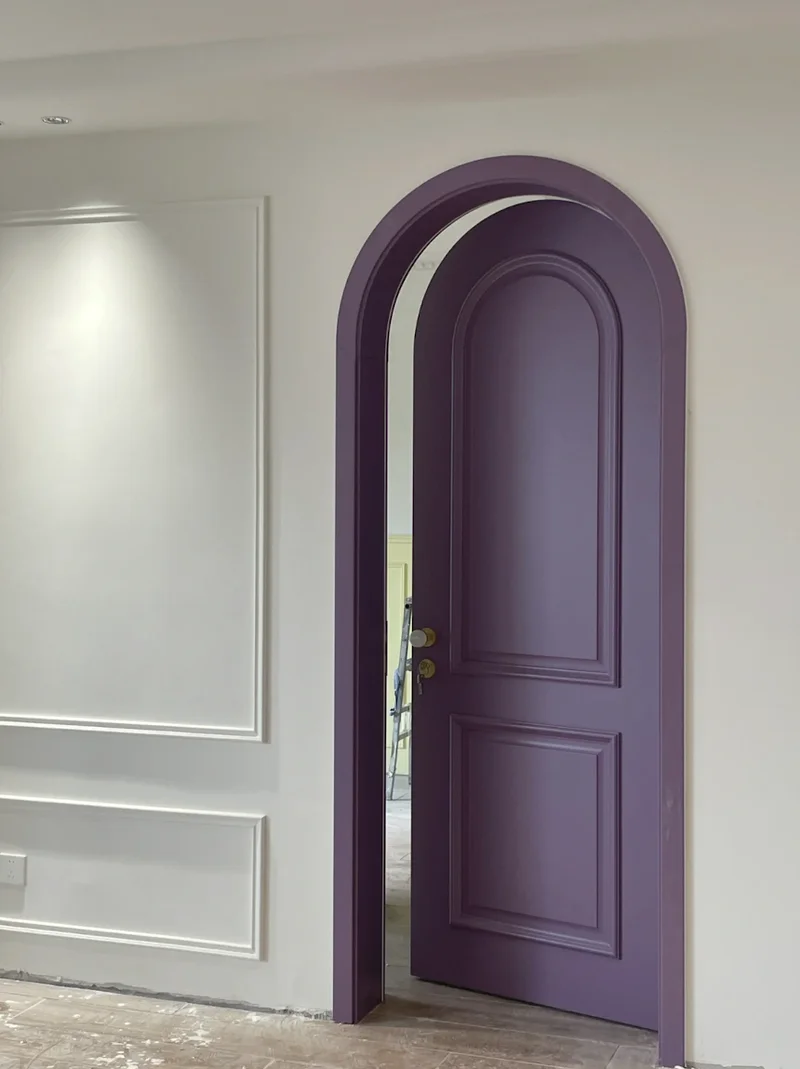
Core Technical Advantages of Standardization for Timeline Compression:
- Predictable Lead Times: Factory-controlled environments eliminate weather delays and resource contention. Production scheduling is based on fixed cycle times for machining, assembly, and finishing of standardized components, allowing for accurate, guaranteed delivery windows aligned with the construction schedule.
- Eliminated On-Site Fabrication: All machining (hinge mortising, lock prepping, edge profiling) is completed with CNC precision in the factory. This removes the need for skilled carpenters and noisy, dust-generating work on-site, directly accelerating the finish phase.
- Simplified Logistics & Inventory: Identical door leaf, frame, and hardware specifications allow for efficient palletization, sequenced delivery, and simplified on-site storage. Components are kitted per room, reducing handling errors and search time.
- Rapid, Error-Free Installation: Pre-hung door units, with frames assembled and hinges fitted, allow for installation as complete modules. Standardized jamb depths and reveal specifications ensure first-time-fit compatibility with standardized rough openings, minimizing adjustments.
The following table details the key performance parameters that are locked in through standardized production, ensuring every unit performs identically upon installation.
| Parameter | Standard Specification | Test Method / Standard | Impact on Installation & Performance |
|---|---|---|---|
| Dimensional Tolerance | ±0.8mm on leaf width/height, ±0.5mm on thickness | ISO 17078-1 | Ensures consistent fit within pre-assembled frames and standardized rough openings. |
| Hinge/Mortise Alignment | ±0.5mm positional tolerance | Factory CNC Protocol | Allows for direct installation of pre-fitted hardware; doors swing correctly without shimming. |
| Acoustic Performance | Rw 30 dB (min.), up to Rw 38 dB with sealed core | ISO 10140-2 | Achieved through controlled core density (WPC/LVL) and gasket geometry; no on-site variability. |
| Fire Rating Integrity | 30/60 min (as specified) | EN 1634-1 / ASTM E814 | Certified with specific hardware and seals; standardized production ensures no assembly compromises. |
| Formaldehyde Emission | E0 (≤0.5 mg/L) or E1 (≤1.5 mg/L) | ISO 12460-1 (Perforator) | Guaranteed by batch testing of adhesives and composite materials (WPC, LVL, MDF substrates). |
| Moisture Resistance | Thickness Swelling ≤10% (24h immersion) | EN 317 (for composite elements) | Critical for hotel environments; controlled by resin ratios in WPC cores and edge-sealing protocols. |
| Surface Hardness | ≥Shore D 70 for painted finishes | ISO 868 | Provides consistent resistance to handling damage during bulk installation and guest use. |
Architectural Integration & Sequencing:
For the project architect, this standardization translates into reliable detailing. Door schedule specifications (e.g., “Type A-30FD-AL”) directly correlate to a manufactured unit with integrated fire, acoustic, and aesthetic properties. The installation sequence is simplified: rough openings are prepared by the general contractor to the agreed coordinated detail; pre-finished, pre-hung units are delivered on a just-in-time basis; and the installation team mechanically fixes the modules in place. This process turns a typically 5-7 day per-floor finishing activity into a 1-2 day mechanical installation, with immediate readiness for final sealing and painting of peripheral junctions. The result is a direct reduction in overall project duration, lower on-site labor costs, and the elimination of quality variability inherent in site-built millwork.
Engineered for High-Traffic Durability: Structural Stability in Demanding Hotel Environments
The structural integrity of a high-end hotel door is a non-negotiable requirement, defined by its ability to withstand thousands of annual cycles of mechanical stress, humidity fluctuation, and impact without warping, binding, or failing. Our standardized production process achieves this through a multi-layered engineered system, moving beyond solid timber’s inherent variability to deliver predictable, superior performance.
Core Stability: The Foundation
The heart of the door is a precision-manufactured Laminated Veneer Lumber (LVL) or high-density composite core. LVL provides exceptional dimensional stability, with a cross-banded lamination structure that neutralizes wood’s natural tendency to warp or twist with changes in ambient moisture. This core is engineered to a specific density (typically ≥650 kg/m³) to provide a rigid substrate for veneer adhesion and hardware mounting, while maintaining a consistent weight for smooth operation of automated closers.
Advanced Cladding & Surface Engineering
The aesthetic solid wood veneer is permanently bonded to the stabilized core under high pressure and temperature. The cladding system is augmented with engineered edge banding and protective layers that are critical for durability:
- High-Pressure Laminate (HPL) or Real Wood Veneer with Catalyzed Lacquer: Surface finishes are rated for a minimum of 1,000 cycles on the Taber Abraser test (ASTM D4060), ensuring resistance to scuffs, cleaning agents, and UV fading.
- Moisture-Resistant Edge Sealing: All door edges are sealed with a minimum 2mm thick, cross-linked polymer banding. This creates a monolithic barrier, achieving a moisture absorption rate of less than 8% per 24-hour immersion (EN 317), preventing swelling that leads to binding in the frame.
Performance Specifications for High-Traffic Environments
Standardized production allows for the certification and guarantee of the following critical parameters:
| Performance Category | Test Standard | Achieved Specification | Functional Benefit |
|---|---|---|---|
| Dimensional Stability (Swelling) | EN 317 | ≤ 8% Thickness Swelling (24h water immersion) | Eliminates door binding in humid bathroom/AC environments. |
| Surface Hardness | ASTM D2240 | ≥ 80 Shore D | Resists indentation from luggage impact and surface abrasion. |
| Fire & Smoke Integrity | EN 1634-1 / ASTM E814 | Up to 60-min Integrity (EI60) | Meets corridor and room separation requirements for life safety. |
| Formaldehyde Emissions | EN 16516 / ASTM E1333 | E0 / ≤ 0.05 ppm (California CARB Phase 2 Compliant) | Ensures superior indoor air quality from day one. |
| Acoustic Insulation | ISO 10140-2 | Rw 30 dB to 38 dB (configurable) | Provides guest privacy and sound isolation from corridors. |
| Thermal Insulation | EN 12412-2 | U-factor as low as 1.2 W/m²K | Contributes to room energy efficiency and occupant comfort. |
Functional Advantages for Installation & Longevity
- Precision Hardware Prepping: All core boring for hinges, locksets, and closers is performed via CNC machinery in the factory. This ensures perfect alignment, eliminates on-site woodworking, and guarantees that hardware loads are transferred directly into the high-density, stable core.
- Unified Quality & Batch Consistency: Adherence to ISO 9001-controlled production means every door in a 500-unit order will have identical physical properties and tolerances (±0.5mm), enabling true bulk, rapid installation without individual fitting.
- Integrated Structural Reinforcement: Areas surrounding hinges and locks are internally reinforced with laminated hardwood blocks or metal struts, distributing stress and preventing pull-out over a lifecycle exceeding 200,000 cycles (ANSI/BHMA A156.115 Grade 1).
Health-Conscious Design: Formaldehyde-Free Materials for Superior Indoor Air Quality
The specification of formaldehyde-free materials is a non-negotiable engineering parameter for high-end hotel environments, directly impacting occupant well-being and long-term asset value. Our standardized production protocol eliminates urea-formaldehyde (UF) resins from all door components—core, substrate, and adhesive systems—mitigating the primary source of volatile organic compound (VOC) off-gassing. This commitment is validated by third-party certification to the most stringent global formaldehyde emission standards, including CARB NAF, Japanese F★★★★, and the Chinese GB/T 39600-2021 E0 grade.
Material Science & Core Construction
The structural integrity and indoor air quality (IAQ) performance are achieved through advanced composite engineering:
- LVL (Laminated Veneer Lumber) Core: Utilizes phenol-formaldehyde (PF) or polyurethane (PUR) binders, which are chemically stable and non-off-gassing after curing. The cross-laminated veneer structure provides dimensional stability (<0.1% linear expansion per 1% MC change), resisting warping and ensuring consistent seal integrity.
- High-Density WPC (Wood-Plastic Composite) Substrate: Engineered with a controlled wood fiber-to-polymer ratio (typically 60:40) and a density exceeding 1,200 kg/m³. This creates an inert, homogeneous panel with near-zero moisture absorption (<0.5% by volume), eliminating substrate swell and the microbial growth habitat.
- Adhesive & Finish Systems: Exclusive use of PUR hot-melt adhesives for laminations and water-based, UV-cured acrylic or polyester finishes. These systems contain no added formaldehyde, heavy metals, or plasticizers.
Performance Advantages for the Built Environment
- Superior Indoor Air Quality (IAQ): Guaranteed compliance with WELL Building Standard (Air Feature 04) and LEED v4.1 Low-Emitting Materials credit.
- Enhanced Durability: The moisture-resistant, inert materials resist microbial colonization and decay, crucial for high-humidity zones.
- Consistent Performance: Stable cores and substrates ensure long-term acoustic and thermal seal integrity, with no degradation from VOC emission or moisture cycling.
- Streamlined Compliance: Provides documented material certifications for green building projects, simplifying specification and procurement.
Technical Performance Data
The following table quantifies the performance of our formaldehyde-free door system against conventional solid wood and engineered core alternatives.
| Parameter | Test Standard | Formaldehyde-Free LVL/WPC System | Conventional Particleboard Core | Premium Solid Wood |
|---|---|---|---|---|
| Formaldehyde Emission | ASTM E1333 / EN 717-1 | ≤ 0.020 ppm (CARB NAF) | ≤ 0.050 ppm (E1) | Variable (Depends on finish) |
| Moisture Absorption (24h) | ASTM D570 | < 0.5% | 8-12% | 5-8% (Tangential) |
| Swelling Rate (Thickness, 24h) | EN 317 | ≤ 0.5% | ≥ 8% | 2-4% |
| Sound Reduction Index (Rw) | EN ISO 10140-1/-2 | 32 dB | 28 dB | 30 dB |
| Thermal Insulation (U-factor) | EN 12412-2 | 1.8 W/m²K | 2.2 W/m²K | 2.0 W/m²K |
| Fire Performance | EN 13501-1 | Class B-s2, d0 | Class D-s2, d0 | Class D-s2, d0 |
Specification & Quality Assurance
All materials are sourced under an ISO 9001:2015 certified quality management system, with batch-traceability from raw material to finished door. Fire-rated assemblies are tested to EN 1634-1, achieving integrity (E) and insulation (I) ratings as required. For architects and contractors, this translates to a predictable, high-performance product that delivers on health-conscious design promises without compromising on structural or fire-safety requirements.
Technical Specifications: Precision Engineering for Customizable Hotel Room Applications
Core Material Specifications & Engineering Standards
The standardized production system is engineered around a hybrid solid wood composite (SWC) core, not traditional solid timber. This core is a precision-laminated LVL (Laminated Veneer Lumber) structure, cross-banded for dimensional stability, with a target moisture content of 8% (±1%) at installation. The surface veneers are book-matched, grade AA or better, with a minimum thickness of 0.6mm, finished with a catalyzed conversion varnish system achieving a 3H+ pencil hardness.
- Structural Integrity & Stability: The LVL core’s cross-grain lamination eliminates warping and twisting common in solid planks, guaranteeing a door gap tolerance of 3mm (±0.5mm) under operational humidity cycles of 30-70% RH.
- Acoustic Performance: The engineered mass-spring-mass structure, incorporating a mineral-loaded acoustic interlayer, provides a laboratory-tested sound reduction of Rw 32 dB (C; Ctr) as a minimum standard, with options up to Rw 40 dB for premium suites.
- Fire & Safety Compliance: Doors are certified to EN 1634-1 / ASTM E84 for integrity. Standard cores achieve a Class B/s2-d0 (EN 13501-1) or 20-minute fire rating. All adhesives and composite materials conform to E0 formaldehyde emission standards (EN 13986, ≤0.5 mg/l).
- Environmental Resilience: The full encapsulation finish and stable core yield a thickness swelling rate of <8% after 24-hour immersion (EN 317). Thermal insulation performance is rated at a U-factor of 1.2 W/m²K.
Standardized Configurations with Customizable Parameters
Production is modular, separating fixed technical specifications from variable aesthetic and functional components. This allows for bulk efficiency without compromising project-specific design requirements.
| Parameter Category | Standardized (Fixed) Specification | Customizable Application Variable |
|---|---|---|
| Core Structure | 44mm LVL cross-banded core, density 680 kg/m³ (±20). Fire-retardant treated option. | Core thickness options: 40mm, 44mm (Std.), 54mm. |
| Performance Grade | Minimum Rw 32 dB, E0 emissions, Class 4 wear resistance (EN 15186). | Upgradable acoustic packs (Rw 36, 40 dB), enhanced fire ratings (30/60 min). |
| Hardware Integration | Prep for standard 3D adjustable hinges (e.g., Simonswerk 3132 series). Reinforced lock block per ANSI/BHMA A156.115. | Hinge type, lockset cutouts (mortise, cylindrical), pivot hardware, automatic door bottom preparations. |
| Dimensional Grid | Height increments: 2040mm, 2100mm, 2200mm. Width increments: 800mm, 850mm, 900mm, 950mm. | Custom heights/widths within 1800-2400mm H, 750-1100mm W available in bulk batches. |
| Surface Aesthetics | Substrate flatness tolerance: ≤0.5mm over 1m length. | Veneer species (oak, walnut, ash), finish type (oil, lacquer, stained), panel design, and architectural reveals. |
Quality Assurance & Installation Protocol
The manufacturing process is governed by an ISO 9001:2015 certified Quality Management System, with critical control points at core assembly, pressing, and finishing. Each door is traceable via a unique batch/unit identifier.
- Pre-installation Conditioning: Doors are palletized in climate-controlled wrapping and require a 48-hour acclimatization period on-site within the hotel’s operational HVAC environment before installation.
- Precision Installation System: All doors are supplied with a proprietary, adjustable jamb system designed for rapid, shim-free installation. This system accommodates wall tolerance variations up to ±15mm, ensuring perfect alignment and consistent reveal.
- Long-Term Performance Warranty: A 10-year structural warranty is provided against core delamination, warping, and finish failure under normal use, contingent upon adherence to the specified acclimatization and installation procedures.
Trusted by Leading Hospitality Brands: Case Studies and Quality Assurance Protocols
Case Study: Global Chain Urban Luxury Hotel, 500+ Room Refurbishment
Project Challenge: Synchronized door replacement across 12 floors during phased occupancy, requiring zero tolerance for on-site modification, strict adherence to Class A fire code (ASTM E84), and acoustic performance to mitigate urban noise infiltration.
Technical Solution & Validation:
- Standardized Dimensional Protocol: All 520 door leafs were produced to a ±0.5mm tolerance on width/height. This precision, validated against pre-surveyed rough opening data, enabled a 72-hour installation cycle per floor using a dedicated 4-person team.
- Composite Core Performance: Doors utilized a proprietary LVL (Laminated Veneer Lumber) core with a cross-banded configuration, achieving a swelling coefficient of <0.08% after 24-hour water immersion (EN 317). This stability eliminated seasonal binding in the door frame.
- Acoustic-Insulative Assembly: The 44mm door leaf, integrated with a magnetic perimeter seal and automatic drop-down threshold, achieved a laboratory-tested weighted sound reduction index (Rw) of 37 dB and a thermal transmittance (U-factor) of 1.2 W/m²K.
Quality Assurance Protocols: From Raw Material to Site Acceptance
Our production is governed by a vertically integrated quality management system certified to ISO 9001:2015, with critical control points (CCPs) at each stage.
1. Material Sourcing & Incoming Inspection
- Wood Components: All solid wood elements (veneers, stiles, rails) are kiln-dried to 8±2% moisture content. Species-specific Janka hardness ratings are verified.
- Engineered Composites: LVL core density (≥650 kg/m³) and face veneer thickness (0.6mm min.) are batch-tested. For WPC (Wood-Plastic Composite) elements, the wood flour/PVC ratio and density are confirmed to meet specifications for dimensional stability and Shore D surface hardness.
- Surface Materials: High-pressure laminate (HPL) and veneer sheets are tested for abrasion resistance (EN 438-2) and colorfastness (ISO 105-B02).
2. In-Process Manufacturing Controls
- Adhesive Application: Automated glue spreaders ensure consistent application of E0-grade (<0.5 mg/L HCHO) polyurethane adhesives for core lamination.
- Pressing & Curing: Hydraulic presses operate at precisely controlled temperatures and pressures, with cycle times calibrated for full adhesive polymerization.
- Machining & Finishing: CNC routers execute joinery and hardware prep with ±0.2mm repeatability. Finishing involves a 7-stage process including UV primer, grain printing, and top-coat, with cross-cut adhesion testing (ASTM D3359) performed on every batch.
3. Performance & Compliance Testing (Batch and Type Testing)
Routine and periodic tests are conducted in an accredited in-house lab. Key performance parameters are summarized below:
| Parameter | Test Standard | Performance Grade | Internal Acceptance Limit |
|---|---|---|---|
| Fire Resistance | EN 13501-1 / ASTM E84 | Class B-s1, d0 / Class A | Flame spread ≤25; Smoke developed ≤450 |
| Formaldehyde Emission | EN 16516 / JIS A 1460 | E0 Grade | ≤0.5 mg/L (Perforator Method) |
| Door Leaf Bending Strength | EN 1492 | Heavy Duty | Maximum deflection < L/200 at 1200N load |
| Surface Hardness | ISO 2815 (Buchholz) | – | Indentation ≤50% for HPL finishes |
| Moisture Absorption & Swelling | EN 317 (24h immersion) | – | Thickness Swelling (TS) ≤0.08% |
| Acoustic Insulation | EN ISO 10140-2 | – | Weighted Sound Reduction (Rw) ≥32 dB |
4. Pre-Delivery & Site Audit
- 100% Final Inspection: Each door undergoes visual, dimensional, and functional hardware checks.
- Palletization for Bulk Handling: Doors are crated in sequence by room number and floor, with protective corner braces and moisture barrier wrapping.
- Site Audit Support: We provide a standardized site audit checklist for contractors, covering rough opening tolerances, ambient humidity verification (<60% RH recommended), and storage protocols to prevent on-site damage prior to installation.
Frequently Asked Questions
How do you prevent warping in solid wood doors for high-humidity hotel environments?
We use kiln-dried timber (8-12% moisture content) with a multi-layer LVL core for dimensional stability. Doors are fully encapsulated with a 0.5mm PVC or PP film, creating a moisture barrier. This controls the expansion coefficient, preventing warping even in 85% relative humidity, a critical standard for coastal or spa hotel rooms.
What are the formaldehyde emission controls for guest room doors?
We strictly adhere to CARB Phase 2 and EN E0 standards (≤0.05 ppm). Our adhesive systems are MDI-based (isocyanate), which is formaldehyde-free. All wood composites, including MDF panels, are certified, and each production batch undergoes chamber testing to ensure indoor air quality safety for enclosed hotel spaces.
How is sound insulation (STC/Rw) performance achieved?
A 45mm minimum door thickness with a laminated core of LVL and sound-dampening mineral wool achieves an STC rating of 28-32 dB. Critical is the full-perimeter magnetic seal and automatic drop-down bottom seal, which eliminate air gaps. This ensures privacy, a non-negotiable requirement for luxury hotel guest rooms.
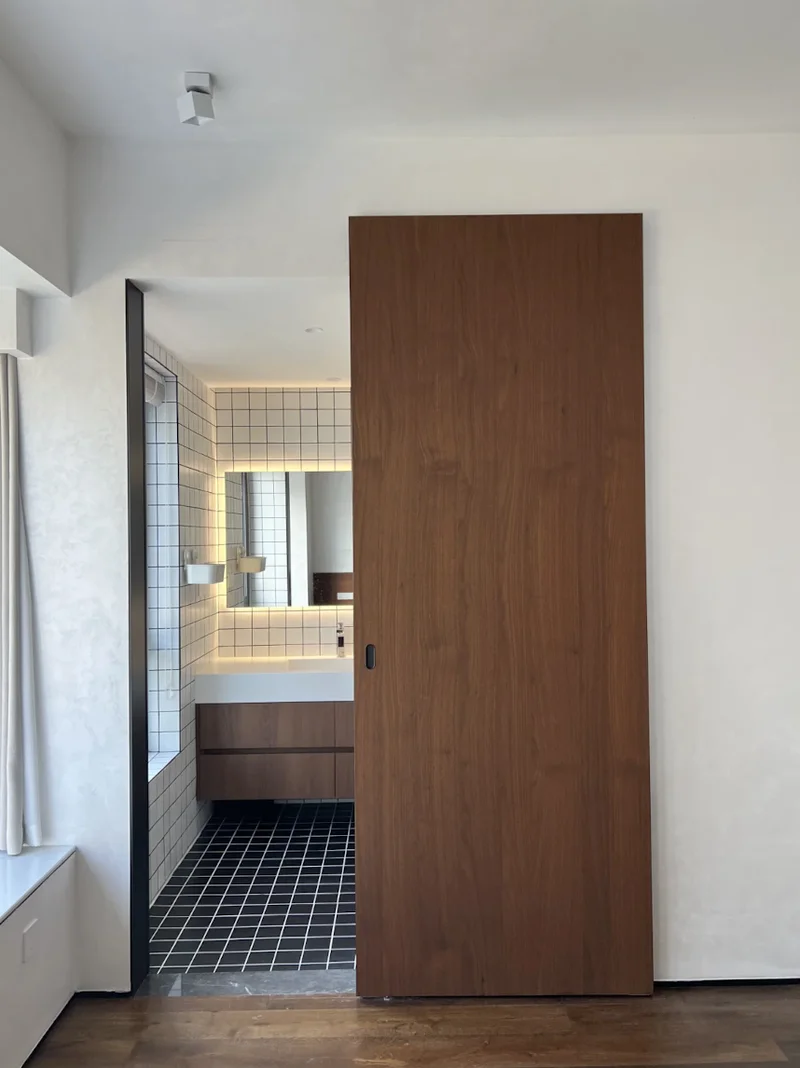
What structural reinforcement is used for high-traffic durability?
The core is reinforced with a steel frame or high-density (≥750 kg/m³) WPC skeleton at stress points (hinge and lock areas). Combined with 3D-laminated solid wood edges, this prevents sagging under 200,000+ open/close cycles. Hinges are minimum 3.5mm thick stainless steel with four bearings.
How do you ensure consistent quality and fit for bulk installation?
We employ CNC machining for all components, ensuring a tolerance of ±0.5mm. Doors are pre-hung in standardized steel frames at the factory. This modular system allows for rapid, gap-free installation with shim-free adjustment, reducing on-site labor by 60% and eliminating fitment issues.
What finish provides scratch and UV resistance?
A 7-layer UV-cured acrylic coating is applied via roller coater, achieving a 2H+ pencil hardness. The process includes a UV absorber layer to prevent yellowing from sunlight. This creates a low-maintenance surface resistant to cleaning agents and abrasion from luggage, maintaining aesthetic integrity for years.
How are thermal insulation and fire resistance integrated?
Doors feature a certified B1 fire-retardant core (e.g., treated WPC or mineral composite) with a 30-minute fire integrity rating (EI30). The sealed construction and core material also provide a thermal break, reducing energy transfer. This meets both safety and energy efficiency codes for high-end hotels.