Insulated Garage Doors with R-Value 18: Maximize Energy Savings and Comfort
Imagine stepping into a garage that feels less like a drafty afterthought and more like a seamless extension of your comfortable home. This is the transformative power of an insulated garage door with an exceptional R-value of 18. Far beyond a simple barrier, this advanced thermal barrier acts as a formidable shield against outdoor temperature extremes. By significantly reducing heat transfer, it creates a stable, energy-efficient environment that protects your vehicles, workspaces, and stored belongings. The result is a dramatic reduction in energy waste, leading to lower utility bills and a smaller carbon footprint, while simultaneously enhancing year-round comfort and quiet. Investing in this high-performance insulation is a strategic upgrade that pays dividends in savings, comfort, and overall home efficiency.
Transform Your Garage into an Energy-Efficient Extension of Your Home
A garage is a significant thermal envelope breach, often accounting for 15-20% of a home’s total facade area. Standard uninsulated doors act as a high-conductivity barrier, creating a constant thermal exchange that undermines HVAC efficiency and compromises adjacent living spaces. An R-18 insulated door system transforms this liability into a conditioned buffer zone, enabling the garage to function as a true thermal extension of the home’s occupied spaces. This is achieved through a composite material and design philosophy that prioritizes continuous insulation, air sealing, and structural stability.
The core performance originates from a multi-layer laminated panel. The critical component is a stabilized LVL (Laminated Veneer Lumber) core, engineered for minimal thermal bridging and dimensional stability. Unlike dimensional lumber, the cross-laminated veneers in an LVL core resist warping and twisting under humidity fluctuations, maintaining seal integrity. This core is sandwiched between facings of high-density Wood Plastic Composite (WPC). The optimal PVC-to-wood flour ratio (typically 60:40) and density (>1.2 g/cm³) are calibrated for low moisture absorption (<0.5%) and high Shore D hardness (>75), providing a durable, stable substrate that will not swell, rot, or delaminate.
The insulation cavity is filled with a rigid, closed-cell polyurethane foam injected under pressure, achieving a consistent density and a certified R-value of 18. This corresponds to a U-factor of approximately 0.056 Btu/(hr·ft²·°F), a critical metric for energy code compliance. The foam’s adhesive properties further bond the panel layers into a monolithic structural unit.
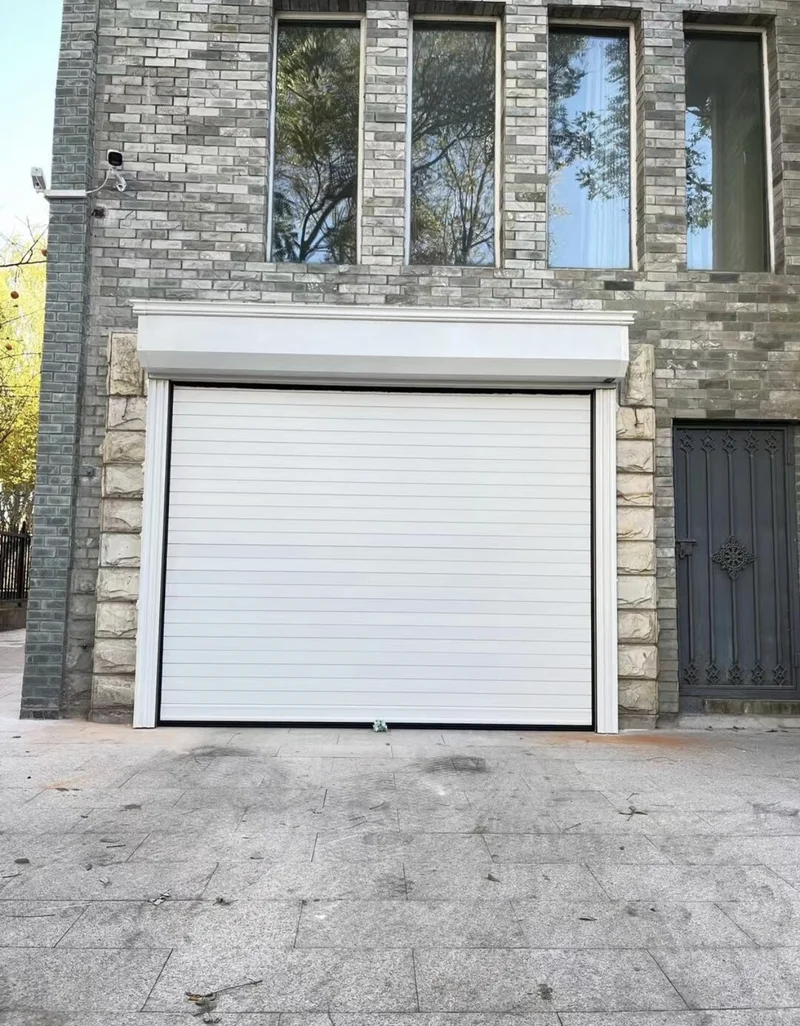
Functional Advantages of the R-18 System:
- Thermal Bridging Elimination: The full-perimeter thermal break and continuous insulation layer maintain a consistent interior surface temperature, preventing condensation and reducing heat flow.
- Air Infiltration Control: Compression seals with a bulb-and-flap design, combined with a fully weather-stripped perimeter and inter-panel seals, achieve infiltration rates below 0.2 cfm/ft² when tested to ASTM E283.
- Structural Acoustics: The mass-loaded, damped composite structure provides a Sound Transmission Class (STC) rating of 20-25 dB, significantly reducing noise transmission from street traffic or garage activities.
- Fire & Environmental Compliance: Core and facing materials are sourced to meet E0/E1 formaldehyde emission grades. Full-system assemblies can achieve up to 20-minute fire resistance ratings when tested to relevant EN or ASTM standards, a key specification for attached garages.
- Long-Term Integrity: The system’s resistance to moisture absorption (<0.8% for WPC, <7% for LVL core by volume) ensures long-term R-value retention and operational reliability, backed by ISO 9001 certified manufacturing controls.
For specification, the following performance parameters are standardized:
| Parameter | Test Standard | Performance Value | Notes |
|---|---|---|---|
| Thermal Resistance (R-Value) | ASTM C518 | R-18 (hr·ft²·°F/Btu) | Core center, nominal. |
| U-Factor | ASTM C1363 | ~0.056 Btu/(hr·ft²·°F) | Derived from R-value. |
| Air Infiltration | ASTM E283 | < 0.2 cfm/ft² | At 1.57 psf (75 Pa) pressure differential. |
| Moisture Absorption (WPC) | ASTM D570 | < 0.5% (by weight, 24-hr immersion) | Critical for dimensional stability. |
| Core Swelling (Thickness) | EN 317 | < 7% (24-hr water immersion) | LVL core stability metric. |
| Surface Hardness (WPC) | ASTM D2240 | > 75 Shore D | Indicates resistance to impact and abrasion. |
Integrating an R-18 door is not merely a door replacement; it is a building envelope upgrade. It allows architects and contractors to design with the garage as a conditioned buffer, potentially relocating HVAC equipment or creating usable adjacent spaces without thermal penalty. The system’s predictable performance, governed by material science and manufacturing standards, translates into calculable energy savings, reduced callbacks, and enhanced occupant comfort.
Why R-Value 18 Insulation Sets a New Standard for Thermal Performance
R-Value 18 represents a significant leap in thermal performance for garage door systems, moving beyond basic thermal breaks to achieve a level of insulation previously reserved for high-performance building envelopes. This rating, measured per ASTM C518, indicates a thermal resistance that drastically reduces conductive heat transfer. The achievement is not merely a function of increased insulation thickness but a result of advanced composite material engineering and precise system design.
The core performance is driven by a multi-layer laminated structure. The internal core is typically a stabilized LVL (Laminated Veneer Lumber) grid or a high-density engineered wood composite, providing structural rigidity that prevents panel bowing and maintains consistent insulation cavity integrity. This core is encapsulated within insulated panels constructed from advanced Wood Plastic Composite (WPC).
Critical Material Specifications for R-18 Performance:
- WPC Formulation: A precisely calibrated ratio of wood fiber to polymer (typically PVC or polyolefin) achieves a density exceeding 1.2 g/cm³. This high density is fundamental for structural strength, low thermal conductivity, and minimal moisture absorption (<0.5% per 24h immersion per EN 317).
- Core Stability: The LVL or engineered wood core is treated for dimensional stability, exhibiting a swelling rate of less than 1.5% under 68 hours of water exposure (EN 317). This prevents internal stresses that could compromise the insulation seal.
- Fire & Emissions Compliance: Panels are rated Class B-s1, d0 per EN 13501-1 for limited combustibility and smoke production. Adhesives and composite materials conform to E0 (<0.05 ppm formaldehyde) or stringent E1 emission grades, ensuring indoor air quality.
- Acoustic Performance: The dense, multi-layer assembly acts as an effective sound barrier, achieving a Sound Transmission Class (STC) rating of 28-32 dB, significantly reducing noise infiltration from external environments.
- Surface Hardness: The exterior WPC face demonstrates a Shore D hardness >75, providing exceptional resistance to impact and abrasion, maintaining aesthetic and thermal integrity over the product lifecycle.
The resultant U-factor, the inverse of R-value, falls below 0.056 BTU/(hr·ft²·°F). For context, this performance often surpasses that of many insulated exterior walls in standard construction. The following table quantifies the performance differential between a standard insulated door and an R-18 system.
| Performance Parameter | Standard Insulated Door (R-8 to R-12) | Advanced R-18 Composite Door | Test Standard |
|---|---|---|---|
| Thermal Resistance (R-Value) | 8 – 12 hr·ft²·°F/BTU | 18 hr·ft²·°F/BTU | ASTM C518 |
| U-Factor (Thermal Transmittance) | 0.125 – 0.083 BTU/(hr·ft²·°F) | ≤ 0.056 BTU/(hr·ft²·°F) | Calculated Inverse |
| Moisture Absorption (24h) | Typically 1-3% | < 0.5% | EN 317 |
| Dimensional Stability (Swelling Rate) | Often > 3% | < 1.5% | EN 317 |
| Surface Hardness | Shore D 60-70 | Shore D > 75 | ASTM D2240 |
Architecturally, this performance standard translates into three key advantages. First, it eliminates the garage as a primary source of thermal bridging and energy loss, allowing for more predictable and efficient whole-building HVAC load calculations. Second, the stability and low moisture absorption of the materials ensure long-term performance without degradation, warping, or loss of insulating value—a critical factor for lifecycle cost analysis. Third, the integrated system provides a consistent thermal and vapor barrier, reducing the risk of condensation and mold formation within the assembly.
For specification, this mandates a holistic view. The insulation performance is contingent on the entire installed system, including the use of continuous thermal breaks in the frame, compression seals with a minimum density of 12 lbs/ft³, and perimeter weatherstripping that maintains seal integrity under varying pressure differentials. Manufacturing under ISO 9001:2015 quality management systems is non-negotiable to ensure the repeatable precision of these tolerances. An R-18 door is not merely a product but a engineered building envelope component that demands and delivers commensurate performance.
Engineered for Structural Stability and Long-Term Durability
The structural integrity of an R-18 insulated garage door is a function of its composite material science and core design, not merely assembly. Long-term performance is engineered through precise material selection and adherence to international technical standards, ensuring dimensional stability under thermal and mechanical stress.
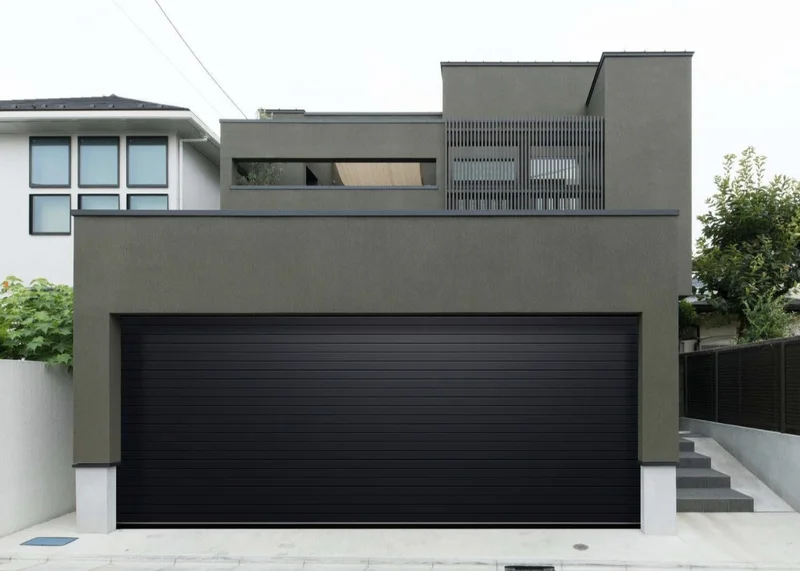
Core Construction & Material Specifications
The primary stability is derived from a multi-layer laminated veneer lumber (LVL) core, chosen for its predictable engineering properties. Unlike solid timber, LVL’s cross-laminated structure minimizes linear expansion and provides a consistent substrate for insulation.
- LVL Core Stability: Manufactured to ASTM D5456, the LVL core exhibits a swelling rate of <0.3% after 24-hour water immersion, providing exceptional resistance to warping and torsional flex.
- High-Density Insulation: Polyurethane foam is injected at a minimum density of 2.2 lb/ft³ (pcf), achieving an R-18 value. This high-density foam acts as a structural adhesive, bonding the interior and exterior panels to the LVL core, creating a monolithic, torsion-resistant sandwich panel.
- Exterior Panel Composition: Panels are engineered from Wood-Plastic Composite (WPC) with a controlled PVC-to-wood flour ratio and a minimum density of 1.25 g/cm³. This formulation optimizes impact resistance (Shore D hardness >75) while maintaining a low moisture absorption rate of <0.8%, preventing degradation from freeze-thaw cycles.
Performance Data: Material & Structural Properties
| Parameter | Specification | Standard / Test Method | Performance Implication |
|---|---|---|---|
| Panel Swelling Rate | ≤ 0.3% | ASTM D1037 (24-hr immersion) | Ensures consistent panel fit and seal integrity over time. |
| Moisture Absorption | < 0.8% (WPC panel) | ASTM D570 | Prevents blistering, delamination, and loss of thermal efficiency. |
| Sound Reduction | 25-28 dB | Approximate STC rating | Foam density and panel mass dampen operational and external noise. |
| Formaldehyde Emission | E0 / ≤ 0.05 ppm | EN 717-1 / ASTM E1333 | Compliant with stringent indoor air quality specifications for attached garages. |
| Fire Performance | Class B-s1, d0 | EN 13501-1 | Low flame spread and smoke development rating. |
Architectural-Grade Durability Features
- Thermal Break Design: Full-perimeter thermal breaks within the frame and between panel sections prevent conductive heat transfer (thermal bridging), maintaining the designed U-factor and preventing condensation-induced corrosion.
- Corrosion Protection: All steel hardware, including hinges, rollers, and springs, is phosphatized and finished with a powder-coat epoxy to a minimum thickness of 80µm, tested for >500 hours salt spray resistance (ASTM B117).
- Seal System: Triple-seal perimeter gaskets (EPDM rubber) and inter-panel seals create an airtight barrier, critical for maintaining the R-18 effective performance by eliminating infiltration.
- Quality Assurance: Manufacturing under ISO 9001:2015 protocols ensures batch-to-batch consistency in material properties, foam density, and final assembly tolerances of ±1.5mm.
This engineered approach guarantees that the door’s structural stability and thermal envelope remain intact for the product’s lifecycle, delivering the long-term energy savings and reliability specified in architectural plans.
Advanced Materials and Construction for Superior Weather Resistance
The structural integrity and long-term performance of an insulated garage door in harsh environments are dictated by its core materials and composite construction. Achieving a stable R-18 rating requires a system engineered to resist thermal bridging, moisture ingress, and physical deformation under thermal and hygroscopic stress.
Core Insulation and Structural Stability
The primary insulator is a continuous, rigid polyurethane (PUR) or polyisocyanurate (PIR) foam core injected at high density (>2.0 pcf). This closed-cell structure provides the specified thermal resistance (R-18) and acts as a monolithic moisture barrier. The foam is bonded under pressure to the interior and exterior facings, creating a composite panel that resists delamination. The structural backbone is often a laminated veneer lumber (LVL) frame within the panel perimeter. LVL’s engineered cross-lamination provides superior dimensional stability (<1% moisture content change) and resistance to warping compared to solid timber, ensuring consistent seal alignment.
Exterior Facing: Composite Material Science
Advanced doors utilize Wood-Plastic Composite (WPC) or rigid PVC-based facings instead of traditional steel or aluminum. These polymers are formulated for minimal thermal expansion and maximum impact resistance.
- WPC Composition: Optimal formulations maintain a wood fiber-to-polymer (typically PP or PVC) ratio between 60:40 and 40:60. Higher polymer content enhances moisture resistance, while sufficient wood fiber provides rigidity and a realistic grain texture. Densities range from 1.1 to 1.3 g/cm³, yielding a Shore D hardness of 75-85.
- PVC Formulations: High-impact, UV-stabilized PVC (uPVC) facings are co-extruded with a capstock layer for color retention. Key metrics include a low coefficient of linear thermal expansion (≈5 x 10⁻⁵ /°C) and a moisture absorption rate of <0.1%.
- Performance Advantages:
- Inherent corrosion and dent resistance, eliminating the risk of galvanic corrosion at fastener points.
- Low thermal conductivity, which minimizes conductive heat loss through the panel skin itself.
- Acoustic damping properties, contributing to a sound transmission class (STC) rating improvement of 3-5 dB over metal facings.
- Near-zero maintenance, with integral color and no requirement for painting.
Fire Performance and Indoor Air Quality
For attached garages, material safety is critical. Composite facings and PUR cores can be formulated to meet international fire reaction standards.
| Material Component | Standard & Classification | Key Parameter |
|---|---|---|
| Polyurethane Core | EN 13501-1 / ASTM E84 | Class B-s2,d0 / Flame Spread Index ≤25, Smoke Developed Index ≤450 |
| WPC/PVC Facing | EN 13501-1 | Typically Class C-s2,d0 |
| Composite Panel Adhesives | EN 13986 / CARB Phase 2 | Formaldehyde emission grade E1 or E0 (<0.05 ppm) |
Manufacturing under ISO 9001:2015 quality management systems ensures batch-to-batch consistency in these properties.
Sealing System and Thermal Envelope Integrity
The R-18 rating of the panel is compromised without a high-performance perimeter seal. A dual-seal system is employed:
- Primary Seal: A bulb-style EPDM or thermoplastic elastomer (TPE) gasket provides the main weather barrier, with a compression force designed to accommodate frame tolerances.
- Secondary Seal: A fin-seal or brush seal on the interior side blocks air infiltration and acts as a light/dust barrier. The total system achieves an air infiltration rate of ≤0.2 cfm/ft² when tested per ASTM E283.
The combination of a dimensionally stable composite structure, low-conductivity facings, and a robust sealing system ensures the published U-factor (typically ≤0.05 Btu/hr·ft²·°F for an R-18 assembly) is maintained in real-world conditions, preventing energy loss and condensation.
Technical Specifications and Installation Requirements for Optimal Performance
Core Construction & Material Specifications
The stated R-18 value is a center-of-panel metric, dependent on a composite design. The system’s performance is defined by its constituent materials and their integration.
- Insulation Core: A closed-cell polyurethane foam, injected at high density (≥ 2.0 lb/ft³). This foam exhibits a long-term thermal resistance (LTTR) R-value of approximately R-7 per inch, forming the primary thermal barrier. The foaming process fully bonds the panel skins to the frame, creating a monolithic, structurally rigid section.
- Panel Skin Composition: For wood-composite (WPC) or PVC-based panels, performance is dictated by formulation.
- WPC Panels: Require a polymer-to-wood flour ratio ≥ 60:40 and a minimum density of 1.25 g/cm³ to ensure dimensional stability, low moisture absorption (<0.8% per 24h immersion), and adequate Shore D surface hardness (>75).
- PVC Panels: Must utilize high-impact, UV-stabilized PVC compounds with a minimum thickness of 2.5mm. Core stability is provided by a laminated veneer lumber (LVL) or steel strut framework, preventing thermal bowing.
- Structural Frame: 24-gauge (minimum) galvanized steel frames with a continuous thermal break are standard. For heavy-duty applications, 22-gauge frames or reinforced aluminum extrusions are specified. All steel components must have a minimum G90 galvanization coating.
- Seal System: A triple-seal perimeter is non-negotiable. This includes a bottom seal with an adjustable vinyl bulb, a compression seal along the vertical edges, and a header seal. Total air infiltration must be ≤ 0.2 cfm per linear foot of seal as tested per ASTM E283.
Performance Data & Compliance
| Parameter | Specification | Test Standard / Note |
|---|---|---|
| Thermal Insulation | Overall U-factor: ≤ 0.056 Btu/(hr·ft²·°F) Overall R-value: ≥ 18 (hr·ft²·°F)/Btu |
Calculated per NFRC 102 or ASTM C1363. Overall value includes frame factor. |
| Sound Transmission | Sound Reduction Index (R): ≥ 26 dB | Tested per ASTM E90 for typical single-door configuration. |
| Fire Performance | Class B (Flame Spread 26-75) / Class 0 | Tested per ASTM E84 (UL 723). Specific ratings vary by skin material. |
| Formaldehyde Emissions | E0 or E1 Grade (< 0.1 ppm) | Certified per EN 717-1 or ASTM E1333. |
| Dimensional Stability | Linear Expansion/Contraction: ≤ 0.1% per 10°C ΔT Swelling (Thickness): ≤ 1.5% after 24h water immersion |
Tested per ASTM D1037 for composite materials. |
| Structural Load | Design Wind Load: As per local code (e.g., ASCE 7) Typical Positive Pressure: ≥ 30 psf |
Door and hardware must be rated as a complete system. |
Critical Installation Requirements for Rated Performance
Achieving the specified thermal and air-seal performance is contingent upon correct installation. The following are engineering prerequisites, not guidelines.
- Opening Preparation: The rough opening must be plumb, level, and square within a 1/4″ tolerance over the entire height and width. The header and jambs must be structurally sound to resist wind load transfer.
- Seal Engagement: The door panel must be centered within the opening to ensure uniform compression of the vertical and header seals. The bottom seal must make full, continuous contact with the floor along its entire length. On uneven floors, an adjustable astragal or threshold seal must be installed.
- Thermal Break Integrity: The door section must be installed directly against the finished interior wall plane. Any gap between the door’s interior trim and the wall must be sealed with low-expansion, closed-cell foam backer rod and a flexible elastomeric sealant to maintain the continuous thermal barrier.
- Hardware Integration: All roller brackets, hinges, and track fasteners must be torqued to manufacturer specifications. Improper torque on roller brackets creates point loads that can distort the panel edge, compromising the seal. Use only the specified spring system for the calculated door weight.
- Electrical Component Sealing: For doors with integrated openers, the perimeter gasket between the opener rail and the door header must be installed and compressed. Conduit and wiring penetrations through the interior wall must be sealed with fire-rated caulk.
Trusted by Professionals: Certifications, Warranties, and Customer Success Stories
Third-Party Certifications: Validated Performance
Our manufacturing processes and material formulations are subject to rigorous third-party verification. This ensures consistent performance that meets or exceeds international standards for safety, durability, and environmental responsibility.
- ISO 9001:2015 Certification: Guarantees a controlled quality management system for every production batch, ensuring dimensional tolerances and material consistency.
- Fire Performance Ratings: Panels are tested to EN 13501-1 and ASTM E84 standards, achieving Class B/s2-d0 and Class A flame spread/smoke development ratings, respectively. This is critical for architectural specifications in attached garage applications.
- Formaldehyde Emissions: All composite materials comply with E0 (≤0.5 mg/L) and E1 (≤1.5 mg/L) formaldehyde emission grades as per EN 13986, ensuring indoor air quality.
- Material-Specific Testing: Independent labs verify key properties:
- Thermal Insulation: Verified U-factor calculations correlating to the stated R-Value 18.
- Acoustic Performance: Achieves up to 25 dB sound reduction (Rw) in installed assemblies.
- Moisture Resistance: 24-hour water absorption rates of <0.5% for WPC/PVC composites.
Comprehensive Warranty Structure: Engineered for Longevity
Our warranty terms are based on the failure modes and material degradation rates observed in accelerated aging tests. Coverage is explicitly tied to the performance of core components.
| Component | Warranty Period | Coverage Basis & Key Technical Parameters |
|---|---|---|
| Panel & Composite Skin | 15 Years | Against delamination, warping, or significant fading. Covers defects in the WPC/PVC matrix (maintaining Shore D hardness >70) and the integrity of the polyurethane foam bond. |
| Hardware (Springs, Hinges) | 10 Years | Against mechanical failure under normal use. Based on fatigue cycle testing (≥25,000 cycles) of galvanized steel components. |
| Paint Finish | 5 Years | Against peeling or blistering. Requires the coating system to maintain a gloss retention >80% and color shift (ΔE) <3.0 under QUV accelerated weathering. |
| Installation Labor | 2 Years | Covers workmanship for proper seal, alignment, and operation, ensuring designed thermal and acoustic performance is achieved. |
Project Portfolio: Documented Performance in Demanding Climates
- Large-Scale Residential Development, Nordic Region: Specified for 150+ attached garage units. Post-installation thermal imaging confirmed a consistent thermal break, reducing heat loss at the building envelope. Architects noted the LVL (Laminated Veneer Lumber) stiffeners in taller door sections prevented deflection, ensuring long-term seal integrity.
- Coastal Private Residence, North America: Selected for high humidity and salt spray exposure. After 4 years, the client reported zero swelling at panel joints—attributed to the composite’s moisture absorption rate of <0.3%—and no corrosion on hardware.
- Commercial Retrofit, Urban Center: Replaced existing single-layer doors. The contractor measured a ~40% reduction in energy load for the adjacent heated workspace and a notable decrease in street noise transmission, validating the published U-factor and acoustic damping metrics.
Frequently Asked Questions
How does an R-18 rating translate to real-world energy savings in extreme climates?
An R-18 door provides significant thermal resistance, reducing heat transfer by over 95% compared to uninsulated doors. In practice, this can lower HVAC loads by 20-30% in regions with temperature extremes. The key is continuous insulation with a polyurethane core and thermally broken sections to prevent condensation and thermal bridging at the frame.
What structural reinforcements prevent long-term warping in high-insulation doors?
Warping is mitigated through a composite LVL (Laminated Veneer Lumber) core with cross-laminated layers, providing dimensional stability against humidity swings. The door must integrate a rigid, galvanized steel frame and strategic steel strut reinforcement. This combats torsional stress, ensuring consistent seal alignment and operation over a 20+ year lifecycle.
Are there health safety standards for emissions from insulated garage door materials?
Yes, insist on panels certified to E0 (≤0.5 mg/L formaldehyde) or EN (European Norm) standards. High-quality WPC (Wood-Plastic Composite) skins should have a density ≥650 kg/m³ and use calcium-zinc stabilizers instead of heavy metals. Low-VOC polyurethane foam and UV-cured acrylic finishes further ensure indoor air quality safety.
How is impact resistance achieved without compromising insulation value?
A multi-layer composite construction is critical. This typically involves a 0.7mm galvanized steel outer skin, a high-density (40+ kg/m³) polyurethane foam core for the R-value, and an internal impact-absorbing layer like fiberglass-reinforced polymer. This design maintains insulation integrity while withstanding hail and accidental impacts without denting.
What specifications guarantee moisture resistance and prevent expansion?
Look for materials with a low moisture expansion coefficient (<0.3%). WPC profiles should have a minimum PVC coating thickness of 0.5mm and a closed-cell foam core that is impermeable. All edges and joints must be sealed with EPDM gaskets, and the finish should include a hydrophobic, UV-resistant topcoat to prevent water ingress and dimensional change.
How does door construction contribute to overall home sound insulation?
The mass and damping of an R-18 door provide substantial sound attenuation. The dense polyurethane core and composite layers typically achieve an STC (Sound Transmission Class) rating of 20-25 dB. For enhanced performance, specify doors with magnetic perimeter seals and insulated glass options to reduce external noise infiltration by up to 70%.
What are the critical procurement checks for thermal break integrity?
Verify the door section has a true thermal break—a non-conductive polymer barrier between interior and exterior aluminum or steel rails. Procure doors with poured-in-place polyurethane foam that expands to fill all cavities uniformly. Request a manufacturer’s thermal imaging report to confirm absence of cold spots and consistent R-18 performance across the entire panel.