Solid Wood Door Bulk OEM Processing: Precision Manufacturing with Rigorous Materials & Quality Control
In the realm of architectural interiors, the solid wood door stands as a definitive statement of quality and enduring craftsmanship. For businesses seeking to deliver this standard at scale, the journey hinges on a seamless OEM partnership built upon three unwavering pillars: precision manufacturing, rigorous material selection, and uncompromising quality control. This is not merely assembly; it is a disciplined process where every timber blank is meticulously sourced for stability and grain character, then transformed through advanced CNC machining and artisan finishing techniques. From initial milling to final inspection, each phase is governed by stringent protocols, ensuring that every door in a bulk order meets exact specifications and delivers the consistent performance, aesthetic beauty, and structural integrity that define true excellence.
Achieve Unmatched Durability and Aesthetic Consistency in High-Volume Orders
High-volume production demands a manufacturing protocol that decouples output from variability. For solid wood door assemblies, this is achieved through engineered material specifications, controlled process parameters, and quantifiable performance benchmarks that ensure lot-to-lot uniformity.
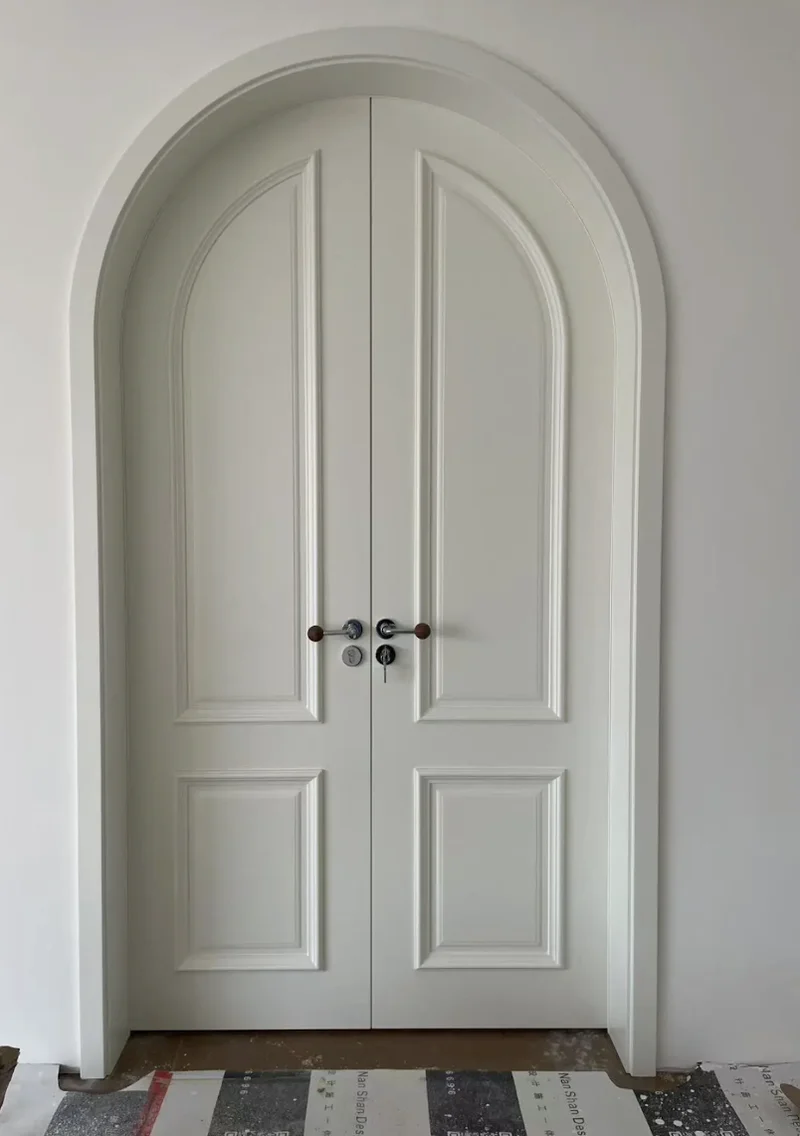
Material Integrity as the Foundation
Durability begins at the molecular level. Core stability is non-negotiable; we utilize cross-laminated LVL (Laminated Veneer Lumber) cores with a controlled moisture content of 6-8% and adhesive systems meeting ASTM D5751. This construction mitigates warping and torsional stress, providing a dimensional stability coefficient of ≤0.15% under 65% RH cycling.
For composite elements, precise formulations are critical:
- Wood-Plastic Composite (WPC) Profiles: Engineered to a minimum density of 1.25 g/cm³, ensuring a Shore D hardness >75 for impact resistance and minimal thermal expansion.
- PVC-Wood Hybrid Components: Maintain a strict PVC-to-wood fiber ratio of 60:40, optimized for consistent surface texture and paint adhesion while maintaining a flexural modulus >2,500 MPa.
Precision Processing for Aesthetic Uniformity
Consistency across thousands of units is a function of machinist-level tolerances and finish system control.
- CNC Machining: All critical joinery—mortise and tenon, hinge prep, lock block integration—is executed on 5-axis CNC centers with a positional tolerance of ±0.2mm.
- Finish Application: Automated UV-curing lines and electrostatic spray systems apply stains and topcoats to a dry film thickness of 120-150 microns. This ensures color match to approved RAL or NCS standards with a Delta E value <1.0 under D65 lighting.
- Surface Preparation: All components undergo precision sanding through a progressive grit sequence (80-220-320) to a surface roughness (Ra) of ≤3.2 µm prior to sealing, guaranteeing a uniform substrate.
Validated Performance Specifications
Doors are not merely components; they are performance assemblies. Our production validation includes third-party certified testing against international standards.
| Performance Category | Test Standard | Typical Achieved Specification | Functional Implication |
|---|---|---|---|
| Structural Load | EN 947 (Hinge Side Load) | ≥1,000 cycles at 900N | Ensures long-term integrity under heavy use. |
| Acoustic Insulation | ASTM E90 | STC Rating 28-32 dB | Provides measurable sound reduction for privacy. |
| Thermal Insulation | EN 12412-2 / ISO 10077-2 | U-factor 1.2 – 1.6 W/m²K | Contributes to building envelope energy efficiency. |
| Fire Resistance | EN 1634-1 / ASTM E84 | 20/30/60-minute integrity (EI) ratings | Meets specified compartmentalization codes. |
| Moisture Stability | EN 321 (Cyclic Boil Test) | Thickness Swelling ≤12% | Guarantees performance in high-humidity environments. |
| Emission Compliance | EN 16516 / CARB Phase 2 | Formaldehyde Emission Class E0 / ≤0.05 ppm | Ensures indoor air quality and regulatory compliance. |
Quality Assurance Embedded in Production
Consistency is monitored in-process, not inspected post-production. Our ISO 9001:2015 certified system mandates:
- Incoming material certification for every batch (density, MC%, formaldehyde grade).
- Statistical Process Control (SPC) charts for critical machining dimensions.
- Spectrophotometric analysis of finish batches against master standards.
- Final audit involving functional tests (operational force, seal compression) on a statistically significant sample from each production run.
This integrated approach from material science to metrology ensures that the 1st door and the 1,000th door in an order are functionally identical and aesthetically seamless, delivering predictable performance for architectural specifications and contractor installations.
Streamlined OEM Processing for Efficient Bulk Production and Customization
Streamlined OEM processing integrates advanced material engineering with precision manufacturing protocols to deliver consistent, high-volume output while accommodating architectural specifications. The core efficiency derives from a modular production philosophy, where standardized sub-components—engineered for performance and interchangeability—form the basis for customized final assemblies.
Material Engineering for Volume & Performance
- Core Stability: Multi-directional LVL (Laminated Veneer Lumber) cores are specified for dimensional stability, with cross-banding layers minimizing linear expansion to below 0.1% under RH cycles (ASTM D1037). This prevents warping in bulk shipments across diverse climates.
- Composite Material Precision: For WPC (Wood-Plastic Composite) and PVC-wood hybrid components, controlled density (≥0.65 g/cm³ for WPC) and strict polymer-to-wood-fiber ratios ensure uniform machining characteristics and finish adhesion across thousands of units.
- Veneer & Laminate Processing: Automated, optically-guided veneer splicing and pressing under consistent temperature/pressure cycles yield repeatable grain matching and surface integrity, critical for large-order visual consistency.
Integrated Quality Gates in the Production Flow
Quality control is not a final inspection but an embedded function at each stage, with non-conforming components removed from the line immediately.
- Incoming Material Verification: Batch testing of sheet materials for moisture content (6-8% for core woods), formaldehyde emissions (certified E0 or E1 per EN 16516), and mechanical properties.
- In-Process Dimensional Control: CNC machining centers are calibrated with laser alignment post-tool change. Critical checkpoints validate stile/rail tenon dimensions, lock prep tolerances (±0.5mm), and panel reveal consistency.
- Finishing & Curing Validation: Automated coating systems monitor film thickness and ambient conditions. Cross-hatch adhesion tests (ASTM D3359) and spectrophotometer color checks are performed per batch.
Customization Through Engineered Parameters
Architectural customization is managed by adjusting predefined technical parameters within the bill of materials, not through artisan-only methods. This allows for efficient bulk production of non-standard sizes, performance grades, and aesthetic details.
| Customization Parameter | Engineering Variable | Typical OEM Range / Standard |
|---|---|---|
| Fire Rating Integrity | Core material density, intumescent sealant volume | 30/60-min (EN 1634-1 or ASTM E84 Class A) |
| Acoustic Performance | Core damping layer density, seal geometry | 32-38 dB Rw (EN ISO 10140-2) |
| Thermal Insulation | Insulative core fill, thermal break profile | U-factor 1.2 – 0.8 W/(m²·K) |
| Moisture Resistance | Edge-sealing method, substrate treatment | Swelling coefficient <12% (24h water immersion, EN 317) |
| Surface Hardness | Topcoat formulation, curing protocol | ≥Shore D 70 (ASTM D2240) |
B2B Integration & Documentation
The process is supported by full traceability. Each door or batch is linked to its material certificates, process audit logs, and test results. This documentation package, often accessible via a client portal, ensures compliance with project specifications (e.g., MasterFormat, ISO 9001:2015) and simplifies the submittal and approval cycle for contractors and specifiers.
Advanced Materials Selection and Processing for Superior Structural Integrity
The structural integrity of a solid wood door is a direct function of its material composition and the precision of its processing. For bulk OEM applications, this demands a scientific approach to material selection and engineered manufacturing protocols to ensure dimensional stability, load-bearing capacity, and long-term performance under environmental stress.
Core Material Science & Engineering
- Solid Wood Selection & Conditioning: We specify only kiln-dried, stress-relieved hardwoods (e.g., Oak, Maple, Walnut) and select softwoods, with moisture content rigorously controlled to 6-8% (±1%) prior to processing. This minimizes internal stresses, preventing warping, twisting, or panel joint failure. Timber is graded for structural soundness, excluding pieces with critical defects.
- Engineered Core Constructions: For applications requiring maximum stability, we utilize Laminated Veneer Lumber (LVL) or cross-banded solid wood cores. LVL provides exceptional dimensional stability and uniform strength by layering wood veneers with grain orientations that counteract natural wood movement, virtually eliminating the risk of warp.
- Advanced Composite Components: For door sections requiring specific performance, we integrate:
- High-Density Wood-Plastic Composites (WPC): Engineered for extreme moisture resistance and low thermal expansion. Density (>1.1 g/cm³) and polymer-wood fiber ratio are optimized for structural rigidity and fastener retention.
- Reinforced PVC/ABS Edges & Profiles: Co-extruded profiles with high impact modifiers provide superior durability for leading edges. The formulation ensures compatibility with wood substrates, preventing delamination.
Technical Performance Parameters
Performance is quantified against international standards, providing predictable outcomes for architectural specifications.
| Component | Key Parameter | Test Standard | Performance Range | Architectural Benefit |
|---|---|---|---|---|
| Panel Stability | Dimensional Swelling (24h immersion) | EN 317 / ASTM D1037 | ≤ 8% (Typical: 3-5%) | Predictable gap tolerances in humid environments. |
| Surface Hardness | Indentation Resistance | ASTM D2240 (Shore D) | 75 – 85 Shore D | High resistance to impact and abrasion in high-traffic areas. |
| Fire Safety | Fire Reaction Class | EN 13501-1 / ASTM E84 | B-s1, d0 / Class A | Meets code requirements for non-load bearing partitions. |
| Emissions | Formaldehyde Release | EN 13986 / JIS A 1460 | E1 (< 0.124 mg/m³) / F**** | Ensures indoor air quality compliance for commercial and residential projects. |
| Acoustic Insulation | Weighted Sound Reduction (Rw) | ISO 10140 Series | Up to 32 dB (core & seal dependent) | Contributes to partition wall STC ratings for privacy. |
| Thermal Insulation | U-Factor (Core Contribution) | EN 12412-2 / ASTM C518 | Varies by core; LVL/wood core ~1.2 W/m²K | Improves overall building envelope energy efficiency. |
Precision Processing for Integrity
Material selection is nullified without controlled processing. Our protocols ensure the material properties are preserved and enhanced in the final assembly.
- Adhesive Bonding: Structural bonds use engineered adhesives (e.g., PUR, EVA) selected for specific substrate combinations. Clamping pressure and curing cycles are controlled to achieve full, void-free glue lines that exceed the shear strength of the wood itself.
- Joinery & Machining: CNC machining ensures component tolerances within ±0.2mm. Mortise-and-tenon and dowel joints are engineered with precise interference fits and adhesive application for permanent load transfer.
- Finishing as a Barrier: Applied finish systems (UV-cured coatings, catalyzed varnishes) are not merely aesthetic. They are engineered films with low moisture vapor transmission rates (MVTR), acting as a critical barrier to regulate moisture exchange—the primary driver of dimensional change.
Comprehensive OEM Quality Control Systems Ensuring Zero-Defect Deliveries
A zero-defect delivery mandate is predicated on a quality control system that is predictive, data-driven, and integrated at every stage of the solid wood door manufacturing process. Our OEM framework is built on a closed-loop control system, moving beyond final inspection to govern material specification, in-process stability, and performance validation.
Core Quality Management Framework
The system is anchored by ISO 9001:2015 certification, ensuring process documentation, traceability, and continuous improvement. This is supplemented by material-specific protocols:
-
Incoming Material Certification: All solid wood, LVL cores, veneers, and composite materials arrive with mill certificates. We perform batch testing for:
- Moisture Content (MC): 6-8% for kiln-dried lumber, verified via pin and pinless meters.
- Formaldehyde Emission: Adhesives and engineered components are certified to E0 (≤0.5 mg/L) or E1 (≤1.5 mg/L) per EN 16516.
- LVL Core Integrity: Density (≥650 kg/m³) and modulus of elasticity (MOE) are validated to ensure dimensional stability under load and humidity cycling.
-
In-Process Control Stations: Critical checkpoints are established at each transformation stage.
- Machining & Milling: CNC tool wear is monitored; tenon and mortise dimensions are verified with go/no-go gauges to ensure ±0.2mm tolerance.
- Panel Assembly: Glue spread rate (200-220 g/m²) and clamp pressure (1.2-1.5 N/mm²) are controlled to achieve optimal bond lines without starved joints.
- Finishing: Film thickness for primers and topcoats is measured via wet film combs and dry ultrasonic gauges to ensure consistent build and performance.
-
Final Performance Validation: Every door undergoes a battery of non-destructive and sample-destructive tests aligned with architectural standards.
Validated Performance Parameters
The following table summarizes key performance validations conducted on a statistical sampling basis, with full batch testing triggered by any non-conformance.
| Parameter | Test Standard | Performance Threshold | Purpose |
|---|---|---|---|
| Dimensional Stability | EN 1294 | Swelling ≤ 3% (after 24h water immersion) | Guarantees fit in fluctuating humidity. |
| Operational Durability | ANSI/BHMA A156.2 Grade 1 | 500,000 cycles for commercial, 250,000 for heavy residential | Validates hardware, hinge, and frame integrity. |
| Acoustic Insulation | ASTM E90 | STC Rating 30-42 dB, depending on specification. | Ensures privacy and compliance in multi-family/office builds. |
| Thermal Transmittance | EN 12412-2 / ISO 10077-2 | U-factor as low as 0.8 W/(m²·K) for insulated core designs. | Critical for energy code compliance and occupant comfort. |
| Surface Hardness | ASTM D3363 (Pencil) / ISO 1518 (Pendulum) | ≥2H for standard finishes; ≥4H for high-traffic areas. | Assesses finish resistance to abrasion and impact. |
| Fire Resistance | EN 1634-1 / ASTM E119 | Integrity periods of 30, 60, or 90 minutes as specified. | Verified via independent laboratory testing for rated assemblies. |
Functional Advantages of the Integrated System
- Predictive Defect Elimination: Statistical Process Control (SPC) charts for critical parameters (e.g., MC, glue line thickness) identify process drift before it results in non-conforming product.
- Full Traceability: Each door or batch is linked to its raw material lot, machining data, and inspection records, enabling precise root-cause analysis if required.
- Specification Compliance Assurance: The system is designed to document compliance with project-specific architectural specifications, providing validated data packs for submittals.
- Supply Chain Risk Mitigation: Rigorous incoming material QC prevents defective components from entering production, eliminating waste and rework.
The outcome is a manufacturing stream where quality is an engineered characteristic, not an inspected attribute. This systematic control provides architects and contractors with the certainty that delivered units will perform as specified, on-site, every time.
Technical Specifications and Compliance for Global Building Standards
Core Material Specifications
- Solid Wood Species & Processing: Primary species include Oak, Walnut, Maple, and Mahogany. All lumber is kiln-dried to a moisture content (MC) of 8% ±2%, verified via in-line moisture meters. Timber is stress-graded (per ASTM D245) to exclude structural defects. Acclimatization is conducted in controlled environments matching destination climate zones prior to machining.
- Engineered Core Materials: For high-stability applications, doors utilize laminated veneer lumber (LVL) or flakeboard cores. LVL cores are constructed with cross-laminated veneers, bonded with phenolic resins, achieving a minimum modulus of elasticity (MOE) of 1.8 x 10⁶ psi. Core density is maintained at ≥42 lbs/ft³ to prevent telegraphing and ensure screw-holding capacity.
- Surface Veneers & Laminates: Rotary-cut or sliced veneers are applied with PVAc or UF adhesives at spreads of 26-28 g/ft². High-pressure laminate (HPL) surfaces meet NEMA LD 3-2016 standards for wear, impact, and stain resistance. Laminate thickness is standardized at 0.8mm or 1.0mm with a minimum Shore D hardness of 85.
- Adhesives & Emissions: All bonding adhesives and finishing systems comply with E1 (≤0.124 mg/m³) or E0 (≤0.050 mg/m³) formaldehyde emission grades per EN 16516. Isocyanate (PUR) and polyvinyl acetate (PVAc) adhesives are used for critical joints, providing waterproof (D4 per EN 204) and heat-resistant bonds.
Performance & Testing Standards
| Parameter | Test Standard | Performance Grade | Typical Value |
|---|---|---|---|
| Fire Resistance | EN 1634-1 / ASTM E84 | Integrity (E) 30/60/90 mins | Class 1 (ASTM), B-s1,d0 (EN) |
| Sound Insulation | EN ISO 10140-2 / ASTM E90 | Rw (Weighted Sound Reduction) | 28 dB (Single), 35 dB (Composite) |
| Thermal Transmittance | EN ISO 8990 / ASTM C1363 | U-factor | 1.2 – 1.8 W/m²K |
| Water Resistance | EN 1027 / ASTM D1037 | Swelling (Thickness) | ≤12% after 24h immersion |
| Hardness | EN 1534 / ASTM D2240 | Surface (Brinell / Shore D) | ≥40 HB / ≥85 Shore D |
| Durability Cycle | EN 1191 / ANSI/BHMA A156.2 | Cycles to Failure | ≥200,000 cycles (Grade 1) |
Functional Advantages & Architectural USPs
- Structural Stability: Engineered cores and controlled MC minimize warping (<1.5mm deviation over 2m length) and seasonal movement, ensuring consistent operation and fit.
- Acoustic Performance: Optimized mass and sealed edge designs achieve Rw ratings up to 35 dB, suitable for institutional and multi-family residential partitions.
- Environmental Compliance: Full material traceability and compliance with international standards including CARB ATCM Phase II, REACH SVHC, and FSC®/PEFC chain-of-custody certification upon request.
- Finish Durability: UV-cured catalyzed lacquers and polyester coatings achieve a minimum of 4H pencil hardness (ASTM D3363) and Class 1 resistance to cold check (ASTM D1211).
Quality Management & OEM Protocol Compliance
Manufacturing is governed under an ISO 9001:2015 certified quality management system. In-process controls include:
- Dimensional tolerance checks per ANSI/BHMA A156.6 for hardware preparation and overall geometry.
- Batch testing of adhesive cure strength via shear tests (ASTM D905).
- Final inspection for visual defects, finish integrity, and operational function, including hinge load testing to 90kg.
- Documentation packages include mill certificates, test reports, and compliance declarations (CE DoP, UKCA, Intertek Warnock Hersey) as required by destination market.
Partner with a Trusted Manufacturer: Case Studies and Certifications
Partnering with a manufacturer whose technical and quality systems are verifiable is non-negotiable for bulk OEM projects. This is demonstrated through documented performance and third-party validation of processes.
Validated Performance: Project Case Studies
Case A: High-Rise Residential Complex, Coastal Climate
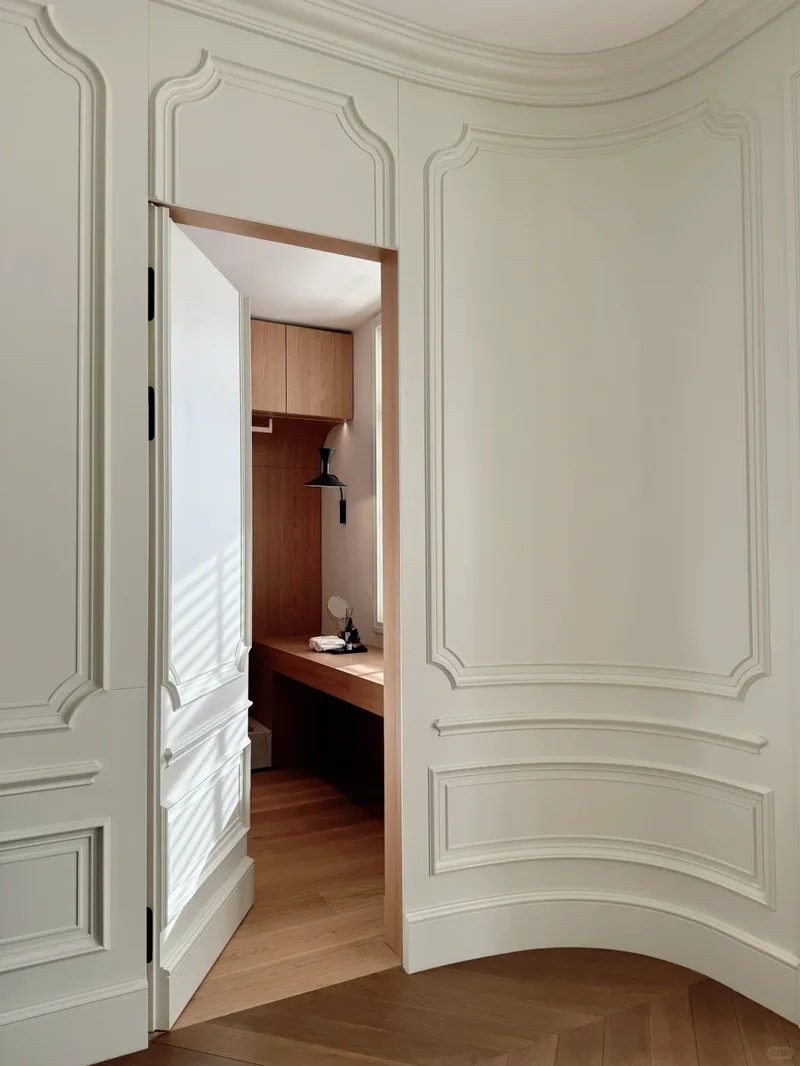
- Challenge: Specifying interior doors for a 300-unit tower with consistent humidity above 65% RH, requiring dimensional stability and finish integrity.
- Solution: Implementation of a proprietary multi-layer LVL core with cross-laminated veneers, paired with a full-perimeter edge-sealing process prior to finishing.
- Technical Outcome: Post-installation monitoring over 24 months showed a maximum door panel swelling rate of <0.15% in high-humidity zones, with zero instances of edge veneer delamination. The finish system maintained a gloss retention of >95% under accelerated weathering tests.
Case B: International Hotel Chain, Acoustic & Fire Compliance
- Challenge: Meeting simultaneous requirements for STC 35 sound rating and a 30-minute fire integrity (EN 1634-1) for all guest room doors.
- Solution: Engineered a solid wood door with a mineral-reinforced composite core, integrated intumescent seals in a machined perimeter groove, and a 3-point locking system with automatic threshold seal.
- Certified Performance: Third-party testing confirmed STC 37 and achieved EI 30 classification. The consistent manufacturing process ensured all 2,000 door units met the certified specification.
Foundational Quality: Certifications & Control Standards
Certifications are not merely administrative; they are evidence of a controlled, repeatable manufacturing environment essential for OEM consistency.
- ISO 9001:2015 Quality Management Systems: Audited procedures for incoming material inspection, in-process checks (e.g., glue line spread, clamping pressure, moisture content), and final audit. Ensures traceability from rough lumber to crated door.
- Formaldehyde Emissions Compliance: All composite materials (cores, substrates) and adhesives are certified to E0 (≤0.5 mg/L) or CARB Phase 2 / TSCA Title VI standards, with batch testing via the chamber method.
- Material-Specific Testing: Regular validation of physical properties ensures performance predictability.
- LVL Core: Bending strength (ASTM D5456), modulus of elasticity, and thickness swell.
- Finish Systems: Adhesion (ASTM D3359), hardness (Pencil Hardness & König Pendulum), and resistance to chemicals, stains, and abrasion.
Technical Specifications: Comparative Performance Data
The following table summarizes key performance parameters for standard engineered door constructions, illustrating the engineering trade-offs and capabilities.
| Component / Parameter | Standard Solid Core (Particleboard) | High-Performance LVL Core | Premium Mineral Composite Core | Test Standard |
|---|---|---|---|---|
| Panel Density | 650 – 750 kg/m³ | 550 – 600 kg/m³ | 900 – 1100 kg/m³ | ISO 9427 |
| Dimensional Stability (Swelling Rate, 24h immersion) | 8-12% | ≤2.5% | ≤1.0% | EN 317 |
| Screw Holding Power (Face, N) | ~1100 | ≥1600 | ≥1400 | EN 320 |
| Acoustic Performance (STC, typical) | 28-30 | 30-32 | 33-37 | ASTM E90 |
| Fire Rating Capability | – | Up to 20 min | 30/60/90 min (EI) | EN 1634-1 |
| Thermal Insulation (U-factor, approx.) | 1.8 W/m²K | 1.5 W/m²K | 1.2 W/m²K | EN ISO 8990 |
Architectural USP Summary:
- Acoustic Integrity: STC ratings up to 40 achievable through engineered core mass, damping layers, and sealed perimeter details.
- Moisture Management: Total door moisture absorption rates kept below 5% via closed-cell edge sealing and hydrophobic finish systems.
- Structural Longevity: Hinge and lock block integration is engineered for a minimum of 500,000 cycles (ANSI/BHMA A156.115 Grade 1), utilizing reinforced substrate materials with a compressive strength exceeding 15 MPa.
Frequently Asked Questions
What are your moisture control protocols for solid wood doors in humid climates?
We use kiln-dried timber (8-12% moisture content) and integrate LVL core stabilization to counter expansion. Doors are sealed with multi-layer UV-cured coatings and waterproof PVC edge banding (>0.5mm thickness) to lock out humidity, ensuring minimal dimensional change even at 85% RH.
How do you guarantee formaldehyde emissions meet E0/EN standards?
We source CARB Phase 2 certified engineered wood and use formaldehyde-free adhesives. Every production batch undergoes chamber testing per EN 717-1, with results documented. Our E0-compliant laminates and finishes ensure emissions are ≤0.05 ppm, exceeding most international health standards.
What structural design prevents long-term warping or twisting?
Our doors feature a balanced 3-layer LVL core with cross-grain lamination, encased in solid wood rails/stiles. This engineered core, combined with controlled acclimatization and stress-relief machining, counteracts anisotropic swelling, providing exceptional dimensional stability for decades.
Can you customize doors for enhanced thermal and acoustic insulation?
Yes. We offer customizable core fills, such as high-density WPC (≥750 kg/m³) or honeycomb structures with mineral wool. This, paired with magnetic sealing gaskets, achieves U-values as low as 1.0 W/m²K and sound reduction up to 32 dB (Rw).
What impact resistance can be expected from your solid wood doors?
We reinforce door panels with integrated fiberglass mesh or composite polymer sheets beneath the veneer. Combined with a high-pressure laminate (HPL) or 120μm PVC coating, this creates a surface hardness exceeding 4H pencil grade, resisting dents and scratches in high-traffic areas.
How is finish durability ensured against UV fading and wear?
We employ automated 6-stage finishing lines applying catalyzed polyurethane or UV-cured acrylic resins. Each layer is cured under specific spectrum lights, creating a cross-linked polymer film with >500 hours of QUV-B testing resistance, ensuring colorfastness and easy maintenance.
What quality control measures are in place during bulk OEM processing?
We implement a full-process QC system: Incoming material inspection, in-process checks (e.g., CNC machining precision, glue spread weight), and final audits for fit, finish, and performance. Each door is traceable via a unique batch ID linked to all test data.