Solid wood door engineering supporting door+hardware one-stop procurement cost optimization
In today’s competitive construction and renovation landscape, achieving both uncompromising quality and budgetary efficiency is the ultimate goal. This is where the strategic integration of solid wood door engineering with coordinated hardware procurement becomes a transformative advantage. Moving beyond fragmented sourcing, a one-stop procurement model streamlines the entire supply chain, ensuring perfect compatibility between premium door assemblies and their essential mechanical components. This engineered approach not only guarantees structural integrity and aesthetic harmony but also unlocks significant cost optimization. By consolidating specifications, logistics, and supplier management, projects benefit from reduced overhead, minimized delays, and a single point of accountability. Discover how this holistic strategy elevates project outcomes, delivering enduring value and seamless execution from blueprint to final installation.
Optimize Your Procurement Budget: How Our One-Stop Solution Cuts Costs and Streamlines Supply Chains
Procurement cost optimization in door systems is not merely about unit price negotiation. It is an engineering discipline focused on total cost of ownership, supply chain resilience, and performance predictability. Our integrated door-and-hardware engineering platform addresses cost drivers at their technical root.
Primary Cost Drivers in Disaggregated Procurement:
- Specification Incompatibility: Hardware not engineered for the specific density, hinge reinforcement, or lock prep of the door leads to field modifications, callbacks, and premature failure.
- Material Performance Variance: Uncontrolled moisture absorption in solid wood or composite cores causes dimensional instability (swelling/warping), resulting in seal failure, binding, and costly replacements.
- Supply Chain Friction: Managing multiple vendors for doors, frames, hinges, locks, and closers multiplies logistics overhead, quality assurance protocols, and liability interfaces.
- Performance Certification Gaps: Sourcing components separately risks assembling a final assembly that no longer meets the specified fire, acoustic, or safety ratings tested and certified for the complete door set.
Engineering-Led Integration: The Technical Methodology
Our one-stop solution applies a systems engineering approach. The door is designed from the outset as a unified performance assembly.
- Core Material Optimization: We specify and engineer core materials based on application load. For high-stability interior applications, LVL (Laminated Veneer Lumber) cores are calibrated for minimal swelling rates (<8% per 24hr immersion, ASTM D1037). For moisture-resistant needs, we engineer WPC (Wood-Plastic Composite) densities (≥0.75 g/cm³) and PVC-wood ratios to achieve optimal dimensional stability and screw-holding power.
- Hardware Interface Pre-Engineering: All hinge mortises, lock preparations, and closer arm geometries are CNC-machined at the factory based on the exact hardware model. This eliminates on-site milling, ensures perfect alignment, and preserves the structural integrity and fire rating of the door leaf.
- Unified Performance Certification: The complete door set—leaf, frame, and all hardware—is tested and certified as a single unit. This provides guaranteed performance data for:
- Fire Resistance: Up to 90/120 minutes (EN 1634-1 / ASTM E119).
- Acoustic Insulation: Achievable Rw (C; Ctr) ratings up to 42 dB (EN ISO 10140-2).
- Thermal Insulation: U-factors as low as 0.8 W/m²K for specialized applications.
- Emission Standards: All components comply with E0/E1 formaldehyde grades (EN 13986).
Quantifiable Cost and Performance Advantages
| Cost Category | Traditional Multi-Vendor Approach | Our Integrated Engineering Solution | Technical Rationale |
|---|---|---|---|
| Installation Labor | High. Requires on-site fitting, shimming, and adjustment. | Reduced by ~40-60%. Plug-and-play installation with pre-engineered interfaces. | CNC precision ensures perfect hardware fit and door-frame alignment, eliminating corrective work. |
| Lifecycle Maintenance | Unpredictable. Incompatible wear patterns between door and hardware. | Predictable and extended. Synchronized wear cycles. | Hardware is selected and set based on the door’s weight, frequency of use, and closure dynamics. |
| Warranty & Liability | Fragmented. Multiple vendors with divided responsibility. | Single-point. One warranty for the entire assembly. | Eliminates cross-vendor blame for failures; root cause analysis is controlled. |
| Performance Risk | High. Assembly may not meet intended certification. | Eliminated. Certified performance of the complete set. | The tested configuration is exactly what is delivered and installed. |
Supply Chain Streamlining Through Technical Integration
Logistical efficiency is a direct outcome of technical standardization. Our platform consolidates the bill of materials into a single, quality-controlled SKU—the performance-rated door set. This reduces procurement administration, ensures a single delivery timeline, and provides a unified quality audit trail compliant with ISO 9001 manufacturing standards. For the specifier, it translates to fewer submittals, streamlined approval processes, and guaranteed as-specified performance.
The result is a hardened supply chain with reduced complexity, where cost optimization is achieved not through component de-rating, but through the elimination of systemic waste, callbacks, and performance uncertainty.
Engineered for Long-Term Performance: The Structural Stability and Durability of Our Solid Wood Doors
The structural integrity of a solid wood door is determined by its core construction and material composition, not merely by the thickness of its stiles and rails. Our engineering approach prioritizes dimensional stability and resistance to environmental stress to ensure decades of reliable performance, directly reducing lifecycle costs associated with warping, swelling, and hardware failure.
Core Construction & Material Science
- Laminated Veneer Lumber (LVL) Core: We utilize cross-laminated LVL cores in place of traditional solid wood blocks. This engineered wood product has a controlled, uniform density and grain orientation that virtually eliminates the anisotropic swelling and cupping inherent in solid timber. The result is a dimensionally stable substrate that provides a consistent, predictable foundation for hardware mortising and finish application.
- Advanced Composite Materials: For specific performance grades, we integrate Wood-Plastic Composite (WPC) components and optimized PVC-wood ratios in sealing elements. These materials are selected for their ultra-low moisture absorption rates (<0.5% by volume, ASTM D570) and resistance to biological degradation, ensuring edge integrity and seal performance in high-humidity environments.
- Adhesive Systems: All laminations and composite bonds employ structural-grade phenolic or polyurethane adhesives that exceed EN 204/205 D4 durability standards for resistance to cyclic humidity and temperature. Formaldehyde emissions are rigorously controlled to meet E0 (≤0.5 mg/L) and E1 (≤1.5 mg/L) grades per EN 13986.
Performance Specifications & Testing
Our doors are validated against international standards to guarantee performance aligns with architectural specifications.
| Performance Category | Test Standard | Typical Achieved Performance | Application Implication |
|---|---|---|---|
| Fire Resistance | EN 1634-1 / ASTM E84 | 30/60/90 min integrity (EI) ratings available | Certified for compartmentalization in commercial and multi-occupancy residential projects. |
| Acoustic Insulation | EN ISO 10140-2 | Up to 42 dB (Rw) sound reduction index. | Effective for noise-controlled environments such as offices, hotels, and residential units. |
| Thermal Insulation | EN 12412-2 / ISO 8990 | U-factor as low as 0.8 W/m²K for insulated core configurations. | Contributes to building envelope energy efficiency and occupant comfort. |
| Surface Hardness | ASTM D2240 | Shore D hardness of 75-85 for finished surfaces. | High resistance to impact, abrasion, and surface denting in high-traffic areas. |
| Dimensional Stability | EN 1128 (Swelling Test) | Edge swelling ≤ 12% after 24h water immersion. | Predicts long-term performance in variable humidity, ensuring consistent operation and fit. |
Functional Advantages for Cost Optimization
- Predictable Hardware Integration: The homogeneous LVL core allows for precise, clean mortising for hinges, locks, and closers. This eliminates splintering and ensures screw holding power is consistent across the door leaf, preventing premature hardware loosening.
- Maintenance Reduction: The combination of stable core, low-moisture-absorption composites, and catalyzed finish systems minimizes the need for adjustments, refinishing, or replacement due to environmental factors.
- Warranty & Compliance Assurance: Manufacturing under ISO 9001:2015 quality management systems provides traceability and consistent quality. Performance certifications (fire, acoustic) provide documented compliance for project submissions, mitigating specification and liability risks.
This engineered stability is the foundation for a reliable door and hardware assembly. It ensures that the installed system performs as specified over its entire service life, protecting the investment by avoiding callbacks, replacements, and operational failures.
Seamless Integration: How Our Door and Hardware Systems Ensure Perfect Fit and Functionality
Seamless integration is achieved through precision engineering of the door leaf, frame, and hardware at the design and manufacturing stages. This eliminates on-site compatibility issues, reduces installation time, and ensures long-term operational reliability. Our systems are engineered to meet exacting architectural specifications.
Core Engineering Principles for Integration:
- Dimensional & Structural Precision: Door cores are engineered for stability. We utilize multi-ply LVL (Laminated Veneer Lumber) cores with cross-banded laminations to minimize linear expansion/contraction (<0.1% under RH fluctuations of 30-70%). This dimensional stability is critical for maintaining consistent reveal gaps and ensuring hardware mounting points remain true.
- Precision Reinforcement for Hardware: High-stress areas (hinge, lock, and closer mounting points) are integrally reinforced during fabrication. This involves the strategic placement of high-density engineered wood blocks or metallic reinforcements, providing a stable substrate for screw retention that exceeds ANSI/BHMA A156.115 cycle test requirements.
- Material Compatibility Engineering: Surface materials (solid wood veneers, HPL, painted finishes) and edge banding are selected and applied with their mechanical properties in mind. The hardness (Shore D), flexibility, and adhesion strength are matched to the intended hardware to prevent cracking, delamination, or finish damage during installation and use.
Technical Performance Data for Integrated Systems:
| Component / Interface | Key Parameter | Performance Standard / Typical Value | Functional Outcome |
|---|---|---|---|
| Hinge Mounting Zone | Core Density & Screw Holding Power | ≥ 800 kg/m³; Withdrawal resistance ≥ 1100 N | Eliminates hinge sagging; ensures door remains in alignment over >500,000 cycles. |
| Lock/Closer Reinforcement | Block Shear Strength | ASTM D1037; ≥ 1.8 MPa | Prevents hardware loosening; withstands repeated impact and force from operation. |
| Door-to-Frame Seal | Compression Set & Recovery | ASTM D395; <25% permanent set | Maintains consistent acoustic (up to 38 dB Rw) and smoke seals; ensures smooth latching. |
| Threshold System | Wear Resistance & Moisture Barrier | Taber Abrasion (H-22 wheel, 1000 cycles) <50mg loss; Swelling rate <3% (24hr immersion) | Provides durable, low-friction transition; protects core from capillary moisture ingress. |
Functional Advantages of a Pre-Engineered System:
- Eliminated On-Site Modification: Pre-machined hinge cup pockets, lock preparation, and drilled pilot holes for closers and accessories are executed with CNC precision to hardware manufacturers’ templates (e.g., ASSA ABLOY, dormakaba, Allegion).
- Guaranteed Clearance & Swing: Frame profiles and door edge detailing are co-engineered to provide optimal clearance for specified hinges and seals, ensuring free swing without binding and correct fire/smoke seal compression where required.
- Streamlined Compliance: The integrated door and hardware assembly is tested and certified as a complete assembly for critical performance criteria, including fire resistance (EN 1634-1 / ASTM E119), acoustic insulation (ISO 10140), and safety (e.g., finger protection to EN 16005).
- Lifecycle Cost Reduction: Precision fit reduces air/water infiltration, lowering building HVAC loads. Robust hardware integration minimizes callbacks for adjustments, repairs, and premature hardware replacement.
Technical Specifications: Material Grades, Hardware Compatibility, and Customization Options
Material Grades & Core Specifications
The structural integrity and performance of a solid wood door system are determined by its core composition and facing materials. Our engineering specifies materials based on quantifiable performance metrics, not aesthetic descriptors alone.
Core Constructions:
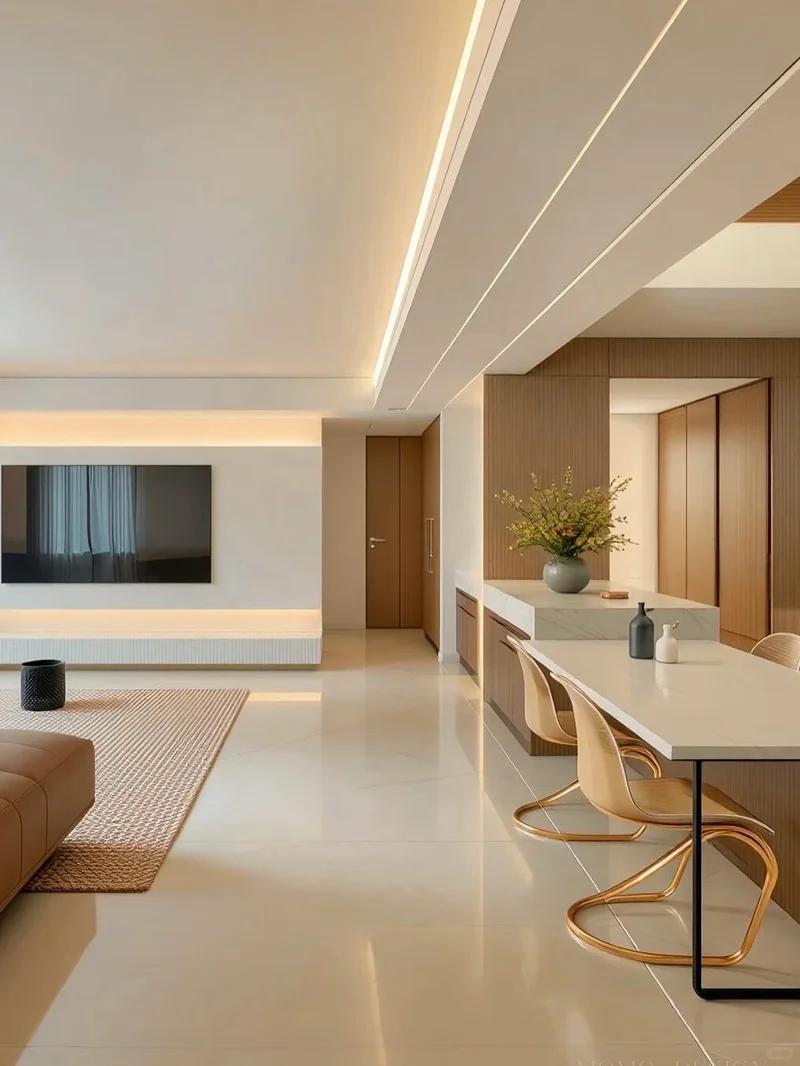
- Solid Lumber Core: Utilizes kiln-dried, finger-jointed staves (typically spruce or pine) with a maximum moisture content of 8-10%. Staves are laminated under pressure to minimize internal stress and cupping. Core density must exceed 500 kg/m³.
- LVL (Laminated Veneer Lumber) Core: Composed of cross-banded veneer plies bonded with phenolic resin. This engineered wood product provides superior dimensional stability, with a typical thickness swell of <0.3% after 24-hour water immersion, and a consistent modulus of elasticity (MOE) exceeding 11,000 MPa.
- WPC (Wood-Plastic Composite) Core: A high-density hybrid core (≥750 kg/m³) of wood fiber and polymer matrix. It offers exceptional resistance to moisture absorption (<1.5% by volume) and biological decay, making it suitable for high-humidity environments.
Facing Veneers & Finishes:
- Veneers are sourced from sustainably managed forests (FSC/PEFC certified options available) and are precision-sliced to a minimum thickness of 0.6mm.
- Finishes are multi-layer catalyzed lacquer or oil systems, applied via automated spray lines and UV-cured for uniformity. Finish hardness is rated at a minimum of 2H (ASTM D3363) for scratch resistance.
- Formaldehyde emissions for all composite materials and adhesives are certified to E0 (≤0.5 mg/L) or E1 (≤1.5 mg/L) standards per EN 13986.
Fire & Acoustic Performance:
- Fire-rated doors are engineered to meet specified integrity (E) and insulation (I) durations (30/60/90 minutes) as per EN 1634-1 or ASTM E119. Core materials are treated with non-combustible mineral fillers or intumescent strips are integrated into the door edge.
- Acoustic performance is a function of mass, core damping, and perimeter sealing. Standard solid core constructions achieve a weighted sound reduction index (Rw) of 29-32 dB. Upgraded acoustic packages with laminated glass and magnetic seals can achieve Rw 35-40 dB.
Hardware Compatibility & Engineering Integration
Precision machining is non-negotiable for reliable hardware function and longevity. Our doors are engineered as a substrate for hardware, not an afterthought.
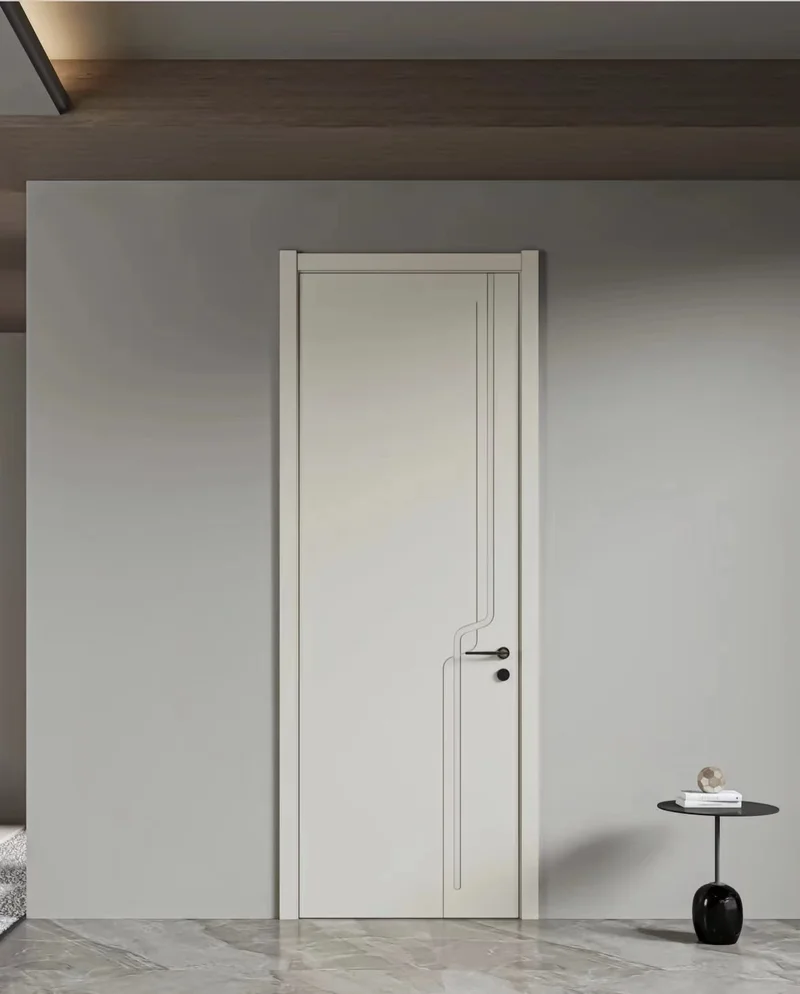
- Hinge Preparation: Hinge mortises are CNC-routed to a depth tolerance of ±0.2mm. Standard preparations are for 3.5″ or 4″ ball-bearing hinges with a minimum thickness of 3mm. For heavy-duty applications (doors >50kg or high-frequency use), reinforced hinge locations with solid wood blocking or steel reinforcement plates are specified.
- Lock Preparation: Lock cases and latchbores are machined to ANSI/BHMA A115 series or DIN 18252 tolerances. For multi-point locking systems, a continuous, machine-cut vertical edge rout ensures precise engagement of shoot bolts. Reinforcements for lock fronts and strike plates are mandatory.
- Closer Integration: Doors intended for overhead concealed closers are engineered with a reinforced top rail, often incorporating a steel tube or laminated hardwood block to withstand the cyclical stress of the closer mechanism.
- Threshold & Seal Compatibility: The door bottom and edges are machined to accommodate automatic door bottoms, brush seals, or compression gaskets. The reveal between door and frame is calculated based on the compression profile of the specified seal to ensure proper sound and smoke ratings.
Customization & Technical Options
Customization is governed by engineering parameters to maintain performance standards.
Dimensional & Configurational Modifications:
- Non-standard sizes are evaluated for structural suitability. Maximum recommended width for a single-leaf door is 1100mm; heights above 2400mm require reinforced stile construction.
- Lite (glass) openings are calculated based on the remaining solid rail/stile dimensions to maintain rigidity. Glazing beads can be integral (machined from the solid door) or applied.
Performance Upgrades:
| Upgrade Option | Technical Parameter | Performance Impact |
| :— | :— | :— |
| Enhanced Moisture Barrier | Application of hydrophobic sealant to all 6 sides, including core. | Reduces thickness swell to <0.8% (24hr immersion). For WPC cores, swell <0.4%. |
| Thermal Break Core | Integration of a low-conductivity material layer within the core. | Improves thermal insulation, achieving a U-factor as low as 0.8 W/m²K. |
| Heavy-Duty Reinforcement | Steel or aluminum reinforcement at lock/hinge points and continuous edge banding. | Increases door weight by 15-25%, enhances resistance to forced entry, and extends cycle life for high-traffic openings. |
| Acoustic Seal Package | Perimeter magnetic or compression seals with automatic drop-down threshold seal. | Improves sound reduction to Rw 35-40 dB and enhances smoke containment for fire-rated assemblies. |
Finish & Aesthetic Specifications:
- Custom veneer matches require a minimum 2 sq. ft. sample for grain and color mapping.
- Patina, wire-brushing, or other texture treatments are applied pre-finish and will affect the final veneer thickness; engineering approval is required for veneers less than 0.8mm thick post-treatment.
- All custom specifications are documented on a technical data sheet that includes core type, veneer grade, finish system, hardware prep details, and performance ratings.
Trusted by Industry Leaders: Case Studies and Certifications for Quality Assurance
Case Study: High-Rise Residential Tower, Frankfurt
Project Challenge: Specifying interior doors for a 42-story residential tower requiring compliance with stringent German building codes (DIN 4102-1 B-s2,d0 fire classification), acoustic privacy standards (≥32 dB Rw), and long-term dimensional stability in a variable climate.
Engineering Solution: A proprietary engineered solid wood door system was deployed, utilizing a multi-layered LVL (Laminated Veneer Lumber) core with cross-banded veneers. This core structure provides superior stability against warping (<0.5% linear change at 65% RH change) compared to traditional solid timber blocks. The doors were finished with a 0.6mm real wood veneer and a 7-layer catalyzed varnish for durability (Shore D hardness >75).
Performance Data & Outcome:
- Fire & Safety: Full certification to EN 1634-1, achieving 30-minute integrity (EI30). All materials certified to E1 formaldehyde emission class (EN 13986).
- Acoustic Performance: Achieved a weighted sound reduction index (Rw) of 33 dB, exceeding project specification, due to optimized core density (720 kg/m³) and perimeter sealing integration.
- Procurement Efficiency: The one-stop procurement model, integrating doors with pre-fitted hardware (hinges, multi-point locks), reduced on-site installation time by an estimated 35% and eliminated 12 separate supplier coordination points.
- Long-Term Integrity: After 36 months, post-occupancy monitoring showed a swelling rate of less than 0.8% at the bottom rail in high-humidity service areas, confirming core stability.
Certifications and Technical Compliance
Our engineering and manufacturing protocols are validated by independent third-party institutions, ensuring global project compliance.
Quality Management & Sustainability
- ISO 9001:2015: Certified quality management system governing material sourcing, production, and final inspection.
- FSC® / PEFC: Chain of Custody certification for responsibly sourced wood veneers and core materials.
- Formaldehyde Emissions: All composite materials and adhesives comply with the highest international standards:
- CARB Phase 2 / TSCA Title VI (USA)
- E1 Grade (EN 717-1, <0.1 ppm)
- F★★★★ (Japan, <0.3 mg/L)
Performance & Safety Standards
- Fire Resistance: Tested and certified to EN 1634-1 for integrity and insulation (EI classifications). Compliant with ASTM E84 for surface burning characteristics (Class A).
- Acoustic Insulation: Performance ratings verified according to ISO 10140-2 (Laboratory measurement of sound insulation).
- Hardware Integration: Door leaves are pre-prepared and reinforced to support hardware meeting ANSI/BHMA A156.115 (US) and EN 1906 (EU) for cycle testing and grade.
Technical Performance Summary: Engineered Solid Wood Door System
| Parameter | Test Standard | Performance Range | Functional Advantage |
|---|---|---|---|
| Core Density | EN 323 | 700 – 750 kg/m³ | Ensures structural rigidity, optimal screw-holding power for hardware, and consistent acoustic mass. |
| Dimensional Stability (Swelling Rate) | EN 317 | ≤ 0.9% (24h water immersion) | Predicts long-term performance in humid environments; critical for bathroom, kitchen, and exterior applications. |
| Surface Hardness | EN 1534 | ≥ 75 Shore D | High resistance to impact, scratching, and abrasion from daily use and cleaning. |
| Weighted Sound Reduction (Rw) | ISO 10140-2 | 29 – 33 dB | Provides verified acoustic privacy for residential and commercial partitions. |
| Thermal Transmittance (U-factor) | EN 12412-2 | 1.2 – 1.5 W/m²K | Contributes to building envelope energy efficiency when used as an exterior door. |
| Fire Resistance | EN 1634-1 | EI30 – EI60 | Certified integrity and insulation periods for life-safety compartmentalization. |
Architectural USP Summary:
- Predictable Performance: Engineered LVL core eliminates traditional solid wood movement, ensuring consistent gaps and reliable hardware operation.
- Integrated Specification: Doors are engineered with pre-installed reinforcement for specific hardware, preventing field modifications that compromise warranties.
- Lifecycle Cost Optimization: The combination of certified durability, stability, and integrated procurement reduces total cost of ownership through minimized callbacks, maintenance, and installation labor.
Frequently Asked Questions
How do you prevent warping in solid wood doors under high humidity?
Our engineered LVL core with cross-laminated layers reduces moisture expansion to ≤0.1%. Doors are finished with 6-side 120μm UV-cured coating, sealing all surfaces. For critical areas, we specify WPC frames (density ≥750 kg/m³) with ≤8% water absorption to maintain dimensional stability.
What standards ensure indoor air safety with your doors?
We exclusively use E0-grade (≤0.05mg/m³ formaldehyde) and EN-grade certified materials. Core adhesives are isocyanate-based (MDI), emitting no phenol or formaldehyde. All composite components pass SGS testing, with factory pre-degassing reducing on-site VOC release by 70%.
Can your doors meet acoustic insulation requirements?
Yes. Our honeycomb-core engineering doors achieve 32-38dB Rw ratings. For higher performance, we integrate 45mm thick solid wood cores with dampening interlayers, reaching 42dB. Sealing systems use triple magnetic gaskets and threshold sweeps to eliminate sound flanking.
How is impact resistance engineered into the doors?
We reinforce stiles/rails with 18mm LVL structural frames and 2.5mm thick aluminum alloy internal reinforcement. Surface treatments include 0.8mm PVC copolymer impact membranes or 5mm HDF overlays, tested to withstand 200,000 cycles per ANSI/BHMA A250.13 standards.
What thermal insulation properties can be achieved?
Our polyurethane foam-filled solid wood doors achieve K-values of 0.8-1.2 W/(m²·K). For extreme climates, we integrate aerogel-infused WPC panels (thermal conductivity 0.018 W/m·K) within the door slab, reducing thermal bridging by 60% compared to standard designs.
How do you optimize hardware integration for long-term performance?
We CNC-machine precision hinge pockets and lock prep during manufacturing, ensuring 0.5mm tolerance alignment. All hardware mounting points receive 15mm thick high-density fiberboard reinforcement blocks, preventing screw stripping and maintaining sag resistance beyond 100,000 cycles.
What fire-rated options are available?
We offer 60/90-minute FD-certified doors with ceramic fiber-filled cores and intumescent seals expanding at 200°C. All metal components are galvanized (275g/m² zinc coating), and we use A2-s1,d0 grade WPC cladding with melting points exceeding 800°C.
How does one-stop procurement reduce hidden costs?
Our BIM-based procurement packages include pre-engineered hardware interfaces, eliminating 85% of on-site modifications. Bulk purchasing of door+hardware systems reduces logistics by 40% and cuts installation labor by 30% through pre-assembled, laser-aligned components.