Steel door wholesale for building material distributors
In the competitive landscape of building material distribution, securing a reliable and high-quality product line is paramount to both profitability and reputation. For distributors seeking to fortify their offerings with durable, secure, and versatile solutions, a strategic partnership with a dedicated steel door wholesaler is a decisive advantage. This gateway to premium inventory unlocks access to a range of styles—from commercial-grade entrances to sleek residential designs—all built to meet rigorous safety and performance standards. By streamlining your supply chain through wholesale channels, you gain the competitive edge of consistent quality, scalable inventory, and enhanced margins. This article explores how leveraging steel door wholesale partnerships can build a stronger, more resilient foundation for your distribution business, opening doors to sustained growth and customer satisfaction.
Maximize Project Efficiency with High-Performance Steel Doors for Distributors
High-performance steel doors are engineered systems designed to meet precise architectural specifications while streamlining procurement and installation for distributors. Core efficiency gains are realized through standardized components, predictable performance data, and compliance with international building codes, reducing project risk and callbacks.
Material & Construction Specifications
Performance is dictated by material selection and fabrication integrity. Critical factors include:
- Cold-rolled steel skins: Typically 20-24 gauge, with a minimum yield strength of 33 ksi. A high-quality, electrophoretically applied epoxy primer is non-negotiable for corrosion resistance prior to finishing.
- Core stability: Polyurethane or mineral wool cores are standard. Polyurethane provides superior thermal insulation (U-factors as low as 0.20 Btu/(hr·ft²·°F)), while mineral wool offers enhanced fire resistance. Core adhesion must prevent delamination under thermal cycling.
- Edge reinforcement: A fully welded, reinforced frame (16-gauge steel is typical) and a magnetic or compression-type gasket system are essential for structural rigidity and sealing performance.
Quantified Performance Advantages
Distributors can specify with confidence based on the following tested parameters:
| Performance Category | Test Standard | Typical Specification Range | Architectural Impact |
|---|---|---|---|
| Fire Resistance | ASTM E119 / EN 1634-1 | 20, 45, 60, 90, 180-minute ratings | Defines compartmentalization strategy and egress planning. |
| Acoustic Insulation | ASTM E90 / ISO 140-3 | STC 35-52 (Rw 35-52 dB) | Critical for multi-family, healthcare, and educational facilities. |
| Thermal Insulation | ASTM C518 / ISO 8990 | U-factor: 0.20 – 0.65 Btu/(hr·ft²·°F) | Directly impacts building energy compliance and HVAC sizing. |
| Structural Performance | ASTM E330 | Positive & Negative Pressure Loads (e.g., 75 psf) | Mandatory for hurricane-prone and high-wind zones. |
| Durability Cycle Test | ANSI/BHMA A156.4 | Grade 1: 1,000,000 cycles minimum | Ensures longevity in high-traffic commercial applications. |
Functional Advantages for Streamlined Projects
- Pre-hung & Pre-finished Units: Factory-assembled door, frame, and hardware preparations ensure perfect alignment and reduce on-site labor by up to 70%. Factory-applied finishes (polyester powder coat, laminate) offer consistent quality and eliminate painting delays.
- Integrated Fire & Smoke Seals: Intumescent strips and cold-smoke seals are factory-installed per rated assembly specifications, removing a critical on-site error point.
- Hardware Reinforcements: Standardized lock blocks, hinge preparations, and closers reinforce plates are pre-installed, accommodating heavy-duty ANSI/BHMA Grade 1 hardware without field modification.
- Moisture & Environmental Stability: Unlike organic materials, steel does not absorb moisture (0% absorption rate), eliminating dimensional swelling or warping that can cause operational failure in humid environments.
Supply Chain & Quality Assurance
Efficiency extends beyond the product to the supply chain. Look for wholesale partners whose manufacturing is ISO 9001:2015 certified, ensuring process control. Doors should carry independent certifications from Underwriters Laboratories (UL) or Warnock Hersey for fire ratings and NAFS (North American Fenestration Standard) for overall performance. A consistent, documented supply of doors with E0 or E1 formaldehyde emission grades (for any composite core materials) is now a baseline requirement for green building projects seeking LEED or BREEAM credits.
Engineered for Extreme Durability: Superior Structural Stability in Commercial Applications
The structural integrity of a commercial steel door is defined by its core assembly and material performance under load. Unlike residential units, commercial applications demand a system engineered to withstand high-cycle operation, impact, and environmental stress without deflection or failure. The primary failure points in inferior doors—hinge reinforcement, lock block integrity, and panel rigidity—are addressed through a calculated engineering approach.
Core Structural Components & Performance:
- Reinforced Frame Construction: Minimum 16-gauge (1.5mm) cold-rolled steel forms the stiles and rails, with internally welded 12-gauge (2.7mm) steel reinforcement channels at all hinge and lock locations. This creates a continuous load path, transferring operational stresses away from the skin and preventing sag.
- High-Density Core Infill: A composite core of mineral wool or polyurethane foam is injected under pressure. This achieves dual objectives: it provides a shear-resisting substrate that stabilizes the steel faces against oil-canning, and delivers defined acoustic and thermal properties. Core density directly correlates to STC (Sound Transmission Class) ratings and U-factor stability.
- Full-Perimeter Welding & Seam Integrity: Robotic MIG welding along the entire door perimeter creates a monolithic structure. The critical factor is weld penetration and post-weld treatment to prevent stress corrosion cracking, ensuring the seam behaves as a unified component rather than a bonded joint.
Quantified Performance Benchmarks:
Commercial durability is validated against standardized test protocols. The following table outlines key performance parameters for a standard 36″ x 84″ commercial-grade door.
| Performance Characteristic | Test Standard | Minimum Performance Threshold | Typical Superior Specification |
|---|---|---|---|
| Structural Load (Sag) | ASTM E 2066 | ≤ 0.13″ deflection under 250 lbf lateral load | ≤ 0.08″ deflection |
| Hinge Cycle Fatigue | ANSI/BHMA A156.4 Grade 1 | 500,000 cycles minimum | 1,000,000+ cycles |
| Surface Hardness | ASTM D 3363 (Pencil Test) | ≥ 4H (Resists marring) | 6H-8H (Cross-link catalyzed coatings) |
| Impact Resistance (Face) | ASTM D 2794 (Direct/Reverse Impact) | 80 in-lbs (Low-traffic) | 160+ in-lbs (High-impact areas) |
| Fire Rating Integrity | UL 10C / EN 1634-1 | 20-Minute (Labeled) | 60/90/180-Minute (Certified Assembly) |
Functional Advantages in Application:
- Long-Term Dimensional Stability: The combination of a rigid steel shell and stabilized core results in a swelling coefficient of <0.5% even at 95% RH, maintaining precise clearances for frames and hardware.
- Enhanced Security by Design: The reinforced lock block area resists concentrated force attacks, withstanding over 1000 ft-lbs of dynamic impact as per ASTM F 476.
- Maintenance & Lifecycle Efficiency: Electrostatically applied polyester or fluoropolymer coatings (≥ 2.5 mils DFT) exhibit a fade resistance of >5000 hours (ASTM G 154), eliminating refinishing cycles and reducing total cost of ownership.
Specification must reference the complete assembly, including frame anchorage details and hardware preparation, as the door’s rated performance is contingent on its integration into a tested wall system.
Advanced Fire and Security Features: Meeting Rigorous Building Code Standards
Steel doors are the cornerstone of passive fire protection and structural security in modern construction. Their inherent material properties, when engineered to precise specifications, create barriers that meet and exceed the most stringent international building codes. Performance is dictated by the integration of the door leaf, frame, hardware, and sealing systems into a certified assembly.
Core Fire Resistance Mechanisms
Fire-rated doors are not simply steel sheets; they are engineered systems. The critical component is the insulated core, which must maintain integrity (E) and insulation (I) under standard time-temperature curves (e.g., ASTM E119, EN 1363-1). Our doors utilize non-combustible, mineral-based cores with precisely calibrated density to provide thermal resistance, preventing heat transfer and maintaining the unexposed surface temperature below critical limits. Intumescent seals, installed in the door edge or frame, expand at approximately 200°C to seal gaps and prevent smoke and flame penetration. The steel facings, typically 20-gauge (0.9mm) or heavier for higher ratings, provide structural stability and resist deformation under heat.
Security Through Material and Design
Security is a function of material strength, hardware integration, and anti-defeat details. The tensile strength of cold-rolled steel sheet forms a monolithic barrier resistant to impact. Security is engineered through:
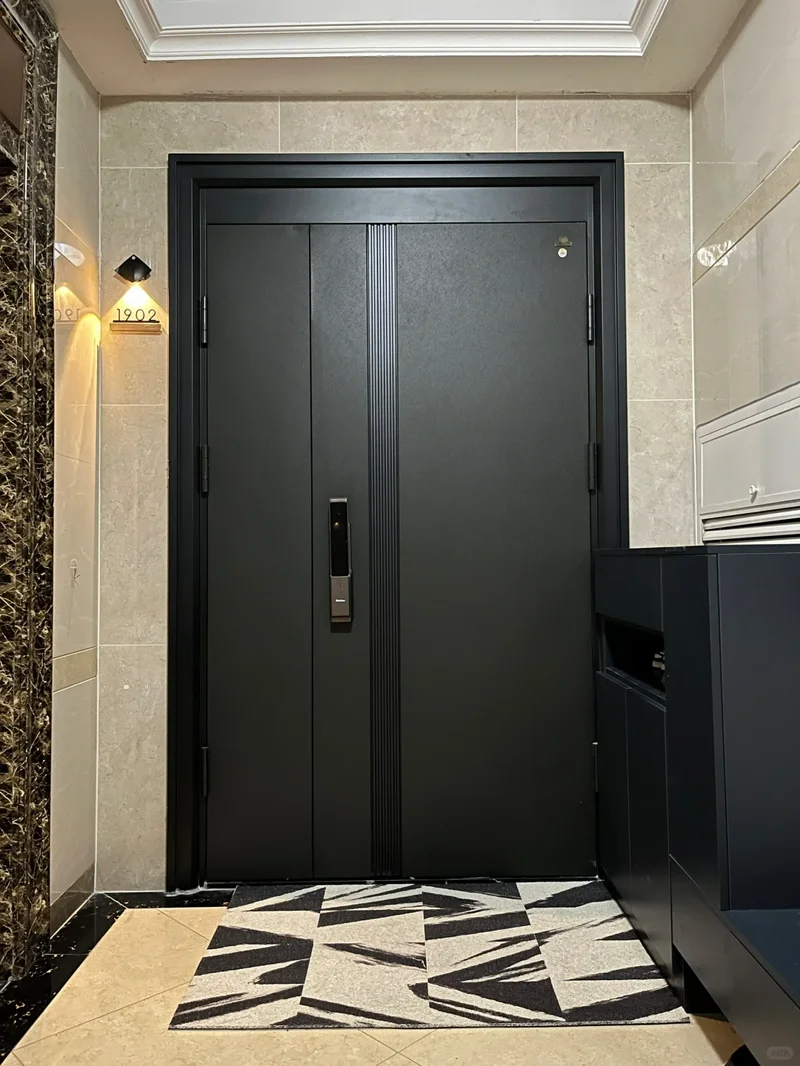
- Reinforced Lock Preparation: Doors feature welded-in steel reinforcement plates at lock and hinge locations to prevent forced entry through the hardware.
- Full-Perimeter Sealing: Multi-point locking systems engage bolts into the frame head, sill, and strike jamb at multiple points, distributing load and resisting racking.
- Anti-Jemmy Features: Continuous welded seams and concealed hinges eliminate prying points at the door perimeter.
- Hardware Compatibility: Doors are prepped to integrate with ANSI/BHMA Grade 1 locksets, high-cycle hinges, and electronic access control systems.
Performance Data for Specification
Selecting the correct assembly requires matching project specifications to certified performance data. The following table outlines key parameters for common fire-rated door assemblies.
| Fire Rating (ASTM E119 / EN 13501-2) | Minimum Steel Gauge (Leaf) | Core Type | Intumescent Seal Expansion Requirement | Typical Application / Code Mandate |
|---|---|---|---|---|
| 20-Minute (C) / EI 30 | 24 ga (0.6mm) | Mineral Wool / Composite | 5:1 ratio | Interior corridor doors, office separations |
| 60-Minute (B) / EI 60 | 20 ga (0.9mm) | High-Density Mineral Core | 10:1 ratio | Stairwell enclosures, horizontal exits |
| 90-Minute (B) / EI 90 | 18 ga (1.2mm) | Stabilized High-Density Core | 10:1 ratio | Fire walls, high-risk area separations |
| 180-Minute (A) / EI 120 | 16 ga (1.5mm) or heavier | Ceramic-Based Core | 15:1 ratio | Industrial partitions, specialized hazard areas |
Certification and Compliance
All fire-rated door assemblies are supplied with labeled components and follow strict third-party certification (e.g., UL, Warnock Hersey, Intertek) protocols. This includes periodic follow-up inspections (FUS) of manufacturing facilities to ensure consistency. For security, doors can be specified to meet standards such as ASTM F476 (Security) or forced entry resistance ratings (e.g., UL 752 ballistic ratings for specialized applications). It is imperative that distributors verify that the entire assembly—door, frame, hardware, and glazing—is listed under the same certification report for the specified rating.
Customizable Solutions: Tailored Sizes and Finishes for Diverse Distributor Needs
Customization is not an aftermarket service but an integral part of the manufacturing specification. For distributors, this translates to precise inventory alignment with regional building codes, architectural trends, and specific project demands without compromising on core performance metrics.
Core Material & Construction Flexibility
The structural integrity of a custom door is non-negotiable. Our engineering allows for modifications within a rigorously defined framework:
- Frame & Core: Cold-rolled steel frames are fabricated to non-standard widths and heights, with reinforced hinge and lock blocks integrated into a stabilized LVL (Laminated Veneer Lumber) or mineral core. LVL core stability, with cross-banding layers, prevents warping and ensures consistent screw-holding power in oversized units.
- Skin & Stiffeners: 20-gauge to 24-gauge steel skins are formed to custom dimensions. A variable-depth embossed pattern accommodates subsequent finishing while maintaining rigidity. Internal steel stiffener spacing is calculated based on final door size to meet or exceed ASTM E1300 load standards.
- Glazing & Lite Kits: Prepared for insulated glass units (IGU) up to 1″ thickness, with thermally broken sash options. Sightlines and mun tin configurations are engineered to maintain the door’s structural and thermal performance.
Technical Performance Parameters Across Custom Sizes
Performance is validated for all standard and extended size ranges. The following table outlines guaranteed minimums for key metrics.
| Parameter | Standard Size Range (Up to 36″ x 84″) | Extended Custom Range (Up to 48″ x 96″) | Test Standard / Notes |
|---|---|---|---|
| Fire Rating | Up to 90-min (A-label) | Up to 90-min (A-label) | ASTM E119 / UL 10C. Core material dictates rating. |
| Sound Transmission Class (STC) | STC 30 – 38 | STC 28 – 36 | ASTM E90. Slight decrease in larger glazed areas. |
| Thermal Insulation (U-Factor) | 0.30 – 0.45 Btu/(ft²·°F·hr) | 0.35 – 0.50 Btu/(ft²·°F·hr) | NFRC 102 calculation. Dependent on core and glazing. |
| Structural Load (Deflection) | L/175 at 200 psf | L/175 at 150 psf | ASTM E1300. Custom stiffening required for larger sizes. |
Finish & Coating Systems
The finish is a functional barrier, not merely decorative. Our coating process adheres to AAMA 2604-2605 standards for performance.
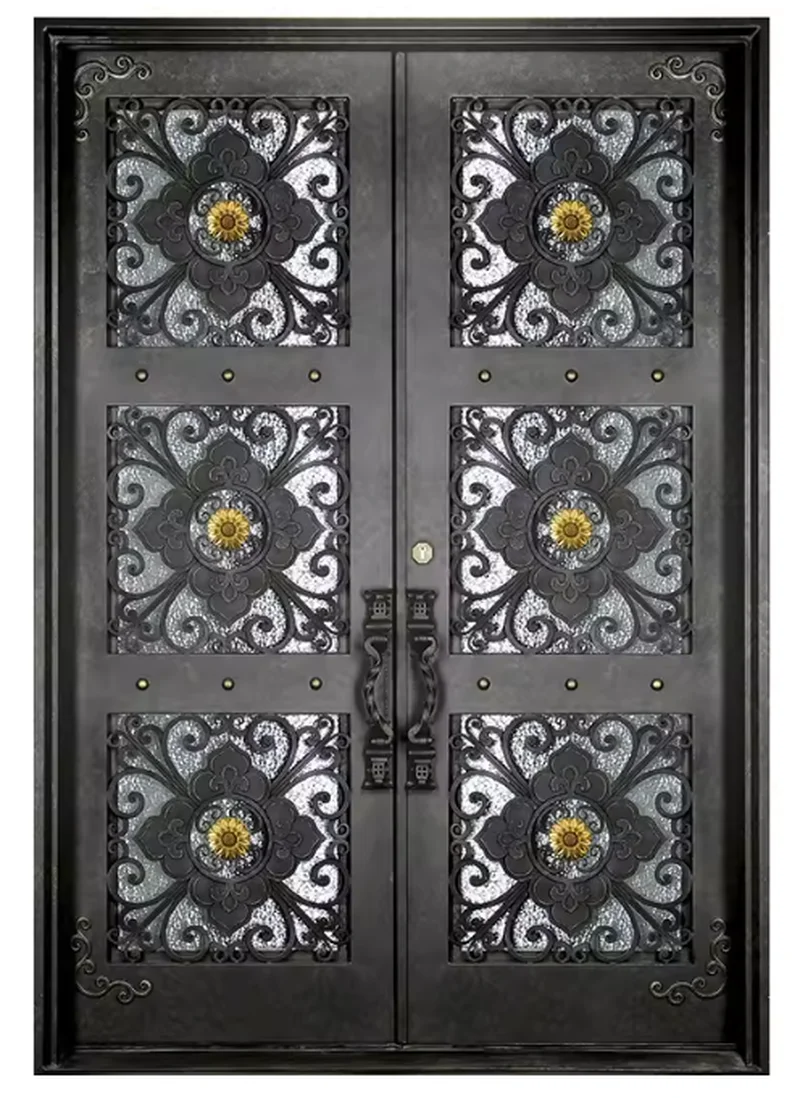
- Pre-Treatment & Primer: A multi-stage zinc phosphate pre-treatment ensures corrosion resistance and primer adhesion. Electrocoated (E-coat) primer provides complete coverage on all surfaces, including recessed edges.
- Topcoat Options:
- Polyester (PE): Standard 60-70μm dry film thickness. Good color and gloss retention; suitable for interior and protected exterior applications.
- Polyvinylidene Fluoride (PVDF): 70-80μm dry film thickness. Superior chalk and fade resistance (AAMA 2605), recommended for full sun exposure and coastal environments.
- Custom Color Matching: Available for both PE and PVDF systems using RAL, Pantone, or physical samples. Metallic and textured finishes require specific formulation for consistent application.
- Post-Forming & Embossing: Finishes can be applied post-forming for complex shapes, ensuring uniform coverage. Deep wood-grain embossing (up to 0.8mm) is compatible with all coating systems.
Quality Assurance for Custom Batches
Every custom order undergoes the same documented QA protocol as standard production, traceable via unique lot numbers.
- Dimensional tolerance verification to within ±1.6mm on width/height and ±0.8mm on thickness.
- Dry film thickness verification via magnetic or eddy-current gauges.
- Adhesion testing via cross-hatch and tape per ASTM D3359.
- Full documentation pack provided, including material certifications, test reports, and installation guidelines.
Technical Specifications and Compliance: Detailed Data for Informed Procurement Decisions
Material Composition & Core Construction
The structural integrity of a steel door begins with its substrate and core. The industry standard utilizes a minimum 20-gauge (0.912 mm) cold-rolled, galvanized steel skin, phosphatized and coated with a primer for corrosion resistance and paint adhesion. Core options define performance:
- Honeycomb Core: A lattice of kraft paper or steel provides basic rigidity and sound dampening at minimal weight. Standard for interior applications.
- Polyurethane (PU) Foam-Injected Core: Closed-cell foam is injected under pressure, fully adhering to the steel skin. This creates a monolithic structure with superior thermal insulation (U-factors as low as 0.20 Btu/(hr·ft²·°F)) and sound reduction (STC ratings up to 40 dB).
- Mineral Wool Core: Non-combustible, rock-based insulation offers exceptional fire resistance and acoustic performance, commonly specified for fire-rated assemblies and high-noise environments.
Door edges are typically reinforced with a welded, 16-gauge steel channel frame. Hinge preparation involves welded, 12-gauge steel reinforcement plates or full-length hinges for heavy-duty cycles.
Performance Specifications & Testing Standards
Procurement must be guided by third-party certified test reports, not manufacturer claims alone.
Fire Resistance: Doors are tested and rated as complete assemblies (door, frame, hardware). Ratings are defined by the time a door withstands a standard fire exposure while maintaining integrity and insulation.
- ASTM E119 / UL 10C: Standard test methods for fire tests of door assemblies in North America.
- EN 1634-1 / BS 476-22: European standards for fire resistance and smoke control.
Acoustic Performance: Sound Transmission Class (STC) measures airborne sound attenuation. Higher STC ratings indicate greater noise reduction.
| Core Type | Typical STC Rating (dB) | Typical U-Factor (Btu/(hr·ft²·°F)) | Primary Application |
|---|---|---|---|
| Honeycomb Paper | 20-25 | 0.60 – 0.80 | Light commercial interior |
| Polyurethane Foam | 30-40 | 0.20 – 0.30 | Exterior, thermal/acoustic critical |
| Mineral Wool | 35-45 | 0.30 – 0.40 | Fire-rated, high acoustic zones |
Structural & Durability Testing:
- Cycle Testing: Hinge and hardware durability is validated per ANSI/BHMA A156.13 for standard duty (250,000 cycles), heavy duty (500,000 cycles), or extra heavy duty (1,000,000 cycles).
- Load Testing: Resistance to static torsion and soft/ heavy body impact per ANSI/SDI A250.13.
- Air/Water Infiltration: Performance tested per AAMA 920 for exterior doors, specifying maximum allowable air leakage and water penetration resistance under specific pressure differentials.
Finish & Coating Specifications
The finish system determines long-term durability and aesthetics. A high-performance coating consists of:
- Chemical Pretreatment: Zinc phosphate or chromate conversion coating for corrosion inhibition and paint adhesion.
- Electrocoating (E-Coat): A cathodic epoxy primer applied via electrodeposition, providing uniform coverage on all surfaces, including edges, for superior rust prevention.
- Topcoat: A high-build polyester or polyurethane powder coat, applied electrostatically and thermally cured. Standard dry film thickness (DFT) should be 45-60 microns (1.8 – 2.4 mils). Performance grades include:
- Qualicoat Class 1 / AAMA 2603: Good weathering resistance for interior or protected exterior.
- Qualicoat Class 2 / AAMA 2604: Superior weathering resistance for severe exterior environments.
- Qualicoat Class 3 / AAMA 2605: Excellent long-term color and gloss retention for high UV exposure.
Compliance & Quality Assurance Frameworks
- Quality Management: Manufacturer certification to ISO 9001 ensures consistent process control from raw material intake to final inspection.
- Environmental & Health: Low-VOC coatings and adhesives. Core materials must comply with E1 (≤ 0.124 mg/m³ air) or CARB Phase 2 formaldehyde emission standards. REACH and RoHS compliance for restricted substances.
- Building Code Compliance: Products must carry certification marks from recognized testing agencies (UL, Intertek/Warnock Hersey, FM Approvals) verifying compliance with referenced standards (IBC, NFPA 80, local codes).
Trusted by Industry Leaders: Case Studies and Certifications for Reliable Partnerships
Our technical specifications and manufacturing processes are validated by independent certification bodies, providing a foundation for reliable, long-term supply agreements. This is critical for distributors who must guarantee project compliance and performance longevity to their contractor and architectural clients.
Material & Performance Certifications
- ISO 9001:2015: Certified quality management systems govern every stage, from raw material sourcing (cold-rolled steel coil, LVL core) to final inspection, ensuring batch-to-batch consistency.
- Fire Resistance Ratings: Doorsets are tested and certified to relevant standards (e.g., EN 1634-1, ASTM E119) for integrity and insulation (EI classifications). Documentation includes detailed assembly specifications for regulatory submission.
- Formaldehyde Emissions: All composite core materials and interior finishes comply with stringent E0 (<0.5 mg/L) or E1 (<1.5 mg/L) emission grades as per EN 16516, supporting healthy indoor air quality specifications.
- Acoustic Performance: Laboratory-tested sound reduction ratings (e.g., Rw 32 dB to Rw 42 dB) are provided, with data for different core infill densities and sealing system configurations.
Technical Validation Through Application
Case studies demonstrate performance under real-world structural and environmental stress.
-
Project: Coastal Multi-Use Residential Complex
- Challenge: High saline atmosphere, frequent storm-driven moisture, and stringent acoustic codes for mixed commercial/residential zones.
- Solution: Doorsets with 1.2mm galvanized steel skins, polyester powder-coat finish rated >1,000 hours salt spray resistance (ASTM B117), and a mineral wool core.
- Verified Outcome: After 36 months, independent inspection showed zero corrosion at cut edges or hardware points. Achieved a consistent Rw 37 dB rating, with a thermal transmittance (U-factor) of 1.2 W/m²K.
-
Project: Inland High-Rise Hotel
- Challenge: Meeting non-combustible facade requirements for upper floors, high-cycle durability for guest rooms, and rapid installation timelines.
- Solution: FD60-rated steel doorsets (EI 60) with reinforced continuous hinges and a pre-installed, adjustable frame system.
- Verified Outcome: Certification documentation facilitated fast-track building approval. The unified assembly reduced on-site fitting time by an average of 45 minutes per door, with a documented operational cycle life exceeding 500,000 cycles before hinge adjustment.
Comparative Performance Data: Core Material Properties
Selection of the appropriate core material is fundamental to meeting specific performance profiles. The data below outlines key engineering parameters.
| Core Type | Density (kg/m³) | Moisture Absorption (24hr, %) | Approx. Sound Reduction (Rw) | Thermal Conductivity (W/m·K) | Primary Application |
|---|---|---|---|---|---|
| Honeycomb Cardboard | 25-35 | Not Applicable | 22-26 dB | ~0.05 | Lightweight interior partitions, low-traffic areas. |
| Solid LVL (Laminated Veneer Lumber) | 550-650 | <8% (EN 317) | 28-32 dB | ~0.13 | High-stress locations (e.g., hardware points), requires controlled humidity. |
| Mineral Wool | 80-120 | <1% (hydrophobic) | 35-42 dB | ~0.04 | Acoustic & fire-rated assemblies, exterior doors with high thermal demands. |
| Polyurethane Foam (PUR) | 40-50 | <2% | 30-35 dB | ~0.025 | Optimal thermal insulation for exterior applications, stable dimensional structure. |
Partnership Assurance
Our supply chain is audited to ensure traceability of prime-grade steel and compliant components. Detailed Technical Data Sheets (TDS) and Declarations of Performance (DoP) are provided for all product lines, enabling your technical sales team to specify with confidence. We support partners with BIM object files and detail drawings for integration into architectural plans and specifications.
Frequently Asked Questions
What are the critical technical specifications for moisture and thermal performance in wholesale steel doors?
For high-performance applications, specify doors with a polyurethane foam core (density ≥38kg/m³) achieving a U-value below 1.0 W/m²K. Ensure a minimum 200μm powder-coated finish with a chromate pre-treatment to prevent corrosion. For dimensional stability, the steel skin must be bonded to a moisture-resistant LVL frame to eliminate warping.
How do your steel doors comply with international formaldehyde and environmental safety standards?
Our composite cores and adhesives are certified to E0 (≤0.05 ppm) and ENF (Formaldehyde-Free) standards. We use isocyanate-free PUR bonding agents and WPC components with a density of 650-750 kg/m³, ensuring zero off-gassing. All materials are backed by SGS or CARB Phase II compliance certificates for global procurement.
What structural reinforcements prevent long-term warping or sagging in heavy-use commercial doors?
We integrate a full-perimeter, 18mm LVL (Laminated Veneer Lumber) reinforcement frame within the door slab. This is combined with a minimum of three heavy-gauge steel hinges (3.0mm thickness) and a continuous internal steel reinforcement channel. This system ensures torsional rigidity and prevents sagging beyond 1.5mm over a decade.
What are the tested impact resistance and security ratings for your wholesale steel door products?
Doors are constructed with 0.8mm galvanized steel skins and a reinforced lock block area. They achieve ANSI Grade 1 certification, withstanding over 1,000,000 cycles. The multi-point locking system integrates bolts with a minimum 25mm projection into a 1.6mm steel frame, providing superior resistance to forced entry.
How is sound insulation performance quantified in your steel door assemblies for multi-unit buildings?
Our acoustic doors feature a mineral wool-infilled core and magnetic perimeter seals, achieving a weighted sound reduction index (Rw) of 38-42 dB. Critical is the 10mm automatic drop-down threshold seal, which eliminates bottom air gaps, a common failure point in achieving certified acoustic performance.
What finishing processes ensure UV and weather resistance for exterior steel doors in coastal or harsh climates?
We employ a 7-stage pre-treatment including phosphating, followed by a 80μm epoxy primer and a 120μm polyester top-coat, applied via electrostatic spray and cured at 200°C. This provides a Class 4 (1,000h) salt spray resistance rating and guarantees colorfastness (Delta E <2.0) under prolonged UV exposure per ASTM G154.
Can you customize steel door cores for specific fire-rating or ballistic requirements?
Yes. We engineer doors with specialized cores, such as 1.5-hour fire-rated mineral wool boards or UL752 Level 3 ballistic polyethylene laminates. Customization includes integrating intumescent seals that expand at 200°C and reinforcing the lock/hinge areas with 3mm armored steel plates for high-security applications.