Garage doors with built-in windows for natural light
Imagine stepping into your garage and being greeted not by a dim, cavernous space, but by a bright, welcoming environment bathed in natural light. This transformative experience is now easily achieved with the innovative integration of built-in windows in modern garage doors. Moving beyond purely utilitarian design, these doors elegantly merge functionality with aesthetic appeal, allowing homeowners to enhance curb appeal while solving the common problem of a dark and uninviting garage. Strategically placed windows invite the sun’s rays to illuminate your workspace, showcase your vehicles, or simply create a more pleasant entry point to your home. This design evolution represents a thoughtful upgrade, turning a simple barrier into a source of illumination and style.
Illuminate Your Workspace: How Built-In Windows Transform Garage Ambiance and Functionality
The strategic integration of windows into garage door panels is an architectural intervention that fundamentally alters the space’s utility and environmental quality. It moves the structure beyond mere vehicle storage to a viable workshop, studio, or hobby area. The primary transformation is the introduction of controlled, diffuse natural light, which reduces dependence on artificial lighting during daylight hours and mitigates the cave-like atmosphere of standard garages. This requires a meticulous engineering approach to ensure structural integrity, security, and long-term performance are not compromised.
Functional & Psychological Advantages:
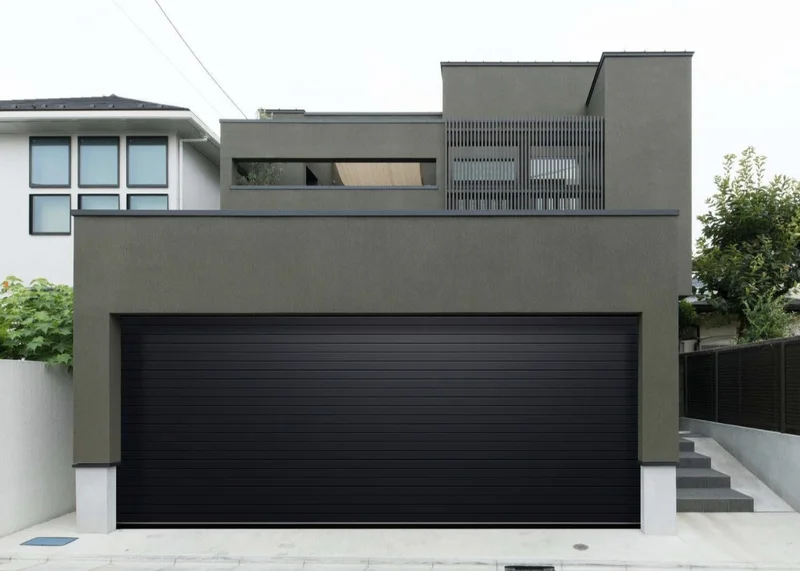
- Enhanced Visual Acuity & Safety: Natural light provides superior color rendering and reduces eye strain during detailed tasks (e.g., woodworking, mechanical repair), directly impacting precision and safety.
- Passive Solar Gain & Thermal Management: Correctly oriented glazing can contribute to passive heating in colder months. This must be balanced with low-emissivity (Low-E) coatings and insulated glass units (IGUs) to manage solar heat gain and maintain consistent interior temperatures.
- Psychological Well-being: Access to natural light and external views is linked to improved occupant mood and productivity, a critical factor when the garage functions as a regular workspace.
- Security Through Visibility: External visibility acts as a natural deterrent to unauthorized activity, while allowing occupants to survey the exterior without opening the door.
Critical Engineering & Material Considerations for Window Integration:
The insertion of a fenestration element into a door panel creates a potential point of structural weakness, thermal bridging, and water ingress. Mitigating these requires precise material specification and assembly.
- Panel Core & Frame Stability: The door’s structural core must maintain dimensional stability around the window cut-out. Laminated Veneer Lumber (LVL) or high-density composite cores are specified for their minimal swelling (<0.5% @ 65% RH) and resistance to warping, ensuring the window frame remains square and the sealant bond is not stressed.
- Glazing Specifications: For all functional workspaces, insulated glass units (IGUs) are non-negotiable. A typical specification is a 24mm IGU with a 16mm argon-filled cavity, dual-pane tempered glass (for safety), and a soft Low-E coating (e.g., ε=0.04) on surface #3. This configuration achieves a center-of-glass U-factor of approximately 1.0 W/(m²·K) and a Solar Heat Gain Coefficient (SHGC) tunable based on orientation and climate.
- Frame Material & Sealing: The window frame, whether PVC, aluminum, or composite, must have a compatible thermal expansion coefficient with the main door panel material. A multi-stage sealing system is employed: a primary structural adhesive bond, a secondary compression gasket, and often a tertiary applied sealant bead on the exterior. The weep hole system for drainage must be designed to prevent water retention.
- Material-Specific Impacts:
- Wood-Composite (WPC) Doors: The homogeneous, non-porous nature of high-grade WPC (density > 1.25 g/cm³) allows for clean routing and excellent substrate adhesion for sealants. Its inherent low moisture absorption (<1%) prevents swelling that could distort the window frame.
- Steel Doors: Here, the window frame is typically a thermally broken aluminum insert. The critical factor is the isolation of the metal frame from the steel panel via a non-conductive thermal break material (e.g., polyamide) to prevent condensation and heat transfer.
- Fiberglass/GRP Doors: The window frame is often molded as an integral part of the panel, eliminating a seam. The glass is then bonded directly to the fiberglass substrate using a high-strength, UV-stable structural silicone, creating a monolithic appearance.
Performance Data & Specification Guidance:
| Parameter | Standard/Test Method | Typical Performance Range | Notes |
|---|---|---|---|
| Thermal Insulation (U-Factor) | EN ISO 10077 / ASTM C1363 | 0.8 – 1.2 W/(m²·K) | For complete door with insulated glazing. Value depends on panel core and glazing spec. |
| Acoustic Insulation (Rw) | EN ISO 10140 / ASTM E90 | 25 – 35 dB | Glazing is the weak point; laminated glass or asymmetric IGU thickness improves performance. |
| Glazing Safety | EN 12600 / ANSI Z97.1 | Tempered or Laminated Class | Tempered is standard; laminated provides superior security and sound damping. |
| Air Infiltration | EN 12425 / ASTM E283 | Class 2 or better | Dependent on the perimeter sealing quality of the window-within-panel assembly. |
| Structural Load (Wind Load) | EN 12444 / ASTM E330 | Up to Class 4 (≥ 1600 Pa) | The window and its reinforcement must be tested as part of the complete door assembly. |
Compliance & Certification:
Specifications should mandate that the complete door assembly, with windows, is tested and certified to relevant standards. Key certifications include:
- ISO 9001: For quality management in manufacturing.
- EN 13241 / ASTM E2848: For the performance of the entire industrial, commercial, or garage door product.
- Fire Rating: If required, glazing must meet the appropriate integrity (E) and insulation (I) classifications per EN 13501 or ASTM E119.
- Emissions: Panel materials and interior adhesives should comply with E1 (<0.1 ppm formaldehyde) or equivalent low-VOC classifications.
In conclusion, the window is not merely an aesthetic add-on but a engineered subsystem. Its successful integration demands a holistic view of the door as a building envelope component, with rigorous attention to the interplay of structural mechanics, thermal dynamics, and material compatibility.
Design Meets Durability: Engineered for Weather Resistance and Long-Term Performance
The structural integrity and longevity of a garage door with glazing are dictated by its composite material formulation and assembly methodology. Windows are not merely cut into the panel; they are integrated into a reinforced framework that maintains the door’s torsional rigidity and load-bearing capacity. The core challenge is managing differential expansion and stress points around the fenestration.
Core Material Engineering
The panel substrate is critical. We utilize three primary engineered material systems, each selected for dimensional stability and low maintenance:
- Wood-Plastic Composite (WPC): High-density (≥1.2 g/cm³) WPC with a wood fiber content below 60% ensures minimal hygroscopic expansion. The polymer matrix encapsulates the fibers, resulting in a moisture absorption rate of <0.5% per ASTM D570, preventing warping and rot.
- PVC-U with Wood Core: A cellular PVC-U exterior cladding (Shore D hardness 75-80) is mechanically bonded to a stabilized timber or LVL (Laminated Veneer Lumber) core. The PVC-U layer provides a Class A fire rating (ASTM E84) and a near-zero maintenance surface, while the engineered wood core provides structural stiffness.
- Full-Thermobreak Aluminum Sections: For aluminum doors, the glazing frames are fabricated from thermally broken profiles with polyamide barriers. The internal reinforcement is typically powder-coated galvanized steel, calculated for wind load resistance per EN 12424.
Performance Specifications of Integrated Glazing
The window units are not standard residential glass. They are sealed, insulated glazing units (IGUs) set within a resilient perimeter gasket system that accommodates panel movement.
| Parameter | Specification | Test Standard / Implication |
|---|---|---|
| Glazing Unit U-Factor | ≤1.2 W/(m²·K) | Center-of-glass value; contributes to overall door thermal performance. |
| Air Infiltration | ≤0.5 cfm/ft² | ASTM E283; critical for energy efficiency and dust/ moisture ingress prevention. |
| Sound Reduction (STC) | 28-33 dB | ASTM E90; dampens external noise transmission through the glazed areas. |
| Gasket Material | EPDM or TPE | Resists UV degradation, ozone cracking, and remains pliable from -40°C to +70°C. |
Structural and Environmental Resilience
The design addresses specific failure points common to fenestrated doors:
- Drainage and Moisture Management: Each window frame incorporates a concealed weep channel within the bottom rail to evacuate condensate or incidental water, preventing pooling within the panel structure.
- UV and Impact Resistance: The exterior face of the glazing is either tempered glass (Class A safety per ANSI Z97.1) or a polycarbonate composite with a hard-coat UV inhibitor. The PVC-U or WPC surfaces are co-extruded with full-thickness, UV-stabilized pigments.
- Formaldehyde & Emissions: All composite materials and adhesive systems comply with E0 (≤0.5 mg/L) or E1 (≤1.5 mg/L) formaldehyde emission grades per EN 13986. Core materials are certified to ISO 9001 for consistent production quality.
- Cyclic Load Testing: Completed door assemblies undergo minimum 25,000 open-close cycles (EN 12453) with continuous monitoring for frame distortion, gasket fatigue, and hardware alignment.
Energy-Efficient and Secure: Balancing Natural Light with Insulation and Safety Features
The primary engineering challenge in designing garage doors with glazed sections is maintaining the thermal envelope and structural integrity of the door system. The window unit is a deliberate thermal bridge; therefore, the material composition and construction of the door leaf are critical to achieving overall performance.
Core Material Science & Construction
The insulating properties are dictated by the door panel’s core and the glazing unit. High-performance options utilize a composite approach:
- Laminated Veneer Lumber (LVL) Core: Provides exceptional dimensional stability (swelling rate <1.5% per ASTM D1037) and racking resistance, forming a rigid backbone for the insulated panel system.
- Wood-Plastic Composite (WPC) Cladding: Engineered with a high polymer-to-wood fiber ratio (typically >60:40) and densities exceeding 1.2 g/cm³ for low moisture absorption (<1%) and high Shore D surface hardness, resisting impact and weathering.
- Polyvinyl Chloride (PVC) Foam-Filled Sections: Closed-cell PVC foam cores offer a superior thermal break, with a typical U-factor of 0.35-0.45 Btu/(hr·ft²·°F), while adding minimal weight.
Glazing: The Controlled Thermal Bridge
The window is not a weak point but a specified component. Performance is managed through:
- Insulated Glass Units (IGUs): Standard is dual-pane, argon-filled, with a low-emissivity (Low-E) coating on surface #3. This configuration can achieve a center-of-glass U-factor as low as 0.28.
- Spacer Technology: Warm-edge spacers (stainless steel or composite polymer) minimize conductive heat loss at the glass perimeter.
- Safety Glazing: Tempered or laminated glass is mandatory for all glazed sections in garage doors, per ANSI Z97.1 / CPSC 16 CFR 1201 Cat. II. Laminated glass provides added security and sound damping.
Integrated Performance Specifications
A systems approach ensures the door performs as a unified assembly.
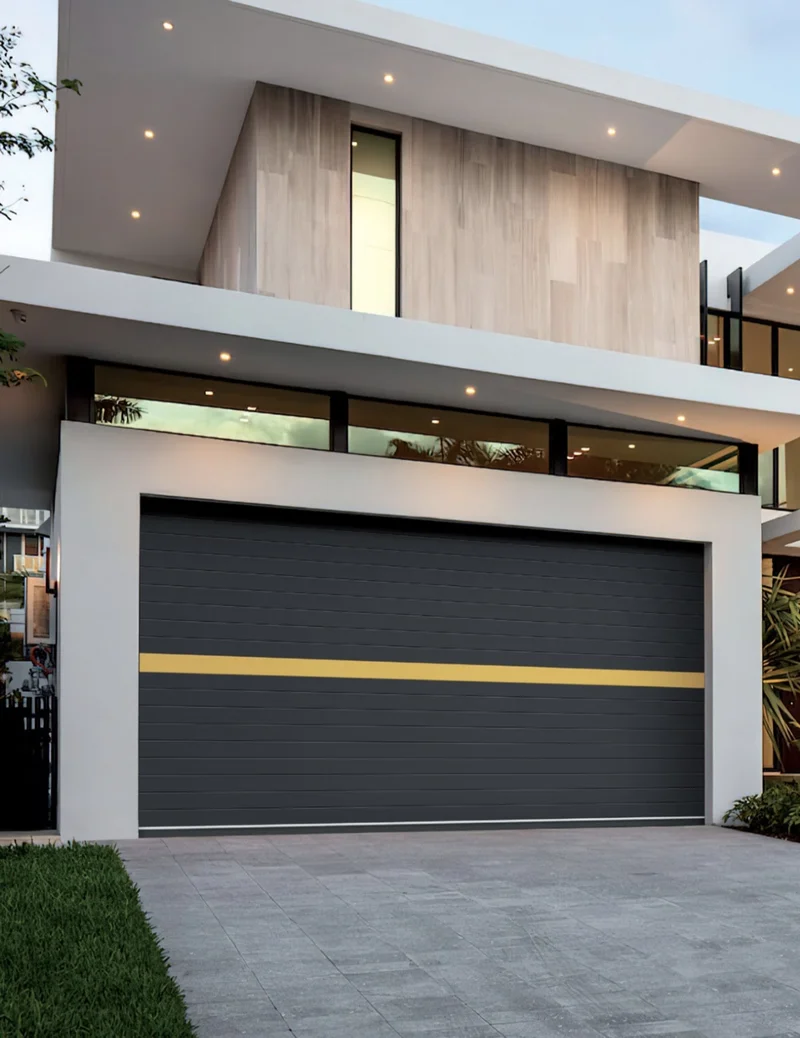
| Performance Parameter | Typical Specification Range | Test Standard / Notes |
|---|---|---|
| Thermal Transmittance (U-factor) | 0.20 – 0.45 Btu/(hr·ft²·°F) | Whole-door NFRC 100 calculation; depends on core/glazing combo. |
| Sound Transmission Class (STC) | 25 – 35 dB | ASTM E90; higher values achieved with laminated glass & dense cores. |
| Fire Performance | Class B (or better) | EN 13501-1 / ASTM E84; critical for attached garage applications. |
| Formaldehyde Emission | E0 or E1 Grade | EN 717-1 / ASTM E1333; essential for indoor air quality. |
| Operational Cycle Durability | ≥ 25,000 cycles | Simulating 10+ years of use; verifies hardware and panel integrity. |
Functional Advantages of the Engineered System
- Condensation Resistance: The combination of warm-edge spacers, Low-E glass, and a thermally broken panel frame raises the interior surface temperature, pushing the dew point outward and mitigating condensation.
- Structural Security: The LVL or steel-reinforced core provides a high resistance to forced entry. Multi-point locking systems engage with a reinforced header and track for full-perimeter security.
- Long-Term Dimensional Stability: Low moisture absorption rates in WPC and PVC components, coupled with the stability of LVL, ensure consistent panel alignment and seal integrity over decades, preventing air infiltration.
- Quality Assurance: Manufacturing under ISO 9001:2015 ensures batch-to-batch consistency in material properties, adhesive application, and final assembly tolerances.
Customizable Options for Every Architectural Style: Sizing, Window Configurations, and Materials
Sizing and Structural Integrity
Garage door sizing is a critical structural consideration. Standard residential single-car openings typically require doors 8′ to 9′ wide and 7′ to 8′ high, while double-car doors range from 16′ to 18′ wide. Custom architectural projects can demand widths exceeding 20′ for coach-house or multi-vehicle applications. The primary engineering challenge is maintaining panel rigidity and track system integrity across large spans. Our doors utilize a structural composite core, such as Laminated Veneer Lumber (LVL), for dimensional stability. LVL provides a consistent modulus of elasticity (MOE), resisting warping and sagging under load, which is paramount for wide, insulated sections. All custom sizes are engineered with reinforced perimeter stiles and top rails, and hardware is specified accordingly (e.g., 0.134″ or 0.162″ galvanized steel track, heavy-duty rollers) to meet calculated stress loads.
Window Configuration and Glazing Specifications
Window configurations must balance light transmission, privacy, and thermal performance. Configurations are defined by lite count and pattern (e.g., traditional long panels, modern square grids, arched transoms).
- Glazing: Standard is tempered, insulated Low-E glass (double-pane, argon-filled). The low-emissivity coating reflects infrared energy, significantly improving the door’s overall U-factor.
- Spacer: Warm-edge spacers (e.g., stainless steel or composite foam) minimize thermal bridging at the glass edge, reducing condensation risk.
- Privacy & Safety: For obscuration, options include frosted, patterned, or laminated glass. All glazing is safety-tempered to ANSI Z97.1 / CPSC 16 CFR 1201 standards.
Technical Glazing Performance Table:
| Parameter | Standard Double-Pane Low-E | Performance Triple-Pane Low-E | Obscured/Frosted Glass |
|---|---|---|---|
| U-Factor (Btu/hr·ft²·°F) | 0.28 – 0.32 | 0.15 – 0.20 | 0.28 – 0.32 |
| Solar Heat Gain Coeff. (SHGC) | 0.25 – 0.30 | 0.20 – 0.25 | 0.20 – 0.25 |
| Visible Transmittance (VT) | 0.50 – 0.60 | 0.45 – 0.55 | 0.20 – 0.40 |
| Sound Transmission Class (STC) | 28 – 32 | 32 – 36 | 28 – 32 |
Material Science and Performance Specifications
The substrate defines the door’s long-term performance, maintenance profile, and architectural authenticity.
1. Wood-Plastic Composite (WPC)
A high-density extruded composite of wood flour/fibers and polymer (typically PVC or PP). The precise wood-to-plastic ratio and additive package determine performance.
- Density: High-grade WPC exceeds 1.2 g/cm³, providing structural soundness and a solid feel akin to hardwood.
- Moisture Absorption: <1% by volume (per ASTM D570), rendering it highly resistant to rot, swelling, and fungal decay.
- Thermal Stability: Coefficient of linear thermal expansion is lower than pure PVC, reducing panel movement with temperature swings.
- Finishing: Accepts full-wrap, factory-applied acrylic or PVDF coatings with exceptional adhesion. Can be embossed with authentic wood-grain textures.
2. Cellular PVC
A rigid, foamed PVC substrate with a homogeneous, non-porous structure.
- Moisture & Rot: Zero water absorption; completely impervious to rot and insect damage.
- Machinability: Can be routed, shaped, and detailed to replicate intricate traditional millwork profiles.
- Thermal Insulation: The closed-cell structure provides a natural thermal break, contributing to a superior U-factor for the door section.
- Surface Hardness: Typically 70-75 Shore D, providing good impact resistance.
3. Engineered Wood Core (LVL) with Exterior Skins
For projects requiring the acoustic and mass feel of traditional wood without its inherent instability.
- Core: LVL core provides a stable, predictable substrate (≤1% moisture content variation) that will not warp, cup, or split.
- Skins: Overlaid with exterior-grade MDF, HDF, or plywood, primed and painted in a controlled factory environment.
- Fire Performance: Can be specified with fire-retardant treated core and/or gypsum-based skins to meet regional fire-rating requirements (e.g., 20-minute fire door rating).
4. Steel with Thermal Break
For maximum security and durability in modern or industrial designs.
- Construction: 24-gauge (0.024″) or thicker galvanized steel faces.
- Thermal Break: A polyurethane-injected foam core (≥1.8 lb/ft³ density) bonds the interior and exterior panels, creating a continuous thermal barrier and achieving U-factors as low as 0.16.
- Sound Dampening: The constrained-layer damping effect of the foam core provides measurable sound reduction, with STC ratings up to 20 for the door section.
Comparative Material Performance Table:
| Material | Primary Advantage | Moisture Absorption | Recommended U-Factor (Door System) | Key Maintenance Consideration |
|---|---|---|---|---|
| WPC | Dimensional stability & wood aesthetic | Negligible (<1%) | 0.30 – 0.45 | Periodic cleaning; painted finish is durable. |
| Cellular PVC | Total moisture resistance & detail | Zero | 0.25 – 0.40 | UV-stable; does not require painting but can be painted. |
| Engineered Wood | Acoustic mass & fire-rated capability | Low (skin-dependent) | 0.35 – 0.50 | Maintain exterior paint film integrity. |
| Insulated Steel | Structural strength & thermal efficiency | N/A | 0.16 – 0.20 | Protect against surface corrosion if finish is compromised. |
All manufacturing processes adhere to ISO 9001 quality management standards. Composite materials are certified to E1 or E0 formaldehyde emission grades (EN 13986). Final specification must account for local wind-load requirements, seismic codes, and exposure ratings.
Technical Specifications and Installation: A Guide to Seamless Integration and Structural Integrity
Material Specifications & Performance Data
The structural integrity and long-term performance of a garage door with integrated glazing are dictated by its composite material formulation and adherence to international standards. The core materials are engineered to meet specific environmental and load-bearing challenges.
Door Panel Core: Laminated Veneer Lumber (LVL)
- Density & Stability: Engineered LVL cores provide a minimum density of 640 kg/m³, ensuring superior dimensional stability compared to solid timber. The cross-laminated structure minimizes warping, twisting, and bowing, with a linear expansion coefficient of ≤0.1% per 1% moisture content change.
- Structural Rating: All LVL cores are stress-graded to meet or exceed ANSI/AWC NDS or EN 14374 standards for structural composite lumber, guaranteeing consistent load-bearing capacity across the door panel.
- Formaldehyde Emission: Core adhesives are certified to E0 (≤0.5 mg/L) or CARB Phase 2 / EN 13986 E1 (≤0.1 ppm) emission standards.
Door Panel Cladding: Wood-Plastic Composite (WPC)
- Formulation: The WPC cladding utilizes a PVC-to-wood fiber ratio optimized for durability and low maintenance. A typical high-performance formulation is 60% PVC, 35% wood fiber (pine), and 5% proprietary stabilizers and coupling agents.
- Physical Properties:
- Density: 1.25 – 1.35 g/cm³
- Moisture Absorption: <0.8% after 24-hour immersion (ASTM D570)
- Linear Thermal Expansion: 4.5 x 10⁻⁵ /°C
- Shore D Hardness: 68-72
- Fire Performance: WPC formulations achieve a Class B (EN 13501-1) or Class C (ASTM E84) fire rating, with a flame spread index ≤75 and smoke developed index ≤450.
Glazing Unit Specifications
Glazing is the critical interface for natural light transmission and must maintain the door’s thermal and security envelope.
- Sealed Insulated Glass Unit (IGU): Standard configuration is a 24mm overall thickness IGU, comprising:
- Outer Lite: 4mm tempered, low-iron glass for maximum clarity and impact resistance (EN 12150).
- Air Gap: 16mm argon-filled cavity (90% minimum fill) for enhanced thermal performance.
- Inner Lite: 4mm laminated glass (2x2mm glass with 0.76mm PVB interlayer) for safety and security (EN 14449).
- Performance Data:
- Thermal Insulation (U-value): 1.4 W/m²K for the glazing unit itself.
- Solar Heat Gain Coefficient (SHGC): 0.38
- Visible Light Transmittance (VLT): 72%
- Sound Reduction (Rw): 35 dB
Full-Door System Performance
When integrated into the complete door assembly, the system must be evaluated as a whole.
| Parameter | Test Standard | Performance Rating | Notes |
|---|---|---|---|
| Thermal Transmittance (U-value) | EN 12428 / ASTM C1363 | 1.8 W/m²·K | For a standard 45mm thick panel with IGU. |
| Wind Load Resistance | EN 12424 / ANSI/DASMA 108 | Class 3 (≥800 Pa) | Suitable for most residential and light commercial applications. |
| Air Permeability | EN 12426 / ANSI/DASMA 302 | Class 2 (≤1.5 m³/m²·h @ 50 Pa) | |
| Operating Sound Level | In-house test (3m distance) | ≤58 dB(A) | With standard sectional track and screw-drive operator. |
| Mechanical Durability (Cycles) | EN 12425 | ≥10,000 cycles | Test includes full open/close cycle under load. |
Installation Protocol for Structural Integrity
Proper installation is non-negotiable for achieving the designed performance and longevity. Deviations from these protocols will compromise weather sealing, structural stability, and operational safety.
1. Pre-Installation Site Audit & Preparation
- Structural Lintel Verification: The supporting lintel above the opening must be certified by a structural engineer to carry the full dead load of the door system plus dynamic operational loads. Minimum required bearing capacity is 2.5x the door’s total weight.
- Opening Tolerance: The rough opening must be plumb, level, and square. Maximum tolerance is 6mm over the full height and width of the opening. The floor must be level within 3mm across the door’s travel path.
- Header & Jamb Preparation: Install a continuous, waterproof sealant membrane (e.g., butyl tape or fluid-applied sealant) on the interior face of the door jambs and header to prevent capillary moisture ingress behind the frame.
2. Frame Anchoring & Alignment
- Anchor Specification: Use only hot-dip galvanized steel or stainless steel anchors. Minimum diameter: 10mm. Minimum embedment depth into concrete/masonry: 70mm.
- Anchor Pattern: Place anchors at a maximum of 400mm centers along the vertical jambs and 300mm centers along the header. The first anchor must be within 150mm of each corner.
- Shimming Protocol: Use composite or PVC shims only. Shim behind every anchor point to ensure the frame is perfectly plumb and square without being distorted by the anchor tension. The frame must be free of deflection before final torque is applied.
- Torque Sequence & Value: Follow a cross-pattern torque sequence. Final torque for 10mm anchors must not exceed 25 N·m to avoid crushing the frame profile.
3. Panel & Glazing Integration
- Panel Handling: Lift panels using designated lifting points only. Never place stress on the glazing units or the panel joints.
- Sealant Application: Apply a continuous bead of structural silicone sealant (compatible with WPC and glass) to the glazing rabbet before inserting the IGU. The sealant bead must have a minimum 6mm width and 8mm height to ensure both adhesion and weather sealing.
- Glazing Retention: Secure the IGU using a dedicated PVC or aluminum glazing bead, fastened with stainless steel screws at 200mm centers. Do not overtighten.
4. Hardware & Sealing Finalization
- Track Alignment: The vertical track must be plumb within 1.5mm over its full height. The horizontal track must have a consistent rise per manufacturer specifications, typically a 25mm rise per 300mm of horizontal run.
- Bottom Seal: The automatic threshold seal must create a uniform compression of 8-10mm against the finished floor when the door is in the closed position. Adjust the seal bracket accordingly.
- Spring System Calibration: The torsion spring system must be calibrated to counterbalance 100% of the door’s weight, verified by the door remaining stationary at any point in its travel when disconnected from the operator. Springs must be rated for a minimum of 25,000 cycles.
5. Post-Installation Verification & Commissioning
- Operational Force Test: Measure the force required to manually open and close the door. It must not exceed 50 N as per EN 12453.
- Safety System Validation: Photoelectric eyes must be aligned and tested. The auto-reverse mechanism on the bottom edge must engage with an obstruction test using a 50mm high solid object.
- Client Handover: Provide a signed installation certificate, a log of spring cycle ratings, and manufacturer warranties. Instruct the end-user on the 6-month and 12-month inspection points for hardware and seal integrity.
Trusted by Professionals: Certifications, Warranty, and Real-World Applications
Certifications and Compliance
Garage doors with integrated glazing are structural building components and must meet rigorous international standards. Our manufacturing facilities are ISO 9001:2015 certified, ensuring consistent quality control from raw material sourcing to final assembly. Material-specific certifications are critical:
- Material Integrity: Composite panels (WPC/PVC-wood) are tested to ASTM D1037 for dimensional stability and mechanical properties. Core materials, such as LVL (Laminated Veneer Lumber), comply with ANSI/APA PRS 610 for shear strength and resistance to warping.
- Fire Safety: Glazing and panel assemblies achieve Class A (ASTM E84) or Euroclass B-s1,d0 (EN 13501-1) fire ratings, with fire-resistant glazing options available for compartmentalization requirements.
- Emissions: All composite materials and adhesives are certified to E0 (<0.5 mg/L) or CARB Phase 2 compliant formaldehyde emission levels, ensuring indoor air quality.
- Performance Testing: Complete door assemblies undergo cycle testing (ANSI/DASMA 102) and are rated for wind load resistance (ASTM E330) and structural performance (ASTM E72).
Warranty Structure: A Material Science Commitment
Our warranty terms are derived from validated long-term performance data of the material systems used.
- Panel Warranty (10-15 years): Covers against manufacturing defects in the panel substrate. This is predicated on the stability of the composite matrix. For example, our WPC formulations maintain a density >1.15 g/cm³ and a moisture absorption rate of <0.8% (per ASTM D570), preventing swelling, delamination, and fungal decay.
- Hardware Warranty (Lifetime): Covers torsion springs, cables, rollers, and hinges. Springs are rated for a minimum of 25,000 cycles (residential) or 100,000 cycles (heavy-duty), with cycle life validated per ANSI/DASMA 107.
- Finish Warranty (5-10 years): Applies to factory-applied coatings (polyester, polyurethane, or PVDF). Warranty ensures resistance to UV degradation (QUV testing per ASTM G154), color fade (Delta E <5), and coating adhesion (ASTM D3359).
Technical Performance Parameters
The integration of windows alters the door’s physical behavior. The following table compares key performance metrics between a standard insulated steel door and our composite window-door system.
| Parameter | Standard Insulated Steel Door | Composite Door with Integrated Glazing | Test Standard |
|---|---|---|---|
| Thermal Insulation (U-factor) | 0.20 – 0.30 Btu/(hr·ft²·°F) | 0.35 – 0.45 Btu/(hr·ft²·°F)* | ASTM C1363 |
| Sound Transmission (STC) | 25-28 dB | 22-25 dB | ASTM E90 |
| Panel Surface Hardness | 70-80 Shore D (coating) | 55-65 Shore D (composite substrate) | ASTM D2240 |
| Operating Force (Manual) | 18-22 lbf | 15-18 lbf | ANSI/DASMA 102 |
*U-factor varies with glazing type; double-pane Low-E argon fill achieves ~0.38.
Real-World Architectural Applications
These systems are specified for projects where aesthetics, light, and performance converge.
- Residential Estate & Spec Homes: Used to create a visual connection between garage workshops, pool equipment rooms, or home gyms and the exterior, while providing secure, insulated enclosure. The low swelling rate (<1.5% per ASTM D1037) of the composite frame ensures consistent operation in coastal or high-humidity climates.
- Light Commercial & Retail: Ideal for boutique dealerships, studio frontages, or retail storage where brand-consistent façade appearance and natural light in loading/display areas are required. Doors can be specified with fire-rated glazing to maintain fire separation walls.
- Agricultural & Equestrian Facilities: Provides durable, low-maintenance access with ample daylight for barns, equipment sheds, and riding arenas. The non-corrosive, chemically inert composite surfaces withstand ammonia-rich environments and frequent wash-downs.
- Municipal & Community Buildings: Specified for fire stations, community centers, and public works buildings where durability, natural lighting in workspaces, and a non-industrial aesthetic are mandated. Full compliance with ADA and building code requirements for operation and safety is maintained.
Frequently Asked Questions
How do WPC garage doors with windows prevent moisture-induced warping?
Opt for WPC with density ≥750 kg/m³ and moisture absorption <0.5%. Critical is a co-extruded, UV-stabilized PVC cladding (≥0.5mm thick) encapsulating the core, creating a moisture barrier. Ensure integrated windows are thermally broken and sealed with EPDM gaskets, not silicone alone, to prevent differential expansion at the joint.
What formaldehyde emission standards ensure indoor air safety?
Specify materials meeting E0 (≤0.5mg/L) or EN Standard Class E1 (≤0.124mg/m³) for the composite core and any internal adhesives. Request certified test reports from suppliers. For ultimate safety, select doors using phenol-formaldehyde-free LVL reinforcement and isocyanate-based binders, which have negligible off-gassing.
Can window inserts compromise the door’s thermal insulation (U-value)?
Yes, if glazing is not engineered for the assembly. Specify double or triple-pane insulated glass units (IGU) with low-E coating and argon fill, set in a thermally broken vinyl or composite sash. The overall door U-value should be ≤1.0 W/(m²K), with the glazing unit’s U-value matching or exceeding this performance.
How is structural integrity maintained around large window cut-outs?
The door panel must be reinforced with an engineered framework, typically LVL (Laminated Veneer Lumber) or aluminum struts, around the aperture. This redistributes torsion and wind load. The composite skin must be mechanically bonded, not just adhered, to this frame to prevent delamination and maintain racking resistance.
What impact resistance should the windows have for security and safety?
Glazing should be tempered safety glass (mandatory) and ideally laminated (≥6.4mm thick). For high-security, specify polycarbonate glazing or laminated glass with a PVB interlayer, achieving a Class 1 impact rating. The sash design must also secure the glass with a compression gasket system, not just a glazing bead.
Do these doors require special maintenance due to sun exposure on the composite?
Select doors with full-perimeter, cap-stock PVC cladding containing UV inhibitors. The finish should be a multi-coat, acrylic-based system applied via co-extrusion, not a surface laminate. This provides consistent colorfastness and requires only annual cleaning with mild detergent—no sealing or repainting.
How is sound insulation affected by adding windows?
The glazing is the weak point. To maintain STC ratings ≥28 dB, use asymmetrical glass thicknesses (e.g., 4mm/6mm) in laminated panes and ensure the sash has a dual-seal acoustic gasket. The door core itself should have a minimum density of 45 kg/m² for effective mass-based sound damping.