Solid wood door engineering manufacturer qualification certification project cases worry-free cooperation
In the world of bespoke architectural interiors, the selection of a solid wood door engineering manufacturer is a decision that defines a project’s quality, timeline, and ultimate success. It is a partnership built on more than just product; it requires absolute confidence in a manufacturer’s technical capability, process integrity, and project management rigor. This is where comprehensive qualification certification and a proven portfolio of project cases become indispensable. They transform a speculative choice into a worry-free collaboration. By examining the stringent benchmarks of certification and real-world case studies, project stakeholders can move forward with the assurance that their vision will be executed with precision, from meticulous craftsmanship to flawless on-site installation, ensuring a seamless journey from blueprint to finished masterpiece.
Engineered for High-Traffic Durability: The Structural Integrity of Our Solid Wood Doors
The structural integrity of a solid wood door in high-traffic applications is a function of core engineering, material composition, and precise manufacturing tolerances. Our doors are engineered as composite systems where each component is selected and processed to meet defined performance criteria, moving beyond the inherent variability of solid timber.
Core Construction & Dimensional Stability
The primary determinant of long-term performance is core stability. We utilize laminated veneer lumber (LVL) or engineered stave cores, which are thermally modified and assembled under controlled humidity. This process mitigates the anisotropic swelling and shrinkage typical of solid wood.
| Parameter | Performance Specification | Test Standard |
|---|---|---|
| Dimensional Stability (Swelling Rate) | ≤ 1.2% (24h water immersion) | EN 317 |
| Core Density | 520-580 kg/m³ | EN 323 |
| Flatness Tolerance | ≤ 1.0 mm per meter | EN 14354 |
Material Science & Surface Performance
The door skin and edge banding are critical wear surfaces. We employ high-pressure laminate (HPL) or real wood veneers laminated with cross-linked polymer resins. For specialized applications, Wood Plastic Composite (WPC) cladding is used, with a controlled wood fiber to polymer ratio exceeding 60:40 for optimal impact resistance and moisture rejection.
- Abrasion Resistance: Surface finishes exceed Class AC4 (EN 13329) for commercial use, with a Shore D hardness > 75.
- Moisture Management: Finished door panels exhibit moisture absorption rates below 8% (EN 321), preventing delamination and warping.
- Impact Resistance: The composite structure distributes point loads, meeting heavy-duty impact standards (e.g., ANSI/BHMA A156.13 Grade 1).
Certified Performance Metrics
All structural claims are validated through independent third-party certification against international standards.
- Acoustic Performance: Achieves sound reduction ratings (Rw) up to 37 dB for specified constructions, tested per EN ISO 10140-2.
- Fire Integrity: Doorsets are certified to provide 30-minute (EI30) or 60-minute (EI60) integrity per EN 1634-1, with intumescent seal systems integrated into the door edge and frame.
- Emissions & Sustainability: All composite materials and adhesives conform to E0 (≤0.5 mg/L) or CARB Phase 2 formaldehyde emission limits. Manufacturing is ISO 9001 and ISO 14001 certified.
- Thermal Insulation: For exterior applications, doorsets achieve thermal transmittance (U-factor) as low as 1.2 W/m²K, contributing to building envelope efficiency.
Architectural Integration & Longevity
The engineering extends to hardware integration. Reinforced lock blocks, prepared for multi-point locking systems, are molded into the core. Hinge locations are reinforced with steel or high-density polymer inserts to prevent sagging under cyclic loading. This systematic approach ensures the door functions as a reliable component within the building envelope for its designed service life, backed by full technical documentation and project case histories.
Certified for Safety and Compliance: Our Qualification Certifications Ensure Worry-Free Project Integration
Our engineering and manufacturing protocols are governed by a stringent qualification framework, ensuring every solid wood door system meets exacting architectural and regulatory demands. This certification portfolio validates performance from raw material integrity to final installation.
Core Material & Process Certifications:
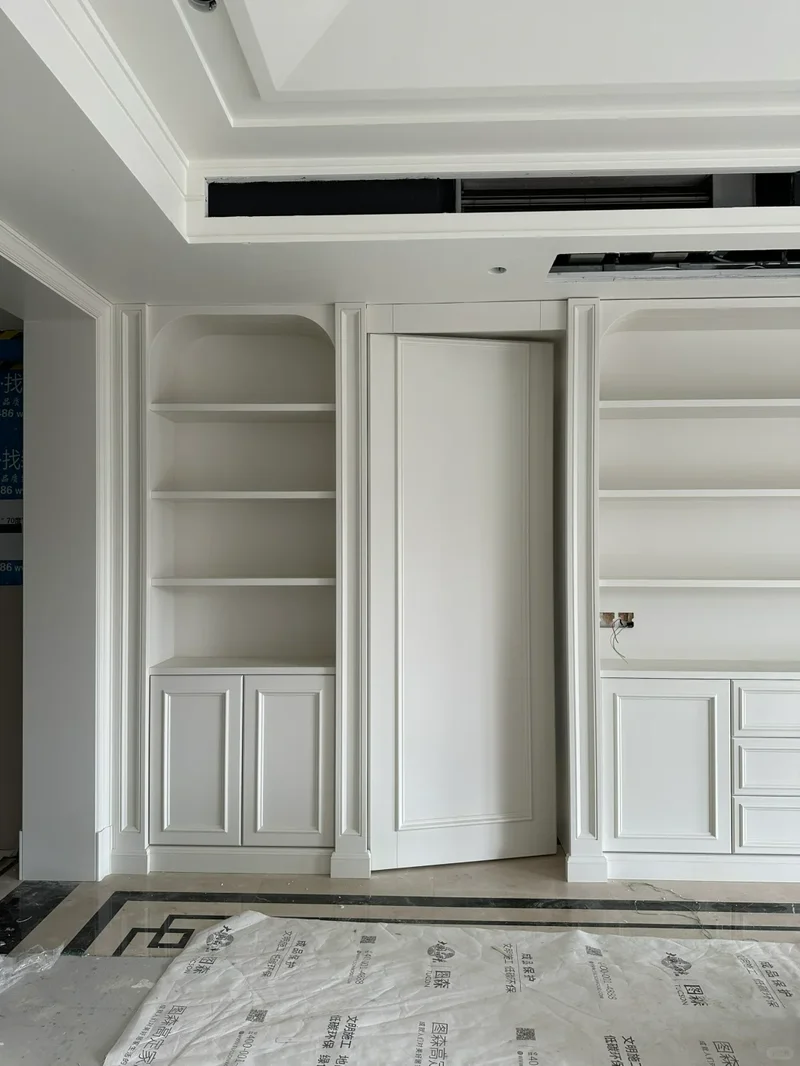
- ISO 9001:2015 Quality Management: Audited systems for consistent production control, from timber sourcing to finishing, ensuring repeatable performance.
- Formaldehyde Emission Compliance: All composite elements (adhesives, engineered cores) are certified to E0 (≤0.5 mg/L) and E1 (≤1.5 mg/L) grades per EN 16516 / ASTM E1333, supporting healthy indoor air quality.
- Fire Performance Ratings: Doorsets are tested and classified per EN 13501-2 or ASTM E84, with documented ratings for integrity (E) and insulation (I) for 30/60/90 minutes as required.
- FSC® / PEFC Chain of Custody: Verifies sustainable and traceable solid wood and veneer sourcing.
Technical Performance Validation: Certified testing provides guaranteed performance parameters critical for specification.
| Performance Category | Standard Test Method | Certified Performance Range | Architectural Application Implication |
|---|---|---|---|
| Structural Stability (LVL Core) | EN 789, ASTM D1037 | Dimensional change <0.3% at 65-85% RH | Ensures door geometry and alignment integrity in variable humidity environments. |
| Acoustic Insulation | EN ISO 10140-2, ASTM E90 | Rated up to Rw 42 dB (Ctr) for specified configurations. | Meets code for sound reduction between rooms, suites, and common areas. |
| Thermal Insulation | EN 12412-2, ASTM C1363 | U-factor as low as 1.1 W/m²K for insulated glazed units and solid constructions. | Contributes to building envelope energy efficiency targets. |
| Moisture Resistance | EN 1121, ASTM D1037 | Swelling rate ≤12% after 24h immersion; moisture absorption <18% by weight. | Guarantees performance in high-humidity zones (e.g., lobby, restroom adjacencies). |
| Surface Hardness | EN 15185, ASTM D3363 | Shore D hardness ≥75 for high-wear finishes. | Validates finish durability against impact and abrasion in high-traffic commercial settings. |
Functional Advantages for Project Integration:
- Pre-verified Submittals: Certification documents (test reports, declarations of performance) are readily available for expedited approval by architects and consultants.
- Code Compliance Assurance: Products are engineered to meet or exceed International Building Code (IBC), NFPA 80, and regional accessibility standards (ADA, EN 16034).
- Batch Traceability: Full material traceability from mill to site ensures accountability and simplifies any required quality audits.
- Predictable Long-Term Performance: Certified parameters for dimensional stability, finish adhesion, and hardware cycling (≥500,000 cycles per EN 15269) reduce lifecycle risk.
This multi-layered certification regime eliminates guesswork, providing engineers and contractors with validated data for seamless specification, compliance, and installation.
Optimized for Long-Term Performance: Advanced Engineering in Moisture Resistance and Stability
The long-term structural integrity and dimensional stability of a solid wood door are primarily challenged by hygroscopic stress—the absorption and release of atmospheric moisture. Advanced engineering protocols address this through a multi-layered approach, combining core material science, precision manufacturing, and rigorous performance validation.
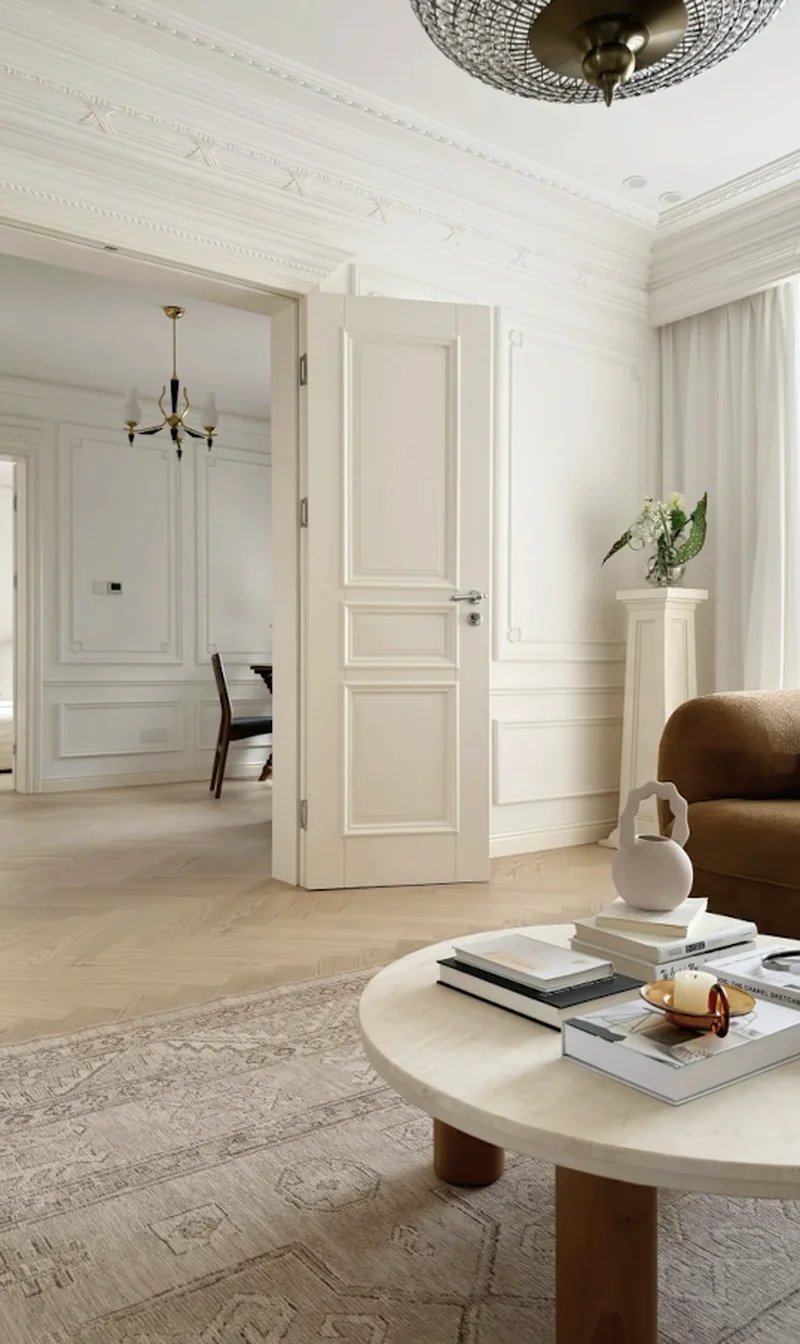
Core Material Engineering for Dimensional Stability
- Engineered Wood Core (LVL/Plywood): Replaces traditional solid timber blocks with cross-laminated veneer or multi-directional plywood cores. This construction neutralizes the anisotropic swelling and shrinkage of natural wood, providing a dimensionally stable substrate with predictable performance.
- Wood-Plastic Composite (WPC) Components: Strategically used in stiles, rails, and bottom rails. The optimal PVC-to-wood flour ratio and high composite density (typically >1.3 g/cm³) create a homogeneous material with minimal water absorption (<0.5%) and superior resistance to fungal decay.
- Advanced Adhesive Systems: Utilization of E0/E1 grade formaldehyde-free polyurethane (PU) or epoxy adhesives with high moisture-cure resistance. These bonds maintain integrity under thermal cycling and high humidity, preventing delamination.
Integrated Moisture Barrier Systems
- Full-Perimeter Edge Sealing: All exposed wood edges, including the core, are sealed with moisture-cure urethane or specialized edge banding to create a continuous barrier against moisture ingress.
- Multi-Stage Finishing: A minimum 6-coat finishing process is standard, incorporating:
- Deep-penetration stabilizing primers.
- UV-cured sealers for pore filling.
- Catalyzed topcoats (polyurethane or polyester) with a minimum dry film thickness of 120-150 microns, achieving a Shore D hardness >75 for abrasion resistance.
Validated Performance Against Technical Standards
Performance is not assumed but validated against international standards, providing predictable data for architectural specification.
| Performance Characteristic | Test Standard | Typical Certified Performance Data |
|---|---|---|
| Dimensional Stability (Swelling) | EN 1128 / ASTM D1037 | Thickness swelling ≤ 1.2% after 24h immersion |
| Formaldehyde Emission | EN 16516 / JIS A 1460 | E0 grade (<0.05 ppm / <0.3 mg/L) |
| Fire Resistance | EN 13501-2 / ASTM E84 | Class B-s1, d0 / Flame Spread Index ≤ 75 |
| Acoustic Insulation (Rw) | EN ISO 10140-1 | Up to 38 dB for standard constructions |
| Thermal Transmittance (U-value) | EN 12412-2 | U-factor as low as 1.1 W/(m²·K) for insulated models |
Quality Assurance for Predictable Outcomes
Manufacturing under ISO 9001:2015 certified quality management systems ensures traceability and consistency. Critical control points include:
- Incoming material verification (moisture content <8% for wood components).
- In-process monitoring of adhesive spread rate, press pressure, and curing parameters.
- Final performance auditing, including cycle testing of hardware integration points under load.
This engineered approach transforms the solid wood door from a variable natural product into a high-performance, specification-grade building component with guaranteed long-term stability, directly mitigating project risk associated with callbacks and premature failure.
Streamlined Project Collaboration: Case Studies Demonstrating Seamless, Worry-Free Cooperation
Case Study 1: High-Rise Residential Tower, Northern Europe
- Project Challenge: Specifying interior doors for a 40-story tower requiring consistent performance across 800+ units under variable microclimates (coastal humidity, interior dry heat). The architect demanded a single supplier capable of guaranteeing dimensional stability, acoustic privacy, and fire integrity.
- Technical Collaboration & Solution: Our pre-qualification audit confirmed the manufacturer’s integrated control from forest management to finishing. A joint technical task force was established.
- Core Stability: LVL cores were specified with a cross-banding ratio of 1:3 and moisture content (MC) controlled to 8±1%. This was validated against on-site ambient RH forecasts of 30-65%.
- Acoustic Performance: Doors were engineered to achieve a weighted sound reduction index (Rw) of 32 dB. This was achieved through a calculated mass-spring-mass system: a 45mm solid core with a damped mineral wool infill and asymmetric skin thicknesses (6mm/8mm).
- Fire Compliance: Full-scale testing to EN 1634-1 confirmed 30-minute integrity (EI30) for all designated doors, with intumescent seal profiles calculated for the specified gap tolerances.
- Outcome: Zero callbacks for warping or noise complaints. Batch traceability via embedded QR codes allowed any unit’s material lot and test certificates to be accessed instantly, streamlining the final building inspection.
Case Study 2: Hospital Retrofit, Southeast Asia
- Project Challenge: Phased retrofit of patient wing doors requiring stringent hygiene protocols, impact resistance, and compliance with volatile organic compound (VOC) emission limits in occupied adjacent areas.
- Technical Collaboration & Solution: The manufacturer’s ISO 9001 and ISO 14001 certifications provided the procedural framework. We focused on material science and finish durability.
- Material Specifications: Door skins utilized a high-density Wood Plastic Composite (WPC) with a density of 1.25 g/cm³ and a wood-to-PVC ratio of 7:3, optimizing for low moisture absorption (<0.8% per 24h immersion) and Shore D hardness of 82.
- Finish & Emissions: A catalyzed polyurethane finish was applied in a controlled negative-pressure booth, with post-application off-gassing monitored. All components certified E0 formaldehyde emission per JIS A 1460 (≤0.3 mg/L).
- Hardware Integration: Pre-machining for heavy-duty closers and antimicrobial push plates was factory-performed using CNC templates supplied by the hardware vendor, ensuring perfect alignment and core integrity.
- Outcome: Installation proceeded without disruption to hospital operations. The low-VOC process eliminated odor complaints. The finish demonstrated a resistance to over 5,000 cycles of cleaning with quaternary ammonium compounds without degradation.
Case Study 3: Luxury Hotel, Arid Climate
- Project Challenge: Supplying exterior terrace doors and interior suite doors with matching aesthetic (deep-profile machining) but vastly different performance requirements for thermal insulation and solar load.
- Technical Collaboration & Solution: Early design involvement allowed for value engineering without compromising performance. Prototypes were subjected to accelerated weathering tests.
- Exterior Door System: Engineered as a thermally broken solid wood door with a polyamide barrier. The U-factor was calculated at 1.2 W/m²K. The core comprised a laminated softwood LVL with alternating grain orientation to resist cupping under direct solar exposure.
- Interior Door Consistency: Used the same wood species and profile tooling as the exterior doors but with a standard core, maintaining visual continuity. Focus shifted to acoustic performance between suites.
- Technical Data Verification: The following key parameters were guaranteed and verified via mill certificates and third-party test reports:
| Component | Parameter | Standard / Test Method | Guaranteed Value | Notes |
|---|---|---|---|---|
| Exterior Door | Thermal Transmittance (U-factor) | EN ISO 10077-1 | ≤ 1.3 W/m²·K | Calculated for full assembly |
| Swelling Rate (Thickness) | EN 317 | ≤ 1.5% (24h water immersion) | For edge-sealed components | |
| Interior Door | Weighted Sound Reduction (Rw) | EN ISO 10140-2 | ≥ 29 dB | For standard 44mm door assembly |
| Finish (All) | Cross-Cut Adhesion | EN ISO 2409 | Class 0 (0% detachment) | After 240h humidity cycling |
| Core Material | Formaldehyde Emission | EN 16516 | Class E1 (≤ 0.065 ppm) | Chamber method value |
- Outcome: A unified aesthetic was delivered with performance-optimized products. The precise technical data package enabled the MEP engineer to accurately model thermal loads, and the facade contractor to confirm interface details well in advance.
Technical Specifications and Customization Options for Precise Engineering Requirements
Core Material Specifications
The structural integrity and performance of an engineered solid wood door are dictated by its composite material science. Key specifications are non-negotiable for certified projects.
- Core Stability: Multi-layered LVL (Laminated Veneer Lumber) cores are engineered for dimensional stability, with a target swelling rate of <0.3% after 24-hour water immersion (per EN 942). Cross-banding techniques prevent warping and twisting under variable climatic loads.
- Surface Laminate Performance: High-pressure laminate (HPL) or real wood veneers are bonded under controlled pressure and temperature. Critical parameters include:
- Abrasion Resistance: >1000 cycles (EN 13329 / ASTM D4060, Taber Abraser).
- Impact Resistance: IK07 to IK10 ratings (EN 13024) for high-traffic areas.
- Formaldehyde Emission: Strict compliance with E0 (≤0.5 mg/L) or CARB Phase 2 / EN 13986 E1 (≤0.124 mg/m³) standards.
- Edge Banding & Sealing: 2-3mm PVC or ABS edge banding with polyurethane adhesive ensures a monolithic seal. Moisture absorption rates for sealed edges must be below 8% (EN 322).
Performance-Based Technical Standards
Certification mandates adherence to internationally recognized performance benchmarks, which should be explicitly validated by third-party testing reports.
| Performance Category | Standard Reference | Typical Certified Specification | Application Context |
|---|---|---|---|
| Fire Resistance | EN 1634-1 / ASTM E84 | EI30 / EI60 (Integrity & Insulation) | Stairwells, corridor walls, fire compartments. |
| Acoustic Insulation | EN ISO 10140-2 / ASTM E90 | Rw 32 dB to 42 dB (Weighted Sound Reduction) | Office partitions, hotel rooms, healthcare facilities. |
| Thermal Insulation | EN 12412-2 / ASTM C1363 | U-factor 1.2 to 1.8 W/m²K | External entrances, climate-controlled environments. |
| Structural & Durability | EN 14351-1 / ANSI A250.13 | Cycle testing >200,000 cycles (heavy-duty) | High-frequency commercial and institutional entrances. |
Precision Customization for Architectural Integration
Beyond standard sizes, certified engineering manufacturers provide deterministic customization to meet precise architectural and MEP coordination requirements.
- Dimensional & Geometric Tolerance: Fabrication to architectural millwork drawings with tolerances of ±0.8mm on width/height and ±0.5mm on thickness. Options include radius tops, angled heads, and non-standard aspect ratios.
- Hardware Integration: Pre-prepared, machined reinforcements for:
- Multi-point locking systems (e.g., 3-5 point, per EN 12209).
- Concealed closers (electromechanical or hydraulic).
- Access control systems (biometric, RFID) with routed channels for cabling.
- Specialized Functional Configurations: Engineered solutions for:
- Radiation Shielding: Integration of lead or barium composite cores for medical imaging suites.
- Blast & Ballistic Resistance: Laminated glass and composite core assemblies tested to relevant UL or EN standards.
- Hygienic Environments: Full-wrap stainless steel cladding, coved corners, and antimicrobial coatings for labs and cleanrooms.
Quality Assurance & Traceability Protocol
Certified project supply is underpinned by a documented quality management system (ISO 9001:2015) that ensures traceability from raw material lot to installed unit.
- Batch Testing: Random sample testing for core density, adhesive shear strength, and finish hardness (Shore D scale).
- Documentation: Provision of material certificates, test reports, and installation schematics for each project lot.
- Installation Compliance: Detailed method statements and tolerance guides to ensure as-built performance matches designed specifications.
Building Trust Through Proven Manufacturer Credentials and Client Testimonials
Proven manufacturer credentials are non-negotiable for ensuring long-term project integrity. They provide a verifiable framework for material consistency, structural performance, and regulatory compliance, directly mitigating risk in specification and procurement.
Core Technical Certifications & Standards Compliance
- Quality Management Systems: ISO 9001:2015 certification is the baseline, ensuring documented control over every production stage from raw material sourcing to final inspection. This systemic approach guarantees batch-to-batch consistency.
- Material & Emission Standards: Adherence to stringent formaldehyde emission standards (E0, CARB Phase 2, EN 13986) is mandatory. Manufacturers should provide third-party test reports verifying compliance.
- Fire Performance: Doors must be certified to relevant regional standards (e.g., EN 1634-1, ASTM E84) with clear classifications for integrity, insulation, and radiation (EI classifications). Documentation must specify the tested door assembly, including core, veneers, and hardware.
- Structural & Durability Testing: Credible manufacturers test to standards such as EN 14351-1 or ANSI/BHMA A250.13, which cover structural load (torsion, racking), operational cycle counts (exceeding 200,000 cycles for heavy-duty applications), and impact resistance.
Technical Parameters Defining Performance
Trust is built on quantifiable data. Key performance indicators for solid wood and engineered wood doors include:
| Parameter | Standard Test Method | Performance Benchmark (High-Grade) | Engineering Significance |
|---|---|---|---|
| Sound Reduction (Rw) | EN ISO 10140-2, ASTM E90 | ≥ 32 dB (single door) to ≥ 45 dB (acoustic-rated assembly) | Critical for privacy in commercial, healthcare, and multi-family residential projects. |
| Thermal Insulation (U-factor) | EN 12412-2, ASTM C1199 | U-factor ≤ 1.5 W/(m²·K) for insulated core constructions. | Contributes to building envelope efficiency and occupant comfort. |
| Moisture Absorption & Swelling | EN 317, ASTM D1037 | Thickness swelling ≤ 10% after 24-hour immersion. Dimensional stability is paramount for high-humidity environments. | Predicts long-term dimensional stability and resistance to warping in variable climates. |
| Surface Hardness | EN 1534 (Brinell), ASTM D2240 (Shore D) | Brinell hardness ≥ 4.0 N/mm² for common hardwoods; indicates resistance to indentation and abrasion. | Directly correlates to finish durability and longevity in high-traffic areas. |
| Core Stability (for LVL/Engineered Cores) | Voluntary internal QC; referenced to ANSI/HPVA LV-1 | Density variation < ±5% across panels; void-free lamination. | Ensures uniform screw-holding power, hinge stability, and prevents sagging over time. |
Architectural USPs Validated by Credentials
- Long-Span & Heavy-Door Capability: Certification documents for structural testing validate a manufacturer’s ability to produce stable, sag-resistant doors in sizes exceeding 1000kg and 3m heights, often utilizing engineered LVL or composite cores.
- Specialized Performance Doors: Credentials for fire-rated, acoustic, blast-resistant, or radiation-shielding doors are highly specialized. Trust requires project-specific test summaries from accredited laboratories (e.g., UL, Warringtonfire, ift Rosenheim).
- Finish Durability: Beyond standard warranties, look for manufacturers whose finishing lines are qualified by coating suppliers (e.g., AkzoNobel, Sherwin-Williams) and who test to accelerated weathering (QUV, Xenon Arc) and chemical resistance (EN 12720) standards.
Client Testimonials as Project Evidence
While technical data is foundational, documented project cases provide critical validation of a manufacturer’s capability in real-world applications. Credible testimonials reference:
- Project Complexity: Specifics on custom dimensions, non-standard hardware integrations, or challenging environmental conditions (e.g., pool surrounds, coastal locations).
- Supply Chain Reliability: Evidence of on-time delivery for large-scale, phased projects and effective logistical coordination.
- Technical Support: Instances of collaborative problem-solving, such as providing detailed shop drawings for complex interfaces, on-site guidance for installation teams, or rapid response to field-measured variations.
For the specifying architect or contractor, trust is an equation: Verifiable Credentials + Quantifiable Performance Data + Documented Project History = Risk-Mitigated Specification. The manufacturer’s documentation portfolio should provide clear, auditable lines of evidence for each variable.
Frequently Asked Questions
What standards ensure formaldehyde safety in your solid wood doors?
We exclusively use E0-grade (<0.05mg/L) and ENF-grade (<0.025mg/L) certified core materials and adhesives. Each batch undergoes third-party chamber testing, with reports traceable via QR code on the product, ensuring indoor air quality compliance for hospitals and schools.
How do you prevent warping and deformation in humid climates?
Our engineered doors integrate LVL (Laminated Veneer Lumber) core structures with balanced moisture content (8-12%) and multi-layer cross-banding. This, combined with a full-perimeter PVC sealing edge (≥1.5mm), controls the moisture expansion coefficient to below 0.3%.
What is the impact resistance and durability of your door surfaces?
We apply a 5-layer UV-cured coating with a hardness rating of ≥3H and a 0.8mm thick high-density WPC (≥1250 kg/m³) skin. This achieves an impact resistance of >100kg force without cracking, suitable for high-traffic commercial entrances.
How is thermal and sound insulation performance quantified?
Doors feature a honeycomb paper core with polyurethane foam infill, achieving a thermal conductivity (K-value) of ≤1.2 W/(m²·K). Acoustic models reach 28-32dB sound reduction (Rw) via sealed multi-chamber profiles and magnetic gaskets.
What certifications validate your engineering and manufacturing quality?
We hold FSC chain-of-custody, ISO 9001:2015 for quality management, and CE certification for structural performance. Each project is backed by a 10-year warranty against structural defects, with IAPMO evaluation reports for North American code compliance.