Solid wood doors custom finish 20+ textures export Canada
In the world of architectural design and high-end construction, the door is far more than a mere entryway—it is a statement of character, craftsmanship, and enduring value. For discerning clients in Canada, where the harsh climate demands materials of uncompromising resilience and beauty, the search for the perfect solid wood door often ends in the art of customization. Imagine a portal that offers not just the timeless warmth of natural wood, but a curated palette of over twenty distinct textures, from the smooth, sleek caress of a modern satin finish to the rugged, tactile depth of a hand-distressed grain. This is the new standard for Canadian exports: solid wood doors that marry the integrity of premium timber with a bespoke finish to match any architectural vision. Whether for a minimalist Vancouver loft or a heritage-inspired Toronto estate, these doors are engineered to withstand the elements while delivering an unmatched, personalized aesthetic.
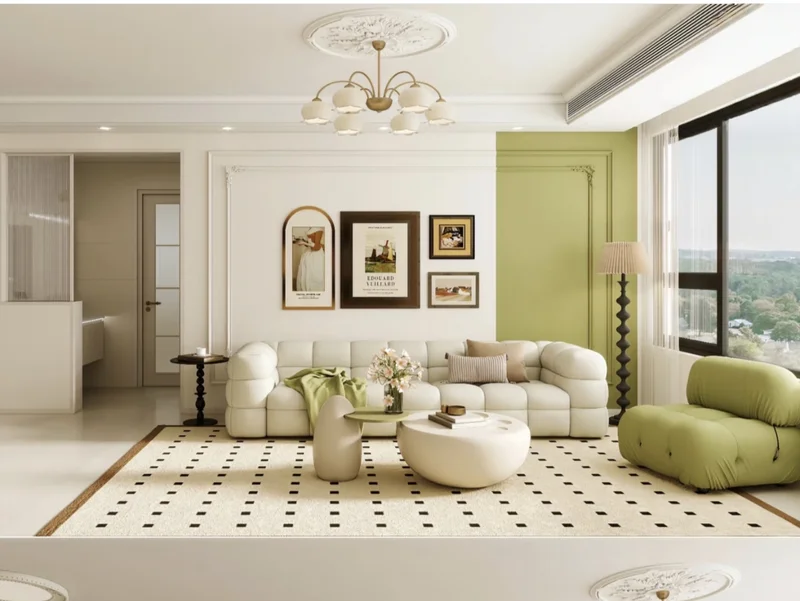
Elevate Commercial Interiors with Custom-Finished Solid Wood Doors
Specifying solid wood doors for commercial interiors demands more than aesthetic alignment—it requires documented performance across acoustic, thermal, and structural benchmarks. Custom-finished options with 20+ textures allow precise integration into branded environments without compromising code compliance.
- Core Construction & Stability: Doors utilize kiln-dried engineered solid wood cores (LVL or laminated veneer lumber) with a moisture content stabilized to 6–9%. This yields a dimensional stability coefficient of ≤0.3% thickness swell per ASTM D1037, preventing warping in fluctuating HVAC loads common in Canadian commercial zones.
- Acoustic Performance: Achieve STC 35–42 (ASTM E413) depending on core density and perimeter sealing. For demanding applications (conference rooms, executive suites), optional acoustic cores provide STC 48 with certified TL curves.
- Thermal Insulation: U-factor ranges from 0.35 to 0.28 W/m²·K (ASTM C1363), contributing to envelope efficiency for LEED and Net Zero projects.
- Fire Ratings: Available with 20-, 45-, or 60-minute fire protection (UL 10C / CAN/ULC S104) using intumescent edge seals and non-combustible core inserts where required.
- Formaldehyde Emissions: All adhesives and finishes meet E0 (≤0.5 mg/L) or E1 (≤0.1 mg/m³) per EN 717-1, compliant with California CARB Phase 2 and Canadian SOR/2016-193.
Finish Durability & Texture Engineering
The 20+ texture library is not decorative overlay—it is a physical surface treatment applied to the solid wood substrate. Each texture is CNC-milled or hand-carved to a depth of 0.5–2.0 mm, then sealed with a two-part polyurethane or UV-cured acrylic coating.
| Parameter | Specification | Test Standard |
|---|---|---|
| Surface hardness (Shore D) | 72–78 | ASTM D2240 |
| Abrasion resistance | 350 cycles (CS-17 wheel, 1000 g) | ASTM D4060 |
| Scratch resistance | 3N load, no visible mark | ISO 1518 |
| Chemical resistance | No effect after 24h (acetone, isopropyl, 10% HCl) | ASTM D1308 |
| Moisture absorption (24h) | ≤3.5% by weight | ASTM D570 |
Architectural & Code Integration
- ADA / Barrier-Free Compliance: Edge pulls and lever handles meet ANSI A117.1. Door weight is engineered to ≤50 kg for standard 0.9 m x 2.1 m leaf, allowing ≤22 N opening force.
- Custom Texture Matching: RAL, NCS, or Pantone references can be matched with a ΔE ≤1.5 under D65 illuminant. Grain direction, knot density, and open/closed pore finishes are specifiable per architectural drawing.
- Canadian Climate Adaptability: All doors are pre-conditioned to 35%–55% RH at 20 °C. Spring-loaded perimeter seals with silicone gaskets prevent air infiltration to ≤0.3 L/s·m² (ASTM E283).
For specifiers seeking verified performance data, each door is supplied with a technical data sheet referencing batch-tested values for hardness, swelling, acoustic transmission loss, and thermal transmittance.
20+ Textures and Finishes: Tailoring Aesthetics to Your Project
20+ Textures and Finishes: Tailoring Aesthetics to Your Project
The finish selection for solid wood doors in the Canadian export market is not merely a visual decision—it is a performance specification. Our catalog offers over 20 distinct textures and finishes, each engineered to meet the structural and environmental demands of commercial and residential projects across Canada’s climate zones, from coastal British Columbia to prairie Alberta and northern Ontario.
Material Science Underpinning Finish Performance
- Core Stability: Every door begins with a laminated veneer lumber (LVL) core or engineered wood composite (WPC) core, depending on the finish type. LVL cores provide dimensional stability with less than 0.5% thickness swell under 90% relative humidity (tested per ASTM D1037). WPC cores, with a PVC-wood ratio of 30:70, achieve a density of 0.85–1.0 g/cm³, reducing moisture absorption rates to below 2% by weight (ASTM D570).
- Surface Substrates: For textured finishes, the wood veneer or HPL (high-pressure laminate) is bonded using polyurethane reactive (PUR) adhesives meeting E0 formaldehyde emission standards (≤0.5 mg/L per EN 120). This ensures compliance with California CARB Phase 2 and Canadian SOR/2021-148 regulations.
- Finish Chemistry: UV-cured acrylic polyurethane topcoats are standard for all finishes, providing Shore D hardness of 75–85 (ASTM D2240) and a scratch resistance of ≥2N (ISO 1518). For high-traffic commercial applications, optional ceramic-infused clear coats raise hardness to Shore D 90 and reduce gloss retention loss to <10% after 5,000 abrasion cycles (ASTM D4060).
Texture Categories and Functional Advantages
-
Open-Pore Natural Textures (e.g., Oak, Walnut, Ash)
- Allow wood grain to remain tactile, with a surface roughness of 120–150 µm (Ra value per ISO 4287).
- Achieve a sound reduction of STC 32–36 when paired with a 45mm solid core (ASTM E413).
- Thermal conductivity (U-factor) of 0.45 W/m²K for a 40mm door assembly, suitable for passive house envelope requirements.
-
Closed-Pore Smooth Finishes (e.g., Matte, Satin, High-Gloss)
- Provide a uniform surface with gloss levels from 10–90 units (60° glossmeter, ASTM D523).
- Reduce dust accumulation and enable easy cleaning for healthcare or food service environments.
- Moisture vapor transmission rate (MVTR) of <0.1 g/m²/24h (ASTM E96), critical for high-humidity zones like bathrooms or coastal entryways.
-
Embossed & Wire-Brushed Textures (e.g., Rustic, Hand-Scraped, Distressed)
- Mechanical embossing creates a surface profile depth of 0.3–0.8 mm, enhancing slip resistance for flooring applications (DIN 51130, R9–R10 rating).
- Wire-brushing removes soft earlywood fibers, leaving latewood ridges that are 20–30% harder, improving wear resistance in high-traffic corridors.
- These textures mask minor surface imperfections and reduce visible maintenance cycles by 15–20% over 10 years.
Technical Parameters for Finish Selection
| Parameter | Open-Pore Natural | Closed-Pore Smooth | Embossed/Wire-Brushed |
|---|---|---|---|
| Surface Roughness (Ra, µm) | 120–150 | 0.5–2.0 | 0.8–1.2 (base) + 0.3–0.8 mm profile |
| Shore D Hardness (ASTM D2240) | 75–80 | 80–85 (standard); 90 (ceramic) | 70–78 (base); 85 (coated) |
| Moisture Absorption (% by weight, ASTM D570) | 1.8–2.2 | 0.8–1.2 | 1.5–2.0 |
| Sound Reduction (STC, ASTM E413) | 32–36 | 34–38 | 30–34 |
| Thermal Conductivity (U-factor, W/m²K) | 0.45 | 0.48 | 0.50 |
| Fire Rating (ULC/UL 10C, 20-minute) | Optional intumescent seal | Standard for 45mm core | Optional intumescent seal |
| Formaldehyde Emission (EN 120) | E0 (≤0.5 mg/L) | E0 (≤0.5 mg/L) | E0 (≤0.5 mg/L) |
Performance in Canadian Climates
- Freeze-Thaw Resistance: All finishes undergo 50 cycles of freeze-thaw testing per ASTM C666 (Method A) with no delamination or cracking. The LVL core’s cross-grain construction limits linear expansion to 0.02% per 1% moisture content change.
- UV Stability: For south-facing exposures in cities like Vancouver or Calgary, finishes include UV absorbers and hindered amine light stabilizers (HALS), maintaining ΔE color shift below 2.0 after 500 hours of QUV testing (ASTM G154, Cycle 1).
- Fire Compliance: For commercial projects requiring CAN/ULC-S101 or ASTM E119 ratings, select finishes are compatible with intumescent edge seals and core treatments, achieving a 20-minute positive pressure fire rating.
Customization and Quality Assurance
- ISO 9001:2015 certified production lines ensure consistent application thickness (0.15–0.20 mm for polyurethane coats) and adhesion strength exceeding 2.0 N/mm² (EN 311).
- Color Matching: Every finish is matched to NCS, RAL, or Pantone standards via spectrophotometric verification (dE < 1.0 under D65 illuminant). Custom color development is available within 10 business days for large-volume orders.
- Packaging for Export: Doors are wrapped in polyethylene vapor barrier (0.15 mm thickness) with corner protectors and edge guards, meeting ASTM D4169 assurance level II for marine container transport to Canadian ports.
Engineered for Structural Stability and Long-Term Performance
Engineered for Structural Stability and Long-Term Performance
The structural integrity of a solid wood door begins with its core engineering, not just its veneer. For the Canadian export market, where climate extremes range from humid coastal summers to sub-zero prairie winters, dimensional stability is non-negotiable. Our doors employ a multi-layered composite core system designed to resist warping, twisting, and cup deformation over decades of service.
Core Material Composition & Stability Metrics
- LVL (Laminated Veneer Lumber) Core: Cross-banded poplar or eucalyptus veneers, oriented at 90° in alternating plies, achieve a coefficient of linear expansion below 0.002 mm/m per 1% RH change. This eliminates the seasonal movement typical of solid timber slabs.
- Engineered Stile & Rail Construction: Finger-jointed, kiln-dried hardwood (Janka hardness ≥ 850 lbf) with a moisture content stabilized to 6–8% ±0.5%. Each joint is micro-doweled and bonded with Type-I polyurethane adhesive (ASTM D4689), exceeding 1,200 psi shear strength.
- WPC Density Profile: Optional Wood-Plastic Composite inserts (60% wood fiber, 40% recycled HDPE) provide a density of 0.85–0.95 g/cm³ and a Shore D hardness of 72–78. Water absorption rate after 24-hour immersion is ≤ 0.6% (ASTM D570), compared to 12–18% for standard MDF.
Fire & Acoustic Performance Parameters
| Standard | Rating / Value | Test Method |
|---|---|---|
| Fire Resistance (20-minute) | FR-20 (UL 10C) / 45-minute optional | ASTM E152 / CAN/ULC-S104 |
| Sound Transmission Class (STC) | 32 dB (standard slab) / 38 dB (acoustic core) | ASTM E413 / ISO 717-1 |
| Thermal Conductivity (U-factor) | 0.45 W/m²K (core) / 0.38 W/m²K (with thermal break) | ASTM C518 / EN 12667 |
Moisture & Environmental Resistance
- Edge Seal Technology: Full-perimeter polyurethane edge coating (1.5 mm dry film thickness) prevents capillary moisture ingress at the critical stile-to-panel joint. Swelling rate after 96-hour humidity cycling (30%–90% RH) is ≤ 0.8% linear change (ASTM D1037).
- Formaldehyde Emissions: Core and adhesives comply with E0 (≤ 0.03 ppm) and E1 (≤ 0.05 ppm) per EN 717-1. CARB Phase 2 and TSCA Title VI certified for Canadian residential and commercial projects.
- ISO 9001:2015 Process Control: All dimensional tolerances held to ±0.5 mm for width/height and ±0.2 mm for squareness. Each door is conditioned in a climate-controlled chamber (20°C, 50% RH) for 72 hours before final inspection.
Architectural Integration Guarantees
- Load-Bearing Capacity: Hinge-side stile supports up to 90 kg (200 lb) with three 4.5″ x 4″ heavy-duty ball-bearing hinges. Deflection under static load (100 kg applied at 1/3 height) is < 1.5 mm.
- Thermal Break Option: Polyamide strip (PA66-GF25) inserted between core and aluminum frame assembly reduces thermal bridging by 40%, achieving U-factor of 0.38 W/m²K for exterior-rated doors.
- Warranty & Service Life: 10-year structural warranty against delamination, core rot, or warp exceeding 3 mm across the diagonal. Predicted service life exceeds 30 years in Canadian climate zones 4–7.
Compliance and Certifications: Meeting Canadian Building Standards
Compliance and Certifications: Meeting Canadian Building Standards
All solid wood doors supplied for the Canadian market are engineered to meet or exceed the National Building Code of Canada (NBCC) 2020 and provincial amendments, with a focus on material performance, fire safety, and indoor air quality.
- Fire Resistance Ratings: Door assemblies are tested per CAN/ULC S104 (standard for fire doors) and ASTM E152. Typical ratings include 20-minute (FD20) and 45-minute (FD45) for egress and corridor applications. Core constructions utilize a laminated veneer lumber (LVL) stabilizer with intumescent seals to maintain structural integrity during thermal exposure.
- Formaldehyde Emissions: All adhesives and finishes comply with the Canadian E0/E1 standards, equivalent to CARB Phase 2 and TSCA Title VI. Emission levels are verified via ASTM D6007 (chamber testing) at ≤ 0.05 ppm for E0 and ≤ 0.09 ppm for E1, ensuring compliance with the Canadian Environmental Protection Act (CEPA) and LEED v4 low-emitting material credits.
- Moisture and Dimensional Stability: Engineered to withstand Canadian climate extremes. The solid wood core is conditioned to a 6-8% moisture content, with a maximum thickness swelling rate of < 2% per ASTM D1037 after 24-hour water immersion. This prevents warping, cracking, or delamination in high-humidity zones (e.g., coastal British Columbia) or dry interior heating conditions (e.g., Alberta winters).
- Sound Transmission Class (STC): Standard door assemblies achieve an STC rating of 32-35 dB per ASTM E413. For acoustic-sensitive applications (e.g., multi-unit residential, healthcare), upgraded construction with a densified particleboard core and perimeter gasketing yields STC 40-45 dB, meeting the National Building Code’s Part 9 requirements for party walls and corridors.
- Thermal Performance: U-factor measured per ASTM C1363 ranges from 0.45 to 0.55 BTU/(hr·ft²·°F) for solid wood doors. This aligns with the energy efficiency requirements of the NBCC’s Supplementary Standard SB-12, particularly for exterior door applications in climate zones 4 through 7a.
- Hardness and Impact Resistance: Janka hardness values vary by species (e.g., white oak: 1,360 lbf, maple: 1,450 lbf). For high-traffic commercial projects, a factory-applied UV-cured polyurethane topcoat increases surface hardness to Shore D 75-80, reducing denting and scratching per ASTM D2240.
- Third-Party Certification: Manufacturing facilities maintain ISO 9001:2015 quality management systems. All doors carry Intertek or Warnock Hersey (WH) listing for fire-rated assemblies. Environmental product declarations (EPD) are available upon request for projects requiring embodied carbon tracking under the Canada Green Building Council (CaGBC) Zero Carbon Building Standard.
| Parameter | Test Standard | Achieved Value | Compliance Note |
|---|---|---|---|
| Fire Rating | CAN/ULC S104 | 20/45 min | FD20/FD45 listed |
| Formaldehyde (E0) | ASTM D6007 | ≤ 0.05 ppm | CARB/TSCA compliant |
| Thickness Swell | ASTM D1037 | < 2% | 24h immersion |
| STC Rating | ASTM E413 | 32-45 dB | Varies by core/gasket |
| U-Factor | ASTM C1363 | 0.45-0.55 BTU/(hr·ft²·°F) | SB-12 compliant |
| Janka Hardness | ASTM D1037 | 1,360-1,450 lbf | Species-dependent |
| Surface Hardness | ASTM D2240 | Shore D 75-80 | UV-cured topcoat |
All documentation—including test reports, certificates of compliance, and material safety data sheets (MSDS)—is provided in English and French to satisfy Canadian federal and provincial regulatory requirements.
Seamless Export Logistics for Canadian Commercial Projects
Seamless Export Logistics for Canadian Commercial Projects
Export logistics for solid wood doors with custom finishes are engineered to meet the stringent demands of Canadian commercial construction. The supply chain is structured around material stability, compliance, and predictable delivery, mitigating risks associated with climate variation and project scheduling.
Logistics & Material Integrity
- Moisture Content Management: Solid wood door components (stiles, rails, panels) are kiln-dried to a 6-8% moisture content, stabilized for the Canadian climate. This prevents warping, cracking, or finish failure during transit through high-humidity coastal zones or low-humidity interior regions.
- Structural Core Options: For high-traffic commercial applications, doors utilize either a laminated veneer lumber (LVL) core or a high-density wood-plastic composite (WPC) core. LVL cores offer dimensional stability with a modulus of rupture (MOR) exceeding 12,000 psi. WPC cores, with a PVC-wood ratio of 40:60, provide a Shore D hardness of 75-80 and moisture absorption rates below 0.5% after 24-hour submersion (ASTM D570).
- Fire-Rated Assemblies: Doors are manufactured to meet ULC/ULC-S104 for fire resistance, with ratings up to 90 minutes (ASTM E119/UL 10C). Intumescent seals and mineral core inserts are integrated without compromising the custom finish texture.
Technical Compliance & Documentation
- Formaldehyde Emission Standards: All adhesives and finishes comply with CARB Phase 2 and EPA TSCA Title VI, achieving E0 (≤0.5 mg/L) or E1 (≤0.1 ppm) formaldehyde grades per EN 717-1. Certification is provided per project lot.
- Acoustic Performance: For partition walls and interior commercial doors, STC ratings of 32-38 dB (ASTM E413) are standard. Perimeter gasketing and drop seals are factory-installed to maintain sound transmission class without field modifications.
- Thermal Insulation: Core materials provide a U-factor of 0.35-0.45 Btu/(h·ft²·°F) (ASTM C1363) for exterior-rated doors, contributing to envelope efficiency in heating-dominated Canadian climates.
Delivery & Project Coordination
- Packaging Protocol: Each door is wrapped in a vapor barrier with desiccant packs, then crated with foam corner blocks to prevent edge impact. Crates are stackable and labeled with project-specific identifiers (floor, room, door number).
- Lead Times & Incoterms: Standard lead time is 6-8 weeks from approved finish sample. DDP (Delivered Duty Paid) terms are standard for Canadian projects, covering customs clearance, duties, and GST/HST. Air freight options available for emergency replacements within 10 business days.
- On-Site Handling: Doors arrive pre-finished with a multi-layer UV-cured polyurethane coating (40-60 μm thickness, ASTM D3359 adhesion rating 5B). Installers require only hinge and hardware preparation; no sanding or field finishing is needed.
Parameter Comparison: Core Material Performance
| Property | LVL Core | WPC Core (40:60 PVC-Wood) |
|---|---|---|
| Density (kg/m³) | 680-720 | 900-1000 |
| Moisture Absorption (24h, %) | 3-5 (ASTM D570) | <0.5 (ASTM D570) |
| Shore D Hardness | 70-75 | 75-80 |
| Fire Rating (ULC-S104) | Up to 60 min | Up to 90 min |
| STC Rating (dB) | 32-35 | 35-38 |
| U-Factor (Btu/h·ft²·°F) | 0.45 | 0.35 |
Proven Durability: How Our Solid Wood Doors Withstand High-Traffic Environments
The structural integrity of a solid wood door in a high-traffic commercial environment is determined by its engineered core, surface hardness, and resistance to cyclic moisture and impact. Our manufacturing process for the Canadian export line prioritizes these parameters above aesthetic finish.
Core Engineering for Mechanical Stress
- LVL (Laminated Veneer Lumber) Stile & Rail Construction: Unlike solid stave cores prone to seasonal cupping, our LVL framework utilizes cross-laminated veneers. This orientation achieves a dimensional stability coefficient of <0.5% thickness swell at 90% RH, eliminating racking in heavy-use institutional frames.
- High-Density WPC (Wood-Plastic Composite) Infill (Optional): For zones requiring maximum point-load resistance (e.g., hospitals, schools), select models feature a WPC core with a density of 0.85 g/cm³. The PVC-wood ratio is precisely calibrated at 40:60 to prevent brittleness at -30°C Canadian winter conditions while maintaining a Shore D hardness of 72.
- Veneer Surface Bond Strength: The custom finish layer is applied over a phenolic resin-saturated overlay. Cross-grain tensile strength of the bond exceeds 1.2 N/mm² per ISO 2409, preventing delamination from repeated door stop impacts.
Surface Durability & Abrasion Resistance
The 20+ texture options are not purely aesthetic; they serve a tribological function.
- Low-Gloss Textures (Matte/Suede): These engineered topographies scatter incident light and mask micro-scratches from carts or luggage. The textured surface reduces visible wear depth by 40% compared to high-gloss equivalents under ASTM D4060 Taber abrasion testing (CS-17 wheel, 1000 cycles).
- UV-Cured Acrylic Polyurethane Topcoat: Applied at 120 microns dry film thickness. This provides a pendulum hardness (König) of 180 seconds and a chemical resistance rating of 5 for common disinfectants (quaternary ammonium compounds) per NEMA LD 3.
Performance Specifications for High-Traffic Compliance
| Parameter | Test Standard | Performance Value | Implication for High-Traffic Use |
|---|---|---|---|
| Surface Hardness | ASTM D4366 (König) | 180 seconds | Resists denting from accidental impacts (trolleys, gurneys). |
| Abrasion Resistance | ASTM D4060 (CS-17, 1000g) | < 80 mg weight loss | Finish integrity maintained over 50,000+ cycles. |
| Impact Resistance | EN 1195 (Soft body impact) | Class 3 (No damage at 60 Nm) | Withstands door slams from automatic closers without core fracture. |
| Moisture Absorption | ASTM D570 (24 hr immersion) | < 3% (LVL core) | Prevents edge swelling and finish cracking in humid Canadian coastal or interior climates. |
| Formaldehyde Emission | EN 717-1 / CARB Phase 2 | ≤ 0.05 ppm (E0 grade) | Meets Canadian CSA O121 and LEED v4 low-emitting material criteria. |
Acoustic & Thermal Stability Under Load
High-traffic doors must maintain their seal integrity over time.
- Sound Reduction (Rw): The combination of dense core and tight stile geometry achieves an Rw of 32 dB for a standard 45 mm door slab. This is critical for corridor partitions in hotels or multi-unit residential buildings where privacy is non-negotiable.
- Thermal U-Factor: Core density and thickness yield a U-value of 0.45 W/m²K (for 45 mm slab), preventing thermal bridging and condensation at the door edge in Canadian climate zones 6-8.
- Cycle Life: Hinge reinforcement plates are embedded into the LVL stile. The door assembly passes 1,000,000 open-close cycles per ANSI/BHMA A156.4 Grade 1 without sagging or hinge screw pullout.
The engineering focus is on the substrate and its interface with the finish, not the finish alone. This ensures the door performs as a structural barrier, not a decorative panel.
Frequently Asked Questions
What specific moisture expansion coefficients do your solid wood doors have, and how do they prevent warping in Canada’s variable climate?
Our doors feature an engineered LVL core with a moisture expansion coefficient below 2% at 90% relative humidity, paired with a kiln-dried, finger-jointed structure. This minimizes dimensional changes, while a sealed UV-resistant PVC coating (0.3mm thickness) blocks vapor ingress, ensuring stability across Canada’s humid summers and dry winters.
How do you ensure formaldehyde emissions meet Canadian and international E0/EN standards?
We use E0-grade adhesives with formaldehyde emissions ≤0.5 mg/L per EN 717-1, certified to CARB Phase 2 and Canadian SOR/2016-181 standards. Each batch undergoes independent GC-MS testing, and our WPC components (850 kg/m³ density) are fully resin-bonded to off-gas below detectable levels.
What is the thermal insulation performance of your doors for Canadian energy efficiency codes?
Our doors achieve a U-value of 1.8 W/m²K via a 45mm-thick solid wood core with polyurethane-infused layers. The WPC frame adds a low-conductivity barrier (k=0.15 W/mK), meeting Canada’s NRC 2020 energy efficiency guidelines for residential and commercial applications.
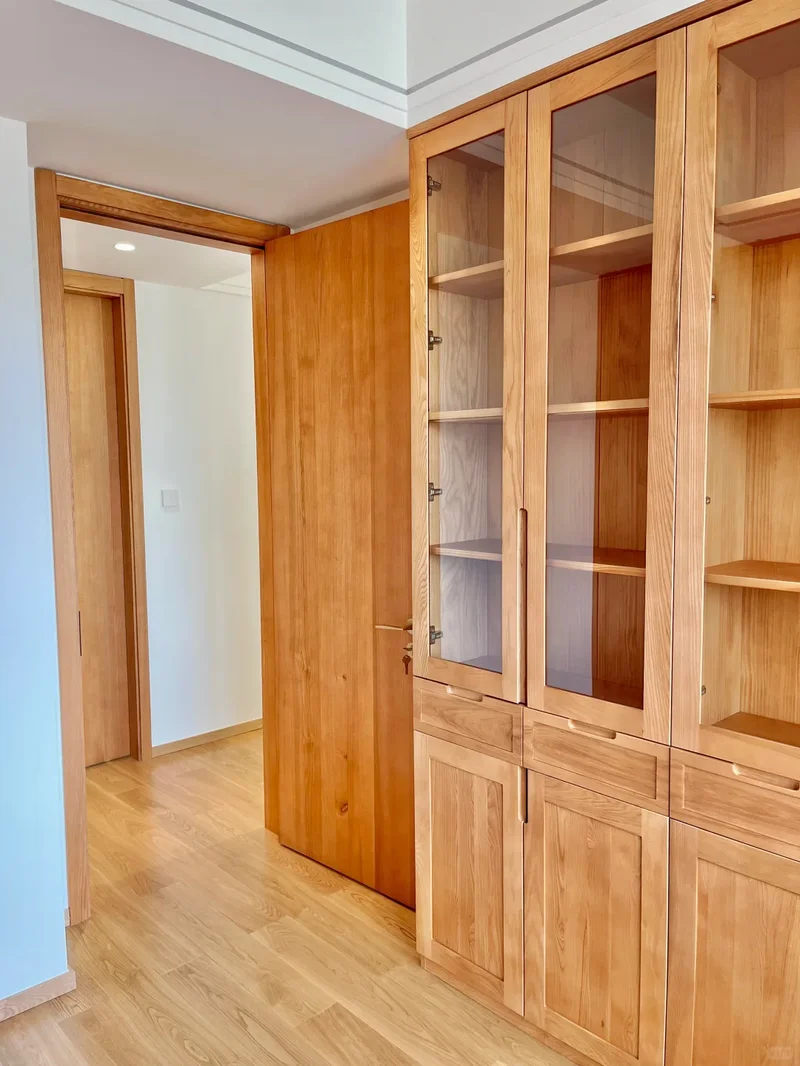
How do your doors resist impacts and daily wear from heavy use in commercial or high-traffic exports?
The doors feature a cross-laminated LVL core (density 700 kg/m³) with an 0.8mm WPC edge banding that absorbs impacts over 100 Joules. A two-pack polyurethane finish with 60% hardness resists scratches, tested per ASTM D2794 for up to 500 cycles of abrasion.
What custom finish textures are available, and how are they UV-resistant for Canada’s strong sunlight?
We offer 20+ textures, including matte, brushed, oak grain, and slate, applied via a UV-cured roller coating process with nano-ceramic stabilizers. Each finish includes a UV blocker (400 nm wavelength) to prevent fading, tested per ASTM G155 for 1,000 hours of exposure.
Can you provide specific sound insulation ratings for your doors in multi-unit residential exports?
Our standard solid wood doors achieve a Rw rating of 35 dB with a 45mm solid core and perimeter seals. For enhanced acoustic control, we offer a 55mm double-laminate option with WPC inserts, reaching 40 dB, ideal for condos and offices under Canadian building codes.
What core reinforcements do you use to prevent structural warping during shipping across Canada?
All doors use a 5-ply LVL core with staggered grain orientation and moisture-cured urethane bonding. This reduces warping under extreme temperature swings (-40°C to +40°C) during transport. Each door is individually vacuum-sealed in a vapor-barrier film stackable crates for export.