Steel door OEM for global security brands
In an increasingly interconnected world, the demand for robust physical security has never been greater. For global security brands seeking to deliver uncompromising protection without compromising on design or supply chain efficiency, partnering with a premier steel door OEM is a strategic imperative. These specialized manufacturers are the unseen architects of safety, transforming advanced engineering and stringent quality standards into the fortified barriers that guard homes, enterprises, and institutions worldwide. By leveraging precision fabrication, rigorous testing protocols, and scalable production, a trusted OEM partner empowers brands to enhance their market offerings with durable, reliable, and certified security solutions. This collaboration is where innovation meets integrity, forming the critical first line of defense in a comprehensive security ecosystem.
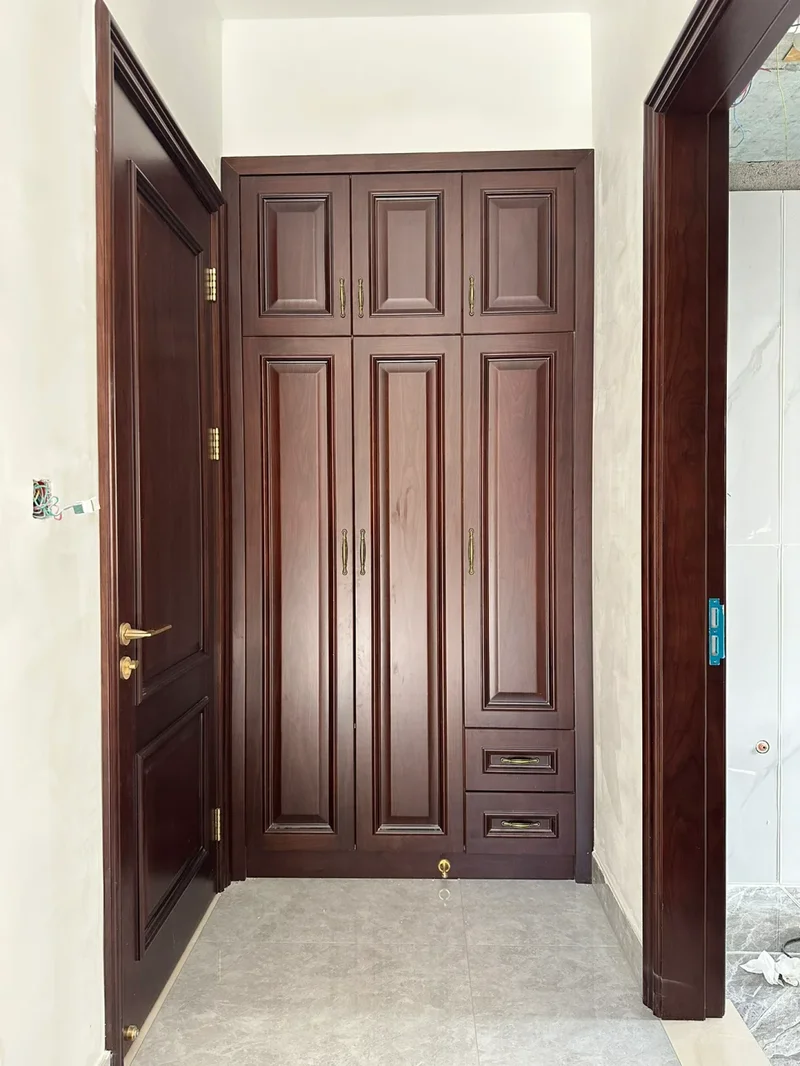
Unmatched Security and Durability: Why Global Brands Trust Our Steel Door OEM Solutions
Our OEM steel door solutions are engineered to meet the most rigorous global security and architectural specifications. Trust is built on quantifiable performance, achieved through advanced material science, adherence to international standards, and precision manufacturing.
Core Engineering and Material Integrity
Security begins with the door leaf construction. We utilize a reinforced, multi-point locking system integrated into a rigid steel frame. The steel skins are cold-rolled to precise gauges, typically 0.8mm to 1.2mm, and undergo a multi-stage pre-treatment (phosphatization) before powder coating. This ensures superior adhesion and corrosion resistance, exceeding 1,000 hours in salt spray testing (ASTM B117).
For enhanced performance, doors are filled with high-density, stabilized cores. Our options include:
- Mineral Wool Core: Provides exceptional fire resistance and acoustic damping, achieving up to 44 dB sound reduction (Rw) and fire ratings up to EI 90 (EN 1634-1).
- Honeycomb Composite Core: Offers optimal strength-to-weight ratio for large-format doors, ensuring panel stability and preventing oil-canning.
- Polyurethane Foam (PUR) Core: Delivers superior thermal insulation with U-factors as low as 0.8 W/m²K, contributing to building energy efficiency.
Quantified Performance and Compliance
Our manufacturing is governed by ISO 9001:2015 quality management systems, ensuring consistency from raw material to finished product. All materials are certified to meet stringent environmental and safety standards.
| Performance Parameter | Test Standard | Typical Performance Range | Notes |
|---|---|---|---|
| Fire Resistance | EN 1634-1 / ASTM E119 | EI 30 – EI 120 | Integrity & Insulation ratings certified by accredited labs. |
| Forced Entry Resistance | EN 1627 / ASTM F476 | RC 2 – RC 6 (EN), Grade 40 – I (ASTM) | Dependent on hardware specification and leaf build-up. |
| Sound Insulation (Rw) | EN ISO 10140-2 | 32 dB – 44 dB | Core density and sealing are critical factors. |
| Thermal Transmittance (U-value) | EN ISO 12567 / ASTM C1363 | 0.8 – 1.5 W/m²K | Achieved with thermal break frames and PUR foam cores. |
| Formaldehyde Emission | EN 16516 / ASTM E1333 | E0 / E1 / CARB Phase 2 | All composite materials and adhesives are certified. |
Functional Advantages for Architects and Specifiers
- Structural Longevity: Anti-torsion frames and heavy-duty, stainless steel continuous hinges (e.g., 5-knuckle) prevent sagging over time, maintaining seal integrity and operability.
- Environmental Stability: Low moisture absorption rates (<12% per EN 323) in core materials prevent swelling or warping, ensuring consistent performance in varying climates.
- Finish Durability: Electrostatic powder coating applied after chemical pre-treatment yields a finish with a pencil hardness of ≥2H (ASTM D3363) and exceptional resistance to UV degradation and abrasion.
- Precision Integration: Doors are engineered for seamless integration with access control, fire alarm, and building automation systems, with pre-machined preparations for a wide range of global hardware brands.
This technical foundation provides the predictable, certified performance that global security brands require for their projects, from high-security facilities to critical infrastructure.
Precision Engineering for High-Traffic and Harsh Environments: Built to Withstand the Toughest Conditions
The core engineering challenge for high-traffic and harsh environment doors is managing dynamic stress and environmental load without compromising security or longevity. Our OEM solutions are engineered from the material level upward to meet this challenge, focusing on structural integrity, dimensional stability, and resistance to degradation.
Material Science & Core Construction
Performance begins with the substrate. We utilize engineered cores and composites specified for minimal movement under thermal and hygroscopic stress.
- High-Density LVL (Laminated Veneer Lumber) Core: Provides superior dimensional stability compared to solid timber or particle board. Its cross-laminated structure minimizes linear expansion, preventing warping and ensuring consistent hardware alignment. Typical swelling rates are maintained below 0.5% after 24-hour water immersion.
- Advanced WPC (Wood-Plastic Composite) Profiles: Engineered for exterior and high-moisture interiors. We specify high-density WPC (≥ 1.3 g/cm³) with optimized polymer-wood flour ratios to achieve a low moisture absorption rate (<0.8%) and high resistance to fungal decay.
- Steel Reinforcement: Full-perimeter, welded steel frame integration and multi-point lock system reinforcements are standard. Steel components undergo phosphate pretreatment and cathodic electrocoating prior to powder coating for corrosion resistance exceeding 1,000 hours in salt spray testing (ASTM B117).
Performance Specifications for Defined Conditions
Doors are validated against international standards to provide predictable performance data for architectural specification.
| Performance Aspect | Test Standard | Typical Achieved Specification | Application Context |
|---|---|---|---|
| Fire Resistance | EN 1634-1 / ASTM E119 | EI 30 / EI 60 / EI 90 certified | Required fire compartmentalization in corridors, stairwells. |
| Acoustic Insulation | EN ISO 10140-2 | Rw 35 dB to Rw 45 dB | High-traffic corridors, perimeter doors in noisy environments. |
| Thermal Insulation | EN 12412-2 / ISO 8990 | U-factor as low as 0.8 W/m²K | Building envelope applications, energy code compliance. |
| Surface Hardness | ASTM D2240 (Shore D) | ≥ 75 Shore D for high-wear areas | Resistance to impact, scratching, and abrasion in public spaces. |
| Formaldehyde Emissions | EN 16516 / JIS A 1460 | E0 or Super E0 Grade (<0.3 mg/L) | Mandatory for healthcare, education, and residential projects. |
Functional Advantages for High-Traffic & Harsh Use
- Sustained Structural Integrity: The synergy between a stable core, rigid steel reinforcement, and full-mortise hardware ensures door leaf and frame alignment persists despite frequent operation and impact.
- Superior Environmental Resistance: Low moisture absorption materials and robust finishing systems prevent swelling, delamination, and corrosion in environments with high humidity, temperature fluctuations, or exposure to cleaning chemicals.
- Long-Term Operational Reliability: Precision-machined hardware preparations and heavy-duty, bearing-equipped hinges (e.g., 3D adjustable) are engineered for a lifecycle exceeding 500,000 cycles, minimizing maintenance.
- Consistent Compliance: Manufacturing under ISO 9001:2015 and ISO 14001 controls ensures every unit meets the specified performance ratings, providing reliable certification for regulatory approval.
The result is a door assembly that functions as a predictable, high-performance component within the building envelope, specified with confidence for demanding applications such as hospital corridors, school entrances, industrial facilities, and coastal properties.
Customizable Design and Integration: Tailored Steel Door Solutions for Your Security Brand’s Unique Needs
Customization in steel door manufacturing is not merely aesthetic; it is a precise engineering discipline that integrates material performance, structural integrity, and architectural specification to meet exacting brand and project requirements. Our OEM process is built on a foundation of advanced material science and adherence to international standards, ensuring every tailored solution delivers uncompromised security and performance.
Core Material Engineering & Technical Standards
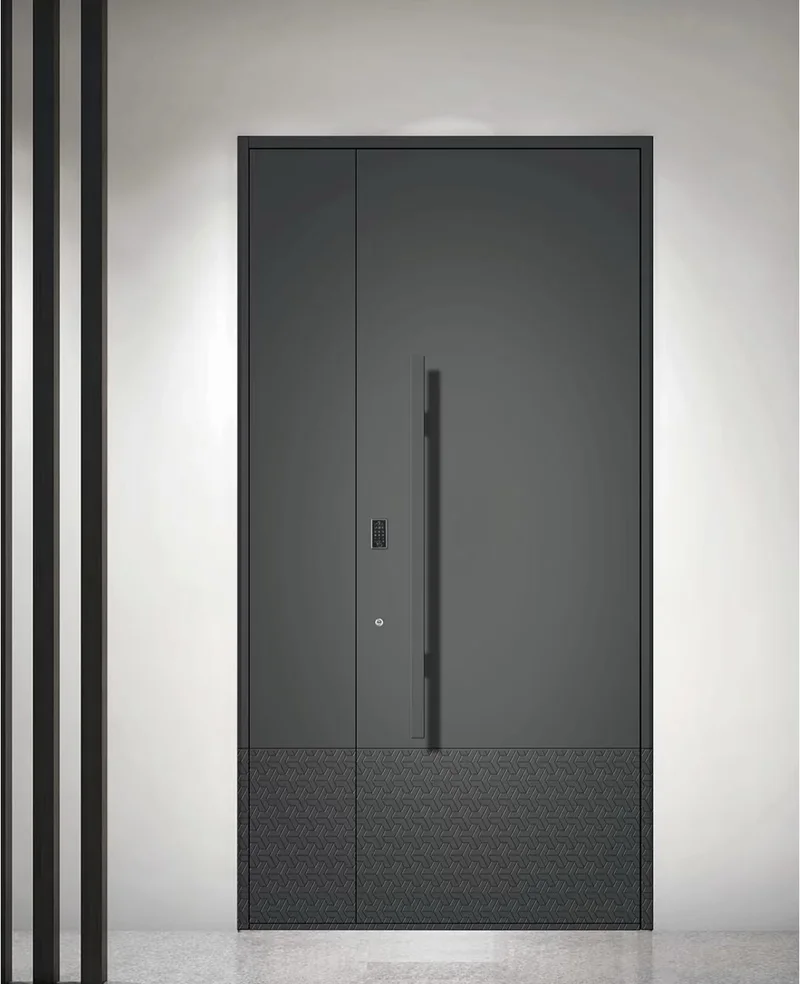
The performance of a custom door begins with its constituent materials and certified manufacturing processes.
- Material Specifications: We engineer doors using cold-rolled, galvanized steel sheets with yield strengths ranging from 280 MPa to 350 MPa, formed into reinforced box-frame structures. Composite cores are specified by density and stability: WPC (Wood-Plastic Composite) cores are engineered to densities of 650-750 kg/m³ with controlled PVC-wood ratios for optimal dimensional stability. LVL (Laminated Veneer Lumber) cores are selected for cross-laminated construction to minimize warping and provide a consistent substrate for heavy-duty hardware.
- Compliance & Certification: All manufacturing adheres to ISO 9001:2015 quality management systems. Fire door assemblies are tested and rated to relevant standards (e.g., EN 1634-1, ASTM E119). Emission control is critical; we utilize adhesives and composite materials certified to E0 (<0.5 mg/L) or E1 (0.5-1.5 mg/L) formaldehyde emission grades.
- Performance Integration: Customization directly impacts performance metrics. We model and test for:
- Acoustic Insulation: Achievable STC ratings of 35-50 dB through tailored core infill, sealed constructions, and gasket geometry.
- Thermal Insulation: U-factors can be engineered down to 0.7 W/(m²·K) or lower via integrated thermal breaks and high-performance core materials.
- Environmental Resistance: Door systems are specified with moisture absorption rates below 12% for WPC and swelling rates under 8% for dimensional stability in humid climates.
Functional Advantages of a Tailored OEM Approach
- Brand-Centric Aesthetics: Full control over finish, including powder coating specifications (standard, textured, anti-graffiti), veneer species and thickness, and laminate selections. Custom tooling for unique embossing, profile shapes, and glazing bead designs.
- Precision Hardware Integration: Engineering support for seamless integration of third-party or proprietary hardware (multi-point locks, panic devices, access control). Precisely machined prep for hinges, locks, and closers ensures flawless operation and maintains security ratings.
- Dimensional & Configuration Flexibility: Manufacture to non-standard sizes, asymmetrical visions lites, and specialized configurations (double-acting, radiation shielding, blast-resistant) without compromising structural performance.
- Streamlined Logistics: Provision of fully assembled, pre-hung door sets in custom-sized rough openings, complete with factory-installed hardware and seals, reducing on-site labor and potential for installation error.
Technical Parameters for Custom Specification
The following table outlines key variable parameters for engineering a tailored door solution.
| Performance Category | Key Parameter | Standard Range | Customization Impact |
|---|---|---|---|
| Structural & Security | Steel Skin Thickness | 0.8 mm – 1.5 mm | Directly influences resistance to forced entry and overall panel rigidity. |
| Core Stability | LVL Core Density | 550 – 650 kg/m³ | Higher density improves screw holding power, acoustic mass, and flatness retention. |
| Surface Durability | Powder Coat Finish Hardness | Shore D 70 – 85 | Higher hardness provides superior resistance to abrasion and impact. |
| Moisture Management | 24hr Water Absorption (Core) | ≤ 8% (WPC) | Critical for doors in high-humidity environments; lower rates prevent delamination and swelling. |
| Fire Integrity | Certified Fire Rating | 30 – 120 minutes | Dictates specific material choices for core, glazing, and intumescent sealant systems. |
Our engineering team collaborates directly with your technical staff to analyze project requirements, select the optimal material stack-up, and validate performance through data-driven specifications. This ensures the final product is not just a custom door, but a fully integrated security component bearing your brand’s identity.
Advanced Technical Specifications: Core Features That Define Our Steel Door OEM Excellence
Material Composition & Core Integrity
The structural integrity of a steel door is dictated by its composite design. Our OEM specification mandates a cold-rolled, low-carbon steel skin with a minimum thickness of 0.8mm, electro-galvanized and phosphatized for superior paint adhesion and corrosion resistance. The core is not a filler but a critical structural component. We utilize a multi-density engineered core system:
- High-Density Perimeter Blocking: A reinforced frame of laminated veneer lumber (LVL) or particleboard with a minimum density of 750 kg/m³ provides a rigid substrate for heavy-duty lock and hinge installation, preventing sag and ensuring consistent latching.
- Stabilized Central Core: The field is filled with a honeycomb matrix of steel or a stabilized, low-moisture-absorption material (e.g., polyurethane foam with a closed-cell content >90%). This design achieves optimal weight-to-stiffness ratio, dampens vibration, and provides a stable base for the steel skin, eliminating oil-canning.
Performance Engineering & Testing Compliance
Our doors are engineered to meet or exceed international benchmarks for safety, environmental, and performance standards. Compliance is verified through in-house and third-party accredited laboratory testing.
- Fire & Safety Ratings: Doors are certified to relevant regional standards, including EN 1634-1 for integrity/insulation (EI classifications) and ASTM E119. Hardware prep is precision-engineered to maintain rated performance.
- Environmental & Quality Management: All materials comply with E0/E1 formaldehyde emission grades. Manufacturing processes are governed under ISO 9001:2015 quality management systems, with material traceability from coil to finished product.
- Acoustic Performance: Sound Transmission Class (STC) ratings are engineered through mass, damping, and decoupling principles. Core density and specialized sealing systems target STC 35-50+ for critical applications.
- Thermal Insulation: For insulated models, the U-factor is engineered using polyurethane foam cores with a minimum density of 40kg/m³, achieving U-factors as low as 0.7 W/(m²·K).
Precision Manufacturing & Finish Durability
Dimensional tolerance and finish longevity are non-negotiable. Our fabrication process utilizes CNC punching, laser cutting, and robotic welding to ensure consistency. The finishing system is a multi-stage process:
- Pre-treatment: 7-stage zinc phosphate coating for corrosion inhibition.
- Primer: Cathodic electrocoating (E-Coat) for complete coverage and edge protection.
- Topcoat: Application of high-solid polyester or fluoropolymer powders, cured at specified temperatures to achieve a consistent film thickness of 60-80 microns. This results in a finish with a Shore D hardness >75 and exceptional resistance to UV degradation, chemicals, and abrasion.
Technical Performance Data Summary
| Parameter | Test Standard | Performance Range | Notes |
|---|---|---|---|
| Steel Skin Thickness | ASTM A924 | 0.8 mm – 1.5 mm | Cold-rolled, galvanized. |
| Core Density (Perimeter) | EN 323 | ≥ 750 kg/m³ | LVL or equivalent engineered wood. |
| Swelling Rate (Core) | EN 317 | ≤ 8% (24h immersion) | Measures dimensional stability under humidity. |
| Surface Hardness | ASTM D2240 | ≥ 75 Shore D | Powder coat finish durability. |
| Thermal Transmittance (U-Factor) | EN ISO 8990 / ASTM C1363 | 0.7 – 1.2 W/(m²·K) | Dependent on core and glazing. |
| Sound Reduction (STC) | ASTM E90 | 35 – 52 dB | Model-specific construction. |
| Fire Resistance | EN 1634-1 / ASTM E119 | EI 30 – EI 120 | Certified with appropriate hardware. |
Proven Reliability and Compliance: Meeting Global Standards for Security and Safety
Our engineering and manufacturing protocols are defined by a material-first philosophy and third-party certification to ensure structural integrity, longevity, and predictable performance in diverse environments. We do not simply meet standards; we engineer to exceed their most rigorous thresholds, providing a verifiable technical foundation for global brand security solutions.
Core Material Specifications & Performance
- Steel Skin & Core System: Doors utilize cold-rolled, galvanized steel skins (typically 0.8mm to 1.2mm) formed over a stabilized, high-density core. The core is not a filler but a structural component, engineered for dimensional stability, impact resistance, and fire performance. Options include mineral wool for fire and acoustic ratings or honeycomb structures for optimal weight-to-strength ratio.
- Sealant & Glazing Integrity: Perimeter seals employ multi-point locking systems integrated with continuous EPDM or thermoplastic gaskets, achieving air infiltration ratings below 0.3 cfm/ft². Glazing pockets are engineered to accommodate laminated security glass or polycarbonate sheets, with structural silicone or captured gasket systems ensuring long-term weather resistance and forced-entry resistance.
- Surface Durability: Post-fabrication, surfaces undergo a multi-stage phosphating pretreatment followed by electrostatic powder coating. The resulting finish exceeds 1,000 hours in neutral salt spray testing (ASTM B117) without red rust, with a pencil hardness of ≥H for scratch resistance.
Certified Performance to Global Benchmarks
Compliance is not a single checkpoint but a continuous framework. Our Quality Management System is ISO 9001 certified, with specific product lines tested and certified to the following standards:
| Standard Category | Applicable Standard | Key Performance Parameter | Typical Achieved Rating |
|---|---|---|---|
| Fire Resistance | EN 1634-1 / ASTM E119 | Integrity & Insulation (E & I) | EI 30/60/90/120 |
| Security & Safety | EN 1627 / ASTM F476 | Resistance to manual attack | RC 2/3/4 (EN), Grade 40 (ASTM) |
| Acoustic Insulation | EN ISO 10140-2 / ASTM E90 | Sound Reduction Index (Rw) | Rw 35 dB to Rw 50 dB |
| Thermal Insulation | EN 12412-2 / ASTM C1363 | Thermal Transmittance (U-value) | U = 1.1 to 1.8 W/m²K |
| Environmental | EN 13986 / CARB NAF | Formaldehyde Emissions | E1 (<0.1 ppm) / CARB NAF |
Functional Advantages for Architectural Integration
- Predictable Structural Behavior: Finite Element Analysis (FEA) validates door and frame assemblies under load, ensuring consistent performance for large-scale or custom installations.
- Environmental Stability: Low moisture absorption rates (<1% by volume per 24h immersion) and thermal expansion coefficients matched to common building substrates prevent warping or binding.
- Maintenance & Lifecycle: Engineered hinge systems are rated for >500,000 cycles. All hardware is specified for corrosion resistance (minimum 600 hours salt spray) and compatible with access control systems.
All performance data is derived from independent, accredited laboratory testing. Full test reports and certification documents are available for project specification and validation.
Partner with Confidence: Our Commitment to Quality and Support for Your Brand’s Success
Our engineering partnership is built on a foundation of verifiable material performance and documented process control. We provide the technical backbone for your brand’s security products, ensuring every door meets the exacting standards of global architectural and security specifications.
Material Integrity & Core Technology
- Steel Substrate & Fabrication: We utilize cold-rolled, galvanized steel sheets (typically 0.8mm to 1.5mm gauge) with a minimum yield strength of 280 MPa. Panels are formed on CNC press brakes with tolerances within ±0.5mm, ensuring perfect fit for subsequent lamination and hardware integration.
- Advanced Composite Cores: For non-metallic door options, our engineered cores are specified by performance, not just composition.
- WPC (Wood-Plastic Composite) Cores: We engineer to a minimum density of 650 kg/m³, with a controlled PVC-to-wood flour ratio optimizing dimensional stability (swelling rate <0.5% after 24-hour water immersion) and screw-holding force (>1200 N).
- LVL (Laminated Veneer Lumber) Cores: LVL is sourced from certified, kiln-dried timber, cross-laminated for stability. We specify a maximum moisture content of 8% at fabrication and a formaldehyde emission grade of E0 (≤0.5 mg/L, per EN 13986).
- Adhesive Systems: Structural bonding employs PUR (Polyurethane Reactive) hot-melt adhesives with a minimum shear strength of 8 MPa, ensuring permanent lamination between steel, core, and veneers across operational temperature ranges.
Certified Performance & Testing
Our manufacturing is governed by ISO 9001:2015 quality management systems, with batch traceability from raw material to finished product. Performance is validated against international standards.
| Performance Category | Test Standard | Typical Achieved Specification | Application Note |
|---|---|---|---|
| Fire Resistance | EN 1634-1 / ASTM E119 | EI 30 / EI 60 ratings available | Core formulation and intumescent sealant systems are certified as an assembly. |
| Acoustic Insulation | EN ISO 10140-2 | Rw 32 dB to Rw 42 dB | Achieved through mass law principles and proprietary damped core constructions. |
| Thermal Insulation | EN ISO 8990 / ASTM C518 | U-factor as low as 1.2 W/m²K | Utilizing polyurethane foam-injected cores with a closed-cell content >90%. |
| Surface Hardness | ASTM D2240 (Shore D) | >75 Shore D for high-pressure laminate finishes | Ensures resistance to impact and abrasion in high-traffic environments. |
Engineering Support for Your Brand
- Design for Manufacturing (DFM) Collaboration: Our engineering team engages early in your design process to optimize for structural integrity, hardware compatibility, and cost-efficient production. We provide detailed CAD models and stress analysis for custom configurations.
- Prototyping & Validation: We produce fully functional prototypes for your in-house testing, accompanied by a material certification dossier. We can facilitate third-party testing at accredited laboratories to achieve required regional certifications (UL, CE, etc.).
- Technical Documentation: You receive comprehensive support documentation, including detailed installation guides, material safety data sheets (MSDS), and declared material health certifications (e.g., LEED, BREEAM compliant E0/E1 data).
- Supply Chain Assurance: We maintain long-term contracts with tier-1 material suppliers, providing you with stability in both cost and quality. Our inventory management systems (VMI compatible) ensure consistent lead times for production runs.
Your brand’s reputation for security and quality is protected by our rigorous, specification-driven manufacturing process. We function as your seamless, technical production partner.
Frequently Asked Questions
How do you prevent steel door warping in humid climates?
We use LVL (Laminated Veneer Lumber) core reinforcement with a moisture expansion coefficient below 12%. Doors are finished with a 25μm electrostatic PVC coating and sealed edges to block humidity ingress, ensuring dimensional stability even at 85% RH.
What formaldehyde standards do your composite materials meet?
All wood-plastic composites (WPC) and adhesives comply with E0 (≤0.5mg/L) and EN 717-1 standards. We use phenol-formaldehyde-free binders and source panels with CARB Phase 2 certification, ensuring indoor air safety for sensitive environments.
How is impact resistance engineered into your security doors?
Doors feature a 1.2mm cold-rolled steel skin reinforced with a honeycomb aluminum core. Critical zones use WPC inserts at 850kg/m³ density, tested to withstand 150J impact per ANSI SDI 250.3 without permanent deformation.
What thermal insulation values can be achieved?
Our insulated models integrate 32mm polyurethane foam cores (λ=0.022 W/m·K) with thermal break frames. This achieves U-values as low as 0.8 W/m²·K, reducing energy transfer by 60% compared to standard hollow-core doors.
How do you ensure long-term structural integrity?
We employ multi-axis CNC welding for frame joints and apply 3-stage phosphate pretreatment before powder coating (70μm). Hinges are reinforced with 304 stainless steel inserts, preventing sagging under 200kg cyclic load over 100,000 cycles.
What sound insulation performance do your doors provide?
Doors achieve STC 38-42 dB via a dual-seal system (magnetic and compression gaskets) and a constrained layer damping core. Acoustic laminated glass options can further elevate performance to STC 45 dB for critical noise-sensitive areas.
How is UV and corrosion resistance maintained externally?
Exterior doors receive a 3-coat system: zinc phosphate pretreatment, epoxy primer, and polyester powder coating with UV stabilizers (QUV tested for 2000 hours). Coastal variants use 316-grade stainless hardware and salt-spray-tested (1000h) finishes.