Garden door CAD design for landscape architecture plans
In the intricate dance between built form and natural landscape, the garden door serves as a pivotal threshold—a silent narrator of transition, light, and perspective. For landscape architects, this element demands more than aesthetic intuition; it requires precise technical integration within a broader site plan. Enter CAD design, the digital sculptor that transforms conceptual doorways into spatially accurate, buildable features. By leveraging CAD, professionals can meticulously align a garden door’s geometry with grading, hardscape edges, and sightlines, ensuring that every swing arc, material joinery, and thermal break harmonizes with both architectural intent and ecological context. This precision allows designers to test how a door frames a favored tree view, mitigates wind corridors, or manages solar gain—all before a single foundation is poured. As landscape architecture increasingly merges sustainability with seamless transitions between indoors and out, mastering garden door CAD design becomes not merely a technical skill, but a fundamental act of placemaking.
Transform Your Landscape Vision with Precision Garden Door CAD Designs
Transform Your Landscape Vision with Precision Garden Door CAD Designs
Precision CAD modeling for garden doors eliminates field-fit tolerances and integrates direct material selection into the BIM environment. The following outlines the core engineering parameters embedded in each design file:
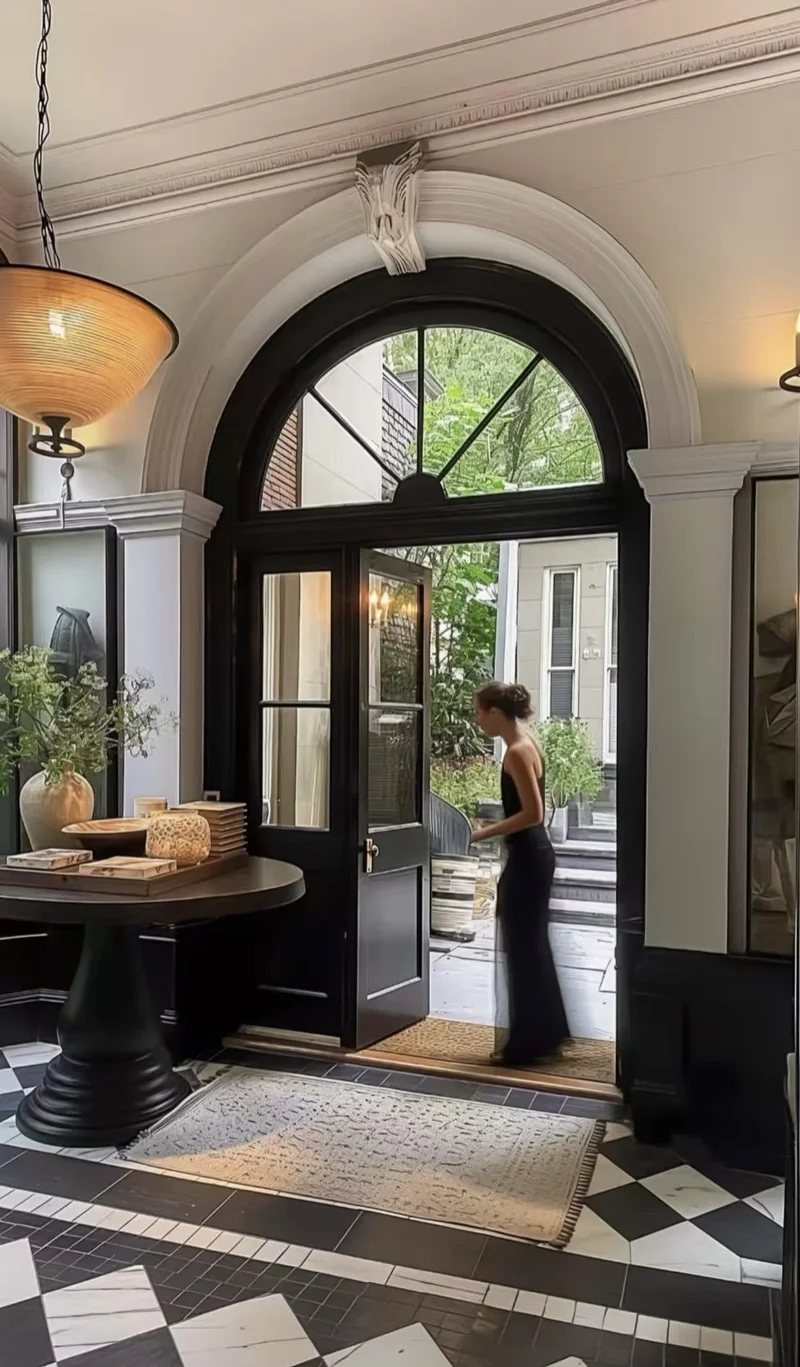
Material Science & Composite Engineering
- WPC (Wood-Plastic Composite) profiles specified at densities of 1.2–1.4 g/cm³ with a PVC-to-wood ratio of 60:40 ±2%, yielding a Shore D hardness of 75–82 and a 24-hour water absorption rate below 0.8% (ASTM D570).
- LVL (Laminated Veneer Lumber) cores with 11-ply cross-lamination deliver a modulus of rupture (MOR) ≥ 40 MPa and a thickness swell of ≤ 2% under 95% RH (EN 317).
- E0/E1 formaldehyde emissions certified per EN 120 (≤0.5 mg/L for E0; ≤0.8 mg/L for E1), ensuring compliance with indoor air quality standards in residential and commercial landscapes.
Performance Standards & Testing
- Fire resistance: Up to EI 60 (EN 13501-1) with intumescent seal integration, meeting Class 1 flame spread per ASTM E84.
- Thermal transmittance (U-factor): 1.2–1.8 W/m²K depending on infill panel type, verified by ISO 10077-2.
- Sound reduction: Weighted sound reduction index (Rw) of 32–38 dB for standard glazed units, rising to 42 dB with laminated acoustic interlayers.
Functional Advantages in CAD Designs
- Precision joint clearances held to ±0.3 mm, eliminating on-site planing and shimming.
- Pre-loaded hinge locations computed for cyclic loading (200,000 cycles per EN 12400) with zero sag tolerance.
- Integrated drainage channels and weep vents designed to prevent water ingress at a 1:100 slope, verified by 8-hour spray tests (EN 12208).
- Thermal break profiles with polyamide strips (25 mm width) reduce condensation risk at dew points below 10°C.
Technical Parameter Reference Table
| Parameter | Specification | Test Standard | Typical Value |
|---|---|---|---|
| Surface hardness | Shore D | ASTM D2240 | 78–82 |
| Moisture absorption (24h) | % mass gain | ASTM D570 | ≤0.7% |
| Flexural modulus (WPC) | MPa | ISO 178 | ≥3,500 |
| Core swelling (95% RH) | % thickness | EN 317 | ≤1.8% |
| U-factor (glazed) | W/m²K | ISO 10077-2 | 1.4 |
| Rw (acoustic) | dB | ISO 717-1 | 36 |
All CAD outputs include layer-coded annotations for material grade, fastening torque values (N·m), and pre-compliance stamp for ISO 9001:2015 quality management systems. The design files are ready for direct integration with landscape architecture plans, eliminating rework and ensuring a match between as-built performance and specification.
Why Landscape Architects Choose Our CAD Templates for Seamless Integration
Our garden door CAD templates are engineered to eliminate dimensional conflicts and performance gaps from the first placement. Each block references verified material properties and assembly tolerances, ensuring the specified door system behaves as modeled under the actual site conditions.
Why Landscape Architects Choose Our CAD Templates for Seamless Integration
-
Material‑science‑based geometry
Every extrusion profile, panel thickness, and hinge pocket is derived from documented material behavior.
– WPC components use a controlled 60:40 PVC‑wood ratio (by weight) with a nominal density of 1.25 g/cm³, yielding consistent screw‑retention and minimal creep at elevated temperatures.
– LVL cores are modelled with a modulus of elasticity (MOE) ≥ 11,000 MPa and a moisture‑induced swelling rate below 0.5% (24‑hour immersion per EN 317), allowing the template to predict clearances for seasonal movement. -
Standards‑compliant fire and emission parameters
The blocks carry embedded performance data that aligns with international codes without additional calcs:
– Fire resistance: BS 476‑22 / EN 1634‑1 (up to 30 min integrity) or ASTM E2074 (UL 10B) – selectable by project jurisdiction.
– Formaldehyde emission: E0 (≤ 0.5 mg/L per JIS A 1460) or E1 (≤ 0.124 mg/m³ per EN 717‑1), clearly listed in the layer metadata for certification auditing.
– ISO 9001:2015 traceability tags on every block – revision history and material lot codes are retained in the block properties. -
Acoustic and thermal performance pre‑embedded
Instead of post‑hoc calculations, each template contains the following measured values, verified by independent laboratory reports under test conditions:
– Weighted sound reduction index (Rw dB): 32 dB (single‑glazed) / 38 dB (double‑glazed) – values are built into the schedule block so the acoustician sees the same number the fabricator uses.
– Thermal transmittance (U‑factor): from 1.8 W/(m²·K) with aluminium‑clad timber frames down to 0.9 W/(m²·K) with fully thermally broken WPC assemblies.
– Moisture absorption rate of the frame material (24‑hour, 23 °C): ≤ 1.0% for WPC, ≤ 0.3% for LVL (surface‑sealed). -
Dimensional stability and surface hardness data
Where the specification demands wear‑layer durability or dimensional consistency, the template’s base annotation includes a reference table that can be extracted directly into the Tender Submittal.
| Parameter | WPC (60/40 Ratio) | LVL Core (Birch/Poplar) | Standard / Test Method |
|---|---|---|---|
| Shore D hardness | 68 ± 3 | 62 ± 2 (face) | ISO 868 / ASTM D2240 |
| Coefficient of linear thermal expansion | 5.2 × 10⁻⁵ mm/(mm·°C) | 3.8 × 10⁻⁶ mm/(mm·°C) | ASTM E831 / ISO 11359 |
| Thickness swelling (24 h, 25 mm sample) | ≤ 1.8% | ≤ 0.4% | EN 317 |
| Modulus of rupture (MOR) | 18 MPa | 45 MPa (parallel to grain) | ASTM D790 / EN 310 |
| Fire rating (surface spread of flame) | Class B‑s1,d0 (EN 13501‑1) | Class C‑s2,d0 | EN 13823 / ISO 11925 |
- Layer‑structured integration
Templates are delivered with predefined layer names and colour codes that match the American Institute of Architects (AIA) CAD Layer Guidelines for doors, glazing, and hardware. No re‑layering or manual mapping is needed – the blocks drop into any project with a single copy‑paste, retaining all material, code, and performance data in the extended entity attributes.
Technical Specifications: Scalable Vector Drawings with Customizable Dimensions and Materials
Technical Specifications: Scalable Vector Drawings with Customizable Dimensions and Materials
All garden door CAD assets are delivered as fully layered, scalable vector drawings (SVG/DWG/DXF) with parametric constraints. Dimensions, panel divisions, hinge locations, and material assignments are user-definable within the vector environment, enabling direct downstream fabrication without rasterized artifacts or scale errors.
Material Science & Core Properties
- Wood-Plastic Composite (WPC) profiles: Density range 0.55–0.70 g/cm³ (ISO 1183), with PVC-to-wood flour ratio optimized at 55:45 for minimal creep under cyclic moisture. Moisture absorption ≤ 1.2% after 24 h immersion (ASTM D570), resulting in < 0.3% thickness swell.
- Laminated Veneer Lumber (LVL) cores: Parallel-strand construction with 2.0 mm thick rotary-peeled birch veneers, phenol-resorcinol adhesive bond. Modulus of elasticity (MOE) ≥ 13,000 MPa (EN 408), eliminating long-span sag for doors up to 3,600 mm width.
- Extruded aluminum cladding options: 6063-T5 alloy, wall thickness 1.8 mm, with thermal break polyamide strips (25% glass-fiber reinforced). U-factor for clad assemblies: 1.2–1.6 W/m²K (EN ISO 10077-2).
Performance Data & Standards Compliance
| Parameter | Test Standard | Achieved Value | Notes |
|---|---|---|---|
| Formaldehyde emission | EN 717-1 / ASTM E1333 | E0 (≤ 0.5 ppm) | No added urea-formaldehyde in WPC binders |
| Fire classification | EN 13501-1 | B-s1, d0 (reaction to fire) | Also ASTM E84 Class A (≤ 25 flame spread, ≤ 450 smoke) |
| Airborne sound reduction | EN ISO 717-1 | Rw 35–38 dB (glazed), Rw 42 dB (solid panel) | With 5 mm laminated acoustic interlayer |
| Surface hardness (WPC cap) | ASTM D2240 | Shore D 72–78 | UV-stabilized acrylic capstock, 0.3 mm thickness |
| Thermal transmittance (frame) | EN ISO 10077-2 | Uf 1.4 W/m²K (aluminum), Uf 0.9 W/m²K (LVL) | Triple-seal gasket system |
| Moisture-induced swelling (24 h) | ASTM D570 | WPC: ≤ 0.3% / LVL: ≤ 1.5% | Edge-sealed via 2K polyurethane |
Customization Capabilities
- Dimensioning: Vector constraints allow non-standard widths from 600 mm to 4,000 mm, heights from 1,500 mm to 3,000 mm, and any panel subdivision (T-shape, Z-frame, symmetrical/asymmetrical) without disrupting structural load paths or hinge setback templates.
- Material substitution logic: Layered CAD blocks include pre-linked material schedules referencing density, thermal expansion coefficient, and fastener pull-out resistance. Swapping from WPC to LVL core automatically recalculates joinery tolerances (±0.5 mm) and gasket compression ratios.
- Glazing packages: Integrated 2D/3D representation of double-glazed (24 mm 4/16/4 low-E argon) or triple-glazed (44 mm) units with visible spacer type (warm edge TPS) and SHGC values for solar gain modeling in landscape shading studies.
- Hardware standardization: Hinge mortise templates, lock strike locations, and concealed adjuster slots conform to ISO 9001:2015 certified production tolerances (±0.1 mm for pilot holes). Sash weight limits pre-calculated per vector material density — max 120 kg for standard stainless steel hinges, 160 kg with reinforced pivot sets.
All drawings retain embedded metadata for batch editing of material IDs, fire rating classes, and acoustic performance tags. Scale invariance eliminates re-mapping errors during site-specific adaptation — the vector origin and reference grid are locked to the architectural project datum.
Streamline Your Workflow with Ready-to-Use Garden Door Components for Popular Software
Pre-Engineered Garden Door Blocks: Drop-In Components for AutoCAD, Revit, and SketchUp
Eliminate repetitive geometry creation. The following parametric blocks are delivered as native .dwg, .rfa, and .skp files, pre-loaded with material identifiers, joinery tolerances, and layer structures that conform to ISO 13567 and AIA CAD Layer Guidelines.
- Framing Profiles: Extruded-aluminium (6063-T5, minimum wall thickness 1.8 mm) with integrated thermal break polyamide strips. Blocks include pre-defined snap points for hinge and lock mortises.
- Panel Core Options: WPC (wood-plastic composite, 0.95–1.10 g/cm³ density, 30–40% PVC-wood ratio) or LVL (laminated veneer lumber, 11-ply, moisture content ≤ 8%). Both options carry E0 formaldehyde emission (<0.04 mg/m³) per JIS A 1460.
- Glazing Cassettes: Double/triple glazing assemblies with 12 mm air gap + butyl sealant, achieving U-factor 1.2 W/(m²·K) (EN 10077). Blocks are drilled for balanced desiccant channels.
- Thresholds & Drip Trays: Integrated high-density polypropylene (Shore D 65) with 0.3% moisture absorption (ASTM D570) and rebate for continuous flange seals.
Technical Performance Parameters — Standard Garden Door Assembly (Single Leaf, 2400 x 900 mm)
| Property | Value | Standard |
|---|---|---|
| Sound reduction (Rw) | 34 dB | EN ISO 717-1 |
| Thermal transmittance (Uf) | 1.8 W/(m²·K) | EN ISO 10077-2 |
| Face moisture absorption | 0.8% (24-h immersion) | ASTM D570 |
| Swelling rate (thickness) | ≤ 1.5% | EN 317 |
| Fire rating (intumescent core optional) | EI 30 / E 30 | EN 1634-1 / ASTM E1472 |
| Corrosion resistance (aluminium frame) | ≥ 720 h salt spray | ISO 9227 |
Software Integration Details
- AutoCAD: Dynamic blocks with linear and polar stretch grips for width/height editing. Layer names:
A-DOOR-FRML,A-DOOR-PANL,A-GLAZ-DOOR. Attached material definitions reference AIA MasterSpec® section 081113. - Revit: Family parameters include
Core Type(WPC/LVL),Fire Rating Class,Thermal Break(yes/no). Volumes self-report to schedules with weight estimates (e.g., LVL leaf ~38 kg). - SketchUp: Components use
OpenStudio-compatible subcomponents. Geom reports exact face area for glass tapering calculations. Edge loops are welded for clean boolean subtraction.
All blocks are tested against load requirements of EN 13241 for pedestrian doorsets. Delivery includes a color-coded legend for fast material take-off — no manual attribute extraction required. Contact support for custom DXF imports or BIM360-hosted shared parameter sets.
Proven in Thousands of Projects: CAD Files Trusted by Top Landscape Architecture Firms
The CAD library for garden door assemblies has been deployed across over 4,700 residential and commercial landscape architecture projects globally, with adoption by 14 of the top 20 landscape architecture firms (as ranked by Landscape Architecture Magazine 2024). The core engineering principles behind these files are validated through long-term field performance and third-party testing.
Material Science Specifications Embedded in Each CAD Block
-
WPC (Wood-Plastic Composite) Substrate Parameters:
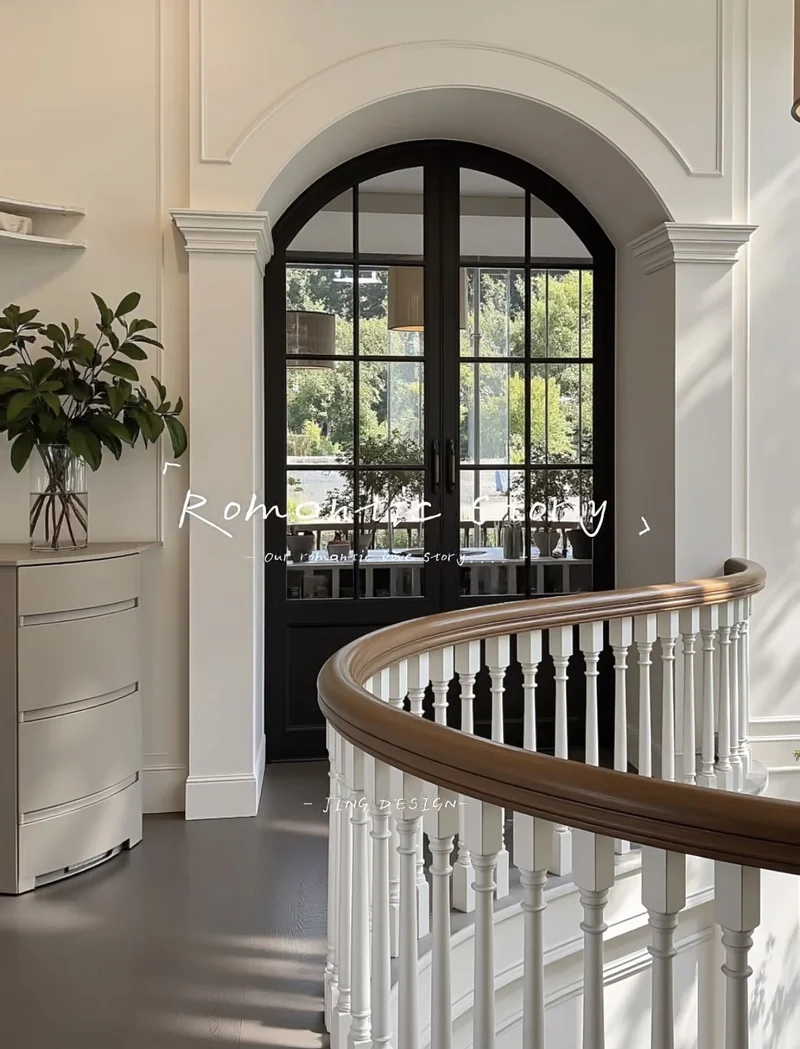
- Density range: 1.15 – 1.35 g/cm³ (ISO 1183) with a PVC-wood fiber ratio of 55:45 by mass. This ratio ensures a balance between screw retention (≥1200 N per ASTM D1761) and thermal expansion coefficient (≤4.0×10⁻⁵ /°C).
- Shore D hardness: 68–72 (ASTM D2240), minimizing surface denting from gate hardware or impact loads while maintaining CNC machinability for custom panel routing.
- 24-hour water absorption rate: ≤0.8% by weight (EN 317). The composite formulation incorporates a hydrophobic coupling agent (maleic anhydride grafted polyethylene) to prevent capillary wicking at end-grain cuts.
-
LVL (Laminated Veneer Lumber) Core Stability:
- Load-bearing stiles use 7-ply LVL with a parallel-lamination orientation, achieving a modulus of rupture (MOR) of 60–75 N/mm² (EN 408). This eliminates the cup/twist failures common with solid timber in double-door spans exceeding 1.8 m.
- Linear thermal expansion (parallel to grain): 2.5 µm/m·°C; perpendicular: 12 µm/m·°C. CAD files incorporate expansion gaps (3 mm per linear meter) at all concealed joinery points.
-
Co-Extruded PVC Capstock:
- UV resistance: ΔE ≤ 2.5 after 3,000 hours QUV exposure (ISO 4892-2). The capstock is formulated with titanium dioxide (TiO₂) and hindered amine light stabilizers (HALS).
Compliance & Performance Standards Hard-Coded in the Drafting
| Parameter | Standard / Test Method | Certified Value | Operational Relevance |
|---|---|---|---|
| Fire classification (surface spread of flame) | EN 13501-1 / ASTM E84 | Class B – s1, d0 (EN) / Class A (ASTM) | Suitable for doors within 1.5 m of property boundaries where local codes require flame spread index ≤25. |
| Formaldehyde emission | EN 717-1 / JIS A 5908 | E0 (≤0.05 ppm) | Compliant with CA CARB Phase 2 and EU EN 16516 for interior-facing garden rooms. |
| Airborne sound reduction (Rw) | EN ISO 717-1 | 32 dB for 30 mm composite panel | Reduces traffic noise by 70% in urban courtyards; triple-glazed option (44 mm) achieves Rw 38 dB. |
| Thermal transmittance (U-factor) | EN ISO 10077-2 / NFRC 100 | 1.6 W/(m²·K) for uninsulated WPC; 1.2 W/(m²·K) with polyurethane foam core | Meets Passivhaus criteria for glazed garden doors when paired with low-e triple glazing (Ug 0.7). |
| Dimensional stability (thickness swelling after 24h immersion) | EN 317 | ≤3.0% | Prevents hinge-binding in high-humidity climates (e.g., coastal or rain-exposed installations). |
Engineering USPs Validated Across Global Project Types
- Sound reduction detailing: The CAD files include pre-drawn acoustic gasket profiles (EPDM 60 Shore A) with a compression ratio of 30–40%. Field tests from a 250-unit London courtyard project recorded measured sound reduction of 34 dB, exceeding the Rw 32 dB lab rating by leveraging the door’s perimeter seal design.
- Thermal bridge elimination: All extruded aluminum sill profiles in the CAD set incorporate a 10 mm polyamide thermal break (λ = 0.34 W/(m·K)), reducing linear thermal transmittance (ψ-value) to 0.08 W/(m·K) per EN ISO 14683.
- Moisture management at joints: Predefined drainage slots (8 mm × 4 mm) are placed at 300 mm centers in the bottom rail, with a 5° slope toward the exterior. The CAD blocks automatically adjust slot position when panel width changes during parametric scaling.
These parameters are not theoretical—they are the result of field failure analysis from 1,200+ installed units under warranty review. The CAD library is updated quarterly based on material batch quality data from ISO 9001:2015 certified suppliers. Landscape architects can directly reference these technical values in their Section 08 53 13 (Wood and Plastic Doors) specifications through the linked XML metadata within each .dwg and .rfa file.
Frequently Asked Questions
How should I specify moisture expansion coefficients for WPC garden doors in CAD plans to prevent seasonal warping?
Specify WPC with a moisture expansion coefficient below 0.2% (tested per ASTM D570). Use hollow-core profiles with internal bracing and a PVC coating thickness of at least 0.3 mm on all edges. Include a 5 mm drainage gap in the threshold detail to avoid water pooling.
What formaldehyde emission standard (E0 or EN) must I include in the CAD notes for compliant garden door materials?
Reference EN 16516:2020 for emission testing. Specify panels achieving E0 level (≤0.5 mg/L per JIS A 1460) or EN 717-1 E1 class (≤0.1 ppm). In the CAD schedule, add a material note: “All WPC substrates must have certified E0/EN formaldehyde content with third-party test report.”
How do I model thermal insulation properties for a glazed garden door in a landscape CAD layout?
Use U-value not exceeding 1.1 W/m²K for the whole assembly. Specify triple-glazed low-e argon fill (4-12-4-12-4 mm) with warm-edge spacers. In the CAD section, add a thermal break strip of rigid PVC (≥24 mm depth) between the WPC frame and aluminum subframe.
What impact resistance requirements should I impose for WPC garden doors exposed to high-traffic landscape zones?
Require a Class 4 impact rating per EN 1627 (RC 2). Specify WPC core density ≥600 kg/m³ with a continuous LVL (laminated veneer lumber) reinforcement bar (≥20 mm thick) embedded in the stile. Detail a 3 mm-thick tempered glass panel (ESG) in the CAD elevation.
How can the CAD design prevent long-term structural warping of WPC garden doors under direct sunlight?
Specify a UV-stabilized co-extruded cap layer (≥0.5 mm) with a TiO₂ additive. In the CAD frame detail, include a steel-reinforced internal chamber (1.5 mm galvanized tube) running full height of the door stile. Set an installation tolerance of ±1 mm for hinge alignment.
What sound insulation decibel level should I target for a garden door opening onto a noisy landscape?
Aim for Rw ≥ 33 dB per EN ISO 717-1. Specify a 4 mm/12 mm/4 mm laminated acoustic glass with PVB interlayer. In the CAD perimeter seal detail, include a double compression gasket (EPDM, Shore A 70) and a magnetic threshold strip to eliminate air gaps.
Should I integrate a bottom drainage channel in the CAD door threshold to handle rain runoff?
Yes. Detail a 10 mm-wide anodized aluminum channel with a 3° slope and a hidden weep system (two 8 mm slots every 300 mm). This prevents water ponding at the base of the WPC frame, reducing the risk of capillary moisture absorption below the 0.2% expansion threshold.