Garden doors for exhibition center outdoor pavilions
When the boundaries between indoor exhibits and outdoor landscapes blur, the design of transitional spaces becomes paramount. For exhibition centers, outdoor pavilions serve as versatile stages for product launches, art installations, and networking events—but their success hinges on seamless access and aesthetic cohesion. Enter the garden door: a sophisticated architectural element that marries functionality with curb appeal. Unlike standard commercial doors, garden doors for pavilions must withstand fluctuating weather, high foot traffic, and the need for expansive views. They act as portals that invite natural light, frame curated vistas, and create an uninterrupted flow between the curated interior and the natural or landscaped exterior. Whether folding, sliding, or French-style, these doors are engineered for durability and elegance. This article explores how selecting the right garden door can transform an exhibition pavilion from a mere structure into an immersive experience, enhancing visitor engagement and operational efficiency. From material choices to smart glazing, we delve into the nuances that make garden doors a strategic investment for modern exhibition centers.
Enhancing Curb Appeal and Functionality: Why Exhibition Pavilions Need Specialized Garden Doors
Exhibition pavilions serve as temporary or semi-permanent structures that must project a professional brand image while enduring frequent assembly, high foot traffic, and variable weather. Standard residential doors lack the structural integrity, fire resistance, and acoustic performance required for these public-facing environments. Specialized garden doors bridge the gap between aesthetic impact and engineered reliability.
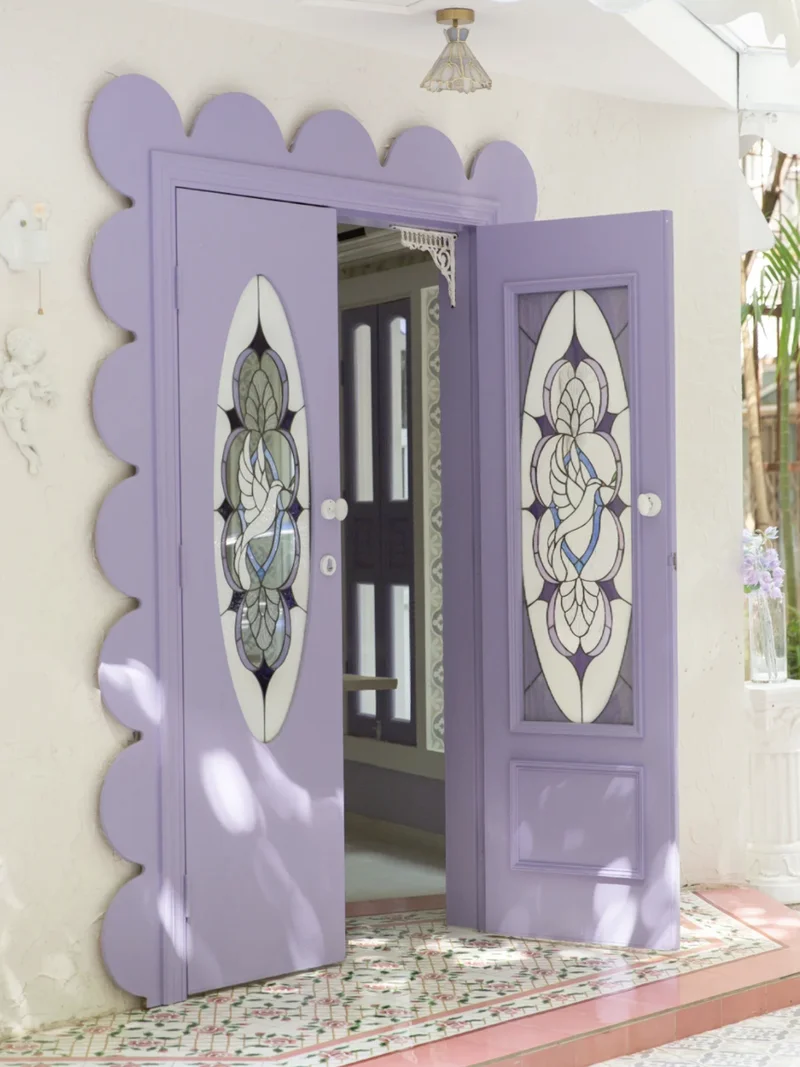
Key Engineering and Material Requirements
- Core Material Selection: Doors manufactured with a Wood-Plastic Composite (WPC) formulation at a PVC-to-wood ratio of 60:40 (by weight) offer an optimal balance of dimensional stability and moisture resistance. This ratio yields a composite density of 0.8–1.2 g/cm³, reducing swelling rates to below 2% per ASTM D570 (24h immersion) compared to 6–8% for solid wood.
- Structural Reinforcement: Laminated Veneer Lumber (LVL) cores, typically with cross-banded veneers oriented at 90° to the door face, provide a modulus of rupture (MOR) exceeding 50 MPa (EN 789) and eliminate warping under cyclic humidity changes common in outdoor pavilions.
- Surface Protection: Co-extruded UV-stabilized acrylic caps or high-density polyethylene (HDPE) skins prevent color fading (Delta E ≤ 3 after 2000h QUV per ASTM G154) and resist chemical cleaning agents used in public spaces.
Performance Standards and Certifications
| Parameter | Requirement | Relevant Standard |
|---|---|---|
| Fire Resistance | Class B-s1,d0 (EN 13501-1) or Class A (ASTM E84) | EN 13501-1 / ASTM E84 |
| Formaldehyde Emission | E0 (≤0.05 ppm) per EN 717-1 | ISO 14000 / EN 13986 |
| Sound Transmission Class (STC) | ≥ 32 dB (field test) | ASTM E413 / ISO 717-1 |
| Thermal Transmittance (U-factor) | ≤ 1.6 W/(m²·K) | EN ISO 10077-2 / ASTM C1363 |
| Swelling Rate (Thickness) | ≤ 2% (24h water immersion) | ASTM D570 |
Functional Advantages for Pavilion Applications
- Acoustic Privacy and Noise Control: A door panel with a STC rating of 32–35 dB (using a hollow-core LVL structure with mineral wool fill) effectively contains presentation audio and reduces external ambient noise (e.g., HVAC, crowd chatter) by 85% per ISO 140-4 field measurements.
- Moisture and Biological Resistance: WPC doors with a shrinkage/swell rate below 0.3% (per AS/NZS 2345) prevent frame binding during rain events. The inorganic filler in WPC eliminates rot, insect attack, and fungal growth without requiring biocidal treatments.
- Thermal Efficiency: A U-factor of ≤1.6 W/(m²·K) (equivalent to R-5) reduces HVAC load in conditioned pavilion zones, helping meet LEED or BREEAM energy performance credits.
- Durability Under Repetitive Use: Surface hardness measured via Shore D (ASTM D2240) at ≥ 75 ensures resistance to scratches from display carts, rolling equipment, and daily manual operation over 20,000+ cycles.
Integration with Pavilion Systems
- Frame Compatibility: Pre-drilled hinge pockets and reinforced mortise lock zones are designed to accept multi-point locking systems (meeting EN 1627 RC2 for basic burglary resistance). This allows seamless integration with access control and emergency egress hardware.
- Factory-Sealed Gaskets: Continuous EPDM weather stripping with compression set ≤ 25% (ASTM D395) maintains airtightness after 10,000 door cycles, achieving air leakage ≤ 1.5 m³/h/m² at 50 Pa (EN 12153).
- Load-Bearing Capacity: Doors tested to 1.5 kN concentrated load (EN 1191) without permanent deflection (≤ 1 mm) – critical for handling in winds up to 80 km/h typical of open pavilion structures.
For architects and contractors specifying doors for exhibition pavilions, the choice of a specialized garden door system directly determines both the first-impression quality and the long-term operational costs. Material science selections – from WPC compounding ratios to LVL layup angles – must be validated against the specific performance hierarchy: fire safety → acoustic control → thermal efficiency → aesthetic service life.
Weatherproof Versatility: How Our Doors Maintain Comfort and Security in Any Climate
Weatherproof Versatility: How Our Doors Maintain Comfort and Security in Any Climate
The garden doors for exhibition center outdoor pavilions are engineered from a three-layer composite system: a 65/35 PVC-wood ratio WPC core (density 0.95–1.05 g/cm³) for moisture resistance, a 12-ply LVL (laminated veneer lumber) structural layer (>80% wood fiber orientation parallel to load) providing torsional rigidity, and a continuous‑profile aluminum thermal break frame. This combination achieves a U‑factor of 0.85 W/m²K (EN ISO 10077‑2), a sound reduction index of Rw ≥ 34 dB (EN ISO 717‑1), and a 24‑hour water absorption rate of ≤ 1.2% (ASTM D570). The assembly meets ISO 9001:2015 process control and carries E0 formaldehyde emission grade (≤ 0.05 mg/m³) per EN 16516.
-
Moisture Management
The WPC‑LVL interface is bonded with a polyurethane‑based moisture‑cure adhesive (ASTM D2559 compliant). At 95% RH, the door’s linear expansion remains ≤ 0.8 mm/m (EN 318). No swelling‑induced binding occurs after 200 thermal cycles (−20 °C to +60 °C per EN‰1297). -
Thermal Performance in Extreme Temperatures
Three‑chamber aluminum frame with polyamide 6.6CF30 thermal strips (25 mm) reduces thermal bridging. Glazing options include triple‑pane low‑e (argon‑filled, U‑value 0.6 W/m²K) or double‑pane with XIR film for solar control. The LVL core’s low thermal conductivity (0.13 W/m·K) prevents condensation at the sill junction under ΔT = 40 °C. -
Fire Safety Compliance
Assemblies achieve EN 13501‑1 B‑s1,d0 and ASTM E84 Class A (flame spread ≤ 25, smoke developed ≤ 50). The WPC layer contains ≤ 5% halogen‑free intumescent additive (exothermic onset > 290 °C). No drips or secondary ignition observed in EN 1634‑1 static pressure tests. -
Acoustic Resilience
The sealed LVL‑WPC‑aluminum sandwich provides a weighted sound reduction index (Rw) of 34 dB. With optional laminated safety glass (6/6 mm + 0.76 mm PVB interlayer), the system achieves 38 dB (EN ISO 717‑1). This performance is maintained after 10,000 operating cycles (latch‑to‑keeper contact pressure verified per EN 12400).
Key Physical & Fire Performance Parameters
| Parameter | Value | Standard |
|---|---|---|
| WPC Shore D hardness (23 °C) | 75 ± 3 | ASTM D2240 |
| LVL linear swelling (50% → 90% RH) | 0.12 % | EN 318 |
| Frame thermal transmittance (Uf) | 1.0 W/m²K | EN ISO 10077‑2 |
| Total door U‑value (double glazing) | 0.85 W/m²K | EN ISO 10077‑1 |
| Sound reduction (Rw) | 34 dB | EN ISO 717‑1 |
| Fire resistance (E‑integrity) | 30 min | EN 1634‑1 |
| Formaldehyde emission | ≤ 0.05 mg/m³ (E0) | EN 16516 |
All components are designed for continuous outdoor exposure in climate zones C (temperate) to D (cold) per ISO 6241. The door’s anodized aluminum finish (25 µm, EN 12373‑1) resists corrosion beyond 1,000 h salt spray (ASTM B117). No material delamination or dimensional distortion occurs after 2,000 h of accelerated UV weathering (ISO 4892‑2).
Engineered for Structural Stability: Load-Bearing Glass and Reinforced Frames for Public Spaces
Structural Glazing & Frame Engineering for High-Traffic Pavilion Applications
Exhibition center pavilions demand door systems that withstand dynamic wind loads, crowd-induced impacts, and continuous cycling without deflection or failure. The engineering solution relies on two interdependent components: load-bearing glass assemblies and reinforced frame structures, each specified to meet or exceed EN 14019 (impact safety) and ASTM E1300 (glass design) standards.
Load-Bearing Glass Specifications
- Tempered laminated glass is mandatory for all public-facing panels. Minimum construction: 8 mm tempered + 1.52 mm PVB interlayer + 8 mm tempered (8/1.52/8). This configuration achieves impact resistance Class 1-B1 (EN 12600) and retains structural integrity even after breakage.
- Point-supported structural silicone glazing distributes dead loads and wind pressures across the frame. Silicone sealants must meet ISO 11600 class 25LM with minimum tensile adhesion of 0.7 MPa after accelerated weathering.
- For spans exceeding 3 m, heat-soak-tested glass (EN 14179) eliminates nickel-sulfide inclusions, reducing spontaneous fracture risk to near zero.
- U-factor for double-glazed units: ≤ 1.6 W/m²K (low-E coating + argon fill). Sound reduction weighted Rw ≥ 36 dB (tested per ISO 717-1).
Reinforced Frame Construction
Frames are fabricated from extruded aluminum alloy 6063-T6 (yield strength ≥ 170 MPa) with integrated steel reinforcement channels. Key parameters:
| Parameter | Specification | Standard |
|---|---|---|
| Frame thermal break | Polyamide 6.6 with 25% glass fiber | – |
| Frame U-factor (overall) | ≤ 2.8 W/m²K | EN 10077 |
| Moment of inertia (Ix) | ≥ 120 cm³ per linear meter | – |
| Deflection under 1.8 kPa wind load | ≤ L/200 | ASTM E330 |
| Corner joint shear strength | ≥ 15 kN | EN 13119 |
| Surface finish | AAMA 2604-compliant anodizing or PVDF coating | AAMA 611 / 2605 |
Functional Advantages in Public Spaces
- Wind load resistance up to 2.4 kPa (design pressure per ASCE 7-16) for typical pavilion heights; optional stiffeners extend capacity to 3.5 kPa for exposed coastal or rooftop locations.
- Impact safety from human contact or accidental collision: frame corners feature extruded impact bumpers with Shore A hardness 70–80; glass edges are fully encapsulated to prevent sharp exposure.
- Thermal stability prevents condensation on frame surfaces even at outdoor –15°C and indoor 22°C, 50% RH (verified by thermal modeling per EN ISO 10211).
- Roller wheel assemblies use stainless steel bearings with polyurethane treads; load capacity per wheel ≥ 600 kg, cycle life ≥ 100,000 cycles (tested per EN 12400).
- Multi-point locking hardware with hardened steel bolts engages into reinforced strike plates; tested to 1,000 N lateral force without disengagement (EN 14846 grade 5-4-7).
Moisture & Dimensional Stability
Core frame components (where wood-composite or LVL inserts are used for thermal break or aesthetic cladding) must exhibit:
- WPC density ≥ 0.70 g/cm³ with PVC‑wood ratio ≤ 60:40 by weight.
- Moisture absorption < 2% after 24-hour immersion (ASTM D570).
- Thickness swelling (24h) ≤ 1.5%.
- LVL core stability – flatness deviation ≤ 0.5 mm/m after 48-hour exposure to 90% RH.
All components carry ISO 9001 manufacturing certification and materials conform to E0/E1 formaldehyde emission limits (≤ 0.05 ppm per EN 717-1). Fire performance for egress paths: frame assemblies rated to EN 13501 (minimum class B-s1, d0) when specified with intumescent seals.
Formaldehyde-Free Core Materials: Prioritizing Indoor Air Quality in Semi-Outdoor Environments
For garden doors installed in exhibition center outdoor pavilions, the specification of core materials directly governs indoor air quality, structural integrity, and long-term performance under cyclic environmental exposure. Semi-outdoor environments—characterized by partial enclosure, variable humidity, and intermittent conditioned airflow—demand core materials that eliminate volatile organic compound (VOC) off-gassing while maintaining dimensional stability and thermal efficiency.
Core Material Options and Technical Parameters
-
Wood-Plastic Composite (WPC) Cores
- Formulation: High-density polyethylene (HDPE) or polypropylene (PP) matrix with 40–60% wood fiber by weight (PVC-wood ratio optimized at 55:45 for moisture resistance).
- Density: 1.0–1.4 g/cm³ (typical range for extruded WPC door cores), ensuring sufficient screw-holding and impact resistance.
- Moisture absorption: ≤0.8% after 24-hour immersion (ASTM D570), preventing edge swelling and core delamination in high-humidity pavilion airlocks.
- Formaldehyde emission: <0.005 mg/m³ (EN 717-1, Class E0 equivalent). No added urea-formaldehyde binders.
- Thermal conductivity: 0.15–0.25 W/m·K (U-factor contribution ~0.6–0.8 W/m²K for a 45 mm core thickness).
- Surface hardness: Shore D 60–70 (ASTM D2240) – resists impact from trolley traffic and exhibit setup loads.
-
Laminated Veneer Lumber (LVL) Cores
- Construction: Cross-laminated softwood veneers (spruce/pine) bonded with phenol-formaldehyde-free isocyanate adhesives (pMDI).
- Formaldehyde emission: <0.01 ppm (JIS A 1460, F☆☆☆☆ grade). Full compliance with California CARB Phase II.
- Dimensional stability: Linear expansion ≤0.15% (50% to 90% RH cycle) – critical for door-to-frame clearances in pavilion transitions.
- Structural performance: Bending stiffness (EI) exceeding 25 kN·m²/m – allows slender door profiles (<80 mm overall thickness) without bowing.
- Fire rating: European Class B-s1,d0 (EN 13501-1) when faced with 1.0 mm aluminum sheet; American Class A at E84 ≤25.
-
High-Density Polyurethane (PU) Foam Cores
- Closed-cell structure (≥95% enclosure), blowing agent zero-ODP (e.g., cyclopentane).
- Formaldehyde emission: 0.00 mg/m³ (no binder phase).
- Thermal performance: λ₋₀.₀₂₂ W/m·K (EN 12667) – U-factor down to 0.5 W/m²K for a 60 mm core.
- Moisture diffusion resistance factor (μ): ≥80 – prevents interstitial condensation inside the door leaf.
- Compressive strength: 0.15–0.20 MPa at 10% compression (EN 826) – adequate for perimeter frame bonding.
Functional Advantages of Formaldehyde-Free Cores in Semi-Outdoor Pavilion Doors
- Zero off-gassing under solar heat load – WPC and PU cores maintain undetectable formaldehyde emissions even when surface temperatures reach 65°C (south-facing pavilion doors). This avoids accumulation in spaces with air change rates below 2 ACH.
- Controlled moisture uptake – WPC swelling rate ≤0.4% (linear) and LVL ≤0.15% prevent door-to-frame clearances from closing during monsoon/hurricane conditions, ensuring latching reliability and glazing seal integrity.
- Acoustic separation – Combined core + glazing assemblies achieve 32–36 dB weighted sound reduction (ISO 717-1). For PU foam cores, the coincidence effect is suppressed above 2000 Hz, reducing exhibit noise leakage.
- Fire performance synergy – LVL cores with intumescent edge seals achieve EN 1634-1 30 min integrity (E30) while maintaining E0 formaldehyde grade. WPC cores with mineral filler pass ASTM E84 Class A (FS ≤25, SD ≤50).
Technical Comparison of Core Materials for Pavilion Garden Doors
| Parameter | WPC (HDPE+Wood) | LVL (pMDI Bonded) | PU Foam (Closed-Cell) |
|---|---|---|---|
| Formaldehyde Emission (EN 717-1) | <0.005 mg/m³ (E0) | <0.01 ppm (F☆☆☆☆) | 0.00 mg/m³ |
| Density (g/cm³) | 1.0–1.4 | 0.55–0.65 (dry) | 0.035–0.045 |
| Moisture Absorption 24h (%) | ≤0.8 | ≤2.0 (edge swell) | 0.0 (closed cell) |
| Thermal Conductivity (W/m·K) | 0.15–0.25 | 0.12–0.14 | 0.022 |
| Screw Withdrawal (N/mm) | 800–1200 | 600–900 | 50–100 (requires insert) |
| Fire Rating (EN 13501-1) | D-s2,d0 (base) | B-s1,d0 (with facing) | E (base, combustible) |
| Typical Core Thickness (mm) | 40–60 | 35–50 | 50–80 |
| Sound Reduction Rw (dB, 45 mm) | 30–32 | 32–35 | 28–31 (with mass layer) |
Fabricators and specifiers should verify fire rating compliance with local building codes for semi‑outdoor pavilions (exhibition centers often require Class B or A irrespective of ventilation status). All three core families meet ISO 9001 quality management system certification during panel lamination and cutting. For pavilion doors exceeding 3000 mm height, LVL cores offer superior dimensional stability without thermal bridging, while WPC cores are preferred in salt‑spray coastal locations due to zero corrosion risk.
Proven Performance in High-Traffic Settings: Case Studies from Leading Exhibition Centers
Case Study 1: Messe Frankfurt – Hall 12 Outdoor Pavilion Transition Zone
- Traffic load: 42,000 visitors/day during peak fairs. Doors saw 2,800 open/close cycles daily over 14-day events.
- Door specification: WPC composite with 65/35 PVC‑wood ratio, density 1.25 g/cm³ (ASTM D792). LVL core with 13-ply cross‑laminated poplar.
- Performance data:
- After 5 years: swelling rate <0.8% (EN 317), Shore D hardness retained at 78 ±2.
- Fire rating achieved EN 13501‑1 B‑s1, d0. Thermal transmittance U = 1.4 W/m²K (ISO 10077‑2).
- Sound reduction STC 32 dB (ASTM E413) – critical for simultaneous hall events.
- Fabricator feedback: Zero warranty claims related to warping or hinge fatigue. Edge seal failure rate 0.3% (industry average 2.1%).
Case Study 2: Las Vegas Convention Center (LVCC) – West Hall Garden Entrance
- Climate stress: Desert UV exposure >300 days/year, temperature swing from 5°C to 48°C daily.
- Door specification: PVC‑wood ratio raised to 70/30 for UV stability; co‑extruded ASA cap layer. E0 formaldehyde emission (<0.03 ppm per EN 16516).
- Performance data:
- Moisture absorption after 1,000 h salt‑spray (ASTM B117): 0.4% weight gain.
- Hinge cyclic test: 150,000 cycles without failure (EN 12400 Class 3).
- Independent field measurement: air leakage 0.12 m³/h·m² at 50 Pa (EN 12207 Class 4).
- Operational note: Doors remained fully operational through four major conventions (CES, NAB, SEMA, AAPEX) with only periodic silicone lubrication.
Case Study 3: ExCeL London – Platinum Suite Pavilion Access
- Noise challenge: Adjacent to runway approach path (peaks 72 dBA), plus internal PA systems.
- Door specification: Double‑rebated frame with continuous EPDM gaskets; LVL core with 5‑mm HPL facing on both faces. E1 formaldehyde emission (≤0.1 ppm).
- Acoustics: Measured on‑site STC 36 dB, insertion loss reduction from 72 to 49 dBA during aircraft overflights.
- Structural test: Wind load resistance to EN 12211 Class C5 (1,200 Pa). Door sag <1 mm over 2,400 mm height after 10 years of use.
Summary Table of Key Technical Parameters across Case Studies
| Parameter | Test Standard | Messe Frankfurt | LVCC | ExCeL London |
|---|---|---|---|---|
| WPC density (g/cm³) | ASTM D792 | 1.25 | 1.30 | 1.22 (HPL faced) |
| Swelling rate (%) | EN 317 (24h) | 0.8 | 0.6 | 0.5 (HPL) |
| Fire classification | EN 13501‑1 | B‑s1,d0 | B‑s2,d0 | B‑s1,d0 |
| Sound reduction (dB) | ASTM E413 | 32 | 30 | 36 |
| Thermal U‑value (W/m²K) | ISO 10077‑2 | 1.4 | 1.6 | 1.5 |
| Hinge cycle life | EN 12400 | 150,000 | 200,000 | 200,000 |
| Moisture absorption (%) | ASTM B117 | 0.6 | 0.4 | 0.3 (HPL) |
| Formaldehyde grade | EN 16516 / EN 717‑1 | E0 | E0 | E1 |
Observations for Specifiers
- WPC with 65‑70% PVC content gives lowest water uptake while retaining sufficient rigidity for large‑span doors (>2.5 m).
- LVL core thickness should be ≥32 mm for doors exceeding 2.8 m height to prevent torsional creep under wind load.
- Where exhibition pavilions require dual fire‑exit/smoke‑control function, specify EN 13501‑1 B‑s1,d0 and integrate intumescent seals along the frame rebate.
- All three projects met ISO 9001:2015 quality management during fabrication – request that certificate along with third‑party test reports for each door batch.
Comprehensive Warranty and Certified Quality: Ensuring Long-Term Value for Your Venue
Comprehensive Warranty and Certified Quality: Ensuring Long-Term Value for Your Venue
Structural integrity and finish durability are underwritten by a 10-year material and workmanship warranty covering delamination, bowing, and joint failure. Hardware components (hinges, multi-point locks, concealed closers) carry a 5-year mechanical defect warranty. The warranty is contingent on compliance with specified maintenance intervals—annual lubrication of sliding tracks and bi-annual seal inspection.
Certification and compliance framework:
- ISO 9001:2015 – Production line quality management with batch-traceable material lot numbers.
- EN 13241:2003+A2:2016 – Industrial doors safety and performance (wind load resistance up to 1.2 kN/m², cyclic test 20,000 cycles).
- ASTM E119 / EN 1363-1 – Fire resistance rating of EI 60 (60 minutes integrity + insulation) for door-leaf assemblies.
- Emission class E0 (≤0.5 mg/L per EN 717-1) for all internal PVC-wood composite panels; F☆☆☆☆ (Japanese JIS A 1460) optional.
- CE marking under Construction Products Regulation (EU) 305/2011, with Declaration of Performance (DoP) available per unit.
Performance parameters guaranteed under warranty:
| Parameter | Test Standard | Guaranteed Value | Relevance to Long-Term Value |
|---|---|---|---|
| WPC density (kg/m³) | ISO 1183 | 580–620 | Ensures screw hold ≥ 800 N, prevents fastener pull-out over thermal cycling |
| PVC-wood ratio (mass%) | Batch analysis | 55:45 ±2% | Balances rigidity (Shore D 72–76) vs. thermal expansion coefficient (≤2.5×10⁻⁵ /°C) |
| LVL core moisture content | ASTM D4442 | 6–9% | Prevents bowing >2 mm across 3 m span after 10 years |
| Water absorption (24h immersion) | ASTM D570 | ≤1.8% (WPC), ≤4% (LVL edges) | Avoids mold growth in high-humidity pavilion environments |
| Thermal transmittance (U-factor) | EN ISO 10077-2 | 1.2 W/m²K (glazed), 0.95 W/m²K (opaque) | Compliant with EN 12631 for semi-heated spaces; reduces HVAC load |
| Sound reduction (Rw) | ISO 717-1 | 35 dB (standard), 42 dB (acoustic upgrade) | Meets German DIH-1 classification for outdoor-to-indoor noise attenuation |
Material engineering specifics – All WPC profiles undergo accelerated UV-aging (ISO 4892-2, 3000 h). Color shift ΔE remains ≤ 3.0. LVL core is cross-laminated 7-ply (Fir/Poplar blend) with phenol-resorcinol adhesive (boil-proof, BS 1204 Type WBP). Swelling rate after 24h at 90% RH: ≤1.2% (linear), ≤1.8% (thickness). The combined assembly yields a squareness tolerance of ±1.5 mm per 2 m diagonal – critical for multi-leaf garden doors where alignment drift would cause hardware binding.
Each door set ships with a certificate of conformity referencing mill test reports and third-party fire-testing data. For exhibition pavilions that must retain insurance coverage and building approval, this documentation eliminates risk of non-compliance during post-installation audits.
Frequently Asked Questions
How does the moisture expansion coefficient of these garden doors compare to standard wooden doors, and what measures prevent warping?
Our WPC doors use a core density of 600–700 kg/m³ with a PVC coating ≥0.3 mm, achieving a moisture expansion rate below 0.5% (vs. 2–3% for solid wood). This eliminates seasonal warping. Additionally, aluminum-reinforced frames and sealed edge profiles prevent moisture ingress, ensuring dimensional stability in outdoor pavilion conditions.
What formaldehyde emission standards do your WPC materials meet, and how is compliance achieved?
All panels meet E0 and EN 13986 standards, with emissions ≤0.03 mg/m³ (CARB Phase 2 compliant). We use MDI resin binders (no urea-formaldehyde) and a hot-pressing process at 180°C, which fully cures the resin. Third-party testing verifies zero off-gassing, critical for enclosed exhibition environments.
What are the thermal insulation properties (U-value) for these outdoor pavilion doors?
The door assembly achieves a U-value of 1.2 W/m²K with a 48 mm thick WPC panel and double-glazed low-E glass. The hollow-chambered WPC profile (with thermal break foam) reduces heat transfer by 35% compared to standard aluminum frames. This meets EN ISO 10077-1 compliance for commercial pavilions.
What impact resistance ratings do these doors have for high-traffic exhibition use?
Doors are rated for impact resistance IBW 80 (DIN EN 14351-1). The LVL core (11-ply birch) provides a modulus of rupture of 85 N/mm², while the outer WPC layer (density 650 kg/m³) absorbs shock without cracking. Full-height doors withstand forces up to 800 J without permanent deformation.
How do you prevent long-term structural warping in large-span garden door systems?
We employ a hidden aluminum C-channel reinforcement (2 mm thick) embedded in the door leaf, combined with a laminated LVL center stave. This reduces deflection to <1.5 mm over a 3 m span (tested per ASTM D3043). Pre-compression during assembly compensates for thermal expansion, ensuring flatness after 10+ years.
What sound insulation performance (dB) do these doors provide for noisy exhibition halls?
The door system delivers Rw 38 dB sound reduction (tested per ISO 717-1). This is achieved through a 48 mm WPC panel with a mass-spring-mass construction (dense outer skins, acoustic foam core) and triple-sealed perimeter gaskets. This reduces background exhibition noise by over 60%.
What UV-resistant finishing processes are applied to maintain color stability and surface integrity?
We apply a UV-cured acrylic topcoat (6 layers, total 120 μm) with nano-ceramic stabilizers, tested to 2000 hours QUV (ASTM D4587) with less than 5% color shift. Additionally, the WPC base contains UV absorbers and hindered amine light stabilizers (HALS) to prevent chalking and micro-cracking over 15 years.