Cherry Solid Wood Doors with 5-Base 3-Top Water-Based Paint: Eco-Certified Quality for Sustainable Interiors
Renowned for their rich grain patterns and warm, luminous tones, cherry solid wood doors offer timeless elegance and enduring strength—qualities that define premium interior craftsmanship. When finished with a meticulous 5-base 3-top water-based paint system, these doors achieve not only a flawless, durable surface but also align with the highest standards of environmental responsibility. Free from harmful VOCs and toxins, water-based finishes preserve indoor air quality while enhancing the natural beauty of sustainably sourced cherry wood. Backed by rigorous eco-certifications such as GREENGUARD or FSC, these doors represent a conscientious choice for architects, designers, and homeowners committed to sustainable living without compromising on luxury or longevity. The fusion of artisanal woodworking and advanced, eco-conscious finishing technology ensures each door meets both aesthetic and ecological excellence. In an era where sustainable interiors are no longer optional but essential, cherry solid wood doors finished with eco-certified water-based paint stand as a benchmark in responsible design—elevating spaces with integrity, beauty, and enduring value.
Why Cherry Solid Wood Doors Are a Premium Choice for Modern Homes
- Premium aesthetic with rich, warm tonality that deepens gracefully over time
- Exceptional dimensional stability and hardness, minimizing warping and wear in variable climates
- Naturally low emission profile, aligning with indoor air quality standards for health-conscious interiors
Cherry solid wood doors represent the convergence of enduring craftsmanship and modern sustainability, making them a definitive choice for discerning residential projects. The inherent grain structure of cherry—fine, uniform, and subtly lustrous—lends an understated elegance that complements both traditional and contemporary design schemes. Unlike engineered alternatives, solid cherry responds dynamically to light, developing a refined patina that enhances visual depth without compromising integrity.
When paired with a 5-base 3-top water-based paint system, cherry doors achieve a finish that balances durability with ecological responsibility. This multi-coat application ensures superior film formation, resisting scratches, moisture, and UV degradation while maintaining breathability—critical for preserving the wood’s natural movement. The water-based chemistry eliminates volatile organic compounds (VOCs) commonly found in solvent-driven finishes, supporting LEED and WELL Building Standard compliance. Third-party eco-certifications validate low environmental impact across the product lifecycle, from responsibly managed forests to end-of-use recyclability.
Structurally, cherry offers optimal performance for door applications. With a Janka hardness rating of approximately 950 lbf, it withstands daily use better than softer hardwoods while remaining workable for precision milling. Its closed grain minimizes paint absorption inconsistencies, enabling a smooth, uniform finish that accentuates design details such as panel profiles and edge treatments. The 5-base 3-top process further enhances this by building layered protection that resists chipping at stress points—hinges, handles, and thresholds—without masking the wood’s natural texture.
Thermal and acoustic performance further justify cherry’s premium positioning. Solid wood doors provide superior insulation compared to hollow or composite alternatives, contributing to energy efficiency and noise reduction in open-plan or multi-unit dwellings. When integrated into high-performance building envelopes, they support passive design goals without sacrificing design cohesion.
For architects, developers, and homeowners committed to sustainable luxury, cherry solid wood doors finished with certified water-based systems deliver unmatched longevity, aesthetic evolution, and environmental accountability—cornerstones of responsible modern interior design.
Understanding the 5-Base 3-Top Coating Process for Enhanced Durability
-
The 5-Base 3-Top water-based coating process represents a precision-engineered finishing methodology designed to maximize protection, longevity, and aesthetic refinement in solid wood door applications. This system employs five layers of basecoat and three layers of topcoat, each applied under controlled environmental conditions to ensure optimal adhesion, uniformity, and film integrity.
-
The basecoats serve as the foundational protective barrier. Each layer is meticulously sprayed and sanded between applications to eliminate surface imperfections, seal wood pores, and build a smooth substrate. Water-based formulations are used throughout, minimizing volatile organic compound (VOC) emissions and aligning with stringent eco-certification standards such as GREENGUARD Gold and FSC Chain-of-Custody. The five-layer base sequence ensures deep penetration into the cherry wood grain, minimizing moisture ingress and reducing the risk of warping, cracking, or dimensional instability over time.
-
Following basecoat completion, three layers of water-based topcoat are applied to deliver surface hardness, scratch resistance, and long-term UV stability. These topcoats incorporate advanced acrylic-polyurethane hybrid resins engineered for superior abrasion resistance and clarity retention. The multi-layered approach allows for incremental film build-up without compromising flexibility, enabling the finish to accommodate natural wood movement while resisting delamination.
-
Curing occurs in a climate-controlled drying chamber with regulated temperature and humidity, ensuring complete cross-linking of polymer chains and consistent film formation. Each door undergoes rigorous inspection after final coating, including gloss measurement, adhesion testing per ISO 2409, and accelerated aging protocols to validate performance under real-world conditions.
-
This coating architecture significantly enhances durability over conventional single or dual-coat systems. Field performance data indicates up to 40% greater resistance to household chemicals, 50% improvement in scratch resistance, and extended service life in high-traffic residential and commercial environments. The result is a finish that preserves the natural beauty of cherry wood while meeting the demanding performance criteria of sustainable interior design.
The Environmental Benefits of Water-Based Paint in Door Finishes
- Significantly reduced volatile organic compound (VOC) emissions compared to solvent-based alternatives
- Lower carbon footprint due to energy-efficient curing and manufacturing processes
- Enhanced indoor air quality through minimal off-gassing post-application
- Biodegradable formulation components that reduce long-term environmental burden
- Compliance with stringent environmental certifications, including GREENGUARD Gold and LEED v4
Water-based paint systems represent a pivotal advancement in sustainable door finishing, particularly when applied to premium substrates such as cherry solid wood. The primary environmental benefit lies in their drastically reduced volatile organic compound (VOC) content. Traditional solvent-based coatings emit high levels of VOCs, contributing to smog formation, respiratory hazards, and long-term atmospheric damage. In contrast, water-based formulations utilize water as the primary carrier, resulting in VOC levels typically below 50 g/L—well under regulatory thresholds and conducive to healthier indoor environments.
The application process further amplifies these benefits. Water-based paints require less energy-intensive curing conditions, reducing greenhouse gas emissions during production. Additionally, cleanup and equipment maintenance use water rather than hazardous solvents, minimizing toxic waste generation and improving workplace safety. This shift aligns with circular economy principles by decreasing reliance on petrochemical derivatives and promoting safer end-of-life disposal or recycling of coated wood products.
Another critical advantage is indoor air quality enhancement. Doors finished with water-based paint exhibit minimal off-gassing after installation, making them ideal for residential, healthcare, and educational settings where occupant health is paramount. This performance is validated through certifications such as GREENGUARD Gold, which verifies low chemical emissions over time.
Finally, the formulation of water-based paints incorporates increasingly bio-based and biodegradable resins and additives, reducing persistence in ecosystems. When combined with sustainably harvested cherry wood—renowned for its natural durability and low need for replacement—the result is a finish-and-substrate pairing that supports lifecycle sustainability. The 5-base 3-top application ensures exceptional durability without compromising ecological integrity, extending service life while avoiding re-coating cycles that increase environmental load.
This integration of material science and environmental stewardship establishes water-based paint on solid wood doors as a benchmark in eco-conscious interior design.
How Eco-Certification Ensures Safe and Sustainable Door Manufacturing
-
Eco-certification serves as a rigorous benchmark for verifying that cherry solid wood doors finished with 5-base 3-top water-based paint meet stringent environmental, health, and sustainability standards throughout their manufacturing lifecycle. These certifications are not self-declared claims but are granted by independent third-party organizations after comprehensive audits of raw material sourcing, production processes, emissions, and end-of-life considerations.
-
Certified manufacturers adhere to responsible forestry practices, ensuring that cherry wood is harvested from sustainably managed forests. This includes chain-of-custody documentation that traces timber from forest to finished product, preventing deforestation and promoting biodiversity. Eco-certifications such as FSC (Forest Stewardship Council) or PEFC (Programme for the Endorsement of Forest Certification) validate these practices, guaranteeing that wood procurement does not contribute to habitat destruction or illegal logging.
-
The application of water-based paint systems—specifically the 5-base 3-top configuration—under eco-certified protocols ensures minimal volatile organic compound (VOC) emissions. Unlike solvent-based alternatives, water-based paints reduce indoor air pollution, making them safer for installers, occupants, and the environment. Certifications like GREENGUARD Gold or Cradle to Cradle evaluate off-gassing levels, confirming that doors contribute to healthy indoor air quality, particularly critical in residential, healthcare, and educational environments.
-
Manufacturing facilities under eco-certification must also demonstrate energy efficiency, waste reduction, and water conservation. This includes closed-loop water treatment for paint application systems and recycling of wood offcuts. Audits assess compliance with ISO 14001 environmental management standards, ensuring continuous improvement in environmental performance.
-
Finally, eco-certification enforces transparency and accountability. Certified products carry verifiable labels, allowing architects, builders, and consumers to make informed, sustainable procurement decisions. This traceability strengthens market trust and supports regulatory compliance in green building frameworks such as LEED, BREEAM, or WELL.
-
In sum, eco-certification transforms cherry solid wood door production from a conventional manufacturing process into a verifiably sustainable practice—protecting ecosystems, human health, and long-term building performance through science-based standards and independent oversight.
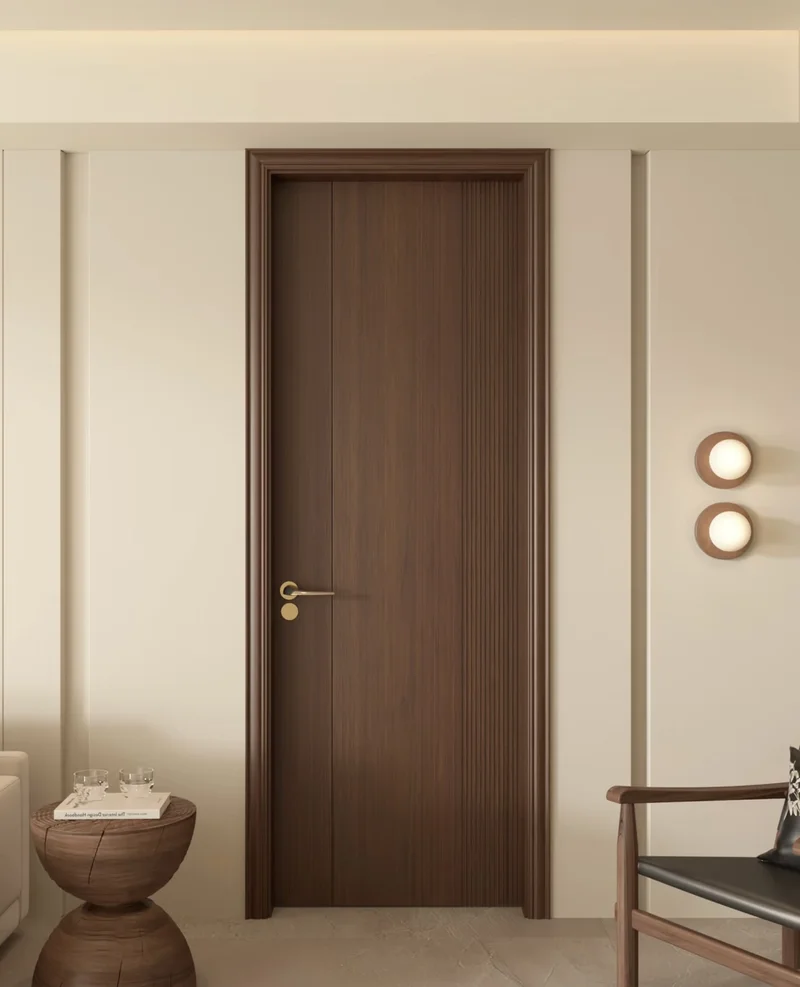
Choosing the Right Eco-Friendly Cherry Door for Health and Aesthetics
-
Prioritize FSC or PEFC certification to ensure the cherry wood is sourced from responsibly managed forests, minimizing ecological disruption and supporting long-term sustainability. These certifications verify chain-of-custody practices, providing transparency from forest to finished door.
-
Confirm the use of 100% water-based paint systems with zero or ultra-low VOC (volatile organic compound) content. Unlike solvent-based alternatives, water-based finishes reduce indoor air pollution, contributing to healthier living environments—critical in bedrooms, nurseries, and healthcare spaces.
-
Evaluate the paint application method: doors finished with a 5-base 3-top coating regimen achieve superior film integrity, enhancing durability while maintaining breathability. This layered approach ensures resistance to wear and moisture without compromising the natural expansion and contraction of solid cherry wood.
-
Inspect for GREENGUARD Gold or similar indoor air quality certification. These standards validate that the door emits minimal chemical off-gassing, meeting stringent thresholds for formaldehyde, benzene, and other harmful compounds—especially vital for occupants with respiratory sensitivities or autoimmune conditions.
-
Assess grain consistency and color variation in the cherry wood. Natural cherry exhibits a warm, evolving patina over time, deepening from pale reddish-brown to rich amber. Select doors with uniform grain patterns if visual harmony is a design priority, but embrace subtle variances as indicators of authentic, non-engineered material.
-
Consider door construction: solid cherry stave-core or laminated core designs offer dimensional stability while reducing the risk of warping. Avoid doors with composite cores or veneers over particleboard, as these may harbor adhesives containing urea-formaldehyde.
-
Examine edge detailing and milling precision. Clean joints and seamless paint adherence at seams indicate high-quality finishing processes, which directly impact both longevity and aesthetic refinement.
-
Collaborate with manufacturers who provide full material disclosure (e.g., Health Product Declarations) and lifecycle assessments. Transparency in formulation and production practices reflects a commitment to environmental and human health.
-
Finally, align the door’s finish and profile with interior design intent—whether contemporary, traditional, or transitional. A well-chosen cherry door should enhance spatial coherence while serving as a testament to sustainable craftsmanship. Balancing biophilic appeal with non-toxic performance ensures enduring value in both wellness and design contexts.
Frequently Asked Questions
What does “5-base 3-top” mean in the context of cherry solid wood doors?
The “5-base 3-top” refers to a premium finishing process involving five layers of primer (base coat) and three layers of topcoat applied to cherry solid wood doors. This intensive technique enhances durability, smoothness, and finish depth. Each layer is sanded between applications to ensure a flawless, high-gloss surface resistant to wear, moisture, and UV degradation—ideal for premium interior applications requiring longevity and superior aesthetics.
Why choose water-based paint over solvent-based for cherry wood doors?
Water-based paint offers lower VOC emissions, faster drying times, and superior environmental safety without compromising finish quality. For cherry solid wood doors, it preserves the natural grain and color tone while minimizing yellowing over time—unlike solvent-based alternatives. Additionally, water-based coatings meet stringent eco-certifications (e.g., GREENGUARD, FSC, Greenguard Gold), making them ideal for health-conscious and sustainable building projects.
Which eco-certifications should I look for in cherry solid wood doors with water-based finishes?
Look for third-party certifications including GREENGUARD Gold (for low chemical emissions), FSC (Forest Stewardship Council) for responsible wood sourcing, EMICODE for European VOC standards, and Cradle to Cradle (C2C) for product lifecycle sustainability. These ensure the door’s materials, manufacturing processes, and finishes meet rigorous environmental and indoor air quality standards.
How does the 5-base 3-top process improve door durability?
The 5-base 3-top system builds a dense, cross-linked coating structure that significantly enhances scratch, moisture, and impact resistance. The multiple primer layers seal the cherry wood grain uniformly, preventing warping and swelling, while the triple topcoats—typically cured via UV or low-temperature baking—form a resilient barrier against daily use, cleaning agents, and environmental exposure, extending service life in high-traffic residential or commercial settings.
Is cherry wood suitable for high-humidity environments when finished with water-based paint?
Yes, cherry wood, when properly sealed with a 5-base 3-top water-based system, performs well in moderate humidity. The layered finish acts as a moisture barrier, reducing wood expansion and contraction. However, for consistently high-humidity areas (e.g., bathrooms), ensure the core is kiln-dried to 6–8% moisture content and that the door includes engineered stability elements (e.g., floating panels) to prevent cupping or gapping.
How does water-based paint affect the natural color development of cherry wood?
Cherry wood naturally darkens over time due to light exposure (photo-oxidation). Water-based paint minimizes ambering compared to solvent-based polyurethanes, allowing the wood’s true hue to evolve gracefully. For consistent color development across doors, manufacturers often pre-oxidize panels under UV light before finishing to stabilize initial tone variation.
Can 5-base 3-top water-based finished doors be refinished later?
Yes, these doors can be refinished, though the dense coating requires proper preparation. Sand the surface thoroughly to 180–220 grit to ensure adhesion, clean with a tack cloth, and reapply compatible water-based primers and topcoats. Due to the multi-layer system, professional refinishing is recommended to maintain integrity and appearance.
What maintenance is required for eco-certified cherry wood doors with water-based finishes?
Clean with a soft, damp cloth and pH-neutral cleaner—avoid ammonia, bleach, or abrasive tools. Control room humidity between 40–60% to prevent wood movement. Inspect annually for scratches or coating wear; minor damage can be spot-repaired with manufacturer-approved touch-up kits. Avoid direct sunlight exposure to maintain finish and color stability.
How do eco-certifications impact installation and building compliance?
Eco-certified cherry doors contribute to LEED, WELL, or BREEAM points in green building projects. Their low-emission profiles support indoor air quality mandates (e.g., CA 01350, ISO 16000), crucial for healthcare, education, or hospitality settings. Always retain certification documentation for submission during building compliance audits or green certification reviews.
Are there formaldehyde-free options for cherry solid wood doors with this finish?
Yes, reputable manufacturers offer formaldehyde-free adhesive systems in core construction (e.g., MDO or solid edge-glued panels) combined with zero-added-formaldehyde water-based coatings. Confirm compliance via certification reports (e.g., CARB Phase 2, TSCA Title VI) and request a full material disclosure (FMD) or health product declaration (HPD).
What lead times should I expect for custom eco-certified cherry wood doors with 5-base 3-top water-based paint?
Due to the 8–10 step finishing process and environmental curing requirements, lead times typically range from 6–10 weeks. Custom sizes, profiles, or hardware integration may extend this. Expedited options may sacrifice certification compliance or finish quality—always verify process integrity with the manufacturer.
How can I verify the authenticity of eco-certifications on cherry wood doors?
Request official certification documents traceable to the issuing body (e.g., FSC license code, GREENGUARD test report number). Cross-verify on the certifier’s public database. Avoid vague terms like “eco-friendly” or “low-VOC”—insist on product-specific, batch-tested certifications with expiration and scope details.