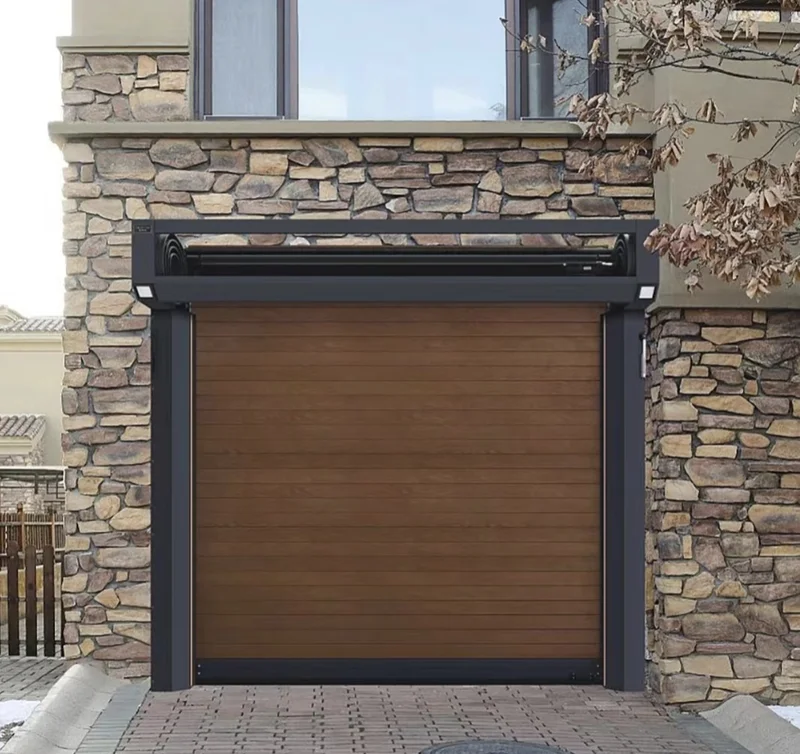
Wooden Garage Doors with Weatherproof Coating: Premium Protection and Elegance for Villas
For discerning homeowners seeking the perfect harmony of natural beauty and enduring performance, wooden garage doors with advanced weatherproof coating represent the pinnacle of exterior design for luxury villas. Meticulously crafted from premium hardwoods, these doors exude timeless elegance, enhancing curb appeal with warmth and sophistication that synthetic materials simply cannot replicate. Engineered to withstand the rigors of changing climates—from intense UV exposure to heavy rain and humidity—modern weatherproof coatings form an invisible shield, preserving the wood’s integrity while preventing warping, cracking, and fading. The result is a seamless fusion of aesthetics and resilience, where craftsmanship meets cutting-edge protection. Beyond functionality, these garage doors elevate the architectural character of high-end residences, offering a bespoke touch that aligns with the refined tastes of villa living. For those who demand both grandeur and longevity, wooden garage doors with weatherproof finishes are not merely an entry point—they are a statement of enduring quality and refined design.
Why Wooden Garage Doors Enhance Villa Aesthetics and Value
-
Wooden garage doors serve as a pivotal architectural feature in villa design, harmonizing structural function with aesthetic refinement. Their natural grain, warmth, and organic variation distinguish them from synthetic alternatives, creating an immediate visual connection between the built environment and its surrounding landscape—particularly critical in high-end residential settings where cohesion and material authenticity are paramount.
-
The inherent elegance of wood elevates curb appeal, reinforcing the villa’s architectural identity whether in classical, contemporary, or transitional styles. Species such as teak, Douglas fir, or walnut offer distinct tonal ranges and textures that can be matched to exterior wood elements—entry doors, cladding, pergolas—establishing design continuity. This unity enhances perceived craftsmanship and attention to detail, attributes highly valued in luxury properties.
-
Beyond appearance, wooden garage doors contribute substantively to property valuation. Real estate appraisals increasingly recognize premium materials and bespoke finishes as value drivers. A custom-fitted wooden door with precision detailing signals investment in quality, often influencing buyer perception and willingness to pay. Studies in luxury residential markets indicate that high-impact exterior upgrades, particularly those combining beauty and durability, yield strong returns on investment.
-
When paired with advanced weatherproof coating technology, wood transcends traditional limitations. Multi-layer protective finishes—comprising UV-resistant sealants, water-repellent barriers, and anti-fungal treatments—preserve structural integrity and appearance despite exposure to humidity, temperature fluctuation, and solar radiation. This engineered resilience ensures long-term performance without compromising aesthetic authenticity.
-
Unlike steel or fiberglass, wood possesses a tactile richness and acoustic dampening quality that enhances user experience. The material’s density contributes to reduced noise transmission, a subtle yet meaningful comfort in private residences.
-
In sum, wooden garage doors represent a strategic convergence of design excellence and material longevity. Their integration into villa architecture not only defines visual character but also reinforces market position, making them a discerning choice for architects, developers, and homeowners committed to enduring quality and elevated aesthetics.
The Science Behind Weatherproof Coatings for Wooden Garage Doors
-
Advanced weatherproof coatings for wooden garage doors are engineered to address the primary degradation pathways of wood: moisture absorption, UV radiation, thermal cycling, and biological attack. These formulations combine polymer science, nanotechnology, and material durability research to create protective barriers that extend service life while preserving aesthetic integrity.
-
Moisture is the most critical factor in wood deterioration, leading to swelling, warping, and fungal growth. High-performance coatings utilize hydrophobic resins—such as polyurethane, acrylic, or epoxy-modified hybrids—that form cross-linked molecular networks impermeable to liquid water while allowing vapor transmission. This balance prevents trapped moisture, reducing the risk of delamination and rot.
-
Ultraviolet (UV) radiation degrades lignin, the structural polymer in wood, causing surface graying and embrittlement. Premium coatings incorporate UV absorbers (e.g., benzotriazoles) and Hindered Amine Light Stabilizers (HALS) that dissipate radiant energy before it damages the wood substrate. These additives significantly reduce photo-oxidative degradation, maintaining color stability and surface cohesion over years of exposure.
-
Thermal expansion and contraction induce mechanical stress at the coating-wood interface. Elastic binders within the coating formulation accommodate dimensional changes in wood, maintaining adhesion under fluctuating temperatures. Elongation-to-break values exceeding 150% in modern elastomeric coatings ensure crack resistance in climates with extreme diurnal or seasonal temperature shifts.
-
Biological resistance is achieved through the integration of organic biocides (e.g., carbamates or isothiazolinones) that inhibit mold, mildew, and algae growth without compromising environmental safety. These agents are encapsulated or bound within the matrix to provide long-term efficacy without rapid leaching.
-
Application techniques also influence performance. Multi-layer systems—typically including a penetrating primer, mid-coat, and topcoat—optimize adhesion, depth of protection, and abrasion resistance. Factory-applied coatings under controlled conditions ensure uniform film thickness and cure parameters, surpassing field-applied alternatives in durability.
-
Independent accelerated weathering tests (e.g., ASTM G154, ISO 11507) confirm that advanced coatings retain >90% gloss and <2 ΔE color shift after 2,000 hours of UV and moisture exposure. Real-world performance data from coastal and alpine environments validate service lives exceeding 15 years with minimal maintenance.
These scientifically optimized coatings represent the convergence of protective functionality and architectural elegance, essential for high-end residential applications where longevity and appearance are equally paramount.
Top Weather-Resistant Wood Species Ideal for Villa Garage Doors
- Teak
- White Oak
- Ipe (Brazilian Walnut)
- Sapele
- Accoya (modified softwood)
These species represent the pinnacle of performance and longevity when engineered for exterior applications such as villa garage doors, where exposure to solar radiation, moisture, and thermal cycling is inevitable. Each possesses intrinsic properties—whether natural oil content, cellular density, or extractive richness—that confer exceptional resistance to decay, warping, and insect infestation.
Teak stands preeminent for its high concentration of natural oils and rubber content, delivering unparalleled dimensional stability and resistance to fungal degradation. Its ability to endure prolonged UV exposure without significant graying makes it ideal for regions with intense sunlight. When paired with a weatherproof coating, teak maintains structural integrity for decades, requiring minimal maintenance.
White Oak, particularly quartersawn grain, offers a compelling balance of aesthetic refinement and durability. Its closed, interlocked grain structure and tyloses-rich vessels inhibit water penetration, providing excellent rot resistance. This species performs exceptionally in temperate and humid climates, where moisture management is critical. With a properly applied semi-transparent or solid stain coating, white oak retains color fidelity and surface integrity over time.
Ipe, renowned for its extreme density (Janka hardness exceeding 3,500 lbf), exhibits near-impervious resistance to moisture absorption and insect attack. Its natural lignin content stabilizes the wood under thermal fluctuation, minimizing cupping and checking. While challenging to machine, Ipe’s service life surpasses 40 years in exterior applications when maintained with UV-inhibiting finishes.
Sapele, often favored for its rich, mahogany-like appearance, possesses good natural durability and moderate resistance to decay. Its interlocked grain enhances stability, though performance is optimized when combined with penetrating oil-based sealers that reinforce its moisture-repellent qualities.
Accoya, a thermally modified softwood acetylated for stability, delivers performance akin to tropical hardwoods without ecological compromise. With swelling reduced by up to 75% compared to untreated wood, Accoya resists warping and coating failure, making it ideal for large-panel garage door construction in variable climates.
When specifying any of these species for villa garage doors, integration with multi-layer weatherproof coatings—comprising UV stabilizers, water repellents, and microporous breathability—is essential to maximize service life and aesthetic retention.
Maintenance Tips to Prolong the Lifespan of Coated Wooden Garage Doors
-
Inspect the coating and surface condition of the garage door semi-annually, focusing on areas most exposed to direct sunlight, precipitation, and mechanical wear. Early detection of coating degradation—such as micro-cracking, chalking, or delamination—enables timely intervention before substrate damage occurs.
-
Clean the door surface every three to four months using a pH-neutral, non-abrasive detergent and low-pressure water rinse (under 1,000 psi). High-pressure washing accelerates coating erosion and may force moisture behind the finish layer, compromising adhesion and promoting wood swelling or fungal growth.
-
Address surface contaminants promptly. Organic deposits such as bird droppings, tree sap, or mold should be removed with a soft cloth and mild cleaning agent to prevent acid etching or localized degradation of the protective coating.
-
Monitor and maintain all hardware components, including hinges, tracks, rollers, and weatherstripping. Misaligned or stressed hardware can induce torsional strain on the door panel, leading to microfractures in the coating and eventual water ingress.
-
Reapply a compatible topcoat every 3–5 years, depending on regional UV exposure and climatic severity. This recoating interval preserves UV stabilizers and hydrophobic agents within the finish system, maintaining both aesthetic integrity and protective performance. Always prepare the surface by light sanding and thorough cleaning prior to application.
-
Ensure proper drainage and ventilation around the door structure. Prolonged exposure to ground moisture or poor airflow at the bottom panel increases the risk of coating failure and wood rot. Maintain a minimum 6-inch clearance between the door’s lower edge and any finished grade or landscaping.
-
Avoid prolonged shading from vegetation or structures, which promotes moisture retention and fosters mold or mildew development on coated surfaces. Prune overhanging branches and ensure sunlight exposure for at least part of the day to facilitate natural drying.
-
Use only manufacturer-recommended lubricants and cleaning products on moving parts and adjacent surfaces. Off-spec chemicals may degrade the coating’s cross-link density or leave residues that attract dust and pollutants.
Consistent, proactive maintenance not only sustains the visual appeal of coated wooden garage doors but also ensures the long-term efficacy of the weatherproofing system. Adherence to these protocols extends service life, minimizes restoration costs, and preserves the architectural value of high-end residential installations.
Design Trends: Combining Luxury and Durability in Villa Garage Entrances
-
Integration of luxury and durability in villa garage entrances has evolved into a critical design consideration, where aesthetics must not compromise resilience. Contemporary villa architecture demands seamless transitions between living spaces and functional elements, positioning the garage door as a pivotal design feature rather than a utilitarian afterthought.
-
Premium wooden garage doors, enhanced with advanced weatherproof coatings, represent the convergence of refined materiality and engineered performance. Sustainably sourced hardwoods such as teak, iroko, and European oak offer natural elegance with rich grain patterns, while proprietary hydrophobic and UV-resistant sealants ensure long-term protection against moisture, temperature fluctuation, and solar degradation—common challenges in coastal or extreme climates.
-
Design emphasis is shifting toward minimalist proportions with clean lines, concealed hardware, and flush paneling that align with modernist and contemporary architectural idioms. Hidden track mechanisms and low-profile weather seals support unobtrusive integration, allowing the door’s material quality to dominate visual perception.
-
Customization remains paramount. Homeowners and architects increasingly specify bespoke dimensions, panel configurations, and finishes tailored to the villa’s facade palette. Integration with smart home ecosystems—via silent, high-torque motors and remote monitoring—ensures operational convenience without compromising acoustic tranquility.
-
In high-end applications, layered construction techniques are employed: a solid wood exterior bonded to a lightweight composite core enhances thermal insulation and structural stability while minimizing warping. This hybrid approach maintains the authentic appearance of solid timber with improved dimensional integrity.
-
Sustainability and longevity are now aligned through non-toxic, low-VOC coating systems that preserve wood integrity without environmental trade-offs. These coatings are engineered for reapplicability, enabling restoration without full replacement—extending service life and preserving material value.
-
The most successful designs achieve harmony between the villa’s architectural language and the entrance’s functional demands. Whether recessed within a limestone portico or flush-mounted within a glass-and-steel façade, the garage door must reflect the same rigor in craftsmanship as the residence itself.
-
Ultimately, the modern luxury villa garage entrance is no longer defined by opulence alone, but by the sophistication of its material science, precision engineering, and contextual sensitivity—where enduring beauty is measured not just in appearance, but in resilience over time.
Frequently Asked Questions
What makes a weatherproof coating essential for wooden garage doors in villas?
A weatherproof coating is critical for wooden garage doors in villas because it protects against moisture, UV radiation, thermal expansion, and fungal decay. High-end villas often feature large, custom wooden doors that are exposed to harsh weather; without proper sealing, wood can warp, crack, or rot. Expert-grade coatings like marine-grade polyurethane or epoxy-silane hybrids create a durable, breathable barrier that maintains structural integrity and aesthetic value over decades.
How do I choose the best weatherproof finish for a wooden garage door in coastal areas?
For coastal environments, opt for finishes with superior salt-mist resistance and UV stability. Catalyzed lacquers or penetrating oils with fluoropolymer additives are recommended by architects and preservation experts. These finishes resist chlorides, prevent graying, and allow wood to breathe—critical in high-humidity, saline conditions that accelerate degradation in untreated or poorly sealed timber.
Can I apply a weatherproof coating to an already installed wooden garage door?
Yes, but professional surface preparation is essential. The existing finish must be fully removed via sanding or chemical stripping to ensure adhesion. Any damaged wood should be repaired and acclimated. Experts recommend pressure-treated or kiln-dried wood prior to recoating, followed by priming and multiple topcoats of a flexible, elastomeric sealant designed for exterior wood to prevent peeling and delamination.
Are there eco-friendly weatherproofing options for premium wooden garage doors?
Yes. High-performance bio-based finishes like linseed oil-modified alkyds, tung oil polymer systems, or nano-cellulose fortified coatings offer sustainable weather protection. These meet stringent VOC regulations and are favored in luxury eco-villas. Brands like Teknos and Remmers provide certified sustainable, food-safe wood sealants with 15+ year outdoor durability under expert application.
How often should weatherproof coatings on wooden villa garage doors be maintained?
With premium coatings, maintenance is typically required every 7–10 years under moderate climates. In extreme sun, wind, or humidity zones, professionals recommend a recoat every 5 years. Annual inspections for micro-cracks, flaking, or blisters are advised. Maintenance should include light sanding, cleaning with oxalic acid solutions to remove tannin stains, and resealing per manufacturer specifications to extend service life.
What wood species are most suitable for weatherproofed garage doors in luxury villas?
Engineered hardwoods like African Mahogany, Cumaru, or European Oak are preferred for their natural density, grain stability, and resistance to decay. These species accept coatings uniformly and maintain dimensional stability under thermal stress. For ultra-luxury applications, architects specify quarter-sawn or rift-sawn lumber to minimize warping and enhance finish adhesion in custom automated garage systems.
Do weatherproof coatings affect the automation compatibility of wooden garage doors?
Yes, improper coatings can cause imbalance or warping, affecting sensor alignment and track operation. High-build finishes must be applied evenly across both faces to prevent differential expansion. Experts insist on post-coating moisture balancing and stress-relieving protocols. Additionally, use of lightweight engineered cores with exterior hardwood veneers ensures compatibility with high-torque openers and smart access systems.
What role does wood grain orientation play in coating durability?
Flat-sawn grain is more prone to cupping and uneven absorption, leading to coating failure. Quarter-sawn and vertical-grain wood minimize movement and provide uniform penetration for coatings. Structural engineers and conservators recommend vertical-grain orientation for garage doors over 10 feet wide, especially in seismic or high-wind zones where dimensional stability is critical for long-term performance.
How does climate impact the selection of a weatherproof system for wooden garage doors?
Hot-dry climates demand elastomeric coatings with high UV absorption and thermal flexibility (e.g., silicone-modified polyesters). Cold-humid regions require vapor-permeable films to prevent interstitial condensation. Tropical zones benefit from anti-mold biocidal additives in the coating matrix. A site-specific climate analysis by a building envelope consultant is advised before finalizing the coating system.
Are there fire-retardant weatherproof coatings suitable for wooden garage doors in villas?
Yes. Intumescent coatings that combine fire resistance (Euroclass B-s1, d0 or better) with hydrophobic sealing are available. Brands like Remmers Holzschutz or Sikkens Rubbol offer dual-function systems that expand under heat to form an insulating char layer while withstanding freeze-thaw cycles. These are mandated in wildfire-prone areas and required by building codes near property boundaries.
What’s the difference between film-forming and penetrating weatherproof finishes for garage doors?
Film-forming finishes (e.g., 2K polyurethane) create a resilient surface shield that resists abrasion but may peel over time. Penetrating oils (e.g., Loxeal or Osmo) saturate the wood fibers, allowing natural movement and requiring less maintenance. In luxury villas, hybrid systems—penetrating base with a film topcoat—are often engineered for optimal longevity, appearance, and serviceability.
How do automated moisture sensors integrate with coated wooden garage doors?
Advanced coated doors integrate with villa-wide BMS (Building Management Systems) using embedded hygrometers that monitor substrate moisture in real time. If levels exceed 14%, alerts are triggered for preventive maintenance. This predictive approach—used in smart homes—prevents long-term damage and is increasingly specified by architects for high-value wooden elements exposed to variable weather.