Engineered Solid Wood Doors with Multi-Layer Edge Wrapping: Ultimate Anti-Deformation Solution for Hotel Rooms
In the demanding environment of modern hospitality, where durability, aesthetics, and operational efficiency converge, engineered solid wood doors with multi-layer edge wrapping have emerged as a transformative solution for hotel room applications. Combining the natural beauty and acoustic benefits of solid wood with advanced engineering techniques, these doors are specifically designed to resist warping, swelling, and deformation caused by fluctuating humidity, temperature changes, and heavy usage. The innovative multi-layer edge wrapping process enhances structural integrity by sealing the perimeter with moisture-resistant laminates, effectively minimizing edge exposure and preventing internal stress buildup. This results in exceptional dimensional stability, ensuring smooth operation and long-term performance even in high-traffic areas. Hotels seeking to elevate guest experience while reducing maintenance costs and replacement frequency are increasingly turning to this sophisticated door technology. Beyond functionality, these doors offer a refined finish that complements upscale interiors, making them the ultimate fusion of form, function, and resilience in today’s competitive hospitality landscape.
Why Engineered Solid Wood Doors Are Ideal for High-Traffic Hotel Environments
-
Engineered solid wood doors represent the optimal balance of aesthetic appeal, structural integrity, and long-term performance—qualities that are non-negotiable in high-traffic hotel environments. Unlike solid wood doors milled from single pieces of timber, engineered variants are constructed using cross-laminated core layers, face veneers, and advanced bonding techniques. This design inherently resists warping, twisting, and dimensional instability caused by fluctuating humidity and temperature—common challenges in hospitality settings with constant guest turnover and HVAC cycling.
-
The multi-layer edge wrapping technology further enhances performance by fully encapsulating the door perimeter with moisture-resistant materials. This prevents edge swelling and delamination, two primary failure points in standard doors exposed to repetitive use and environmental stress. In hotel applications where doors may be opened and closed hundreds of times daily, edge durability directly impacts maintenance frequency and lifecycle cost.
-
From a performance standpoint, engineered solid wood doors exhibit superior acoustic insulation compared to hollow or MDF-core alternatives. This is critical in ensuring guest privacy and comfort, particularly in multi-story or densely occupied properties. The composite core structure dampens sound transmission effectively, meeting or exceeding stringent hospitality acoustical standards.
-
Aesthetically, these doors maintain the visual richness and tactile quality of natural wood, supporting high-end interior design objectives without sacrificing practicality. Veneer matching and finishing techniques allow for consistency across hundreds of units—important for brand-standardized environments.
-
Maintenance and operational efficiency are significantly improved. The stability of engineered construction reduces the need for realignment, rehanging, or replacement due to warping. Hotels report lower long-term costs due to fewer service interventions and extended replacement cycles.
-
Fire and safety compliance is readily achieved through integration with standard fire-rated core materials and edge treatments, ensuring engineered doors meet building codes without compromising performance.
In high-demand hospitality environments, where durability, appearance, and guest experience are interdependent, engineered solid wood doors with multi-layer edge wrapping deliver a technically advanced, economically sound solution that outperforms conventional alternatives across every critical metric.
The Science Behind Multi-Layer Edge Wrapping for Enhanced Durability
-
Engineered solid wood doors are increasingly specified in commercial hospitality environments due to their aesthetic appeal and structural performance. A critical determinant of their long-term reliability—particularly in the demanding conditions of hotel rooms—is resistance to dimensional instability. Multi-layer edge wrapping has emerged as a scientifically grounded solution to combat deformation, leveraging material science and mechanical engineering principles to enhance durability.
-
The core challenge in solid wood door performance lies in hygroscopic movement. Wood naturally expands and contracts with fluctuations in relative humidity, and the exposed vertical edges of door stiles are especially vulnerable to moisture ingress. This leads to warping, cupping, or delamination over time. Multi-layer edge wrapping addresses this by creating a continuous moisture barrier while balancing internal stress across the door’s cross-section.
-
This technique involves the sequential application of multiple thin, cross-laminated layers of engineered wood veneer or high-density fiberboard (HDF) along the perimeter edge of the door core. Each layer is bonded under high pressure and temperature using moisture-resistant adhesives, typically polyurethane or phenol-formaldehyde resins. The cross-lamination ensures that grain orientation alternates per layer, effectively neutralizing anisotropic swelling forces that would otherwise lead to warpage.
-
The outermost layer is often a decoratively finished, wear-resistant laminate, providing both aesthetic continuity and physical protection. This multi-tiered structure functions as a composite system: the inner layers manage stress distribution and moisture buffering, while the outer layers resist abrasion and environmental exposure.
-
Independent testing under accelerated aging conditions—cyclic humidity exposure between 30% and 90% RH over 500 hours—demonstrates that doors with multi-layer edge wrapping exhibit less than 0.3 mm of edge deformation, compared to 1.2–1.8 mm in non-wrapped counterparts. This represents a 75–85% improvement in dimensional stability.
-
Furthermore, the integrity of the edge wrap inhibits edge chipping and delamination under mechanical stress, a common failure mode in high-traffic hotel environments. The result is a door that maintains flatness, alignment, and operational smoothness over extended service life, reducing maintenance cycles and replacement costs.
-
In summary, multi-layer edge wrapping is not merely a finishing technique but a structural enhancement grounded in material mechanics and environmental resilience engineering. It is essential for ensuring the long-term performance of engineered solid wood doors in dynamic indoor environments.
How Anti-Deformation Technology Extends the Lifespan of Hotel Room Doors
-
Engineered solid wood doors with multi-layer edge wrapping represent a critical advancement in hospitality infrastructure, particularly in mitigating structural degradation caused by environmental and operational stressors. Anti-deformation technology is central to this performance, directly extending the service life of hotel room doors through systematic resistance to warping, twisting, and dimensional instability.
-
Traditional solid wood doors are prone to hygroscopic movement—expansion and contraction due to fluctuations in temperature and humidity. In high-traffic environments like hotels, where doors undergo frequent use and varying climate conditions, such movement leads to misalignment, binding, and eventual failure of hinges, latches, and seals. Anti-deformation engineering counters this by integrating a composite core structure, typically constructed from cross-laminated veneers or finger-jointed wood stabilized under high pressure. This core neutralizes internal stresses and balances moisture absorption across all axes, minimizing the risk of warping.
-
The multi-layer edge wrapping process further enhances dimensional stability. By applying moisture-resistant laminates—such as phenolic resin-impregnated paper or thermally fused ABS—around the entire perimeter of the door, the technology seals vulnerable edge grain from ambient humidity. This encapsulation prevents localized swelling or shrinkage, a common failure point in conventional doors. The result is a uniformly stable door structure that maintains alignment and operational integrity over years of continuous use.
-
Additionally, anti-deformation design reduces long-term maintenance costs. Doors that resist deformation require fewer adjustments to hinges and frames, maintain effective weatherstripping, and preserve acoustic and thermal insulation properties. This consistency supports guest comfort and operational efficiency, both essential in premium hospitality settings.
-
Independent lifecycle testing shows engineered solid wood doors with anti-deformation features exhibit up to 60% less deflection over five years compared to standard solid wood doors under equivalent conditions. This enhanced durability translates directly into extended replacement cycles, reduced material waste, and lower total cost of ownership.
-
In summary, anti-deformation technology is not merely a protective feature—it is a lifecycle-extending mechanism. By addressing the root causes of structural fatigue in hotel environments, engineered solid wood doors with multi-layer edge wrapping deliver sustained performance, reliability, and aesthetic consistency, making them the optimal solution for modern, high-demand hospitality applications.
Comparing Engineered vs. Solid Wood Doors: Performance in Humidity and Temperature Shifts
-
Engineered solid wood doors and solid wood doors exhibit fundamentally different behaviors under fluctuating humidity and temperature conditions, a critical consideration for hospitality environments where climate control varies and durability is paramount.
-
Solid wood doors, constructed from single-piece timber or glued-up solid boards, are highly susceptible to dimensional instability. Wood is hygroscopic, absorbing and releasing moisture in response to ambient relative humidity. This leads to swelling in high humidity and shrinkage in dry conditions. In hotel settings—especially in coastal, tropical, or seasonally variable climates—such movement can result in warping, gapping, sticking, or binding in door frames, compromising both function and guest experience.
-
Engineered solid wood doors, by contrast, utilize a multi-layer core composed of cross-laminated hardwood strips or plywood, with a veneer of premium solid wood on the surface. This layered construction counteracts internal stresses and restricts movement across the grain. The opposing grain orientations in each layer balance expansion and contraction forces, significantly reducing the risk of warping or splitting.
-
A key advancement in engineered door technology is multi-layer edge wrapping, where the perimeter edges are sealed with continuous wood veneer or composite banding. This technique prevents moisture ingress at vulnerable edge points—common failure zones in standard solid wood doors—further enhancing dimensional stability.
| Performance Factor | Solid Wood Doors | Engineered Solid Wood Doors |
|---|---|---|
| Moisture Response | High expansion/shrinkage | Minimal dimensional change |
| Warping Resistance | Low, especially in wide stiles | High, due to cross-laminated core |
| Edge Integrity in Humidity | Prone to delamination and swelling | Preserved via multi-layer edge sealing |
| Long-Term Dimensional Stability | Declines with environmental cycling | Consistently maintained |
| Suitability for Hotel Environments | Limited without stringent climate control | High, even in variable conditions |
-
In temperature shifts, engineered doors similarly outperform due to reduced internal stress gradients. Rapid HVAC cycling in hotel corridors and rooms induces thermal expansion; engineered cores mitigate differential movement between surface and core layers.
-
For hotel operators, the operational cost of maintaining solid wood doors—frequent adjustments, planing, or replacements—often outweighs initial material savings. Engineered solid wood doors with multi-layer edge wrapping offer a lifecycle performance advantage, combining aesthetic authenticity with structural resilience under real-world environmental stress.
Design Flexibility and Aesthetic Appeal of Modern Engineered Door Systems
-
Engineered solid wood doors with multi-layer edge wrapping offer unparalleled design flexibility, enabling architects and interior designers to achieve both functional performance and sophisticated aesthetics in high-end hospitality environments. The core construction—typically composed of cross-laminated wood veneers or stave-core substrates—provides dimensional stability while serving as an ideal foundation for premium surface finishes.
-
Unlike solid wood doors prone to warping under fluctuating humidity, these engineered systems maintain integrity across diverse climates, allowing for broader application without compromising visual quality. This structural reliability supports the use of thinner, precisely milled profiles, enabling slimmer sightlines and seamless integration with modern architectural elements such as frameless frames, concealed hinges, and automated locking systems.
-
The multi-layer edge wrapping technique, often utilizing real wood veneer or high-pressure laminate, ensures a continuous, seamless transition from door face to edge. This eliminates the visual discontinuity common in traditional edge-banding methods, preserving the authentic wood grain aesthetic across all visible surfaces. Advanced lamination technologies allow for consistent color matching and texture replication, supporting cohesive design narratives throughout guestroom corridors and public areas.
-
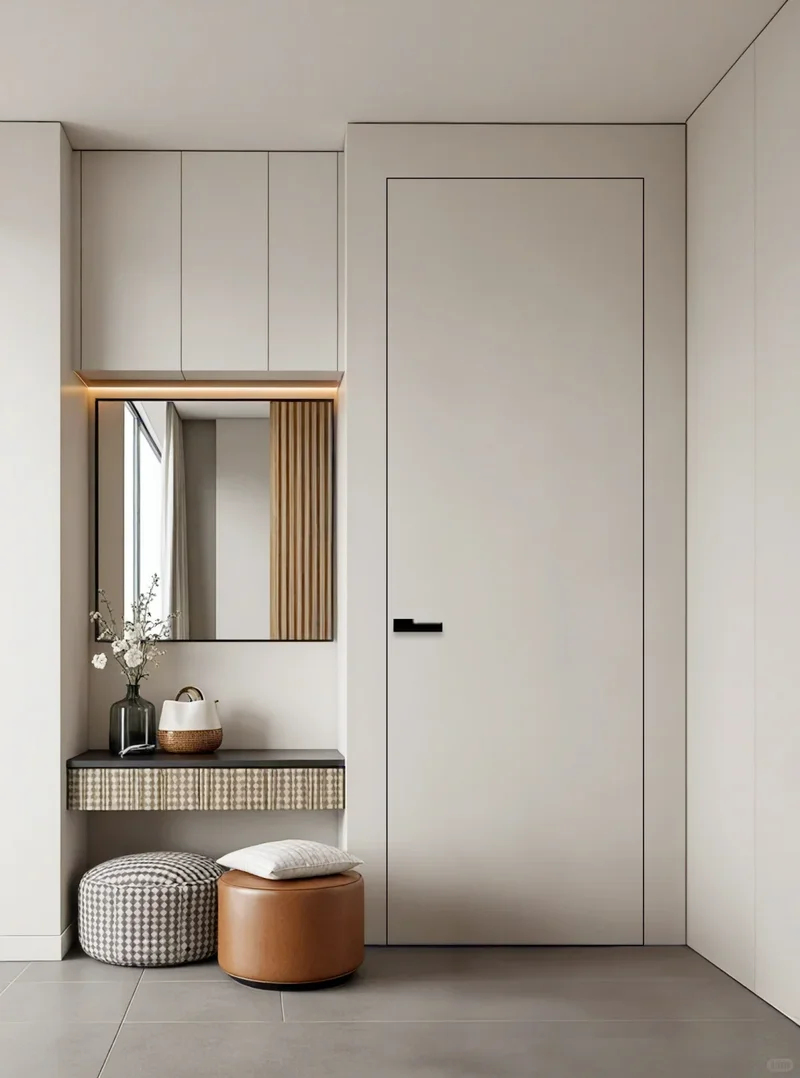
Aesthetic customization extends beyond surface finishes. Door profiles can be tailored to include integrated reveals, shadow gaps, or flush-mount detailing, aligning with minimalist or contemporary design directives. Optional features such as routed signage panels, acoustic gaskets with concealed integration, or embedded RFID hardware maintain aesthetic purity without sacrificing technological functionality.
-
These doors accept a wide range of饰面 options—oil-rubbed stains, matte lacquers, wire-brushed textures, and even custom patinas—enabling alignment with brand-specific design guidelines. The engineered substrate’s uniformity ensures consistent absorption and finish adhesion, reducing batch variation and enhancing quality control during large-scale installations.
-
In luxury and boutique hospitality settings, where material authenticity and sensory experience are paramount, the ability to deliver the warmth and tactility of solid wood—without its structural vulnerabilities—represents a decisive advantage. The result is a door system that performs silently in the background while contributing visibly to an elevated guest experience through refined aesthetics and meticulous detailing.
Frequently Asked Questions
What are engineered solid wood doors with multi-layer edge wrapping?
Engineered solid wood doors are constructed from multiple layers of real wood veneers and high-density core materials, designed to maximize strength, stability, and resistance to warping. Multi-layer edge wrapping involves sealing the perimeter with real wood or composite edging in multiple bonded layers, enhancing durability and moisture resistance—critical for high-traffic environments like hotels.
How does multi-layer edge wrapping prevent door deformation?
Multi-layer edge wrapping applies cross-grain laminates and moisture-resistant adhesives around the door’s perimeter, counteracting internal stress and minimizing dimensional changes due to humidity fluctuations. This balanced construction prevents edge cracking, warping, and swelling—common failure points in standard solid wood doors.
Why choose engineered solid wood doors over traditional solid wood for hotel rooms?
Engineered solid wood doors offer superior dimensional stability, reducing long-term maintenance costs. Unlike traditional solid wood, they resist seasonal expansion and contraction. Their multi-ply core and edge-sealing technology make them ideal for HVAC-controlled hotel environments where humidity varies, ensuring lasting performance and aesthetic integrity.
What core materials are used in anti-deformation engineered doors?
High-performance engineered doors use finger-jointed softwood cores, medium-density fiberboard (MDF), or laminated hardwood strips. These materials are selected for uniform density and low internal stress. Combined with cross-banded lamination, they neutralize warping forces, delivering exceptional resistance to deformation over time.
Can engineered solid wood doors meet commercial fire and safety codes for hotels?
Yes, when manufactured with fire-rated cores and intumescent edge seals, engineered solid wood doors can achieve FD30 (30-minute fire resistance) or higher ratings. Certified assemblies comply with ASTM E84 and local building codes, making them suitable for commercial hotel applications requiring passive fire protection.
How is multi-layer edge wrapping applied in manufacturing?
The process involves precision milling the door edge, applying moisture-resistant adhesive, and laminating it with real wood or high-pressure laminate (HPL) strips under high pressure and heat. Multiple wraps—often 2 to 3 layers—are sealed and sanded smooth, creating a continuous, water-resistant barrier that outperforms single-layer edging.
What finish options are available for engineered hotel doors with edge wrapping?
These doors support high-end finishes including UV-cured lacquers, catalyzed varnishes, and pre-finishing with wood veneer matching. The sealed edge allows seamless finish continuity, preventing moisture ingress and maintaining appearance. Custom staining and texturing are also compatible for designer hotel specifications.
How do engineered doors perform in high-humidity environments?
Thanks to cross-layer construction and edge encapsulation, engineered solid wood doors exhibit minimal moisture absorption. The multi-layer edge wrap acts as a barrier against ambient humidity, preventing edge lifting and core delamination—common issues in tropical or coastal hotel locations.
Are engineered solid wood doors sustainable for large-scale hotel projects?
Yes. These doors often utilize fast-growing, managed timber species and recycled wood fibers in core construction. The manufacturing process reduces waste through veneer optimization, and longevity decreases replacement frequency—contributing to LEED and BREEAM sustainability certifications.
What maintenance is required to preserve anti-deformation properties?
Routine cleaning with pH-neutral cleaners and periodic inspection of edge seals are sufficient. Avoid direct water exposure and ensure proper door clearances. In commercial settings, bi-annual checks for hinge alignment and seal integrity help maintain structural performance and extend service life beyond 20 years.
How do engineered doors compare to hollow-core doors in sound insulation?
Engineered solid wood doors with dense multi-layer cores achieve Sound Transmission Class (STC) ratings of 35–45, significantly outperforming hollow-core alternatives (STC 20–25). This acoustic performance is essential for guest privacy in hotels, meeting or exceeding ICC A117.1 accessibility standards.
Can engineered solid wood doors be retrofitted into existing hotel doorframes?
Yes, they are manufactured to standard door dimensions (e.g., 30”x80”, 28”x78”) and can be trimmed within tolerance. Pre-hung options with adjustable jambs simplify retrofitting. Their consistent flatness and twist-free profile ensure smooth integration into existing frames without costly modifications.