Solid Wood Doors Pre-Cut for Smart Locks: Custom Engineering for Seamless Smart Home Integration
In the evolving landscape of smart home technology, seamless integration begins at the threshold—literally. Solid wood doors pre-cut for smart locks represent the perfect marriage of timeless craftsmanship and modern innovation, engineered to meet the exacting demands of today’s connected living. No longer must homeowners choose between the natural beauty and durability of solid wood and the convenience of smart access systems. Through precision customization, manufacturers now deliver doors with factory-installed mortises, pre-routed lock pockets, and exact borehole placements tailored to leading smart lock models—ensuring flawless fit, enhanced security, and streamlined installation. This level of engineering eliminates guesswork, reduces on-site errors, and preserves the door’s structural integrity and aesthetic appeal. As smart homes grow more sophisticated, pre-cut solid wood doors emerge not just as functional entryways, but as purpose-built gateways designed for effortless connectivity. This is customization redefined—where artisanal quality meets intelligent design in perfect harmony.
Why Pre-Cut Solid Wood Doors Are Essential for Smart Lock Compatibility
- Precision alignment ensures reliable smart lock operation
- Factory pre-cutting minimizes field errors and installation delays
- Custom bore and edge routing accommodate diverse smart lock mechanisms
- Structural integrity preserved through controlled milling processes
- Streamlined integration supports advanced access control ecosystems
Pre-cut solid wood doors are not a convenience—they are a technical necessity for dependable smart lock integration. Unlike retrofit installations, which rely on field measurements and manual drilling, factory pre-cut doors undergo computer-guided machining that achieves tolerances within ±0.5 mm. This level of accuracy is critical for smart lock actuation, where misaligned deadbolts or strike plates can lead to repeated failure in bolt extension or retraction.
Smart locks—particularly those with motorized mechanisms or integrated biometrics—require exact bore diameters (typically 2-1/8”), cross-bore placement at 4-7/8” or 6-3/4” from edge, and precise edge routing for latch housing. Field cutting introduces variability due to tool variance, operator skill, and material deflection in dense hardwoods like oak or walnut. Even minor deviations compromise the mechanical interface between lock and door, resulting in binding, misfires, or premature motor wear.
Moreover, solid wood doors present unique challenges. Their density and grain structure react unpredictably to on-site drilling, increasing risks of tear-out, splitting, or dimensional instability. Factory pre-cutting mitigates these risks by employing stabilized stock and optimized feed rates, preserving both aesthetics and function. The result is a door that maintains structural continuity around the lock cavity—essential for long-term durability and security certification compliance.
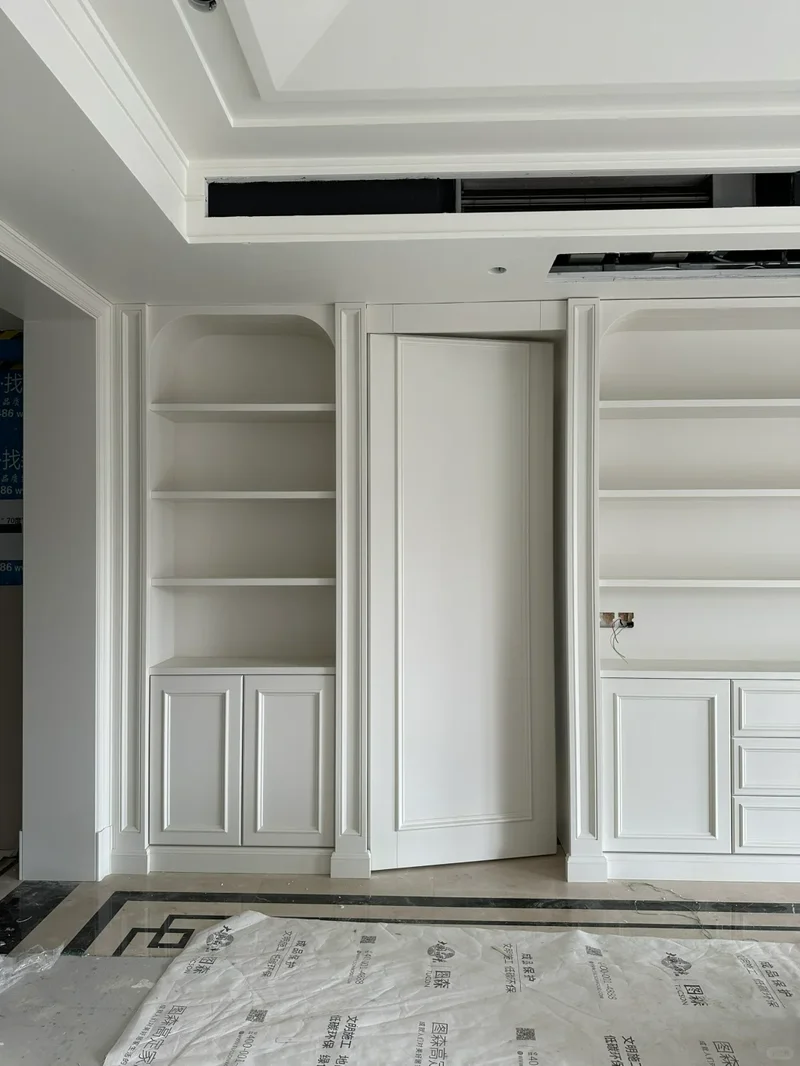
Pre-cutting also enables seamless integration with home automation platforms. With the lock cavity and wiring chases pre-configured, low-voltage lines for keypad feedback, Wi-Fi modules, or access control relays can be internally routed without compromising door integrity. This supports UL 294 compliance for commercial applications and facilitates centralized monitoring in enterprise environments.
Ultimately, pre-cut solid wood doors provide a foundation for interoperability, scalability, and service longevity in smart access systems. They eliminate installation uncertainty, reduce labor costs, and ensure that the physical layer of access control performs as reliably as the digital layer it supports. For architects, integrators, and facility managers, specifying pre-cut doors is not optional—it is a prerequisite for robust, future-ready deployment.
Engineering Precision: How Custom Milling Ensures Flawless Smart Lock Installation
-
Precision milling is foundational to the successful integration of smart locking systems within solid wood doors, where dimensional accuracy directly impacts functionality, security, and longevity. Unlike retrofit installations that rely on field modifications, custom-milled doors eliminate variability by incorporating exact hardware specifications at the manufacturing stage.
-
Smart lock mechanisms—whether electronic deadbolts, keypad entry systems, or Bluetooth-enabled cylinders—require strict tolerances for bore diameter, edge bore depth, and strike pocket geometry. Deviations exceeding ±0.5 mm can result in misalignment, compromised latch engagement, or motor strain in motorized units. Custom milling ensures that each bore (typically 2-1/8” cross-bore and 1” edge bore) is machined with CNC-guided accuracy, maintaining perpendicularity and depth consistency across production batches.
-
The integration challenge extends beyond basic drilling. High-performance smart locks often include auxiliary components such as interior mounting plates, wiring channels, and battery compartments. Custom milling addresses these requirements through engineered recesses and internal routing pathways that preserve door integrity while accommodating electronics. This eliminates the need for post-installation alterations, which risk weakening structural wood fibers or exposing end grain to moisture ingress.
-
Material behavior is also factored into the milling process. Solid wood exhibits hygroscopic movement—expansion and contraction with humidity fluctuations. Custom milling anticipates this by applying compensation algorithms to critical dimensions, ensuring operational clearance is maintained across environmental cycles. Additionally, milling sequences are optimized to minimize internal stress release, preventing warp or twist that could affect door alignment and lock actuation.
-
Surface finish and edge definition are equally critical. Clean, burr-free bores prevent galling of metal components and ensure smooth actuator movement. Precision-machined strike pockets in the door jamb align seamlessly with throw dimensions, reducing wear and enhancing security performance.
-
Ultimately, custom milling transforms solid wood doors from passive architectural elements into engineered platforms for smart home integration. By embedding exacting tolerances and system-specific geometries during fabrication, manufacturers deliver a turnkey solution where form, function, and technology converge without compromise. This level of engineering precision ensures reliability, reduces installation errors, and supports the long-term performance of advanced access control systems.
Top Smart Lock Types That Work Seamlessly with Pre-Machined Solid Wood Doors
-
Deadbolt Smart Locks with ANSI Grade 1 Certification
For pre-machined solid wood doors, ANSI Grade 1 deadbolt smart locks offer optimal security and durability. These locks are engineered to meet rigorous standards for forced entry resistance and cycle testing, making them ideal for exterior solid wood entry doors. Their standardized bore hole (2-1/8 inch) and edge bore (1 inch) align precisely with factory-pre-cut door preparations. Models with reinforced steel components and motorized bolt throws operate smoothly within dense wood substrates, minimizing stress on the door edge. Integration with Z-Wave, Zigbee, or Bluetooth enables reliable communication with home automation hubs while maintaining a low-profile aesthetic. -
Mortise Smart Locks for Premium Installations
Mortise smart locks are increasingly viable for high-end solid wood doors pre-machined to accept traditional mortise hardware. These units occupy a reinforced pocket within the door edge and offer superior mechanical strength compared to cylindrical locks. Modern smart mortise variants incorporate electronic strike integration, keypad, and credential-based access (fingerprint, NFC) while preserving the architectural integrity of solid wood doors. Their compatibility with pre-routed mortise pockets eliminates field modifications, ensuring perfect alignment and long-term operational stability. These are particularly suited for historic or custom door designs where aesthetics and durability are paramount. -
Smart Lever Handlesets with Integrated Locking Mechanisms
Full smart handlesets combine electronic access control with ergonomic lever design, ideal for pre-drilled solid wood doors requiring both elegance and functionality. These systems include smart-enabled interior locking controls, encrypted wireless protocols, and adjustable backsets to match factory-cut preparations. Their modular construction allows for precise alignment with pre-cut cross-bores and latch cutouts, reducing installation complexity. Premium models feature anti-pick shielding and tamper detection calibrated for solid wood’s acoustic and structural properties. -
Keyless Entry Systems with Retrofit Compatibility
Certain keyless systems are designed specifically for retrofit into pre-machined doors without altering existing hardware cutouts. These utilize adaptive mounting plates and configurable latch components to align with standard door preparations. Battery-efficient designs with low-voltage alerts ensure uninterrupted operation, critical for solid wood doors where external power access is limited.
Each lock type must be matched to the door’s core density, finish thickness, and existing machining tolerances to prevent warping or actuator strain. Precision in alignment between the lock chassis and door edge ensures decades of reliable service, maintaining both security and aesthetic continuity.
Customization Options for Aesthetic and Functional Integration in Wood Entry Doors
-
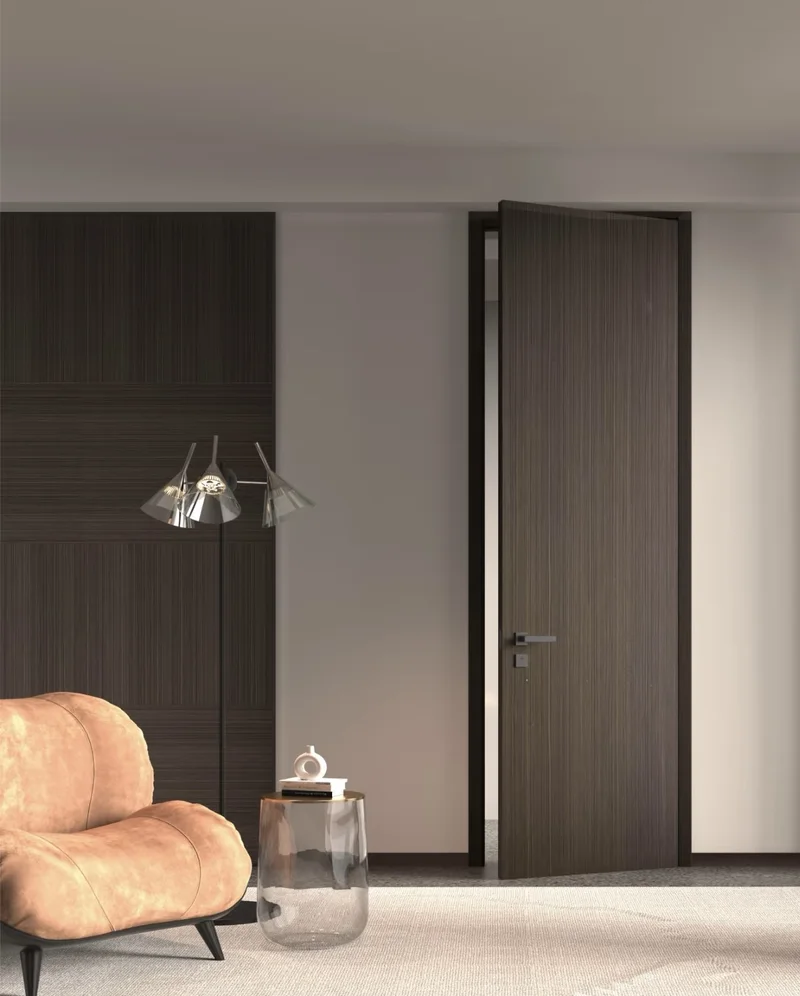
Material Selection: Solid wood doors offer inherent aesthetic richness and structural integrity, with species such as white oak, walnut, and mahogany providing distinct grain patterns and tonal variations. Each wood type responds differently to finishes and environmental conditions, necessitating careful selection based on regional climate and design intent. Pre-cut smart lock integration is compatible across species, though dimensional stability should be evaluated to prevent warping around precision-machined lock pockets.
-
Finish Options: Custom finishing includes pre-catalyzed lacquers, oil-based polyurethanes, and natural oil finishes, each offering differing levels of durability, sheen, and grain enhancement. UV-resistant formulations mitigate solar degradation, particularly in sun-exposed entries. On-site finishing remains an option, but factory-applied finishes ensure uniformity and optimal adhesion within tight-tolerance lock zones.
-
Dimensional Customization: Doors are available in standard and non-standard dimensions, with height adjustments up to 96 inches and widths accommodating single and double entry configurations. Custom rabbits, thresholds, and sidelight integrations are engineered to maintain structural continuity and weather resistance while aligning with smart lock strike plate placement.
-
Glazing and Panel Configuration: Integration of insulated glass panels—beveled, frosted, or leaded—allows daylight transmission without compromising security. Frame and stile proportions are adjusted to preserve structural rigidity around the pre-routed lock core. All glazing complies with thermal performance standards and is sealed to prevent condensation within the door assembly.
-
Hardware Coordination: Pre-cut lock pockets are dimensioned for leading smart lock models (e.g., Schlage Encode, Yale Assure), with provisions for recessed wiring chases for hardwired or rechargeable variants. Customization includes finish-matching strike plates, interior lever designs, and escutcheon profiles to align with architectural style—contemporary, transitional, or traditional.
-
Security and Insulation Enhancements: Multi-point locking systems can be integrated alongside smart locks, with reinforced stiles and composite inserts at stress points. Core insulation values exceed R-5 through polyurethane foam infusion, maintaining thermal efficiency without interfering with electronic components.
These customization pathways ensure that wood entry doors achieve both design coherence and technical synergy within modern smart home ecosystems, balancing artisanal craftsmanship with engineered precision.
Choosing the Right Manufacturer for Handcrafted Solid Wood Doors with Smart Lock Prep
-
Prioritize manufacturers with documented expertise in both fine woodworking and modern smart home integration. Handcrafted solid wood doors require mastery in material selection, joinery, and finishing, while smart lock prep demands precision engineering and familiarity with electronic hardware tolerances. Seek partners who treat both aspects as integral, not additive.
-
Evaluate the manufacturer’s design-to-production workflow. Top-tier producers employ digital modeling and CNC-guided milling to ensure lock prep cavities—mortise pockets, bore holes, and wire chases—are executed with sub-millimeter accuracy. This consistency is critical for accommodating name-brand smart locks (e.g., Schlage, Yale, August) without field modifications.
-
Confirm standardized and customizable prep options. Leading manufacturers offer pre-configured smart lock templates aligned with industry-standard dimensions, while also supporting custom configurations for emerging or proprietary hardware. Request detailed technical drawings and compatibility documentation for verification.
-
Assess material integrity and long-term performance. Solid wood doors with integrated electronics must balance structural stability with functional durability. Inquire about seasoning protocols, moisture content control, and use of stable species such as white oak, walnut, or rift-sawn maple—particularly in humid or temperature-variable environments where movement can compromise lock alignment.
-
Demand evidence of field-tested installations. Ask for case studies or project references where doors have undergone long-term performance evaluations under real-world conditions, including repeated lock actuation, seasonal expansion/contraction, and finish resilience.
-
Examine collaboration protocols. The best manufacturers work closely with architects, builders, and smart home integrators, providing pre-installation checklists, coordination drawings, and on-site support when necessary. Seamless integration hinges on early involvement in the project timeline.
-
Verify post-purchase support. Warranty coverage should include both the door’s construction and the integrity of smart lock preparations. Responsive technical assistance and replacement policies reflect confidence in craftsmanship and customer commitment.
Selecting a manufacturer is not merely a sourcing decision—it is a strategic alignment with a partner capable of unifying artisanal quality with technological precision. The ideal candidate demonstrates proven integration capability, rigorous quality control, and a collaborative ethos that supports the complexity of modern, connected living spaces.
Frequently Asked Questions
What does “pre-cut for smart locks” mean in solid wood door manufacturing?
Pre-cut for smart locks means the door is factory-machined with precise boreholes (typically a 2-1/8″ cross-bore and 1″ edge bore) and mortises to accommodate smart lock components such as electronic deadbolts, wiring channels, and escutcheon plates. This ensures correct alignment, structural integrity, and seamless integration without on-site modifications that could compromise the door’s strength or finish.
Can solid wood doors be customized for specific smart lock brands like Schlage, Yale, or August?
Yes, solid wood doors can be precisely engineered to support major smart lock brands. Customization includes depth-specific mortising, sizing for internal electronics, and routing for batteries or wiring. Manufacturers use brand-specific templates from Schlage, Yale, or August to guarantee compatibility and maintain warranty validity through certified installations.
What wood species are best suited for pre-cut smart lock installations?
Hardwoods like white oak, walnut, and hard maple are ideal due to their density, dimensional stability, and resistance to warping—critical when introducing internal cutouts. These species maintain structural integrity after machining and provide a stable substrate for smart lock mechanisms that require precise tolerances.
How does pre-cutting for smart locks affect the structural strength of a solid wood door?
When performed correctly using CNC-guided machinery, pre-cutting minimally affects structural strength. Critical stress zones (e.g., rail and stile joints) are preserved using engineering protocols. Reinforcements such as phenolic inserts or composite backing blocks may be added to high-stress bore areas to ensure long-term durability and security performance.
Are pre-routed wiring channels available in solid wood doors for smart lock battery or keypad integration?
Yes, high-end manufacturers offer concealed wiring channels routed from the lock location to a hidden battery compartment or external keypad. These pathways are precision-cut to prevent surface damage and maintain aesthetic continuity, with fire-rated sealants used where required by code.
What customization options exist for multi-point smart lock systems in solid wood doors?
For multi-point locking systems, custom solid wood doors can include dual mortises for top and bottom bolts, reinforced edge bands for latching mechanisms, and internal framing to handle actuator loads. These require structural analysis during design to prevent wood splitting and ensure smooth operation across temperature and humidity changes.
How do environmental factors affect pre-cut smart lock installations in solid wood doors?
Solid wood is hygroscopic and expands/contracts with humidity fluctuations. Pre-cut installations must account for seasonal movement by using expansion-tolerant designs, flexible mounting systems, and climate-specific acclimation protocols prior to machining and installation to prevent lock binding or door warping.
Can fire-rated solid wood doors be pre-cut for smart locks without compromising safety?
Yes, but only when performed by certified manufacturers using UL-listed procedures. Fire-rated doors require intumescent seals and specific bore depth limitations. Pre-cutting must follow NFPA 80 standards, with no field modifications permitted. Documentation and labeling are required to maintain certification.
What are the engineering tolerances required for smart lock-ready solid wood doors?
Precision requirements include ±1/64″ alignment for cross-bore to edge-bore concentricity, ±1/32″ mortise depth tolerance, and flat-bottom mortises to ensure electronic components seat properly. CNC machining with laser calibration is typically used to achieve these tolerances consistently.
Is retrofitting a smart lock into a non-pre-cut solid wood door advisable?
Retrofitting is possible but not recommended for high-end applications due to risks of misalignment, wood tear-out, compromised insulation, and voided warranties. Professionally pre-cut doors offer superior performance, uniform finish application, and long-term reliability—especially critical for heavy or motorized smart locks.
How does pre-cutting impact the finishing process on solid wood smart lock doors?
Factory pre-cutting allows finishes to be applied before machining, ensuring full coverage inside boreholes and mortises, which prevents moisture ingress. Post-installation touch-ups are minimized, and consistent curing is achieved under controlled conditions, reducing finish failure around high-traffic lock areas.
What structural reinforcements are used in solid wood doors for heavy smart lock mechanisms?
Reinforcements include stainless steel strike plates with extended screws, laminated stile inserts, and composite lock blocks embedded within the door edge. These address lateral stress from motorized bolts and enhance security ratings, particularly in commercial or high-traffic residential deployments.