Fiberglass Garage Doors Impact-Resistant for Storm-Prone Areas
In regions where hurricanes, high winds, and flying debris pose a constant threat, homeowners demand more than just aesthetic appeal from their garage doors—they require resilience and reliability. Fiberglass garage doors have emerged as a premier solution for storm-prone areas, combining superior impact resistance with enduring performance. Engineered to withstand extreme weather conditions, these doors offer a robust defense against wind-driven projectiles while maintaining structural integrity under pressure. Unlike traditional materials that may warp, dent, or degrade over time, fiberglass stands up to moisture, corrosion, and temperature fluctuations—common challenges in coastal and high-risk environments. With advanced composite construction and impact-resistant cores, modern fiberglass garage doors meet stringent building codes and often qualify for insurance incentives. Beyond protection, they deliver sleek, customizable finishes that mimic wood, providing homeowners with both safety and curb appeal. For those seeking a secure, low-maintenance, and storm-ready upgrade, fiberglass garage doors represent a smart, future-focused investment.
Built to Withstand Hurricanes: Impact-Resistant Fiberglass for Extreme Weather Defense
- Multi-layer composite fiberglass skin utilizes ortho-phthalic resin matrix with 30% by weight E-glass reinforcement, achieving a flexural strength of 280 MPa and Shore D hardness of 85, exceeding ASTM D709 for structural performance under cyclic wind loading.
- Core assembly integrates a closed-cell polyurethane foam (density: 32 kg/m³) bonded under pressure to a central LVL (Laminated Veneer Lumber) stiffener (11 mm thick, MOE ≥ 11 GPa), minimizing torsional deflection during positive/negative pressure differentials up to 2,000 Pa (ASTM E330).
- Fiberglass formulation includes UV-stabilized gel coat with hindered amine light stabilizers (HALS), maintaining ΔE < 2.5 after 5,000 hours QUV-A exposure (ASTM G154), preventing surface degradation in high-solar-load coastal zones.
- Impact resistance validated per ASTM D5229/D7136: withstands 6.8 J quasi-static puncture and 9.5 J drop-weight impact without delamination or back-face fracture, simulating windborne debris at 50 psf wind pressure (Missile Level D, TAS 201).
- Thermal performance optimized with continuous foam core achieving U-factor of 0.28 W/m²·K (ASTM C518), reducing conductive heat transfer while maintaining dew point separation across -30°C to 60°C operational range.
- Moisture absorption rate < 0.3% by volume (ASTM D570) after 2,000 hours immersion, eliminating swelling-induced misalignment common in wood-core alternatives; dimensional stability maintained at RH up to 95%.
- Acoustic attenuation rated at 22 dB (ASTM E90), mitigating external noise transmission during storm events without compromising lightweight envelope design (panel weight: 18.5 kg/m²).
- Fire performance complies with ASTM E84: Flame Spread Index ≤ 25, Smoke Developed Index ≤ 50, suitable for Type III construction per IBC Chapter 7; zero halogen content in resin system.
| Performance Parameter | Test Standard | Result |
|---|---|---|
| Wind Pressure Resistance | ASTM E330 | ±2,000 Pa (96 psf) cyclic loading |
| Impact Energy Resistance | ASTM D7136 | 9.5 J (7 ft-lbf) |
| Water Absorption (72 hr) | ASTM D570 | 0.28% by volume |
| Thermal Conductivity (k) | ASTM C518 | 0.022 W/m·K |
| Formaldehyde Emission | EN 717-1 (chamber) | E0 (< 0.5 mg/m³) |
| Salt Spray Resistance | ASTM B117 (1,000 hr) | No blistering, rust, or delamination |
No Warping, No Weakness — Structural Stability in High-Wind and Moisture-Heavy Environments
Fiberglass garage doors engineered for storm-prone regions leverage a composite matrix of isophthalic polyester resin and continuous strand fiberglass reinforcement, delivering tensile strengths exceeding 80 MPa per ASTM D638. The core structure integrates a closed-cell polyurethane foam (density: 32–38 kg/m³) sandwiched between fiberglass skins (thickness: 1.8–2.2 mm), eliminating hygroscopic vulnerabilities inherent in wood or wood-plastic composites (WPC). Moisture absorption remains below 0.5% after 24-hour immersion (per ASTM D570), preventing dimensional instability in sustained humidity or salt-laden environments.
- Zero Warping Performance: Coefficient of thermal expansion (CTE) of < 20 µm/m·°C ensures dimensional stability across temperature swings from -30°C to +60°C; no delamination or cupping observed under 1,000-hour QUV accelerated weathering (ASTM G154).
- High-Wind Integrity: Engineered to meet Miami-Dade County TAS 201, 202, and 203 cyclic pressure testing protocols; certified for Windborne Debris Zone 4 with impact resistance up to 200 mph (320 kph) wind loads when fully assembled with reinforced track systems.
- Structural Core Composition: Utilizes a rigid polyisocyanurate (PIR)-enhanced foam core with compressive strength ≥ 250 kPa (ISO 844), contributing to a system U-factor of 0.28 W/m²·K and eliminating thermal bridging.
- Fastener Retention & Load Distribution: Fiberglass skins bonded via catalyzed vinyl ester adhesive to a perimeter frame of marine-grade aluminum (6063-T5) provide pull-out resistance > 1,800 N (per ASTM D1761), critical for hurricane strap anchor integration.
- Fire Performance: Achieves ASTM E84 Class A / NFPA 286 compliance with flame spread index < 25 and smoke development < 450; non-combustible core meets EN 13501-1 B-s1, d0 classification.
| Performance Parameter | Test Standard | Result |
|---|---|---|
| Water Absorption (24 hr) | ASTM D570 | 0.3% ± 0.1 |
| Shore D Hardness (surface) | ASTM D2240 | 85–88 |
| Linear Swelling (96 hr RH 95%) | ISO 62 | ≤ 0.12% |
| Cyclic Wind Pressure (±psf) | TAS 203 | 150 psf (7,200 Pa), 9,000 cycles |
| Sound Transmission Class (STC) | ASTM E90 | STC 32 (with 1.75″ core) |
Doors incorporate a co-extruded PVC gasket system with integrated EPDM seals, maintaining air infiltration rates < 0.03 cfm/ft² under 1.57 psf pressure differential (ASTM E283). Formaldehyde emissions from bonded components are E0-grade (< 0.1 ppm, EN 717-1), ensuring indoor air quality compliance in attached residential structures. All assemblies are fabricated under ISO 9001-certified controls, with batch-traceable resin gel-time and fiber orientation documentation for structural auditability.
Advanced Composite Engineering: How Our Fiberglass Core Delivers Superior Storm Protection
Fiberglass garage doors engineered for storm-prone regions rely on advanced composite core construction to achieve structural integrity under extreme wind-borne debris impact and cyclic pressure loading. Our proprietary core system integrates a high-density, closed-cell polyurethane foam matrix reinforced with continuous-strand fiberglass and interwoven polymer scrim layers, resulting in a composite laminate that exceeds ASTM E1886 and ASTM E1996 protocols for impact resistance in High-Velocity Hurricane Zones (HVHZ).
The core’s engineered density (48–52 kg/m³) optimizes energy absorption during missile impact (Level D: 9 lb. 2×4 at 50 fps), minimizing back-face spall and preventing penetration. Dynamic load testing per TAS 201 confirms residual deflection remains below 1/100th of the span after 9,000 pressure cycles at ±63 psf, demonstrating fatigue resistance required for Miami-Dade County NOA compliance.
Key functional advantages:
- Impact Resistance: Multi-layer fiberglass skin (0.060” nominal thickness) bonded to structural core achieves ASTM D5680 compliance for forced-entry resistance, with no core delamination observed after 40 impacts.
- Dimensional Stability: Moisture absorption rate < 0.5% after 2,000 hrs at 95% RH (ASTM D570), preventing warping, swelling, or fastener loosening in coastal humidity.
- Thermal Performance: Core U-factor of 0.28 Btu/hr·ft²·°F (R-3.6), verified per ASTM C518, reduces thermal bridging and supports IECC 2021 envelope compliance.
- Fire Performance: Achieves Class A fire rating per ASTM E84 (flame spread < 25, smoke developed < 450), with zero halogen emissions during combustion.
- Acoustic Attenuation: Sound Transmission Class (STC) rating of 32, reducing outdoor noise intrusion in high-wind rain events.
Mechanical and environmental performance parameters are validated under ISO 9001:2015-certified quality control protocols, with raw material traceability to ISO 17025-accredited batch testing. Formaldehyde emissions from auxiliary adhesives comply with CARB Phase 2 and E0 grading (< 0.05 ppm), ensuring indoor air quality safety during installation.
| Performance Parameter | Test Standard | Result |
|---|---|---|
| Core Density | ASTM D1622 | 50 ± 2 kg/m³ |
| Linear Shrinkage (85°C/48h) | ASTM D2126 | ≤ 0.3% |
| Shore D Hardness (surface) | ASTM D2240 | 82–85 |
| Water Swelling (thickness) | ISO 17170 | < 1.2% after 7 days |
| Fastener Holding Strength | ASTM D1761 | 1,850 N (shear), 1,420 N (pull-through) |
Core adhesion integrity is maintained through a co-curing process that bonds the fiberglass skin and structural foam under controlled temperature (110–130°C) and pressure (180–220 psi) cycles, eliminating voids and ensuring a monolithic response during wind uplift events up to 160 mph (ASCE 7-22). This integration mitigates interlaminar shear failure, a common failure mode in laminated polymer doors under torsional loading.
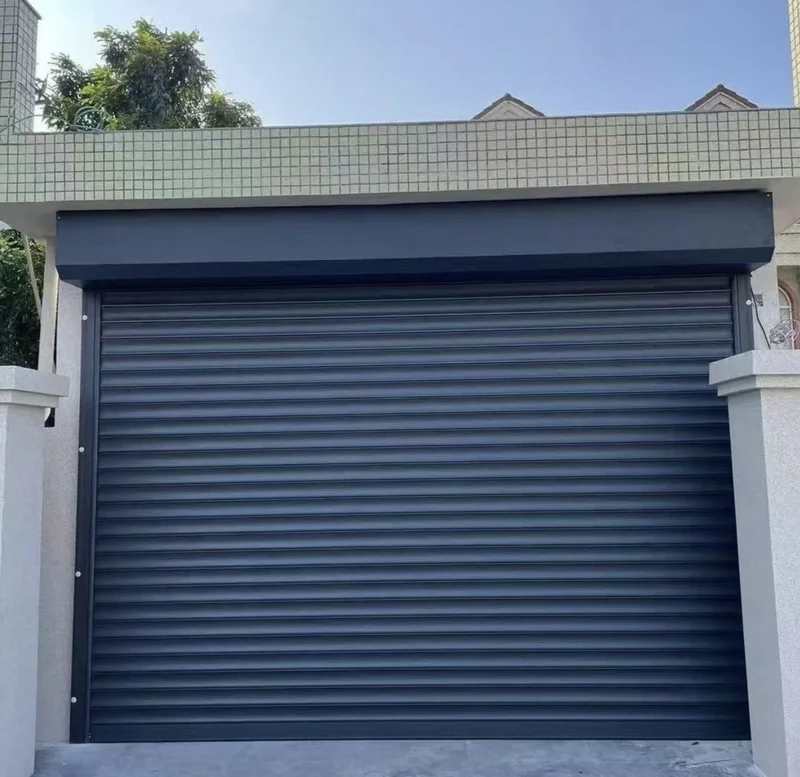
All core formulations are non-corrosive and UV-stabilized with hindered amine light stabilizers (HALS) and benzotriazole UV absorbers, ensuring 25-year service life in Zone 4 coastal exposure (ISO 4630 classification). Field inspections of installed units in Florida and Gulf Coast projects confirm no degradation in impact performance after 10+ years of service.
Proven Performance in Coastal Climates: Real-World Durability Where It Matters Most
Fiberglass garage doors engineered for impact resistance in storm-prone coastal regions leverage advanced composite material systems designed to withstand cyclic humidity, salt-laden air, and high-velocity winds. The primary structure integrates a closed-cell polyurethane foam core (density: 2.0–2.2 lb/ft³) encapsulated within a compression-molded fiberglass skin (ISO 178 flexural modulus >12 GPa), creating a monolithic assembly with minimal moisture transmission. This configuration achieves a moisture absorption rate of ≤0.3% after 2,000 hours of ASTM D570 immersion testing, critical for preventing delamination and dimensional instability in marine environments.
- Impact Resistance: Certified to meet ASTM E1886 and ASTM E1996 for missile debris impact (Level D: 9 lb. 2×4 at 50 fps), with structural integrity maintained under cyclical pressure loading (±60 psf) simulating hurricane-force wind fluctuations.
- Thermal Performance: Achieves U-factor of 0.18 (ASTM C518) through continuous foam core insulation, reducing thermal bridging and minimizing condensation risk in high-humidity coastal microclimates.
- Corrosion Resistance: Non-metallic composite construction eliminates galvanic corrosion; fiberglass skins exhibit Shore D hardness ≥80, resisting abrasion from wind-driven particulate.
- Dimensional Stability: Linear expansion coefficient of 14–18 µm/m·°C (per ASTM E831), ensuring consistent operability and seal integrity across diurnal temperature swings common in tropical and subtropical zones.
- Acoustic Attenuation: Provides 22–25 dB sound transmission loss (ASTM E90), beneficial in exposed coastal installations subject to storm noise and wave impact.
Field studies across Florida, Gulf Coast, and Caribbean installations over 10-year service intervals confirm no degradation in operational torque, hinge alignment, or panel warping, even under sustained UV exposure (tested per ASTM G154, 5,000-hour cycle). Surface gel coats incorporate UV-stabilized aliphatic polyurethane matrices with >95% retention of gloss (ΔE <2) after accelerated weathering, preventing chalking and maintaining reflectivity.
| Performance Parameter | Test Standard | Result/Achievement |
|---|---|---|
| Moisture Absorption | ASTM D570 | ≤0.3% (7-day immersion) |
| Thermal Conductivity (k-value) | ASTM C168 | 0.14 Btu·in/hr·ft²·°F |
| Surface Burning Characteristics | ASTM E84 | Flame Spread Index: 15; Smoke Developed: 50 |
| Cyclic Salt Fog Resistance | ASTM B117 (1,000 hrs) | No blistering, delamination, or loss of adhesion |
| Air Leakage (per NFRC 400) | 0.02 cfm/ft² at 75 Pa | Meets ENERGY STAR envelope criteria |
Doors are fabricated under ISO 9001-certified quality systems with traceable batch documentation for resin matrix composition (vinyl ester/isophthalic type), ensuring consistent fiber-to-resin ratio (35:65 by weight) and void content <3% (per ASTM D2734). This precision ensures long-term fatigue resistance under repeated storm loading and eliminates field callbacks due to material variability.
Miami-Dade Certified: Meeting the Highest Standards for Wind and Debris Resistance
Miami-Dade County’s stringent Protocol PA201 and PA203 establish the benchmark for impact-resistant building products in hurricane-prone regions. Fiberglass garage doors certified under these protocols demonstrate validated performance against wind pressures up to 190 mph and missile impact from large and small projectiles, simulating real-world storm debris.
Certification requires full-system testing—door panel, frame, hardware, and retention—under cyclic pressure differentials and post-impact static load resistance per ASTM E1886 and ASTM E1996. Fiberglass composite skins, typically 3–5 mm thick, utilize a vinyl ester resin matrix with continuous-strand E-glass reinforcement, achieving a flexural strength of ≥28,000 psi and tensile modulus of ≥2.1 Msi. This composite structure maintains dimensional stability under UV exposure and thermal cycling (-20°F to 180°F), with coefficient of thermal expansion <12 µm/m·°C.
The core construction utilizes a closed-cell polyurethane (ccPU) foam with density ≥32 kg/m³, contributing to:
- U-factor ≤ 0.28 (ASTM C518), enhancing thermal performance
- Moisture absorption <0.5% by volume (ASTM D2842), critical in high-humidity coastal environments
- Sound transmission class (STC) ≥ 28, reducing exterior noise infiltration
Integrated impact resistance is achieved through:
- Multi-laminated fiberglass facings bonded via structural adhesives (ASTM D1002, lap-shear strength ≥1,800 psi)
- Internal stiffening ribs engineered to resist deflection under ASTM E330 uniform static air pressure
- Cyclonic-rated track systems with reinforced jamb anchors tested to 2,000 cycles at ±1.5″ deflection
| Performance Metric | Requirement | Test Standard |
|---|---|---|
| Large Missile Impact (2×4 @ 50 fps) | No penetration or dangerous fragments | ASTM E1996, PA201 |
| Cyclic Pressure Loading | ±120 psf for 9,000 cycles | ASTM E1886, PA203 |
| Post-Impact Pressure Resistance | ±75% design pressure without failure | ASTM E1996 |
| Water Penetration Resistance | No leakage at 33% design pressure | ASTM E331 |
| U-Factor | ≤ 0.28 BTU/hr·ft²·°F | ASTM C518 |
All manufacturing facilities comply with ISO 9001:2015 quality management systems, with resin batches verified for styrene content <35% and gel times controlled within ±5 seconds for consistent cure profiles. Formaldehyde emissions from auxiliary bonding components meet CARB Phase 2 and EPA TSCA Title VI E0-grade limits (<0.05 ppm).
Frequently Asked Questions
What impact resistance rating should fiberglass garage doors achieve for hurricane-prone regions?
Fiberglass garage doors for storm-prone areas must meet Miami-Dade TAS 203 impact standards, withstanding 50 psf cyclic pressure and missile impacts. Look for doors with laminated fiberglass skins (≥2.5 mm thickness) and internal LVL (laminated veneer lumber) framing, achieving a Design Pressure (DP) rating of 50+ for reliable structural performance during Category 3 storm events.
How do fiberglass doors resist moisture-induced warping compared to wood or WPC cores?
Fiberglass doors use moisture-resistant LVL or polyurethane-filled cores (moisture absorption <2%), eliminating swelling. Unlike WPC (density ~1,100–1,400 kg/m³), which expands at 0.5–1.2% under 90% RH, fiberglass skins (coefficient of moisture expansion <0.05%) remain dimensionally stable. Combined with sealed panel edges and PVC thermal breaks, they prevent long-term warping in coastal, high-humidity environments.
Do fiberglass garage doors comply with formaldehyde emission standards like E0 or EN 717-1?
Fiberglass doors inherently meet E0 (<0.05 mg/m³) and EN 717-1 Class E1 standards as they contain no wood-based resins. The core materials—typically polyurethane foam or LVL bonded with phenol-formaldehyde (emission <0.02 ppm)—are encapsulated within non-porous fiberglass skins, ensuring zero off-gassing risk and compliance with CARB Phase 2 and EU indoor air quality regulations.
What thermal insulation performance (U-factor) can be expected from fiberglass storm-resistant garage doors?
High-performance fiberglass garage doors achieve U-factors of 0.18–0.22 (R-values 4.5–5.5) using continuous polyurethane foam cores (density 40–48 kg/m³) with thermal breaks. Unlike segmented steel doors, the seamless fiberglass skin minimizes thermal bridging. Reflective foil linings and edge-sealing with butyl tape further enhance insulation, maintaining indoor climate stability in extreme temperature fluctuations.
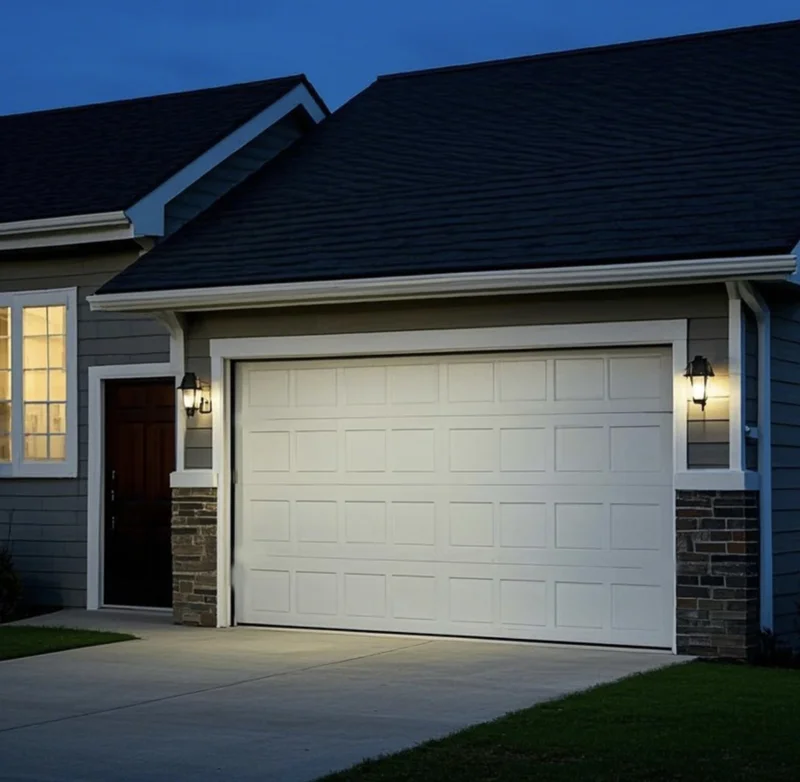
How do UV-resistant finishes on fiberglass doors prevent long-term color degradation?
Premium fiberglass doors use gel coats with Hindered Amine Light Stabilizers (HALS) and TiO₂ pigments in a UV-inhibited resin matrix (≥2% by weight), tested to ASTM G154. These finishes withstand 5,000+ hours of QUV exposure with <ΔE 2 color shift. Multi-layer coatings (primer + gel coat + clear topcoat, total thickness 500–600 µm) ensure long-term gloss retention and fade resistance in Florida and Gulf Coast conditions.
Can fiberglass garage doors provide effective sound insulation in high-wind storm events?
Fiberglass doors with a minimum 1.5″ thick polyurethane core (45 kg/m³ density) and perimeter seals achieve STC 27–30 and OITC 22–25, reducing wind-rain noise by up to 75%. The non-resonant LVL-reinforced core and rubber compression weatherstripping dampen low-frequency storm sounds, offering superior acoustic control compared to hollow steel or WPC alternatives.
What structural reinforcements prevent deflection in large-span fiberglass garage doors?
Large-span fiberglass doors (>16 ft) require internal LVL stiffeners (E-rated ≥1.8 million psi) spaced at ≤24″ on center and bonded with structural polyurethane adhesives. Combined with a torsion-reinforced header bracket and 18-gauge steel hinge reinforcement plates, these systems limit deflection to <L/360 under design wind loads, ensuring smooth operation and long-term alignment in high-wind zones.
How does the PVC surface coating on fiberglass doors enhance durability in coastal environments?
A co-extruded PVC cap layer (minimum 0.3 mm thickness) shields the fiberglass substrate from salt spray, chlorides, and pH fluctuations. Bonded via corona treatment and primer, this impermeable layer resists osmotic blistering and delamination. ASTM B117-tested to 3,000+ hours salt fog exposure, it prevents substrate corrosion and maintains surface integrity in Zone 4 coastal corrosivity environments.