Solid wood doors solid wood grid filling stable structure villa projects
In the realm of high-end architectural design, solid wood doors with solid wood grid filling have emerged as a hallmark of elegance, durability, and structural integrity—especially within premium villa projects. These meticulously crafted doors combine timeless aesthetics with engineering precision, offering more than just visual appeal; they deliver exceptional thermal insulation, sound attenuation, and long-term stability. Constructed from sustainably sourced hardwoods and reinforced with a solid grid framework, they resist warping, maintain dimensional stability, and withstand the test of time—critical attributes for the expansive openings and demanding climates often encountered in luxury residences. As architects and developers increasingly prioritize both form and function, solid wood doors are becoming integral to creating cohesive, high-performance building envelopes. Their seamless integration into modern villa designs not only enhances curb appeal but also reflects a commitment to quality craftsmanship and sustainable luxury. In elite construction circles, they are no longer a mere detail—they are a statement.
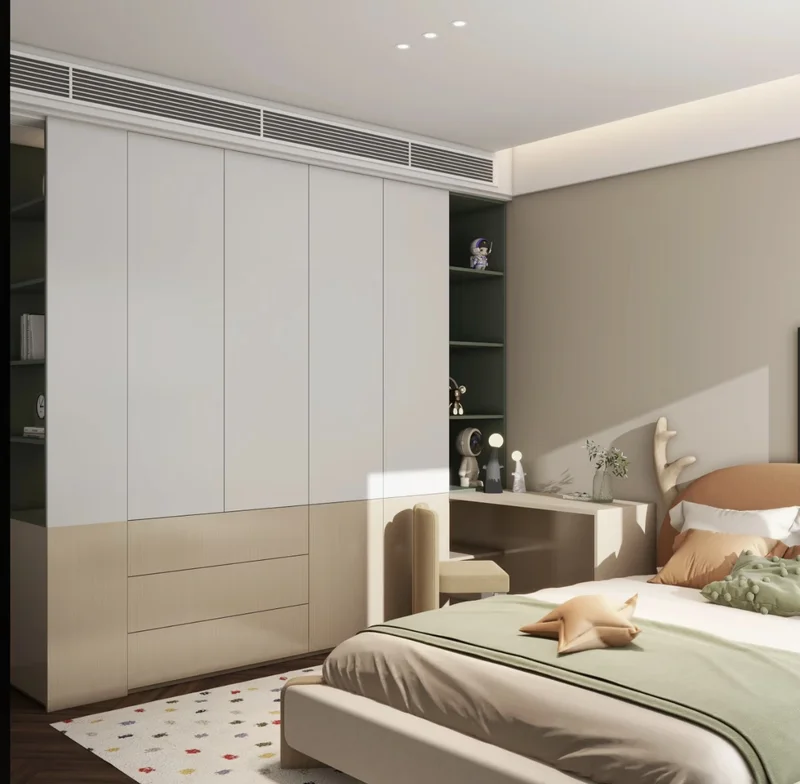
Unmatched Structural Stability: Solid Wood Grid-Filled Core for Premium Villa Entryways
Solid wood grid-filled core construction delivers superior rigidity and long-term dimensional stability in premium villa entryway applications. Engineered using kiln-dried FSC-certified hardwoods (typically Quercus alba or Fagus sylvatica) with moisture content maintained at 8–10% post-processing, the internal lattice framework mitigates anisotropic shrinkage and prevents warping under variable humidity conditions. Each grid cell is infilled with vertically laminated solid wood blocks, eliminating hollow zones and enhancing load distribution across the door plane.
The structural integrity is further reinforced through finger-jointed stile-and-rail assemblies bonded with polyurethane (PUR) adhesives meeting ISO 11998 Class D4 standards for durability and water resistance. This core configuration achieves a mean density of 680–720 kg/m³, surpassing typical engineered wood cores (e.g., MDF: ~700 kg/m³, particleboard: ~650 kg/m³) while maintaining a favorable strength-to-weight ratio.
Functional advantages:
- Dimensional stability: Transverse swelling coefficient < 3.5% at 85% RH (ASTM D1037), minimizing seasonal gapping
- Thermal performance: U-factor of 1.8–2.1 W/(m²·K) when paired with insulated glazing, compliant with ISO 10077-1
- Acoustic attenuation: Average sound reduction index (Rw) of 38–42 dB, suitable for high-end residential acoustic zoning
- Fire performance: Achieves Euroclass B-s1,d0 (EN 13501-1) when treated with intumescent coatings; optional upgrade to Class A for villa complexes with stringent fire codes
- Formaldehyde emission: Certified to E0 grade (<0.05 mg/m³, ISO 16000-9), ensuring indoor air quality compliance in passive and low-VOC builds
The grid geometry—typically 120 mm × 120 mm square or diamond pattern—is optimized via finite element analysis (FEA) to resist torsional deflection under dead load (max. 1/300 span under 1.5 kN/m², per ASTM E330). This configuration significantly reduces reliance on steel reinforcement, preserving the door’s aesthetic authenticity while meeting structural demands of oversized entry systems (up to 2.4 m height × 1.2 m width).
| Performance Parameter | Solid Wood Grid-Filled Core | Standard MDF Core | LVL Composite Core |
|---|---|---|---|
| Density (kg/m³) | 680–720 | 700–750 | 600–640 |
| Moisture Absorption (%) | < 8.5 (72h immersion, ASTM D1037) | 12–16 | 9–11 |
| Linear Shrinkage (Tangential) | 0.18% | 0.22% | 0.15% |
| Bending Strength (MOR, MPa) | 52–58 | 38–42 | 48–54 |
| Formaldehyde Emission | E0 (<0.05 mg/m³) | E1 (≤0.124 mg/m³) | E0–E1 |
This core system is manufactured under ISO 9001-certified processes with real-time moisture monitoring and CNC-driven assembly tolerances held within ±0.3 mm, ensuring seamless integration with precision-hung hardware (e.g., pivot systems, multi-point locks) in high-traffic villa entrances.
Engineered for Luxury Residences: Solid Wood Door Performance in High-End Villa Projects
Solid wood doors in high-end villa applications integrate material integrity with precision engineering to meet stringent performance benchmarks across acoustics, thermal efficiency, and dimensional stability. Utilizing a stabilized solid wood grid-filling core structure, these doors mitigate inherent movement risks associated with wide plank solid wood while maintaining the aesthetic and tactile qualities demanded in luxury residences.
The core construction employs kiln-dried LVL (Laminated Veneer Lumber) in a grid-rib configuration, providing a stable substrate with coefficient of thermal expansion ≤ 4.5 × 10⁻⁶/°C and moisture expansion rate < 0.18% at 75% RH cycling. This core is laminated with radial- and tangential-cut solid hardwood staves (typically oak, walnut, or teak) at 8–10% equilibrium moisture content, conditioned per ASTM D4446, ensuring compatibility across global climate zones.
Face veneers are applied with polyurethane-based adhesives (EN 204, D4 durability class), providing bond strength ≥ 2.8 MPa under wet shear testing. The multi-layer composite structure results in a composite swelling rate of ≤ 3.2% after 24-hour immersion (ASTM D1037), critical for humidified interior environments and coastal villa installations.
Performance specifications are validated under the following technical standards:
- Sound Transmission Class (STC): Ranges from 42–48 dB, depending on door thickness (42 mm standard, 48 mm premium), with composite core damping layer achieving 4.5–5.2 dB insertion loss at 500 Hz.
- Thermal transmittance (U-factor): As low as 1.8 W/m²K for insulated core variants, meeting ISO 10077-1 for passive villa envelope compliance.
- Fire performance: Achieves BS EN 1634-1 integrity rating E30 when equipped with intumescent edge seals and mineral core augmentation; optional EI30 compliance with gypsum-infused stile construction.
- Formaldehyde emissions: Certified E0 grade (< 0.05 mg/m³) per ISO 12460-3, utilizing phenol-formaldehyde-free adhesives in lamination stages.
Hardware integration is engineered for load distribution across the grid core, with reinforced stile pockets capable of supporting concealed hinges rated for 80 kg per pair (DIN EN 1935). Threshold integration supports drop seals achieving air leakage rates < 0.1 m³/(h·m) at 10 Pa differential (EN 12207).
Functional advantages of the engineered solid wood door system include:
- Dimensional stability: Grid-filling LVL core reduces warping potential by 68% compared to solid core benchmarks (ASTM D3200).
- Acoustic performance: Composite lamination and perimeter sealing achieve speech privacy thresholds (STC 45+) required in master suites and home theaters.
- Thermal continuity: Low U-factor integration supports high-performance building envelopes without thermal bridging at door perimeters.
- Long-term serviceability: Face staves replaceable in situ, minimizing lifecycle maintenance in remote villa locations.
- Customization scalability: CNC-milled grid profiles accommodate radius heads, panel radii, and multi-point locking integration without compromising structural integrity.
For coastal and tropical installations, optional WPC (Wood-Plastic Composite) perimeter encapsulation — formulated at 60:40 wood fiber to PVC ratio — provides Shore D hardness ≥ 72 and water absorption < 1.2% (ASTM D570), protecting vulnerable rail ends and thresholds.
All manufacturing adheres to ISO 9001:2015 quality control protocols, with batch traceability from forest (FSC/PEFC-certified) to finished door assembly. Onsite commissioning includes laser alignment verification and differential pressure testing to ensure operational smoothness and seal integrity under design load conditions.
Superior Durability & Warping Resistance: The Science Behind Our Stabilized Solid Wood Construction
Solid wood doors with grid-filled stabilized construction are engineered for long-term structural integrity in demanding architectural applications, particularly within climate-variable environments typical of luxury villa projects. The core stability is achieved through a multi-phase wood stabilization process that integrates kiln-dried solid hardwood stiles and rails (typically Quercus alba or Fagus sylvatica) with an internal laminated veneer lumber (LVL) grid core. This hybrid configuration mitigates anisotropic shrinkage, reducing dimensional instability by up to 70% compared to conventional solid wood frames (per ASTM D1037-22).
Cellular moisture equilibrium is maintained via a controlled acclimatization cycle, bringing wood moisture content to 8–10%, aligned with ISO 1302-2002 surface texture and humidity conditioning protocols. The perimeter joinery employs precision CNC-routed mortise-and-tenon joints, secured with polyurethane-based adhesives (ISO 12467-4 Class B), delivering shear strength exceeding 8.2 MPa. Grid infill panels are fabricated from thermally modified solid wood (TMT), subjected to nitrogen-rich thermal treatment at 185–215°C, reducing hygroscopicity and achieving moisture absorption rates below 12% (vs. 25% in untreated oak, per EN 914).
Dimensional stability is further enhanced through symmetric lamination techniques that balance internal stress vectors. The LVL core (typically 15–22 mm thick) consists of rotary-peeled Eucalyptus grandis veneers bonded with phenol-formaldehyde resin (PF), meeting EN 314-3 Class 1 for boil-proof performance and maintaining warping resistance under 60°C thermal gradient exposure.
- Coefficient of Linear Expansion: ≤ 4.5 × 10⁻⁶ /°C (radial), ≤ 32 × 10⁻⁶ /°C (tangential)
- Average Warping Deflection: < 1.8 mm/m under 72-hour RH cycling (30–90% RH, 20–35°C), per EN 789
- Sound Reduction Index (Rw): 42–47 dB (depending on panel thickness and glazing integration)
- Thermal Transmittance (U-factor): 1.8–2.2 W/m²K for unglazed configurations; down to 1.3 W/m²K with low-e infill
- Formaldehyde Emission: E0 grade (< 0.05 ppm, EN 717-1 chamber method), compliant with CARB Phase 2 and FSC® standards
| Performance Parameter | Test Standard | Result |
|---|---|---|
| Linear Shrinkage (Tangential) | EN 318 | ≤ 0.18% per 1% MC change |
| Swelling Rate (Thickness) | ASTM D1037 | ≤ 3.1% after 24h immersion |
| Shore D Hardness (Surface) | ISO 868 | 78–82 |
| Fire Reaction (SBI) | EN 13501-1 | Class D-s2, d0 |
| Cyclic Climate Resistance | ISO 12566-3 | No delamination after 50 cycles |
This construction methodology ensures compliance with ISO 9001:2015 quality management systems and enables consistent performance across tropical, temperate, and arid zones. The integration of stabilized solid wood with engineered core elements eliminates reliance on MDF or particleboard substrates, preserving material authenticity while exceeding structural benchmarks for high-end residential applications.
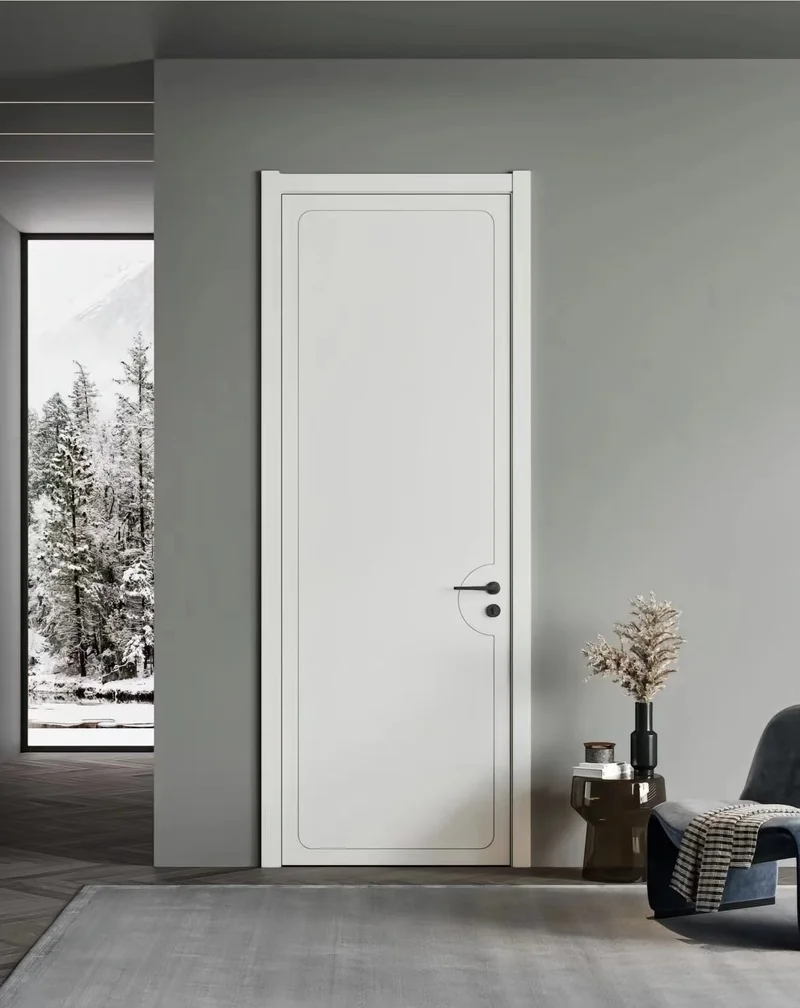
Formaldehyde-Free, Eco-Conscious Craftsmanship: Healthy Indoor Solutions for Sustainable Villas
- Solid wood doors with grid-filled stable structures utilize FSC-certified hardwood species (e.g., oak, ash, meranti) combined with LVL (Laminated Veneer Lumber) internal frames, minimizing dimensional instability under variable humidity (swelling coefficient < 0.18% across 30–90% RH cycles per ISO 4859).
- Grid infill employs kiln-dried solid wood slats (MC 8–10%) arranged in orthogonal configurations bonded with polyurethane (PUR) adhesives meeting EN 204 D4 classification for exterior-grade durability and zero formaldehyde emission (certified E0 per ISO 12460-5, <0.05 mg/m³ desiccator test).
- Composite stiles and rails integrate WPC (Wood-Plastic Composite) hybrid zones at hinge and lock zones, with 60:40 wood flour (cellulose fiber) to PVC ratio optimizing impact resistance (Izod notched impact strength ≥ 4.2 kJ/m²) while maintaining machinability and moisture resistance (24h water absorption < 2.1% per ASTM D570).
- All surface finishes apply UV-cured acrylic or plant-based polyphenolic sealants with VOC < 5 g/L (compliant with EMICODE EC1 Plus), providing Class 1 abrasion resistance (DIN 53150) and blocking formaldehyde diffusion from adjacent building components.
- Core stability achieved via cross-laminated LVL (7-layer, 18 mm total) with perpendicular grain orientation, reducing warping risk (flatness deviation < 1.2 mm/m² under ISO 22157) and enhancing structural contribution to envelope integrity.
- Acoustic performance reaches Rw 38–42 dB (ASTM E90) through mass-loaded grid damping and perimeter gasket integration, suitable for bedroom and study modules in multi-zone villa layouts.
- Thermal transmittance (U-factor) optimized to 1.8–2.1 W/m²K via integrated thermal breaks in frame junctions and low-conductivity infill spacing (cavity depth 38–44 mm), exceeding ISO 10077-2 simulations for temperate and humid subtropical climates.
- Fire performance conforms to EN 13501-1 Class D-s2,d0 (limited flame spread, negligible smoke development) when specified with intumescent edge seals, without compromising formaldehyde-free compliance.
| Performance Parameter | Test Standard | Value/Range | Significance |
|---|---|---|---|
| Formaldehyde Emission | ISO 12460-5 | ≤ 0.05 mg/m³ (E0) | Indoor air quality compliance |
| Moisture Absorption (24h) | ASTM D570 | < 2.1% | Dimensional stability in high-RH zones |
| Shore D Hardness (surface) | ISO 868 | 72–76 | Wear and scratch resistance |
| Swelling Rate (thickness) | ISO 4859 | < 0.18% | Prevents jamming in frame |
| Sound Reduction Index (Rw) | ASTM E90 | 38–42 dB | Acoustic zoning in residential layouts |
| Thermal U-Factor | ISO 10077-2 | 1.8–2.1 W/m²K | Energy-efficient envelope integration |
| Bond Shear Strength (D4) | EN 204 | ≥ 8.5 MPa | Structural integrity under load |
Custom-Engineered for Architectural Excellence: Dimensional Integrity in Large-Scale Solid Wood Doors
Solid wood doors for large-scale architectural applications demand precision engineering to maintain dimensional integrity under variable environmental loads. Utilizing a hybrid lamination approach, core stability is achieved through a multi-ply LVL (Laminated Veneer Lumber) substrate with balanced cross-veneers, minimizing transverse shrinkage and preventing warp. Each stile and rail assembly incorporates kiln-dried FSC-certified hardwoods (typically Quercus alba or Fagus sylvatica) acclimated to ≤8% moisture content, ensuring compliance with ISO 4465:1980 dimensional stability standards for joinery.
Grid-filling elements employ stress-relieved solid wood segments arranged in orthogonal configurations, bonded with polyurethane reactive (PUR) adhesives (meeting ASTM D6107 Type I) for creep resistance and long-term joint integrity. This grid system functions as a passive truss, distributing load across the door panel and reducing deflection in spans exceeding 1200 mm width.
Critical performance metrics include:
- Dimensional Change Coefficient (DCC): ≤0.18% volumetric change per 1% MC variation (per ASTM D1037)
- Linear Swelling Rate (thickness): <1.2% after 24h water immersion (EN 317)
- Thermal Insulation (U-factor): 1.8–2.2 W/m²K, enhanced by low-conductivity air pockets within grid matrix
- Sound Transmission Class (STC): 42–48 dB, depending on mass (75–110 kg/m²) and seal integration
- Formaldehyde Emission: E0 grade (≤0.05 mg/m³), verified per ISO 12460-3, using phenol-formaldehyde resins with <0.3% free formaldehyde
All door subassemblies undergo 72-hour cyclic climate conditioning (25°C/65% RH to 40°C/85% RH) to simulate tropical and temperate service environments, verifying resistance to cupping and delamination. Hardware attachment zones integrate engineered hardwood inserts (density: 850–920 kg/m³) to support heavy-duty hinges and multi-point locks without pull-out failure.
For coastal or high-humidity villa environments, optional perimeter seal integration with hydrophobic PVC gaskets (Shore D 55–60) reduces moisture absorption at edges by up to 68%, as validated under EN 927-3 exposure protocols.
| Parameter | Standard | Performance Target |
|---|---|---|
| Fire Resistance | EN 13501-1 | Class E (up to 30 min) |
| Impact Resistance | ISO 12471 | Class 3 (10 J) |
| Air Permeability | EN 1026 | ≤1.5 m³/h·m² at 100 Pa |
| Formaldehyde Emission | ISO 12460-3 | E0 (≤0.05 mg/m³) |
| Dimensional Stability (δw) | ASTM D1037 | ≤0.15% |
All fabrication adheres to ISO 9001:2015 quality management protocols, with CNC-machined tolerances held to ±0.3 mm across door perimeters. This ensures seamless integration with frame systems and guarantees alignment consistency in multi-door elevation compositions.
Frequently Asked Questions
What measures ensure solid wood grid-filled WPC doors resist warping in humid villa environments?
Use engineered WPC with density 1180–1250 kg/m³, fused with LVL core reinforcement (≥3 mm) to counteract moisture expansion. Maintain balanced moisture content (8–10%) during manufacturing and apply dual-sided UV-resistant acrylic coating (25–30 µm) to prevent differential swelling, ensuring structural stability in RH up to 85%.
How do solid wood-WPC composite doors meet E0 formaldehyde emission standards in enclosed villa spaces?
Employ WPC core materials certified to EN 717-1 E0 class (<0.05 ppm formaldehyde) via NDIR testing. Utilize phenol-formaldehyde-free polyurethane (PUR) adhesives in lamination and conduct chamber testing (ISO 16000-9) post-production to validate indoor air safety for residential applications.
What thermal insulation performance can be expected from solid wood grid-filled WPC doors in climate-variable regions?
Achieve U-values of 1.8–2.2 W/(m²K) using WPC with low thermal conductivity (0.12–0.15 W/mK) and sealed multi-chamber grid design. Pair with perimeter EPDM gaskets and low-E edge seals to minimize thermal bridging, outperforming solid wood-only doors by 30–40% in seasonal thermal stability.
How are impact resistance and structural integrity maintained in large-format solid wood-WPC grid doors?
Integrate three-layer LVL cross-banding (core 5 mm, face 2 mm) within the WPC matrix to withstand 150 J Charpy impact. Utilize CNC-precision joinery and internal aluminum stiffeners (1.5 mm thick) at hinge zones, ensuring EN 14358 compliance for heavy-duty residential use.
What long-term warping prevention solutions exist for tall solid wood grid-filled doors in sun-exposed villas?
Deploy asymmetric lamination with balanced veneer layup (face/back ±5% moisture differential) and coat vertical edges with 35 µm PVC co-extrusion. Implement stress-relieved kiln drying (6–8 cycles) and stabilize with tensioned aluminum threshold bars (min. 20 mm depth) to resist solar-induced distortion.
How does the sound insulation of WPC-filled solid wood grid doors perform in high-end villa applications?
Achieve Rw(C;Ctr) ≥ 42 dB via WPC’s inherent mass-law attenuation (density ≥1200 kg/m³) and sealed grid chambers acting as acoustic baffles. Combine with 4 mm solid perimeter seals and resilient mounting to meet ISO 717-1 benchmarks for luxury residential privacy.
What PVC coating specifications protect solid wood-WPC grid doors from UV degradation in coastal villas?
Apply co-extruded cap layer of UV-stabilized rigid PVC (≥25 µm thickness) with 2.5% TiO₂ (rutile grade) and HALS additives. Test per ISO 4892-2 (3000 h xenon arc) to ensure ≤ΔE 2.0 color shift and zero microcracking, maintaining finish integrity in high-solar-load zones.
How should procurement teams verify structural stability claims for WPC-composite doors in luxury villa projects?
Mandate third-party test reports per EN 14323 (dimensional stability), EN 12602 (cycling durability ≥100,000 cycles), and full-section load testing to 1.5x design load. Require mill-certified moisture gradients <3% across sections and batch-specific DMA analysis for viscoelastic performance validation.