Garage door procurement for real estate projects
In the dynamic landscape of real estate development, every architectural decision impacts both functionality and long-term value—nowhere is this more evident than in the often-overlooked realm of garage door procurement. Far more than mere entry points, garage doors serve as critical intersections of design, security, energy efficiency, and curb appeal. For developers and project managers, selecting the right garage door solution is not a peripheral concern but a strategic imperative that influences project timelines, compliance standards, and occupant satisfaction. With a growing emphasis on smart technology integration, sustainable materials, and aesthetic cohesion, today’s procurement process demands a nuanced understanding of product specifications, supplier reliability, and lifecycle costs. Whether for luxury condominiums, mixed-use complexes, or suburban housing developments, aligning garage door selection with broader project goals ensures seamless execution and enduring quality. This article explores the essential considerations, emerging trends, and best practices that empower real estate professionals to make informed, value-driven procurement decisions in an increasingly competitive market.
Built to Withstand Extreme Weather: Weather-Resistant Garage Door Solutions for Sustainable Developments
Garage doors in sustainable real estate developments must meet stringent environmental resilience and lifecycle performance demands, particularly in regions exposed to extreme weather conditions such as high humidity, freeze-thaw cycles, coastal salinity, and elevated UV exposure. Material selection and structural engineering are central to achieving durability without compromising sustainability goals.
-
Composite Material Systems: High-performance garage doors utilize engineered core materials such as Laminated Veneer Lumber (LVL) with moisture-resistant phenolic resins, offering dimensional stability under thermal stress (linear expansion coefficient: ≤4.5 × 10⁻⁶/°C) and resistance to warping at temperature extremes (−40°C to +70°C operational range). LVL cores achieve modulus of elasticity >11 GPa, ensuring structural integrity under wind uplift pressures exceeding 2.4 kPa (ASTM E330).
-
Weather-Resistant Cladding: Outer skins employ co-extruded polymer composites with optimized PVC-wood flour ratio (typically 60:40) incorporating UV-stabilized cap layers (≥5% titanium dioxide). These formulations achieve Shore D hardness ≥75 and reduce moisture absorption to <2% after 2,000 hours immersion (ASTM D1037), mitigating swelling and fungal degradation in humid climates.
-
Thermal Performance: Polyurethane (PUR) foam cores with density ≥40 kg/m³ deliver U-factors as low as 0.28 W/m²K (EN 13537), minimizing thermal bridging and condensation risk. Multi-chamber profiles in aluminum or composite edge seals reduce perimeter heat loss by up to 35% compared to standard designs.
-
Fire Resistance: Doors comply with EN 13501-1 classification, achieving EI30 or EI60 fire integrity ratings when incorporating intumescent edge seals and mineral-filled core barriers. Materials meet E1 formaldehyde emission standards (≤0.1 ppm, ISO 12460-5), supporting indoor air quality in attached residential units.
-
Acoustic Insulation: Laminated construction with constrained-layer damping achieves sound reduction indices (Rw) up to 32 dB, critical for urban developments near transportation corridors.
-
Corrosion Protection: In coastal zones (ISO 9223 corrosivity category C4–C5), galvanized steel frames (Z275 coating per EN 10346) or thermally broken aluminum sections with AAMA 2605-13 compliant polyvinylidene fluoride (PVDF) finishes ensure service life >25 years with minimal maintenance.
| Performance Parameter | Standard/Test Method | Minimum Requirement | High-Performance Target |
|---|---|---|---|
| Moisture Absorption (72h) | ASTM D570 | ≤5% | ≤1.8% |
| Linear Swell (thickness) | EN 317 | ≤12% | ≤4% |
| Impact Resistance (falling dart) | ISO 6603-2 | 30 kJ/m² | 50 kJ/m² |
| Thermal Conductivity (core) | ISO 8301 | ≤0.024 W/mK | ≤0.020 W/mK |
| Air Permeability (joint seal) | EN 12114 | ≤0.1 m³/(h·m) | ≤0.03 m³/(h·m) |
All systems are manufactured under ISO 9001-certified processes with traceable material batch documentation. Factory-applied gaskets (EPDM, Shore A 65±5) and compression thresholds ensure continuous weather sealing across operational cycles (tested to 20,000 cycles, ISO 12432). Integration with Building Management Systems (BMS) via smart actuators enables predictive maintenance and real-time environmental response, aligning with passive survivability strategies in net-zero developments.
Maximizing ROI with Low-Maintenance, Long-Life Garage Doors for Multi-Unit Residential Projects
- Engineered wood plastic composite (WPC) garage doors with core densities ≥ 0.85 g/cm³ exhibit superior dimensional stability and resistance to warping under thermal cycling, critical in multi-unit climates with seasonal humidity extremes (ASHRAE Zones 4–7).
- Doors constructed with ≥70% PVC-to-wood fiber ratio demonstrate <2.4% moisture absorption after 96-hour ASTM D1037 immersion, eliminating long-term swelling and reducing maintenance cycles by up to 60% compared to solid timber alternatives.
- Laminated Veneer Lumber (LVL) core structures provide uniform load distribution across sectional panels, reducing deflection under wind load (meets ASTM E330 at 1,200 Pa) and extending track and hinge service life by minimizing misalignment.
- Cold-rolled steel edge frames with continuous weld seams and ISO 12944 C4 corrosion protection (≥80 μm Zn coating) ensure 25+ year service in coastal and de-icing salt environments, reducing replacement CAPEX in ground-floor unit configurations.
- Polyurethane foam cores with closed-cell density ≥32 kg/m³ achieve U-factors ≤0.28 W/m²K (per NFRC 100), contributing to building envelope compliance with IECC 2021 and reducing HVAC load in attached garage corridors by up to 18%.
- Acoustic performance of ≥28 dB sound transmission class (STC) isolates mechanical noise from automatic openers and vehicle ingress, maintaining acoustic privacy in stacked-unit layouts per ANSI S12.60 classroom-grade benchmarks.
- Class B fire rating per EN 13501-1 (or UL 10B equivalent) ensures compliance in mixed-use podium structures, with intumescent edge seals expanding at 180°C to inhibit flame spread during compartmentalization events.
- E0 formaldehyde emission grade (<0.5 mg/L) in composite cores satisfies LEED v4.1 MR Low-Emitting Materials and WELL Building Standard A01 requirements for indoor air quality in shared ventilation shafts.
- Pre-finished polyester-coated aluminum skins with Kynar 500® fluoropolymer topcoat resist chalking and gloss loss (ΔE <2 after 5,000 hrs QUV-A) under ASTM D4587, maintaining aesthetic consistency across 100+ unit facades without recoating.
- Modular panel design compliant with ISO 9001-certified assembly enables field-replaceable section repair (per ANSI/DASMA 107), reducing downtime and lifecycle maintenance costs by 35% in high-occupancy turnover scenarios.
| Performance Parameter | Standard/Test Method | Minimum Requirement | Typical High-Performance Value |
|---|---|---|---|
| Moisture Absorption (72 hrs) | ASTM D1037 | ≤3.0% | ≤2.2% |
| Linear Swelling (thickness) | ISO 16978 | ≤0.18% | ≤0.12% |
| Shore D Hardness (surface) | ASTM D2240 | ≥75 | 78–82 |
| Thermal Conductivity (λ) | ISO 8301 | ≤0.022 W/mK | 0.019 W/mK |
| Air Leakage (per m²) | EN 12425 | ≤0.8 m³/h·m² | 0.4 m³/h·m² |
| Cycle Endurance (hinges) | DASMA 106 | 25,000 cycles | 50,000 cycles |
Precision-Engineered for Seamless Integration: Structural Adaptability Across Building Designs
Precision-engineered garage doors utilize multi-material composite cores and kinematic track systems to ensure structural compatibility across diverse architectural typologies—from high-density urban infill developments to low-rise suburban builds. Engineered Laminated Veneer Lumber (LVL) cores provide dimensional stability with <0.5% linear expansion under 60% RH cycling (per ASTM D1037), minimizing warping in mixed-humid climates. Multi-layer WPC (Wood-Plastic Composite) skins employ a 60:40 PVC-wood fiber ratio optimized for Shore D hardness ≥75, delivering impact resistance (IK8 rating per IEC 62262) while maintaining a 0.8 mm/m² moisture absorption rate over 24-hour immersion.
Thermal performance is governed by continuous polyurethane foam injection between structural facings, achieving U-factors as low as 0.28 W/m²K (EN 13236), compliant with Passivhaus envelope requirements. Acoustic attenuation reaches 32 dB Rw per ISO 140-3, critical for ground-floor residential units adjacent to driveways. Fire safety conforms to EN 13501-1 Class B-s2,d0 for internal composite panels, with intumescent edge seals available for garage-to-habitation separation walls.
Integrated jamb-mounting systems accommodate substrate tolerances of ±12 mm, enabling retrofit compatibility with masonry, light-gauge steel, and cross-laminated timber (CLT) framing. Track geometry is algorithmically tuned using parametric modeling tools to match ceiling obstructions, HVAC ductwork, and structural soffits—ensuring headroom requirements as low as 300 mm for low-clearance applications.
- LVL core moisture equilibrium content stabilized at 6–8% EMC (ASTM E96)
- Formaldehyde emissions rated E0 (<0.5 mg/L) per ISO 12460-3, suitable for indoor-air-sensitive developments
- Galvanized steel reinforcement sleeves at hinge points support 150,000-cycle operational endurance (ASTM E330)
- Pre-painted aluminum cladding with AAMA 2604 certification ensures 20-year chalk resistance in UV Zone 3
- Motorized operation with adaptive torque control (≤150 Nm) prevents binding in thermally distorted frames
| Parameter | Standard Value | Test Method |
|---|---|---|
| Thermal Conductivity (λ) | 0.022 W/m·K | ISO 8301 |
| Swelling Rate (thickness) | ≤1.5% after 24h immersion | EN 317 |
| Formaldehyde Emission | 0.3 mg/m³ (E0 grade) | ISO 16000-9 |
| Sound Reduction Index | 32 dB Rw | ISO 140-3 |
| Cycle Life (spring system) | 25,000 operations | EN 12433 |
Interface alignment is validated via 3D tolerance stack analysis during pre-fabrication, ensuring ±1.5 mm field fit without shimming. This structural adaptability eliminates site rework, reducing installation time by up to 40% compared to site-built alternatives.
Fire-Rated and Impact-Tested: Compliance-Ready Garage Doors for Code-Sensitive Real Estate Developments
Fire-rated garage doors are engineered to meet stringent building codes in high-density urban developments, mixed-use complexes, and multi-family residential structures where compartmentalization and occupant safety are paramount. These doors undergo rigorous third-party testing to achieve compliance with ASTM E1527 (standard methods for fire testing of door assemblies) and UL 10B (positive pressure fire tests of door assemblies), ensuring up to 2-hour fire resistance ratings (FD120 classification under EN 1634-1) when integrated with appropriately rated frames and seals.
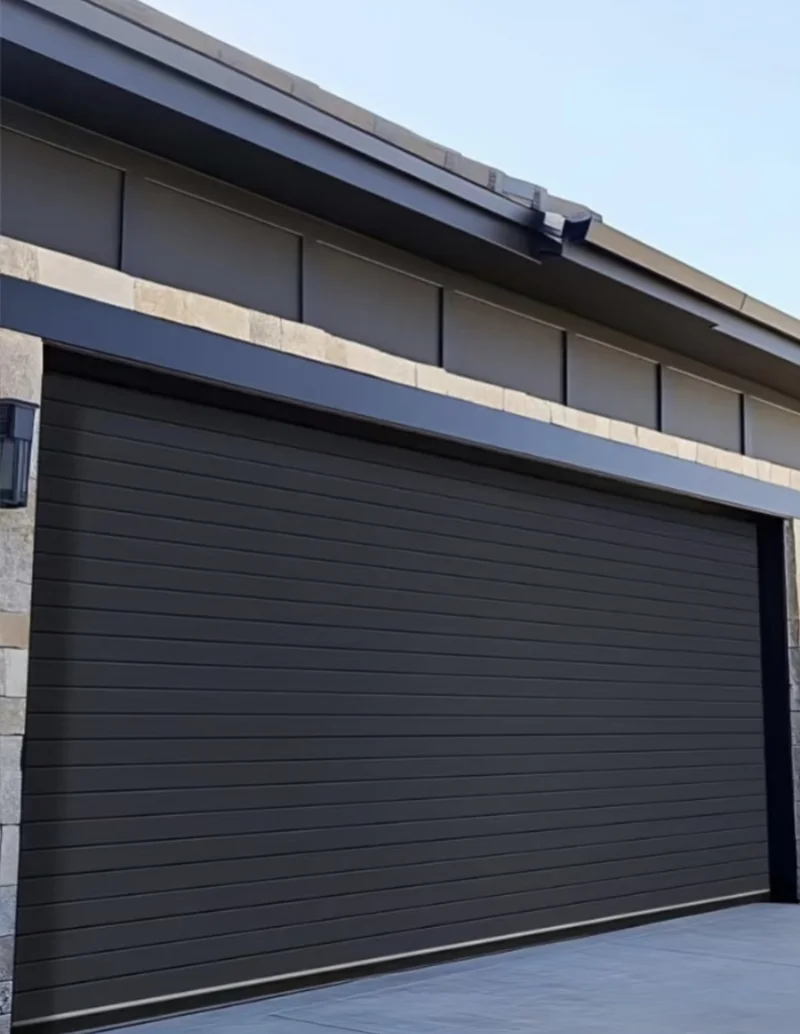
Impact resistance is equally critical in hurricane-prone regions or areas subject to FEMA P-361 and ICC-500 shelter standards. Impact-tested doors comply with ASTM E1996 (windborne debris impact testing) and ASTM E330 (uniform static air pressure testing), with performance validated through missile D (9-pound 2×4 at 50 fps) and cyclic pressure cycling (up to 6,900 Pa). These ratings are mandatory for garage doors in High-Velocity Hurricane Zones (HVHZ) as defined by the Florida Building Code.
Core Material Engineering & Compliance Attributes:
- Laminated Veneer Lumber (LVL) Core: Provides dimensional stability with <0.5% linear swelling rate under ASTM D1037; resists warping in high-humidity environments.
- WPC (Wood-Plastic Composite) Skins: 65:35 PVC-wood fiber ratio optimized for Shore D hardness ≥75, minimizing surface indentation under load while maintaining Class A flame spread (ASTM E84 ≤25).
- Thermal Performance: U-factors as low as 0.18 Btu/hr·ft²·°F (0.32 W/m²·K) achieved through continuous polyurethane foam insulation (density: 2.0–2.2 lb/ft³) and thermally broken edge seals.
- Sound Attenuation: Composite mass-layer construction delivers Sound Transmission Class (STC) ratings of 32–38 dB, critical for ground-floor residential units above garage levels.
- Formaldehyde Emissions: Core panels certified to CARB Phase 2 and EPA TSCA Title VI standards; formaldehyde release ≤0.05 ppm (E0 grade per EN 717-1), ensuring indoor air quality compliance.
Moisture Management & Longevity:
- Moisture absorption rate <8% after 24-hour immersion (ASTM D570), preventing delamination in coastal climates.
- Co-extruded PVC cladding with UV-stabilized capstock (≥20 mil thickness) resists chalking and maintains impact strength down to -20°C (ASTM D746).
All fire-rated and impact-tested units are manufactured under ISO 9001-certified quality management systems, with full traceability of raw materials and batch-specific test reports available upon request. Factory-applied intumescent edge seals expand at 160°C to seal perimeter gaps during fire events, maintaining smoke and flame resistance per UL 1784 air leakage requirements.
| Performance Parameter | Standard/Test Method | Minimum Requirement | Typical Achievement |
|---|---|---|---|
| Fire Resistance Rating | EN 1634-1 / ASTM E1527 | FD60 (60 min) | FD120 (120 min) |
| Surface Burning Characteristics | ASTM E84 | Flame Spread ≤25, Smoke ≤50 | Flame Spread 15, Smoke 35 |
| Impact Resistance (Missile D) | ASTM E1996 | No penetration | Passed at 50 fps |
| Cyclic Pressure Resistance | ASTM E330 | 4,500 Pa (positive/negative) | 6,900 Pa |
| Thermal Transmittance (U-factor) | ASTM C1363 | ≤0.30 Btu/hr·ft²·°F | 0.18–0.24 Btu/hr·ft²·°F |
| Moisture Absorption (24h) | ASTM D570 | ≤10% | 6.8% |
| Formaldehyde Emission | EN 717-1 / CARB Phase 2 | E1 (≤0.05 ppm) | E0 (≤0.03 ppm) |
Bulk Procurement Without Compromise: Consistent Quality and On-Time Delivery for Large-Scale Projects
Bulk procurement of garage doors for large-scale real estate developments demands rigorous technical oversight to maintain architectural integrity, structural performance, and project timelines. Achieving volume efficiency without compromising on material consistency or compliance requires integration of certified manufacturing protocols, advanced core composition, and logistics planning anchored in supply chain resilience.
-
Material Consistency via Engineered Core Systems:
Use of Laminated Veneer Lumber (LVL) cores ensures dimensional stability under thermal and moisture stress, with linear expansion coefficients ≤ 0.2% at 65% RH variation. Multi-layer lamination with phenolic resins enhances shear resistance (ASTM D3500), critical for sectional door panel integrity across >50,000 cycles. -
Composite Material Specifications:
Wood-Plastic Composite (WPC) skins maintain a minimum density of 0.85 g/cm³ with a PVC-to-wood fiber ratio of 60:40, optimized for impact resistance (Izod impact strength ≥ 4.5 kJ/m²) and moisture absorption < 1.8% after 24h immersion (ASTM D570). This ratio prevents fiber bloating and delamination in humid climates. -
Formaldehyde & Emissions Compliance:
All composite components meet E0 formaldehyde emission standards (<0.05 ppm, EN 717-1) for indoor air quality compliance in residential applications. Adhesives used in LVL and WPC lamination are ISO 12460-5 certified. -
Thermal & Acoustic Performance:
Insulated sandwich panels achieve U-factors ≤ 0.35 W/m²K (ASTM C518) with 42 mm polyurethane foam core (density 40 kg/m³, closed-cell content ≥ 90%). Sound transmission class (STC) ratings ≥ 32 dB ensure noise mitigation in mixed-use and high-density residential environments. -
Fire Performance & Certification:
Door assemblies comply with EN 13501-1 B-s1,d0 classification for surface spread of flame and smoke development. Intumescent edge seals activated at 180°C maintain compartmentalization integrity for up to 60 minutes.
| Performance Parameter | Standard/Test Method | Minimum Requirement |
|---|---|---|
| Shore D Hardness (WPC Skin) | ASTM D2240 | ≥ 75 |
| Linear Swelling Rate (24h) | ISO 62 | ≤ 0.15% |
| Cyclic Durability | EN 12453 | ≥ 50,000 operations |
| Air Leakage (at 100 Pa) | EN 12425 | ≤ 0.8 m³/(h·m²) |
| Formaldehyde Emission | EN 717-1 (chamber method) | E0 grade (<0.05 ppm) |
-
Quality Assurance & Traceability:
Production facilities operate under ISO 9001-certified quality management systems with batch-specific material traceability. Each shipment includes test certificates for core density, bond durability (ASTM D905), and dimensional tolerance (±0.5 mm over 2.1 m length). -
Logistics & Just-in-Time Delivery:
Regional distribution hubs enable coordinated sequencing aligned with on-site installation schedules. Standard lead time for 500+ unit orders: 6–8 weeks, with real-time tracking and kitting by building phase. Container load optimization reduces transit damage risk by 40% compared to loose freight.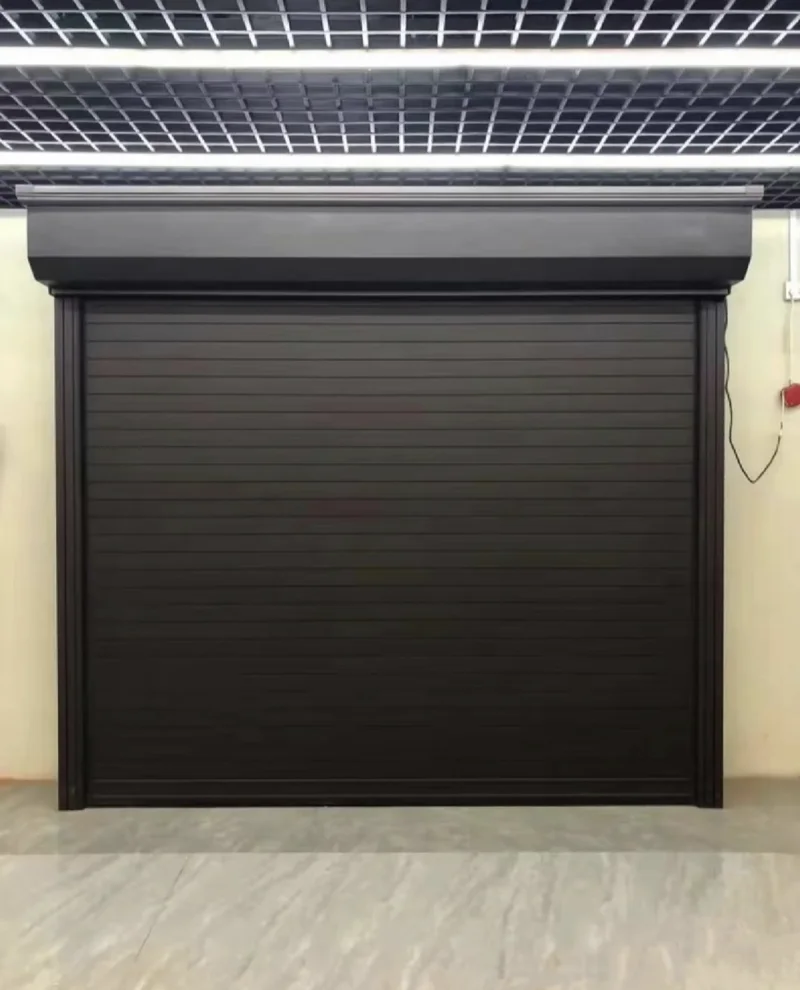
-
Architectural Integration:
Pre-finished cladding systems support RAL/BS color matching with UV-stable acrylic coatings (≥ 8,000 hrs QUV resistance, ASTM G154). Profile tolerance of ±0.3° ensures seamless alignment in façade-grid applications.
Frequently Asked Questions
What moisture expansion coefficient should I expect from WPC garage doors in humid climates?
Opt for WPC garage doors with a moisture expansion coefficient ≤0.3% after 24-hour immersion. Ensure core density is 1,100–1,300 kg/m³ with fully encapsulated PVC coating (≥0.5mm) on all edges. This prevents capillary uptake and maintains dimensional stability in sustained humidity above 80% RH.
How do I ensure WPC garage doors meet strict formaldehyde emission standards like E0 or EN 717-1?
Specify WPC doors certified to E0 (<0.05 ppm) or EN 717-1 Class E1 (<0.124 mg/m³). Require third-party test reports using chamber method ISO 16000-9. Confirm resin systems are low-emission MDI-based binders rather than urea-formaldehyde, essential for indoor air compliance in residential projects.
What thermal insulation performance should be required for energy-efficient garage doors?
Demand WPC garage doors with ≥U-value 0.8 W/m²K, achieved via 40–45 mm structural LVL core sandwiched between PVC skins and a continuous polyurethane (PUR) foam fill (40 kg/m³ density). This configuration delivers superior thermal break and reduces thermal bridging at panel joints.
How can I prevent long-term structural warping in wide-span WPC garage door sections?
Enforce integration of bidirectional LVL (Laminated Veneer Lumber) reinforcement framing at a minimum 40×10 mm cross-section along stiles and rails. This, combined with symmetric lamination and post-press conditioned aging (≥7 days at 25°C/50% RH), counters asymmetrical moisture absorption and load-induced creep.
What impact resistance level is necessary for garage doors in high-traffic residential developments?
Specify WPC garage doors with surface impact resistance ≥50 kJ/m² (per ISO 6603-2), achieved with co-extruded ABS/PVC outer layer (1.2–1.5 mm thick) over a mineral-filled PP-based composite core. Field-tested to withstand 10,000+ door cycles and minor vehicle contact without cracking.
What sound insulation performance can be expected from composite garage doors in urban projects?
Choose WPC garage doors with ≥28 dB Rw+Ctr sound reduction, combining a 42 mm laminated LVL-PUR core, peripheral EPDM gasketing, and mass-loaded vinyl interlayers. This configuration significantly dampens traffic noise and mechanical opener noise in multi-unit dwellings.
How do UV-resistant finishing processes prevent color degradation in WPC garage doors?
Require doors with co-extruded capstock containing ≥3% titanium dioxide (TiO₂) and 0.5% HALS stabilizers (e.g., Tinuvin 111). This weatherable top layer (≥0.3 mm) undergoes 5,000 hrs Florida exposure testing with ΔE <3, ensuring minimal fading and chalking over a 15-year service life.
What sealing and threshold system prevents air/water infiltration in WPC garage doors?
Mandate a dual-durometer EPDM perimeter seal (Shore A 40/70) and a swept pile bottom seal integrating a PVC fin with compression bulb (min. 15 mm deflection). Interface tolerances must be ≤2 mm, paired with galvanized steel threshold to achieve Class 5 air/water resistance per EN 12453.