Office building solid wood door procurement modern style bulk supply
In today’s competitive commercial real estate landscape, selecting the right solid wood doors for office buildings is more than an aesthetic decision—it’s a strategic investment in quality, durability, and brand image. As modern architectural designs emphasize clean lines, natural materials, and timeless elegance, demand for high-performance solid wood doors in contemporary styles continues to rise. Procuring these premium doors in bulk requires a supplier who combines craftsmanship with scalability, ensuring consistency across large-scale projects without compromising on design or structural integrity. From executive suites to corporate lobbies, modern solid wood doors offer superior sound insulation, enhanced security, and a refined ambiance that elevates any workspace. This article explores the essential considerations for sourcing modern-style solid wood doors in volume, including material sourcing, customization options, lead times, and quality assurance protocols. Whether you’re a developer, contractor, or facility manager, understanding the nuances of bulk procurement can streamline project timelines, reduce costs, and deliver a cohesive, high-end finish across your office building portfolio.
Architect-Grade Aesthetics: Modern Solid Wood Door Designs for Premium Office Spaces
- Engineered for architectural precision, modern solid wood office doors utilize multi-layered Laminated Veneer Lumber (LVL) cores with cross-laminated birch or eucalyptus plies, delivering dimensional stability under thermal and hygric stress (≤ 0.18% linear swelling at 75% RH cycling per ASTM D1037).
- Face veneers are rotary- or sliced-cut from FSC-certified hardwoods—primarily European oak (Quercus robur), American walnut (Juglans nigra), and rift-sawn white ash—applied over WBP (Weather and Boil Proof) phenolic film-faced substrates to prevent delamination under 48-hour boil tests.
- Core composition integrates high-density WPC (Wood-Plastic Composite) at 850–920 kg/m³, with optimized PVC-wood fiber ratio of 60:40 by weight, enhancing impact resistance (Izod impact strength ≥ 4.2 kJ/m²) while minimizing moisture absorption to <2.1% after 24h immersion (ASTM D570).
- Surface finishes employ 3–5 coat UV-cured acrylic or catalyzed polyurethane systems, achieving Shore D hardness ≥ 78 and accelerated weathering resistance (500+ hrs QUV-B, no chalking per ASTM G154). Matte, satin, and soft-touch textures comply with EN 13364 for slip and abrasion performance.
- Acoustic performance is engineered via constrained-layer damping: LVL core sandwiched between 1.2mm MDF damping layers achieves Sound Reduction Index (Rw) of 38–42 dB (ISO 10140-2), suitable for executive offices and conference rooms under ISO 717-1.
- Thermal insulation performance achieves U-factors of 1.8–2.1 W/(m²·K) (ISO 10077-1), optimized through low-conductivity edge seals and full-perimeter thermal breaks in frame-to-door interfaces.
- Fire-rated variants (30/60-min) meet EN 1634-1 and ASTM E119 standards, incorporating intumescent edge strips and mineral-filled composite cores achieving EI classification with integrity and insulation compliance.
- Formaldehyde emissions conform to CARB Phase 2, E0 (≤0.5 mg/L), and ISO 12460-5, verified via desiccator and chamber testing; VOC emissions comply with AgBB and LEED v4.1 Material Ingredients credits.
- All doors are manufactured under ISO 9001-certified systems with batch-traceable material logs, CNC-milled to ±0.3 mm tolerance, and pre-hung with adjustable steel frames for ±2 mm field adjustment tolerance.
| Performance Parameter | Value/Range | Test Standard |
|---|---|---|
| Core Density (WPC) | 850–920 kg/m³ | ISO 10144 |
| Moisture Absorption (24h) | < 2.1% | ASTM D570 |
| Linear Swelling (75% RH) | ≤ 0.18% | ASTM D1037 |
| Sound Reduction Index (Rw) | 38–42 dB | ISO 10140-2 |
| Thermal U-Factor | 1.8–2.1 W/(m²·K) | ISO 10077-1 |
| Shore D Hardness (surface) | ≥ 78 | ASTM D2240 |
| Formaldehyde Emission | E0 (≤0.5 mg/L) | ISO 12460-5 |
| Fire Resistance (EI 30/60) | Integrity & Insulation Rated | EN 1634-1, ASTM E119 |
Built to Last: Unmatched Structural Stability for High-Traffic Commercial Environments
Solid wood doors for office buildings must deliver consistent structural integrity and long-term performance under continuous operational demands. Our modern-style solid wood doors are engineered using a multi-layer composite core with Laminated Veneer Lumber (LVL) and Wood-Plastic Composite (WPC) reinforcement, ensuring dimensional stability and resistance to warping in high-traffic commercial environments.
The WPC perimeter frame utilizes a 60:40 wood fiber-to-PVC ratio, optimized for impact resistance and moisture management. This formulation achieves a density of 850–920 kg/m³, providing superior load distribution at hinge points and reducing long-term sagging. The internal LVL core, composed of 3.5 mm rotary-peeled eucalyptus veneers bonded with phenol-formaldehyde resins, exhibits a modulus of elasticity (MOE) ≥11,500 MPa and a modulus of rupture (MOR) ≥65 MPa—exceeding ASTM D5456 standards for engineered wood performance.
All core materials are certified to E1 formaldehyde emission limits (≤0.124 mg/m³, EN 717-1), with optional E0-grade (≤0.05 mg/m³) available for sensitive indoor environments. The assembly process follows ISO 9001-certified procedures, with radio-frequency (RF) edge gluing and CNC-controlled clamping to maintain flatness tolerances within ±0.3 mm/m.
- Dimensional Stability: Linear swelling rate ≤0.18% after 24h water immersion (ASTM D1037)
- Acoustic Performance: Composite construction with constrained-layer damping achieves Rw (C; Ctr) = 42 dB
- Thermal Efficiency: U-factor of 1.8 W/(m²·K) with 45 mm panel thickness
- Fire Compliance: Available in FD30 (30-minute) and FD60 (60-minute) configurations, tested per EN 1364-1 and classified to Euroclass B-s1,d0
- Surface Hardness: Shore D ≥78 on WPC frame, resisting denting from trolleys and equipment impact
| Performance Parameter | Value | Test Standard |
|---|---|---|
| Moisture Absorption (24h) | ≤4.2% | ASTM D1037 |
| Linear Expansion Coefficient | 3.1 × 10⁻⁶ mm/mm/°C | ISO 11359-2 |
| Nail Pull Strength (edge) | ≥1,250 N | EN 789 |
| Creep Deflection (10-year) | <0.5% of span under 40 kgf/m² load | BS EN 11925-2 |
| VOC Emissions | <100 µg/m³ (total), E0 compliant | ISO 16000-9 |
These doors maintain geometric accuracy across temperature ranges from -20°C to +60°C and relative humidity up to 90% RH, making them suitable for stairwells, lobbies, and HVAC-intensive zones. The integrated WPC threshold option reduces floor-level deflection by 40% compared to solid wood thresholds under cyclical loading (100,000+ door cycles simulated per EN 15614-1).
Healthy Indoor Environments: Formaldehyde-Free, Low-Emission Solid Wood Construction
- Solid wood doors for office environments are engineered to meet stringent indoor air quality standards through formaldehyde-free adhesives and low-emission core materials, ensuring compliance with E0 (≤0.5 mg/L) and CARB Phase 2 limits.
- Core construction utilizes moisture-stable Laminated Veneer Lumber (LVL), composed of 3–7 mm rotary-peeled hardwood plies bonded with phenol-formaldehyde-free polyvinyl acetate (PVA) or MDI resins, achieving dimensional stability with < 3% linear swelling after 24-hour water immersion.
- Surface lamination employs FSC-certified hardwood veneers (e.g., European oak, walnut) bonded under 1.8 MPa pressure at 110°C, eliminating the need for urea-formaldehyde resins. VOC emissions are maintained below 50 µg/m³ (tested per ISO 16000-9), qualifying for WELL Building Standard and LEED v4 ID+C credits.
- Alternative WPC (Wood-Plastic Composite) stiles and rails integrate 60–70% wood flour (80–100 mesh) with 30–40% PVC, compounded with Ca/Zn thermal stabilizers instead of lead-based additives, achieving a density of 1.2–1.35 g/cm³ and Shore D hardness ≥75.
- Fire performance meets ASTM E84 Class A (flame spread ≤25, smoke development ≤50) or EN 13501-1 B-s1,d0 when treated with non-halogenated intumescent coatings; certification includes UL or CE marking under EU CPR.
- Acoustic performance reaches Rw 35–40 dB through 45 mm thick composite assemblies with constrained-layer damping between LVL core and veneer facings, suitable for open-plan office partitions and private meeting rooms.
- Thermal transmittance (U-factor) ranges from 1.8 to 2.2 W/m²K for uninsulated solid wood doors, improved to 1.1–1.4 W/m²K with optional aerogel-infused edge seals.
| Performance Parameter | Typical Value | Test Standard |
|---|---|---|
| Formaldehyde Emission | ≤0.05 ppm (E0 Grade) | ISO 12460-3, EN 717-1 |
| Moisture Absorption (72h) | ≤5.2% (LVL Core) | ASTM D1037 |
| Sound Reduction Index (Rw) | 37 dB (avg) | ISO 140-3 |
| Linear Dimensional Change | ≤0.18% (ΔT = 25°C, RH 60→85%) | EN 16781 |
| Nail Withdrawal Strength | 1,850 N (face), 1,200 N (edge) | ASTM D1761 |
| Thermal Conductivity (k-value) | 0.13 W/mK (oak veneer) | ISO 10456 |
- All manufacturing facilities operate under ISO 9001 and ISO 14001 frameworks, with raw material traceability via blockchain-enabled supply chain logs. Batch-specific emission reports (EMICODE EC1 PLUS) and fire test certificates are provided with every bulk shipment.
Engineered for Efficiency: Precision Manufacturing for Seamless Bulk Installation
- Utilization of multi-layer laminated veneer lumber (LVL) cores ensures dimensional stability under variable humidity conditions, minimizing warping and maintaining ±0.5 mm flatness tolerance across 2100 × 800 mm door slabs during bulk installation cycles
- Core density optimized at 620–680 kg/m³ using engineered wood composites (WPC) with 70:30 PVC-wood fiber ratio, balancing impact resistance (Izod impact strength ≥ 4.2 kJ/m²) and weight reduction for high-rise logistics
- Integrated shiplap edge profiling on all stiles and rails enables rapid alignment during sequential mounting, reducing on-site labor by up to 30% compared to traditional butt-joint systems
- Pre-hung units manufactured under ISO 9001-certified CNC-controlled environments with ±0.1 mm milling precision, ensuring consistent hinge mortise depth (9.5 ± 0.2 mm) and strike pocket registration across 500+ unit batches
- Surface lamination with 0.6 mm thick PVC-coated real wood veneer (oak/ash species) provides Shore D hardness of 78–82, resisting abrasion (Taber abrasion loss ≤ 50 mg/100 cycles) while maintaining Class B1 (DIN 4102) fire performance
- Acoustic performance validated at 38 dB Rw (EN ISO 140-3) through constrained-layer damping design; perimeter sealing integrated with factory-installed EPDM gaskets achieving ΔLw ≥ 6 dB improvement over standard wood doors
- Formaldehyde emissions comply with E1 (≤ 0.124 mg/m³, EN 717-1) and CARB Phase 2 standards, with optional E0-grade (≤ 0.05 mg/m³) UF resin systems available for LEED v4.1 MR and WELL v2 certification pathways
| Performance Parameter | Test Standard | Result/Value | Application Relevance |
|---|---|---|---|
| Moisture Absorption (72h) | ASTM D1037 | ≤ 8.4% | Prevents swelling in HVAC-variable zones |
| Linear Swelling Rate (thickness) | ISO 16978 | ≤ 0.18% | Maintains clearance in tight frame fits |
| Thermal Transmittance (U-factor) | ISO 10077-1 | 1.85 W/(m²·K) | Contributes to building envelope efficiency |
| Smoke Density (DSmax) | ASTM E84 | ≤ 450 | Meets NFPA 101 corridor requirements |
| Cycle Life (Hinges) | EN 1906 | ≥ 200,000 cycles | Ensures durability in high-traffic offices |
Factory-executed pre-finishing with 3-coat UV-cured acrylic lacquer (gloss 45 ± 5 GU) eliminates on-site drying delays and guarantees uniform sheen retention after 1,500 hours of QUV accelerated weathering (ASTM G154). All units serialized and shipped in stackable, edge-protected pallets with moisture-vapor barrier wrapping, enabling just-in-time delivery sequencing for floor-by-floor installation across multi-story office developments.
Trusted by Developers: Fire-Rated, Waterproof Options with 15-Year Performance Warranty
Solid wood doors for office buildings must meet stringent performance criteria across fire safety, moisture resistance, and long-term dimensional stability. Our engineered solid core doors integrate a laminated veneer lumber (LVL) structural core with a minimum density of 720 kg/m³, providing superior warpage resistance (< 0.5 mm/m linear expansion over 20°C–60% RH cycling per ASTM D1037) and consistent hinge load retention (tested to 150,000 cycles at 18 kgf per EN 12519). For fire-rated applications, doors are certified to EN 1634-1 and ASTM E-1527, offering 30-minute (FD30) and 60-minute (FD60) integrity and insulation compliance with zero flaming debris emission.
Waterproof performance is achieved through co-extruded wood-polymer composite (WPC) stiles and rails, formulated with a 60:40 PVC-wood fiber ratio and impact modifiers to deliver < 1.2% moisture absorption after 24-hour immersion (ASTM D570). Surface finishes utilize cross-linked acrylic-PVC hybrid films with 60–70 Shore D hardness, providing Class 3 abrasion resistance (ISO 5470-1) and UV stability (ΔE < 2 after 1,500 hrs QUV-A).
All doors comply with E1 formaldehyde emission limits (< 0.124 mg/m³, ISO 12460-5) and are manufactured under ISO 9001-certified processes with full batch traceability. Acoustic performance reaches up to 42 dB Rw (weighted sound reduction index, ISO 717-1) with sealed perimeter gaskets. Thermal transmittance (U-factor) ranges from 1.8 to 2.1 W/(m²·K), depending on core configuration.
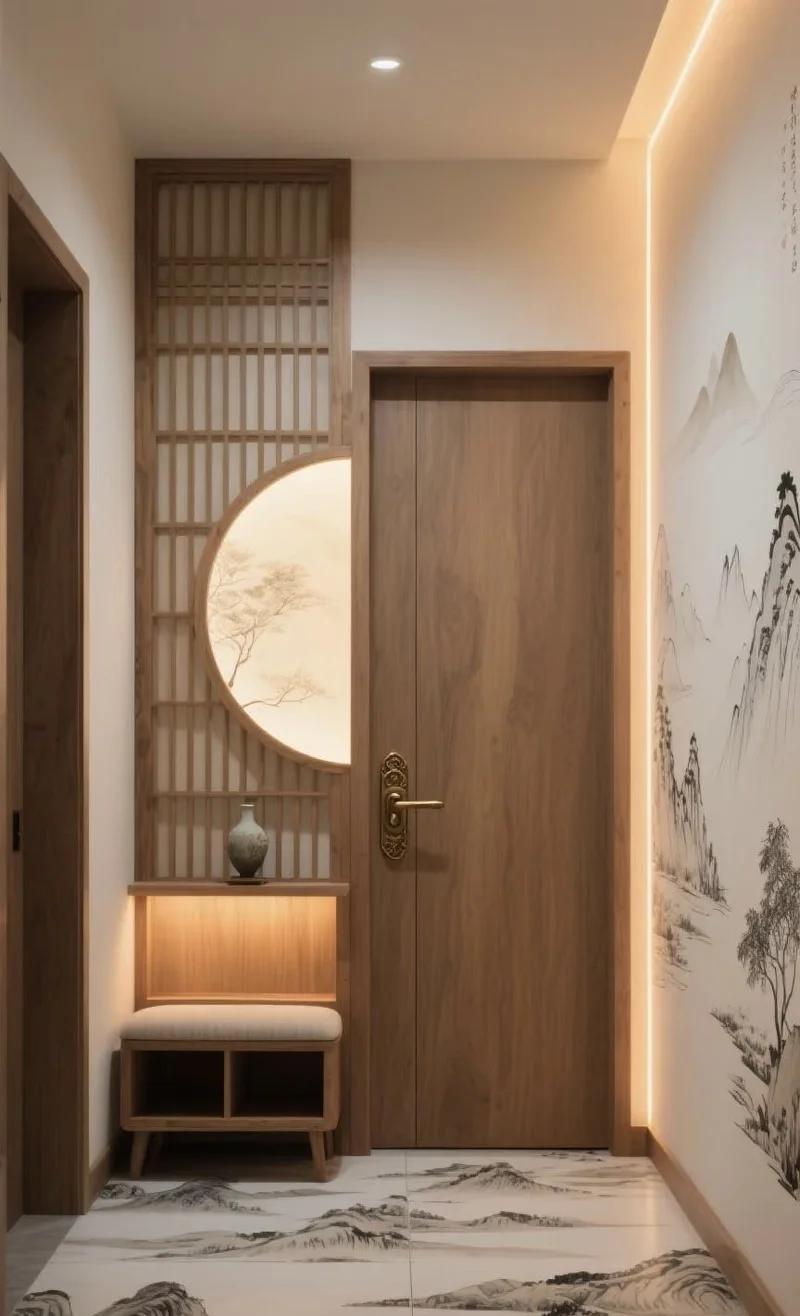
Each door system includes a 15-year warranty covering structural integrity, surface delamination, and dimensional stability under standard interior office conditions (20°C ± 5°C, 45–65% RH).
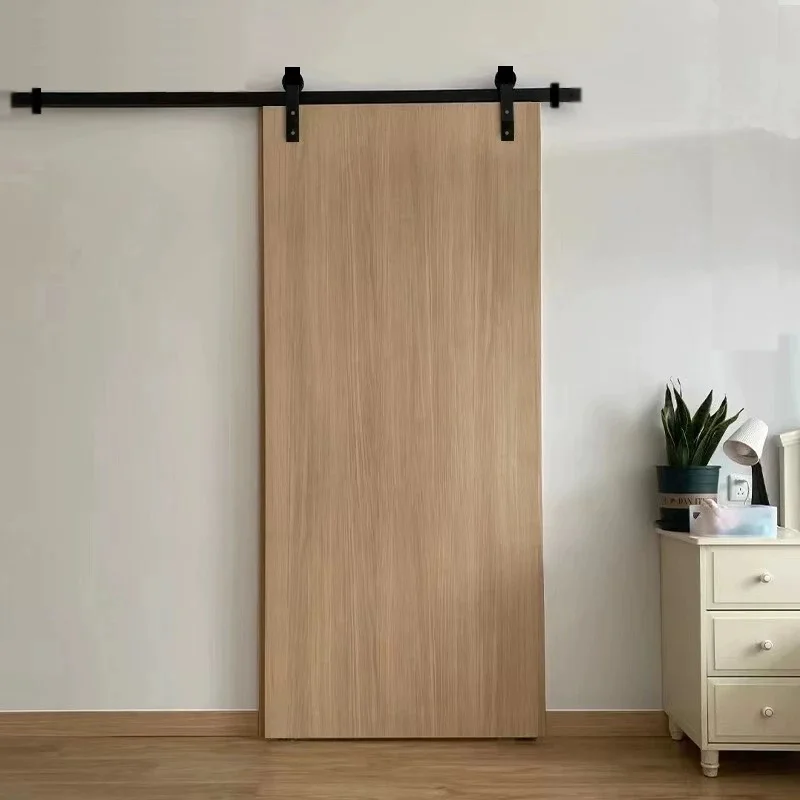
- Fire Resistance: Certified FD30/FD60 per EN 1634-1, with intumescent edge seals and non-combustible mineral board inlays
- Moisture Resistance: WPC frame elements with < 1.2% water absorption; LVL core treated with borate-based biocide
- Dimensional Stability: Warpage < 0.5 mm/m; swelling ratio ≤ 3% thickness after 7-day water exposure
- Acoustic Performance: Up to 42 dB Rw with optional acoustic seals
- Thermal Performance: U-factor 1.8–2.1 W/(m²·K)
- Indoor Air Quality: E1 formaldehyde emission compliance; VOCs < 0.5 mg/m³ (ISO 16000-9)
- Durability: 150,000-cycle hardware testing; 15-year system warranty
| Performance Parameter | Test Standard | Value/Requirement |
|---|---|---|
| Fire Rating | EN 1634-1 / ASTM E-1527 | FD30, FD60 (integrity & insulation) |
| Moisture Absorption (WPC) | ASTM D570 | < 1.2% (24 hrs immersion) |
| Core Density (LVL) | ISO 13083 | ≥ 720 kg/m³ |
| Warpage | ASTM D1037 | < 0.5 mm/m |
| Sound Reduction Index (Rw) | ISO 717-1 | Up to 42 dB |
| Formaldehyde Emission | ISO 12460-5 | E1 grade (< 0.124 mg/m³) |
| U-factor | ISO 10077-1 | 1.8 – 2.1 W/(m²·K) |
| Surface Hardness | ISO 868 | 60–70 Shore D (PVC-acrylic film) |
| Thickness Swelling (7d H₂O) | EN 317 | ≤ 3% |
Frequently Asked Questions
What moisture expansion coefficient should we expect from modern WPC office doors, and how is dimensional stability ensured?
High-performance WPC doors exhibit moisture expansion coefficients below 0.3% after 24-hour water immersion. Stability is achieved through acetylated wood flour, capstock PVC lamination (≥0.3mm), and a sealed LVL core, minimizing swelling. Pre-climatic conditioning at 23°C/50% RH during manufacturing ensures <0.5mm deflection over 2m span under humidity cycling.
How do your solid-core WPC doors comply with E0 formaldehyde and EN 717-1 emission standards?
Our doors achieve E0 certification (<0.05 mg/m³ formaldehyde) using NAF (No Added Formaldehyde) resins in LVL and MUF-bonded WPC composites. Batch-tested per EN 717-1 in climate chambers confirms emissions at 0.03 mg/m³. Materials carry EPD and Declare labels, ensuring compliance with LEED v4 and BREEAM.
What thermal insulation (U-value) and sound attenuation (Rw) do your modern office doors provide?
Doors achieve U-values as low as 1.1 W/m²K via 38mm WPC profiles (density 850 kg/m³) with full polyurethane foam core. Acoustic performance reaches Rw 35 dB, enhanced by perimeter acoustic seals and LVL interlayers. Certified lab reports per ISO 140-3 & ISO 10211 support compliance with Part L & E of building regulations.
How is long-term warping prevented in solid wood-look doors used in high-traffic office environments?
Warp resistance is engineered through symmetric lamination around a 9-ply LVL core (≥1,000 kg/m³), balanced moisture barriers on both faces, and CNC-milled stress-relief channels. Controlled acclimatization at 12% EMC pre-installation and post-lamination UV-stabilized acrylic coating (≥25μm) prevent camber beyond 0.8mm/m over 10 years.
What impact resistance rating do your doors meet, and how is durability validated?
Doors meet EN 12519 Class 5 (high) for operational endurance (200,000 cycles) and impact Class 3 (15 J) via reinforced bottom rails and co-extruded ABS/PVC skins (1.2mm thickness). Drop-ball tests (500g, 1.2m height) show no delamination. All doors are factory pre-tested under IEC 60068-2-75 protocols.
Can your WPC doors be customized for soundproofing in executive office suites?
Yes. Acoustic-optimized variants integrate staggered-density WPC (750–900 kg/m³), lead-free viscoelastic damping interlayers, and perimeter active seals, achieving Rw up to 42 dB. Flush perimeter steel stiffeners eliminate flanking. Design supported by on-site STC field verification and acoustic modeling in ODEON software pre-delivery.
What UV-resistant surface treatments prevent fading in modern-style office doors with natural wood finish?
We apply tri-layer surface protection: (1) ceramic nano-SiO₂ primer, (2) 2K polyurethane base (80μm), and (3) UV-filtered aliphatic polyaspartic topcoat (60μm) with 99% gloss retention after 2,000h Xe-arc weathering (ISO 4892-2). Surface rated for ≥10 years color stability in Zone 3 per ISO 11341.
How is fire performance addressed in WPC core doors for office buildings?
Doors incorporate intumescent WPC matrix with Mg(OH)₂ and ATH flame-retardant additives achieving Euroclass B-s1,d0 per EN 13501-1. Core density (≥920 kg/m³) slows pyrolysis; optional 30-min EI30 fire-rated assemblies include vermiculite edge seals and steel-reinforced frames tested per EN 1634-1.