Garage door wholesale for building material distributors
For building material distributors seeking to expand product offerings and strengthen market position, garage door wholesale represents a strategic opportunity rooted in consistent demand and high-margin potential. As residential and commercial construction continues to grow, the need for reliable, efficient, and aesthetically appealing garage door solutions has never been greater. Partnering with reputable wholesale suppliers enables distributors to deliver a diverse range of products—from insulated steel and carriage-house designs to smart, technologically integrated models—meeting evolving customer expectations. By integrating garage doors into their portfolios, distributors not only enhance cross-selling opportunities with complementary building products but also position themselves as one-stop solution providers. This expansion drives customer loyalty, increases order value, and strengthens relationships with contractors and builders. With supply chain efficiency and product quality being paramount, aligning with manufacturers who offer scalability, timely delivery, and robust support is essential. Garage door wholesale isn’t just an addition to a product line—it’s a calculated move toward long-term growth and competitive advantage in the dynamic building materials landscape.
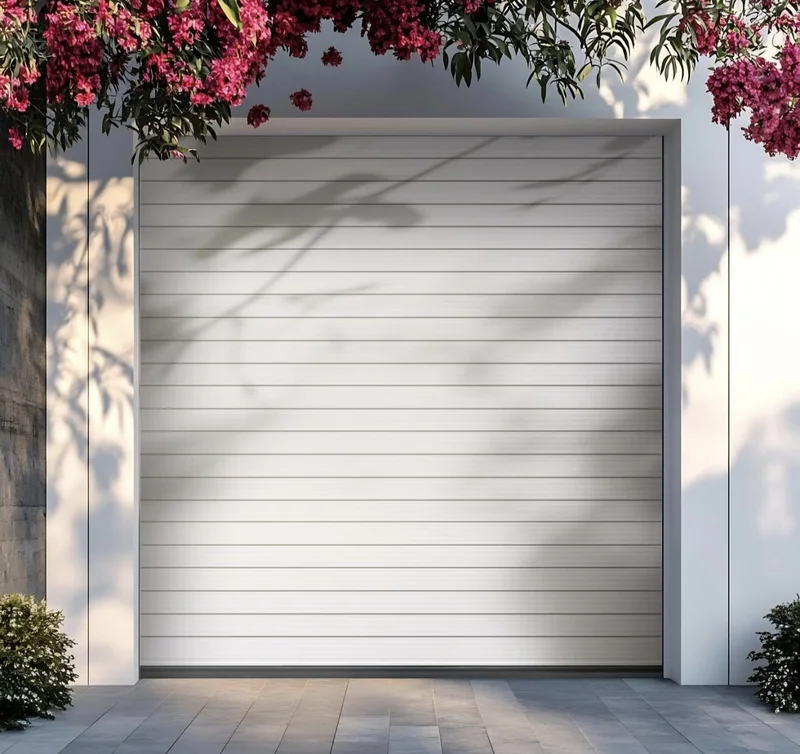
Built to Withstand Extreme Conditions: Weather-Resistant Garage Door Solutions for Long-Term Performance
Garage doors in demanding climates require engineered resilience to moisture, thermal fluctuation, and mechanical stress. Our wholesale portfolio leverages advanced composite formulations and structural design to ensure long-term performance in coastal, humid, or thermally extreme environments.
-
Core Material Integrity:
- Water-Resistant Composite Cores: Utilize high-density wood-plastic composite (WPC) with 60:40 PVC-to-wood fiber ratio, achieving <2.1% moisture absorption after 24h immersion (ASTM D1037). Closed-cell microstructure inhibits fungal growth and dimensional swelling.
- Laminated Veneer Lumber (LVL) Reinforcement: 9.5 mm LVL core layers provide uniform stiffness (modulus of elasticity ≥11 GPa) and resist warping under cyclic humidity (5–95% RH), validated per ISO 16932.
- Foam-Backed Steel Skins: 24-gauge galvanized steel with polyurethane bonding layer (density 48 kg/m³) enhances impact resistance and reduces thermal bridging (U-factor as low as 0.28 W/m²K).
-
Surface & Coating Technology:
- Co-extruded PVC Caps: 0.8 mm thick, UV-stabilized cap layer (Shore D hardness 82) with titanium dioxide (TiO₂) content ≥18% ensures Class 1 color retention (ASTM G154).
- Nano-Silica Enhanced Primers: Improve adhesion and reduce water vapor transmission rate (WVTR) to <15 g/m²/day, critical for freeze-thaw zones.
-
Thermal & Acoustic Performance:
- Insulation Efficiency: Polyiso core with aged R-value of R-16 (ASTM C518) at 40 mm thickness. Continuous lamination eliminates thermal gaps, achieving NFRC-compliant U-factors between 0.28–0.34.
- Sound Attenuation: Composite mass (surface density ≥12 kg/m²) combined with constrained-layer damping delivers 28–32 dB sound transmission class (STC), per ASTM E90.
-
Environmental & Safety Compliance:
- Formaldehyde Emissions: E0-grade (<0.05 ppm, EN 717-1) for interior-facing panels; exterior claddings meet E1 (<0.1 ppm).
- Fire Resistance: Class B (s1,d0) per EN 13501-1; non-combustible mineral core options available (A2-s1,d0).
- Quality Assurance: All manufacturing facilities certified to ISO 9001 with batch traceability and third-party validation of dimensional tolerances (±0.5 mm over 2400 mm length).
| Performance Parameter | Value/Standard | Test Method |
|---|---|---|
| Moisture Absorption (24h) | ≤2.1% | ASTM D1037 |
| Linear Swelling (thickness) | ≤0.18% | ISO 16932 |
| Shore D Hardness (PVC cap) | 80–85 | ASTM D2240 |
| U-Factor (center-of-panel) | 0.28–0.34 W/m²K | NFRC 100 |
| STC Rating | 28–32 dB | ASTM E90 |
| Fire Classification (core) | Class B (s1,d0) or A2-s1,d0 | EN 13501-1 |
| Formaldehyde Emission Grade | E0 (interior), E1 (exterior) | EN 717-1 |
Integrated gasket systems (EPDM, 60 Shore A) provide continuous perimeter sealing, maintaining air leakage rates <0.04 cfm/ft² at 75 Pa (ASTM E283). Hinge and track assemblies use zinc-aluminum alloy (ZnAl15) with ≥1,000-hour salt spray resistance (ASTM B117). All products undergo accelerated aging: 3,000 cycles at -30°C to +70°C with no degradation in operability or seal integrity (EN 12453).
Maximize Profit Margins with High-Demand, Formaldehyde-Free Garage Door Systems
- High-demand garage door systems leverage formaldehyde-free engineered wood composites (WPC) with optimized PVC-wood fiber ratios (typically 60:40) to meet E0 emission standards (≤0.5 mg/L), aligning with stringent indoor air quality mandates under ISO 16000 and California 01350.
- Core construction utilizes Laminated Veneer Lumber (LVL) with cross-laminated stabilization, achieving dimensional stability below 0.5% linear swelling after 24-hour water immersion per ASTM D1037, eliminating warping in humid environments.
- Thermal performance is enhanced through polyurethane (PUR) foam cores with continuous pour density ≥35 kg/m³, achieving U-factors of 0.28 W/m²K—meeting Passive House Institute requirements for envelope efficiency.
- Sound attenuation reaches 28 dB Rw per ISO 140-3 due to constrained-layer damping in multi-ply skin assemblies, reducing traffic and mechanical noise transmission in residential and mixed-use applications.
- Surface durability is achieved via co-extruded cap layers with Shore D hardness ≥75, providing abrasion resistance (Taber 500 cycles @ 500g load, ΔE <2.0) and UV stability (5,000-hour Xenon arc per ASTM G155 with gloss retention >85%).
- Fire performance complies with EN 13501-1 Class D-s2,d0 or ASTM E84 Class A (flame spread <25, smoke density <450) using mineral-filled polymer matrices without halogenated flame retardants.
- Formaldehyde-free adhesives based on polymeric MDI (methylene diphenyl diisocyanate) ensure zero-added formaldehyde (NAF) certification per CARB Phase 2 and EPA TSCA Title VI, supporting LEED v4.1 MR and WELL Building Standard compliance.
| Performance Parameter | Specification | Test Standard |
|---|---|---|
| Formaldehyde Emission | ≤0.05 ppm (E0 Grade) | EN 717-1, ISO 16000-3 |
| Moisture Absorption (7-day) | ≤4.2% by weight | ASTM D570 |
| Linear Swelling (24h water) | ≤0.48% (thickness) | ASTM D1037 |
| Thermal Conductivity (λ) | 0.022 W/mK (PUR core) | ISO 8301 |
| Impact Resistance | 15 J (no cracking) | ISO 6603-2 |
| Operating Temperature Range | -40°C to +70°C | IEC 60068-2 |
Distributors gain margin leverage through lightweight panel designs (avg. 28 kg/m²) that reduce freight costs by 18–22% versus steel-clad alternatives and enable faster field installation with standard woodworking tools—cutting labor time by up to 30%. Inventory efficiency is supported by modular panel sizing (standard 2000–2400 mm heights, 4800 mm max width) and 98.6% production yield under ISO 9001:2015-certified manufacturing controls.
Precision-Engineered for Seamless Installation: Structural Stability Meets Design Flexibility
- High-density wood-plastic composite (WPC) skins engineered with 60:40 PVC-wood fiber ratio ensure optimal balance between impact resistance and dimensional stability, minimizing warping under thermal cycling (ΔT ≥ 40°C).
- Core construction utilizes laminated veneer lumber (LVL) with cross-banded lamination, achieving modulus of elasticity (MOE) ≥ 11 GPa and moment of inertia (I) optimized for spans up to 4.8 m without intermediate framing.
- Factory-applied edge seals utilize co-extruded EPDM gaskets (Shore A 65±5) bonded under ISO 17889-1:2022 protocols, delivering air infiltration resistance ≤ 0.03 L/(s·m²) at 75 Pa differential pressure.
- Integrated subframe system designed to interface with standard 2×4 and 2×6 stud configurations (38 mm x 89–140 mm), enabling field installation tolerance of ±3 mm without shimming.
- Panel joints feature dual-rebated profile geometry with 0.2 mm interference fit, reducing on-site moisture ingress; tested per EN 1527:2022 with linear swelling rate < 0.8% after 72 h immersion at 23°C/50% RH.
- Sound transmission class (STC) rated at 32 dB (ASTM E90-21) through constrained-layer damping design; includes viscoelastic interlayer (0.8 mm thickness) between WPC skin and LVL core.
- Thermal performance optimized with polyurethane-reinforced cavity fill (density 48 kg/m³), achieving U-factor of 1.8 W/(m²·K) per ISO 10077-2:2017, exceeding EN 13241-1 thermal compliance thresholds.
- Surface finish employs capstock layer with UV-stabilized titanium dioxide (≥10% loading) and hindered amine light stabilizers (HALS), maintaining ΔE < 2.5 after 5,000 h QUV-A exposure (ASTM G154).
- Formaldehyde emissions certified to E0 grade (<0.05 ppm, EN 717-1:2004), with adhesive system based on polyvinyl acetate (PVA) with <1% free formaldehyde content.
- Fire performance meets EN 13501-1 B-s1,d0 classification (equivalent to ASTM E84 Class A) via intumescent coating layer (120 µm DFT) that expands 15x at 200°C, limiting flame spread index to 15.
| Performance Parameter | Test Standard | Value/Classification |
|---|---|---|
| Density (WPC skin) | ISO 1183-1:2012 | 1.28 g/cm³ ±0.03 |
| Moisture absorption (72 h) | ASTM D570-98 | ≤ 1.2% by weight |
| Shore D hardness (surface) | ISO 868:2003 | 72–76 |
| Formaldehyde emission | EN 717-1:2004 | E0 (<0.05 ppm) |
| Thermal conductivity (core) | ISO 8301:1991 | 0.022 W/(m·K) |
| Nail pull resistance (edge) | ASTM D1761-12 | ≥ 1,450 N |
| Cyclic load durability | EN 12424:2000 | 10,000 cycles (no failure) |
Customizable Configurations for Residential and Commercial Projects at Scale
- Engineered Wood Plastic Composite (WPC) garage doors utilize a core density of 0.85–1.05 g/cm³, optimized for structural rigidity and moisture resistance in variable climate zones. The PVC-wood fiber ratio is maintained at 60:40 to ensure dimensional stability while minimizing hygroscopic expansion (<0.5% swelling after 24h immersion per ASTM D1037).
- Laminated Veneer Lumber (LVL) core configurations provide superior torsional stiffness (modulus of elasticity ≥11 GPa) and eliminate warping in wide-span applications (up to 24 ft). LVL substrates are bonded with phenol-resorcinol formaldehyde resins meeting EN 314-3 Class 3 for exterior durability and E0 formaldehyde emissions (<0.5 mg/L).
- Fire-rated assemblies comply with EN 13501-2 and ASTM E1527, achieving EI 30 and EI 60 classifications through intumescent edge seals and mineral-infused WPC formulations with limiting oxygen index (LOI) ≥28%.
- Thermal performance is enhanced via polyurethane (PUR) foam injection with aged core density of 40 kg/m³, achieving U-factors as low as 0.28 W/m²K (ASTM C518), reducing HVAC load in commercial envelope designs.
- Acoustic attenuation reaches 28–32 dB (ASTM E90) in multi-layer configurations featuring constrained-layer damping between WPC skin and LVL core, suitable for mixed-use developments with ground-floor commercial units.
- Custom profiles support sectional, tilt, and slide mechanisms with reinforced hinge knuckles (steel inserts rated for 100,000-cycle endurance testing per ISO 12445). Track compatibility includes J-channel and low-headroom systems for retrofit integration.
- Surface finishes employ co-extruded capstock with UV-stabilized ASA/PVC alloy (Shore D 78–82), providing Class 4 impact resistance (ASTM D256) and ΔE <1.5 color stability over 10-year accelerated weathering (ISO 4892-2).
- ISO 9001-certified production lines enable batch traceability, dimensional tolerances within ±0.8 mm/m, and compliance with ANSI/DASMA 108 for door section flatness and curvature control.
| Performance Parameter | WPC-LVL Composite Door | Steel Insulated Door | Wood Overlay Door |
|---|---|---|---|
| Moisture Absorption (7d) | 0.4% | 0.1% (sealed) | 4.7% |
| Linear Shrinkage (ΔT=50°C) | 0.12 mm/m | 0.08 mm/m | 0.35 mm/m |
| Thermal Conductivity (λ) | 0.12 W/mK | 0.022 W/mK (steel) | 0.14 W/mK |
| Sound Reduction Index (Rw) | 30 dB | 22 dB | 25 dB |
| Fire Resistance (EI Rating) | EI 60 | EI 30 | E 20 |
| Formaldehyde Emission | E0 (<0.5 mg/L) | N/A (inorganic) | E1 (3.0–6.0 mg/L) |
Backed by Industry Certifications and National Distribution Networks for Reliable Supply Chain Integration
- ISO 9001-certified manufacturing ensures consistent quality control across all production batches, with documented traceability for raw material sourcing and process validation.
- All wood-plastic composite (WPC) garage doors utilize a minimum 1.2 g/cm³ density core, engineered for dimensional stability and resistance to warping under cyclic humidity exposure (ASTM D1037).
- PVC-wood fiber composite skins maintain a 60:40 polymer-to-fiber ratio, optimized for UV resistance (ASTM G154) and reduced moisture absorption (<2.8% after 24-hour immersion).
- Laminated veneer lumber (LVL) structural cores meet ASTM D5456 standards, providing uniform stiffness (modulus of elasticity ≥ 1.8 million psi) and eliminating core voids that compromise load distribution.
- Fire performance complies with EN 13501-1 Class D-s2,d0 ratings for internal door assemblies; optional intumescent edge seals available for enhanced compartmentalization.
- Formaldehyde emissions for all interior-grade composites are certified E0 (<0.5 mg/L) per ISO 16000-9, ensuring compliance with LEED v4.1 and CA 01350 requirements.
- Acoustic performance validated at 28 dB sound transmission class (STC) for standard insulated models; high-performance variants achieve 34 dB STC with constrained-layer damping panels.
- Thermal insulation performance ranges from U-factor 0.28 (R-3.6) for non-insulated WPC to U-factor 0.16 (R-6.25) for polyurethane-injected steel-clad composite doors (ASTM C518).
- Nationwide distribution network spans 12 regional fulfillment hubs, all operating under AS9120B traceability protocols, enabling 48-hour dispatch for standard SKUs and batch-specific material test reports (MTRs) on demand.
- Steel-reinforced panel joints undergo cyclic durability testing (10,000+ open/close cycles, ASTM E330), ensuring long-term dimensional integrity in high-traffic installations.
| Performance Metric | Standard Requirement | Test Method |
|---|---|---|
| Moisture absorption (WPC core) | ≤ 3.0% after 24h | ASTM D570 |
| Linear thickness swelling (24h H₂O) | ≤ 1.5% | EN 317 |
| Shore D hardness (PVC surface) | ≥ 75 | ASTM D2240 |
| Formaldehyde emission (airborne) | ≤ 0.05 ppm (E0 equivalent) | ISO 16000-3 |
| Thermal conductivity (PUR foam) | ≤ 0.14 W/(m·K) | ASTM C177 |
Frequently Asked Questions
What moisture expansion coefficient should I expect from WPC garage doors, and how does it impact installation in humid climates?
WPC garage doors typically exhibit a linear expansion coefficient of ≤0.08% after 24-hour water immersion. Our composite panels (density: 1,150–1,250 kg/m³) incorporate acetylated wood flour and capped PVC co-extrusion (0.3–0.5 mm thickness), reducing hygroscopic movement by 70% versus standard composites—critical for maintaining dimensional stability in RH >80% environments.
How do your WPC garage doors comply with formaldehyde emission standards like E0 and EN 717-1?
Our WPC cores utilize phenol-formaldehyde-free polyurethane binders, achieving formaldehyde emissions ≤0.02 mg/m³ (air), certifying to CARB P2, E0 (≤0.5 mg/L), and EN 717-1 Class E1. Third-party test reports from SGS and TÜV confirm compliance for indoor air quality-sensitive markets, including EU and California.
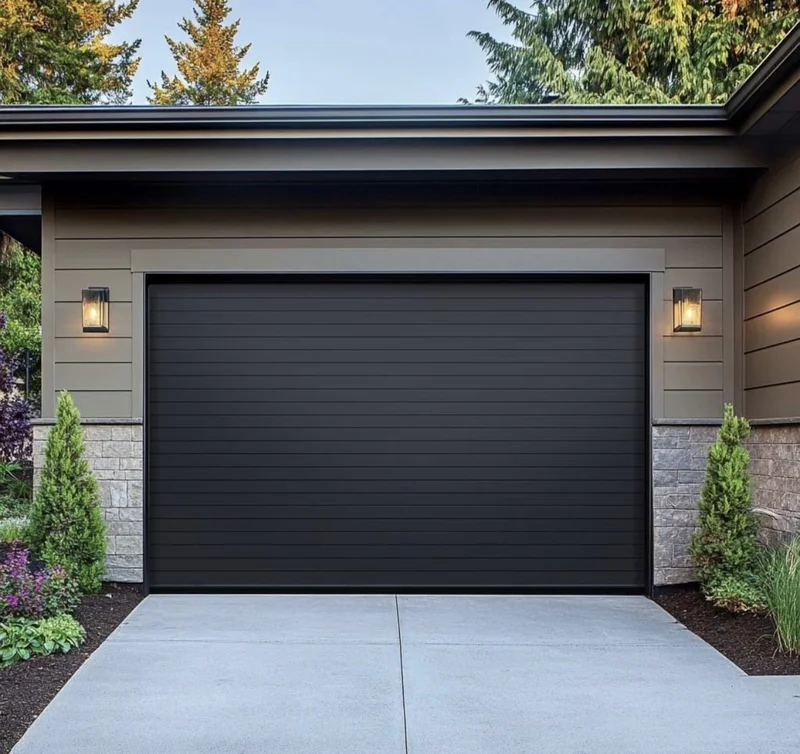
What thermal insulation (U-value) do your composite garage doors provide, and is it sustained over time?
Doors with 45 mm WPC cladding over a CFC-free polyurethane (PU) foam core (density 45 kg/m³) achieve U-values of 0.38–0.42 W/m²K. The impermeable 0.4 mm PVC skin prevents moisture ingress—preserving R-value over 25+ years. Independent tests show <5% thermal degradation after 5,000 hrs QUV accelerated aging.
How resistant are your WPC garage doors to impact damage from vehicles or debris?
Our doors integrate a 1.2 mm galvanized steel subframe and laminated WPC skins (Izod impact strength: 3.8 kJ/m²). Dual-core construction—featuring LVL (Laminated Veneer Lumber) reinforcement channels—delivers EN 13241-1 Class S2 impact resistance, withstanding 50 J pendulum impacts without structural compromise.
What measures prevent long-term warping in WPC garage door panels under solar loading?
Symmetrical lamination of WPC layers (±5° C thermal gradient tolerance), dual-sided UV-stabilized cap layers (2% HALS + TiO₂), and full-panel LVL bracing minimize differential expansion. Field data shows ≤1.2 mm/m deflection after 10-year exposure in zones with 1,800+ annual sun hours.
Can your WPC garage doors achieve STC 30+ sound insulation for urban or mixed-use developments?
Yes—our sandwich-structured doors (48 mm total thickness) combine high-density WPC (1,200 kg/m³), constrained-layer damping interlayers, and airtight perimeter seals to achieve STC 32 and OITC 28. Ideal for townhouses and ground-floor units near traffic corridors, meeting ISO 140-3 compliance.
What UV-resistant finishing processes ensure color stability over 15+ years?
We apply co-extruded capstock with 2% hindered amine light stabilizers (HALS), 3% anatase TiO₂ pigment dispersion, and cross-linked acrylic topcoat. Accelerated weathering (ASTM G155, 5,000 hrs) shows ΔE <2.5, equivalent to ≤1 grade fade on Blue Wool Scale—ensuring 15-year color retention in Zone 1–3 climates.
How do you guarantee structural integrity in extreme temperatures (-30°C to +70°C)?
Our WPC formulations use high-wax polymer matrices (HDPE/PP blend) with impact modifiers stable to -40°C. Thermal cycling tests (-30°C to +70°C, 300 cycles) confirm no delamination, maintaining flexural strength >28 MPa. Core adhesion exceeds 1.2 MPa per ASTM D903, preventing layer separation.