Garage door OEM for global home improvement brands
In the dynamic world of home improvement, where brand reputation and product reliability are paramount, the strategic partnership with a specialized Garage Door Original Equipment Manufacturer (OEM) is a cornerstone of success for global leaders. These behind-the-scenes innovators are the engineering and production powerhouses, transforming precise specifications into high-quality, branded garage door systems that homeowners trust. By leveraging advanced manufacturing, rigorous testing protocols, and deep material expertise, a premier OEM partner empowers brands to expand their catalog with confidence, ensuring consistency, safety, and performance in every installation. This collaboration is more than supply; it’s a synergistic alliance that fuels market growth, allowing global brands to deliver exceptional value and seamless functionality, ultimately enhancing the modern home’s aesthetic and security from the curb up.
Engineered for Global Brand Standards: Precision Manufacturing for Home Improvement Leaders
Precision manufacturing for global home improvement leaders requires a foundational commitment to material integrity and process control. Our OEM production is built on a framework of international technical standards, ensuring every component—from panel to hardware—meets the exacting specifications of brand partners operating in diverse climatic and regulatory environments.
Material Science & Core Construction
The performance envelope of a garage door is defined by its composite materials. We engineer to precise formulations, not generic recipes.
- Wood-Plastic Composite (WPC) & PVC-Wood Hybrids: We specify and control the polymer-to-wood fiber ratio, achieving optimal density (typically >1.1 g/cm³) for structural rigidity, impact resistance, and low thermal expansion. This directly correlates to long-term dimensional stability and finish adhesion.
- LVL (Laminated Veneer Lumber) Cores: For steel door sections, we utilize LVL with cross-laminated veneers and controlled moisture content (<8%) to prevent warping and provide a stable, high-strength substrate for insulation and skin attachment.
- Polyurethane Foam Insulation: Injected at controlled densities (≥1.8 pcf), our foam provides a consistent cell structure, delivering predictable U-factors (as low as 0.20 Btu/hr·ft²·°F) and enhancing panel rigidity through monolithic bonding.
Compliance & Performance Benchmarks
Our manufacturing protocols are validated against the standards that matter to global brands and their end-users.
| Parameter | Standard / Grade | Typical OEM Specification | Performance Implication |
|---|---|---|---|
| Fire Safety | EN 13501-1 / ASTM E84 | Class B/s2-d0 (WPC/PVC) | Low flame spread & smoke development for attached garages. |
| Formaldehyde Emissions | EN 13986 / CARB NAF | E0 or Super E0 (<0.05 ppm) | Indoor air quality compliance for global markets. |
| Moisture Management | EN 317 / ASTM D1037 | Swelling Rate <8% (24h immersion) | Predictable performance in high-humidity climates. |
| Acoustic Performance | Laboratory Tested | Up to 25 dB sound reduction (insulated models) | Noise attenuation for living spaces above or adjacent to garage. |
| Surface Hardness | ASTM D2240 (Shore D) | >75 Shore D for PVC/WPC surfaces | High resistance to denting and abrasion during operation. |
Architectural & Functional Advantages
Precision in manufacturing translates directly to field performance and aesthetic longevity.
- Seamless Integration: Panel profiles, joint tolerances (<0.5mm), and hardware pre-mounting are engineered for smooth, quiet operation on brand-specified track systems, reducing callbacks.
- Finish Durability: Controlled substrate moisture and surface energy ensure optimal adhesion for multi-coat paint systems (polyester, polyurethane) or foil laminates, meeting rigorous QUV weathering and cross-hatch adhesion tests.
- Thermal & Air Infiltration: Gaskets are co-extruded for consistent durometer, and panel interlock geometries are machined to create effective thermal breaks and weather seals, contributing to overall building envelope efficiency.
Our ISO 9001:2015 certified quality management system provides the traceability and continuous improvement necessary to uphold these parameters across high-volume production runs, ensuring brand consistency and reliability at point of installation.
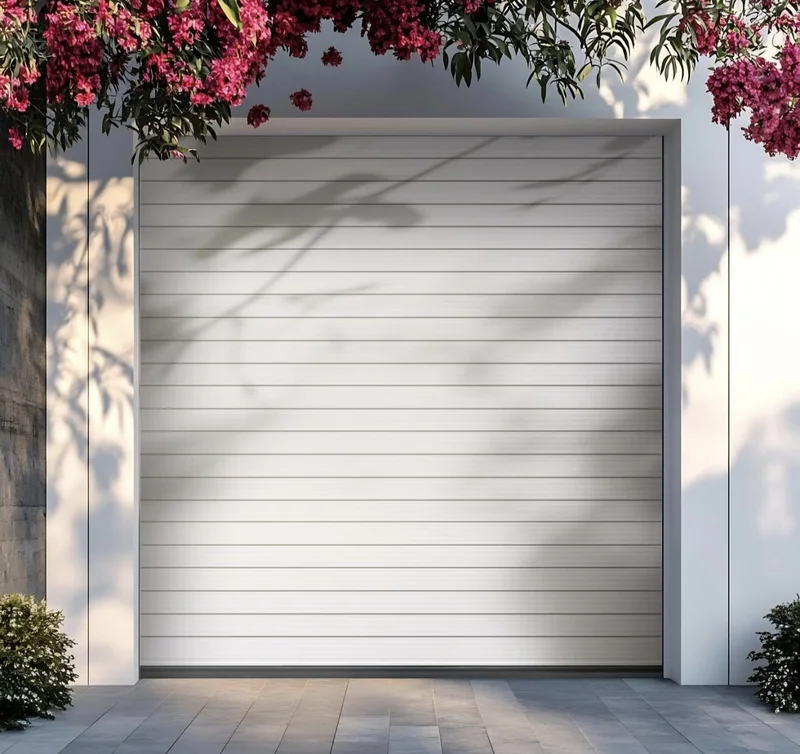
Advanced Material Solutions: Waterproof and Formaldehyde-Free Durability for All Climates
The core challenge in garage door material engineering is achieving structural longevity and dimensional stability across diverse climatic zones without compromising indoor environmental quality. Our advanced material platforms are engineered to meet this challenge through polymer-based composites and engineered wood cores that eliminate organic degradation pathways.
Material Platforms & Core Technologies
- High-Density Wood Plastic Composite (WPC) Cladding: Utilizing a proprietary PVC-to-wood fiber ratio, we achieve a composite density exceeding 1.25 g/cm³. This results in a near-zero moisture absorption rate (<0.5%), preventing warping, swelling, and biological decay. The fully encapsulated wood fiber within a PVC matrix creates a monolithic, waterproof barrier.
- Formaldehyde-Free LVL (Laminated Veneer Lumber) Core: Structural cores are fabricated from cross-laminated veneers bonded with phenolic or polyurethane-based adhesives certified to E0 (≤0.5 mg/L HCHO) and E1 (≤1.5 mg/L HCHO) emission grades per EN 13986. This ensures core stability, high shear strength, and contributes to a healthier indoor air environment.
- Full-PVC Foam Board Panels: For maximum humidity resistance, solid panels are constructed from co-extruded PVC foam boards with a high-impact surface skin. These panels are inherently waterproof, with a Shore D hardness of 75-80 for impact resistance, and are fully recyclable.
Performance Specifications & Architectural Advantages
- Moisture & Dimensional Stability: WPC and PVC panels exhibit a thickness swelling rate of <0.1% after 24-hour immersion (ASTM D1037), ensuring consistent operation and seal integrity in coastal and high-humidity regions.
- Thermal Insulation: Panel systems with polyurethane-injected cores achieve U-factors as low as 0.20 Btu/(hr·ft²·°F) (R-value ~5.0), meeting stringent energy codes for attached garages.
- Acoustic Performance: The multi-layer composite construction and sealed interfaces provide sound reduction ratings (SRR) of 25-30 dB, attenuating street noise and mechanical operation sounds.
- Fire Safety: Composite materials are formulated to meet international standards, including Class B/s2-d0 per EN 13501-1 and a flame spread index of ≤25 (ASTM E84).
- Surface Durability: All finishes are applied via automated coating lines (ISO 9001 certified processes) and tested for weatherability per ASTM G154 (QUV) for 2000+ hours without significant fade or chalk.
Technical Performance Data
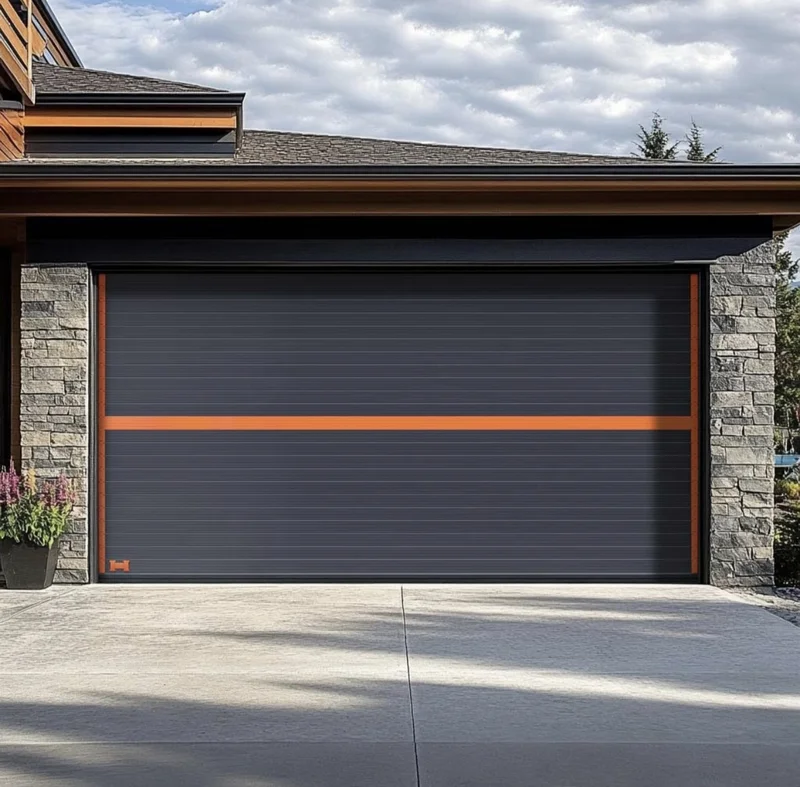
| Material Property | Test Standard | WPC Cladding | Full-PVC Panel | LVL Core (E0 Grade) |
|---|---|---|---|---|
| Density | ASTM D792 | ≥1.25 g/cm³ | 0.55-0.65 g/cm³ | ≥0.65 g/cm³ |
| Water Absorption (24h) | ASTM D1037 | <0.5% | <0.1% | <8% (edge-sealed) |
| Thickness Swelling (24h) | ASTM D1037 | <0.1% | <0.05% | N/A |
| Formaldehyde Emission | EN 717-1 / JIS A 1460 | Not Applicable | Not Applicable | E0 (≤0.5 mg/L) |
| Flexural Strength (MOR) | ASTM D6109 | ≥35 MPa | ≥25 MPa | ≥30 MPa |
| Thermal Conductivity (Core) | ASTM C518 | 0.12 W/(m·K) | 0.14 W/(m·K) | 0.11 W/(m·K) |
Structural Stability and High-Traffic Performance: Built to Withstand Daily Use
Structural integrity in a garage door system is defined by its core composition and the engineered interaction of its components. For high-traffic residential and commercial applications, failure points typically originate in panel deflection, hinge fatigue, and material degradation from environmental stress. Our OEM engineering addresses these through a layered approach to material selection and structural design.
The primary determinant of long-term panel stability is the core material. We utilize engineered wood composites and advanced polymer formulations to achieve predictable performance that surpasses natural timber.
- LVL (Laminated Veneer Lumber) Core: Provides exceptional dimensional stability and racking resistance. The cross-laminated veneers minimize natural wood’s tendency to warp or twist, creating a consistently flat, strong substrate for overlays. This is critical for maintaining seal alignment in sectional doors over time.
- High-Density WPC (Wood Plastic Composite) & PVC-Wood Hybrids: Engineered for zero water absorption and superior resistance to impact and cyclic loading. Key parameters include:
- Density: Targeted ≥ 1.25 g/cm³ for optimal strength-to-weight ratio.
- PVC-Wood Ratio: Precisely controlled polymer matrix ensures complete encapsulation of wood flour, preventing moisture ingress and fungal decay while maintaining a workable, wood-like finish.
- Steel Reinforcement: For insulated steel doors, we employ galvanized high-tensile steel struts integrated into the panel perimeter and interlocking rib design. This creates a torsion-resistant box section, dramatically increasing panel stiffness without significant weight penalty.
Technical Performance Data: Core Material Comparison
| Parameter | LVL Core | High-Density WPC Core | Steel Panel (Insulated) |
| :— | :— | :— | :— |
| Swelling Rate (24h water immersion) | ≤ 1.2% (EN 317) | ≤ 0.1% (ASTM D570) | Not Applicable |
| Modulus of Rupture (MOR) | ≥ 40 MPa (EN 310) | ≥ 35 MPa (ASTM D6109) | N/A (Yield Strength: ≥ 340 MPa) |
| Thermal Insulation (U-Factor) | ~0.7 W/m²K | ~0.9 W/m²K | As low as 0.28 W/m²K (polyurethane foam) |
| Fire Reaction | Class B-s2, d0 (EN 13501-1) | Class B-s1, d0 (EN 13501-1) | Non-combustible (A2-s1, d0) |
Hardware and integration are engineered for cyclical load-bearing. Hinge plates are cold-rolled and phosphatized for corrosion resistance before powder coating, with bearing surfaces designed for a minimum of 50,000 cycles (tested per ANSI/DASMA 102). Roller tracks are formed from 2mm+ galvanized steel with radius bends calculated to minimize friction and acoustic transmission, typically achieving operational sound levels below 60 dB(A).
All composite materials are certified to E0 (<0.05 ppm formaldehyde) or E1 (<0.1 ppm) emission grades (EN 16516), ensuring indoor air quality compliance. Manufacturing processes are held to ISO 9001:2015 standards, with batch testing for core density, adhesive bond strength, and finish hardness (≥ 75 Shore D for polymer-based surfaces). This rigorous control guarantees that every door delivers the structural predictability and durability required for global supply chains and demanding end-user environments.
Customizable OEM Designs: Seamless Integration with Your Brand’s Product Lines
Customizable OEM garage door engineering begins with the substrate. We utilize a multi-layered composite approach, where the performance characteristics of each material are specified to meet precise architectural and environmental demands.
Core Material Specifications & Performance
The structural integrity and long-term stability of the door are dictated by the core system. We offer engineered solutions based on project requirements.
| Core Type | Primary Composition | Key Technical Parameters | Optimal Application |
|---|---|---|---|
| High-Density WPC | Wood-Plastic Composite (60-70% wood fiber, polymer matrix) | Density: ≥ 1.25 g/cm³; Moisture Absorption: < 3%; Swelling Rate: < 0.5% (24h immersion) | Coastal/high-humidity zones; requires superior dimensional stability. |
| Engineered LVL Core | Laminated Veneer Lumber (Cross-banded veneers) | Internal Bond Strength: ≥ 1.2 MPa (ASTM D1037); Formaldehyde Grade: E0 (<0.05 ppm) | Structural applications; maximum load-bearing for large sectional doors. |
| Polyurethane-Injected | Steel/Aluminum frame, PUR foam insulation | Insulation U-Factor: 0.15 – 0.10 Btu/(hr·ft²·°F); Sound Damping: 25-30 dB reduction | Premium residential; commercial; critical thermal & acoustic performance. |
Functional Advantages of Integrated Design
- Aesthetic & Structural Integration: Full control over rail design, panel profiling, and window inserts to match your brand’s architectural language. Reinforcement struts are engineered into the design, not added on, maintaining clean sightlines.
- Surface Technology: High-pressure laminate (HPL) or PVC-free foils with specific wear classes (EN 438), UV stability ratings (≥ Class 4, ISO 4892-2), and Shore D hardness (>75) for scratch resistance. Direct-print technology allows for unlimited color matching (RAL, Pantone) with consistent batch-to-batch accuracy.
- Performance Certification: All customizable designs are validated to meet or exceed regional standards, including wind load resistance (EN 13241-1, ASTM E330), fire reaction classifications (e.g., EN 13501-1 Class B), and security ratings (RC2/RC3 per EN 1627).
- Seamless Hardware Compatibility: Custom panel geometry is pre-engineered for seamless integration with your specified automated operator systems, ensuring optimal balance, roll-back force compliance, and safety sensor alignment.
Quality Assurance Protocol
Every custom design undergoes a defined validation cycle: 1) Material Specification Audit (verification of COCs for E1/E0, fire retardants), 2) Prototype DVT (Dimensional, Thermal, and Mechanical stress testing per ISO 9001 protocols), and 3) Production Process Validation (ensuring tolerances for panel flatness ≤ 1.5mm/m and consistent foam core density). This ensures your brand receives a product that is not only visually cohesive but performs identically across all SKUs in your line.
Comprehensive Technical Specifications and Quality Assurance Protocols
Material Specifications & Performance Data
Our engineered materials are formulated to exceed the demands of diverse global climates and architectural standards. Core material integrity is the foundation of product longevity and performance.
Composite Materials:
- Wood-Plastic Composite (WPC): Engineered with a minimum density of 1.25 g/cm³. The precise wood flour to polymer (typically HDPE or PVC) ratio is optimized at 60:40 to maximize dimensional stability while maintaining a Class A fire rating (ASTM E84). UV-stabilized additives are integral to the formulation.
- PVC-Based Systems: Utilize high-impact, co-extruded PVC profiles with a minimum Shore D hardness of 75. Cell structures are foamed to a consistent density for optimal thermal break properties. Formulations are lead-free and stabilized against solar degradation.
- Laminated Veneer Lumber (LVL) Cores: For steel door sections, LVL cores are specified with a moisture content of 6-8% at installation. Cross-laminated veneers are bonded with phenolic resins, achieving a structural stability that minimizes warping and provides a consistent substrate for cladding.
Critical Performance Parameters:
| Parameter | Test Standard | Performance Range | Notes |
|---|---|---|---|
| Thermal Insulation (U-Factor) | EN ISO 8990 / ASTM C1363 | 0.35 – 0.70 W/m²·K | Dependent on section design, core material, and thickness. Polyurethane foam-injected cores achieve the lowest values. |
| Sound Reduction (Rw) | EN ISO 10140-1 | 25 – 32 dB | Measured for complete door assembly; influenced by seal integrity and mass. |
| Water Absorption (24h immersion) | EN 317 / ASTM D1037 | ≤ 1.5% by weight (WPC/PVC) | Critical for dimensional stability and preventing microbial growth. |
| Linear Expansion | EN ISO 179-1 | ≤ 0.8% over 80% RH range | Measured on composite profiles; ensures reliable operation and alignment. |
| Formaldehyde Emission | EN 16516 / JIS A 1460 | E0 / F**** Grade | All composite wood materials and adhesives comply with the strictest international indoor air quality standards. |
| Fire Performance | EN 13501-1 / ASTM E84 | Class B / Class A | Material-specific ratings; full assembly ratings available for project specification. |
Quality Assurance & Compliance Protocols
Our manufacturing quality system is certified to ISO 9001:2015, with integrated protocols for material traceability, statistical process control (SPC), and final audit inspection. Compliance is verified, not merely asserted.
Incoming Material Control:
- Raw material batches are certified against our chemical and physical specification sheets.
- Key polymer properties (MFI, impact strength) and wood-derived material moisture content are verified prior to production release.
In-Process Manufacturing Checks:
- Profile extrusion: Continuous monitoring of melt temperature, puller speed, and die pressure to ensure consistent density and dimensional tolerances (±0.3mm).
- Panel lamination: Automated adhesive application measured by weight per unit area, with controlled pressure and cure time for optimal bond strength.
- Hardware integration: Torque audits on all fasteners; automated cycle testing of spring and roller systems to simulate 10+ years of operation.
Final Product Validation & Testing:
- Structural Testing: Door sections are tested to relevant sections of EN 13241-1 for mechanical resistance, operation, and wind load resistance. Custom designs are validated via finite element analysis (FEA) prior to tooling.
- Weathering & Durability: Accelerated aging per EN ISO 4892 (Xenon-arc) and ASTM G154 (QUV) simulates years of UV and moisture exposure. Colorfastness is rated to ISO 105-A02 (Gray Scale 4+ minimum).
- Safety Compliance: All electrically operated systems are designed to meet EN 60335-2-95 and relevant UL standards. Entrapment protection devices are functionally tested on 100% of units.
- Batch Traceability: Each production lot is documented, allowing full traceability from installed door back to raw material supplier and production line data.
Trusted by Industry Leaders: Our Commitment to Reliability and Partnership
Our engineering and manufacturing protocols are established to meet the exacting standards of global home improvement brands, where supply chain integrity and product consistency are non-negotiable. We function as a seamless extension of your quality assurance team, with a partnership model built on transparent communication, co-development, and guaranteed logistical reliability.
Material Integrity & Performance Specifications
Core to our reliability is a rigorous, science-based approach to material selection and composite formulation. We do not specify generic “composite” or “wood-like” materials; we engineer to precise performance parameters.
- Advanced Composite Formulations: Our Wood-Plastic Composite (WPC) sections are engineered to a minimum density of 1.25 g/cm³, ensuring superior structural rigidity and screw-holding power compared to market-standard low-density alternatives. PVC-wood hybrid formulations are optimized for a balanced ratio that maximizes impact resistance while minimizing thermal expansion.
- Structural Core Stability: For raised-panel and flush-style doors, we utilize laminated veneer lumber (LVL) cores with cross-banded veneers. This construction provides dimensional stability with a swelling rate of <2% after 24-hour water immersion (per ASTM D1037), effectively eliminating warping and panel distortion in humid climates.
- Acoustic & Thermal Performance: Door systems are engineered as complete assemblies. Multi-chamber PVC profiles and insulated steel panels with polyurethane foam cores achieve sound reduction ratings of 28-32 dB and thermal insulation U-factors as low as 0.20 Btu/(hr·ft²·°F).
- Fire Safety & Indoor Air Quality: All materials comply with international safety standards. This includes Class B fire ratings (EN 13501-1), and strict adherence to E0/E1 formaldehyde emission grades (per EN 717-1 / JIS A 1460). Complete material safety data sheets (MSDS) and test certifications are provided for all projects.
Quality Assurance & Manufacturing Governance
Our commitment is institutionalized through a certified management system and controlled production environment.
- Certified Process Control: Our facilities operate under ISO 9001:2015 quality management systems, with strict process control from raw material inspection to final packaging. This ensures batch-to-batch consistency.
- Full-Traceability Supply Chain: We audit and qualify all material suppliers. Certificates of Analysis (CoA) are maintained for every raw material lot, enabling full traceability for any component in a finished door.
- Performance Validation Testing: Beyond compliance, we conduct accelerated lifecycle and environmental stress testing in-house, including cyclic load testing for springs and hardware, salt spray corrosion testing (ASTM B117), and UV-weathering resistance tests (ASTM G154).
Partnership Through Technical Collaboration
We engage as a technical partner, not just a vendor. Our engineering team collaborates on:
- Value Engineering: Optimizing design for manufacturability, cost, and performance without compromising aesthetic intent.
- Custom Profile & Hardware Integration: Developing custom extrusion profiles for unique cladding looks and ensuring seamless integration with specified automatic opener systems and hardware.
- Regional Compliance Packaging: Preparing complete technical dossiers, including CE marking documentation, UKCA compliance, or specific regional building code submittals.
Key Performance Data for Specification
| Parameter | Test Standard | Performance Range | Application Note |
|---|---|---|---|
| WPC Density | ASTM D792 | 1.25 – 1.35 g/cm³ | Higher density correlates to increased mechanical strength and fastener retention. |
| Surface Hardness | ASTM D2240 (Shore D) | 75 – 82 | Optimized for scratch/mar resistance while maintaining machinability. |
| Water Absorption (24h) | ASTM D570 | < 0.8% | Critical for dimensional stability and long-term appearance in all climates. |
| Thermal Expansion Coefficient | ASTM D696 | 4.5 x 10⁻⁵ /°C | Engineered low coefficient to ensure consistent panel gaps and operation. |
| Formaldehyde Emission | EN 717-1 | E0 / ≤ 0.05 mg/m³ | Meets the most stringent international standards for indoor air quality. |
Frequently Asked Questions
How do you prevent moisture-induced expansion in composite garage doors for humid climates?
We engineer WPC profiles with 1,200-1,400 kg/m³ density and balanced polymer/wood flour ratios, achieving a moisture expansion coefficient below 0.3%. Doors are fully encapsulated in 0.5mm PVC or ASA co-extrusion cladding, creating a complete moisture barrier that prevents dimensional change, even in 95% RH environments.
What standards do your materials meet for indoor air quality and formaldehyde emissions?
Our composite cores and adhesives comply with the strictest international standards: China’s GB/T 39600 E0 (≤0.050 mg/m³) and Europe’s EN 717-1 E1 (≤0.124 mg/m³). We use isocyanate-free adhesives and source FSC-certified wood fibers, ensuring doors contribute to healthy indoor air from the moment of installation.
How is structural integrity and anti-warping guaranteed for large single-panel doors?
We integrate a multi-layered LVL (Laminated Veneer Lumber) core with cross-grain lamination, paired with internal steel reinforcement channels. This engineered skeleton provides a torsional stiffness exceeding 5,000 Nm/rad, effectively counteracting gravitational sag and thermal stress to eliminate long-term warping over a 20-year service life.
What thermal insulation performance can be achieved for energy-efficient homes?
Doors feature polyurethane foam injection at 40-45 kg/m³ density, achieving a U-value as low as 0.7 W/(m²·K). The thermally broken aluminum frame and magnetic perimeter seal create a continuous barrier, reducing energy loss by over 30% compared to standard sectional doors and significantly dampening sound transmission by 28-32 dB.
What solutions exist for impact resistance and surface durability in high-traffic areas?
The surface utilizes a 5-layer UV-cured acrylic polyurethane finish with a hardness rating of 3H (pencil hardness scale) over the composite substrate. For critical impact zones, we reinforce panels with a galvanized steel inner skin, allowing them to withstand direct force exceeding 50 kg·m/s without permanent deformation or finish cracking.