Solid wood door ODM service design R&D engineering solution exclusive customization
In the realm of architectural elegance and enduring craftsmanship, the solid wood door stands as a definitive statement. Moving beyond standard offerings, our specialized ODM service represents a paradigm shift, transforming your vision into a tangible masterpiece of design and engineering. We partner with you from the initial spark of inspiration through meticulous research and development, integrating advanced engineering solutions with artisanal woodworking traditions. This is not merely customization; it is an exclusive collaboration dedicated to solving unique architectural challenges, ensuring every grain, joint, and finish reflects your specific functional requirements and aesthetic ambition. Discover a service where innovation is carved from solid timber, delivering doors that are as unique as the spaces they grace.
Transform Your Architectural Vision with Bespoke Solid Wood Door Solutions
Bespoke solid wood door engineering begins with a material science foundation, ensuring structural integrity and performance longevity. Our R&D process selects and engineers wood species based on specific project parameters, including environmental exposure, acoustic requirements, and load-bearing needs. Core stability is paramount; we utilize engineered wood cores like LVL (Laminated Veneer Lumber) for dimensional stability, preventing warping and twisting in environments with fluctuating humidity. For composite solutions, we precisely control WPC (Wood-Plastic Composite) density profiles and PVC-wood ratios to achieve target performance metrics for Shore D hardness, moisture resistance, and thermal expansion coefficients.
Functional Advantages of Engineered Bespoke Solutions:
- Acoustic Performance: Engineered core and seal integration achieves sound reduction ratings up to 40-45 dB (Rw), with performance validated to ASTM E90 and ISO 10140 standards.
- Fire & Safety Compliance: Doors are engineered to meet specified fire ratings (EN 1634-1, UL 10C, BS 476) with intumescent seal systems. All materials adhere to stringent formaldehyde emission standards (E0 / E1 / CARB Phase 2).
- Environmental Stability: Proprietary finishing and sealing technologies yield moisture absorption rates below 2.5% (per ASTM D1037), with dimensional swelling rates controlled to <0.3% under EN 321 cyclic testing.
- Thermal Efficiency: Integrated thermal breaks and core materials contribute to U-factors as low as 0.8 W/(m²·K), enhancing building envelope performance.
- Structural Integrity: Custom hardware integration is pre-engineered with reinforced lock blocks and hinge preparations, supporting heavy-duty cycles exceeding Grade 1 ANSI/BHMA A156.2 standards.
The following table outlines key performance parameters for standard engineered core options, which are further customized based on project-specific architectural and environmental specifications.
| Core Type / Parameter | LVL (Laminated Veneer Lumber) | Solid Stave (Glued) | High-Density Particle Board |
|---|---|---|---|
| Primary Application | High-stability interior/exterior, wide dimensions | Premium interior, traditional craftsmanship | Cost-optimized interior, painted finishes |
| Density (kg/m³) | 680 – 720 | 550 – 750 (species dependent) | 750 – 850 |
| Dimensional Stability (Swelling Rate) | ≤ 0.25% | ≤ 0.4% (with stabilization) | ≤ 0.3% |
| Recommended Max. Panel Width | 1200mm | 900mm | 1000mm |
| Acoustic Insulation (Rw) | Up to 42 dB | Up to 38 dB | Up to 40 dB |
| Formaldehyde Grade | E0 / E1 | E0 (Adhesive Dependent) | E1 / Super E0 |
Our exclusive customization extends to full-scale prototyping and finite element analysis (FEA) for unique geometries or extreme performance requirements. We manage the complete ODM workflow from CAD/CAM design and CNC machining to finishing system application, ensuring every component—from substrate to hardware—meets the integrated design intent and specified ISO 9001 quality management protocols.
Engineered for Superior Performance: Our ODM R&D Process Delivers Unmatched Quality
Our ODM R&D process is a systematic engineering discipline, not a design exercise. It begins with computational modeling to predict material behavior under stress, humidity, and thermal cycling before any physical prototype is built. This predictive analysis is critical for optimizing the door’s core-shell interface and hinge load distribution, ensuring long-term dimensional integrity.
Material Science & Core Engineering
The performance envelope of a solid wood door is defined by its composite structure. Our R&D focuses on the precise engineering of each layer:
- Stabilized Core: We utilize cross-laminated LVL (Laminated Veneer Lumber) or engineered wood blocks with controlled moisture content (<8%). This core is precision-machined to create a matrix that resists warping and twisting, with a dimensional stability tolerance of ≤0.5% swelling after 24-hour water immersion (ASTM D1037).
- Advanced Composite Skins: For specialized applications, we engineer Wood-Plastic Composite (WPC) and PVC-wood hybrid facings. Key R&D parameters include:
- WPC Density: Optimized between 1.15-1.35 g/cm³ to balance impact resistance and machinability.
- PVC-Wood Ratio: Scientifically calibrated to enhance UV stability and reduce linear thermal expansion to <0.06% per °C.
- Adhesive Systems: We employ cross-linking polymer adhesives with cure cycles engineered for full penetration, resulting in a bond strength exceeding the substrate’s internal cohesion. All adhesives are certified to E0 (≤0.5 mg/L) or E1 (≤1.5 mg/L) formaldehyde emission grades (EN 13986).
Performance Validation & Testing Protocols
Every design undergoes a battery of accredited laboratory tests that define its architectural specifications. Our R&D cycle is not complete until these metrics are validated.
| Performance Category | Test Standard | Our Typical Engineered Performance | Industry Standard Benchmark |
|---|---|---|---|
| Structural Load | ASTM E330 | Sustains 7200 Pa positive/negative pressure without failure. | 4800 Pa (Typical Residential) |
| Acoustic Insulation | ASTM E90 / EN ISO 717-1 | Achieves STC 35-42 dB, with core damping layers targeting specific frequency ranges. | STC 28-32 dB (Standard Solid Core) |
| Fire Resistance | EN 1634-1 / ASTM E119 | Engineered for FD30 (30-minute integrity) to FD60 ratings, using intumescent sealants and non-combustible core materials. | – |
| Thermal Insulation | EN 12412 / ASTM C1363 | U-factor as low as 0.8 W/m²·K, achieved through insulated core designs and thermal-break edge banding. | 1.2-1.5 W/m²·K (Non-Insulated) |
| Surface Hardness | ASTM D2240 | Shore D hardness of 75-85 for composite facings, providing superior resistance to denting and abrasion. | Shore D 65-75 |
Functional Advantages Delivered by This Process:
- Predictable Lifespan: Doors are engineered for a specific service environment (e.g., coastal high-humidity, high-traffic commercial), with fatigue life modeled for >500,000 cycles on hinge and lock points.
- Climate Resilience: Moisture absorption rate is engineered to be below 12% for composite materials, preventing delamination and swelling in relative humidity up to 85%.
- Installation Precision: CNC-machined hardware preps and bore patterns ensure consistent fit and alignment, reducing on-site adjustment time and callbacks.
- Regulatory Assurance: Full traceability of materials and processes underpins compliance with international standards, including ISO 9001:2015 for quality management and relevant building codes (IBC, Eurocode).
This empirical, data-driven R&D methodology transforms subjective material selection into a predictable performance equation, delivering doors that are specified with confidence for projects where tolerance for failure is zero.
Customization at Every Stage: From Design to Engineering for Your Exact Specifications
Our ODM process is engineered to integrate your specifications directly into the material selection, structural design, and performance validation phases. This ensures the final product is not merely an aesthetic match but a performance-engineered component for your specific architectural application.
Design Phase: Specification-Driven Material Architecture
- Core & Substrate Engineering: We select and engineer the core material based on structural and environmental requirements. For high-stability applications, we utilize cross-laminated LVL (Laminated Veneer Lumber) cores with controlled moisture content (<8%) to prevent warping. For acoustic or thermal priority, a honeycomb or solid particleboard core with defined density (≥ 680 kg/m³) is specified.
- Veneer & Laminate Selection: Beyond species and cut, we engineer the surface layer for performance. This includes specifying the thickness (0.6mm – 6mm), grain direction, and backing material of real wood veneers, or selecting high-pressure laminates (HPL) with defined wear resistance (EN 438-2: ≥ 4000 cycles) and impact resistance.
- Functional Layer Integration: Customization includes integrating pre-finished surfaces, fire-resistant coatings, or bactericidal layers at the laminate stage, ensuring chemical and mechanical compatibility with the substrate.
Engineering Phase: Performance Validation & Prototyping
- Material Science Compliance: All material combinations are validated against target standards. This includes formaldehyde emission grades (E0 ≤ 0.5 mg/L, E1 ≤ 1.5 mg/L per EN 717-1), fire reaction class (e.g., EN 13501-1: B-s1,d0), and mechanical load testing (hinge strength, impact per ANSI/BHMA A156.2).
- Prototype Performance Testing: A functional prototype is built and subjected to a subset of tests to verify performance predictions before tooling. Key metrics are measured and reported.
| Performance Category | Standard Test Method | Typical Customizable Range | Key Engineering Parameter |
|---|---|---|---|
| Acoustic Insulation | ASTM E90 / ISO 10140-2 | 28 dB – 40 dB (Rw) | Core density, sealing system design, mass-spring-mass layer composition. |
| Thermal Insulation | ASTM C518 / ISO 8990 | U-factor: 0.7 – 1.2 W/m²·K | Core insulation value, thermal break in frame, edge-sealing. |
| Moisture Stability | EN 1128 (Swelling Test) | Edge Swelling: ≤ 12% (24h immersion) | Type of edge banding (PVC, ABS, wood), sealant penetration, substrate moisture resistance. |
| Surface Hardness | ASTM D2240 (Shore D) | D70 – D85 | Overlay material (HPL, lacquer), coating thickness, curing process. |
- Dimensional & Joinery Engineering: We adapt door slab dimensions, stile-and-rail profiles, and joinery methods (e.g., mortise & tenon, dowel) to meet load-bearing requirements and ensure seamless integration with specified hardware (pivots, closers, access control).
Final Validation: Documentation & Quality Gates
- Technical Data Package (TDP) Delivery: For each custom order, we provide a comprehensive TDP including material datasheets, test reports, installation torque specifications, and maintenance protocols.
- Quality Process Integration: The custom specification is embedded into our ISO 9001-controlled production workflow, with defined inspection points (IQC, PQC, FQC) for critical parameters like dimensional tolerance (±0.5mm), finish consistency, and hardware fit.
Advanced Material Science: Ensuring Structural Integrity and Long-Term Durability
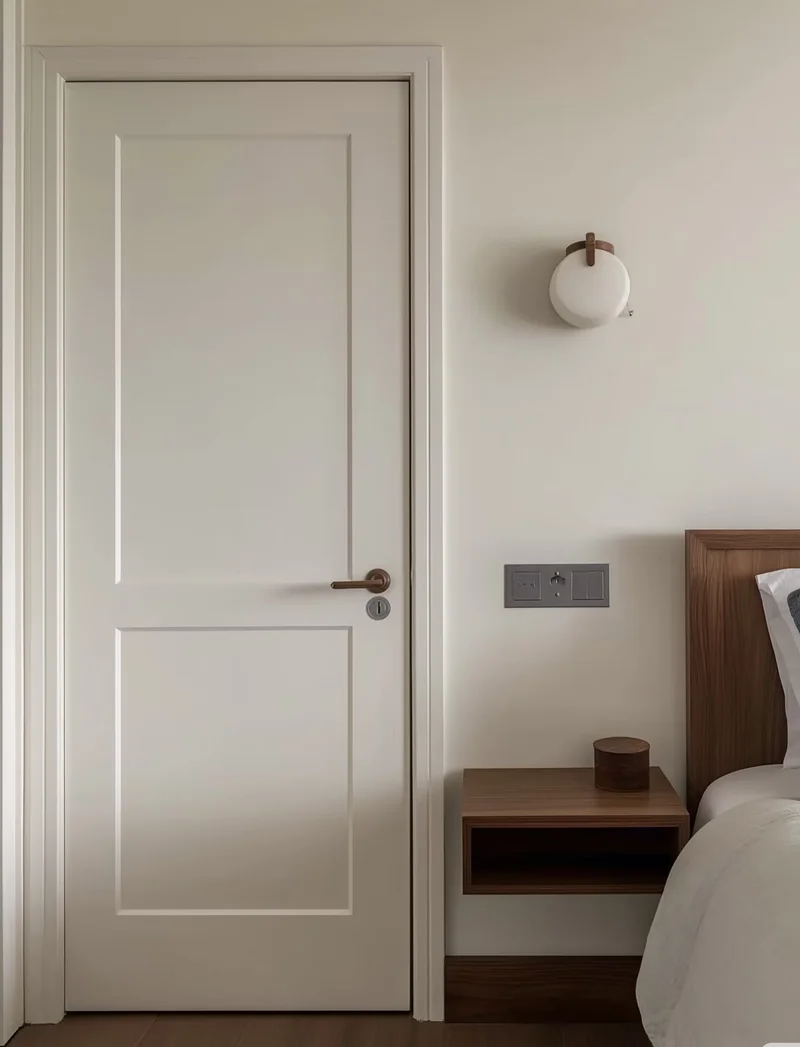
The structural integrity and longevity of a solid wood door are determined by the fundamental properties of its constituent materials and the engineered systems that bind them. Our R&D process is rooted in predictive material science, moving beyond traditional empirical methods to model and validate performance before fabrication. This ensures doors meet not only aesthetic specifications but rigorous architectural and environmental demands.
Core Material Engineering & Composite Systems
- Engineered Solid Wood Cores: We utilize kiln-dried, stress-relieved timber with moisture content stabilized between 6-8%. For large-format or high-stability applications, cross-laminated and finger-jointed core assemblies are employed to mitigate warping and seasonal movement. Laminated Veneer Lumber (LVL) cores offer exceptional dimensional stability (<0.1% linear expansion) and uniform load distribution.
- High-Performance Composite Elements: For door sections requiring extreme moisture resistance or complex molded profiles, we engineer Wood-Plastic Composites (WPC) and polymer-wood hybrids. Key parameters are precisely controlled:
- WPC Density: Targeted between 1.1-1.3 g/cm³ to optimize the strength-to-weight ratio and machining characteristics.
- PVC-Wood Ratio: Formulations are adjusted for specific performance: higher polymer ratios for full-immersion or high-humidity environments (e.g., spa areas), and higher wood flour content for enhanced acoustic damping and a more authentic substrate for veneers.
- Advanced Adhesive & Laminate Chemistry: We specify structural polyurethane (PU) and phenolic resins for core lamination, selected for their high bond strength, creep resistance, and thermal stability. Veneer and foil lamination employs cross-linking ethylene-vinyl acetate (EVA) and reactive hot-melt adhesives, ensuring durability under thermal cycling.
Quantified Performance & Compliance
Performance is quantified against international standards, providing predictable outcomes for project specifications.
| Performance Category | Key Parameter & Test Standard | Typical Performance Range | Application Implication |
|---|---|---|---|
| Structural & Durability | Swelling Rate (Thickness, 24h immersion) EN 317 | ≤ 0.8% | Defines suitability for high-humidity zones; superior to standard particleboard (>15%). |
| Surface Hardness (Shore D) ASTM D2240 | 75 – 85 | Resistance to indentation and impact from everyday use. | |
| Environmental & Safety | Formaldehyde Emission | E0 (≤0.5 mg/L) / CARB Phase 2 Compliant | Ensures indoor air quality compliance for healthcare, education, and residential projects. |
| Fire Reaction Class (EN 13501-1) | B-s1, d0 / Class A (ASTM E84) | Critical for egress routes and compartmentalization in commercial and multi-occupancy buildings. | |
| Acoustic & Thermal | Sound Reduction Index (Rw) EN ISO 10140-2 | 28 – 42 dB | Core density, mass, and sealed perimeter design are engineered to meet specific STC/Rw requirements. |
| Thermal Transmittance (U-factor) EN ISO 10077-2 | 1.2 – 1.8 W/m²K | Insulated core designs and thermal-break gasketing improve energy efficiency in exterior applications. |
Functional Advantages Through Material Selection
- Warp Resistance: Engineered core assemblies and balanced construction (symmetrical material layers on both faces of the neutral axis) counteract internal stresses caused by humidity gradients.
- Impact & Wear Resistance: High-pressure laminate (HPL) surfaces offer superior abrasion resistance (≥1000 cycles, EN 438-2). Reinforced edge banding and corner treatments protect against mechanical damage.
- Moisture & Chemical Stability: WPC and polymer-framed door sections exhibit near-zero moisture absorption (<0.5%), preventing swelling in continuous relative humidity above 85%. Surfaces are tested for resistance to common cleaning agents.
- Long-Term Performance: Accelerated aging tests (QUV, thermal cycling) simulate 10-15 years of service to validate colorfastness, delamination resistance, and hardware holding strength.
This scientific approach to material specification and system engineering transforms the solid wood door from a commodity into a predictable, high-performance building component. It provides the technical certainty required for architectural specification, value engineering, and long-term lifecycle management.
Seamless Integration and Technical Specifications for Your Project Requirements
Seamless Integration Protocol
Our ODM engineering process is built on a foundation of parametric design and modular component architecture. This ensures that custom solid wood door solutions are not isolated products but fully integrated building envelope components. The integration protocol begins with a comprehensive analysis of your project’s architectural drawings, BIM models, and performance specifications. Our R&D team maps door performance to adjacent systems—frames, walls, flooring, and hardware—to preemptively solve for thermal bridging, acoustic flanking, and differential movement.
- BIM/Revit Library Integration: We provide fully detailed, proprietary BIM object families for all core door types. These include material specifications, U-factors, STC ratings, and structural load data embedded within the object parameters, enabling accurate clash detection and performance modeling during the design phase.
- Tolerance Stack-Up Analysis: For high-rise or large-scale projects, we perform computational analysis on cumulative dimensional tolerances across multiple door units. This ensures consistent fit and operation despite structural settling or environmental expansion/contraction.
- Hardware Pre-Engineering: All door cores are pre-engineered to accommodate a full spectrum of architectural hardware, from standard mortise locksets to integrated access control and automatic door bottom systems, without compromising structural integrity or fire rating seals.
Core Technical Specifications & Performance Data
Performance is governed by material science and precision engineering. The following tables detail the baseline specifications for our engineered solid wood door systems. All values are derived from accredited third-party laboratory testing and can be tailored to meet or exceed project-specific requirements.
Table 1: Core Material & Structural Performance Specifications
| Parameter | Standard/Test Method | Premium Solid Core | High-Stability LVL Core | Notes |
|---|---|---|---|---|
| Core Density | ASTM D2395 | 720-780 kg/m³ | 650-680 kg/m³ | Optimized for weight-to-strength ratio and machining. |
| Dimensional Stability (Swelling) | EN 317 | ≤ 1.2% (24h water immersion) | ≤ 0.8% (24h water immersion) | LVL core exhibits superior resistance to hygroscopic expansion. |
| Modulus of Rupture (MOR) | ASTM D1037 | 85 MPa | 92 MPa | LVL core provides more predictable, uniform strength. |
| Formaldehyde Emission | EN 16516 / JIS A 1460 | E0 (< 0.05 mg/m³) | E0 (< 0.05 mg/m³) | All adhesives and composite materials meet the highest global indoor air quality standards. |
| Fire Rating Integrity | EN 1634-1 / ASTM E119 | Up to 90 minutes | Up to 120 minutes | Achieved through proprietary intumescent sealant channels and non-combustible core laminates. |
Table 2: Finished Door Assembly Performance Metrics
| Performance Category | Standard/Test Method | Typical Performance Range | Key Engineering Solution |
|---|---|---|---|
| Acoustic Insulation (STC/Rw) | ASTM E90 / ISO 10140 | STC 35 – 45 dB | Multi-density core layering, magnetic perimeter seals, and acoustic gaskets. |
| Thermal Insulation (U-Factor) | EN 12412-2 / ASTM C1363 | 1.2 – 1.8 W/m²K | Insulated core options and thermal-break edge banding systems. |
| Surface Hardness | ASTM D2240 (Shore D) | D75 – D82 | High-pressure laminate finishes or catalyzed varnish systems. |
| Operational Cycle Life | ANSI/BHMA A156.2 | > 1,000,000 cycles | Reinforced hinge preparation, full-height continuous hinges, and stress-distributed lock blocks. |
Functional Advantages of the Engineered System
- Predictable Long-Term Performance: By controlling moisture absorption rates to below 8% (per EN 322) and utilizing stress-relieved LVL cores, we eliminate warping, twisting, and seasonal binding, ensuring lifecycle cost predictability.
- Enhanced Fire & Safety Compliance: Doors are engineered as complete assemblies. Fire-rated units incorporate certified glass, intumescent seals in the door and frame, and non-combustible mineral cores in critical areas to maintain integrity under test conditions.
- Superior Environmental Resilience: Finishes are cross-linked polymer coatings with a Shore D hardness >78, providing exceptional resistance to abrasion, chemical cleaners, and UV degradation. The substrate is pre-treated with micro-porous preservatives for fungal and pest resistance.
- Streamlined Logistics & Installation: Our panelized construction allows for knock-down (KD) shipping, reducing freight damage and cost. Each unit arrives with a comprehensive integration kit, including shims, specified anchors, and sealants, aligned with the provided installation torque specifications for first-fit success.
Partner with Confidence: Our Proven Track Record in Exclusive Door Customization
Our exclusive customization process is built on a foundation of material science and precision engineering, ensuring every door meets exacting architectural specifications. We begin with a forensic analysis of your project’s environmental and performance demands, from acoustic isolation in high-rise residential to fire integrity in commercial corridors.
Core Material & Construction Integrity
- Advanced Core Systems: We utilize engineered LVL (Laminated Veneer Lumber) cores with cross-laminated plys for dimensional stability (<0.1% swelling rate at 65% RH), eliminating warping and ensuring perfect fit over time. For specialized applications, we engineer hybrid cores combining solid wood blocks with WPC (Wood-Plastic Composite) matrices for optimal weight-to-strength ratios and moisture resistance.
- Precision Veneer & Laminate Application: Our proprietary adhesive systems and press technology ensure void-free bonding of veneers (from 0.6mm sliced to 3.0mm sawn) and high-pressure laminates. We control PVC-wood composite ratios in molded elements to achieve consistent Shore D hardness and grain fidelity.
- Performance Material Integration: We integrate functional layers—acoustic dampening felts, fire-resistant mineral cores, and thermal breaks—seamlessly within the door structure, validated through third-party testing.
Validated Performance to International Standards
All custom solutions are engineered to meet or exceed recognized international benchmarks. Key performance validations include:
| Performance Category | Test Standard | Achievable Specification Range | Application Context |
|---|---|---|---|
| Fire Resistance | EN 1634-1 / ASTM E84 | EI30 / EI60 / EI90 Classification | Commercial egress, corridor partitions, facility core walls. |
| Formaldehyde Emission | EN 16516 / JIS A 1460 | E0 (<0.5 mg/L), Super E0 (<0.3 mg/L) | Healthcare, educational, and residential projects with strict indoor air quality mandates. |
| Acoustic Insulation | EN ISO 10140-2 / ASTM E90 | Rw 32 dB to 42 dB (composite systems higher) | Hotel rooms, conference rooms, multi-family dwelling separations. |
| Structural Durability | EN 1026 / ANSI/BHMA A156.2 | Cycle testing exceeding 1,000,000 cycles for heavy-traffic openings. | High-frequency public and institutional installations. |
| Thermal Insulation | EN 12412-2 / ISO 10077-2 | U-factor as low as 0.8 W/(m²·K) for specialized insulated door systems. | Exterior applications in extreme climates, cold storage transitions. |
Engineering-Led Customization Workflow
- Specification Audit: Our R&D team conducts a gap analysis between your architectural drawings, performance specs (e.g., STC/Rw, fire rating, security level), and material constraints.
- Prototype Fabrication & Testing: We build functional prototypes for destructive and non-destructive testing, including chamber tests for moisture absorption (<8% after 24-hour immersion) and hinge load endurance.
- Documentation & Compliance Packaging: We deliver full technical submittal packages, including material datasheets, independent lab reports, and detailed installation schematics for on-site contractor guidance.
Our partnership model is defined by transparency in engineering data and a commitment to delivering a component that performs as a certified, integral part of your building’s envelope and interior systems.
Frequently Asked Questions
What are your moisture control measures for solid wood doors in high-humidity climates?
We engineer doors with kiln-dried timber (8-12% moisture content) and integrate LVL core stabilization. A 0.5mm PVC edge-sealing and multi-layer UV-cured coating are applied, achieving a moisture expansion coefficient below 0.3%. This prevents swelling and ensures dimensional stability in humidity up to 85% RH.
How do you ensure compliance with stringent formaldehyde emission standards?
We exclusively use E0-grade (<0.050 mg/m³) or ENF-grade (<0.025 mg/m³) adhesives and substrates. Each batch undergoes chamber testing per ISO 12460-1 standards. Our laminated WPC components have a density of 650-750 kg/m³, using zero-added-formaldehyde resins for core bonding.
What structural design prevents long-term warping or twisting?
Our anti-warping system combines a 3-layer cross-laminated LVL core (14-18mm plies) with symmetrical face-veneer balancing. Reinforced aluminum alloy internal frameworks are installed at stress points. This ensures a torsional resistance maintaining flatness within 1mm/m over 10 years under standard conditions.
Can you achieve high sound insulation for residential or commercial applications?
Yes. We design doors with a 45mm minimum thickness, incorporating a honeycomb acoustic core and airtight magnetic seals. This construction achieves a weighted sound reduction index (Rw) of 32-38 dB, effectively blocking mid-frequency noise common in urban and office environments.
What solutions exist for enhancing impact resistance in high-traffic areas?
We reinforce door panels with a composite structure: a high-density WPC skin (≥900 kg/m³) over an impact-absorbing polymer-foam interlayer. The surface is treated with a 7H hardness scratch-resistant finish. This withstands repeated impacts exceeding 100 Joules without surface deformation.
How are thermal insulation properties optimized for energy efficiency?
We integrate a polyurethane foam core with a closed-cell structure (thermal conductivity λ ≤0.025 W/m·K). Combined with thermally broken frames and triple-seal gaskets, the door assembly achieves a U-value as low as 0.8 W/m²·K, significantly reducing thermal bridging and energy loss.
What finishing processes ensure long-term durability against UV and weathering?
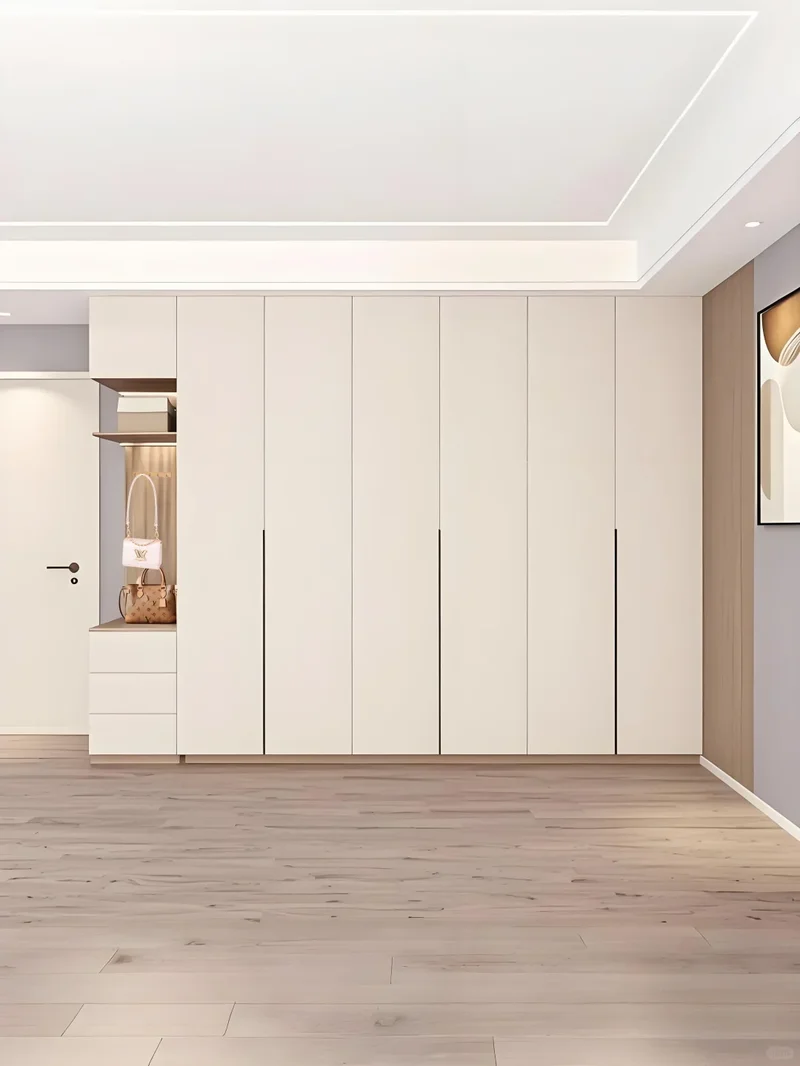
Our 8-stage finishing includes a catalyzed primer, UV-resistant pigmented layers, and a final polyurethane topcoat. This system undergoes 500+ hours of QUV accelerated weathering testing, ensuring less than ΔE 2.0 color shift and maintaining gloss retention above 85% after 10 years of exposure.