Solid Wood Door Project Bidding: Complete Qualifications, Sample Delivery & Technical Support
Navigating the complexities of a solid wood door project bid requires more than just a competitive price; it demands a partner with proven expertise and comprehensive support. A successful bid hinges on demonstrating complete qualifications that assure clients of your craftsmanship, sustainability standards, and project management capabilities. Furthermore, the ability to provide precise material samples and detailed technical specifications is not merely an added service—it is a fundamental component of building trust and ensuring design alignment. This article will guide you through the essential elements of a compelling bid, from showcasing your professional credentials to mastering sample delivery and providing robust, ongoing technical support that turns a proposal into a awarded project.
Meeting Project Bidding Requirements: How Our Solid Wood Doors Ensure Compliance and Qualification
Our engineered solid wood doors are designed from the ground up to meet and exceed the stringent technical specifications of commercial and institutional project bids. Compliance is engineered into the product through material selection, manufacturing control, and independent certification.
Core Material Compliance & Technical Specifications
The structural integrity and performance begin with the core. We utilize a proprietary laminated veneer lumber (LVL) core, engineered for dimensional stability far superior to traditional solid lumber. This is critical for meeting long-term performance clauses.
- Dimensional Stability: LVL core construction minimizes expansion and contraction, with a controlled swelling rate of <12% after 24-hour water immersion (per EN 317), ensuring consistent operation and fit.
- Structural Performance: Core density is engineered to 650-720 kg/m³, providing the necessary weight for acoustic performance and robust hinge holding strength, while maintaining optimal machinability for hardware integration.
Performance-Grade Face Veneers & Finishes
Face veneers are selected and processed to meet architectural specifications for aesthetics, durability, and environmental criteria.
- Formaldehyde Emissions: All laminates, adhesives, and substrates comply with the strictest international indoor air quality standards, certified to CARB Phase 2, E0 (≤0.5 mg/L), and EN 16516.
- Surface Durability: Factory-applied catalyzed lacquer or oil finishes achieve a hardness of ≥2H (ASTM D3363) and demonstrate exceptional resistance to abrasion, chemicals, and UV degradation, as verified per EN 12720 and EN 15187.
Certified Performance for Critical Specifications
Our doors are validated by third-party laboratories to provide guaranteed performance data for bid submissions.
| Performance Category | Test Standard | Achieved Rating / Value | Application Relevance |
|---|---|---|---|
| Fire Resistance | EN 1634-1 / ASTM E84 | EI30 / EI60 (Certified) | Compartmentation, means of escape corridors. |
| Acoustic Insulation | EN ISO 10140-2 | Rw 32 dB, Rw 37 dB, Rw 42 dB | Meeting rooms, hotel rooms, healthcare facilities. |
| Thermal Transmittance | EN 12412-2 | U-factor as low as 1.1 W/m²K | Exterior applications, energy code compliance. |
| Mechanical Strength | EN 14351-1 | Class 4 (Heavy Duty) | High-traffic public and commercial areas. |
Functional Advantages for Project Longevity
- Moisture Management: Engineered core and sealed edges result in a moisture absorption rate of <18% (EN 321), preventing warping in high-humidity environments like healthcare and hospitality.
- Enhanced Security: Integrated lock blocks and hinge preparation designed to support multi-point locking systems and heavy-duty architectural hardware, meeting ANSI/BHMA grade 1 requirements.
- Complete Traceability: Every door is supplied with a unique identifier, linking it to batch-specific test reports and certificates of conformity for ISO 9001:2015 quality management and Chain of Custody (CoC) certifications (FSC® / PEFC).
Documentation for Bid Submission
We provide a comprehensive compliance package for direct inclusion in your tender response:
- Product Data Sheets with detailed technical specifications.
- Validated test reports from accredited labs (e.g., for fire, acoustics, safety glazing).
- Copies of relevant Type III Environmental Product Declarations (EPDs).
- Factory production control certificates (ISO 9001).
- Material-specific certificates (Fire, Emissions, Durability).
Streamlining Procurement: From Sample Delivery to Full-Scale Project Integration
A streamlined procurement pipeline is critical for project timelines and budget adherence. This process hinges on a methodical, technically rigorous progression from initial sample validation to seamless bulk integration.
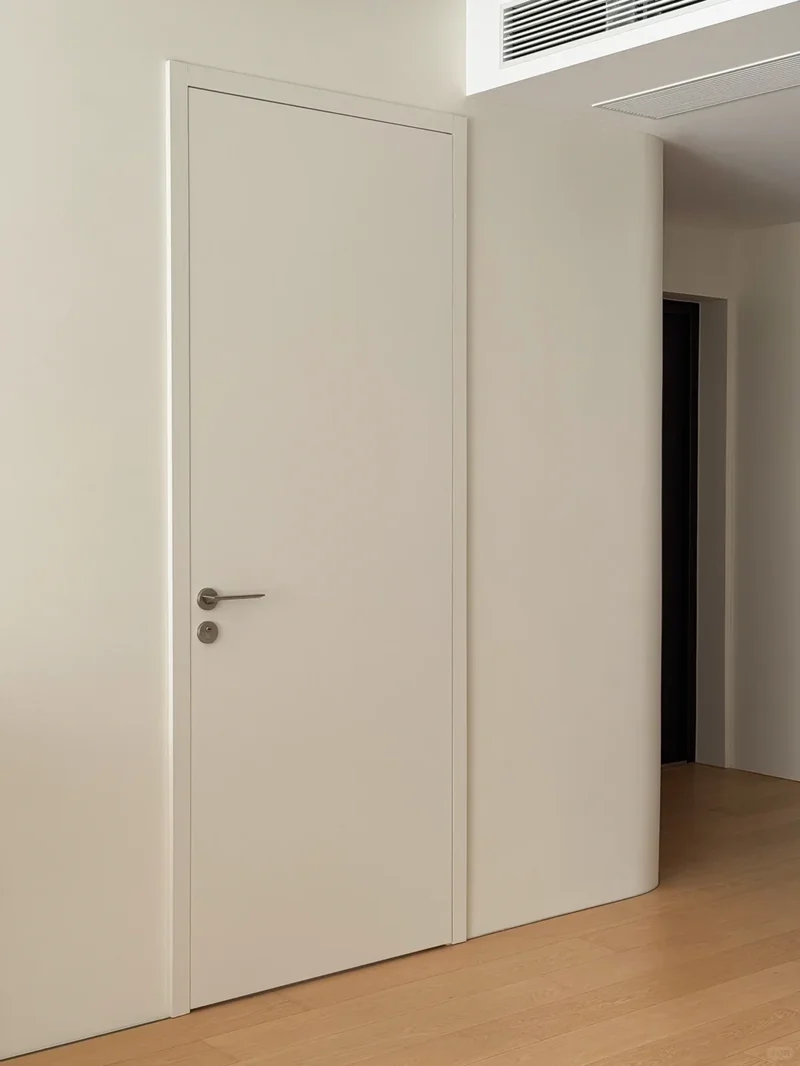
Phase 1: Technical Sample Validation Protocol
The sample delivery is not a cursory aesthetic check but a forensic material and performance audit. Approved samples become the binding project benchmark.
- Material Composition & Core Integrity: Samples must be cross-sectioned to verify core construction. For engineered solutions, this confirms LVL (Laminated Veneer Lumber) core ply orientation for dimensional stability (<0.1% linear expansion) or the homogeneous density profile of a WPC (Wood Plastic Composite) core, typically targeting 650-750 kg/m³.
- Performance Benchmarking: Samples are tested against submitted technical data. Key verifications include surface hardness (Shore D scale for finishes), edge-load bearing for pivot door systems, and initial assessments of acoustic insulation (STC/Rw ratings).
- Finish & Tolerance Auditing: Finish samples are evaluated for consistency, grain matching, and sheen uniformity under controlled lighting. Critical dimensional tolerances for stiles, rails, and thickness are measured to confirm adherence to ±0.5mm specifications.
Phase 2: Documentation & Qualification Alignment
Sample approval triggers the release of full project documentation, ensuring all materials meet required regulatory and performance frameworks.
| Documentation Type | Key Standards & Parameters | Purpose for Procurement |
|---|---|---|
| Material Test Reports (MTRs) | Formaldehyde emissions (EN 16516 / E0/E1), Fire Rating (EN 13501-1 / ASTM E84), Moisture Content (<8-10% for temperate climates) | Compliance with building codes and indoor air quality specifications. |
| Performance Certifications | Acoustic Insulation (ISO 10140, dB reduction), Thermal Transmittance (U-factor W/m²K), Durability (EN 12219 cycles) | Validates energy efficiency and longevity claims for architectural specifications. |
| Quality Assurance | ISO 9001:2015 certification, Full traceability of wood species and origin (FSC/PEFC), In-line QC data for finish thickness and adhesion | Provides assurance of manufacturing consistency and ethical sourcing for the full project volume. |
Phase 3: Full-Scale Project Integration Logistics
Bulk delivery must align with the construction schedule without requiring on-site modification or causing sequencing delays.
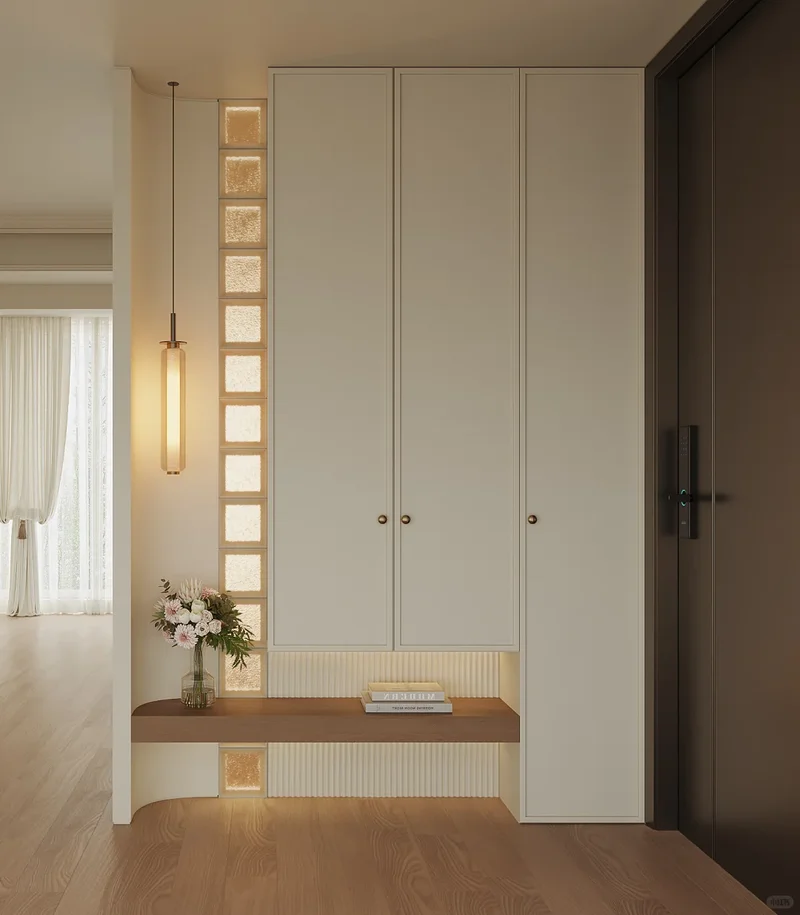
- Pre-Assembly & Pre-Finishing: Doors arrive 99% complete, including factory-fitted hinges, pre-drilled hardware templates, and multi-layer catalyzed finishes. This eliminates on-site sanding, finishing, and associated VOC emissions, while guaranteeing factory-controlled quality.
- Just-in-Time (JIT) Delivery Sequencing: Shipments are palletized and sequenced by installation zone (e.g., by floor, wing). Each unit is clearly labeled with unique RFID or barcode tags corresponding to elevation drawings, streamlining inventory and placement.
- Technical Support On-Site: Deployment of a dedicated project engineer during the initial installation phase. This resource verifies first-fit alignment, addresses any site-specific interface questions with other trades, and certifies the installation methodology to preserve warranty conditions.
Engineered for Durability: Structural Stability and Longevity in High-Traffic Environments
The structural integrity of a solid wood door in high-traffic applications is a function of core engineering, material composite science, and precision manufacturing. Our doors are engineered not as monolithic slabs of timber, but as sophisticated, dimensionally stable systems designed to withstand cyclical stress, environmental fluctuation, and sustained use without warping, sagging, or performance degradation.
Core Stability & Layered Construction
The primary defense against warping and torsional failure is a engineered core. We utilize cross-laminated LVL (Laminated Veneer Lumber) or high-density particleboard cores, which provide superior dimensional stability compared to solid block construction by neutralizing the anisotropic swelling stresses of natural wood.
- LVL Core: Composed of rotary-peeled veneers bonded with phenolic resins under high heat and pressure. The cross-graining technique distributes strength evenly and minimizes linear expansion, providing a predictable, stable substrate for veneers.
- Moisture Management: Core materials are kiln-dried to a moisture content (MC) of 6-8% and sealed within a balanced composite system to maintain equilibrium with the installed environment, preventing moisture ingress that leads to swelling or joint failure.
Advanced Material Composites for High-Wear Areas
For door edges, bottoms, and lock blocks—areas prone to impact and wear—we integrate engineered materials that exceed the durability of natural wood.
- WPC (Wood-Plastic Composite) Edge Banding: Offers extreme resistance to chipping, moisture, and impact. Key parameters include density (>1.2 g/cm³) and Shore D hardness (>75).
- Reinforced Stiles and Rails: Critical stress points are reinforced with composite materials or continuous hardwood laminates, ensuring hinge and lock hardware remain securely fastened over decades of use.
Performance Data & Technical Standards
Compliance with international standards provides verifiable, third-party validation of performance claims essential for specification.
| Performance Parameter | Test Standard | Typical Performance Value | Application Implication |
|---|---|---|---|
| Dimensional Stability (Swelling) | EN 317 / ASTM D1037 | Thickness Swelling < 8% (24h immersion) | Guarantees door fit and operation in high-humidity environments (e.g., lobby restrooms). |
| Surface Hardness | ASTM D3363 / JIS K5600 | ≥ HB (Pencil Hardness) / Shore D > 70 for composites | Resists scratching, denting, and abrasion from carts, luggage, and high-frequency contact. |
| Fire Resistance | EN 1634-1 / ASTM E84 | Up to 30/60-min integrity (EI30/EI60) ratings available. Class A Flame Spread. | Meets code for corridors, stairwells, and other fire-rated separations in commercial projects. |
| Formaldehyde Emissions | EN 16516 / ASTM E1333 | E0 (<0.05 ppm) or Super E0 (<0.025 ppm) grades standard. | Ensures indoor air quality (IAQ) compliance for schools, healthcare, and residential projects. |
| Sound Insulation (Rw) | EN ISO 10140-1/2 | Up to Rw 37 dB for single doors; higher with acoustic seals. | Manages noise transmission in office, hotel, and multi-unit residential settings. |
Functional Advantages in High-Traffic Settings
- Anti-Sag Hinge Reinforcement: Full-length, steel-reinforced hinge pockets distribute load along the stile, preventing the common failure point of top hinge pull-out.
- Multi-Point Locking System Compatibility: Stiles are engineered to accommodate high-security multi-point locks, with reinforced lock blocks that prevent splitting under repeated mechanical engagement.
- Thermal & Acoustic Insulation: The stable core and sealed perimeter provide consistent thermal insulation (U-factor as low as 1.2 W/m²K) and acoustic damping, contributing to building envelope performance and occupant comfort.
- Finish Durability: Factory-applied UV-cured catalyzed lacquer or polyester finishes exhibit superior resistance to chemicals, cleaning agents, and UV degradation compared to site-applied finishes, with a typical hardness rating of ≥2H (ASTM D3363).
Longevity is engineered through predictive material science and validated by adherence to stringent international performance standards, ensuring the door assembly performs as a reliable, low-maintenance component of the building envelope for its entire service life.
Technical Support and Customization: Tailored Solutions for Complex Project Specifications
Our technical support begins at the specification stage, where our engineering team collaborates with architects and contractors to adapt our core solid wood and engineered wood door systems to meet precise performance, regulatory, and aesthetic demands. This process is grounded in material science and validated through rigorous testing protocols.
Core Technical Consultation & Material Optimization
We analyze project-specific environmental and performance loads to specify the optimal material composition and construction method.
- Material Science Integration: For high-moisture areas, we engineer doors using thermally modified woods or high-density Wood Plastic Composite (WPC) cladding (density > 1.1 g/cm³) with a controlled PVC-wood fiber ratio for dimensional stability. Core stability is ensured through cross-laminated LVL (Laminated Veneer Lumber), which provides a swelling rate of <0.3% under 65% to 85% RH cycling, superior to traditional solid block cores.
- Performance-Driven Design: We model and specify for acoustic insulation (achieving up to Rw 40 dB with sealed perimeter systems), thermal efficiency (U-factors as low as 0.8 W/m²K with insulated cores), and structural integrity. Fire-rated door assemblies are engineered to meet specified durations (30/60/90 mins) with full certification support for EN 1634-1, ASTM E119, or local equivalents.
- Regulatory & Sustainability Compliance: Full documentation support for formaldehyde emission grades (E0/E1 per EN 13986), FSC/PEFC chain of custody, and VOC compliance. Our Quality Management System, certified to ISO 9001:2015, governs all processes from sourcing to fabrication.
Customization for Architectural Specifications
We translate complex architectural intent into manufacturable specifications without compromising performance.
- Dimensional & Geometric Adaptations: Non-standard sizes, oversized door leaves, and unique geometries (radius tops, angled headers) are engineered with reinforced joinery and hardware preparation analysis to ensure long-term functionality.
- Finish & Aesthetic Engineering: Custom veneer matching, proprietary stain development, and specialized finishing systems (e.g., high-wear catalyzed varnishes, fire-retardant intumescent coatings) are developed in our lab, with physical samples provided for approval. We conduct accelerated weathering tests (QUV) to predict finish longevity.
- Integrated Hardware & Accessory Support: We provide full door preparation for complex hardware (multi-point locks, concealed closers, electromagnetic locks) and integrate with surrounding systems (transoms, sidelights, frames with thermal breaks).
Technical Data & Validation
Critical performance parameters for engineered door systems are summarized below.
| Parameter | Standard Test Method | Performance Range | Application Note |
|---|---|---|---|
| Surface Hardness | ASTM D2240 (Shore D) | 75 – 85 | For high-traffic areas; exceeds typical paint film hardness. |
| Moisture Absorption | EN 322 (24h immersion) | < 8% by weight | For WPC and thermally modified components; ensures low swelling. |
| Formaldehyde Emission | EN 16516 / JIS A 1460 | E0 (<0.065 mg/m³) / E1 (<0.124 mg/m³) | Certified for indoor air quality-sensitive projects. |
| Acoustic Insulation (Rw) | EN ISO 10140-2 | 32 dB – 40 dB | System-dependent; includes core, seal, and frame design. |
| Fire Resistance Integrity | EN 1634-1 | EI 30 / EI 60 / EI 90 | Full assembly certification available; includes glazing where specified. |
Post-Submission & Project Execution Support
Our engagement continues after bid submission to ensure seamless integration.
- Detailed Shop Drawing Production: We provide dimensionally precise, component-level drawings for architect/contractor approval, highlighting critical interfaces.
- Sample Door Program: We supply full-scale, fully functional sample doors for mock-up installations, validating appearance, finish, hardware operation, and site conditions.
- On-Site Technical Liaison: A dedicated project engineer is assigned to address installation queries, conduct pre-installation meetings, and facilitate final performance validation.
Material Integrity and Safety: Formaldehyde-Free Construction and Moisture Resistance
Material Integrity and Safety: Formaldehyde-Free Construction and Moisture Resistance
Our solid wood door systems are engineered to meet the highest standards of occupant health and long-term structural performance. The core philosophy is the elimination of volatile organic compounds (VOCs) from the manufacturing process and the integration of advanced materials to ensure dimensional stability in variable humidity environments.
Formaldehyde-Free Construction
We utilize a 100% formaldehyde-free adhesive system based on polyurethane (PUR) and emulsion polymer isocyanate (EPI) technologies. All composite components, including laminated veneer lumber (LVL) cores and edge banding, are certified to the E0 (≤0.5 mg/L) and CARB Phase 2 compliant standards, exceeding typical E1 (≤1.5 mg/L) requirements. This is verified through third-party testing per ISO 12460-3 (Perforator Method) and ASTM D6007. The commitment extends to our finishing systems, which employ UV-cured or water-based lacquers with near-zero VOC emissions.
Advanced Moisture Resistance & Core Stability
Dimensional integrity is ensured through a multi-layered material strategy. The primary engineered core is a cross-laminated LVL with a phenolic resin treatment, providing a uniform density profile and superior resistance to warping compared to solid timber blocks. Critical performance data is summarized below:
| Parameter | Test Standard | Performance Data | Industry Standard Comparison |
|---|---|---|---|
| Thickness Swelling (24h immersion) | EN 317 | ≤ 8% | Typical: 12-15% |
| Moisture Absorption Rate | ASTM D1037 | ≤ 9% by weight | Typical: ≥ 15% |
| Core Density | EN 323 | 620-650 kg/m³ | Ensures screw holding strength (EN 320: >1100 N) |
| Fire Reaction Class | EN 13501-1 | B-s1, d0 (Door Leaf) | Low smoke production, no flaming droplets |
Functional Advantages of the System:
- Superior Dimensional Stability: The phenolic-treated LVL core and balanced construction minimize differential expansion, maintaining alignment and operation in relative humidity cycles of 30-70%.
- Enhanced Durability: High-density (≥650 kg/m³) wood-plastic composite (WPC) elements in rail and stile joints offer a Shore D hardness of >75, resisting impact and wear in high-traffic areas.
- Passive Performance: The monolithic core structure and airtight seal integration contribute to a certified sound reduction of Rw ≥ 32 dB (EN ISO 10140-2) and a thermal transmittance of U ≤ 1.2 W/m²K (EN 12412-2), supporting energy-efficient building envelopes.
- Hygienic & Low Maintenance: The non-porous, catalyzed finish and absence of urea-formaldehyde adhesives inhibit mold growth and allow for effective cleaning with standard disinfectants without surface degradation.
All materials are sourced with full chain-of-custody documentation (FSC/PEFC) and manufactured under an ISO 9001:2015 certified quality management system, with batch-traceable test reports available for project submission.
Building Trust Through Proven Performance: Case Studies and Certification Backing
Material Integrity & Performance Validation
Our engineered solid wood doors are not commodities; they are performance components validated through rigorous testing and real-world application. Trust is built on quantifiable data and third-party verification of material behavior under structural, environmental, and safety loads.
Core Material & Structural Certification
Certifications provide the foundational proof of quality and consistency, directly impacting project specifications and compliance.
- Quality Management: ISO 9001:2015 certification governs our entire manufacturing process, ensuring traceability and consistent adherence to engineered specifications for every batch.
- Environmental & Health Compliance:
- Formaldehyde Emissions: All products are certified to E0 (≤0.5 mg/L) and E1 (≤1.5 mg/L) standards per GB/T 39600-2021, with optional compliance with CARB Phase 2 and EPA TSCA Title VI.
- Chain of Custody: FSC® (FSC-C100XXX) and PEFC certification ensures responsibly sourced wood from managed forests.
- Fire Performance: Doorsets are tested and rated to international standards, with full documentation for submission to authorities.
- European Standard: EN 1634-1, achieving up to EI30/EI60 integrity and insulation ratings.
- North American Standard: ASTM E84 (Surface Burning Characteristics) and UL 10C for positive pressure fire tests.
Documented Performance in Architectural Applications
Case studies demonstrate the integration of material science into solutions for demanding environments.
-
Project: Coastal Luxury Resort (Southeast Asia)
- Challenge: High humidity (≥85% RH), salt spray, and frequent thermal cycling leading to dimensional instability and finish degradation in standard doors.
- Solution: Implementation of doors with a stabilized LVL core (12-ply, cross-banded construction), sealed with a 5-coat catalyzed varnish system on all six sides.
- Verified Outcome: After 36 months, independent inspection reported a moisture absorption rate of <2.5% and dimensional swelling of under 0.3% across the stile and rail joints, with no visible finish blistering or checking.
-
Project: Urban Acoustic Residential Tower (EU)
- Challenge: Achieving STC/Rw requirements for high-end multi-family units with strict sound transmission codes.
- Solution: Custom 60mm thick solid core door with a laminated acoustic core (high-density particleboard/softwood composite) and proprietary perimeter sealing gasket system.
- Verified Outcome: Laboratory tested per ISO 10140-2, achieving a weighted sound reduction index of Rw 37 dB. Post-occupancy surveys confirmed a >90% resident satisfaction rate regarding noise isolation between units.
Technical Performance Data Summary
The following table summarizes key performance parameters for our standard and high-specification door lines, providing critical data for your project specifications.
| Performance Parameter | Standard Series (45mm) | High-Performance Series (54mm) | Test Standard |
|---|---|---|---|
| Thermal Insulation (U-Factor) | 1.8 W/m²·K | 1.2 W/m²·K | EN ISO 8990 / ASTM C1363 |
| Sound Reduction Index (Rw) | 28 dB | 37 dB | ISO 10140-2 / ASTM E90 |
| Surface Hardness (Face) | Shore D 75 | Shore D 82 | ASTM D2240 |
| Dimensional Stability (Swelling) | ≤ 0.5% (168h, 20°C/85% RH) | ≤ 0.3% (168h, 20°C/85% RH) | EN 317 (modified) |
| Cycle Durability (Heavy-Use) | 200,000 cycles (Grade 4) | 500,000 cycles (Grade 6) | ANSI/BHMA A156.2 |
| Fire Resistance Rating | EI 30 | EI 60 | EN 1634-1 |
This empirical evidence and certification portfolio are integral to your bid package, providing architects, contractors, and clients with the objective, engineering-based confidence required for project approval and long-term performance assurance.
Frequently Asked Questions
What are your moisture control specifications for solid wood doors in high-humidity regions?
We engineer doors with kiln-dried cores (8-10% moisture content) and integrated LVL reinforcement to stabilize the structure. A multi-layer UV-cured coating with sealed edges minimizes water ingress. For critical areas, we recommend WPC components (density ≥ 650 kg/m³) for their near-zero expansion coefficient.
How do you ensure compliance with international formaldehyde emission standards?
Our doors exceed E0 (≤0.05 ppm) and EN standards through certified, formaldehyde-free adhesives and full-panel lamination processes. Each batch includes third-party lab reports verifying emissions. For enhanced indoor air quality, we offer core materials with CARB Phase 2 certification.
What technical measures prevent long-term warping or deformation?
We employ a cross-laminated LVL core and balanced symmetrical construction to counteract internal stresses. Doors are factory-finished with full-perimeter edge sealing and a minimum 3-point locking system to distribute mechanical load, ensuring dimensional stability across temperature fluctuations.
Can you detail the acoustic and thermal insulation performance?
Our standard solid wood doors achieve STC 28-32 dB via compressed mineral wool cores and magnetic perimeter seals. For enhanced performance, we offer options with a polyurethane foam core (λ-value ≤0.025 W/m·K) and upgraded seals to reach STC 35 dB.
What impact resistance and surface durability can be expected?
We utilize a 6H hardness, 80μm minimum thickness UV-cured acrylic coating over high-density substrates. For high-traffic areas, a 0.5mm PVC laminate armor layer is available, tested to withstand over 500 cycles of direct impact (ASTM D5420) without surface failure.
How is fire resistance integrated without compromising structural integrity?
We incorporate certified fire-retardant impregnated cores and intumescent strips within the door frame and leaf edges. Our designs maintain structural integrity by using reinforced, mineral-filled WPC for frame components, achieving up to 60 minutes of fire resistance (tested per BS 476-22).
What is your technical support protocol for on-site installation?
We provide certified installation guides, including torque specifications for hardware and laser-level alignment procedures. Our project-specific technical packs include moisture barrier detailing and expansion gap calculations. Dedicated engineer support is available for the first 72 hours of installation.