Garage doors export to Southeast Asia with humidity tolerance
As Southeast Asia’s dynamic construction and real estate sectors continue to flourish, the demand for high-quality, durable building components has never been greater. For exporters of garage doors, this vibrant market presents a significant opportunity, yet it comes with a critical technical challenge: relentless humidity. Standard garage door materials can succumb to warping, corrosion, and premature failure in these tropical climates, compromising security and aesthetics. Successfully exporting to this region requires more than just logistics; it demands engineered solutions specifically designed for moisture resistance. This article explores the essential considerations for manufacturers and exporters aiming to deliver garage doors that not only meet but exceed the rigorous demands of Southeast Asia’s humid environment, ensuring longevity, performance, and customer satisfaction in a competitive marketplace.
Engineered for High-Humidity Environments: Superior Moisture Resistance for Southeast Asian Climates
The structural integrity and aesthetic longevity of garage doors in Southeast Asia are primarily challenged by sustained high humidity, which accelerates material degradation through swelling, warping, corrosion, and biological growth. Our product line is engineered from the substrate outward to mitigate these failure modes, ensuring dimensional stability and performance over the lifecycle of the installation.
Core Material Science & Construction
- Advanced Composite Panels (WPC): Utilizing a high-density Wood-Plastic Composite (minimum 1.2 g/cm³), the formulation optimizes the polymer-to-wood fiber ratio to create a hydrophobic matrix. This significantly reduces water absorption to below 3% (per 24h immersion, ASTM D570), preventing the swelling and delamination common in solid wood or low-density composites.
- Engineered Timber & LVL Cores: Where a traditional wood aesthetic is required, we employ laminated veneer lumber (LVL) cores. The cross-laminated, adhesive-bonded structure under high pressure provides superior dimensional stability compared to solid timber, resisting warping and twisting under moisture load.
- Metallic Component Specification: All galvanized steel components, including tracks, hinges, and reinforcement struts, undergo a hot-dip galvanization process with a minimum coating of Z275 (275 g/m²). For coastal or highly aggressive environments, a supplemental powder-coated finish (≥80µm) is applied, tested to withstand 1,000 hours of salt spray (ASTM B117) without red rust.
- Sealant & Glazing Systems: Perimeter seals are formulated from EPDM rubber for consistent flexibility and resistance to UV degradation and moisture. Glazing, where applicable, uses tempered glass with butyl-based secondary seals to prevent fogging and moisture ingress into insulated panels.
Performance Specifications & Standards Compliance
| Parameter | Specification | Test Standard | Performance Implication |
|---|---|---|---|
| Moisture Absorption | ≤ 3% (WPC), ≤ 8% (LVL) | ASTM D570 | Controls swelling, maintains panel fit and door operation. |
| Linear Expansion Coefficient | < 0.5% for WPC composites | Internal QC (24h water immersion) | Ensures consistent panel gaps and alignment in humid cycles. |
| Formaldehyde Emission | E0 / Super E0 Grade | EN 717-1, JIS A 1460 | Ensures indoor air quality safety for attached or integral garages. |
| Fire Safety Rating | Class B-s1, d0 / ASTM E84 Class A | EN 13501-1 / ASTM E84 | Critical for compliance in residential and commercial projects. |
| Thermal Insulation (U-Factor) | 0.7 – 1.2 W/m²K (depending on core) | EN ISO 8990 / ASTM C1363 | Reduces thermal bridging and condensation risk on the interior surface. |
| Acoustic Insulation | Up to 40 dB sound reduction (Rw) | EN ISO 10140-2 | Mitigates external noise, a valued feature in dense urban areas. |
Functional Advantages for High-Humidity Application
- Mold & Mildew Resistance: Material formulations and surface treatments include non-toxic biocides that inhibit the growth of mold, mildew, and fungi, preserving appearance and air quality.
- Corrosion-Resistant Hardware: All fasteners and moving parts are manufactured from 300-series stainless steel or are zinc-plated with a chromate conversion coating, ensuring reliable operation in humid, saline environments.
- Integrated Water Management: Panel and frame profiles are designed with drip edges and capillary breaks to channel water away from critical seams and prevent accumulation.
- Long-Term Structural Warranty: Backed by a comprehensive warranty covering material integrity against humidity-induced failure, validated by accelerated aging tests (QUV/ASTM G154).
Our manufacturing processes are certified to ISO 9001:2015, with rigorous batch testing for moisture-related performance metrics. This engineered approach provides architects, contractors, and developers with a predictable, specification-grade product that eliminates humidity as a primary failure vector, reducing lifetime maintenance costs and callbacks.
Advanced Material Science: How Our Garage Doors Resist Warping, Swelling, and Mold Growth
The structural integrity and longevity of garage doors in Southeast Asia’s humid climate are dictated by core material composition and engineered resistance to hygroscopic stress. Failure modes—warping, swelling, and mold growth—are mitigated through advanced polymer composites and processed wood core technologies, not surface treatments alone.
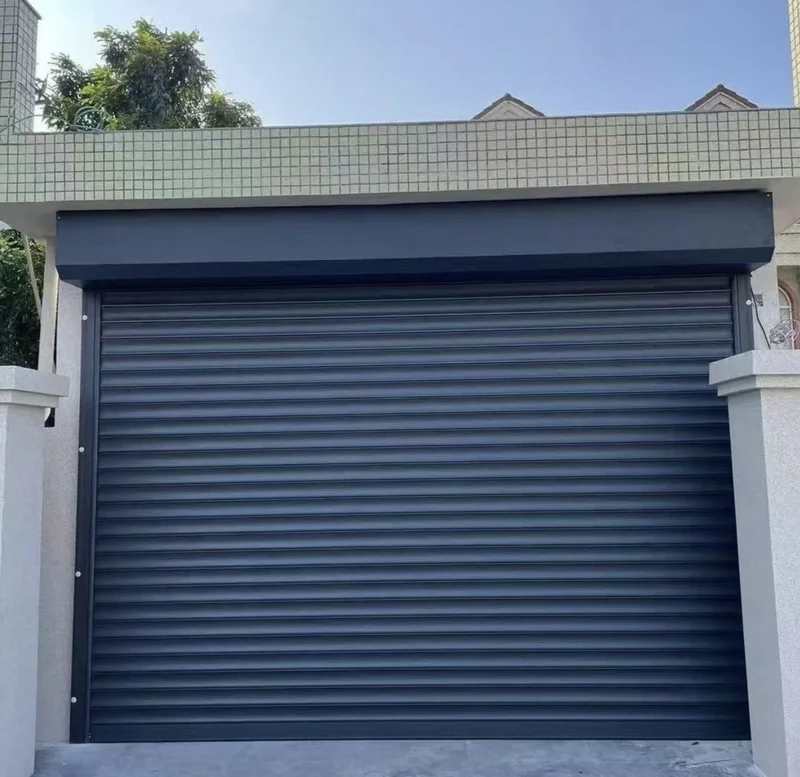
Core Material Systems & Moisture Management
- Wood-Plastic Composite (WPC) Cladding: Our panels utilize high-density WPC (≥1.2 g/cm³) with a controlled wood flour to PVC/polyethylene binder ratio. This formulation minimizes the cellulose content that absorbs water, while the encapsulating polymer matrix creates a moisture barrier. The result is a linear expansion coefficient of ≤0.5% after 24-hour water immersion (ASTM D570), effectively eliminating swelling and subsequent warping.
- Engineered LVL (Laminated Veneer Lumber) Core: For structural sections requiring high strength-to-weight ratios, we use LVL with phenolic resins. The cross-laminated veneers distribute hygroscopic stress evenly, preventing unilateral warping. Core moisture content is stabilized at 8-10% post-manufacturing (EN 322), ensuring dimensional stability in ambient relative humidity up to 90%.
- Integrated Mold Inhibition: Biostatic additives are compounded directly into the polymer matrices during extrusion, not coated on. This provides permanent, non-leaching protection against fungal and algal growth, meeting ASTM G21 and ISO 846 standards for mold resistance.
Performance Specifications & Technical Data
The following table quantifies key performance parameters for critical material components under humid conditions.
| Component | Material Specification | Key Performance Metric | Test Standard | Typical Value |
|---|---|---|---|---|
| Panel Cladding | High-Density WPC | Water Absorption (24hr) | ASTM D570 | ≤ 0.4% by weight |
| Swelling (Thickness, 24hr) | ASTM D570 | ≤ 0.5% | ||
| Shore D Hardness | ASTM D2240 | 75-80 | ||
| Structural Core | Phenolic-Bonded LVL | Internal Bond Strength | EN 319 | ≥ 1.2 N/mm² |
| Formaldehyde Emission | EN 717-1 | E0 Grade (≤ 0.05 ppm) | ||
| Seal & Insulation | Closed-Cell Polyurethane Foam | Moisture Vapor Transmission | ASTM E96 | < 1.0 perms |
| Thermal Insulation (U-factor) | ASTM C518 | 0.35 – 0.45 W/m²K |
Architectural & Compliance Advantages
- Dimensional Stability: The low moisture absorption rate of the composite system ensures consistent panel alignment and door operation, preventing binding and seal failure.
- Structural Longevity: Phenolic resins in the LVL core are hydrolysis-resistant, maintaining adhesive integrity under prolonged high humidity. This preserves the door’s load-bearing capacity and impact resistance.
- Health & Safety Compliance: All composite materials and adhesives are certified to E0 or E1 formaldehyde emission grades (EN 717-1, JIS A 1460). Fire-retardant grades meet EN 13501-1 Class B or ASTM E84 Class B.
- Acoustic & Thermal Performance: The dense, non-absorbent composite structure, combined with polyurethane foam, provides a sound reduction rating (SRR) of 25-30 dB and consistent thermal insulation, as the R-value does not degrade with humidity exposure.
- Quality Assurance: Material formulation and production are controlled under ISO 9001:2015, with batch testing for moisture-related performance to ensure consistency for large-scale architectural projects.
Structural Integrity and Durability: Built to Withstand Heavy Use and Harsh Weather Conditions
The structural performance of garage doors in Southeast Asia is defined by a material’s response to constant thermal cycling, high ambient moisture, and saline or polluted atmospheres. Our engineering prioritizes composite material integrity and core stability to prevent warping, delamination, and corrosion over a 15-year service life.
Core Material Stability and Moisture Resistance
The door’s structural core is critical. We utilize high-density (≥750 kg/m³) Wood Plastic Composite (WPC) cladding and panels, with a PVC-to-wood flour ratio optimized for minimal water absorption (<0.8%). For sectional doors, the stile-and-rail framework is constructed with Laminated Veneer Lumber (LVL) cores, which provide dimensional stability with a swelling rate below 1.5% even at 90% Relative Humidity. This prevents racking and ensures smooth operation of the roller system.
Surface and Hardware Corrosion Defense
All external metal components—hinges, rollers, tracks, and springs—undergo a multi-stage pretreatment and powder-coating process to a minimum thickness of 80µm. This coating is certified to withstand over 1,000 hours of neutral salt spray testing (ASTM B117), exceeding the demands of coastal environments.
Performance Under Load and Impact
Doors are designed to withstand standard wind loads for the region (up to 1500 Pa) and repeated cyclic operation. The integration of the high-density composite skin with the reinforced framework yields a high rigidity-to-weight ratio.
- High Cycle Durability: Hinge and roller systems are rated for a minimum of 25,000 open/close cycles without failure or significant wear.
- Impact Resistance: The composite panels have a Shore D hardness of 75-82, providing resistance to dents and accidental impacts common in busy settings.
- Acoustic & Thermal Insulation: The dense, non-homogeneous core structure acts as an effective sound dampener, achieving a sound reduction rating of 28-32 dB. The thermal insulation U-factor for insulated models ranges from 0.45 to 0.70 W/m²K.
- Fire Safety Compliance: Core materials and foams meet international fire reaction standards, typically achieving Class B/C per EN 13501-1 or an ASTM E84 Flame Spread Index ≤25.
Technical Specifications: Material Performance Data
| Parameter | Test Standard | Performance Range | Notes |
|---|---|---|---|
| Water Absorption (24h) | ASTM D570 | < 0.8% | For WPC/PVC composite panels |
| Thickness Swelling (24h) | EN 317 | ≤ 1.5% | At 90% RH, for LVL core |
| Salt Spray Resistance | ASTM B117 | > 1,000 hours | Red rust prevention on hardware |
| Hardness (Shore D) | ASTM D2240 | 75 – 82 | For finished panel surface |
| Formaldehyde Emission | EN 16516 | E0 / ≤ 0.065 mg/m³ | For all wood composite elements |
| Cyclic Durability | EN 13241-1 | ≥ 25,000 cycles | Full operational cycle test |
Manufacturing under ISO 9001:2015 quality management systems ensures batch-to-batch consistency. Every door is subjected to a final QC check for alignment, seal integrity, and smooth operation before crating, guaranteeing it arrives on-site ready for reliable installation and long-term performance.
Customizable Solutions for Export: Tailored Designs and Specifications for Southeast Asian Markets
For Southeast Asian markets, customization is not a luxury but a technical necessity. The region’s defining combination of high ambient humidity, intense UV exposure, and saline coastal air demands a fundamental re-engineering of standard garage door specifications. Our export philosophy is built on material science and performance data, allowing for precise tailoring to local climatic and architectural demands.
Core Material Systems for Humidity Control
The selection of substrate and cladding materials dictates long-term dimensional stability and finish integrity.
- High-Density Wood-Plastic Composite (WPC): We engineer panels with a minimum density of 1.25 g/cm³. This high density, achieved through precise polymer-wood flour ratios and advanced extrusion, directly correlates to reduced water absorption (<1.5% by 24-hour immersion) and superior resistance to fungal decay and termites.
- Engineered LVL (Laminated Veneer Lumber) Core: For steel or aluminum sandwich panels, we exclusively use phenolic-resin bonded LVL cores. This treatment ensures core stability with a thickness swelling rate of <8% under prolonged humidity, preventing panel delamination and maintaining structural rigidity.
- PVC-Over-Wood Systems: For traditional wood aesthetics, we offer a proprietary capped system. A solid wood substrate is fully encapsulated in a multi-layer, UV-stabilized PVC skin. This creates a complete moisture barrier, with the PVC cladding providing a Shore D hardness of >75 for impact resistance.
Performance Specifications & Certifications
All customizable solutions are validated against international standards, providing quantifiable performance guarantees.
- Moisture & Durability: Panels are tested for dimensional stability per ASTM D1037. Our standard for Southeast Asia is a maximum linear expansion of ≤0.3% at 90% RH.
- Fire Safety: Composite materials can be specified with Class B (EN 13501-1) or Class 1 (ASTM E84) fire ratings, utilizing non-halogenated flame retardants integrated during the compounding process.
- Emission Standards: Adhesives and composite materials comply with E0 (≤0.5 mg/L) or E1 (≤1.5 mg/L) formaldehyde emission grades (EN 717-1), ensuring indoor air quality.
- Structural Integrity: Hardware and track systems are specified with a minimum galvanization of Z275 (hot-dip) or equivalent zinc-aluminum coating for corrosion resistance in C4 (high salinity) environments as per ISO 9223.
Architectural & Functional Customization
Tailoring extends beyond climate resistance to functional and aesthetic integration.
- Acoustic Performance: For residential complexes, doors can be engineered with polyurethane foam-injected cores and sealed perimeter systems to achieve sound reduction ratings of 28-32 dB (Rw).
- Thermal Insulation: For conditioned parking or adjacent living spaces, insulated steel sections with polyurethane foam (density ≥40 kg/m³) achieve U-factors as low as 0.7 W/m²K.
- Finish & Colorfastness: Powder coatings are specified with a minimum 80μm DFT and QUV-A accelerated weathering resistance exceeding 1,500 hours without significant chalking or fading (ΔE <3). Woodgrain embossing depths are increased to 200-300μm for long-term visual texture retention under intense sun.
Technical Specification Matrix for Key Customizable Options
The following table outlines baseline performance parameters for our core customizable systems tailored for Southeast Asia.
| System | Core/Substrate | Cladding/Finish | Key Humidity Metric (Swelling/ Absorption) | Recommended Coating/ Treatment | Typical U-Factor (W/m²K) |
|---|---|---|---|---|---|
| Premium Insulated Sectional | Polyurethane foam (≥40 kg/m³) between galvanized steel (SZ350) | 80μm polyester powder coat, primer | N/A (non-hygroscopic core) | Cathodic electrocoating + powder coat | 0.7 – 1.0 |
| Humidity-Resistant Composite | High-Density WPC (≥1.25 g/cm³) | Integrated co-extruded cap layer | Water absorption <1.5% | UV-inhibited polymer matrix | 1.2 – 1.5 |
| Stabilized Hybrid Panel | Phenolic-treated LVL core | Aluminum alloy sheet (0.7mm) | Thickness swelling <8% | Fluorocarbon paint (PVDF) or anodizing | 1.8 – 2.2 |
| Traditional Aesthetic | Kiln-dried solid timber | Full-wrap PVC cap (≥0.8mm) | Moisture barrier complete | UV-stabilized PVC formulation | 2.0 – 2.5 |
The engineering process begins with a project’s geographic location, architectural style, and performance requirements. We then specify the material system, protective treatments, and hardware specifications to deliver a door system with documented longevity and performance in the Southeast Asian environment.
Technical Specifications and Performance Data: Ensuring Long-Term Reliability and Low Maintenance
Core Material Specifications
The structural integrity and longevity of garage doors in high-humidity climates are determined by core material composition and manufacturing standards.
- Composite (WPC) Doors: Engineered for maximum humidity resistance. Performance is dictated by density (≥ 650 kg/m³) and polymer-to-wood fiber ratio. A high polymer content encapsulates wood fibers, creating a moisture barrier. Critical metrics include water absorption <8% (ASTM D570) and thickness swelling <3% after 24-hour immersion.
- Steel Doors with LVL Core: Stability relies on the LVL (Laminated Veneer Lumber) core. LVL must be certified to E0 or E1 formaldehyde emission grades (EN 13986) and have a moisture content stabilized between 8-10% prior to encapsulation. The steel skin must be galvanized (Z275 minimum) with a full-wrap, factory-applied primer.
- PVC Sectional Doors: Superior to standard polymers, high-impact PVC formulations require a minimum Shore D hardness of 75 and a Vicat softening point >75°C to resist deformation under heat and humidity.
Performance Data & Environmental Tolerance
Quantifiable performance under Southeast Asian conditions is non-negotiable. The following data is derived from accelerated aging tests simulating high humidity (85% RH) and cyclic temperature exposure.
| Parameter | Test Standard | Performance Target | Functional Implication |
|---|---|---|---|
| Dimensional Stability (Swelling) | ASTM D1037 | ≤ 2.5% linear change | Prevents binding in tracks, ensures smooth operation. |
| Moisture Absorption | ASTM D570 | ≤ 7% by weight | Maintains panel weight and balance; prevents core degradation. |
| Surface Hardness | ASTM D2240 (Shore D) | ≥ 78 | Resists impact damage from debris and daily use. |
| Thermal Insulation (U-Factor) | EN 12428 | 1.2 – 1.8 W/m²K | Reduces heat transfer, improves energy efficiency for attached spaces. |
| Acoustic Insulation | EN ISO 10140-1 | 25 – 30 dB reduction | Minimizes external noise ingress. |
| Fire Resistance | EN 13501-1 | Class B-s1, d0 (Standard) | Specifiable to Class A2 for critical applications. |
Critical Construction & Finish Specifications
- Seal System: Triple perimeter seals using EPDM rubber are mandatory. Bottom seals must provide a positive closure against uneven floors.
- Hardware Corrosion Protection: All springs, hinges, brackets, and fasteners must be hot-dip galvanized or stainless steel (AISI 304 minimum). Zinc-plated hardware is unsuitable.
- Finish Durability: Polyester powder-coat finishes for steel must be 30-40 microns thick, applied over conversion coating. For WPC/PVC, co-extruded, UV-stabilized cap-stock layers (>0.5mm) are required to prevent fading and chalking.
- Glazing (if applicable): Insulated double-pane glass with tempered outer pane and butyl/desiccant edge seal to prevent internal fogging.
Quality Assurance & Compliance
Long-term reliability is predicated on controlled manufacturing. All components must be traceable to batch-level material certifications.
- Factory Controls: ISO 9001:2015 certified production is required, with documented process control for moisture content, lamination pressure, and cure times.
- Material Certifications: Supplier Certificates of Analysis (CoA) for raw materials (resins, steel coil, wood fiber) must be available, verifying compliance with stated technical specs.
- Performance Warranty: A clear, transferable warranty covering material integrity and finish against humidity-induced failure for a minimum of 10 years is standard for products meeting these specifications.
Trusted by Global Exporters: Proven Success and Certifications for Quality Assurance
Our engineered garage door systems are specified for major infrastructure and residential projects across Southeast Asia, with documented performance in high-humidity coastal and tropical climates. Long-term structural integrity is non-negotiable; our supply chain and manufacturing protocols are validated by independent international bodies.
Core Material Certifications & Performance Data
Material stability under thermal-hygric cycling is critical. Our composite and solid-core doors are certified to the following standards, ensuring predictable performance in 70-95% RH environments.
| Parameter | Standard / Grade | Test Method | Performance Significance for Humidity Tolerance |
|---|---|---|---|
| Formaldehyde Emission | E0 (≤0.5 mg/L) | EN 717-1, JIS A 1460 | Ensures indoor air quality and indicates advanced resin bonding, reducing water-soluble adhesive content. |
| Dimensional Stability (Swelling) | ≤12% thickness increase (24h water immersion) | EN 317 (for panels) | Direct measure of moisture resistance; critical for panel integrity and track alignment. |
| Fire Reaction | Class B-s1, d0 | EN 13501-1 | Reflects core material density and chemical additives that also inhibit moisture retention. |
| Surface Hardness | ≥80 Shore D (composite faces) | ASTM D2240 | Resistance to impact and abrasion in humid, saline air, maintaining aesthetic durability. |
| Thermal Insulation (U-Factor) | 0.7 – 1.2 W/m²K | EN ISO 8990 | Low U-factor indicates a sealed, moisture-resistant core structure with minimal thermal bridging. |
Quality Management & Material Traceability
- ISO 9001:2015 Certified Manufacturing: Ensures batch-to-batch consistency in raw material formulation, pressing parameters, and final assembly tolerances (±1.5mm).
- FSC/PEFC Chain of Custody: For timber and wood composite components, guaranteeing sourced from sustainably managed forests with lower inherent moisture variability.
- Salt Spray Test Certification (ASTM B117): Panels and hardware are tested for 500+ hours of neutral salt spray, validating corrosion protection for coastal installations.
Architectural Performance Advantages in Humid Climates
- Moisture Absorption Rate: <8% for Wood Plastic Composite (WPC) cladding (ASTM D570), achieved through optimal PVC-wood flour ratios and high-density (≥1.3 g/cm³) extrusion.
- Core Stability: Laminated Veneer Lumber (LVL) cores are kiln-dried to ≤10% moisture content and engineered with cross-laminated plys to resist warping (≤2mm deviation over 2.4m span).
- Acoustic & Sealing Performance: Integrated perimeter seals with EPDM gaskets provide a sound reduction rating (Rw) of up to 38 dB and a primary weather seal against driven rain.
- Finish Durability: Multi-coat polyester/polyurethane finishes applied via automated lines exhibit >1,000 hours of QUV-B resistance (ASTM G154), preventing blistering and fading under high UV/humidity.
Frequently Asked Questions
How do your garage doors prevent warping in Southeast Asia’s 80-90% humidity?
Our doors use LVL core reinforcement with ≤8% moisture content and WPC cladding (density ≥1,250 kg/m³). This combination ensures a moisture expansion coefficient below 0.3%, and edges are sealed with 200μm PVC coating to block water ingress, preventing structural deformation.
What formaldehyde emission standards do your composite doors meet for indoor air safety?
All materials comply with E0 (≤0.5 mg/L) and EN 717-1 Class E1 standards. We use urea-free adhesives and WPC panels with ≤0.3 mg/L formaldehyde emission, ensuring safe indoor air quality even in enclosed garages attached to living spaces.
How is thermal insulation optimized for tropical climates without heavy materials?
Doors feature polyurethane foam cores (R-value ≥18) sandwiched between WPC panels. This design minimizes heat transfer while keeping weight low. The closed-cell foam structure also resists humidity absorption, maintaining consistent insulation performance.
What impact resistance do your doors offer against frequent tropical storms?
Panels are reinforced with galvanized steel frames and 22mm thick high-density WPC (≥1,300 kg/m³), achieving a JIS A 4706 impact rating. The surface undergoes UV-cured acrylic finishing to withstand hail and debris without cracking or fading.
How do you ensure long-term corrosion resistance in coastal areas?
All metal components receive a triple-layer treatment: zinc phosphating, epoxy primer, and polyester powder coating (≥80μm). Hinges and tracks are stainless steel (304 grade), and WPC panels include anti-fungal additives to resist salt-air corrosion.
What sound insulation levels can be expected in urban Southeast Asian settings?
Our door systems achieve 40-45 dB sound reduction via laminated WPC layers (18mm + 22mm) with an acoustic PVB interlayer. The perimeter uses dual magnetic seals to minimize noise leakage from street traffic or machinery.
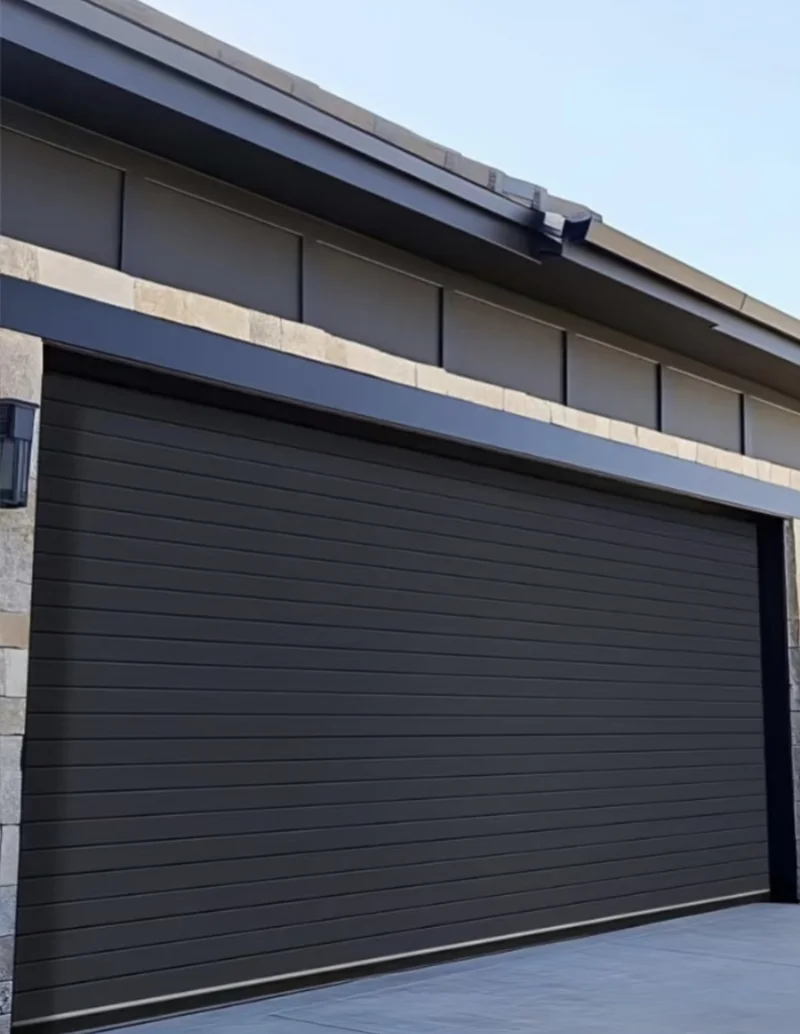
How are UV-resistant finishes applied to prevent color fading?
We use a 4-stage process: substrate priming, UV-absorbing base coat, automated spray coating with polyurethane pigments, and a final UV-cured topcoat (≥120μm total). This ensures color stability for over 10 years under intense solar exposure.
What quality certifications validate your doors’ humidity tolerance claims?
Products are tested to ISO 4611 (humidity cycling), ASTM D1037 water absorption standards, and carry Singapore Green Label certification. Each batch undergoes 1,000-hour humidity chamber testing at 40°C/95% RH to verify performance.