Solid wood door customization solution hotel/villa/office building exclusive scheme
In the realm of architectural distinction, the entrance sets the tone. For hotels, villas, and office buildings seeking to transcend the ordinary, a bespoke solid wood door is more than an entry point—it is a statement of craftsmanship, security, and unparalleled elegance. Our exclusive customization solutions are designed for those who understand that first impressions are lasting. We collaborate closely with architects, designers, and developers to transform vision into reality, meticulously crafting each door from select, sustainably sourced hardwoods. From grand, intricately carved portals for luxury resorts to sleek, modern designs for corporate headquarters, we provide a seamless, end-to-end service. This is where timeless material meets contemporary innovation, creating a signature element that enhances property value, embodies brand identity, and welcomes the world with silent, solid grace.
Elevate Your Project’s Aesthetic and Functionality with Bespoke Solid Wood Doors
Bespoke solid wood doors are engineered systems, not merely decorative elements. Their performance is dictated by core construction, material composition, and precise manufacturing tolerances. A true custom solution integrates aesthetic intent with non-negotiable technical specifications for longevity, safety, and environmental performance.
Core Construction & Material Integrity
The door’s stability and performance lifespan are determined by its core. We utilize engineered wood cores, such as LVL (Laminated Veneer Lumber), for superior dimensional stability. Compared to traditional solid block construction, an LVL core provides:
- Minimal Warping: Cross-laminated layers counteract internal stress, maintaining alignment in varying humidity.
- Consistent Density: Eliminates weak points and ensures uniform fastener holding strength across the entire panel.
- Predictable Performance: Allows for accurate engineering of weight, hinge load, and acoustic properties.
For the veneer and solid wood components, species selection is based on Janka hardness, grain structure, and moisture absorption rates. We specify pre-dried lumber to a moisture content of 8% (±2%), matched to the destination’s average annual relative humidity to prevent post-installation swelling or contraction.
Technical Performance Specifications
Our manufacturing adheres to international standards, providing quantifiable performance data for project specifications.
| Performance Category | Standard / Metric | Typical Specification Range | Application Note |
|---|---|---|---|
| Structural & Durability | Cycle Testing (ASTM E2068) | >200,000 cycles | Ensures longevity for high-traffic hotel corridors and office entrances. |
| Acoustic Insulation | Sound Reduction (Rw) | 32-38 dB | Critical for villa master suites, conference rooms, and hotel room privacy. |
| Thermal Insulation | U-Factor | 1.2 – 1.8 W/m²·K | Contributes to building envelope efficiency in climate-controlled environments. |
| Fire Resistance | Integrity (EN 1634-1 / ASTM E814) | EI30 / EI60 | Certified assemblies for required compartmentalization in multi-occupancy buildings. |
| Emissions & Safety | Formaldehyde Emission | E0 / CARB Phase 2 Compliant | Ensures indoor air quality compliance for all interior environments. |
| Surface Hardness | Shore D Hardness | 70-85 (finished surface) | Determines resistance to abrasion, impact, and cleaning agents in commercial settings. |
Functional Advantages of Engineered Bespoke Design
- Integrated Access Control: Precisely machined pockets for mortise locks, multi-point systems, or concealed magnetic locks without compromising structural integrity.
- Acoustic Sealing Systems: Option for full-perimeter compression seals with adjustable thresholds to achieve specified Rw ratings.
- Heavy-Duty Hardware Compatibility: Core is reinforced for precise fitting of continuous hinges (EN 1935 Grade 13) or pivot sets, calculated for door mass and frequency of use.
- Moisture Management: For spa, bathroom, or certain climatic applications, doors can be engineered with stabilized cores and finished with catalyzed conversion varnishes or polyurethanes, achieving swelling coefficients of less than 0.3% under 65% RH for 96 hours.
- Full-System Integration: Custom designs account for and coordinate with surrounding finishes, including floor clearance, jamb details for wall cladding, and shadow-line reveals.
Specification and Compliance
All production is governed by a quality management system certified to ISO 9001:2015. Documentation packages include:
- Material certificates for wood, adhesives, and finishes.
- Independent test reports for fire, acoustic, and cycle performance where specified.
- Full shop drawings for architect/contractor approval, detailing all dimensions, core construction, hardware locations, and finish specifications.
This engineering-led approach transforms a custom door from an architectural feature into a reliable, performance-guaranteed component of the building envelope.
Engineered for High-Traffic Durability: The Structural Integrity of Our Custom Solutions
The structural integrity of a custom solid wood door is defined by its core construction and material composition, not merely surface aesthetics. Our engineered solutions are designed to withstand the mechanical stress, environmental fluctuations, and constant use inherent in commercial and high-end residential settings. The primary failure points in high-traffic applications—hinge area fatigue, panel warping, edge delamination, and impact damage—are addressed at the material and fabrication level.
Core Stability & Layered Construction
The foundation is a dimensionally stable core. We utilize cross-laminated solid wood blocks or engineered LVL (Laminated Veneer Lumber) cores, which are kiln-dried to a moisture content (MC) of 8-10%. This core is then symmetrically balanced with surface laminates and solid wood veneers to create a monolithic structure that resists warping. The critical technical principle is balanced construction: the material mass and grain orientation on one face of the core must be mirrored on the opposite face to counteract internal stresses from humidity changes.
Material Specifications for Performance
Performance is quantifiable. The following table outlines key parameters for our standard high-traffic door construction.
| Parameter | Specification | Test Standard / Rationale |
|---|---|---|
| Core Density | ≥ 650 kg/m³ | Ensures screw-holding power for hardware and impact resistance. |
| Dimensional Stability (Swelling Rate) | ≤ 1.2% over 24h immersion | ASTM D1037; critical for humidity-prone areas like spas and building entrances. |
| Surface Hardness | ≥ 75 Shore D | ASTM D2240; resists scratches, dents, and abrasion from luggage and furniture. |
| Sound Reduction Index (Rw) | 30-38 dB | EN ISO 717-1; core density and airtight sealing contribute to acoustic privacy. |
| Thermal Insulation (U-factor) | 1.2 – 1.8 W/m²K | Dependent on total thickness and core material; improves energy efficiency. |
| Formaldehyde Emission | E0 / ≤ 0.05 ppm | EN 16516; meets the strictest indoor air quality standards for occupied spaces. |
| Fire Rating Integrity | Up to 60 minutes | EN 1634-1; achieved through certified intumescent seals and non-combustible core options. |
Functional Advantages of the Engineered Assembly
- Hardware Integration: Hinge and lock blocks are integrated into the core during fabrication. These are solid hardwood or high-density engineered composites, providing a permanent anchor point that prevents screws from stripping under repetitive load.
- Edge Sealing & Moisture Management: All edges, including the top and bottom, are sealed with a minimum 3-coat UV-cured finish or a durable ABS/PVC edge band. This creates a moisture barrier, limiting water absorption to <8% by volume (ASTM D570), which is essential for maintaining dimensional stability.
- Impact-Resistant Surfaces: High-pressure laminate (HPL) or real wood veneers overlaid on phenolic-backed panels offer superior resistance to impact and cleaning chemicals compared to standard lacquers, with a pencil hardness exceeding 3H.
- Frame Compatibility & Tolerance: Doors are machined to a tolerance of ±0.5mm. This precision ensures perfect alignment with frames and thresholds, reducing wear on hinges and seals while achieving consistent acoustic and smoke-sealing performance as per EN 14351-2.
Advanced Moisture and Fire Resistance for Enhanced Safety and Longevity
The structural integrity and lifespan of a solid wood door are directly compromised by moisture ingress and fire. Our engineering protocols address these failure modes at the material and system level, moving beyond surface treatments to integrate performance into the core construction.
Core Material Engineering for Dimensional Stability
Dimensional instability from humidity cycling is the primary cause of warping, swelling, and joint failure. Our methodology employs a hybridized material strategy:
- Multi-Layer LVL Core: The door core is constructed from cross-laminated LVL (Laminated Veneer Lumber). This engineered wood product has a stabilized, homogeneous structure with minimal internal stress, providing a predictable and stable substrate that resists torsional warping far more effectively than solid timber blocks.
- High-Density WPC (Wood-Plastic Composite) Edges & Critical Zones: All door edges, bottom rails, and areas prone to capillary water uptake are protected with extruded WPC. With a density exceeding 1.3 g/cm³ and a controlled wood fiber-to-polymer ratio, this material exhibits near-zero water absorption (<0.5%), eliminating edge swelling.
- Advanced Adhesive Systems: We use isocyanate-based (EPI) and phenolic-resin adhesives for lamination and joint construction. These adhesives maintain bond strength under prolonged damp conditions, exceeding the requirements of EN 204 durability class D4.
Integrated Fire Resistance Systems
Fire resistance is a system property, not merely a material attribute. Our doors are engineered as complete assemblies to meet defined integrity (E) and insulation (I) criteria.
- Intumescent Seal Integration: A continuous, factory-installed intumescent seal is housed in a machined groove within the door edge. When exposed to heat, this seal expands volumetrically to fill the gap between the door and frame, maintaining the integrity of the fire barrier by preventing smoke and flame passage.
- Core & Component Specification: For rated assemblies, we utilize non-combustible mineral cores or specially formulated fire-retardant-treated wood cores that char at a predictable rate. All hardware is specified with matching fire-endurance ratings.
- Certified Assembly Testing: Door and frame assemblies are tested as complete units to relevant standards (e.g., EN 1634-1, ASTM E84). We provide documentation for 30, 60, and 90-minute integrity and insulation ratings (EI30, EI60, EI90) as required by the project’s compartmentalization strategy.
Performance Data Summary
| Parameter | Test Standard | Performance Range | Notes |
|---|---|---|---|
| Moisture Absorption | EN 317 (WPC) | < 0.5% (24h immersion) | For WPC protective components; solid wood sections are fully sealed. |
| Thickness Swelling | EN 317 | < 0.8% (24h immersion) | Critical for maintaining clearances in high-humidity environments (e.g., spas, coastal properties). |
| Formaldehyde Emission | EN 16516 / ISO 12460-5 | E0 (< 0.05 ppm) / E1 (< 0.1 ppm) | Core materials and adhesives are certified to the highest indoor air quality grades. |
| Fire Rating | EN 1634-1 | EI30 / EI60 / EI90 | Certified for the complete assembly (door, frame, seals, hardware). |
| Acoustic Insulation (Rw) | EN ISO 10140-2 | Up to 42 dB | Achieved through mass, core damping layers, and perimeter sealing. |
| Thermal Transmittance (U) | EN ISO 12567-1 | As low as 1.1 W/m²K | Dependent on core configuration and optional thermal breaks in the frame. |
Architectural and Maintenance Advantages
- Long-Term Fit and Function: Guaranteed dimensional stability ensures doors operate smoothly for the lifecycle of the building, with no binding or latching issues due to humidity changes.
- Reduced Lifecycle Cost: Eliminates call-backs for warped doors or failed finishes in moisture-prone areas, providing a predictable maintenance schedule.
- Code Compliance and Liability Mitigation: Furnishing certified fire performance data and assembly details simplifies the architect’s specification and regulatory submission process.
- Finish Durability: The stable substrate prevents micro-cracking in veneers and paint films caused by underlying wood movement, preserving aesthetic integrity.
Eco-Friendly and Healthy Indoor Environments with Formaldehyde-Free Materials
The specification of formaldehyde-free materials is a critical engineering decision for modern building interiors, directly impacting long-term occupant health and environmental performance. Our solid wood door solutions achieve this through a material science-led approach, eliminating urea-formaldehyde adhesives and volatile organic compounds (VOCs) at the source.
Core Material Technology and Standards
The structural integrity and environmental safety of the door are engineered from the core outward. We utilize formaldehyde-free adhesives, primarily polyurethane (PUR) and phenol-resorcinol-formaldehyde (PRF) types, which are chemically inert upon curing. This is applied across all composite elements:
- LVL (Laminated Veneer Lumber) Core: Engineered with PUR adhesives under high pressure and heat. This results in a dimensionally stable core with superior resistance to warping and twisting compared to solid timber, while maintaining a formaldehyde emission class of E0 (≤0.5 mg/L, per GB 18580 / EN 717-1).
- Surface Veneers & Solid Wood Components: All natural wood elements are bonded to the core and to each other using the same PUR adhesive systems.
- Alternative Composite Panels (for specific designs): Where specified, we integrate ultra-low-emission panels such as NAF (No Added Formaldehyde) certified particleboard or MDF, which use isocyanate-based binders.
Performance Advantages for High-Traffic Interiors
The primary functional benefits of this material specification extend beyond emissions to measurable performance metrics crucial for hotel, villa, and office applications:
- Superior Indoor Air Quality (IAQ): Guaranteed compliance with the strictest international formaldehyde emission standards (E0, CARB NAF, JIS F****). This is non-negotiable for healthcare facilities, luxury residences, and green building certifications (LEED, BREEAM, WELL).
- Enhanced Hygroscopic Stability: Formaldehyde-free adhesives and sealed substrate cores significantly reduce the material’s moisture absorption rate. Doors maintain dimensional stability in environments with variable humidity (e.g., hotel bathrooms, coastal villas), with typical edge swelling rates of <12% after 24-hour immersion (per EN 317).
- Optimized Acoustic Insulation: The homogeneous, void-free bonding within the LVL core and between layers creates a consistent density profile. This enhances sound transmission loss, with performance doors achieving a weighted sound reduction index (Rw) of up to 32 dB for single-leaf constructions.
- Long-Term Durability: PUR and PRF bonds are resistant to hydrolysis, ensuring the structural integrity of the door assembly is maintained over decades, even under cyclical environmental stress.
Technical Specifications & Compliance
The following table summarizes key performance parameters and verification standards for our formaldehyde-free door systems.
| Parameter | Specification / Performance | Test Standard | Application Implication |
|---|---|---|---|
| Formaldehyde Emission | E0 Grade (≤0.5 mg/L) / CARB NAF Compliant | GB 18580, EN 717-1, ASTM E1333 | Ensures compliance with global health standards for occupied spaces. |
| Core Material | Formaldehyde-Free LVL (PUR Bonded) | – | Provides dimensional stability (MoE ≥ 10,000 MPa) and eliminates internal VOC source. |
| Moisture Resistance | Thickness Swelling (24h) < 12% | EN 317 | Critical for doors installed in high-humidity zones (e.g., spa areas, residential kitchens). |
| Fire Performance | Class B / C (EN 13501-1) achievable with integrated treatments | EN 13501-1 | Can be engineered to meet corridor and fire door compartmentalization requirements. |
| Acoustic Insulation | Rw up to 32 dB (Single Leaf, with seals) | ISO 10140-2 | Contributes to room-to-room privacy in hotels and office suites. |
| Quality Management | ISO 9001:2015 certified manufacturing process | ISO 9001 | Guarantees traceability and consistent application of adhesive technology and pressing parameters. |
Architectural Integration and Assurance
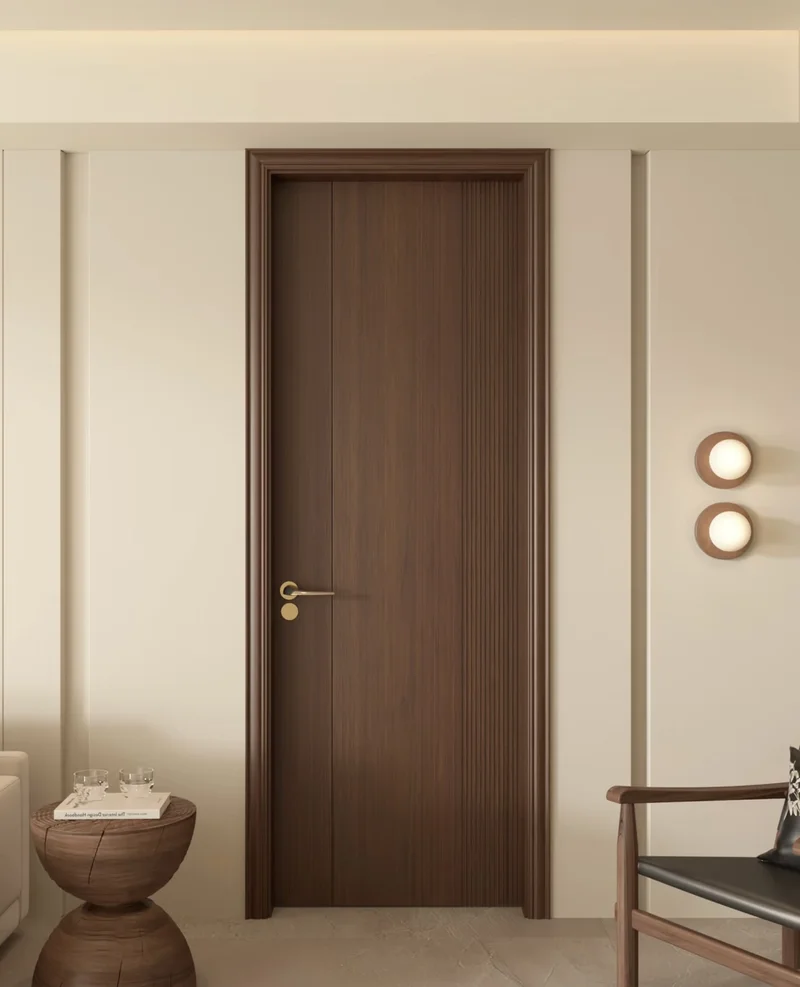
From a specification standpoint, this approach provides a seamless health-focused narrative for the entire project. The doors are not an isolated component but are integral to a building’s overall IAQ strategy. We provide material safety data sheets (MSDS) and third-party test reports for all adhesive batches and composite panels, offering full transparency for the project’s technical file. This allows architects and contractors to confidently meet the stringent material health prerequisites of modern green building frameworks.
Seamless Integration and Customization for Hotel, Villa, and Office Applications
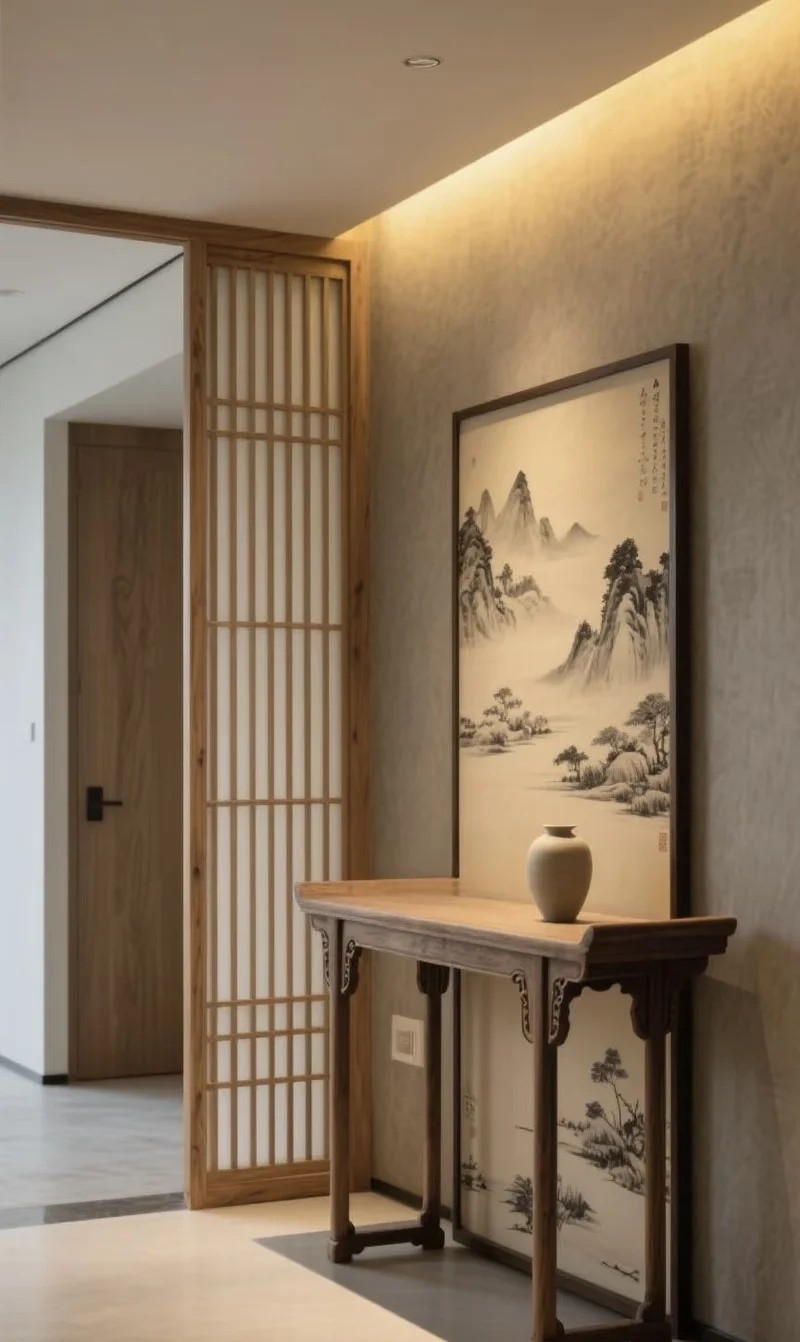
The seamless integration of solid wood doors into a project’s architectural language requires a foundation of precise engineering and material science. Customization is not merely aesthetic; it is a technical discipline ensuring performance, longevity, and compliance across diverse operational environments.
Core Material Specifications & Engineering
The structural integrity begins with the core. We utilize multi-directional LVL (Laminated Veneer Lumber) cores, engineered for dimensional stability with a target moisture content of 6-8% to minimize warping (<1.5mm/m) and swelling (<0.3% thickness swell after 24h immersion). Veneers and solid wood components are sourced from FSC/PEFC-certified forests and undergo a proprietary multi-stage kiln-drying process to achieve equilibrium moisture content (EMC) matched to the installation climate zone.
Surface systems are engineered for application-specific demands:
- Hotel/Villa High-Moisture Zones: Doors integrate WPC (Wood-Plastic Composite) or solid polymer sub-frames with a PVC-wood ratio optimized for Shore D hardness >65 and 24-hour water absorption <1.5%. Core barriers and sealed edge-bandings achieve a moisture resistance rating per EN 1121:2000.
- Office & High-Traffic Areas: Cross-linked acrylic or catalyzed varnish finishes are applied in controlled-environment booths, achieving a film hardness of ≥2H (ASTM D3363) and abrasion resistance of >1,000 cycles (Taber Abraser, CS-10 wheel).
Performance Compliance & Certification
All solutions are developed and manufactured under an ISO 9001:2015 certified quality management system. Standard performance parameters include:
| Performance Category | Test Standard | Typical Achieved Rating | Application Note |
|---|---|---|---|
| Fire Resistance | EN 1634-1 / ASTM E84 | EI 30 / Class B | Core treatments and intumescent seal systems. |
| Formaldehyde Emission | EN 16516 / JIS A 1460 | E0 (≤0.05 ppm) / F**** | Adhesives and composite materials are sourced to meet the most stringent indoor air quality standards. |
| Acoustic Insulation | EN ISO 10140-2 | Rw 32 dB – 42 dB | Achieved through mass-spring-mass core design, perimeter sealing, and automatic drop seals. |
| Thermal Insulation | EN 12412-2 | U-factor as low as 1.2 W/m²K | For specialized applications, integration of insulated core materials and thermal breaks. |
Architectural Integration & Functional Advantages
Customization protocols ensure doors perform as integral components of the building envelope and interior design scheme.
- Dimensional & Configuration Flexibility: Non-standard sizes up to 2800mm height x 1200mm width are engineered with reinforced hanging systems. Configurations include single and double leaf, pivot, sliding, and panic hardware-compatible designs.
- Hardware Integration: Pre-machining for multi-point locking systems (e.g., DIN 18251), concealed closers, and access control interfaces is performed in-factory to tolerances of ±0.5mm, ensuring flawless operation.
- Aesthetic Cohesion: Full-scale finishing includes color matching via RAL, NCS, or custom pantone, with capabilities for deep-profile machining, custom inlays, and textured finishes that maintain consistency across large door schedules.
- Maintenance & Durability: Engineered finishes resist cleaning chemicals (tested per EN 12720), UV degradation, and impact. The system is designed for easy field repair of surface finishes without full door replacement.
Project-Specific Technical Protocols
For each project, a technical data sheet (TDS) is generated, detailing:
- Material specifications and supply chain certifications.
- Full-scale mock-up testing results for finish, hardware, and operational performance.
- Installation guidelines detailing clearances, anchoring methods, and sealant specifications.
- Maintenance protocols and a lifecycle assessment for the specified door assembly.
This engineered approach transforms the door from a commodity into a certified, high-performance building component, ensuring seamless performance aligned with architectural intent and operational demands.
Technical Specifications and Compliance for Professional Building Standards
Core Material Specifications
The structural integrity and longevity of a custom solid wood door are defined by its core composition and surface material science. Our engineered approach ensures dimensional stability and performance consistency across all climates.
Core Construction:
- Multi-Layer LVL (Laminated Veneer Lumber) Core: Utilizes cross-laminated veneers with alternating grain direction (0/90 degrees). This construction neutralizes internal stress, providing superior resistance to warping and twisting compared to solid timber blocks. Core density is maintained at ≥650 kg/m³.
- Stabilizing Grid Framework: The LVL core is reinforced with a perimeter and internal grid of solid wood or high-density engineered lumber, creating anchor points for hardware that exceed ANSI/BHMA A156.115 Grade 1 requirements for heavy-duty commercial use.
Surface & Veneer Technology:
- Premium Veneer Selection: Architectural-grade veneers (sliced or rotary-cut) are sourced from FSC® or PEFC-certified forests. Veneer thickness is a minimum of 0.6mm, ensuring depth and authenticity in grain appearance.
- High-Pressure Laminate (HPL) & Real Wood Veneer (RWV) Options: For high-abuse areas, HPL surfaces offer exceptional abrasion resistance (≥1000 cycles, ASTM D4060) and impact resistance. RWV options are finished with catalyzed conversion varnish systems, achieving a hardness of ≥2H (ASTM D3363).
Performance Parameters & Testing Standards
Doors are tested to international standards to guarantee performance in safety, environmental, and functional categories.
Fire & Safety Compliance:
- Fire Ratings: Doorsets can be manufactured to meet specified fire integrity (E) and insulation (I) ratings as per EN 1634-1 or ASTM E2074. Typical ratings include EI30 and EI60 configurations, with certified hardware and glazing where required.
- Smoke Control: Meeting additional criteria for smoke leakage (Sa or S classification per EN 1634-3) for pressurized stairwells and corridors.
Environmental & Health Standards:
- Formaldehyde Emissions: All composite wood components comply with the strictest international emission standards, certified to CARB ATCM Phase II, EPA TSCA Title VI, and European E1 (≤0.1 ppm per EN 717-1) standards. E0 (≤0.05 ppm) options are available.
- Quality Management: Manufacturing processes are certified to ISO 9001:2015, ensuring traceability and consistent quality control from material sourcing to final assembly.
Acoustic & Thermal Performance:
- Sound Insulation: Performance is a function of core density, sealing, and construction. Standard solid core doors provide a Sound Transmission Class (STC) rating of 26-32 dB. Engineered acoustic doorsets with specialized seals and constructions can achieve STC 35-45 dB, tested per ASTM E90.
- Thermal Insulation: The insulated core and perimeter sealing contribute to a door’s U-factor. Typical U-factors range from 1.8 to 2.5 W/m²·K, supporting building envelope energy efficiency goals.
Functional & Architectural Advantages
- Dimensional Stability: Engineered core reduces linear expansion to <0.3% in 85% relative humidity per EN 321, preventing binding and operational failure.
- Moisture Resistance: Finished doors exhibit minimal edge swelling, with thickness swelling rates of <12% after 24-hour water immersion test (EN 317 equivalent).
- Hardware Integration: Reinforced core sections allow for seamless integration of heavy-duty hinges, multi-point locks, and concealed closers without compromising structural integrity.
- Finish Durability: UV-cured and catalyzed finishes achieve a minimum of 4B adhesion (ASTM D3359) and resist 100+ hours of accelerated weathering (ASTM G154) without significant gloss loss or cracking.
Technical Data Summary
| Parameter | Standard / Test Method | Performance Range | Notes |
|---|---|---|---|
| Core Density | EN 323 | ≥ 650 kg/m³ | LVL composite core |
| Fire Resistance | EN 1634-1 / ASTM E2074 | EI 30 / EI 60 / EI 90 | Full doorset assembly rating |
| Formaldehyde | EN 717-1 / ASTM E1333 | E1 (≤0.1 ppm) / E0 Optional | Core & component emissions |
| Sound Reduction (STC) | ASTM E90 | 26 – 45 dB | Varies with seals & construction |
| Finish Hardness | ASTM D3363 | ≥ 2H (Pencil Hardness) | For clear coat finishes |
| Thickness Swell | EN 317 (Equivalent) | < 12% (24hr immersion) | Measured on door edge |
| Operational Cycle | ANSI/BHMA A156.115 | Grade 1 (1,000,000 cycles) | For heavy-duty commercial hinges |
Frequently Asked Questions
How do you prevent warping in solid wood doors for high-humidity coastal villas?
We use kiln-dried LVL core reinforcement (≤12% moisture content) with balanced cross-lamination, sealed with full-perimeter PVC edge banding (≥2mm). This controls differential expansion. For finishing, a 5-coat UV-curing process with moisture-barrier primers is applied to achieve dimensional stability in 85% RH environments.
What formaldehyde emission standards are guaranteed for hotel room doors?
We exclusively use E0-grade (≤0.050 mg/m³ per GB/T 39600-2021) or ENF-grade (≤0.025 mg/m³) engineered wood cores with MDI non-aldehyde adhesives. All surface coatings are water-based, certified with SGS testing reports to ensure indoor air quality compliance for prolonged occupancy.
Can your doors meet stringent acoustic insulation requirements for office conference rooms?
Yes. We construct doors with a staggered-structure WPC panel core (density ≥750 kg/m³) and integrated magnetic sealing gaskets. This assembly achieves a weighted sound reduction index (Rw) of 32-38 dB, effectively blocking mid-to-high-frequency speech sounds for confidential meeting environments.
How is impact resistance addressed for high-traffic hotel corridor doors?
The solution utilizes a reinforced composite structure: a high-density WPC skin (≥900 kg/m³) over a multi-axial LVL framework. Corners are reinforced with aluminum alloy inserts, and the surface is finished with a 0.5mm wear-resistant thermoplastic polymer coating, tested to withstand over 100,000 impact cycles.
What thermal insulation properties can be achieved for villa exterior doors?
Our doors integrate a polyurethane foam-injected core (thermal conductivity λ ≤0.025 W/(m·K)) within a thermally broken aluminum alloy frame. Combined with triple-sealing profiles, this achieves a U-value of ≤1.2 W/(m²·K), significantly reducing energy transfer and meeting passive building standards for extreme climates.
How do you ensure long-term color stability and finish durability against sunlight?
We employ a 7-stage finishing process: base etching, UV-primer, polyester coating, and a final topcoat with HALS UV absorbers. This system, tested under QUV for 2000 hours, guarantees ΔE ≤2.0 color difference, preventing fading or chalking in south-facing office applications.
What is your solution for preventing bottom edge swelling in wet-area applications like hotel spas?
We fabricate door bottoms with a solid polymer threshold (PP or ASA material) co-extruded with the wood substrate, creating a monolithic water barrier. The entire door is also treated with a vacuum-pressure impregnation sealant, achieving a 24-hour water absorption rate of less than 8%.