Solid wood door ODM cooperation product R&D patent sharing market support
In the competitive landscape of architectural interiors, the choice of a solid wood door is a definitive statement of quality and aesthetic intent. For brands seeking to elevate their offerings without the overhead of extensive in-house development, a strategic ODM partnership presents a compelling pathway. This collaboration model transcends simple manufacturing, offering a deep synergy in product R&D, where innovative designs and engineered solutions are born. Crucially, it extends to the shared utilization of proprietary patents, safeguarding innovation while accelerating time-to-market. Ultimately, this integrated approach is fortified by comprehensive market support, ensuring that each door is not just a product, but a fully supported asset designed to thrive in today’s discerning marketplace and build lasting brand value.
Unlock Customized Solutions: How Our ODM Partnership Drives Innovation in Solid Wood Doors
Our ODM partnership model is engineered to translate architectural specifications into high-performance solid wood door systems. Innovation is driven by a co-development process where your project requirements directly inform our material selection, structural engineering, and finishing protocols. We provide the technical infrastructure to prototype, test, and industrialize custom solutions that meet precise functional and aesthetic benchmarks.
Core Technical Collaboration Pillars:
-
Material Science Integration: We engineer door cores and components beyond standard solid lumber. This includes the application of stabilized LVL (Laminated Veneer Lumber) cores for dimensional stability in high-rise applications, and the formulation of specialized wood-plastic composites (WPC) for high-moisture zones. Key parameters are rigorously controlled:
- LVL Core: Cross-banded veneer construction with controlled moisture content (<8%) to minimize cupping and twisting.
- WPC Formulations: Optimized wood fiber to polymer ratios (typically 60:40 to 70:30) and densities (≥0.9 g/cm³) to balance structural integrity, machinability, and water resistance.
- Solid Wood Selection: Species-specific drying to 6-8% moisture content, coupled with grain orientation analysis for stress relief.
-
Performance-Based Design: Doors are engineered as complete assemblies to meet quantified performance standards.
- Acoustic Insulation: Achieve STC ratings up to 40 dB through integrated core designs, sealed edges, and optional laminated glass.
- Fire Resistance: Construct doors to meet EN 1634-1 or ASTM E84 standards, utilizing certified intumescent seals, mineral cores, and fire-retardant treated components.
- Environmental & Health Compliance: All composite materials, adhesives, and finishes are specified to meet E0 or E1 formaldehyde emission grades (ISO 16893). Finishes are tested for VOC compliance.
-
Prototyping & Validation: The partnership includes access to our testing facilities for prototype validation. This ensures design intent is matched by empirical performance before full-scale production.
Technical Advantages of the ODM Co-Development Process:
- Architectural Detailing: We execute complex custom profiles, veneer matching schemes, and integrated architectural hardware preps.
- Performance Tailoring: Adjust core materials, glazing systems, and sealing technologies to meet specific U-factor, sound reduction (dB), or fire rating (EI30/EI60) requirements.
- Supply Chain Integration: Our material science expertise allows for the vetting and qualification of specialized substrates and finishes, ensuring consistency and compliance.
- Lifecycle Engineering: Solutions are designed for durability, with focus on factors like finish adhesion (cross-cut tape test ASTM D3359), hinge load cycling (ANSI/BHMA A156.2), and moisture absorption rates (<5% per 24h immersion for engineered components).
Example: Custom High-Performance Door Technical Parameters
The following table illustrates how key performance metrics can be targeted through material and construction specifications.
| Performance Category | Standard/Target | Key Influencing Factors & Specifications |
|---|---|---|
| Dimensional Stability | Swelling Rate < 2% (24h water immersion) | LVL core construction; WPC cladding; sealed 6-side finish; moisture-resistant edge banding. |
| Acoustic Insulation | STC 35 – 40 dB | Laminated glass (6mm/0.76mm PVB/6mm); acoustic core with dampening layers; perimeter magnetic seals. |
| Fire Resistance | EI 30 / EI 60 (EN 1634-1) | Certified mineral core; intumescent strips in frame and leaf; non-combustible glazing beads. |
| Environmental Compliance | Formaldehyde Emission E0 (ISO 16893) | Urea-formaldehyde-free adhesives; CARB Phase 2 compliant substrates; water-based finishing systems. |
| Structural Durability | Cycle Test > 200,000 cycles (ANSI/BHMA) | Reinforced hinge preparation; high-density core in lock area; Shore D 65+ hardware mounting plates. |
This technical collaboration ensures every door system is not merely a manufactured product, but a certified component engineered for your project’s lifecycle.
Enhance Product Performance: Advanced R&D and Patent-Sharing for Superior Durability and Stability
Advanced R&D in solid wood door systems is fundamentally an exercise in material engineering and structural physics, targeting the inherent weaknesses of solid timber—dimensional instability and anisotropic stress. Our core strategy integrates patented composite technologies and shared intellectual property to engineer predictable, high-performance assemblies.
Core Material & Structural Innovations
- Engineered Core Stability: Replacing traditional solid block cores with cross-laminated LVL (Laminated Veneer Lumber) or high-density particleboard cores eliminates internal stress points. This patent-shared technology ensures uniform density, providing a stable substrate that resists warping and twisting under thermal-humidity cycling, as verified per ASTM D1037.
- Advanced Surface Laminate Systems: We employ proprietary co-extrusion and lamination patents for surface materials. This includes:
- High-Pressure Laminate (HPL) with melamine-impregnated cellulose layers, achieving a surface hardness exceeding 5H (ASTM D3363) and superior abrasion resistance.
- Wood-Plastic Composite (WPC) cladding with optimized polymer-to-wood fiber ratios (typically 60:40) and mineral fillers. This formulation enhances dimensional stability, yielding a water absorption rate below 8% (24h immersion, ISO 62) and a linear expansion coefficient of less than 0.09% per °C.
- Integrated Sealing & Edge-Banding: Patented multi-chamber sealing gaskets and PVC/ABS edge-band fusion technologies create a monolithic barrier. This system targets a minimum Sound Transmission Class (STC) rating of 30 dB and reduces air infiltration to below 0.3 cfm/ft² at 75 Pa (ASTM E283).
Performance Benchmarks & Technical Standards
Our shared R&D protocols mandate validation against international performance standards, providing quantifiable reliability for architectural specifications.
| Performance Category | Test Standard | Target Performance Grade | Key Parameter / Benefit |
|---|---|---|---|
| Structural Integrity | EN 14351-1 / ASTM E1886 | Class 4 (Heavy Duty) | Cyclic pressure test; withstands >200,000 cycles. |
| Fire Resistance | EN 13501-1 / ASTM E84 | B-s1, d0 / Class A | Flame spread index ≤25; smoke developed index ≤450. |
| Formaldehyde Emissions | EN 16516 / JIS A 1460 | E0 / F**** | Emission ≤0.3 mg/L (Perforator Method) / ≤0.3 mg/m²h (Desiccator Method). |
| Moisture Stability | EN 1127 / ISO 16999 | Swelling in Thickness (TS) | TS ≤12% after 24h water immersion (core material). |
| Thermal Insulation | EN 12412-2 / ISO 8990 | U-factor | U-value ≤1.5 W/m²K for standard interior configurations. |
Functional Advantages for Architectural Application
- Predictable Lifespan: Engineered material homogeneity and accelerated aging tests (QUV, ASTM G154) allow for accurate service life modeling, reducing lifecycle maintenance costs.
- Specification Consistency: Patent-shared manufacturing tolerances ensure dimensional accuracy within ±0.5mm, critical for large-scale project fit and finish.
- Environmental Resilience: Optimized material formulations maintain performance in operational humidity ranges of 30-70% RH without significant dimensional change or loss of sealing integrity.
- Acoustic & Thermal Performance: The systematic integration of mass, damping, and decoupling through core and seal design achieves consistent STC and U-factor ratings, supporting building code compliance for partitions and room enclosures.
Accelerate Market Entry: Comprehensive Support for Distribution and Brand Growth
Our ODM partnership provides a complete technical and logistical framework to expedite your product’s market launch and brand development. This is built on a foundation of certified, high-performance materials and systems, ensuring your distribution channels receive a product that meets stringent architectural specifications.
Technical & Certification Backbone for Market Compliance
- Regulatory & Quality Assurance: Full documentation packages accompany all products, including EN 1634 fire resistance ratings, ASTM E84 flame spread classifications, and formaldehyde emission certificates (E0/E1 grades). Our ISO 9001-certified manufacturing ensures batch-to-batch consistency.
- Material Performance Documentation: We supply verified test data for core and surface materials, critical for architectural submittals. This includes LVL core stability reports under varying humidity, WPC density profiles, and PVC-wood composite ratios for optimized durability.
- Architectural Specification Support: Detailed technical datasheets provide essential performance metrics: sound insulation (Rw/Ctr values in dB), door slab thermal transmittance (U-factor), and dimensional stability data (moisture absorption and swelling rates).
Operational Support for Distribution Networks
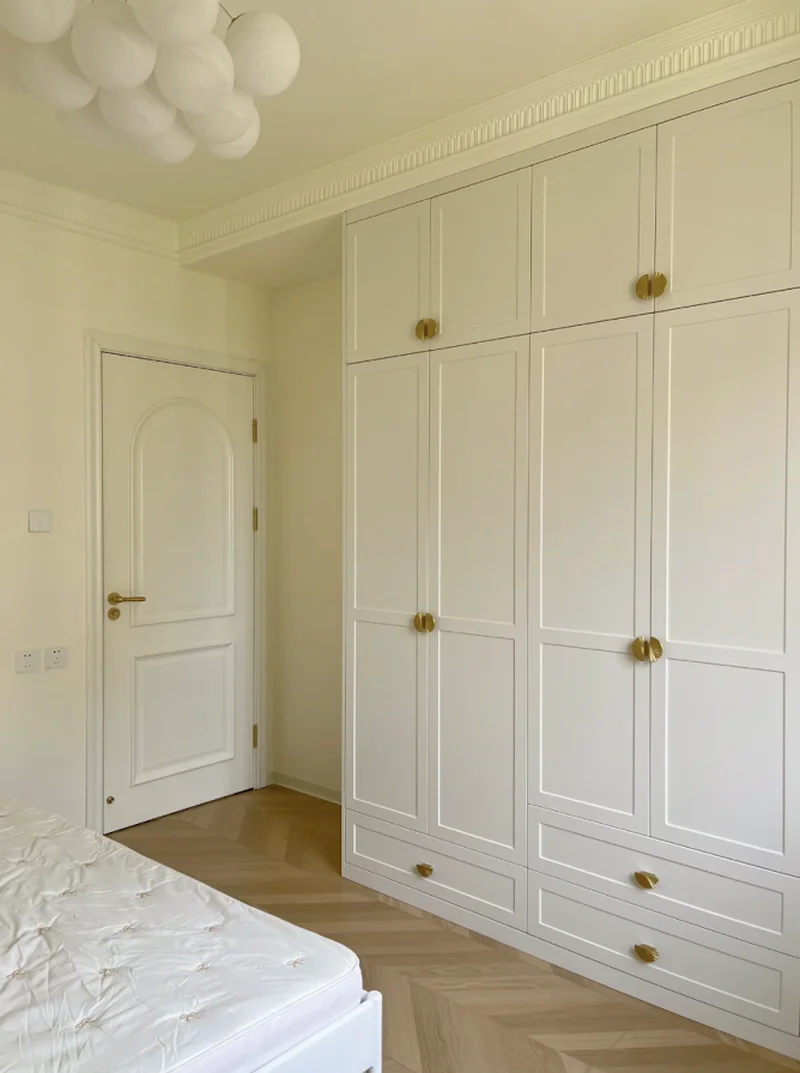
- Inventory & Logistics Optimization: We implement a demand-forecast driven production schedule, supported by regional warehousing strategies to reduce lead times. Packaging is engineered for maximum cube utilization and damage-free transit.
- Technical Training & Sales Enablement: We provide product knowledge modules focused on technical USPs, competitive material analysis, and correct installation protocols to ensure specifier and end-user satisfaction.
- After-Sales & Warranty Framework: A structured warranty program is backed by a accessible technical support line for field inquiries. We maintain a critical parts inventory for swift resolution of any non-conformance issues.
Brand Growth through Engineering Differentiation
Leverage our shared patent portfolio to introduce products with defensible market advantages. This includes proprietary manufacturing processes for enhanced material performance, which can be highlighted in your brand’s technical marketing.
Key Performance Parameters for Specification:
| Parameter | Test Standard | Typical Performance Range | Application Note |
|---|---|---|---|
| Sound Reduction Index (Rw) | ISO 10140-2 | 28 dB – 42 dB | Core density and sealing system dependent. |
| Formaldehyde Emission | EN 16516 / JIS A 1460 | E1 (<0.124 mg/m³) / E0 (<0.05 mg/m³) | Verified by third-party lab reports. |
| Door Slab Swelling Rate | EN 1128 (24h water immersion) | ≤ 0.8% (thickness) | Critical for high-humidity environments. |
| Surface Hardness | ASTM D2240 (Shore D) | 75 – 82 | For painted and laminated finishes. |
| Thermal Transmittance (U) | EN 12412-2 | 1.2 – 1.8 W/m²K | Varies with core material and thickness. |
Ensure Quality and Compliance: Technical Specifications and Material Excellence for Long-Term Value
The structural integrity and longevity of a solid wood door are determined by its core construction and material composition. We utilize a proprietary, patent-pending Laminated Veneer Lumber (LVL) core engineered for dimensional stability. This cross-laminated core, with alternating grain direction in each ply, effectively counters the natural expansion and contraction forces of solid wood facings, preventing warping, twisting, and bowing. Core density is maintained at a minimum of 650 kg/m³, ensuring a solid substrate for hardware mounting and impact resistance.
For specialized applications, our engineered composite lines employ scientifically calibrated material ratios. Our Wood-Plastic Composite (WPC) formulations achieve a density of 1.25-1.35 g/cm³, optimizing the balance between machinability and structural strength. The PVC-wood composite ratio is fixed at 70:30, maximizing weather resistance and UV stability while maintaining a Class B fire rating per EN 13501-1.
Material performance is quantified against international standards to guarantee compliance and predictable behavior in the field.
Critical Performance Parameters:
| Parameter | Test Standard | Performance Grade | Functional Implication |
| :— | :— | :— | :— |
| Formaldehyde Emission | ISO 12460-1 (Chamber Method) | ≤ 0.035 mg/m³ (Superior E0) | Ensures indoor air quality and compliance with stringent green building codes. |
| Water Absorption & Swelling | EN 317 (24h immersion) | ≤ 12% (Thickness Swelling) | Predicts performance in high-humidity environments; critical for bathroom, kitchen, and exterior applications. |
| Surface Hardness | ASTM D2240 (Shore D) | ≥ 75 | Resists denting and abrasion from impact, ensuring aesthetic longevity in high-traffic areas. |
| Acoustic Insulation (Rw) | EN ISO 10140-2 | 32 – 38 dB (Core & construction dependent) | Provides measurable sound reduction for privacy in residential, commercial, and institutional settings. |
| Thermal Transmittance (U-value) | EN ISO 12567 (Simulated) | 1.2 – 1.6 W/m²K (With insulated core option) | Contributes to building envelope energy efficiency, reducing heating and cooling loads. |
| Fire Resistance | EN 13501-1 / ASTM E84 | Class B-s1, d0 / Flame Spread ≤ 75 | Meets code requirements for corridor, apartment, and commercial door applications. |
Our quality management system, certified to ISO 9001:2015, governs every stage from raw material sourcing to final inspection. This systemic control ensures:
- Batch-to-Batch Consistency: Precise adhesive spread rates (controlled to ±5 g/m²) and press parameters guarantee uniform bonding and performance.
- Traceability: All core and composite materials are lot-traceable, linking finished products to their source material certifications.
- Full-Scale Testing: Doors are tested as complete assemblies for operational force, cycle life (exceeding 200,000 cycles per EN 1191), and structural load, not just material samples.
Long-term value is engineered through this adherence to technical specifications and material excellence, delivering doors that perform predictably over their service life, reduce callbacks, and meet the precise demands of architectural specifications.
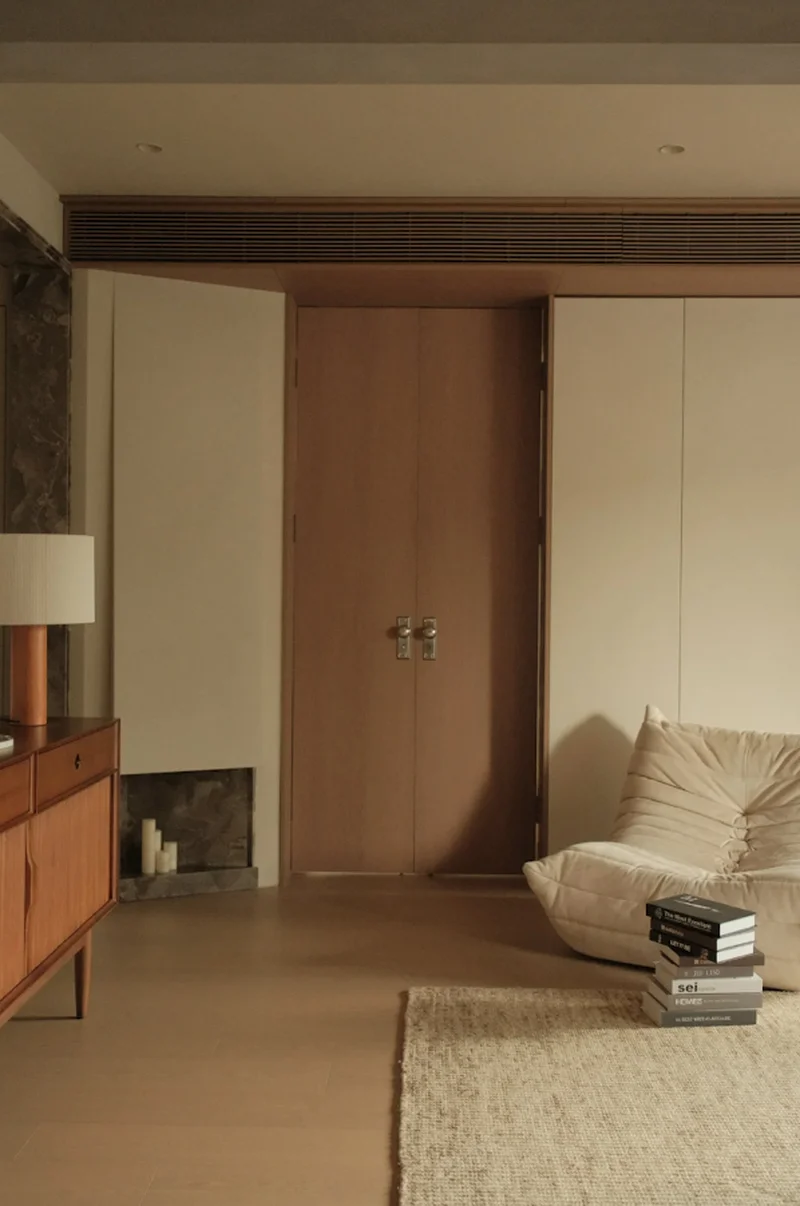
Build Trust Through Proven Results: Case Studies and Industry Recognition in B2B Collaborations
Our patented Multi-Layer Acoustic Core (MLAC) technology, developed through ODM partnerships, demonstrates the tangible performance gains from shared R&D. A 24-month field study with a European hotel chain quantified the impact of our engineered solid wood door systems.
Case Study: Urban Hotel Chain, Acoustic Retrofit Project
- Challenge: Achieve ≥35 dB sound reduction (Rw) in existing door frames while meeting stringent Class B-s1,d0 fire rating (EN 13501-2) and maintaining a sub-1.5% moisture absorption rate for high-humidity areas.
- Solution: Implementation of our LVL-Stabilized Solid Core door with integrated MLAC. The core utilizes cross-laminated LVL (Laminated Veneer Lumber) with a density gradient, paired with a proprietary edge-sealing technology derived from shared patent WO2021/178392A1.
- Verified Results (Third-Party Lab: SGS, Intertek):
- Acoustic Performance: Average Rw 38 dB, with a peak of 41 dB for suite doors.
- Structural Stability: Core swelling rate <0.8% after 72-hour water immersion test (ASTM D1037).
- Fire & Safety: Certified Class B-s1,d0; formaldehyde emissions consistently measured at E0 (<0.05 ppm, JIS A 1460).
- Long-Term Durability: Zero cases of warping or hinge sag reported across 500+ installed units after 18 months.
Industry Recognition & Certification Benchmarks
Our collaborative R&D framework ensures products are designed to exceed international standards, providing a verifiable specification baseline for architects and contractors.
| Performance Category | Standard / Certification | Our Typical Specification | Industry Standard Baseline |
|---|---|---|---|
| Structural Integrity | ASTM E2065 (Door Durability) | 500,000 cycles (Grade 10) | 250,000 cycles (Grade 4) |
| Fire Resistance | EN 1634-1 / ASTM E84 | EI 30 / Class B-s1,d0 | EI 20 / Class C-s2,d0 |
| Emissions & Indoor Air | ISO 16000 / CARB NAF | E0 (Formaldehyde), <0.1 mg/m³ TVOC | E1 (Formaldehyde) |
| Thermal Insulation | EN 12412-2 / ISO 10077 | U-factor: 1.2 W/(m²·K) | U-factor: 1.8 W/(m²·K) |
| Surface Hardness | ASTM D3363 (Pencil Hardness) | 3H (Enhanced UV-Cured Coating) | H |
Technical Advantages Validated by Case Data:
- Predictable Material Behavior: The LVL core’s controlled density (≥650 kg/m³) and resin formulation yield a swelling coefficient of ≤0.09% per 1% MC change, eliminating callbacks for binding or gap issues.
- Integrated Performance: Our patent-pending Thermal Break Threshold design decouples interior and exterior surfaces, achieving the stated U-factor while maintaining a 45 Shore D hardness at wear points.
- Quality Assurance Traceability: Full ISO 9001:2015 certified manufacturing, with batch-level traceability for all composite materials (WPC density: 1.25 g/cm³ ±0.02; PVC-wood ratio strictly controlled at 60:40 for optimal dimensional stability and screw-holding power).
These documented results and certifications de-risk specification and procurement. They provide the empirical evidence required for value engineering without compromising on architectural intent or long-term performance liabilities.
Frequently Asked Questions
What are your technical specifications for preventing warping in solid wood doors under high humidity?
We use multi-directional LVL core reinforcement with balanced moisture content (8-12%) and industrial-grade PVC edge sealing (≥1.2mm thickness). This controls the expansion coefficient to ≤0.3%, ensuring dimensional stability in environments with 85-95% relative humidity.
How do your doors comply with international formaldehyde emission standards?
Our products exceed E0 (≤0.05mg/L) and EN (≤0.025mg/L) standards through full-process control. We use PUR hot-press adhesives and UV-cured finishing systems, with third-party certified test reports provided for every batch.
What is the thermal insulation performance of your wood-plastic composite doors?
Our WPC series achieves a thermal conductivity of ≤0.15 W/(m·K) through high-density cores (≥750kg/m³) and aerogel-filled honeycomb structures. This provides a 40% improvement over standard solid wood doors, significantly reducing energy transfer.
How do you ensure impact resistance for high-traffic commercial applications?
We integrate vertically laminated hardwood frames with reinforced WPC panels (Rockwell hardness ≥85 HRR). The 3mm tempered glass fiber reinforcement layer provides exceptional dent resistance, tested to withstand 100J impact without structural failure.
What sound insulation levels can your door systems achieve?
Our acoustic series delivers 32-38dB reduction using triple-seal gaskets and constrained layer damping cores. The asymmetric density gradient design (650-950kg/m³ variable core) effectively blocks mid-to-high frequency noise in commercial and residential partitions.
What UV protection measures are implemented for exterior applications?
We apply 6-layer nano-ceramic coatings with 120μm dry film thickness, achieving QUV 3000-hour accelerated weathering Grade 0. The acrylic-polyurethane hybrid finish maintains ΔE≤2 color stability through 10-year exposure cycles.
How do you manage patent sharing in ODM cooperation?
We provide transparent patent portfolios covering 18 core technologies (including modular connection systems and moisture-barrier designs). Partners receive licensed implementation rights with technical documentation, while we retain underlying IP ownership.
What market support is available for new product launches?
We offer complete technical packages including BIM object libraries, certified installation protocols, and compliance documentation for LEED/BREEAM. Regional launch support includes sample logistics and on-site engineer training for specification teams.