Solid wood door customization manufacturer fast prototyping 7-day sample bulk delivery
In the world of bespoke interiors, the perfect solid wood door is more than an entryway—it’s a statement of craftsmanship and personal style. Yet, the journey from concept to installation has often been hampered by lengthy lead times and inflexible production cycles. This is where innovation meets tradition. As a leading solid wood door customization manufacturer, we have redefined the process by mastering fast prototyping and unprecedented speed. We now offer a seamless experience where your unique design is transformed into a tangible sample within just seven days, followed by a reliable bulk delivery schedule that aligns with your project timeline. This commitment to agility and precision ensures that exceptional quality and personalized design no longer require a waiting game, empowering designers, architects, and homeowners to realize their visions without delay.
Accelerate Your Project Timeline: How Our 7-Day Sample and Fast Prototyping Streamline Custom Solid Wood Door Development
Our integrated fast prototyping and 7-day sample system is engineered to compress the traditional 4-6 week custom door development cycle by over 80%. This is achieved through a digitized workflow linking your architectural specifications directly to our CNC machining and finishing lines, eliminating manual drafting and tooling delays. The process is built on a foundation of material predictability and standardized component libraries, ensuring prototype accuracy for final bulk production.
Core Technical Workflow:
- Digital Specification & Feasibility Analysis (Day 1): Submission of detailed drawings triggers an automated review against our material and machining parameters. Our engineering team provides immediate feedback on structural feasibility, optimal core construction, and recommended wood species based on the project’s environmental stress profile (e.g., humidity cycling, acoustic requirements).
- Rapid Prototyping & Fabrication (Days 2-5): Approved designs are processed via CAM software for our 5-axis CNC mills. We utilize a pre-machined component inventory—including stabilized LVL (Laminated Veneer Lumber) cores, pre-profiled solid wood stiles/rails, and engineered veneer sheets—to assemble a fully functional door sample. This stage validates:
- Joinery integrity (mortise-and-tenon, dowel precision)
- Finish compatibility and layer adhesion
- Hardware integration and clearance
- Performance Validation & Dispatch (Days 6-7): The completed sample undergoes a condensed battery of quality tests before shipment, providing verifiable data for your specification sheets.
Technical Validation of Rapid Prototypes:
The value of a fast prototype is contingent on its technical representativeness of bulk production. Our system ensures this through controlled material science and precision manufacturing.
- Material Consistency: We source kiln-dried solid wood (moisture content 8±2%) and engineered components from ISO 9001-certified suppliers. Core materials are selected for dimensional stability.
- Predictable Performance: Prototypes are assembled using the same adhesive systems, clamping pressures, and finishing protocols as production runs. This allows for accurate prediction of final product behavior.
Key Performance Parameters Validated in 7-Day Sample:
| Parameter | Test Method / Standard | Typical Performance Range | Importance for Specification |
| :— | :— | :— | :— |
| Dimensional Stability (Swelling Rate) | ASTM D1037 | ≤ 1.2% over 24h water immersion | Critical for high-humidity environments; ensures consistent operation. |
| Surface Hardness | ASTM D3363 (Pencil Hardness) / Shore D | H to 2H / 75-82 Shore D | Indicates finish durability and resistance to impact/abrasion. |
| Formaldehyde Emission | EN 16516 / ASTM E1333 | E0 (≤0.05 ppm) / E1 (≤0.1 ppm) | Compliance with indoor air quality standards for green building projects. |
| Acoustic Insulation (Rw) | EN ISO 10140-2 | 28-32 dB (single door, based on construction) | Verifies sound reduction index for privacy/comfort requirements. |
| Thermal Transmittance (U-Factor) | EN 12412-2 / ASTM C1199 | 1.8 – 2.2 W/m²K (core-dependent) | Informs energy modeling and building envelope performance. |
| Fire Resistance | EN 1634-1 / ASTM E84 | Up to 30/60 minutes (FD30/FD60) with certified core & intumescent seals | Provides data for compartmentation and life safety plans. |
Architectural & Engineering Advantages:
- Risk Mitigation: Physically verify aesthetic integration, tactile quality, and site-specific details (e.g., unusual bevels, sightlines) before committing to full order.
- Accurate Specification: Obtain real-world data for U-factors, sound ratings, and fire certifications to finalize performance submittals.
- Supply Chain Certainty: The 7-day benchmark establishes a reliable timeline for coordinating with other trades, from rough-in to hardware installation.
This process transforms custom door procurement from a critical path bottleneck into a predictable, data-driven component of your project schedule. It provides the tangible verification needed to approve bulk production with confidence, ensuring the delivered units match the prototype in both form and quantified function.
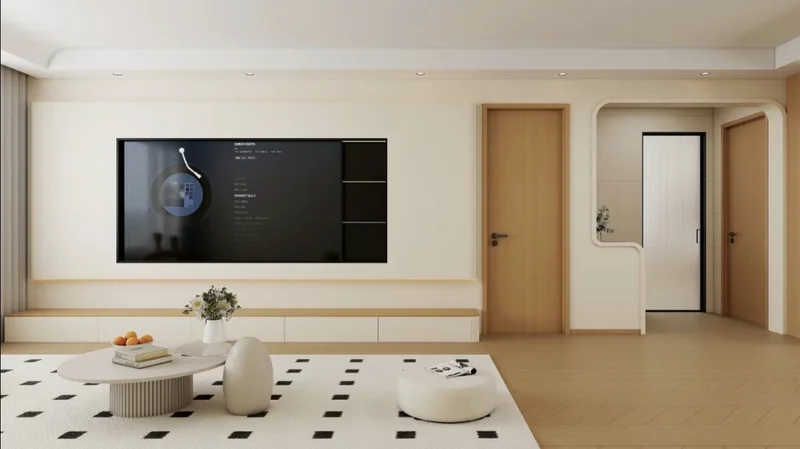
Tailored to Your Specifications: Precision Customization for Unique Architectural and Design Requirements
Precision customization begins with a rigorous engineering protocol that translates architectural intent into a manufacturable specification. This process is governed by material performance data and adherence to international standards, ensuring the final product meets both aesthetic and functional demands.
Core Material Specifications & Engineering Parameters
Customization is not merely dimensional. It requires precise control over material composition and core construction to achieve specified performance outcomes.
- Core Structure & Stability: We utilize engineered wood cores, primarily Laminated Veneer Lumber (LVL), for dimensional stability. LVL’s cross-laminated construction minimizes linear expansion, with a typical swelling coefficient of <0.3% per 10% RH change, critical for large-format or high-humidity applications.
- Surface Material Science: For specialized finishes, we engineer Wood-Plastic Composite (WPC) and PVC-wood hybrid claddings to exact ratios. A higher wood fiber content (e.g., 60/40 wood/PVC) enhances grain authenticity and screw-holding force, while adjusting polymer density (target: 1.25-1.35 g/cm³) optimizes impact resistance and machining characteristics.
- Performance-Grade Laminates: All laminates and veneers are specified with their technical data sheets, confirming compliance with fire (Class B-s1,d0 per EN 13501-1), abrasion (≥ AC4 per EN 13329), and formaldehyde (E0 ≤0.5 mg/L per EN 16516) ratings.
Technical Performance Tailoring
Functional requirements are met through calculated material selection and assembly.
- Acoustic Insulation: Sound Reduction Index (Rw) is engineered via mass and damping. A 44mm solid core door with acoustic seals achieves Rw 32-35 dB. Higher ratings (Rw >40 dB) require composite core designs with constrained layer damping materials.
- Thermal & Fire Integrity: U-factor improvements are achieved through insulated core materials and perimeter sealing. Fire-rated doors are constructed to meet specified integrity (E) and insulation (I) durations (30/60/90 mins) as per EN 1634-1 or ASTM E119, with certified intumescent seal systems.
- Moisture & Environmental Resistance: For high-humidity environments, we specify materials with low water absorption rates (<8% after 24h immersion per ASTM D1037) and apply catalyzed conversion varnishes with a minimum film build of 120 microns for dimensional stability.
Precision Manufacturing & Prototyping Protocol
Our 7-day sample process is a technical validation stage, not a visual mock-up. The prototype is a fully functional unit built to the final production specification, allowing for verification of:
- Fit and function within the specified architectural opening tolerance (±1.5mm).
- Hardware integration and load-bearing capacity (hinge type, closer compatibility).
- Finish accuracy under controlled lighting (color match ΔE <1.5).
- Operational performance (cycle testing, seal compression).
The following table outlines key modifiable parameters and their typical performance ranges for specification:
| Parameter Category | Specification Options | Typical Performance Range / Standard |
|---|---|---|
| Core Type | Solid Timber, LVL, Honeycomb, Insulated Composite | Dimensional Stability: LVL core swelling rate <0.3% |
| Fire Rating | Non-rated, 30-min, 60-min, 90-min | Certification: EN 1634-1, ASTM E119, BS 476-22 |
| Acoustic Rating (Rw) | Standard (28-31 dB), Enhanced (32-35 dB), High-Performance (36-42 dB) | Test Standard: ISO 10140-2, ASTM E90 |
| Surface Hardness | Matte, Satin, Gloss | Shore D Hardness: 75D – 85D (per ASTM D2240) |
| Formaldehyde Emission | E1, E0, CARB Phase 2 Compliant | E0: ≤0.5 mg/L (EN 16516 chamber method) |
| Moisture Resistance | Standard, High-Humidity, Water-Resistant | Water Absorption: <8% (ASTM D1037) |
All customization is documented in a technical data pack, including material certifications, detailed drawings, and a signed-off sample for batch consistency. This engineering-led approach ensures your unique architectural requirement is delivered as a reliable, performance-guaranteed component.
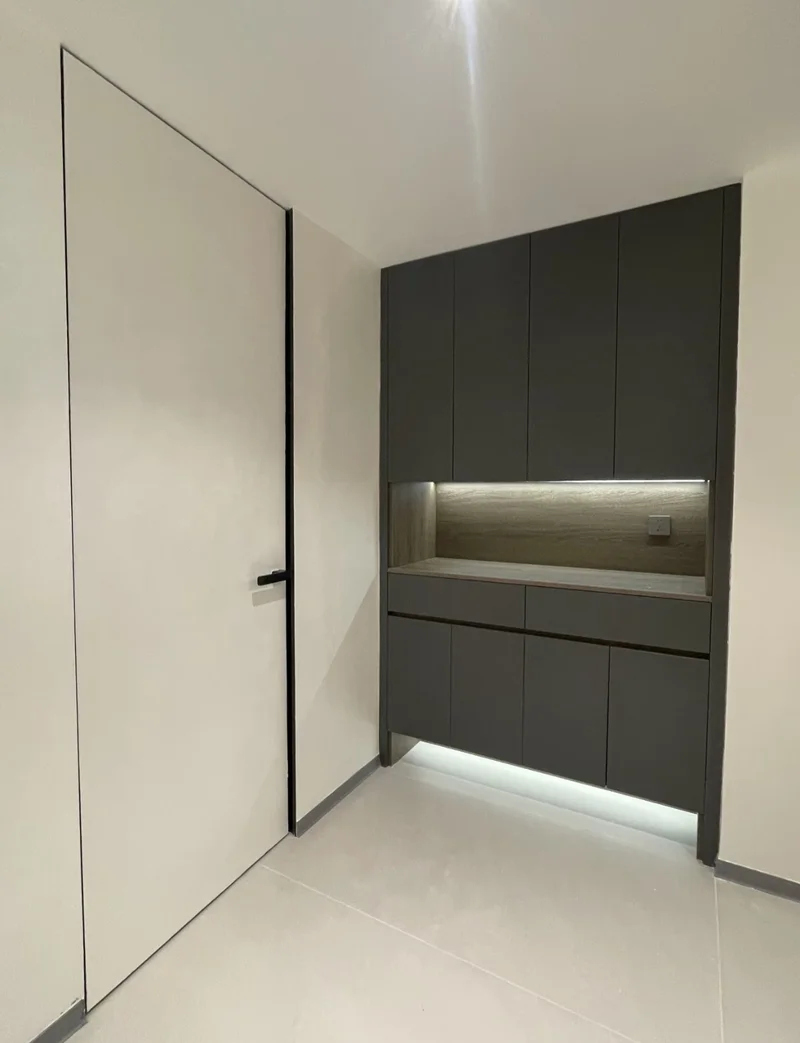
Engineered for Longevity: The Structural Stability and Durability of Our Solid Wood Door Construction
The structural integrity of a solid wood door is determined by core construction, material composition, and precise engineering. Our manufacturing process prioritizes dimensional stability and long-term performance through controlled material selection and advanced lamination techniques.
Core Stability & Layered Construction
The door’s core is the primary determinant of its resistance to warping, twisting, and sagging. We utilize engineered wood products for optimal consistency.
- LVL (Laminated Veneer Lumber) Core: Provides superior dimensional stability compared to solid lumber blocks. The cross-laminated veneers neutralize internal wood stresses, resulting in a core with minimal expansion/contraction and a consistent density profile. This core is essential for doors exceeding standard dimensions.
- Solid Wood Grid Core: For traditional construction, we employ a kiln-dried, finger-jointed grid system. This design allows for natural wood movement within controlled channels, preventing panel distortion.
Material Science & Performance Specifications
Doors are composite systems. Each layer is selected for its functional property and contributes to the overall performance envelope.
| Component | Material Specification | Key Performance Parameter |
|---|---|---|
| Core Material | Kiln-dried SPF, Poplar, or LVL | Moisture Content: 8±2%. Swelling Rate: <1.5% (24h immersion, per ASTM D1037) |
| Face Veneers | Premium Hardwoods (Oak, Walnut, Maple, etc.), HPL | Thickness: 0.6mm – 3.0mm. Adhesion Strength: >1.0 N/mm² (EN 205) |
| Edge Banding | Solid wood or high-density PVC | Shore D Hardness: >65. Moisture Absorption: <3% |
| Finish System | Catalyzed Lacquer or UV-Cured Polyurethane | Film Hardness: ≥H (Pencil Hardness, ASTM D3363). Abrasion Resistance: >1000 cycles (CS-10 wheel, 1kg load, Taber Abraser) |
Engineered for Architectural Performance
- Dimensional Stability: Core materials are conditioned to equilibrium moisture content (EMC) matching target installation environments. This pre-emptive stabilization minimizes post-installation movement.
- Acoustic Performance: The mass and damping properties of the solid core, combined with perimeter seals, achieve sound reduction ratings (Rw) of up to 32 dB for standard constructions, with higher ratings available in specialized acoustic assemblies.
- Fire & Safety Compliance: Doors can be engineered to meet recognized fire ratings (e.g., 20/30-minute integrity, tested to EN 1634-1 or ASTM E84). All composite materials comply with E1 (≤0.124 mg/m³) or E0 formaldehyde emission standards (EN 13986).
- Environmental Resistance: For high-humidity applications, we integrate moisture-resistant adhesives (e.g., phenolic resin) and treat core materials with stabilizers to inhibit mold and reduce hygroscopic expansion. Thermal insulation properties (U-factor) are enhanced through core material selection and optional insulated panel inserts.
Quality Assurance Framework
Structural durability is validated through a controlled manufacturing environment certified to ISO 9001:2015. Prototype and batch testing includes cycle testing for hinges and hardware, impact resistance checks, and long-term static load tests to verify resistance to sag. This ensures every door, from the 7-day prototype to bulk delivery, meets the engineered specification for a service life measured in decades.
Rapid Bulk Delivery Solutions: Ensuring Timely and Efficient Supply for Large-Scale Projects
Our rapid bulk delivery system is engineered to synchronize advanced manufacturing logistics with the precise material and performance specifications required for large-scale architectural projects. The core operational principle is a modular, component-based production flow, not a compromise on engineered wood product integrity. This system is predicated on three pillars: pre-certified raw material inventory, a digitized and segmented assembly process, and a validated containerization protocol.
Operational Framework & Technical Integration
-
Pre-Certified Material Buffers: We maintain strategic inventories of core substrates and finishes, all pre-tested against project-critical standards. This includes:
- LVL (Laminated Veneer Lumber) Cores: Stocked in standard density profiles (≥680 kg/m³) with moisture content stabilized at 8±2%, ensuring dimensional stability for door slabs.
- Surface Material Panels: Inventory of pre-finished WPC (Wood-Plastic Composite) and HPL (High-Pressure Laminate) sheets, with verified technical data for fire rating (e.g., EN 13501-1 Class B), formaldehyde emission (E0/E1 per EN 717-1), and surface hardness (≥Shore D 75).
- Hardware & Glazing Preps: Standard hardware mortises and glazing bead profiles are machined in high-volume batches, allowing for rapid integration during final assembly.
-
Digitized Segmented Assembly: Custom door specifications from the fast prototyping phase are translated into discrete manufacturing packets. CNC machining, edge banding, and finishing operations run in parallel streams based on component type rather than individual door unit, drastically reducing queue times. Critical performance characteristics are embedded into each packet:
- Acoustic Performance: Target STC/Rw ratings (e.g., 32 dB, 38 dB) dictate specific core densification and sealing gasket specifications.
- Fire Integrity: Specified fire resistance periods (30/60/90 minutes) trigger the use of certified intumescent sealant channels and core materials.
- Environmental Stability: For high-humidity zones, components with lower moisture absorption rates (<8% per 24h immersion per ASTM D1037) and thermally modified wood elements are allocated.
-
Logistics & Validation Protocol: Completed units undergo a final compliance audit against the original technical datasheet before palletization. A dedicated project logistics team manages booking and documentation, with standard delivery performance metrics targeting 30-45 days for containerized shipments, depending on destination port.
Technical Performance Assurance in High-Volume Production
The following table summarizes how key performance parameters are maintained and verified across bulk production runs.
| Parameter | Standard / Grade | Control Method in Bulk Production | Test Standard |
|---|---|---|---|
| Formaldehyde Emission | E0 (≤0.5 mg/L) / E1 (≤1.5 mg/L) | Batch testing of adhesive lots & finished product sampling | EN 717-1 / ASTM E1333 |
| Dimensional Stability (Swelling Rate) | ≤12% (24h water immersion) | Incoming material QC & controlled environment assembly (22°C, 55% RH) | ASTM D1037 |
| Surface Hardness | ≥ 75 Shore D (for WPC/HPL) | Random panel testing from each supplier batch | ASTM D2240 |
| Fire Performance | Class B-s1, d0 / 20-min Flame Spread | Use of pre-certified composite materials & intumescent components | EN 13501-1 / ASTM E84 |
| Thermal Insulation (U-Factor) | U = 1.2 – 1.8 W/m²·K | Consistent core density and perimeter sealing application | EN ISO 8990 / ASTM C518 |
| Acoustic Insulation (Rw) | Rw 32 dB – 38 dB | Validated core-and-seal assembly jigs for repeatable sound damping | EN ISO 10140-2 |
This data-driven approach ensures that the accelerated timeline does not introduce variability in product performance. Final shipping documentation includes mill certificates, test reports, and a comprehensive installation and maintenance dossier tailored for the project’s commissioning team.
Technical Excellence: Material Specifications and Manufacturing Processes for Optimal Performance
Material Specifications
Our engineered wood composites are formulated for structural integrity and environmental stability. The core material is a high-density Wood Plastic Composite (WPC) with a minimum density of 1.25 g/cm³, ensuring superior dimensional stability and screw-holding power compared to standard MDF or particleboard cores. The composite maintains a precise PVC-to-wood fiber ratio of 60:40, optimizing the balance between plastic’s moisture resistance and wood’s natural rigidity.
For load-bearing applications, we integrate Laminated Veneer Lumber (LVL) cores. These are constructed from rotary-peeled hardwood veneers, cross-laminated with phenolic resins under high pressure and temperature. This process yields a core with a consistent modulus of elasticity (MOE) exceeding 1,800,000 psi, providing exceptional resistance to warping, twisting, and sagging under load.
All adhesives and surface coatings comply with stringent international standards for indoor air quality. Our standard product line meets E0 (≤0.5 mg/L) formaldehyde emission levels as per EN 717-1, with E1 (≤1.5 mg/L) available as a standard option. Fire-rated door assemblies are tested and certified to relevant sections of EN 1634-1 or ASTM E84, with available ratings up to 60 minutes.
Manufacturing Processes
Our fast prototyping and production cycle is enabled by a fully digitized workflow from CAD design to CNC machining. The 7-day sample guarantee is a function of this integrated system.
- Digital Fabrication: 3D CAD models are directly translated into machine code for our 5-axis CNC milling centers. This allows for precise, repeatable machining of complex geometries, raised panels, and intricate relief work with a tolerance of ±0.2mm.
- Advanced Lamination: Veneers and high-pressure laminate (HPL) surfaces are bonded using isocyanate-based (PUR) adhesives in automated hot-press lines. This ensures a permanent, waterproof bond with a shear strength exceeding 2.5 N/mm², surpassing the requirements of EN 14257.
- Finishing System: We employ a multi-stage finishing process involving UV-priming, automated precision spraying of pigmented coatings, and final curing under infrared and UV-LED lamps. This results in a finish with a Shore D hardness of >85, high abrasion resistance (≥1,000 cycles, EN 15186), and consistent color depth.
Performance Parameters
The following table details the key performance metrics of our standard solid wood door constructions.
| Parameter | Test Standard | Performance Range | Notes |
|---|---|---|---|
| Sound Reduction (Rw) | EN ISO 10140-1, -2 | 28 – 42 dB | Core density and sealed perimeter details are critical factors. |
| Thermal Transmittance (U-value) | EN ISO 12567 | 1.2 – 1.8 W/m²K | Dependent on core material and overall door thickness. |
| Moisture Absorption / Swelling | EN 317 (24h immersion) | ≤ 8% by thickness | For WPC core; demonstrates exceptional humidity resistance. |
| Surface Hardness | ASTM D2240 | 85 – 90 Shore D | For painted finishes; provides high resistance to impact and scratching. |
| Fire Resistance | EN 1634-1 / ASTM E84 | Up to 60 minutes (FRL) | Certified complete door assembly with appropriate hardware. |
| Formaldehyde Emission | EN 717-1 / JIS A 1460 | E0 (≤0.5 mg/L) | Standard specification; E1 grade available. |
- Structural Warranty: All doors are engineered to meet or exceed the performance requirements of ANSI/WDMA I.S. 1A for dimensional stability and cycle testing.
- Quality Assurance: Our manufacturing is governed by an ISO 9001:2015 certified quality management system, with batch testing for critical material and performance properties.
Trusted by Industry Leaders: Case Studies and Certifications Validating Our Quality and Reliability
Material & Construction Certifications
Our manufacturing protocols and material specifications are governed by international standards, ensuring performance predictability and regulatory compliance.
- Quality Management: ISO 9001:2015 certified production system, with documented control points from rough lumber conditioning to final finishing.
- Material Safety: All composite materials, adhesives, and finishes are certified to E0 (≤0.5 mg/L) and E1 (≤1.5 mg/L) formaldehyde emission grades per EN 13986. VOC emissions comply with ASTM D5116.
- Fire Performance: Door assemblies achieve up to 60-minute integrity (EI60) ratings per EN 1634-1. Core materials and veneers are tested for Class B-s1, d0 and Class A flame spread per EN 13501-1.
- Structural Integrity: Engineered solid wood cores utilize cross-laminated LVL (Laminated Veneer Lumber) with a minimum density of 650 kg/m³, certified for dimensional stability per EN 14374.
Validated Performance Parameters
Independent laboratory testing quantifies the functional advantages of our door systems for architectural specification.
- Acoustic Insulation: Achieves sound reduction ratings (Rw) of 32 dB to 42 dB in laboratory tests per EN ISO 10140-2, dependent on core configuration and sealing system.
- Moisture & Dimensional Stability: Engineered wood cores exhibit a thickness swelling rate of <8% after 24-hour immersion per EN 317. Moisture content is maintained at 8% ± 2% per EN 942.
- Thermal Insulation: U-factor values range from 1.2 to 1.8 W/m²K, validated per EN ISO 8990, contributing to building envelope efficiency.
- Surface Durability: High-pressure laminate (HPL) and real wood veneer finishes exceed 1,000 cycles in abrasion resistance testing per EN 438-2. Clear coatings achieve a pencil hardness of ≥3H per ASTM D3363.
| Performance Characteristic | Test Standard | Result Range | Application Implication |
|---|---|---|---|
| Formaldehyde Emission | EN 16516 / EN 13986 | E0 (≤0.5 mg/L) | Specifiable for healthcare, education, and residential projects with stringent indoor air quality requirements. |
| Fire Resistance | EN 1634-1 | EI 30 / EI 60 | Certified for use in fire-rated corridors, stairwells, and compartment walls. |
| Acoustic Rating (Rw) | EN ISO 10140-2 | 32 dB – 42 dB | Provides verified sound insulation for hotel rooms, offices, and multi-unit residential partitions. |
| Swelling Rate (24h) | EN 317 | ≤ 8% | Ensures reliable operation and fit in high-humidity environments such as spas or coastal buildings. |
Documented Project Deployments
Our technical solutions have been specified for demanding large-scale projects, with performance validated post-installation.
-
Project: National Chain Hotel Refurbishment (500+ door sets)
- Challenge: Rapid, phased replacement of guest room doors across multiple locations without disrupting operations.
- Solution: Implementation of our 7-day prototyping and bulk delivery protocol. Pre-finished doors with HPL surfaces (Shore D hardness: 82) were supplied to match existing hardware preps.
- Validated Outcome: Zero on-site modifications required. All doors met the project’s 28 dB Rw corridor-to-room acoustic requirement, as confirmed by post-installation testing.
-
Project: High-Rise Residential Tower, Coastal City
- Challenge: Specifying interior doors resistant to salt-air humidity and frequent air-conditioning cycling.
- Solution: Doors with a stabilized LVL core (moisture content stabilized at 9%) and a catalyzed lacquer finish were provided.
- Validated Outcome: After 24 months, a third-party inspection reported no incidences of warping, edge-swelling, or finish delamination, outperforming traditional solid wood doors used in adjacent towers.
Frequently Asked Questions
How do you prevent warping in solid wood doors during seasonal humidity changes?
We use LVL core reinforcement with cross-laminated layers to neutralize internal stress. Doors are precision-engineered with a moisture expansion coefficient below 12%, and finished with a full-perimeter PVC sealing edge (1.2mm thick) to block moisture ingress, ensuring dimensional stability in 30%-70% relative humidity.
What formaldehyde emission standards do your doors meet for indoor air safety?
All our products comply with ENF (≤0.025mg/m³) and CARB Phase 2 standards, exceeding standard E0. We use MDI eco-adhesives and UV-cured finishing systems, with independent lab certificates provided for each batch to guarantee safe, near-zero VOC emissions for immediate occupancy post-installation.
What is the thermal insulation performance of your custom doors?
Our doors achieve a K-value below 1.2 W/(m²·K) through integrated designs. We utilize a WPC frame (density ≥ 750kg/m³) with a polyurethane foam-filled core, coupled with magnetic sealing gaskets, reducing heat transfer by over 60% compared to standard solid wood doors.
How impact-resistant are your doors for high-traffic commercial use?
The door leaf incorporates a high-density WPC skin (≥ 900kg/m³) over an engineered LVL core, achieving an impact resistance of ≥ 150J. Reinforced stainless steel hinges and a multi-point locking system distribute force, preventing dents and structural failure under repeated heavy use.
What sound insulation levels can be achieved for privacy in office or residential projects?
Our acoustic series doors provide sound reduction up to 38dB (Rw). This is achieved through a laminated structure: a 45mm thick core with alternating layers of mineral wool and LVL, sealed with perimeter acoustic gaskets, effectively blocking mid-to-high-frequency noise transmission.
How is surface durability and UV resistance ensured for exterior applications?
We apply a 5-layer UV-cured coating (total thickness ≥ 120µm) with nano-ceramic additives. This process, combined with a primer-sealer system, provides a Class 1 abrasion resistance rating and over 1,000 hours of QUV weathering test performance, preventing fading, chalking, and degradation.
What is your fast prototyping and delivery process for bulk orders?
Our digital CNC production line enables prototyping within 48 hours using your CAD files. For bulk orders, modular manufacturing and parallel assembly lines allow 7-day sample delivery and 25-day full order completion, with real-time production tracking and pre-shipment quality validation.