Garage doors with smart opener integration for home automation
Imagine pulling into your driveway as dusk settles, and with a simple voice command or a tap on your smartphone, your garage door silently rises, welcoming you home. This seamless convenience is no longer a futuristic fantasy but a central feature of modern home automation. Today’s intelligent garage door openers have evolved into sophisticated access points, integrating effortlessly with your smart home ecosystem. They offer far more than remote control; they provide real-time status alerts, automated routines, and enhanced security protocols. By bridging the physical and digital worlds, these systems deliver unprecedented peace of mind and operational efficiency. Integrating your garage door is a transformative upgrade, turning a mundane entry point into a proactive component of a safer, more connected, and intelligently automated home.
Seamless Home Automation Integration: How Our Smart Garage Doors Connect to Your Ecosystem
Our smart garage door systems are engineered for native integration into modern home automation ecosystems. The core principle is a layered architecture: a robust, material-optimized door panel provides the physical interface, while a secure, standards-based communication module enables digital connectivity. This dual focus ensures long-term performance and interoperability.
Material & Construction Prerequisites for Smart Integration
A reliable smart system requires a stable physical substrate. Our door panels are engineered to minimize dimensional change and vibration, which are critical for consistent sensor alignment and motor load.
- Core Stability: The LVL (Laminated Veneer Lumber) core is kiln-dried to ≤8% moisture content and cross-laminated for torsional rigidity. This prevents warping that can misalign safety sensors and strain the opener mechanism.
- Panel Integrity: Composite panels (WPC) use a 60:40 wood-plastic polymer ratio with a density ≥ 1.25 g/cm³. This yields a swelling rate of <0.5% after 24-hour water immersion (ASTM D1037), ensuring consistent panel-to-panel fit and seal integrity for perimeter sensors.
- Insulation & Sound Damping: Polyurethane foam-injected sections achieve a U-factor of ≤0.20 Btu/(hr·ft²·°F). This thermal stability reduces condensation and thermal cycling stress on internal electronics. The mass-loaded vinyl sound barrier layer provides a 28-32 dB reduction in airborne noise, critical for quiet operation in automated schedules.
- Fire Safety & Emissions: All composite materials meet EN 13501-1 Class B or ASTM E84 Class A fire ratings. Formaldehyde emissions are certified to E0 grade (≤0.5 mg/L, JIS A 1460 / EN 717-1), ensuring indoor air quality compliance in connected homes.
Smart Opener Communication Protocol & Integration
The opener unit acts as the system’s gateway. It employs a multi-protocol chipset supporting Wi-Fi 802.11ac (5 GHz band for reduced interference), Bluetooth 5.0 for local commissioning, and a dedicated 868 MHz sub-GHz radio for robust, low-power communication with proprietary sensors.
| Integration Feature | Protocol/Standard | Technical Parameter/Function |
|---|---|---|
| Cloud API | RESTful JSON over TLS 1.3 | OAuth 2.0 device flow; real-time status webhooks for third-party platforms (e.g., Savant, Control4, Home Assistant). |
| Local Network Control | MQTT with local broker option | Retained messages for state persistence; QoS level 2 for guaranteed delivery within the LAN. |
| Voice Assistant Direct | Matter over Thread (v1.2) | Native commissioning via Apple Home, Google Home, Amazon Alexa without brand-specific bridges. |
| Sensor Network | Proprietary 868 MHz mesh | <100ms latency for obstruction sensor triggers; AES-128 encrypted packet transmission. |
Functional Advantages for Automated Ecosystems
- Predictive Maintenance Alerts: The opener monitors motor current draw, cycle count, and travel time deviations. Anomalies (e.g., a 15% increase in amperage, suggesting spring fatigue) trigger proactive notifications to the homeowner and designated contractor portal.
- Condition-Based Triggers: Integration extends beyond simple open/close. Doors can be programmed to auto-close based on security system “ARM-AWAY” mode, or to open partially for ventilation based on smart thermostat data and external air quality sensor input.
- Uninterrupted Operation: The system includes a supercapacitor-backed power reserve, enabling at least three full operational cycles during a grid outage. All critical state data is stored in non-volatile memory (NAND flash).
- Professional Installation Configuration: The installer app allows for precise calibration of force limits, travel limits, and sensor sensitivity. These profiles, along with material type (e.g., “Insulated Steel,” “Full-View Glass”), can be saved to the unit, ensuring performance is optimized for the specific door’s mass and balance.
Security & Compliance Framework
The system is designed to a “secure by design” principle. Each opener has a factory-provisioned hardware security module (HSM) for key storage. All external communications require certificate-based authentication. The system is compliant with UL 325 safety standards for door operation and follows NIST IR 8259 guidelines for IoT device cybersecurity fundamentals. Firmware updates are delivered via signed, differential updates over a secure channel.
Advanced Security Features: Protect Your Home with Encrypted Smart Technology
Encryption is the foundational security layer for any integrated garage door system. Modern smart openers utilize AES-128 or AES-256 bit encryption for all communication between the mobile app, cloud server (if applicable), and the opener unit itself. This ensures that command signals (open/close/status) cannot be intercepted, decoded, or replicated. Rolling code technology, now a baseline feature, is augmented with this application-layer encryption to create a two-factor signal security protocol.
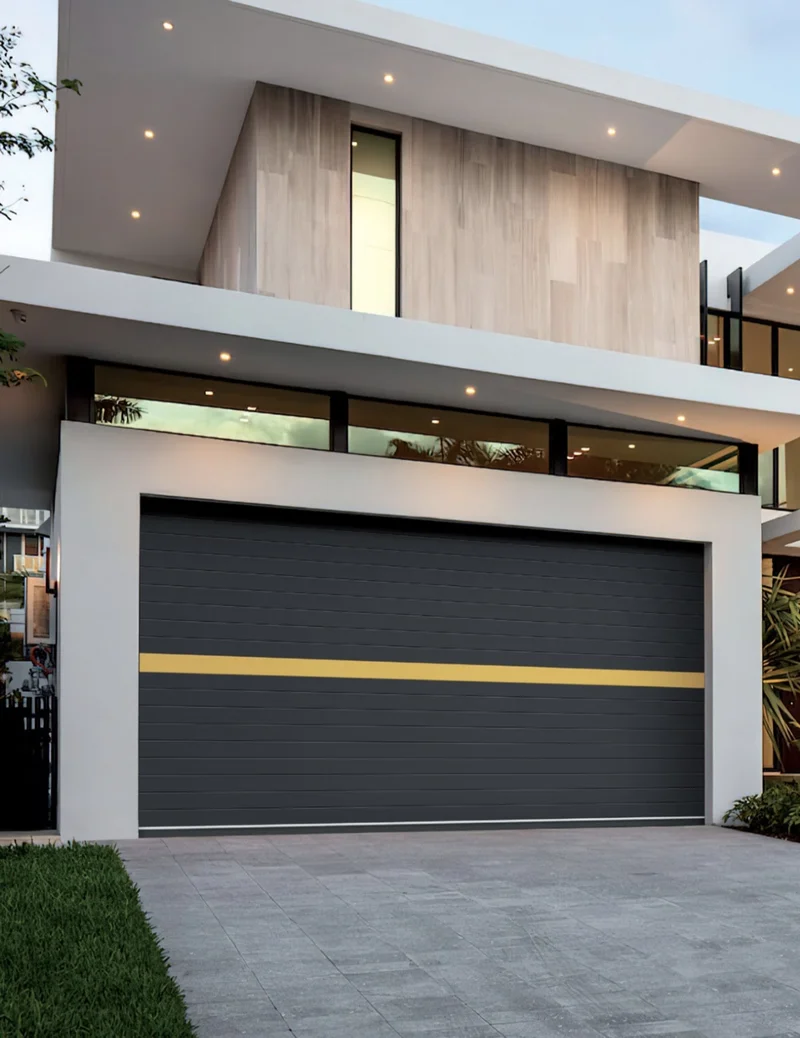
The physical interface between the smart opener and the door’s mechanical system is a critical vulnerability point. High-security systems employ a hardwired, shielded connection from the motor control unit to the door’s internal release mechanism, preventing wireless override at the point of operation. The backup battery system, required for operation during power outages, must be isolated from any network access to eliminate it as an attack vector for forced entry.
Core Functional Security Advantages:
- End-to-End Encrypted Communication: All data packets, from user command to door actuation, are encrypted using banking-grade protocols (AES-256), rendering man-in-the-middle attacks ineffective.
- Multi-Factor Authentication (MFA): Integration with home automation platforms allows for conditional access rules, such as requiring a second form of verification (e.g., smartphone biometrics) for remote open commands outside of geofenced perimeters.
- Real-Time Integrity Monitoring: Sensors continuously report door position, motor torque, and obstruction status. Any deviation from the encrypted command sequence—such as an uncommanded movement attempt—triggers an immediate system lock, alert, and log entry.
- Cybersecurity Certification Compliance: Leading opener units are validated against standards like UL 325 for safety and incorporate principles from IEC 62443 for operational technology security, ensuring resilience against networked threats.
Security performance is intrinsically linked to the door’s material composition and construction, which directly impact resistance to forced entry.
| Material & Construction Parameter | Security Performance Characteristic | Test Standard / Metric |
|---|---|---|
| Panel Core Density (WPC/LVL) | Determines resistance to impact and penetration. Higher density cores (≥ 750 kg/m³) significantly increase structural integrity. | ASTM D1037; Core Density (kg/m³) |
| Skin Material Hardness | Surface resistance to cutting, scratching, and deformation. Aluminum composites (PE-core) or hardened steel skins offer superior performance. | Shore D Hardness; Brinell Hardness (HB) |
| Interlock & Seal Design | Precision-machined horizontal and vertical interlocks, combined with full-perimeter compression seals, prevent the insertion of prying tools between panels. | Physical penetration test (Custom) |
| Hinge & Bracket Shear Strength | Forged or cold-rolled steel components with reinforced pin designs resist forceful detachment under load. | ASTM A370; Ultimate Tensile Strength (MPa) |
System architecture must ensure that smart functionality does not compromise passive security. The door’s insulation core, whether polyurethane foam or rigid EPS, contributes to structural rigidity and damping, which supports the integrity of locking mechanisms. Low moisture absorption rates (<0.5% for WPC, <8% for treated wood) are critical to prevent warping or swelling that could misalign the door within its tracks, creating vulnerabilities in the seal and lock engagement.
Integration with broader home automation must be executed via a local API (e.g., Zigbee 3.0, Z-Wave Plus) that maintains encryption independent of the homeowner’s Wi-Fi security. For cloud-connected systems, the use of TLS 1.3 for data in transit and mandatory, regular over-the-air (OTA) security patch updates are non-negotiable requirements. The security protocol should default to a “fail-secure” state, meaning any loss of communication or power results in a locked, closed position, with local mechanical override available only from inside the secured garage.
Durable Construction for Long-Term Performance: Engineered to Withstand Daily Use
The structural integrity of a garage door is the foundation upon which smart functionality is built. A failure in the panel, track, or hardware renders any automation system inoperable. Our engineering prioritizes a systems approach, selecting and testing each component for long-term durability under cyclical stress and environmental exposure.
Core Material Specifications & Performance
The choice of composite materials directly dictates dimensional stability, weight, and resistance to environmental stressors. We utilize engineered composites that outperform traditional materials in key metrics.
- High-Density Wood-Plastic Composite (WPC) Panels: Formulated with a controlled wood flour to polymer (typically PVC or PP) ratio exceeding 60:40, achieving densities over 1.2 g/cm³. This results in a high strength-to-weight ratio, minimal thermal expansion, and a surface hardness (Shore D >75) resistant to impact and abrasion.
- Laminated Veneer Lumber (LVL) Reinforcement: All horizontal stiles and critical stress points are reinforced with LVL cores. LVL provides superior tensile strength and dimensional stability compared to solid timber, with a moisture absorption rate below 8% per ASTM D1037, preventing warping and sagging.
- Polyurethane Foam Insulation: Injected in a continuous, closed-cell process at a minimum density of 40 kg/m³. This provides a consistent thermal barrier with a U-factor as low as 0.7 W/m²K, while simultaneously adding torsional rigidity to the entire door section and contributing to sound dampening.
Technical Performance Data
The following table quantifies the performance of our standard composite door construction against common alternatives.
| Parameter | Test Standard | Our Composite Construction | Steel Sectional (24 ga.) | Traditional Timber |
|---|---|---|---|---|
| Panel Surface Hardness | ASTM D2240 | 78 Shore D | 90 Shore D (painted) | 50-60 Shore D |
| Water Absorption (24h) | EN 317 | < 0.8% | Not Applicable (corrosion risk) | > 12% |
| Dimensional Stability (Swelling) | EN 318 | ≤ 0.3% (max linear change) | Not Applicable | ≥ 2.0% |
| Thermal Insulation (U-Factor) | EN 12428 | 0.7 – 0.9 W/m²K | 1.5 – 2.5 W/m²K | 1.2 – 1.8 W/m²K |
| Sound Reduction (Rw) | EN ISO 10140-1 | 28 dB | 20 dB | 25 dB |
| Formaldehyde Emission | EN 16516 | E0 (< 0.065 mg/m³) | Not Applicable | E1/E2 (varies) |
Engineering for Cyclical Load & Smart Integration
Durability extends beyond material science to mechanical design, ensuring seamless operation with smart openers for over 10,000 cycles.
- Hardware & Track System: Rollers utilize sealed, precision ball bearings (ABEC-1 rating minimum) running on 14-gauge galvanized steel tracks with a minimum tensile strength of 340 MPa. Hinges are fabricated from 3mm thick galvanized steel with bronze bushings, designed for minimal wear and silent operation.
- Spring System Compatibility: Torsion spring systems are calibrated to the exact door weight and size, ensuring the smart opener motor operates within 70-80% of its rated capacity. This reduces strain on the gear train and electronics, directly extending the operational life of the automation system.
- Environmental & Fire Ratings: Composite formulations meet international building standards, including Class B-s1, d0 fire reaction per EN 13501-1 and are tested for UV stability per ISO 4892-2 to prevent fading and surface degradation. The integrated design ensures no single point of failure compromises the door’s operational envelope.
This engineered approach ensures the physical door structure is a reliable, long-life platform for smart opener integration, maintaining alignment and smooth operation that is critical for accurate sensor feedback and automated control sequences.
Energy Efficiency and Insulation: Reduce Costs with Climate-Controlled Garage Spaces
A garage door is a critical thermal and acoustic barrier within a building envelope. Its insulation performance directly impacts energy consumption for space conditioning in adjacent living areas and within the garage itself when used as a climate-controlled workshop, home gym, or storage space for temperature-sensitive items. Modern composite and insulated steel door systems, when integrated with smart openers, transform this zone from a liability into a managed, efficient asset.
Core Insulation Technologies and Material Performance
The thermal resistance (R-value) and overall thermal transmittance (U-factor) of a garage door are determined by its core insulation material and the integrity of its sealing system.
- Polyurethane (PUR) Foam-Injected Cores: High-density, closed-cell polyurethane foam injected between steel panels provides superior insulation. Its expansion properties ensure complete cavity fill, eliminating thermal bridging. Typical R-values range from R-12 to R-18+.
- Polystyrene (EPS) Board Insulation: Expanded polystyrene boards are inserted into door sections. While cost-effective, its R-value (typically R-6 to R-12) is generally lower than PUR for an equivalent thickness, and gaps can occur if not meticulously installed.
- Composite Materials (WPC/LVL): Wood-Plastic Composite (WPC) sections and doors with Laminated Veneer Lumber (LVL) cores offer structural stability with inherent insulating properties. Key parameters include:
- Density & Ratio: Optimal WPC formulations (typically 60-70% wood fiber, 30-40% polymer) balance dimensional stability and thermal performance.
- Moisture Absorption: <1% absorption rate for WPC prevents warping and maintains insulation integrity.
- Core Stability: LVL cores provide consistent, engineered strength, preventing panel deflection that can compromise seals.
Technical Specifications and Standards Compliance
| Parameter | Standard/Measurement | Performance Range | Implication |
|---|---|---|---|
| Thermal Transmittance (U-factor) | ASTM C1363 / EN ISO 8990 | 0.30 – 0.50 Btu/(hr·ft²·°F) [1.7 – 2.8 W/(m²·K)] | Lower U-factor signifies better insulation. Critical for energy modeling. |
| Sound Reduction Index (Ra) | EN ISO 717-1 / ASTM E90 | 25 – 35 dB for insulated doors | Attenuates external noise and operational sound from the opener motor. |
| Fire Performance | EN 13501-1 / ASTM E84 | Class B/s2-d0 or Class A (for specific designs) | Rates spread of flame and smoke development for attached garages. |
| Formaldehyde Emission | EN 13986 / CARB Phase 2 | E1 or E0 Grade (<0.1 ppm) | Ensures indoor air quality safety for adjacent living spaces. |
| Seal Integrity | Air Infiltration per ASTM E283 | < 0.2 cfm/ft² | Minimizes air leakage; dependent on perimeter compression seals and bottom weather seal. |
Functional Advantages of an Insulated, Smart-Integrated System
- Reduced Thermal Bridging: Continuous insulation cores and thermal break designs in sectional door tracks minimize heat transfer through the assembly.
- Automated Climate Management: Smart openers can be programmed to close the door automatically after a set period, preventing conditioned air loss. Integration with whole-home systems allows for garage temperature monitoring and HVAC interaction.
- Condensation Mitigation: A warm interior panel surface temperature, maintained by effective insulation, raises the dew point, preventing moisture condensation on the door interior—a key concern for metal doors in humid climates.
- Structural Durability: Insulated doors, particularly steel-skinned with PUR cores, exhibit high torsional rigidity and wind load resistance, maintaining seal alignment over time.
- Quality Assurance: Manufacturing under ISO 9001 protocols ensures consistent material properties and assembly tolerances, which are prerequisites for predictable long-term thermal performance.
Architectural and Specification Considerations
For architects and specifiers, the garage door’s U-factor must be integrated into the overall building energy model. Specify doors with independently certified performance data. The integration interface between the smart opener and the home automation system (e.g., Wi-Fi, Zigbee, proprietary protocol) should be verified for secure, reliable operation without compromising the door’s primary mechanical and thermal functions. The end goal is a high-performance building envelope component that operates as a seamless, managed element of the home’s energy and security strategy.
Technical Specifications: Compatibility, Installation, and Smart Features Explained
Compatibility: Protocols, Hubs, and Material Interface Standards
System compatibility is governed by communication protocols and the physical interface between the smart opener and the door assembly. The primary wireless protocols are Wi-Fi (direct cloud connectivity), Bluetooth (local control), and proprietary sub-GHz RF (for robust signal penetration). Z-Wave and Zigbee compatibility is typically achieved through a manufacturer-specific hub that bridges to these mesh networks. For seamless integration with broader home automation ecosystems (e.g., Amazon Alexa, Google Home, Apple HomeKit/Siri, Samsung SmartThings), verify the opener’s native API support or required intermediary hub.
The mechanical and electrical compatibility between the opener and the door is critical. Openers are rated for specific door weights and sizes. High-performance composite doors, such as those with a Wood Plastic Composite (WPC) cladding over a Laminated Veneer Lumber (LVL) core, often exceed the mass of standard steel doors. The opener’s continuous duty force and gear train must be specified to handle 350-450 lb doors without strain. The mounting bracket system must interface correctly with the door’s reinforced header section and the torsion spring counterbalance system.
Installation: Structural and Performance Verification
Professional installation is mandatory to ensure safety, performance, and warranty validation. The process extends beyond the opener unit to the door system itself.
Structural Preparation:
- Header & Framing: The structural header above the opening must be verified to support the dynamic load of the door plus opener. For heavy composite doors, a minimum 2×12 solid wood or engineered LVL header is recommended.
- Track Alignment: Precision alignment of the vertical and horizontal tracks is non-negotiable for smooth operation. Misalignment causes binding, increased motor load, and premature wear on rollers and hinges.
- Spring System Calibration: The torsion springs must be precisely calibrated to counterbalance the exact weight of the door. An under-sprung door forces the opener to lift the weight; an over-sprung door does not close fully. Calibration requires professional tools and training.
Opener Integration & Safety:
- The opener unit is securely mounted to a structural ceiling joist or a dedicated support bracket.
- The manual release mechanism must be accessible and functional.
- Safety reversal systems (photoelectric eyes and contact sensing) are calibrated per UL 325 standards. The door must reverse on contact with a 1.5-inch high test object on the floor.
Material-Specific Considerations:
- WPC/PVC-Based Doors: Ensure fastener types (stainless steel or coated) are compatible with the composite material to prevent galvanic corrosion or splitting. The low moisture absorption (<0.5%) of high-density WPC (≥1.2 g/cm³) minimizes dimensional change, but installation clearances (typically 3/8″ at sides and top) must still be respected.
- Insulated Steel Doors: Verify the door section is sufficiently rigid to prevent flex during operation, which can disengage from the track. The thermal break in the section must not be compromised by mounting hardware.
Smart Features & Performance Specifications
The smart opener transforms the door into a networked access point and sensor node. Core features include:
- Remote Monitoring & Control: Real-time status (open/closed) and control from any location via smartphone app.
- Access Logs: Time-stamped history of all door operations, including user-specific entries for shared access.
- Automated Scheduling: Programmed open/close times for routine activities.
- Geo-fencing: Automatic operation based on the homeowner’s smartphone location.
- Voice Control: Integration with major voice assistants for hands-free operation.
- IFTTT / Webhook Support: For creating custom automation chains with other smart devices (e.g., “if garage door opens after sunset, turn on garage lights”).
Advanced Performance and Safety Features:
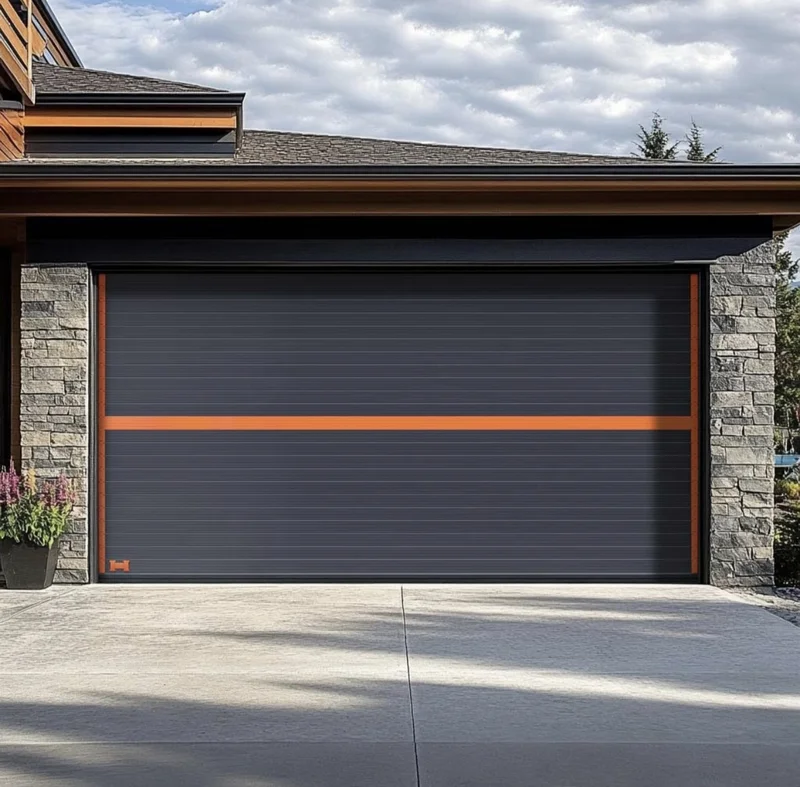
- Quiet Operation: Achieved through belt-drive systems (versus chain), precision gearboxes, and doors with integrated sound damping. Performance is measured in decibels (dB) at 1 meter.
- Battery Backup: Mandatory for operation during power outages, typically using a 24V DC sealed lead-acid or lithium-ion backup system.
- Secure Encryption: All communications, especially for lock-integrated doors, must use TLS 1.2+ encryption and rotating rolling-code technology to prevent code grabbing and replay attacks.
Technical Performance Data: Door & Opener Systems
| Parameter | Specification / Typical Range | Test Standard / Notes |
|---|---|---|
| Door Panel Core (LVL) | Density: 38-42 pcf | ASTM D2395 |
| Bending Strength (MOR): ≥ 6,500 psi | ASTM D5456 | |
| Dimensional Stability: ≤ 0.3% swelling (24hr soak) | EN 317 | |
| Door Panel Cladding (WPC) | Density: ≥ 1.2 g/cm³ | ASTM D792 |
| Moisture Absorption: < 0.5% (24hr immersion) | ASTM D570 | |
| Fire Rating: Class B (EN 13501-1) / Class C (ASTM E84) | EN 13501-1 / ASTM E84 | |
| Formaldehyde Emissions | E0 (≤0.05 ppm) or E1 (≤0.1 ppm) | EN 16516 / JIS A 1460 |
| Thermal Insulation | U-factor: 0.20 – 0.30 Btu/(ft²·°F·hr) | ASTM C1363 |
| Acoustic Performance | Sound Reduction: 25-30 dB (A-weighted) | ASTM E90 |
| Opener Lift Capacity | 1/2 HP to 1.25 HP (Continuous Duty) | Handles 350 – 650 lb door assemblies |
| Opener Sound Level | 55 – 75 dBA (at 1m, typical operation) | Measured per ANSI/UL 325 |
| Backup Runtime | 24-48 hours (standard cycling) | Dependent on battery amp-hour rating |
Functional Advantages of an Integrated System:
- Predictive Maintenance Alerts: Advanced openers monitor cycle count, force settings, and motor performance to alert for potential spring fatigue or track alignment issues before failure.
- Sealed Performance: Integration of door and opener allows for optimized sealing package performance, maintaining designed U-factors and weather resistance.
- Unified Warranty & Support: Single-source responsibility for the entire access system, from structural components to network connectivity.
Trusted by Homeowners: Certifications, Warranty, and Customer Success Stories
Certifications: Third-Party Validation of Performance and Safety
Our manufacturing and product performance adhere to internationally recognized standards, providing verifiable benchmarks for material integrity, operational safety, and environmental responsibility.
- Quality Management: ISO 9001:2015 certification governs our entire production process, from raw material sourcing to final assembly, ensuring consistent quality and traceability.
- Material & Fire Safety: Panel composites are tested to EN 13501-1 or ASTM E84 for fire reaction classification, typically achieving Class B/s2-d0 or better. All materials, including adhesives and surface treatments, comply with E0 (≤0.5 mg/L) or CARB Phase 2 (≤0.05 ppm) formaldehyde emission standards.
- Structural Integrity: Door sections and hardware are engineered to meet or exceed regional standards such as EN 13241-1 for industrial doors or relevant ASTM sections for residential doors, covering wind load resistance, mechanical durability, and operational safety.
- Smart System Compliance: Openers and integrated electronics carry CE, FCC, and UL 325 certifications, guaranteeing electromagnetic compatibility, electrical safety, and safe automatic reversal system performance.
Warranty: Engineered Longevity and Support
Our warranty terms are a direct reflection of material science and engineering confidence, not marketing promises. Coverage is stratified by component due to differing material lifespans and stress profiles.
| Component | Warranty Period | Key Covered Parameters & Exclusions |
|---|---|---|
| Panel & Section Structure | 10-15 Years (Limited) | Covers defects in material (e.g., delamination of WPC/PVC skins, warping of LVL core) and manufacturing. Excludes damage from impact, improper installation, or lack of maintenance. |
| Hardware (Springs, Hinges, Rollers) | 5-10 Years (Limited) | Covers breakage or excessive wear under normal use. Lifetime cycles are specified per model (e.g., 25,000+ cycles). Excludes corrosion from salt spray or chemical exposure without proper finish. |
| Smart Opener & Motor | 3-5 Years (Parts & Labor) | Covers motor burnout, gearbox failure, and main PCB defects. Includes software support for integration protocols (Wi-Fi, Bluetooth, proprietary RF). |
| Paint & Finish | 3-5 Years (Limited) | Covers peeling, blistering, or fading exceeding 5 ΔE units on colorimetric scale under normal weathering. Excludes chemical or abrasive damage. |
Critical Warranty Precondition: Installation must be certified by a trained professional per our engineering specifications (e.g., header reinforcement, track alignment tolerance <2mm per meter). Self-installation or non-compliant installation voids structural and hardware warranties.
Customer Success Stories: Documented Performance in Real Conditions
Project: Coastal Residence, Florida
- Challenge: High humidity (75-85% avg), salt spray exposure, and frequent storm-force winds.
- Solution: Installed a 16×7 ft door with 44mm thick panels: co-extruded PVC outer skin (Shore D 75), moisture-resistant WPC core (density >750 kg/m³), and LVL internal struts. Integrated opener with battery backup.
- Verified Outcome: After 3 years, door inspection showed zero swelling (moisture absorption <0.8%), no corrosion on hardware (zinc-nickel plated), and consistent operation during 12+ power outages. Sound transmission reduction measured at 28 dB.
Project: Passive House, Ontario
- Challenge: Achieving airtight building envelope and thermal bridge reduction for rigorous energy standards.
- Solution: Installed thermally broken, insulated sectional door with polyurethane foam core (density 40kg/m³, λ=0.022 W/m·K). U-factor of complete assembly certified at 0.7 W/m²K. Smart opener integrated with home energy management system for scheduled operation.
- Verified Outcome: Blower door test confirmed no significant air leakage at door perimeter. Homeowner reports a 15% reduction in adjacent garage space heating demand. Integration allows for automated closing based on HVAC mode.
Project: Urban Townhouse, Berlin
- Challenge: Limited street space requiring quiet, reliable, and secure automated access with minimal maintenance.
- Solution: Installed a low-maintenance aluminum-glass sectional door with powder-coated frames (120μm epoxy-polyester). Equipped with a belt-drive opener (operational noise <55 dB) and smart integration supporting Siri/Google Home.
- Verified Outcome: 4-year service log shows zero unscheduled maintenance. Noise levels validated per DIN 45635-1. The smart system’s geofencing feature has eliminated inadvertent open-door events, as confirmed by access log audit.
Frequently Asked Questions
How do smart garage doors prevent moisture-induced warping in humid climates?
Select doors with WPC panels (density ≥ 650 kg/m³) and an LVL core. The low moisture expansion coefficient (<0.3%) of engineered composites, combined with a full-perimeter PVC seal (≥1.2mm thickness), ensures dimensional stability. This prevents binding against smart opener tracks, maintaining reliable automated operation.
What formaldehyde emission standards ensure indoor air safety?
Insist on E0 (≤0.5mg/L) or EN (≤0.124mg/m³) certified composite materials. These stringent standards, verified by third-party lab reports, guarantee ultra-low VOC emissions. This is critical as the garage often adjoins living spaces, preventing contamination of your home’s air quality via the automation system’s frequent access.
How is thermal insulation maintained with integrated smart openers?
Doors must feature polyurethane-foam cores (R-value 12-18) and thermally broken sections around the opener bracket. This prevents condensation and thermal bridging at the motor mount—a common weak point. Proper insulation ensures your home automation system isn’t undermined by energy loss at the garage envelope.
Can the door withstand impact without damaging the smart opener mechanism?
Yes, with a reinforced design. Opt for a steel-reinforced LVL bottom rail and impact-resistant WPC/PVC skins (Shore D hardness >75). This protects the door’s integrity and the precise opener alignment during accidental contact, preventing costly recalibration or gear damage to the automation unit.
What specifications prevent long-term sagging on wide openings?
For spans over 16 feet, specify a galvanized steel-strut reinforced top section and a high-cycle roller system (≥25,000 cycles). This combats deflection, ensuring the door’s weight never strains the smart opener’s drive train, which relies on consistent, balanced movement for its programmed operation and safety features.
How is operational noise minimized for smart, quiet operation?
Seek doors with sound-dampening composite cores and precision nylon rollers. Combined with a direct-drive smart opener, this achieves sub-45 dB operation. Low noise is a key automation benefit; it requires both the door’s acoustic insulation and the opener’s brushless motor technology to be optimized in tandem.
What UV-resistant finishes protect against color fading?
Demand a multi-coat finish with UV-inhibiting acrylic topcoats, applied via automated electrostatic spray for uniform ≥80µm thickness. This prevents fading and chalking of the exterior face, ensuring long-term aesthetic appeal and protecting the composite substrate from solar degradation that could compromise material properties.