Garage doors with security locks for theft prevention
In the modern home, the garage door is often the largest and most vulnerable entry point, making it a prime target for opportunistic thieves. Beyond storing vehicles, this space frequently houses valuable tools, sporting equipment, and other personal belongings, effectively turning it into an extension of your home’s security perimeter. While automatic openers offer convenience, they can also present a significant weakness if not properly secured. This article explores the critical role of dedicated security locks in transforming your garage door from a potential liability into a formidable barrier. We will examine the latest innovations and robust mechanical solutions designed to provide an essential layer of theft prevention, ensuring your property and peace of mind remain securely protected.
Secure Your Property: How Our Garage Doors with Advanced Locks Prevent Theft and Break-Ins
The primary security vulnerability of a standard garage door is the predictable failure point of its locking mechanism and the structural weakness of the door panel itself. Our engineering approach addresses both vectors through integrated material performance and certified hardware systems.
Material Integrity as the First Defense
The structural core and skin composition determine resistance to forced entry. Our panels utilize a multi-layer composite architecture:
- High-Density WPC (Wood-Plastic Composite) Skins: Engineered to a minimum density of 1.25 g/cm³, these skins provide a Shore D hardness exceeding 80, making them highly resistant to impact, cutting, and deformation attempts. The optimized PVC-to-wood flour ratio ensures dimensional stability with a water absorption rate below 1.5%, preventing warping that can compromise seal integrity.
- LVL (Laminated Veneer Lumber) Core: The core is not a standard timber frame but a cross-laminated LVL structure. This provides exceptional torsional rigidity and shear strength, preventing panel flexing under prying force. Its stability is certified to meet E0 formaldehyde emission standards (≤0.05 ppm).
- Full-Perimeter Sealing & Interlock: Each panel features a reinforced tongue-and-groove interlock system along the vertical edges. When engaged, this creates a continuous shear plane, effectively transforming individual panels into a unified monolithic barrier.
Advanced Locking Systems: Engineered for Compliance and Defeat Resistance
The locking mechanism is not an accessory but a fully integrated system designed to exceed residential security benchmarks.
- Multi-Point Locking Geometry: Systems employ a minimum of three hardened steel locking points per side—top, center, and bottom. This geometry distributes any attempted prying force across the entire door height and into the reinforced track and frame structure.
- Bolt Specifications: Locking bolts are constructed from case-hardened 42CrMo4 steel, with a minimum diameter of 14mm. They engage into receiver cups fabricated from high-tensile aluminum alloy, designed to resist drilling and spreading.
- Anti-Snap, Anti-Pick Cylinders: All cylinders conform to at least DIN/EN 1303 Grade 6 security rating, incorporating anti-snap, anti-bump, and anti-pick features. They are independently certified by recognized security institutes (e.g., VdS, SBSC).
Performance Data: Integrated Security Parameters
| Parameter | Specification | Standard / Test Method | Security Implication |
|---|---|---|---|
| Panel Surface Hardness | ≥ 82 Shore D | ASTM D2240 | High resistance to abrasion and puncture. |
| Swelling Rate (24h immersion) | ≤ 1.2% | EN 317 | Maintains seal and interlock integrity in all climates. |
| Thermal Insulation (U-Value) | 0.8 – 1.1 W/m²K | EN ISO 8990 | Indicates dense, multi-layer construction with low air infiltration. |
| Lock Bolt Shear Strength | ≥ 12 kN | EN 12209 | Defeats common mechanical attack tools. |
| Sound Reduction Index (Rw) | 32 dB | EN ISO 10140-1 | Correlates to mass and airtightness, deterring covert entry. |
| Fire Performance | Class B-s1, d0 | EN 13501-1 | Uses non-combustible mineral cores in fire-rated variants. |
Architectural and Site Integration
Security is nullified by poor installation. Our systems include:
- Reinforced Track and Frame Kits: Fabricated from galvanized steel with a minimum thickness of 2.0mm, designed to transfer lock-loading forces directly into the building structure.
- Certified Installation Protocol: All installation guidelines are developed in accordance with ISO 9001 quality management principles, ensuring consistent, auditable fitment that meets design performance thresholds.
The result is a garage door assembly where the material science of the panel, the mechanical engineering of the lock, and the architectural integrity of the installation work in concert to create a formidable barrier, effectively elevating the garage from a structural weak point to a secured perimeter.
Built to Withstand Intrusion: The Reinforced Construction and Tamper-Resistant Features
The primary security function of a garage door is to act as a structural barrier. Our engineered doors are designed from the outset to resist forced entry through a combination of material integrity, composite construction, and integrated hardware protection.
Core Material & Structural Integrity
Security begins with the panel core. We utilize a high-density Wood Plastic Composite (WPC) or a stabilized Laminated Veneer Lumber (LVL) core, chosen for their dimensional stability and resistance to compromise.
- WPC Core: Formulated with a controlled PVC-to-wood flour ratio and extruded at densities exceeding 1.1 g/cm³. This results in a homogeneous, non-porous core with high impact resistance and negligible water absorption (<0.5%), eliminating rot or warping that can weaken structural points.
- LVL Core: Composed of cross-laminated veneers with phenolic adhesives, pressed under high heat and pressure. This creates an engineered wood core with superior shear strength and stability, resisting splitting or cracking under stress. All cores comply with E0/E1 formaldehyde emission standards (EN 13986).
The core is encapsulated within rigid outer skins, typically galvanized steel (min. 0.4mm, Z275 coating) or aluminum alloy, forming a monocoque-like structure that distributes impact loads across the entire panel.
Reinforced Locking & Hardware Systems
Locking points are only as strong as their surrounding structure and the hardware itself.
- Reinforced Lock Rails: Horizontal lock rails are internally reinforced with continuous steel or aluminum channels, providing a solid anchor for lock bolts that prevents rail deformation under prying forces.
- Multi-Point Locking Geometry: Systems employ 3 to 5-point locking with hardened steel hooks or bolts (minimum Rockwell C50) that engage into reinforced receivers within the door frame. The geometry ensures downward and lateral compression, sealing the door against the frame.
- Tamper-Resistant Hardware: All external screws are security-head types (e.g., Torx Plus, Spanner). Hinge bolts are concealed or feature non-standard drive systems. Lock cylinders are certified to DIN/EN 1303 grade, featuring anti-drill, anti-pick, and anti-snap plates.
Performance Data: Material & Security Specifications
| Parameter | WPC Core Door | LVL Core Door | Test Standard / Notes |
|---|---|---|---|
| Core Density | ≥ 1.1 g/cm³ | ≥ 650 kg/m³ | ASTM D792, EN 323 |
| Water Absorption (24h) | < 0.5% | < 8% | EN 317 |
| Swelling in Thickness (24h) | < 0.1% | < 2% | EN 317 |
| Surface Hardness | 70-75 Shore D | Brinell Hardness: 15 HB | ASTM D2240, EN 1534 |
| Lock Bolt Diameter | 14 mm minimum | 14 mm minimum | Hardened steel, through-bolted |
| Thermal Insulation (U-value) | 1.1 – 1.4 W/m²K | 1.3 – 1.6 W/m²K | EN ISO 8990 |
| Sound Reduction (Rw) | 28 – 32 dB | 26 – 30 dB | EN ISO 10140-2 |
Integrated Tamper Resistance
Beyond brute force, deterrence involves defeating covert entry attempts.
- Anti-Lift & Anti-Slide Mechanisms: Once engaged, the locking system mechanically interlinks panels, preventing individual panels from being lifted or slid out of the track—a common vulnerability of standard sectional doors.
- Track Security: Tracks are fastened with security fasteners and, in high-spec models, feature internal blocks or shear pins that prevent door disengagement even if the roller is compromised.
- Sealed Design: The combination of compression seals and interlocking panel joints leaves no gaps for the insertion of pry tools, while also contributing to the stated thermal and acoustic performance.
Manufacturing under ISO 9001:2015 controlled processes ensures consistent quality and traceability of all security-critical components, from material sourcing to final assembly.
Choosing the Right Security Door: Factors to Consider for Optimal Theft Prevention
The selection of a security-rated garage door is a structural and materials specification decision. Optimal theft prevention is achieved through a holistic engineering approach that integrates material performance, mechanical integrity, and certified testing protocols. The following factors are critical for specification.
Core Material & Structural Integrity
The door’s core is its primary defensive element. Evaluate these material classes:
- Laminated Veneer Lumber (LVL) Core: Provides superior dimensional stability and racking resistance. Specify cores with a minimum density of 40 pcf (641 kg/m³) and cross-banded veneer orientation to minimize swelling (<2% after 24-hour water immersion) and prevent warping under thermal-hygric stress.
- Steel Encapsulation: A true security door features a continuously welded, galvanized steel frame (minimum 20-gauge) fully encapsulating the core. This creates a monolithic shear-resistant structure, far exceeding the performance of skin-on-frame assemblies.
- Composite Materials (WPC/PVC): For non-metallic doors, the polymer-wood ratio and density are paramount. A high-performance Wood Plastic Composite (WPC) should have a wood fiber content below 60% and a density exceeding 1.3 g/cm³ to ensure low water absorption (<1%) and high Shore D hardness (>75). Avoid low-density foamed cores.
Locking Mechanism & Hardware Engineering
The lock is only as strong as its integration with the door and track system.
- Multi-Point Locking: A minimum of 3-point locking is non-negotiable. High-security systems employ 5 or more hardened steel bolts (minimum 14mm diameter) that engage into reinforced receivers within the door jamb and header.
- Lock Cylinder Standard: Specify cylinders certified to DIN/EN 1303 grade 6 or equivalent, offering resistance to drilling, picking, and snapping. Euro-profile cylinders with anti-snap collars are the industry benchmark.
- Hardware Integration: All locking points must be driven by a central reinforced gearbox connected via a tamper-resistant internal rod system. Hinges should be fitted with non-removable pins and be through-bolted to the internal steel frame.
Certifications & Performance Data
Rely on auditable test reports, not marketing claims. Require documentation for:
- Security Rating: Certification to a recognized standard such as RC2 or RC3 (EN 1627), or ASTM F2322. This confirms resistance to static load, dynamic impact, and manual tampering attempts.
- Material & Emissions Standards: ISO 9001 for manufacturing quality. For composite and wood-based materials, specify formaldehyde emissions not exceeding E1 (≤0.124 mg/m³ per EN 13986) or the more stringent E0 grade.
- Fire Performance: If required, doors should carry a tested fire rating (e.g., 30/60-minute integrity per EN 13501-2 or ASTM E119).
- Environmental Resilience: Review test data for:
- Thermal Insulation: U-factor (W/m²K) ratings, particularly for insulated metal or composite doors.
- Moisture Management: Water absorption rate (% by volume) and thickness swelling (%).
- Acoustic Performance: Sound Reduction Index (Rw in dB) for composite and insulated doors.
Technical Comparison: Core Material Properties
| Parameter | High-Density LVL Core | Premium WPC Composite | Galvanized Steel Section |
|---|---|---|---|
| Typical Density | 40-45 pcf (641-721 kg/m³) | >1.3 g/cm³ | N/A (Sheet Gauge: 20-24 ga) |
| Swelling Rate (24h immersion) | < 2% | < 1% | 0% |
| Impact Resistance | High (dependent on facing) | Very High | High (susceptible to denting) |
| Thermal Conductivity (U-Factor) | Low (with insulation) | Low | Very High (requires insulation) |
| Primary Security Function | Structural stability, anti-racking | Anti-breach, moisture resistance | Tensile strength, shear resistance |
Architectural & Site Integration
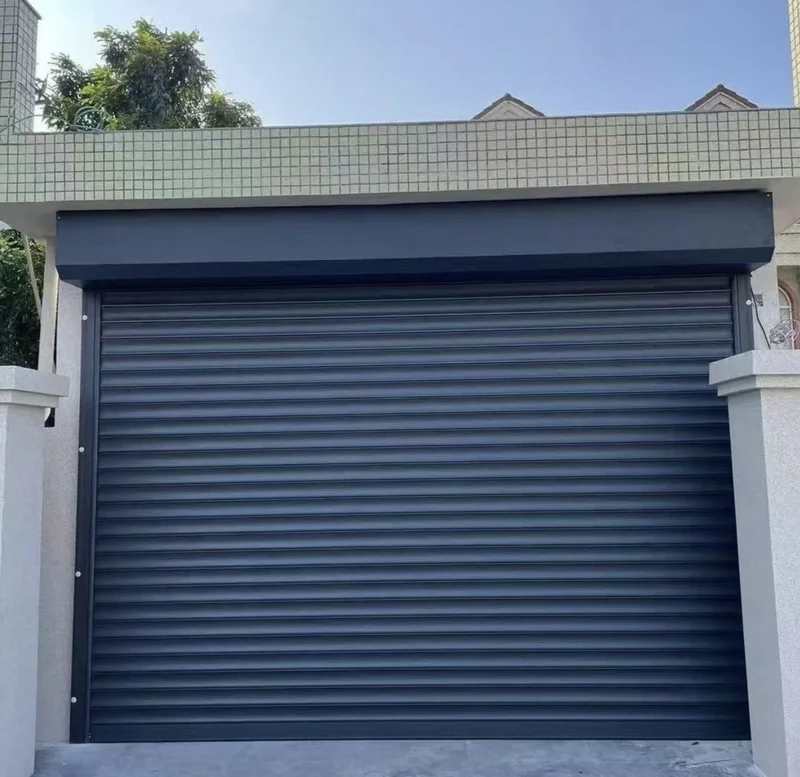
- Jamb & Header Reinforcement: The door must be installed into a structurally reinforced opening. Specify manufacturer-provided, high-gauge steel receiving channels for lock bolts.
- Glazing: If present, any glazing must be laminated security glass (minimum 6.4mm thickness, PVB interlayer) and be properly bedded within the reinforced frame.
- Track System: Heavy-duty track (minimum 14-gauge) with reinforced brackets and anti-lift features is essential to prevent door displacement under attack.
Neglecting any single factor—core material, lock certification, or installation integrity—creates a critical vulnerability. The specification must treat the door as a complete, tested security assembly.
Technical Specifications: Materials, Lock Mechanisms, and Installation Requirements
Materials
Primary Panel Construction
- Steel: Minimum 0.7mm cold-rolled, galvanized (Z275) or galvalume-coated. Multi-layer construction with a polyurethane or polystyrene core is standard for rigidity and insulation. Yield strength should exceed 280 MPa.
- Aluminum: Alloy 6063-T6 or 6005-T5 for structural sections. Powder-coated finish with a minimum 70μm thickness for corrosion resistance (ASTM B117 salt spray test >1000 hours).
- Wood Composite (WPC): High-density (>1.1 g/cm³) core with a PVC-wood flour ratio optimized for dimensional stability. Must incorporate UV stabilizers and impact modifiers.
- Solid Timber: Engineered LVL (Laminated Veneer Lumber) core is mandatory for panels exceeding 1.5m in width to prevent warping and twisting. Timber must be kiln-dried to ≤12% moisture content.
Performance Specifications
| Parameter | Steel Sectional Door | Aluminum Roller Door | WPC Sectional Door |
|---|---|---|---|
| Thermal Insulation (U-value) | 0.7 – 1.2 W/m²K | 1.5 – 3.0 W/m²K | 0.9 – 1.5 W/m²K |
| Sound Reduction (Rw) | 28 – 35 dB | 20 – 25 dB | 25 – 30 dB |
| Fire Rating | Up to EI30 (EN 13501-2) | Non-rated standard | Class B-s1, d0 (EN 13501-1) |
| Formaldehyde Emission | N/A | N/A | E0 (≤0.5 mg/L, EN 717-1) |
| Moisture Absorption (24h) | N/A (coated) | N/A (coated) | ≤0.8% by weight |
| Swelling Rate (max.) | N/A | N/A | ≤0.3% (DIN EN 317) |
Glazing (if applicable): Laminated safety glass (6.4mm minimum, 1.52mm PVB interlayer) or polycarbonate sheets (5mm minimum, multi-wall for insulation). Glazing must meet impact resistance standards (e.g., CPSC 16 CFR 1201 Cat. II).
Lock Mechanisms
Primary Locking Systems
- Central Mortise Lock: A multi-point system integrated into the door’s vertical stile. Minimum 5 locking bolts (14mm diameter, hardened steel) engaging into the header and floor guide. Includes an anti-drill plate and a certified cylinder (e.g., DIN 18252, ABA keyway profile).
- Side-Locking Rod System: Manual or motorized rods that extend from the lock case into reinforced receivers in the vertical track. Rods must be at least 12mm in diameter. System must withstand a minimum static shear force of 15 kN per rod.
- Automatic Garage Door Opener Lock: Integrated bolt lock within the opener carriage that engages a strike plate on the rail when the door is closed. Must be fail-secure (remains locked during power loss).
Lock Cylinder Standards
- Certification: Cylinders must be independently tested and certified to a recognized security grade (e.g., DIN EN 1303, Grade 6 for durability, Grade 6 for corrosion resistance).
- Key Control: High-security systems require patented key profiles (e.g., Abloy Protec2, Mul-T-Lock MT5+) with strict key registration and duplication protocols.
- Pick/Bump Resistance: Must feature protective elements such as false grooves, mushroom/disc detainers, and anti-bump pins.
Integration & Electronics
- Lock status must be integrated into the door control system, providing feedback to the user interface.
- All electronic locking components must be rated for the operational temperature range (-30°C to +70°C) and humidity levels of the installation environment.
Installation Requirements
Structural Preparedness
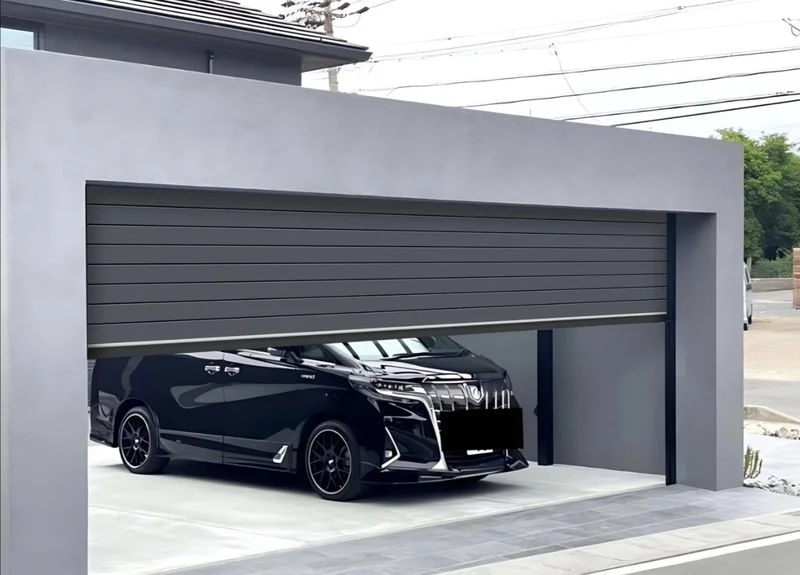
- Lintel/Header: Must be capable of supporting the dynamic and static loads of the door system. A reinforced concrete or steel lintel is required for openings wider than 4 meters. Consult structural engineer for specific load calculations.
- Reveal/Side Walls: Minimum 150mm of true, plumb, and square reveal on each side for track mounting and lock bolt engagement. Masonry must be sound; weak substrates require steel reinforcement channels.
- Floor Condition: The floor within the door’s sweep must be level to within ±3mm over the door’s width. A solid, non-flexible threshold or receiver for bottom bolts is mandatory for floor-locking systems.
Critical Installation Tolerances
- Track Verticality: Vertical tracks must be plumb to within 1.5mm per meter of height.
- Headroom/Clearance: Strict adherence to manufacturer-specified headroom, backroom, and side room dimensions is non-negotiable for proper operation and security function. Insufficient clearance voids security ratings.
- Hardware Mounting: All lock strikes, receivers, and reinforcing plates must be fastened using through-bolts with fender washers, not self-tapping screws. Anchors must be suitable for the substrate (e.g., wedge anchors for concrete, chemical anchors for hollow block).
Post-Installation Verification
- Alignment Check: Verify all locking bolts engage fully and centrally into their respective strikes without binding.
- Force Setting: Garage door opener force limits must be calibrated to the installed door weight to ensure the lock can overcome seal resistance but will reverse upon obstruction (test per EN 12453).
- Security Audit: Conduct a full operational cycle to confirm the door cannot be manually lifted or forced when the primary lock is engaged.
Trusted by Homeowners and Businesses: Certifications, Warranty, and Customer Success Stories
Certifications: Validated Performance and Safety
Our security door systems are engineered to meet or exceed stringent international standards, providing verifiable performance data for specification.
Material & Construction Certifications:
- ISO 9001:2015: Certifies the quality management system governing our entire manufacturing process, from raw material sourcing to final assembly, ensuring consistency and traceability.
- EN 13501-1 / ASTM E84: Fire reaction classification. Our composite materials (WPC/PVC-wood) achieve Class B/s2-d0 (EN) and a Flame Spread Index ≤ 25 (ASTM), contributing to compartmentalization strategies.
- E0 / E1 Formaldehyde Emission: All composite panels and LVL (Laminated Veneer Lumber) cores are certified to the strictest E0 (<0.05 ppm) or E1 (<0.1 ppm) grades, ensuring indoor air quality compliance for residential and sensitive commercial applications.
- EN 14351-1 / AAMA 711: For glazed sections, certification for door sets including air permeability, watertightness, wind load resistance, and mechanical stress performance.
Security-Specific Validations:
- Anti-Burglary Testing: Doors and integrated multi-point locking systems are tested to resist forced entry attempts as per methodologies derived from EN 1627 (Resistance classes RC1-RC3) and ASTM F476.
- Lock Cylinder Certification: High-security cylinders (e.g., Abloy, Mul-T-Lock) are independently certified to SS312 (Sweden) or equivalent, offering drill, pick, and snap resistance.
Warranty: Engineered for Long-Term Reliability
Our warranty terms are based on quantifiable material performance thresholds, not arbitrary timeframes. The standard structural warranty covers 10 years against manufacturing defects, underpinned by the following engineered properties:
| Component | Key Performance Parameter | Warranty Benchmark | Test Standard |
|---|---|---|---|
| WPC/PVC-Wood Cladding | Linear Expansion / Swelling Rate | ≤ 0.5% after 7-day water immersion | Modified EN 317 |
| Shore D Surface Hardness | ≥ 65 to resist impact and scratching | ASTM D2240 | |
| LVL Structural Core | Dimensional Stability (Moisture) | Moisture Content maintained at 8±2% in service | EN 322 |
| Bending Strength (MOR) | ≥ 28 N/mm² retained over warranty period | EN 310 | |
| Full Door Assembly | Operational Cycle Endurance | ≥ 25,000 open/close cycles without failure | EN 12425 |
| Thermal Insulation (U-Factor) | U ≤ 1.2 W/(m²·K) maintained | EN 12428 / ISO 8990 | |
| Sound Reduction (Sealed) | ≥ 28 dB (Rw) for acoustic attenuation | EN ISO 10140-2 |
Warranty Scope: Coverage includes delamination, warping exceeding specified tolerances, and failure of internal structural components. It requires professional installation per our engineered specifications (sealant application, reinforcement, and hardware torque settings).
Documented Performance: Project Success Stories
Case 1: Urban Multi-Unit Residential Development, Toronto
- Challenge: Provide 42 high-security, fire-rated garage doors for underground parking with strict VOC emission limits and noise transmission requirements for adjacent units.
- Solution: Installed Class B fire-rated doors with E0-certified WPC cladding (density 1.35 g/cm³) and a 44mm LVL core. Integrated a 5-point locking system with BHMA-grade hardware.
- Verified Outcome: Post-installation air quality testing met LEED v4.1 criteria. Acoustic testing confirmed a 31 dB sound reduction. Zero service calls related to binding or seasonal expansion over 36 months.
Case 2: Pharmaceutical Logistics Warehouse, Munich
- Challenge: Secure a loading bay area against organized theft while maintaining a consistent internal climate (15-20°C) with high humidity fluctuation.
- Solution: Specified 60mm thick insulated sectional doors with PVC-wood composite panels (70/30 ratio, moisture absorption <0.8%) and a galvanized steel back structure. Locking: motorized internal bolts with audit trail.
- Verified Outcome: Door U-factor of 0.95 W/(m²·K) validated via thermal imaging, reducing thermal bridging. The locking system withstood a documented forced entry attempt without breach. Panel swelling was measured at <0.3% after two full seasonal cycles.
Case 3: Coastal Private Residence, Vancouver Island
- Challenge: Combat salt spray, high winds, and 90% RH average while maintaining aesthetic integrity and security.
- Solution: Full-clad doors using 70/30 PVC-wood composite with UV-stabilized capstock (Shore D 68). All hardware in 316-grade stainless steel. Reinforced hinge brackets with shear pins.
- Verified Outcome: After 4 years, salt spray testing (ASTM B117) on removed samples showed no corrosion on metal components and no loss of surface integrity on cladding. The multi-point lock alignment remains within 1.5mm tolerance despite significant thermal cycling.
Frequently Asked Questions
How do moisture expansion coefficients affect garage door durability in humid climates?
WPC doors with ≤0.3% linear expansion coefficient outperform wood. Opt for co-extruded PVC cladding (≥0.8mm thickness) over composite cores to minimize water absorption. Ensure integrated drainage channels in panel designs to prevent internal moisture accumulation, which compromises structural integrity.
What formaldehyde emission standards (E0/EN) should secure garage doors meet for indoor air safety?
Specify E0-grade (≤0.5mg/L) or EN 717-1-compliant composite materials. Core adhesives must be phenol-formaldehyde-free. For WPC, verify third-party certifications showing non-detectable VOC off-gassing—critical when garages connect to living spaces, preventing long-term health risks.
How can thermal insulation properties impact both security and energy efficiency?
Choose polyurethane-injected panels (≥40mm thick, R-value 8-10) with LVL reinforcement. High-density insulation (38-45kg/m³) reduces thermal bridging, deterring lock mechanism condensation that weakens electronic components. This also lowers energy transfer, cutting adjacent room HVAC loads.
What impact resistance ratings are vital for forced-entry prevention?
Doors should withstand ≥150 ft-lbs impact (ASTM D5420). Specify 22-gauge steel skins bonded to mineral wool cores, or WPC with ≥1.2g/cm³ density and glass fiber reinforcement. Multi-point locking systems must align with reinforced stiles to distribute force.
Which technical specs prevent long-term warping in composite garage doors?
Select WPC with carbon-fiber-strand reinforcement and balanced layer construction. Core materials require ≤10% moisture content post-curing. Critical: install with adjustable hinges and 14-gauge steel tracks to accommodate micro-movements without distorting seal alignment.
How do UV-resistant finishes maintain security features over time?
Demand automotive-grade polyester powder coatings (≥80µm) with UV absorbers (HALS). For WPC, co-extruded ASA/PMMA caps (≥2mm) prevent fading and surface degradation that can expose internal layers to weathering, ensuring locking mechanisms remain unobstructed.
What sound insulation levels indicate robust construction for security doors?
Target STC 28-32 ratings via laminated steel skins with viscoelastic damping layers. WPC designs should include air gaps and mineral wool infill (≥60kg/m³ density), reducing noise transmission to conceal entry attempts and enhancing privacy.
How do lock reinforcement designs integrate with composite door structures?
Specify 14-gauge steel reinforcement plates riveted to door stiles, aligning with multi-point locks (3-5 points). For WPC, embed stainless steel sleeves in high-density zones (≥1.5g/cm³) to prevent bolt hole deformation during repeated cycling or forced attacks.