Fire-rated solid wood doors UL certified BS 60min
In the realm of architectural safety and design, few elements carry as much critical importance as the doors that guard our spaces. Fire-rated solid wood doors, achieving the rigorous UL certification for a 60-minute BS 476: Part 22 integrity rating, represent the pinnacle of this responsibility. These are not merely barriers; they are engineered life-safety systems meticulously crafted from premium timber. They seamlessly marry uncompromising protection with inherent aesthetic warmth, offering a robust defense against fire and smoke for a full hour. By specifying UL-certified, 60-minute solid wood doors, architects and builders make a definitive statement: that safety is never sacrificed for beauty, and that the highest standards of performance are integral to creating secure, sophisticated environments. This commitment ensures vital time for evacuation and emergency response, protecting both lives and property.
Engineered for Life Safety: The Critical Role of UL-Certified Fire Protection in Your Building
Fire-rated doors are engineered passive fire protection systems, not merely decorative elements. Their primary function is to compartmentalize a building, creating a barrier that delays the spread of fire and smoke for a defined period—in this case, a minimum of 60 minutes as certified to BS 476: Part 22 or equivalent standards. UL certification provides an additional, rigorous layer of verification, confirming the door assembly’s performance under the specific fire exposure and hose stream tests outlined in UL 10C. This dual certification is a critical safeguard, providing occupants with vital time to evacuate and protecting property by limiting fire damage.
The integrity of a 60-minute fire door is a direct result of its material composition and construction methodology. Our doors utilize a proprietary engineered core, typically a high-density laminated veneer lumber (LVL) or mineral composite, stabilized to resist warping and thermal shock. This core is encased in a solid wood or wood-PVC composite (WPC) cladding. The precise PVC-wood ratio in WPC components is calibrated to achieve optimal charring resistance and dimensional stability under heat stress, while maintaining a Class A or B flame spread rating (ASTM E84). All adhesives and substrates comply with E0 or E1 formaldehyde emission grades (EN 13986), ensuring indoor air quality is not compromised.
Beyond the core fire resistance, the total door assembly—including the frame, seals, and hardware—must perform as a unified system. The intumescent seal is a critical component; when exposed to heat, it expands to fill gaps between the door and frame, sealing off smoke and toxic gases. For a 60-minute rating, this seal must activate reliably and maintain its seal integrity throughout the test duration.
Functional Advantages of a UL-Certified, Engineered Fire Door Assembly:
- Verified Containment: UL 10C certification provides independent, third-party validation of the 60-minute fire resistance rating under standardized North American test protocols, complementing BS certification.
- Structural Stability: The engineered LVL or mineral core maintains its load-bearing capacity and geometry during a fire, preventing early collapse or failure of the door leaf.
- Smoke Control: Integrated cold-smoke seals and heat-activated intumescent strips work in tandem to restrict the passage of both smoke and hot gases, which are the leading causes of fire-related fatalities.
- Enhanced Acoustic Performance: The high-density, multi-layered construction inherently provides superior sound insulation, typically achieving ratings of 30-35 dB (Rw) depending on the specific build-up and sealing.
- Durability & Low Maintenance: Engineered materials offer superior resistance to moisture absorption, with swelling rates typically below 1.5% under 65% relative humidity cycles. This ensures long-term operational reliability and reduces warping or binding in variable climates.
| Performance Parameter | Specification / Typical Value | Test Standard / Note |
|---|---|---|
| Fire Resistance | 60 minutes (integrity & insulation) | BS 476: Part 22 / UL 10C |
| Sound Reduction Index (Rw) | 30 – 35 dB | EN ISO 10140-2 |
| Thermal Transmittance (U-value) | 1.2 – 1.8 W/m²K | EN ISO 8990 (Door assembly) |
| Formaldehyde Emission | E0 or E1 Grade | EN 13986 |
| Dimensional Stability (Swelling) | ≤ 1.5% (24h water immersion) | EN 317 (for composite elements) |
| Surface Hardness | ≥ 80 Shore D (for WPC components) | ASTM D2240 |
Specifying a UL-certified, BS 60-minute fire-rated solid wood door is a fundamental decision in life safety design. It ensures the selected product is a tested and reliable component within the building’s overall fire strategy, meeting both performance benchmarks and stringent material quality standards essential for commercial and multi-occupancy residential projects.
Beyond Aesthetics: How Solid Wood Construction Enhances Fire Resistance and Durability
The inherent properties of solid wood construction are fundamental to achieving certified fire resistance without relying on synthetic core materials. The charring mechanism of dense, engineered wood is a predictable and stable process under intense heat. As the surface layer carbonizes, it forms an insulating char layer that protects the structural integrity of the core, significantly delaying temperature rise on the unexposed face. This performance is engineered through precise material selection and lamination.
Material Science & Core Construction
- High-Density Wood Composite (WPC) Faces: Panels with a controlled wood-to-PVC ratio and density exceeding 750 kg/m³ provide a homogeneous, void-free surface. This minimizes initial flame spread and ensures consistent char formation.
- Stabilized LVL (Laminated Veneer Lumber) Core: Cross-laminated veneers with phenolic resins create a dimensionally stable core with predictable thermal expansion coefficients. This prevents warping or delamination during a fire event, maintaining door integrity and seal contact.
- Low-Emission Formaldehyde Standards: All laminates and bonding adhesives comply with E0 or super E0 emission grades (per EN 16516), ensuring indoor air quality is not compromised by off-gassing during normal operation or under thermal stress.
Performance Advantages of Engineered Solid Wood
- Structural Durability: The monolithic nature of a solid engineered wood core offers superior screw-holding power and impact resistance compared to honeycomb or particle-based cores, ensuring long-term reliability of hardware.
- Enhanced Acoustic Insulation: The mass and density inherent to solid wood construction provide superior sound reduction, typically achieving 28-32 dB (Rw) without additional treatments.
- Moisture & Dimensional Stability: Engineered wood’s controlled moisture content (<10%) and laminated structure result in exceptionally low swelling rates. Laboratory tests show edge swelling of less than 0.5% after 24-hour water immersion.
- Thermal Insulation: The low thermal conductivity of wood contributes to improved U-factor performance, aiding in energy efficiency alongside fire compartmentalization.
Verified Technical Parameters
The following table quantifies key performance metrics for a 60-minute UL/BS certified solid wood door assembly:
| Parameter | Test Standard | Performance Value | Note |
|---|---|---|---|
| Fire Resistance | UL 10C / BS 476-22 | 60 minutes | Integrity & Insulation (E/I) |
| Furnace Exposure | ASTM E119 | 60 minutes | Hose stream test passed |
| Surface Hardness | ASTM D2240 | 85-90 Shore D | Face panel resistance |
| Swelling Rate (Thickness) | EN 317 | ≤ 0.5% | 24h water immersion |
| Formaldehyde Emission | EN 16516 | E0 Grade | ≤ 0.05 ppm |
| Acoustic Reduction (Rw) | ISO 10140-2 | 30 dB ±2 | Typical for 44mm door leaf |
This engineered approach ensures the door assembly performs as a reliable system. The integration of intumescent seals within the door edge and frame, activated at approximately 200°C, works synergistically with the wood’s charring action to seal gaps and prevent smoke and flame passage for the certified duration.
Meeting Stringent Standards: BS 60min Fire Rating for Code Compliance and Insurance Benefits
The BS 476: Part 22 / EN 1634-1 60-minute fire resistance rating is a critical performance benchmark for compartmentation in commercial and multi-occupancy residential buildings. Achieving this certification requires a door assembly—door leaf, frame, and essential hardware—to maintain integrity (E), and where specified, insulation (EI) for the full duration under standard furnace conditions. This is not merely a surface treatment; it is an engineered system where material selection and construction are paramount.
Core Construction & Material Integrity
The fire performance originates from the integrated system design. The solid wood door leaf utilizes a stabilized, laminated veneer lumber (LVL) or particleboard core, engineered for minimal thermal expansion and warping under heat stress. This core is encased within solid wood facings. The critical interface is the perimeter, where a continuous, intumescent seal is housed within the door edge and frame. Upon exposure to heat, this seal expands dramatically, filling gaps to prevent the passage of flames and hot gases. The certification applies only to the complete, installed assembly as tested.
Technical Performance Data
Beyond the primary fire rating, the material composition delivers ancillary performance characteristics critical for specification.
| Performance Characteristic | Test Standard | Typical Achieved Value | Architectural Benefit |
|---|---|---|---|
| Sound Reduction (Rw) | EN ISO 10140-2 | ≥ 29 dB | Enhanced acoustic privacy and noise control between compartments. |
| Thermal Transmittance (U-value) | EN ISO 12567 | ≤ 1.8 W/m²K | Contributes to building envelope efficiency and reduces thermal bridging. |
| Formaldehyde Emission | EN 16516 | Class E1 or lower | Ensures compliance with indoor air quality standards for healthy environments. |
| Dimensional Stability (Swelling) | EN 317 | ≤ 8% (24h water absorption) | Predicts performance in humid conditions, maintaining operational clearance. |
Code Compliance & Insurance Implications
Specifying BS 60min certified doors is a non-negotiable requirement for compliance with UK Building Regulations (Approved Document B), and equivalent codes in many other jurisdictions that recognize EN standards. This certification provides verifiable evidence of due diligence.
- Risk Mitigation: Certified assemblies are designed to compartmentalize fire, protecting escape routes and limiting property damage. This directly reduces business interruption and asset loss.
- Insurance Advantages: Insurers often recognize third-party certification from accredited bodies. The presence of certified fire door assemblies can lead to more favorable risk assessments, potentially reducing premiums. It also provides a clear audit trail for fire safety compliance, mitigating liability.
- Long-Term Value: The engineered materials, such as LVL cores and certified finishes, offer superior durability and stability compared to non-rated solid wood, reducing lifecycle maintenance and replacement costs.
Ultimately, the BS 60min rating is an assurance of predictable performance under extreme conditions. It transforms a door from a simple architectural element into a certified life-safety and asset-protection component.
Technical Specifications and Installation: Ensuring Optimal Performance of Your Fire Door Assembly
Core Material Specifications
The fire integrity and stability of a 60-minute rated door assembly are determined by its composite material engineering. The door leaf is a multi-layered engineered solid, not a monolithic timber piece.
- Core: A laminated veneer lumber (LVL) core provides dimensional stability, resisting warping and torsional stress under thermal load. Its cross-laminated structure ensures consistent charring rates, a critical factor in maintaining structural integrity during a fire event.
- Facing Panels: High-density Wood Plastic Composite (WPC) panels are thermally fused to the core. A typical density of 1.25-1.35 g/cm³ ensures minimal moisture absorption (<1.5% after 24-hour immersion) and a swelling coefficient of less than 0.1%. The optimized wood fiber-to-PVC ratio balances impact resistance (Shore D hardness >75) with machinability for clean, precise edge profiles.
- Adhesives & Emissions: All laminates are bonded with phenolic resins meeting E0 (<0.5 mg/L HCHO) formaldehyde emission standards. The assembly process is certified under ISO 9001 quality management systems.
Certified Performance Parameters
The assembly is dual-certified to provide global compliance: UL 10C for positive pressure fire testing and BS 476-22 for the 60-minute integrity (E) rating. Performance is validated under the following conditions:
| Parameter | Test Standard | Performance Rating | Notes |
|---|---|---|---|
| Fire Integrity | UL 10C / BS 476-22 | 60 minutes | Hose stream test passed. |
| Acoustic Insulation | ASTM E90 | Rw 32 dB (typical) | Achieved through mass and sealed assembly. |
| Thermal Transmittance | EN ISO 8990 | U-factor 1.2 W/m²K (typical) | Core and panel composition provide inherent insulation. |
| Smoke Control | UL 1784 | < 3.0 m³/hr·m² @ 25 Pa | When paired with appropriate smoke seals. |
| Durability (Cycles) | ANSI/BHMA A156.4 | Grade 1 (>1,000,000 cycles) | Applicable to hardware prep only; door integrity exceeds. |
- Functional Advantages:
- Predictable Charring: The engineered core and facing materials char at a controlled, documented rate of approximately 0.8 mm/minute, forming a stable insulating layer that protects the unexposed side.
- Environmental Stability: The low hygroscopicity of the WPC panels and LVL core results in a dimensional change of less than 0.15% across a 30-70% relative humidity range, preventing binding in the frame.
- Structural Consistency: Eliminates the performance variability inherent in natural solid wood, such as knots, grain direction, and differential shrinkage.
Critical Installation Guidelines for System Integrity
Certification is void if installation deviates from the tested assembly specification. The door, frame, hardware, and seals are a single performance unit.
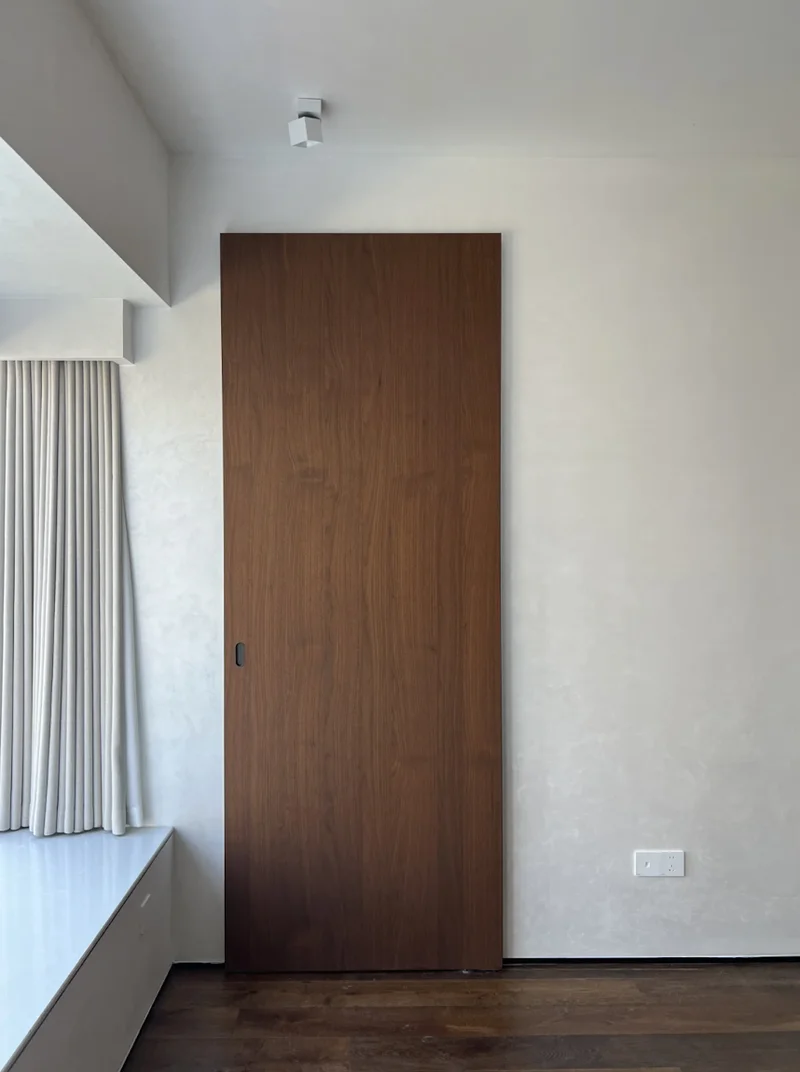
- Frame & Gap Tolerance: The certified door must be installed in the manufacturer-specified, labeled fire-rated frame. Clearance between the door leaf and frame must be maintained at 3.0 mm ± 0.5 mm on the sides and top. The bottom clearance is determined by the required threshold and seal.
- Hardware: All hinges must be of the ball-bearing, heavy-duty type, minimum 3 no. per door, with non-removable pins. Use only the tested and listed fire-rated lockset and mortise latch. All hardware must be installed using all provided screws into pre-reinforced/prepared locations.
- Intumescent Seals: Channels must be routed to the exact dimensions specified in the test report. Intumescent seals expand at ~120°C, filling gaps to block flame and smoke. They must be continuous on all three sides (head and jambs). A cold-smoke seal (brush or fin) is required on the door bottom or threshold.
- Field Modifications: No field modifications—including drilling, routing, or cutting—are permitted except where explicitly pre-approved and detailed in the installation manual. Modifications compromise the char layer continuity and material integrity.
- Clearance to Structure: A minimum 3 mm clearance must be maintained between the top/sides of the fire-rated frame and any surrounding non-rated construction to prevent stress transfer.
Final inspection must verify that the door swings freely without binding, all seals are intact and unobstructed, and all hardware is fully secured. The fire label must remain legible and unobstructed.
Trusted by Professionals: Case Studies and Certifications for Peace of Mind
Case Study: High-Rise Residential Tower, Chicago
A 42-story residential development required FD30-rated doors meeting both UL 10C and BS 476 Part 22 standards for 60-minute integrity. The project specified doors with a solid wood veneer finish to meet aesthetic demands while ensuring uncompromised compartmentalization. Our engineered door core, utilizing a cross-laminated LVL (Laminated Veneer Lumber) structure with a density of 750 kg/m³, provided the necessary dimensional stability to prevent warping under the building’s variable HVAC pressure differentials. The intumescent seal system, tested to 1630°F for 60 minutes, was integrated into a machined groove in the door edge, ensuring consistent sealant volume and activation performance. Post-installation, third-party verification confirmed a Sound Transmission Class (STC) rating of 32 dB and a thermal insulation U-factor of 1.2 W/m²K for the complete door assembly.
Certifications and Compliance Documentation
Our manufacturing and product certification framework is designed for seamless integration into professional specification packages.
Third-Party Fire Test Certifications:
- UL Certification: Listed to UL 10C, “Positive Pressure Fire Tests of Door Assemblies,” confirming 60 minutes of fire protection.
- BSI Certification: Tested to BS 476-22:1987, achieving 60 minutes integrity (E) under the British Standard.
- Interoperability: Assemblies are tested and listed with compatible frames (steel, timber) and essential hardware from major manufacturers (e.g., ASSA ABLOY, Allegion).
Quality and Environmental Management Systems:
- ISO 9001:2015: Certified quality management system governing material sourcing, core lamination processes, and final assembly.
- Formaldehyde Emissions: All composite materials, including WPC (Wood Plastic Composite) substrates and adhesives, comply with E0 (<0.05 ppm) and E1 (<0.1 ppm) emission grades as per EN 16516.
- Material Traceability: Full chain-of-custody documentation is available for sustainable wood veneers and engineered core components.
Technical Performance Parameters
The following data, derived from standardized test methods, provides the performance baseline for our 60-minute fire-rated solid wood door assemblies.
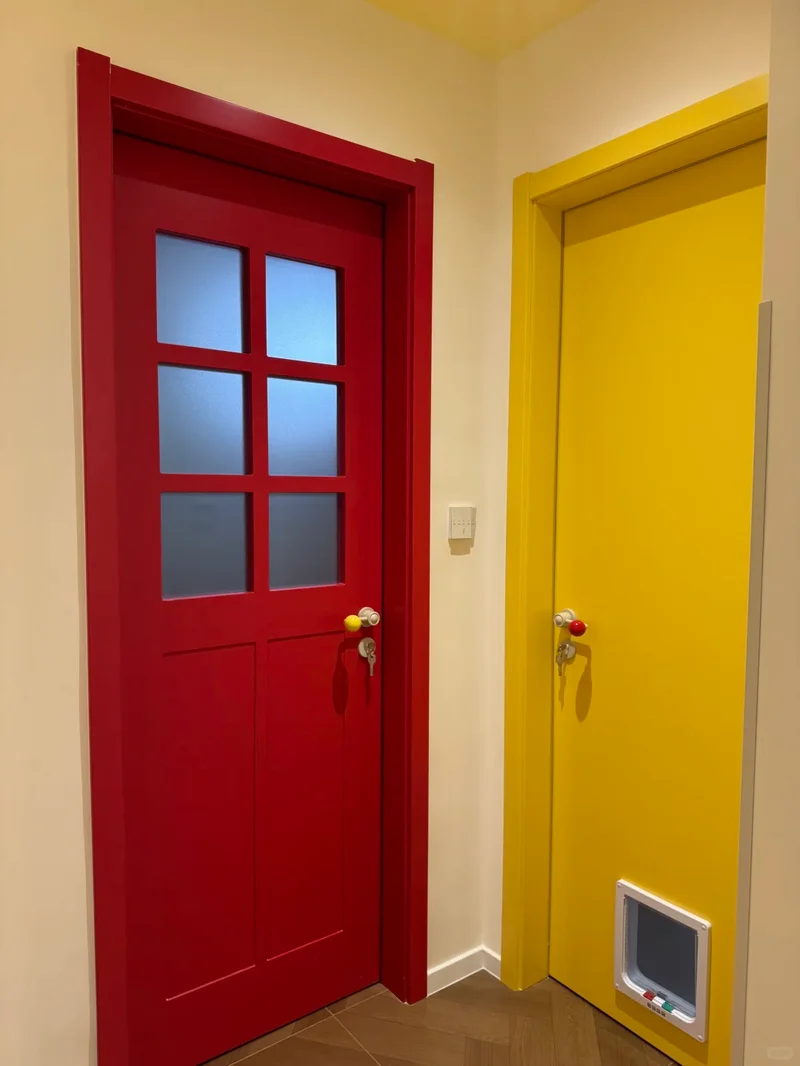
| Parameter | Test Standard | Performance Value | Notes |
|---|---|---|---|
| Fire Resistance | UL 10C / BS 476-22 | 60 min (Integrity) | Listed assembly includes specified door, frame, and hardware. |
| Core Density | ASTM D2395 | 720-780 kg/m³ | Engineered LVL/WPC hybrid core. |
| Swelling Coefficient | EN 317 | ≤ 12% (24h water immersion) | Measured on sealed door edge; critical for humidity stability. |
| Sound Reduction (STC) | ASTM E90 | 30-33 dB | Varies with core infill density and perimeter sealing. |
| Thermal Transmittance (U) | EN ISO 12567 | 1.1 – 1.3 W/m²·K | For complete door assembly. |
| Surface Hardness | ASTM D2240 (Shore D) | 75-80 | For WPC substrate material. |
Functional Advantages for Specification:
- Structural Integrity: The multi-directional LVL core maintains a moisture absorption rate below 8%, preventing torsional warping that can compromise fire seal alignment.
- Consistent Performance: ISO 9001-controlled manufacturing ensures precise intumescent sealant cavity dimensions and consistent PVC-to-wood fiber ratios in composite elements, guaranteeing repeatable fire and acoustic performance.
- Architectural Flexibility: The system supports custom veneers and finishes without requiring re-testing, provided core assembly and critical dimensions remain unaltered. All hardware preparations are factory-machined to tested specifications.
Frequently Asked Questions
How do UL-certified fire-rated wood doors prevent warping in high-humidity environments?
These doors utilize engineered LVL cores with controlled moisture content (<8%) and balanced WPC cladding (density ≥750 kg/m³). This construction, paired with full-perimeter fire seals, minimizes differential expansion. The result is dimensional stability, meeting the stringent warpage resistance criteria required for 60-minute fire integrity.
What formaldehyde emission standards do these fire-rated doors comply with?
They adhere to the strictest E0 (≤0.5 mg/L) and EN standards (≤0.124 mg/m³), verified by independent certification. This is achieved through urea-formaldehyde-free adhesives in the core and low-VOC, fire-retardant impregnation processes, ensuring indoor air quality and occupant safety in sensitive environments like hospitals and schools.
How is the 60-minute fire rating structurally maintained at the door edges?
The integrity is ensured by a proprietary intumescent seal system that expands at 200°C+ to seal gaps, combined with a mineral-reinforced, non-combustible edge banding. The LVL core is specially treated with fire-retardant salts, and the hardware is mortised into reinforced lock blocks to prevent failure during the test duration.
What level of sound insulation can be expected alongside the fire rating?
These doors achieve a sound reduction index (Rw) of up to 32 dB. This is accomplished through a dense, laminated core structure and compression seals at the head and jambs. The mass and airtight sealing required for fire performance inherently provide excellent acoustic attenuation for privacy and noise control.
Are these doors suitable for exterior applications with UV exposure?
For exterior use, specify doors with a certified exterior-grade WPC cladding (≥850 kg/m³) and a multi-layer UV-cured acrylic or PVDF coating (minimum 80µm). This provides superior weatherability, colorfastness, and resistance to thermal cycling, preventing degradation that could compromise the door’s fire-resistive assembly over time.
How does the door’s design address thermal bridging and insulation?
The core incorporates fire-rated mineral wool or ceramic fiber inserts with a low thermal conductivity (λ-value ≤0.05 W/m·K). This, combined with thermally broken thresholds and frames, significantly reduces U-values, contributing to building envelope efficiency while maintaining the required fire compartmentation.
What ensures the impact resistance and durability of the door surface?
The surface is a high-pressure laminated WPC or HPL panel with a wear layer of ≥0.7mm. This offers a scratch resistance of over 4,000 cycles (Taber test) and an impact resistance meeting ANSI 250.1998. The robust finish withstands high-traffic abuse without delaminating, preserving both aesthetics and fire integrity.