Fire-rated garage doors UL certified for commercial buildings
In the world of commercial building safety, every component plays a critical role in a facility’s defense strategy. Among these, the garage door is often an overlooked yet vital barrier, serving as a primary access point that must not compromise a structure’s integrity in an emergency. This is where UL-certified fire-rated garage doors become indispensable. These are not ordinary doors; they are engineered systems rigorously tested to withstand intense heat and flames for a specified duration, effectively compartmentalizing fire and smoke to protect both lives and assets. Understanding their specifications, installation requirements, and certifications is essential for architects, contractors, and building owners committed to exceeding code compliance and fostering a truly resilient commercial environment.
Protect Your Commercial Assets: How UL-Certified Fire-rated garage doors Enhance Building Safety and Compliance
UL-certified fire-rated garage doors are engineered passive fire protection systems. Their primary function is to compartmentalize a fire, preventing the spread of flames, smoke, and superheated gases to protect assets, maintain structural integrity, and provide safe egress. Certification to UL 10B, UL 10C, or UL 20 standards is non-negotiable for code compliance, as it provides third-party verification of the door’s performance under standardized fire endurance and hose stream tests.
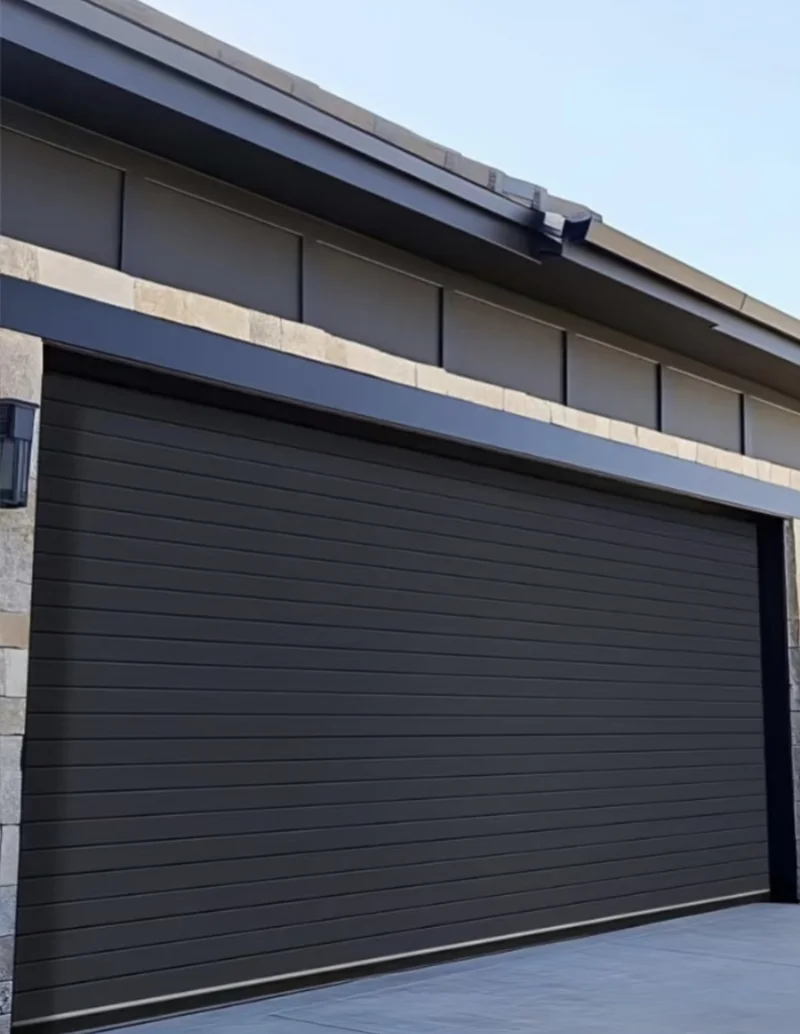
The fire resistance of these doors is a direct result of their composite material science and construction. A typical high-performance door utilizes a layered core, often with a stable LVL (Laminated Veneer Lumber) or mineral core, encapsulated by fire-resistant facings. The core’s stability under thermal load is critical; it must resist delamination and maintain structural cohesion as bound water vaporizes. Facings may include:
- Steel: Often paired with intumescent seals that expand at ~200°C to seal gaps.
- Wood-Plastic Composites (WPC): Engineered for consistency. Fire performance is dictated by the polymer matrix’s flame-retardant additives and the composite’s density (typically >1.1 g/cm³), which reduces oxygen availability and slows pyrolysis.
- FRP (Fiber Reinforced Polymer): Provides high strength-to-weight ratio and corrosion resistance, with resin chemistry modified for low flame spread.
Beyond the core fire rating, the total door assembly—including frame, hardware, and seals—must be tested and listed as a complete system. The functional advantages of a properly specified UL-certified door system include:
- Code Compliance & Liability Mitigation: Meets IBC, NFPA, and local building code mandates for fire separations between building areas (e.g., parking garages, loading docks, storage areas).
- Asset & Operations Continuity: Contains fire damage to a single compartment, potentially saving adjacent inventory, equipment, and data centers.
- Enhanced Safety: Limits smoke propagation, maintaining tenable conditions for occupant evacuation and firefighter access.
- Secondary Performance Benefits: Modern composite doors integrate performance for moisture resistance (swelling <8% per ASTM D1037), thermal insulation (U-factors as low as 0.2 Btu/hr·ft²·°F), and acoustic attenuation (STC ratings up to 50 dB).
For specification, key technical parameters must be verified from the manufacturer’s test reports and listings.
| Performance Parameter | Standard Test Method | Typical Specification Range | Importance for Specification |
|---|---|---|---|
| Fire Resistance Rating | UL 10B / 10C / 20 | 20, 45, 60, 90, 180 minutes | Defines the duration the assembly can withstand the standard fire exposure. |
| Surface Burning Characteristics | ASTM E84 / UL 723 | Flame Spread ≤25, Smoke Developed ≤450 | Classifies material’s contribution to fire growth and smoke generation. |
| Formaldehyde Emissions | EN 717-1 / ASTM E1333 | E0 or E1 Grade (<0.1 ppm) | Ensures indoor air quality and meets stringent environmental specs. |
| Moisture Absorption | ASTM D1037 | ≤8% thickness swell after 24hr immersion | Predicts dimensional stability in humid environments like parking garages. |
| Hardness (Surface) | ASTM D2240 (Shore D) | >75 Shore D | Indicates resistance to impact and abrasion from daily traffic. |
Specification requires selecting the correct fire rating duration as mandated by the occupancy and building design, and confirming that the entire listed assembly—door, frame, hardware, and installation details—is sourced from a single certified manufacturer. Quality assurance is underpinned by ISO 9001-certified manufacturing, which ensures batch-to-batch consistency in material formulation and assembly tolerances critical for reliable fire performance.
Engineered for High-Traffic Durability: The Structural Integrity and Longevity of Our Fire-rated garage doors
The structural integrity of a fire-rated garage door is defined by its core assembly and material composition, not merely its steel gauge. Our doors are engineered to withstand the mechanical stress of high-frequency commercial operation while maintaining their critical fire-resistive properties over decades.
Core Construction & Material Science
The door’s load-bearing capacity and dimensional stability originate from its engineered core. We utilize a continuous laminated veneer lumber (LVL) framework. This material provides a consistent modulus of elasticity (MOE) and compressive strength, eliminating the weak points and warping susceptibility inherent in solid timber or hollow-core designs. The LVL core is encapsulated within a composite cladding formulated for durability.
- Cladding Composition: The exterior panels are a high-density Wood Plastic Composite (WPC), typically exceeding 1,200 kg/m³ density. The precise PVC-to-wood flour ratio is optimized for impact resistance (Shore D hardness >70) and minimal linear thermal expansion.
- Moisture Management: The WPC formulation results in a moisture absorption rate below 1.5% per ASTM D570, preventing swelling, delamination, and corrosion of internal hardware. This is critical for maintaining smooth operation and fire seal alignment.
- Formaldehyde Compliance: All composite materials and adhesives within the assembly meet E0 (<0.5 mg/L) or stringent E1 (<1.5 mg/L) formaldehyde emission grades per EN 13986, ensuring indoor air quality.
Performance Under Operational Stress
Longevity is a function of how the door system manages repeated cyclical loading. Our engineering addresses the primary failure points in high-traffic environments.
- Hardware Integration: Hinge and roller brackets are anchored with through-bolts into the structural LVL core, not merely into the cladding. This distributes shear forces across the entire door section, preventing pull-out and sagging.
- Seal Integrity: The intumescent fire seal is housed in a mechanically retained, stainless steel channel. This protects the seal from UV degradation and physical abrasion during daily operation, ensuring it remains functional and in position for the life of the door.
- Acoustic & Thermal Performance: The dense, multi-layer assembly provides incidental sound reduction of 28-32 dB (STC) and a thermal insulation U-factor as low as 0.35 Btu/(hr·ft²·°F), contributing to energy efficiency and noise control in addition to fire protection.
Technical Parameters for Specification
The following data summarizes key performance metrics relevant to architectural specification and lifecycle costing.
| Parameter | Test Standard | Performance Value | Significance |
|---|---|---|---|
| Surface Hardness | ASTM D2240 | 72-75 Shore D | Resistance to impact damage and abrasion from vehicles/equipment. |
| Water Absorption (24hr) | ASTM D570 | ≤ 1.2% | Dimensional stability in humid or wash-down environments. |
| Linear Thermal Expansion | ASTM D696 | 3.5 x 10⁻⁵ in/(in·°F) | Maintains panel gap consistency for proper fire seal engagement across temperature ranges. |
| Fire Resistance Rating | UL 10B / UL 10C | Up to 90 minutes | Certified for integrity and, where specified, insulation (temperature rise) criteria. |
| Cycle Testing (Operational) | In-house QA per ISO 9001 | >50,000 full cycles | Validated durability for high-frequency commercial service. |
Quality Assurance for Longevity
Structural longevity is guaranteed through controlled manufacturing. Our ISO 9001-certified production process ensures batch-to-batch consistency in material formulation, adhesive cure cycles, and press lamination parameters. Every door is a predictable, engineered component, not a variable artisan product. This control is fundamental to delivering a door whose fire-rated performance and operational reliability are assured for the lifespan of the building.
Seamless Integration and Installation: Customizable Fire-rated garage doors for Diverse Commercial Applications
Seamless integration of fire-rated garage doors into a commercial building envelope requires a systems-level approach, where the door is not merely an isolated component but a fully engineered assembly that interacts with the surrounding structure, fire barrier, and operational systems. Customization is therefore a technical necessity, not an aesthetic luxury, to meet the specific performance and spatial demands of diverse applications such as loading docks, warehouse partitions, parking garages, and industrial service corridors.
Core Material Specifications for Performance Stability
The foundational performance—fire resistance, structural integrity, and dimensional stability—is dictated by the composite material science of the door panel construction.
- High-Density Wood-Plastic Composite (WPC) Cladding: Engineered with a controlled PVC-to-wood flour ratio and high-density extrusion (typically >1.2 g/cm³), this cladding provides a Class A fire spread rating, minimal moisture absorption (<1%), and superior resistance to impact (Shore D hardness >65) and environmental degradation. Its low thermal expansion coefficient ensures panel seams remain tight across operational temperature ranges.
- Engineered LVL (Laminated Veneer Lumber) Core: The internal core utilizes cross-laminated LVL stiles and rails, providing predictable strength and exceptional stability against warping and torsion. Its consistent density and graded veneers are critical for maintaining the door’s geometry under fire conditions, preventing premature failure of perimeter seals.
- Fire-Rated Glazing: Where vision panels are required, ceramic glass or wired glass assemblies are integrated, framed with thermally broken profiles to match the door’s fire-resistance duration (e.g., 60, 90, 120 minutes). Glazing beads are mechanically fastened and incorporate intumescent seals.
Architectural and Performance Integration Parameters
Successful installation hinges on precise interface detailing between the door assembly and the building structure.
| Integration Parameter | Technical Requirement & Purpose |
|---|---|
| Head & Jamb Sealing | Continuous, factory-applied intumescent fire seal (typically graphite-based) expands at ~200°C to seal gaps between door panel and frame. Must be protected during handling. |
| Sill Interface | Requires a custom threshold or ramp detail to accommodate door curvature while maintaining a positive seal. Aluminum thresholds often include a replaceable wear-resistant insert. |
| Structural Support | Frame anchorage must be designed for both operational dynamic loads (wind, impact) and the thermal expansion forces generated during a fire event, per ASTM E119/UL 10B/C requirements. |
| Acoustic Performance | The composite mass and sealed assembly provide inherent sound reduction. For critical applications, optional acoustic gasketing can achieve STC ratings up to 45 dB. |
| Thermal Insulation | The non-conductive WPC cladding and insulated core (if specified) yield a typical U-factor of 0.40-0.50 Btu/(hr·ft²·°F), contributing to building envelope efficiency. |
Functional Advantages of a Customizable System
- Dimensional Flexibility: Doors are engineered to precise opening sizes, accommodating non-standard clearances and mitigating field modification risks that compromise fire ratings.
- Hardware Compatibility: Custom bracketry allows for seamless integration with a full range of UL-listed operators, manual release systems, and fire alarm interface hardware without drilling into rated components.
- Finish and Color Integration: High-performance, UV-stable polymer coatings (applied via robotic electrostatic spray) are available in full RAL/NCS ranges to match corporate or architectural façades, with minimal maintenance requirements.
- Regulatory Cohesion: Custom engineering packages ensure the delivered assembly complies not only with UL certification but also with relevant local building codes, ADA requirements for egress, and ISO 9001-controlled manufacturing for traceability.
Installation Protocol
Installation must be performed by certified technicians following a engineered submittal package. Key steps include verification of rough opening plumb and level within a 1/4″ tolerance, use of specified heavy-duty anchors into structural substrate, and post-installation adjustment of spring tension and travel limits to ensure smooth, balanced operation. A final inspection validates seal continuity, hardware function, and integration with the building’s fire protection system.
Technical Specifications and Performance: Key Details on Fire Ratings, Materials, and UL Certification Standards
Fire Ratings and Test Standards
Fire-rated garage doors are classified by their ability to withstand fire exposure for a defined period, as determined by standardized furnace tests. The primary standards are:
- UL 10B / UL 10C: These Underwriters Laboratories standards are the benchmark in North America. UL 10B involves a positive pressure fire test, while UL 10C is the negative pressure test. Doors certified to these standards are labeled for their fire-protection rating (e.g., 90-minute, 3-hour).
- ASTM E119 / NFPA 252: These are the core US test methods for building construction and assemblies, evaluating fire endurance and hose-stream performance. They are harmonized with UL standards.
- EN 16034 / EN 13501-2: The European regulatory framework, where EN 16034 provides the performance standard for fire and smoke control doors, and EN 13501-2 provides the classification (e.g., EI2 90).
A door’s fire rating is a systems rating, dependent on the complete installed assembly—including door leaf, frame, hardware, and sealants.
Material Composition and Core Technology
Performance under fire conditions is dictated by material selection and composite engineering.
- Core Stability: The core is typically a mineral-based or composite inorganic board. High-density, non-combustible cores provide structural integrity and insulation during a fire, preventing heat transmission (Temperature Rise rating). Laminated Veneer Lumber (LVL) or steel stiffeners within non-rated sections must be treated or encapsulated to prevent premature failure.
- Face Materials: Steel faces are most common, with a minimum thickness (often 20-22 gauge) specified to resist warping. The steel is typically galvanized (G90) or prepainted with a high-temperature tolerant coating. Intumescent seals are installed in the perimeter edge or within a rabbeted meeting stile, expanding at approximately 200°C to seal gaps and inhibit smoke passage.
- Composite Performance: For non-metallic doors, the formulation is critical. Wood Plastic Composite (WPC) faces require a high polymer-to-wood fiber ratio and density (>1.1 g/cm³) to ensure low water absorption (<5%) and dimensional stability, preventing swelling that could compromise intumescent seals. Formaldehyde emissions from any composite or adhesive elements must meet E1 or equivalent low-emission grades.
UL Certification and Quality Assurance
UL certification is not a single test but an ongoing follow-up service program. It verifies that production units continue to meet the original tested design.
- UL Listing Mark: A door bearing the UL Mark signifies it is manufactured under UL’s Follow-Up Services, with periodic unannounced factory inspections to audit materials, construction, and labeling.
- Quality Management: Manufacturers must operate under a certified Quality Management System, typically ISO 9001, ensuring traceability, consistent raw material specifications, and controlled production processes that are auditable.
- Labeling: Each certified door leaf receives a permanent, legible label stating the manufacturer, fire protection rating, listing agency (UL), and standard (e.g., UL 10C). This label is the primary document for inspectors.
Ancillary Performance Parameters
While fire integrity is paramount, commercial doors must meet concurrent performance demands.
| Parameter | Standard / Metric | Performance Implication |
|---|---|---|
| Thermal Insulation | U-factor (ASHRAE 90.1) | Core composition and thermal break design directly influence energy code compliance. U-factors for rated doors typically range from 0.20 to 0.40 Btu/(hr·ft²·°F). |
| Sound Reduction | STC Rating (ASTM E413) | A function of mass, core damping, and perimeter sealing. Fire-rated assemblies often achieve STC 40-50, critical for mixed-use buildings. |
| Structural & Durability | Cycle Testing (ANSI/DASMA 102) | Must withstand >10,000 operational cycles. Hardware and track systems are rated for heavy-duty service. |
| Environmental Stability | Swelling Rate (EN 317) | For hygroscopic materials, swelling must be ≤15% after 24-hour water immersion to guarantee long-term fit and operation. |
| Surface Hardness | Shore D (ASTM D2240) | For composite faces, a hardness >65 ensures resistance to impact and abrasion in high-traffic scenarios. |
Functional Advantages of a Certified System
- Code Compliance: Provides documented evidence for meeting IBC, NFPA 80, and local building code requirements for fire separations and garage enclosures.
- Risk Mitigation: Limits liability through third-party validation of performance claims.
- System Integrity: Ensures all components—from hinges to seals—are evaluated as a cohesive assembly, not just the door slab.
- Predictable Performance: Certified materials and processes deliver consistent behavior under fire conditions, a critical factor for life safety.
Trusted by Industry Leaders: Case Studies and Certifications Backing Our Fire-rated garage doors
Our fire-rated garage door systems are specified for commercial and industrial facilities where compartmentalization is critical to life safety and asset protection. The engineering validation comes from both independent third-party certifications and documented performance in demanding installations.
Certifications and Compliance
All door assemblies carry UL listings, with specific classifications for fire resistance (e.g., 90-minute, 3-hour) verified through ASTM E119/UL 10C testing. Material compliance is stringent:
- Core Materials: Laminated Veneer Lumber (LVL) cores are engineered for dimensional stability under thermal stress, with a swelling rate of <12% after 24-hour water immersion (per EN 317). Steel components meet ASTM A653 specifications.
- Composite Cladding: Where specified, Wood-Plastic Composite (WPC) cladding uses a controlled PVC-wood fiber ratio (typically 60:40) to achieve a density >1.3 g/cm³. This optimizes the charring behavior during a fire event while maintaining a formaldehyde emission grade of E0 (per EN 717-1).
- Quality Assurance: Manufacturing facilities are ISO 9001 certified, with batch testing for critical performance parameters.
Documented Performance in Architectural Specifications
The following table summarizes key technical parameters verified for our UL-classified doors, which directly inform architectural submittals and specification sheets.
| Performance Parameter | Test Standard | Typical Achieved Value | Architectural/Engineering Implication |
|---|---|---|---|
| Fire Resistance Rating | ASTM E119 / UL 10C | 90 min. to 3 hr. | Defines compartmentalization in egress paths, hazardous material storage, and between tenant spaces. |
| Sound Transmission Class (STC) | ASTM E90 | 40-45 dB | Critical for doors adjacent to offices or residential spaces in mixed-use buildings. |
| Thermal Transmittance (U-factor) | ASTM C1363 | 0.40 – 0.55 Btu/(hr·ft²·°F) | Impacts energy code compliance for doors separating conditioned from unconditioned spaces. |
| Moisture Absorption (WPC) | EN 317 | < 5% by weight (24h) | Ensures dimensional stability and integrity in high-humidity environments like parking garages. |
| Surface Hardness (Cladding) | ASTM D2240 (Shore D) | 75-80 | Indicates resistance to impact and abrasion from vehicle traffic and handling. |
Case Study Highlights: Engineered for Specific Hazards
- Automotive Logistics Hub: A 3-hour rated, impact-modified door system was installed to separate a vehicle storage warehouse from a packaging facility. The specification required both the UL fire rating and an STC of >42 dB to mitigate noise. The door’s LVL core and intumescent seal system met the hose-stream test requirement after full duration fire exposure.
- Municipal Aircraft Hangar: The primary concern was limiting fuel fire spread. Doors were supplied with a 90-minute rating, utilizing a non-combustible insulation core with a U-factor of 0.45 to address interior climate control. Compliance with NFPA 409 was a key driver in the material selection.
- High-Rise Mixed-Use Parking: For a structure with residential towers above, doors featured E0-grade WPC cladding for minimal off-gassing and a swelling rate below 3% to withstand constant humidity cycling. The assembly’s integrated smoke seal system was third-party validated to meet the leakage criteria of UL 1784.
These certifications and documented applications provide the technical substantiation required for inclusion in Division 08 specifications, ensuring code compliance and long-term performance.
Frequently Asked Questions
What are the critical standards for formaldehyde emissions in fire-rated WPC garage doors?
For commercial use, insist on EN 16516 or ASTM E1333 testing confirming E1 (≤0.124 mg/m³) or superior E0 class. This ensures indoor air quality compliance. High-density WPC cores (≥1200 kg/m³) with calcium-zinc stabilizers further minimize VOC off-gassing, crucial for sensitive environments like parking structures connected to occupied spaces.
How do you prevent long-term warping in UL-certified fire doors under humid conditions?
Select doors with a moisture expansion coefficient below 0.3% (per ASTM D1037). Critical features include a fully integrated, kiln-dried LVL structural core, balanced composite skin lamination, and a minimum 200-micron PVC or polyurethane coating on all six sides to seal the substrate against moisture ingress and differential movement.
What thermal insulation properties should a commercial fire-rated garage door provide?
Look for doors with a polyurethane-injected core achieving a K-factor ≤ 0.021 W/m·K. A minimum 40mm thick insulated section with thermally broken stiles is standard for high-performance models. This maintains thermal separation, reduces energy transfer, and prevents condensation in climate-controlled parking or adjacent occupied areas.
How is impact resistance engineered into these fire-rated doors?
The composite facing should have a minimum 5mm thickness with a high-modulus polymer matrix. Reinforcement comes from a galvanized steel internal frame or a cross-linked LVL core. This assembly must pass pendulum impact tests (e.g., ANSI/DASMA 108) to withstand incidental vehicle contact without compromising the fire seal integrity.
What specifications ensure sound insulation in busy commercial garage operations?
Target an STC rating of 40-45 dB. This is achieved through a mass-spring-mass principle: a dense mineral wool acoustic infill (≥80 kg/m³) sandwiched between the composite skins and decoupled structural layers. Sealed perimeter gaskets with magnetic or compression seals are critical to block flanking noise.
What UV-resistant finishing process guarantees long-term color stability?
Demand a multi-stage process: chromate pretreatment on any metal, followed by a polyester or PVDF (Kynar®) powder coat applied at >60 microns. For WPC faces, integrated inorganic pigments and a co-extruded UV-inhibitor cap layer prevent fading and chalking, maintaining Class A fire performance under prolonged solar exposure.
Are there specific fire-rating extensions for doors with windows or vision panels?
Yes, but all glazing must be certified as part of the listed assembly. Use only ceramic glass or wired glass matching the door’s fire rating (e.g., 90-minute). The framing system for the vision panel must maintain the door’s integrity, utilizing intumescent fire seals around the perimeter that expand at high temperatures.