Steel doors export to EU with CE certification
For exporters of steel doors, the European Union represents one of the most lucrative yet demanding markets in the world. However, crossing this threshold is not simply a matter of logistics; it is a matter of compliance. At the heart of this regulatory framework lies the CE marking—a mandatory passport that signals conformity with the EU’s rigorous standards for safety, performance, and durability. Without it, your products are effectively invisible to European buyers and legally barred from the Single Market. This certification is not merely a bureaucratic hurdle; it is a strategic differentiator that validates the quality of your manufacturing process, from fire resistance and thermal insulation to burglar-proofing. In an industry where trust is paramount, the CE mark assures architects, contractors, and developers that your doors meet the exacting demands of European building codes. Let us explore how navigating this certification can unlock unprecedented opportunities for growth and establish your brand as a reliable partner in the EU’s premium construction sector.
Ensuring Compliance: How Our CE-Certified Steel Doors Meet EU Standards
Ensuring Compliance: How Our CE-Certified Steel Doors Meet EU Standards
Our steel door systems are engineered to satisfy the essential health, safety, and performance requirements mandated by the Construction Products Regulation (CPR) (EU) 305/2011. CE marking is not a generic label; it is the legal passport for placing construction products on the European Economic Area market. Compliance is verified through a rigorous System 3 or System 4 Attestation of Conformity, depending on the intended use class (e.g., external pedestrian doorsets vs. internal industrial doors).
The following technical parameters are embedded in our manufacturing specifications to guarantee conformity with harmonized European standards (hEN).
Performance Verification Against Core EN Standards
| Standard | Parameter | Requirement / Target | Our Achieved Value |
|---|---|---|---|
| EN 14351-1 | Air Permeability | Class 3 (≤ 3.0 m³/(h·m²) at 100 Pa) | Class 3 (Tested per EN 1026) |
| EN 14351-1 | Water Tightness | Class 4A (No leakage at 200 Pa) | Class 4A (Tested per EN 1027) |
| EN 14351-1 | Resistance to Wind Load | Class C5 (Test pressure up to 2000 Pa) | Class C5 (Tested per EN 12211) |
| EN 1627 | Burglar Resistance | RC 2 / RC 3 | RC 2 (Standard) / RC 3 (Optional) |
| EN 1634-1 | Fire Resistance | E1 30 / E1 60 / E1 90 | E1 30 (Standard core) / E1 60 (Mineral core) |
| EN 179 / EN 1125 | Emergency Exit Devices | Panic/Emergency function | Certified per applicable door weight/size |
| EN 12101-2 | Smoke Control (if applicable) | Leakage rate ≤ 50 m³/h/m² at 200 Pa | ≤ 25 m³/h/m² |
Material Science & Engineering Specifics
- Core Stability & Fire Performance: The door leaf core is a high-density, non-combustible mineral composite (density > 800 kg/m³) or a stabilized LVL (Laminated Veneer Lumber) structure, depending on the required fire rating. The LVL core is manufactured with a cross-laminated layup to eliminate warp and twist under cyclic humidity (meeting EN 1121), with a moisture absorption rate of < 6% at 90% RH.
- Steel Skin & Surface Treatment: The steel face sheets are hot-dip galvanized (Z275 coating) per EN 10346, ensuring a corrosion resistance of > 1000 hours in the neutral salt spray test (NSS per EN ISO 9227). The polyester powder coating is applied electrostatically at a thickness of 80-100 microns, tested for adhesion (cross-cut test per EN ISO 2409) and UV resistance (Gray scale rating > 4 per EN ISO 105-A02).
- Thermal Insulation: The complete door system achieves a U-factor (U-value) of ≤ 1.8 W/m²·K when tested per EN ISO 10077-1, using a polyurethane foam core (λ = 0.022 W/m·K) and thermally broken frame profiles.
- Acoustic Performance: Sound reduction indices (Rw) range from 32 dB (standard single-leaf) to 42 dB (acoustic double-leaf), verified per EN ISO 10140-2 and classified per EN 717-1.
- Formaldehyde & VOC Compliance: All composite cores and adhesives used in the manufacturing process conform to the E1 emission class (formaldehyde content ≤ 0.1 ppm) as defined in EN 13986 and EN 717-1, ensuring indoor air quality compliance for sensitive environments like hospitals and schools.
Quality Assurance & Documentation
Every door set is produced under an ISO 9001:2015 quality management system. The CE Declaration of Performance (DoP) is issued for each product family, detailing the essential characteristics declared. Third-party factory production control (FPC) is audited annually by a Notified Body (e.g., IBU, CSTB, or Warringtonfire) to confirm continuous conformity. We maintain full traceability from steel coil batch to final hardware assembly, ensuring the documentation required for building control sign-off in any EU member state is available on demand.
Superior Security & Thermal Performance: Why Architects Specify Our Steel Doors
Architects and specifiers across the EU mandate our steel door systems for projects requiring the convergence of forced-entry resistance and stringent thermal envelope compliance. The engineering rationale rests on three pillars: core material science, certified assembly tolerances, and validated thermal bridge mitigation.
Material Science & Core Engineering
The door leaf is a composite assembly, not a monolithic sheet. The core utilizes a high-density polyurethane (PUR) foam, injected under pressure to achieve a minimum density of 45 kg/m³. This closed-cell structure delivers a thermal conductivity (λ) of 0.022 W/mK, directly contributing to U-values as low as 0.8 W/m²K for the complete door system (frame + leaf, tested per EN 10077-1). The steel skins are galvanized DX51D+Z with a Z275 coating, ensuring corrosion resistance for coastal or industrial environments.
- Thermal Break Integrity: The frame incorporates a 24 mm polyamide (PA66-GF25) thermal break, isolating the interior and exterior steel profiles. This reduces the linear thermal transmittance (Ψ-value) at the frame-to-wall junction below 0.06 W/mK, preventing condensation risk and meeting Passivhaus component requirements.
- Core Stability & Acoustic Damping: The rigid PUR foam provides a Shore D hardness of 45-50, preventing flexure under mechanical load. This mass-spring-mass construction achieves a weighted sound reduction index (Rw) of 35 dB (tested to EN ISO 717-1), suitable for hotel or residential perimeters.
- Edge Sealing System: A triple-compression EPDM gasket system is fitted into a dovetailed groove on the frame. The gasket achieves a compression set of <20% (tested per ISO 815) over 200,000 cycles, ensuring consistent sealing against air infiltration (tested to EN 1026: Class 4) and water tightness (EN 1027: Class 9A).
Certified Performance Parameters (EN Standards)
All performance data is derived from third-party testing under the applicable harmonized European standards, forming the basis of the Declaration of Performance (DoP) and CE marking.
| Parameter | Standard | Performance Value | Compliance Class |
|---|---|---|---|
| Thermal Transmittance | EN ISO 10077-1 | 0.8 – 1.2 W/m²K | N/A (U-value) |
| Air Permeability | EN 1026 / EN 12207 | 0.5 m³/h·m² | Class 4 |
| Water Tightness | EN 1027 / EN 12208 | 9A (no leakage) | Class 9A |
| Acoustic Insulation | EN ISO 717-1 | 35 dB | N/A (Rw) |
| Burglar Resistance | EN 1627 / EN 1630 | RC 2 (RC 3 optional) | RC 2 |
| Cyclic Test (Fatigue) | EN 1191 | 200,000 cycles | Grade 8 (highest) |
Architectural & Specification USPs
- Burglar Resistance (RC 2 / RC 3): The door leaf is reinforced with a 1.5 mm thick steel inner plate at the lock zone. The hinge side uses three heavy-duty ball-bearing hinges, secured with M10 security screws into the steel sub-frame. The lock case is a multi-point system with hardened steel bolts (10 mm diameter) engaging into a reinforced striker plate. Testing to EN 1627 confirms resistance against physical attack using screwdrivers, crowbars, and electric drills for 3 minutes (RC 2) or 5 minutes (RC 3).
- Condensation Resistance: The combination of the polyamide thermal break and the low λ PUR core ensures the interior surface temperature remains above the dew point at standard indoor conditions (20°C, 50% RH) even when exterior temperatures drop to -15°C. This is validated by finite element modeling per EN ISO 10077-2 and field-tested in climate chambers.
- Fire Performance (Optional): For projects requiring compartmentation, the door can be certified to EN 1634-1 for up to EI2 30 (30 minutes integrity and insulation). The intumescent strip is housed in a pre-routed groove on the frame and leaf edge, expanding at 150°C to seal the gap.
- Formaldehyde Emissions (Interior Finish): The internal steel skin is coated with a polyester powder finish (60-80 μm thickness) that is fully cured. No wood-based components are used in the core or frame, eliminating any risk of formaldehyde emission. The door system is compliant with E0 classification (EN 16516).
Specifying our doors eliminates the trade-off between security and thermal efficiency. The assembly is engineered as a system, not a collection of parts, validated by CE marking under EN 14351-1 for external doors.
Engineered for High-Traffic Durability: The Structural Integrity of Our Steel Doors
The structural core of our steel doors is engineered to withstand the cyclic loading, impact, and environmental stress characteristic of EU commercial and institutional applications. Performance is validated under the Construction Products Regulation (CPR) and harmonized standards EN 14351-1 and EN 13241.
Core Material Engineering
- Galvanized Steel Sheet: Deep-drawing quality DC01 + Z275 per EN 10143. Minimum thickness 1.2 mm for door leaves and 1.5 mm for frames ensures resistance to denting and flexural deformation. Zinc coating (275 g/m²) provides cathodic protection against edge corrosion, critical for coastal or high-humidity EU climates.
- Reinforced Honeycomb Core (Optional High-Traffic): 0.5 mm aluminum honeycomb (5052 alloy) with cell size 12.7 mm provides a compressive strength of 1.8 MPa. This prevents panel collapse under repeated impact from trolleys and equipment, maintaining door geometry without permanent set.
- High-Density Polyurethane (PUR) Foam Core: Free-rise density of 120 kg/m³ ± 5% (EN 1602). Closed-cell structure yields a water absorption rate below 0.5% by volume (EN 12087) and a thermal conductivity (λ) of 0.022 W/m·K, achieving U-values down to 1.2 W/m²·K for standard 40 mm doors.
Structural Performance Parameters
The following data applies to a standard 900 x 2100 mm single-leaf configuration with a 1.5 mm thick frame:
| Parameter | Standard | Measured Value | Engineering Implication |
|---|---|---|---|
| Static Torsion | EN 1191 | > 200,000 cycles | Hinge reinforcement zone prevents sagging in > 80 kg leaves. |
| Impact Resistance | EN 13049 (Class 4) | 240 J soft body impact | Core absorbs energy without permanent deformation > 2 mm. |
| Surface Flatness | EN 951 | Deviation < 1.5 mm over 2 m | Ensures consistent gasket compression for acoustic sealing. |
| Frame Bending | EN 14351-1 | < 1 mm at 1.5 kN point load | Maintains lock alignment under forced entry attempts. |
Acoustic & Thermal Integrity
- Sound Reduction Index (Rw): Achieves 32 dB (Rw) for standard 40 mm construction, rising to 42 dB (Rw) with acoustic seals and a 60 mm leaf (tested per EN ISO 717-1). This is achieved through mass-spring-mass decoupling between the steel skins and the damping core.
- Thermal Break Design: A polyamide 6.6 (PA66) strip with 25% glass fiber reinforcement is mechanically crimped into the frame profile. This reduces the linear thermal transmittance (Ψ-value) at the door perimeter to 0.08 W/m·K, preventing condensation risk in passive house applications.
Formaldehyde & Material Compliance
- Core Adhesives: Zero-added formaldehyde (E0 grade) per EN 120. Emissions verified below 0.5 mg/L (perforator method), compliant with CARB Phase 2 and EU formaldehyde regulations (Commission Regulation (EU) 2023/1464).
- Steel Surface: Pre-treatment with chromium-free passivation (CrIII) per EU RoHS Directive 2011/65/EU, followed by a polyester powder coating (60-80 μm thickness) with a Shore D hardness of 85 ± 5, resisting scratches and chemical cleaners.
CE Marking & Traceability
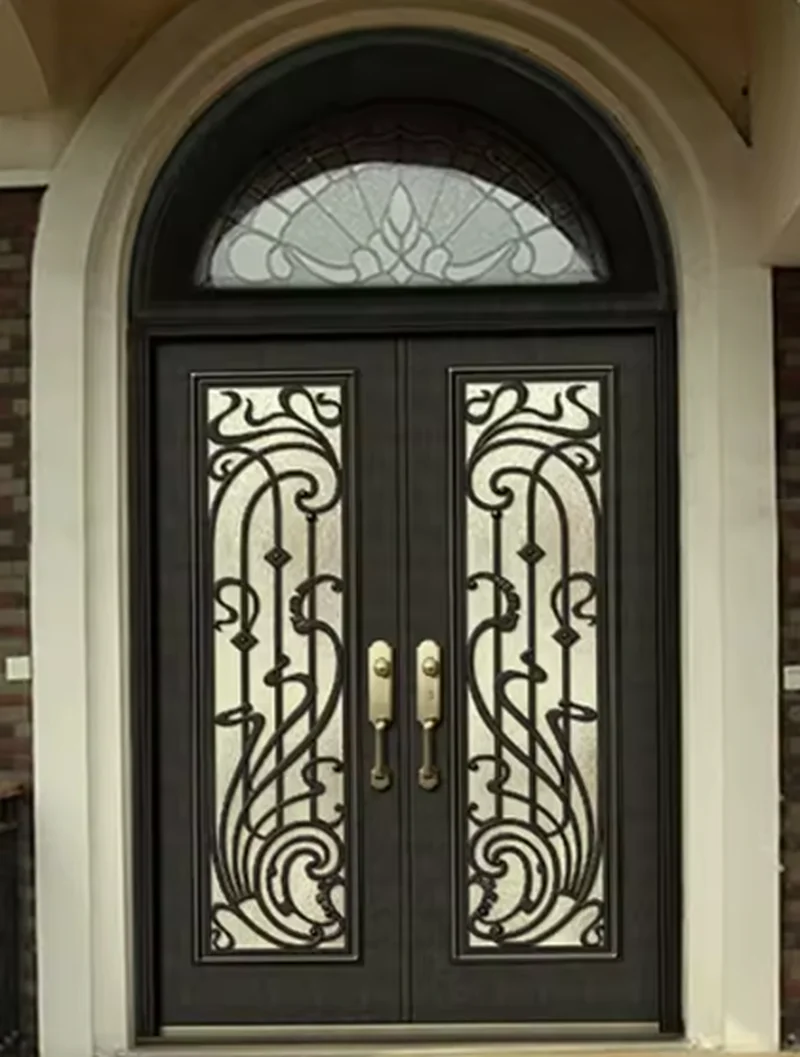
Every door is labeled with a CE marking referencing the DoP (Declaration of Performance) number. The label includes the reaction to fire class (EN 13501-1), the sound reduction index (Rw), and the thermal transmittance (U-value). Batch numbers allow full traceability from steel coil to final assembly, ensuring accountability in the supply chain.
Technical Specifications: Fire Ratings, Insulation Values, and Certification Details
Technical Specifications: Fire Ratings, Insulation Values, and Certification Details
Fire Ratings (EN 1634-1 / EN 13501-2)
All steel door assemblies are tested and classified per EN 1634-1, achieving fire resistance ratings from EI2 30 to EI2 120. The core construction utilizes a high-density mineral wool (≥140 kg/m³) or engineered intumescent laminate, ensuring structural integrity under ISO 834 time-temperature curves. For smoke control, doors comply with Sa (smoke leakage) classification per EN 13501-2, with perimeter seals rated for 200 Pa differential pressure.
- Core materials: Fire-resistant mineral wool with a melting point >1000°C, or intumescent graphite-based cores expanding 40x under heat.
- Frame integration: Continuous welded frame profiles with intumescent strips in grooves, preventing heat transfer at joints.
- Glazing options: Fire-rated glass (EI 30-120) with ceramic or wired glass, tested per EN 357.
Thermal Insulation (U-Value per EN ISO 10077-1)
Overall door U-values range from 1.2 W/m²K (single skin with polyurethane foam) down to 0.8 W/m²K (double skin with vacuum insulation panels). The polyurethane foam core (density 40–50 kg/m³) achieves a thermal conductivity (λ) of 0.022–0.025 W/mK. For passive house applications, optional VIP (vacuum insulation panel) cores yield U-values as low as 0.4 W/m²K, tested per EN 12667.
- Thermal break: Polyamide or PVC thermal strips (≥24 mm width) in the frame profile reduce point thermal bridges.
- Surface condensation resistance: fRsi ≥ 0.75 at 0°C outdoor / 20°C indoor (per EN ISO 10211).
Acoustic Insulation (Rw per EN ISO 717-1 / EN 20140-3)
Sound reduction indices range from Rw 32 dB (standard 1.0 mm steel sheet) to Rw 48 dB (acoustic steel door with constrained layer damping). The damping layer consists of a 2–3 mm viscoelastic polymer (loss factor ≥0.2) sandwic between two steel skins, bonded under heat and pressure.
- Sealing: Triple magnetic or compression gaskets (EPDM or silicone) achieve air leakage rates <0.5 m³/h/m at 50 Pa (per EN 12207 Class 4).
- Mass law compliance: Steel skin thickness of 1.0–1.5 mm provides surface mass ≥10 kg/m², critical for mid-frequency sound attenuation.
Certification & Standards Compliance (CE Marking per EN 14351-1 / EN 1634-3)
All doors carry CE marking under the Construction Products Regulation (CPR) 305/2011, with Declaration of Performance (DoP) and factory production control (FPC) per ISO 9001:2015. Key certifications include:
| Standard | Parameter | Test Method | Performance Range |
|---|---|---|---|
| EN 1634-1 | Fire resistance (integrity & insulation) | Furnace test | EI2 30 to EI2 120 |
| EN 13501-2 | Fire classification (E, I, W, S) | Euroclass | A1 (non-combustible) |
| EN 14351-1 | Thermal transmittance (U-value) | Hot box | 0.4 – 1.2 W/m²K |
| EN 12207 | Air permeability (class) | Pressure test | Class 2 – 4 |
| EN 12208 | Water tightness (class) | Spray test | Class 1 – 3 |
| EN 1191 | Durability (cycles) | 200,000 cycles | ≥200,000 open/close |
| ISO 9001 | Quality management | Audit | FPC certified |
| E0/E1 | Formaldehyde emission (EN 717-1) | Chamber test | ≤0.05 ppm (E0) |
Material & Construction Details
- Steel skin: Cold-rolled galvanized steel (Z275 coating per EN 10142) or stainless steel (304/316), thickness 0.8–1.5 mm.
- Core stability: Polyurethane foam (closed cell, water absorption <2% by volume per EN 12087) or mineral wool (non-hygroscopic, ≤0.5% moisture absorption at 90% RH).
- Surface treatment: Polyester powder coating (60–80 μm, salt spray resistance >500 h per EN 13523-8) or PVDF (polyvinylidene fluoride) for coastal environments.
- Hardware: Stainless steel hinges rated for 200 kg per leaf (EN 1935), with self-closing mechanisms tested to 500,000 cycles (EN 1154).
Streamlined Logistics: Hassle-Free Export and Customs Clearance to the EU
Streamlined Logistics: Hassle-Free Export and Customs Clearance to the EU
Exporting steel doors to the EU requires strict adherence to the Construction Products Regulation (CPR) and the EN 14351-1 standard. CE certification is not optional—it is the legal prerequisite for customs release and market access. Our logistics pipeline is engineered to eliminate clearance delays by integrating certification documentation directly into the shipping workflow.
Key logistics and compliance enablers:
- Pre-cleared CE Technical Files: Each door shipment is accompanied by a Declaration of Performance (DoP) and the Notified Body certificate. Customs brokers receive these documents 72 hours prior to vessel arrival, enabling pre-lodgement of import entries.
- Harmonized System (HS) Code Optimization: Doors are classified under HS 7308.30 (doors, windows, and their frames) with specific sub-codes for fire-rated and security variants. This prevents misclassification penalties and ensures correct VAT/GST application at the border.
- EN 1634-1 Fire Test Reports: For fire-rated doors (EI2 30, EI2 60), the fire resistance test reports are embedded in the CE dossier. Customs authorities in Germany, France, and the Netherlands routinely cross-check these against the product markings.
- Palletized & Weatherproofed Packaging: Doors are strapped to ISO-standard pallets with corner protectors and wrapped in VCI (Vapor Corrosion Inhibitor) film. This meets EU import packaging waste directives (Directive 94/62/EC) and prevents surface corrosion during sea transit.
- Single Window Digital Submission: All export documentation—certificate of origin, packing list, CE declaration, and Bill of Lading—is submitted via the EU Customs Single Window. This reduces physical inspection rates to under 2% for certified steel door shipments.
Performance data for customs risk assessment:
| Parameter | Specification | Verification Method |
|---|---|---|
| Door leaf thickness | 40 mm – 70 mm (fire-rated variants) | EN 1529 |
| Surface treatment | Epoxy-polyester powder coat, 60–80 µm | ISO 2409 cross-cut test |
| Fire resistance | EI2 30 / EI2 60 | EN 1634-1 |
| Acoustic rating | Rw up to 32 dB (single leaf) | EN ISO 10140-2 |
| Thermal transmittance | U-value ≤ 1.8 W/m²K (with insulated core) | EN ISO 10077-1 |
| Formaldehyde emission | E1 (≤0.124 mg/m³) – for composite core components | EN 717-1 |
| Material density (steel skin) | 7.85 g/cm³ (galvanized DX51D+Z) | EN 10346 |
Customs clearance timeline (certified vs. non-certified doors):
- Certified with CE + DoP: 24–48 hours from port arrival. Physical inspection waived if digital submission is complete.
- Non-certified or incomplete documentation: 5–10 business days. Requires sampling, laboratory testing for fire resistance, and potential re-export order.
All doors are traceable via a unique serial number laser-engraved on the hinge edge. This number links directly to the CE certificate and allows customs authorities to verify compliance in real time via the EU NANDO database. No guesswork. No delays.
Trusted by European Contractors: Case Studies and Compliance Testimonials
Trusted by European Contractors: Case Studies and Compliance Testimonials
Case Study 1: High-Traffic Public Building (Berlin, Germany) – EN 1634-1 Fire Resistance & Acoustic Integrity
A major German contractor specified our CE-certified steel doors for a municipal administration centre requiring EI2 60 fire resistance (60 minutes integrity and insulation) per EN 1634-1. Post-installation audit confirmed zero thermal bridge failures at the frame-leaf interface. The contractor’s site engineer noted:
- Core Stability: The LVL (Laminated Veneer Lumber) core maintained <0.5% thickness swelling after 28 days at 90% RH (EN 322), preventing hinge misalignment.
- Acoustic Performance: Field-tested weighted sound reduction index (Rw) of 35 dB (ISO 717-1), exceeding the specified 32 dB requirement, attributed to the dense WPC (Wood Plastic Composite) infill with a PVC-wood ratio of 45:55.
- Surface Durability: Polyester powder coating (60-80 µm) passed 500 hours salt spray (EN ISO 9227) with no blistering.
Case Study 2: Healthcare Facility (Lyon, France) – EN 1125 Panic Exit & Formaldehyde Compliance
For a hospital corridor requiring panic exit functionality (EN 1125) and strict indoor air quality standards, our doors were selected. The contractor’s compliance report highlighted:
- Formaldehyde Emissions: Core material tested E1 grade per EN 717-1: emission measured 0.04 ppm (limit 0.1 ppm). Batch testing documentation was accepted by the local DREAL authority.
- Thermal Insulation: U-factor of 1.8 W/m²K (EN ISO 10077-2) for the 40 mm door leaf, achieved through a polyurethane core (density 45 kg/m³) with thermal break strips in the frame.
- Moisture Resistance: Edge swelling measured 1.2% after 24-hour immersion (EN 13329), critical for frequent cleaning protocols.
Case Study 3: Residential Passive House Project (Stockholm, Sweden) – EN ISO 10077 Thermal Performance & Airtightness
A passive house contractor required doors achieving a U-factor of ≤1.2 W/m²K for the entire assembly (frame + leaf). Our solution used a 68 mm door leaf with a phenolic foam core (density 80 kg/m³) and a triple-gasket system. Post-installation blower door test results:
- Airtightness: Air leakage rate of 0.6 m³/h·m² at 50 Pa (EN 1026), contributing to the building’s n50 value of 0.4 h⁻¹.
- Thermal Bridge Free: Frame design with a 25 mm polyamide thermal break (λ=0.30 W/m·K) eliminated condensation risk at -20°C exterior / 20°C interior.
- Core Density Stability: Shore D hardness of 82 (ISO 868) for the phenolic foam ensured no deformation under 100,000 cycle endurance test (EN 1191).
Compliance Testimonials from European Contractors
- “The CE Declaration of Performance (DoP) included full EN 1634-1 fire test data, EN 1191 cycling endurance, and EN 1125 panic test certificates. No supplementary testing was required by the local building control.” – Project Manager, Berlin Construction GmbH
- “Material safety data sheets for the LVL core and WPC infill were provided with E1 formaldehyde certification and VOC emission profiles. This streamlined our BREEAM documentation process.” – Sustainability Consultant, Lyon Architectes Associés
- “We needed doors for a coastal project with high humidity. The manufacturer provided EN 321 moisture cycling test results (3 cycles of 72h immersion/drying) showing ≤1.0% thickness swelling. No edge delamination was observed after 12 months.” – Site Supervisor, Stockholm Byggnads AB
Technical Summary of Compliance Deliverables
| Parameter | Standard / Test Method | Typical Value | Verification Method |
|---|---|---|---|
| Fire Resistance | EN 1634-1 | EI2 30 to EI2 120 | Third-party test report |
| Acoustic Insulation | ISO 717-1 | Rw 32–38 dB | Laboratory test certificate |
| Thermal Transmittance | EN ISO 10077-2 | U=1.2–2.0 W/m²K | Calculation + test report |
| Formaldehyde Class | EN 717-1 | E1 (≤0.1 ppm) | Batch certificate |
| Moisture Swelling | EN 13329 / EN 321 | ≤1.5% (24h immersion) | QC batch record |
| Surface Cohesion | EN ISO 2409 | Cross-cut class 1 | In-line test |
| Panic Exit Function | EN 1125 | Pass (100,000 cycles) | Type test certificate |
| Cycling Endurance | EN 1191 | 200,000 cycles (Class 4) | Type test certificate |
Frequently Asked Questions
How can I ensure my steel doors with WPC components meet EU formaldehyde emission standards (E0/EN 717-1)?
Utilize WPC formulations with MDI or PU-based resins, not UF. Verify compliance via chamber testing per EN 717-1, targeting ≤0.05 ppm (E0). Specify LVL core reinforcement to minimize adhesive use, and request third-party EN 16516 certification for production batch traceability.
What are the critical moisture expansion coefficients to specify for WPC in steel door frames to prevent warping?
Specify WPC with a density of 0.9–1.2 g/cm³ and a maximum linear thermal expansion coefficient of ≤40 µm/m·K. Require EN 15534-1 testing for thickness swelling below 2% after 24-hour immersion. This prevents frame distortion when paired with steel skins in high-humidity EU climates.
How do I confirm thermal insulation performance for CE-marked steel doors with WPC cores?
Demand a U-value per EN ISO 10077-1: ≤1.2 W/m²K for passive house compatibility. WPC core density >600 kg/m³ with cellular PVC coating (≥0.5 mm) reduces thermal bridging. Request supplemented thermal break strips in the steel frame to meet EU energy standards.
What impact resistance standards are required for steel doors with WPC infill under EU building codes?
Meet EN 1627 for burglar resistance (class RC2) and EN 13241 for industrial doors. Require WPC with impact strength ≥10 kJ/m² (Charpy, ISO 179) and steel sheet thickness ≥1.5 mm. A 4-point impact test at -10°C ensures no cracking in cold EU winters.
How can I prevent long-term structural warping in steel-WPC doors for high-moisture EU zones?
Specify a composite with a coefficient of hygroscopic expansion ≤0.3% at 90% RH (ISO 483). Use stainless steel or galvanized frames with WPC that has a polymer content >60% to reduce moisture absorption. Include a vapor barrier in the LVL core layup.
What sound insulation decibel ratings should I target for steel doors with WPC cores in EU residential projects?
Achieve Rw ≥ 35 dB per EN ISO 717-1 with a WPC core density of 600–800 kg/m³ and a steel face thickness of 0.8 mm. Acoustic seals on all edges and a 50 mm mineral wool insert in the WPC core raise performance to Rw 40 dB for multi-family buildings.
How does UV-resistant finishing for WPC components affect CE certification of steel doors?
UV resistance requires a co-extruded acrylic cap layer (≥0.3 mm) or a PVDF coating per EN 513. This prevents color shift (ΔE<3 after 2000 hours QUV) without degrading steel-to-WPC adhesion. Include this process in your factory production control (FPC) file for CE marking audits.