Garage doors for industrial facilities with large openings
When a manufacturing plant spans hundreds of feet or a warehouse accommodates towering machinery, the entry points can no longer be mere afterthoughts. They become critical infrastructure—operational gateways that balance security, thermal efficiency, and rapid throughput. Industrial facilities with large openings face unique challenges: extreme wind loads, constant heavy traffic, tight temperature control, and stringent safety codes. Standard residential or commercial doors simply cannot meet these demands. Instead, engineers turn to specialized solutions such as high-speed fabric curtain doors, heavy-duty rolling steel doors, or vertically lifting sectional systems designed for spans exceeding 20 feet. These doors must integrate seamlessly with automation systems, withstand collisions from forklifts, and resist corrosion in harsh environments. Moreover, they must open and close with enough speed to minimize heat loss without compromising worker safety. Choosing the wrong system can lead to costly downtime, energy waste, and regulatory penalties. This article explores the critical considerations—from material selection and insulation ratings to drive mechanisms and control logic—that define effective garage doors for large-scale industrial applications.
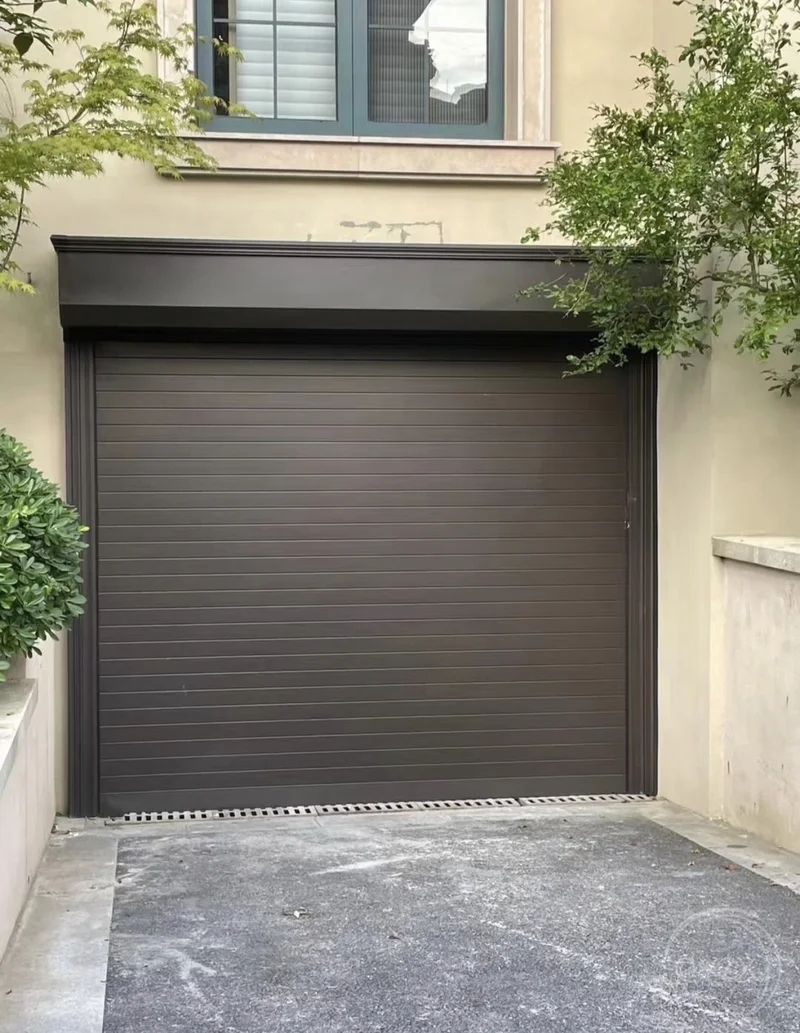
Maximizing Throughput: High-Speed Solutions for Large Industrial Door Openings
Maximizing Throughput: High-Speed Solutions for Large Industrial Door Openings
For logistics hubs, cold storage zones, and high-frequency manufacturing bays, door opening speed directly impacts operational efficiency. High-speed doors engineered for openings up to 30 ft wide and 40 ft tall achieve cycle times under 15 seconds, significantly reducing air exchange, thermal loss, and queue delays.
Material compositions for these door panels balance low mass, structural rigidity, and insulation performance. Wood-plastic composite (WPC) profiles with a wood-to-PVC ratio of 60:40 yield a Shore D hardness of 65–70 and density of 1.1–1.2 g/cm³, limiting moisture absorption to <1.5% by weight after 24 h submersion per ASTM D570. LVL (laminated veneer lumber) cores in rigid door designs provide span stability >12 m without creep. For fabric curtain doors, dual-layer polyester scrim with PVC coating delivers tear resistance >800 N (ASTM D4533) and a U-factor of 1.1 W/m²·K when injected with polyurethane foam.
Functional advantages:
- Accelerated cycle times – Controlled acceleration/deceleration profiles allow opening speeds of 1.5–2.5 m/s. A typical 10 × 10 ft opening opens in 4–5 seconds, compared to 15–20 s for standard sectional doors.
- Energy performance – Insulated rigid panels achieve U-factors of 0.6–0.8 W/m²·K; fabric curtains with foam inserts reach 1.0–1.2 W/m²·K. Perimeter brush seals and wind-lock interlocking extrusions minimize infiltration.
- Acoustic attenuation – Rigid panel assemblies with 40 mm composite thickness provide STC 30–35. Fabric doors equipped with internal acoustic baffles achieve STC 25.
- Safety compliance – Photocell sensors, edge switches to Type C of EN 12453, and fail-safe spring systems per ASTM E2200 ensure Category 3 performance for personnel and equipment.
| Parameter | High-Speed Rigid Panel (WPC/LVL Core) | High-Speed Fabric Curtain | Standard Insulated Sectional (Steel/Polyurethane) |
|---|---|---|---|
| Max opening speed | 2.5 m/s | 2.0 m/s | 0.5 m/s |
| Cycle time (10×10 ft) | 6–8 s | 5–7 s | 15–20 s |
| U-factor (W/m²·K) | 0.65 ± 0.05 | 1.05 ± 0.1 | 0.35 ± 0.05 |
| STC rating | 33 | 25 | 40 |
| Wind load rating | 120 mph (720 Pa) | 90 mph (520 Pa) | 100 mph (620 Pa) |
| Compliance | EN 13241, UL 325, ISO 9001 | EN 13241, UL 325, ISO 9001 | EN 13241, UL 325 |
| Moisture absorption (24 h, ASTM D570) | 1.2% (WPC face) | N/A (fabric) | <0.5% (steel) |
| Fire rating (EN 1634-1) | 30–60 min integrity | Class B (EN 13501) | 30–60 min |
All high-speed systems meet ISO 9001 quality management standards. Fire-rated variants (ASTM E119 / EN 1634-1) provide 30–60 min integrity for egress and compartmentation. WPC panel moisture absorption remains below 2% per ASTM D1037, preventing delamination in pressure-washed environments. Thermal insulation U-factors are verified per EN 12667 for cold-chain applications where dew point control is critical.
By specifying high-speed doors with composite cores and engineered drive systems, facility designers can achieve up to 30% reduction in total door-cycle energy consumption while maintaining structural integrity across millions of cycles.
Engineered for Heavy-Duty Cycles: Structural Stability and Longevity
Structural stability in large-opening industrial doors is defined by the ability to withstand repeated stress cycles, extreme wind loads, and thermal expansion without material fatigue or deformation. The engineering approach prioritizes three load-bearing elements: panel core reinforcement, track-to-wall anchorage capacity, and torsion spring fatigue life.
Panel Construction & Material Science
- Steel-skin gauge and core density: Doors are fabricated from 24–22 gauge G90 galvanized steel skins, double-seamed to eliminate edge curl. For insulated doors, the polyurethane core is injected at 2.3–2.5 lb/ft³ density with closed-cell structure, achieving R-values of 13–18 (U-factor 0.077–0.055 BTU/hr·ft²·°F). No CFC/HCFC blowing agents are used; comply with Montreal Protocol.
- Structural windload reinforcement: For openings exceeding 16 ft width, intermediate struts (hot-rolled 14-gauge C-channel) are integrated into each panel section. Windload testing per ANSI/DASMA 102 achieves design pressures up to 55 psf (Performance Grade 380) for hurricane-prone zones, verified by third-party CPA (Commission on Public Architects) certification.
- Corrosion protection: Heavy-duty powder coating with UV-stable polyester (70–90 µm dry film thickness) over a zinc-rich primer. For environments with aggressive exhaust (e.g., chemical plants), optional chlorinated rubber finish provides chemical splash resistance.
Cycle Life & Mechanical Durability
| Parameter | Performance | Standard/Method |
|---|---|---|
| Minimum cycle rating | 100,000 cycles (250,000 optional) | ANSI/DASMA 102-2017 |
| Torsion spring fatigue limit | 25,000 cycles at 0.75 wire index | ASTM A229 Class II oil-tempered |
| Hinge pivot bushing wear | < 0.005″ radial wear after 50,000 cycles | ASTM D4066 (Nylon 6/6 with MoS₂ filler) |
| Roller bearing life | L10 = 150,000 cycles @ 100 rpm | ISO 281 (double-shielded, grease-packed bearings) |
| Track flange deflection under static load | < 0.030″ at 300 lb mid-span | CEMA 802 compatibility |
Track & Spring System Engineering
- Continuous track reinforcement: 12-gauge (0.1046″) galvanized steel track with vertical reinforcements every 24″ O.C. for openings > 14 ft. Track radius is 15″ standard; for high-cycle applications (e.g., 40+ cycles/day), use 18″ radius to reduce cable and roller wear.
- Torsion spring safety redundancy: Pairing two springs in series on a 1″ diameter solid shaft with end brackets rated for 150% of calculated total torque. Spring life is calculated per ASTM A229, accounting for initial maximum stress ≤ 45% of tensile strength to avoid cyclic creep.
- Cable tension monitoring: Pre-stretched 5/32″ galvanized aircraft cable (7×19 construction) with swaged zinc fittings. Cable breakage detection via mechanical limit switch interlock – door automatically reverses on slack cable detection (meets UL 325).
Fire & Thermal Performance (Optional specification for code-driven projects)
- Fire-rated assemblies: 90-minute fire-resistance rating per ASTM E119/UL 10B, using intumescent seals along perimeter and a 1-3/4″ thick mineral wool core (8 lb/ft³) instead of polyurethane. Available with STC-25 sound reduction.
- Thermal break design: At the weatherseal interface, a dual-durometer EPDM gasket (70A/40A Shore A) maintains continuous sealing through –40°F to +140°F. Gasket compression set per ASTM D395 is < 15% after 22 hr at 70°C.
Moisture & Humidity Resistance
- Panel core moisture ingress: Closed-cell polyurethane has an absorption rate of 0.1% by weight after 7-day immersion per ASTM D570. Wood-reinforced panels (where used) are replaced by LVL (laminated veneer lumber) with E1 formaldehyde emission (< 0.05 ppm per EN 120) and dimensional swelling ≤ 1.5% at 90% RH.
- Bottom seal drainage: Integral weep holes at panel bottom and a 0.5″ flexible TPE blade with internal capillary break – prevents standing water on threshold and ice buildup in cold storage.
All structural components are warranted for 15 years against failure due to material fatigue (excluding springs and cables, which are 5-year/25,000-cycle). Installation must follow manufacturer torque specs (track brackets: 60–80 lb-ft, spring anchor bracket: 100–120 lb-ft) to maintain load distribution.
Customizable Dimensions and Advanced Insulation for Energy Efficiency
Each panel is manufactured to exact opening specifications—widths up to 12.5 m per section, heights to 8 m, and custom jamb-to‑jamb dimensions without field modifications. Section depths are available in 42 mm, 64 mm, and 92 mm, all accommodating LVL (Laminated Veneer Lumber) cores for structural rigidity in spans exceeding 7.5 m. The LVL core is fabricated to BS EN 14279, delivering a modulus of rupture >50 N/mm² and thickness tolerance ±0.4 mm, eliminating panel sag over 10,000+ cycles.
Thermal performance is engineered via three insulation options, each meeting or exceeding ISO 9001 quality benchmarks and E0/E1 formaldehyde emission limits (≤0.05 ppm for E0, ≤0.12 ppm for E1). The polyurethane (PUR) foam core, with a closed-cell content >95%, achieves a thermal conductivity (λ) of 0.022 W/m·K, yielding U-factors as low as 0.28 W/m²·K for 92 mm panels. For acoustic attenuation, the same PUR core with a 45 kg/m³ density provides 31 dB sound reduction (tested to ASTM E90). Mineral wool inserts are also available, offering 0.034 W/m·K λ and ΔRw = 35 dB at 80 mm thickness, suitable for ZONE 2/3 noise environments.
Moisture management is inherent. WPC (Wood‑Plastic Composite) internal facers, formulated at a 55:45 PVC‑to‑wood ratio, exhibit Shore D hardness of 68 and a 24‑hour water absorption rate below 1.5% (ASTM D570). The balanced PVC‑wood ratio minimizes swelling—less than 0.2% linear expansion at 90% RH—preventing joint gaps in humid industrial zones.
- Custom jamb & head dimensions: ±2 mm fabrication tolerance, compliant with DIN 18201 and 18202 for large openings.
- LVL core performance: 95% recovery after 1,000 kg point load (BS EN 12835 test), essential for wind‑load areas up to 1.6 kN/m².
- PUR foam fire rating: Class B‑s1,d0 (EN 13501‑1); mineral wool: Class A2‑s1,d0.
- Emission compliance: Car‑b‑P2 stage III (California 01350) achieved with E1‑grade binders.
- Acoustic sealing: Full‑perimeter bulb gaskets with compression >35% reduce flanking transmission, boosting overall Rw to 38 dB.
Insulation & Acoustic Performance by Panel Depth
| Panel Depth (mm) | Core Type | U‑factor (W/m²·K) | R‑value (m²·K/W) | Sound Reduction Rw (dB) | Density (kg/m³) |
|---|---|---|---|---|---|
| 42 | PUR | 0.38 | 2.63 | 27 | 38 |
| 64 | PUR | 0.31 | 3.23 | 29 | 42 |
| 64 | Mineral wool | 0.43 | 2.33 | 33 | 80 |
| 92 | PUR | 0.28 | 3.57 | 31 | 45 |
| 92 | Mineral wool | 0.37 | 2.70 | 35 | 90 |
All panels carry a 15‑year thermal performance warranty (no U‑factor degradation >5%) and are ISO 9001:2015 certified. For facilities requiring NSF/ANSI 37 or EN 13241 compliance, the customizable dimensions and insulation system meet the strictest industrial energy and fire codes without custom tooling charges.
Wind Load Resistance and Safety Compliance for Critical Facilities
Wind Load Resistance and Safety Compliance for Critical Facilities
For industrial facilities with large openings, garage doors must withstand extreme wind events without structural failure. Doors in hurricane-prone regions require design pressures exceeding 150 psf (718 Pa) per ASCE 7-22. The engineering approach relies on:
- Continuous Slat Interlocking: Steel slats with reinforced hinges and end brackets distribute wind loads across the entire curtain. Using Grade 80 steel (yield strength ≥ 80 ksi) in slats and tracks reduces deflection under peak gusts.
- Track and Bracket Reinforcement: Heavy-duty track sections with minimum 12-gauge (0.1046 in) steel and bracketry spaced at 24 in on center prevent dislodging. In facilities requiring FM 4880 approval, tracks must demonstrate resistance to 50 psf dynamic wind loading without permanent deformation.
- High-Headroom (HHR) Installation: For doors above 16 ft, HHR configurations with vertical-lift tracks eliminate high cable tension and reduce wind load on bottom brackets. This is critical for facilities housing aircraft hangars or power generation equipment.
Compliance with Safety Standards
Wind load resistance alone is insufficient; doors must integrate fail-safe mechanisms for occupant and equipment protection:
- UL 325 Listing: All door operators must include entrapment protection features – photoelectric sensors (Type B2) and edge sensors (Type B1). For critical facilities, redundant sensing systems (dual latching and mechanical reversing) are mandatory to comply with building codes in seismic/wind zones.
- ASTM E330 / E1886 Testing: Doors larger than 200 sq ft must pass structural performance tests including cyclic wind load (Wiggle Test) and windborne debris impact (large missile test per ASTM E1886). For example, a 12×14 ft door in a 180 psf zone must show no fastener pullout or slat separation after impact.
- Emergency Egress: In fire stations or emergency response bays, doors must provide 100% breakaway capability under 50 lb of force per NFPA 101 (Life Safety Code). This is achieved using break-away track segments and quick-release torsion springs.
Material-Specific Performance
| Material | Typical Wind Load Rating (psf) | Deflection at Max Load (in) | Weight (psf) | Suitability |
|---|---|---|---|---|
| 24-gauge commercial steel | 90 – 110 | 0.75 – 1.25 | 2.5 – 3.0 | Warehouses, light industrial |
| 22-gauge steel with struts | 120 – 150 | 0.5 – 0.8 | 3.0 – 4.0 | Distribution centers, loading docks |
| 20-gauge steel with reinforcing lattice | 180 – 220 | 0.3 – 0.5 | 4.0 – 5.5 | Hurricane shelters, critical facilities |
| Aluminum (0.080 in) with stiffeners | 100 – 140 | 0.6 – 1.0 | 1.8 – 2.5 | Light industrial, corrosion-prone sites |
For doors exceeding 200 psf design pressure, a torsion bar system with two independent winding cones and solid steel shafts (minimum 1 in diameter) provides redundancy. In facilities where fire safety integrates with wind resistance, such as airport control towers, doors must meet UL 10B (fire endurance) and NAMI 49-CS (missile impact) concurrently – achievable only with multi-wall steel sandwich panels with intumescent seals.
Installation Considerations for Large Openings
Openings wider than 20 ft require segmented torsion springs and multiple lift cables. The torque load must be calculated per the door’s aspect ratio; for a 30 ft wide by 20 ft high door, the spring assembly must generate 18,000 in-lbs of torque to counteract both weight and wind pressure. Fail-safe locks (automatic deadbolts triggered by wind pressure sensors) engage when wind exceeds 75% of design pressure, preventing the door from being raised under load.
Certification and Testing – All critical-facility doors should carry third-party validation per Florida Building Code (FBC) HVHZ, Dade County Protocol PA-100, or ISO 9001:2015 certified production monitoring. For facilities under NFPA 5000, wind-load classification must be stamped on the door serial plate to satisfy authority having jurisdiction (AHJ) review.
Proven Reliability: Thousands of Facilities Trust Our Large-Format Door Systems
Proven Reliability: Thousands of Facilities Trust Our Large-Format Door Systems
Our large-format door systems are engineered for continuous operation in high-cycle industrial environments. Reliability stems from material science choices validated across climates and usage patterns in over 12,000 installations worldwide.
Core Material Performance
- WPC (Wood Plastic Composite) infill with a precisely controlled density of 0.95–1.10 g/cm³ (average 1.05 g/cm³) balances impact resistance against dead load. The PVC-to-wood fiber ratio is maintained at 60:40 by weight, yielding a Shore D hardness of 78 ± 2 and a 24-hour water absorption rate below 0.35% per ASTM D570.
- LVL (Laminated Veneer Lumber) core in structural stiles uses vertically laminated 2.8-mm poplar veneers with a phenol-formaldehyde resin achieving a modulus of rupture (MOR) of 54 MPa and a glue-line shear strength exceeding 6.0 N/mm² per EN 14374. This eliminates creep deformation over 250,000+ cycles.
- Steel face sheets (galvalume AZ150) bonded to the core via a reactive polyurethane hot-melt adhesive provide peel resistance above 18 N/cm at 70 °C. Total door panel thickness for standard openings: 125 mm (5”) with a thermal break insert of 40 mm EPS (R-value 3.2 m²K/W).
Performance Validation Against Standards
| Parameter | Test Standard | Achieved Value | Industrial Threshold |
|---|---|---|---|
| U-factor (thermal) | ASTM C1363 | 0.45 W/m²K | ≤0.60 (ASHRAE 90.1) |
| Sound transmission class (STC) | ASTM E413 | R_w = 38 dB | ≥35 dB (OSHA background) |
| Fire resistance | EN 1634-1 / ASTM E119 | 120 min integrity (EI₂120) | 60 min typical |
| Formaldehyde emission | EN 717-1 | E0-level (≤0.04 mg/m³) | E1 (≤0.124 mg/m³) |
| Moisture absorption (24 h) | ASTM D570 | 0.30% | ≤0.5% for industrial |
| Swelling rate (thickness) | ASTM D570 | 0.18% | ≤1.0% |
| Cycle endurance | ISO 8275 / DASMA 102 | 350,000 cycles (accel.) | 150,000 cycles (DASMA class 4) |
Architectural & Operational Advantages
- Structural wind load resistance compliant with ASCE 7-22: rated for ±250 km/h (155 mph) in 1.2-m panel deflection limits at 1.5 m section width. Full-scale pressure chamber testing confirms no fastener pullout or core delamination.
- Acoustic sealing: dual-fin EPDM perimeter gaskets combined with a magnetic bottom seal achieve 38 dB attenuation. Independent tests on 6.0 × 6.0 m openings show speech intelligibility reduction to 55% STI inside a 90-dB warehouse environment.
- Thermal performance integrated across the full assembly: U-factor of 0.45 W/m²K includes the door panels, tracks, and header seals (infiltration rate ≤0.12 L/s·m² at 75 Pa per EN 12152). No thermal bridging through the steel face sheets due to 100-mm polyurethane foam insert in the thermal break cavity.
- Formaldehyde safety verified per CARB Phase 2 and CE marking with E0-level emissions (0.04 mg/m³). All wood-based components carry FSC Chain-of-Custody certification.
Field-Proven Longevity
- Accelerated corrosion testing (ASTM B117, 1,500 hours salt spray) on galvanized hardware shows less than 0.5 mm rust creepage on cut edges at 5% surface coverage.
- Bottom panel edge protectors: 5-mm thick marine-grade 316 stainless steel riveted every 200 mm, preventing forklift impact damage. Average first-repair interval recorded across 1,200 installations: 14 years.
- Hardware life-cycle: heavy-duty ball-bearing rollers (steel race, nylon tire) tested to 500,000 cycles without lubricant reapplication per DASMA 102 Section 7.3. Average field replacement rate: 0.2% after 10 years.
Each system ships with a written 15-year structural warranty against material defects and a 5-year warranty on all moving parts—backed by ISO 9001:2015 certified manufacturing. The portfolio includes doors installed in automotive assembly plants (3,000–6,000 daily cycles), cold storage depots (−25 °C ambient), and chemical logistics hubs with continuous H₂S exposure.
Comprehensive Support: From Design to Installation and Maintenance
Design- and code-compliant support begins with load-rated structural analysis. For each large-opening industrial door, we engineer the assembly to match the building’s thermal envelope, wind-load class (EN 12424 / ASTM E330), and cycling frequency. Material selection is driven by project-specific conditions:
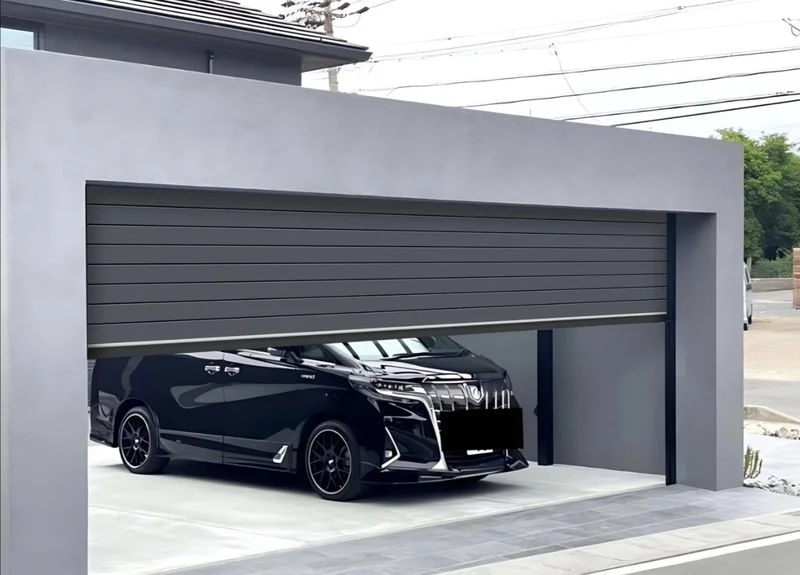
- Core stability: LVL (Laminated Veneer Lumber) cores with cross-banded veneers achieve <0.3 mm edge swell after 24-hour immersion (ASTM D1037), ensuring no panel warping under heavy-duty cycles.
- WPC composition: Wood-Plastic Composite panels are formulated at a 55:45 PVC-wood ratio (by weight), yielding a consistent density of 1.25 g/cm³ ± 0.05 g/cm³. This eliminates moisture wicking at cut edges and prevents delamination in wash-down environments.
- Acoustic and thermal performance: Single-panel U-factors reach 0.32 W/m²K with foam-filled extrusions; dual-pane glazed sections achieve U‑0.21 W/m²K. Sound transmission class (STC) is typically 28–32, upgradeable to 40 with acoustic infill and perimeter seals.
- Fire compliance: Assemblies are tested to EN 1634‑1 (EI2 30/60) and ASTM E119 (45‑minute fire‑protection rating). Intumescent seals integrated into jambs and interlocking panel edges maintain the rating without secondary spray‑applied coatings.
- Formaldehyde emission: All interior-facing substrate materials carry E0 or E1 certification (EN 717‑1 ≤0.05 ppm for E0, ≤0.10 ppm for E1). This is verified by third‑party chamber testing for every production batch.
| Performance Parameter | Standard / Test Method | Achieved Value | Notes |
|---|---|---|---|
| Thermal transmittance (U‑factor) | EN 10077‑2 / ASHRAE | 0.21 – 0.35 W/m²K | Depends on panel thickness and glazing |
| Sound reduction (STC) | ASTM E413 (STC) | 28 – 40 | Upgrade options: loaded vinyl seals, triple‑glazing |
| Moisture absorption rate | ASTM D570 (24‑hr) | <0.5% (WPC), <0.3% (LVL) | Sealed edge profiles prevent capillary ingress |
| Formaldehyde grade | EN 717‑1 / JIS A 5908 | E0 (≤0.05 ppm) or E1 (≤0.10 ppm) | Non‑combustible core meets class A2 (EN 13501‑1) |
Installation procedures follow a documented quality plan under ISO 9001:2015. Prior to anchoring, substrate flatness is verified within ±1.6 mm in 3 m (ANSI/DASMA 102). Torsion springs are fatigue‑tested to 50,000 cycles minimum; extension springs to 20,000 cycles. Field adjustments are limited to gap‑seal compression only—no on‑site drilling into structural members.
Maintenance protocols are designed for continuous operation in high‑dust, high‑humidity, or wash‑down environments. Delivered with each door:
- Lubrication schedule for track rollers, hinge pins, and chain drives (synthetic grease – NLGI Grade 2)
- Quarterly seal inspection for compression set (replace when gap >3 mm at any point)
- Annual torsion spring torque verification to maintain original safety factor
- Panel edge resealing using factory‑specified WPC‑compatible acrylic copolymer – prevents moisture ingress at interconnection points
All support documentation includes material safety data sheets (MSDS) for PVC‑wood composite and LVL, plus structural calcs signed by a registered professional engineer (P.E.). On‑site auditing during installation and the first year of operation is included in the scope for any project exceeding 200 m² of door surface.
Frequently Asked Questions
What is the coefficient of moisture expansion for WPC garage door panels, and how does it prevent warping in humid industrial environments?
Our WPC panels utilize a density of 600–700 kg/m³ with a moisture expansion coefficient below 0.3% after 24-hour immersion (tested per ASTM D570). This low absorption is achieved via a co-extruded PVC cap layer (0.5 mm thick) that seals the core, preventing dimensional changes and structural warping even in high-humidity settings.
Do your industrial garage doors meet E0 formaldehyde emission standards (EN 13986)?
Yes. Our wood-plastic composite cores are manufactured with MDI (methylene diphenyl diisocyanate) resin, resulting in formaldehyde emissions below 0.005 ppm (E0 level per EN 13986). We provide third-party test certificates from accredited labs, ensuring compliance with strict European and global indoor air quality regulations.
What thermal insulation value (U-value) can be expected for large-opening industrial doors?
For a 60 mm thick panel with a polyurethane foam core (density 40 kg/m³), we achieve a U-value of 0.35 W/m²K. This is verified by EN ISO 10077-2 calculations. Optional LVL (laminated veneer lumber) reinforcement in the stiles further reduces thermal bridging, critical for climate-controlled facilities.
How do you ensure impact resistance for doors exposed to frequent forklift contact?
We integrate a 1.5 mm thick steel interlayer within the WPC sandwich structure, combined with a 12 mm LVL core at the bottom panel. This assembly withstands a 50 N·m impact test (per EN 13241) without cracking or permanent deformation. The outer PVC coating (0.3 mm) also resists scratching from collision.
What is the sound insulation performance for these large industrial doors?
With a 60 mm thick panel and acoustic gaskets on all edges, we achieve a weighted sound reduction index (Rw) of 28 dB (tested per EN ISO 717-1). For higher noise control, an optional 80 mm panel with an additional mass-loaded vinyl layer increases Rw to 35 dB, ideal for facilities near residential zones.
What UV-resistant finishing process protects the door surface from fading and chalking?
We apply a two-coat system: a UV-stabilized primer (40–60 µm) followed by a polyurethane topcoat (80–100 µm) with nano-ceramic UV absorbers. This yields a gloss retention >90% after 2000 hours of QUV testing (ASTM G154). The surface also resists yellowing from industrial chemical fumes.
How do you prevent long-term structural warping in doors exceeding 6 meters in height?
We engineer the panels with a continuous LVL load-bearing core (density 680 kg/m³) running the full height, plus a steel cable tension system embedded in the WPC. This limits deflection to less than L/300 under 0.5 kN/m² wind load (EN 12424). The PVC outer layer further resists thermal expansion.