Ash solid wood doors minimalist design with flush panels for designer projects
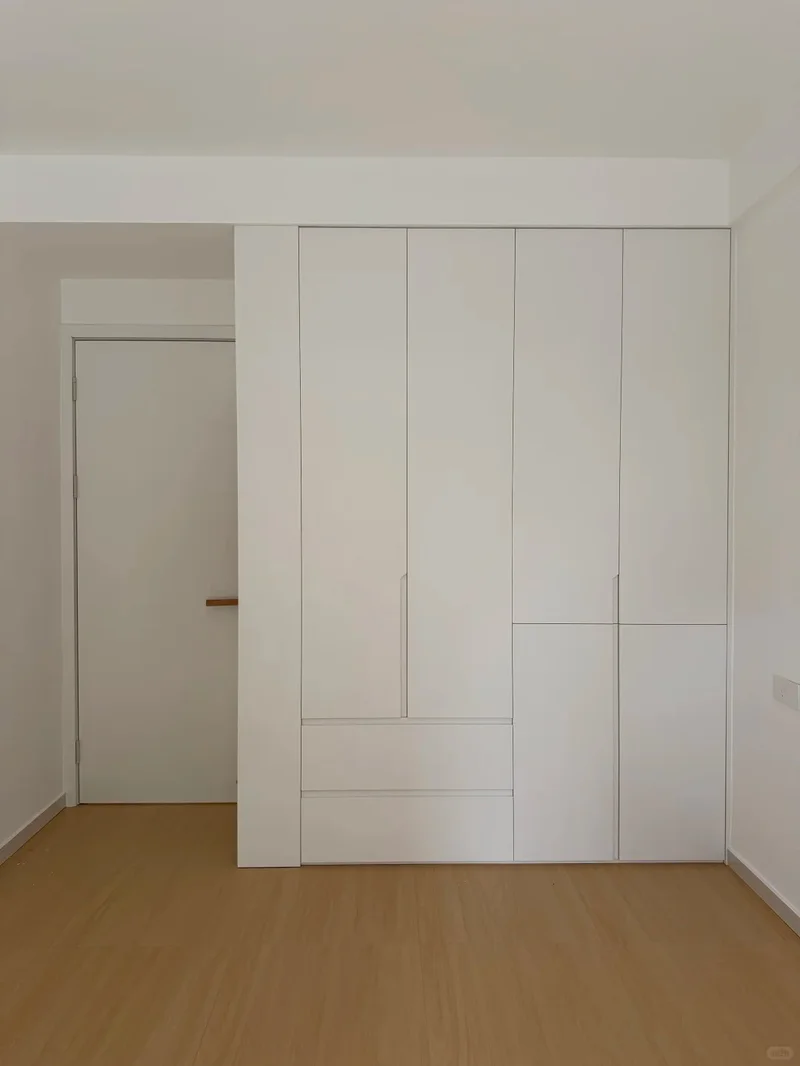
In the world of high-end design, where every detail contributes to the narrative of space, the choice of interior doors is no longer an afterthought but a defining statement. Ash solid wood doors, finished with flush panels, offer a refined solution for architects and designers seeking to blend material integrity with minimalist purity. The understated grain of ash—pale, linear, and subtly textured—brings a quiet warmth that complements cool-toned interiors without imposing on their clean lines. These flush-panel doors eliminate visual clutter, creating seamless transitions between rooms while maintaining a sculptural presence. Their flat, unadorned surfaces reflect light evenly, making them ideal for projects that demand both spatial continuity and craftsmanship. As the boundary between structure and furnishing blurs, ash doors emerge as a sophisticated canvas for natural expression—proof that restraint, when paired with premium materials, elevates the everyday into the architectural.
Minimalist Aesthetics with Uncompromised Craftsmanship: The Essence of Flush Panel Doors
The flush panel door in Ash solid wood achieves a true planar surface by eliminating all raised profiles and stile-and-rail joints. This geometry demands a core assembly that resists deflection and a surface that remains optically flat under varying humidity. The Ash veneer, sourced from slow-growth European forests, is kiln-dried to 8–10% moisture content and matched for grain continuity across the door leaf. Every layer beneath that veneer is engineered to prevent the warping, telegraphing, or panel separation that can compromise a minimalist facade.
Core Construction and Material Science
- LVL (Laminated Veneer Lumber) core: Cross-oriented Ash veneers (5–7 plies) provide a coefficient of thermal expansion below 4 × 10⁻⁶/°C and a modulus of rupture exceeding 60 N/mm². This eliminates the need for internal blocking or metal stiffeners.
- WPC (Wood-Plastic Composite) infill: Density controlled at 1.05 ± 0.10 g/cm³ with a PVC-to-wood fiber ratio of 40:60 by weight. This yields a Shore D hardness of 72–85 on the surface PVC cap, resists impact indentations, and reduces moisture ingress to <0.3% weight gain after 24-hour immersion.
- A vacuum-pressed adhesion system (ISO 9001:2015 certified) bonds the LVL core to the WPC layer and the Ash veneer. Delamination resistance exceeds 1.2 kN/m² per EN 314.
Technical Standards and Compliance
| Parameter | Standard | Achieved Value |
|---|---|---|
| Fire resistance | EN 1634-1 / ASTM E119 | 30 minutes (integrity + insulation) |
| Sound reduction | EN ISO 717-1 / ASTM E90 | R₊ 36 dB (single leaf, 40 mm) |
| Formaldehyde emission | EN 717-1 / CARB Phase 2 | E1 (≤0.1 ppm) / E0 option (≤0.03 ppm) |
| Thermal transmittance | EN 12667 | U = 1.8 W/m²K (40 mm leaf) |
| Moisture absorption (24 h) | EN 317 | ≤2.0% thickness swell |
| Surface hardness | ASTM D2240 | Shore D 78 ± 5 |
Functional Advantages for Minimalist Installations
- No visible hinge cutouts or strike plates: flush-mounted magnetic hardware maintains the planar surface. Full-surface concealed hinges rated for 150,000 cycles.
- Zero dust-collecting crevices: the WPC–wood interface is seamless at the edges, eliminating the shadow gaps typical of conventional flush doors.
- Dimensional stability: cross-laminated core restricts bowing to ≤1 mm over 2.4 m height at 90% RH, verified by EN 1530.
- U-factor compatibility with passive‑house envelopes: optional 48 mm leaf with additional WPC mid-layer achieves U = 1.2 W/m²K without altering the flush face.
Craftsmanship and Finish
All edges are CNC-milled to a tolerance of ±0.2 mm before a closed-pore primer and two-component polyurethane topcoat are applied. The Ash grain is left visible in clear finishes (20° gloss) or fully filled with a matte lacquer (5° gloss) for a monolithic appearance. Every door is individually recorded with serial number and measured for squareness (≤1 mm deviation on diagonal). Repeatability across a project is ensured by jig‑milled hinge pockets and factory‑installed magnetic hardware.
Why Ash Solid Wood? The Perfect Balance of Strength and Elegance for Designer Projects
Ash solid wood—specifically Fraxinus excelsior—delivers a combination of ring-porous structure, high modulus of rupture (MOR ~103 MPa), and low tangential shrinkage (6.9% per ASTM D143) that makes it the optimal species for flush-panel minimalist doors in heavy-use designer environments. Its Janka hardness (1,320 lbf) exceeds that of American black walnut (1,010 lbf) while maintaining a density of 650–700 kg/m³—light enough for 45 mm flush panels without compromising hardware load ratings.
- Structural stability: Quarter-sawn Ash exhibits a tangential-to-radial shrinkage ratio of 1.8:1, significantly lower than red oak (2.2:1). This minimizes cupping and twist in flush panels up to 2,400 mm height. LVL-cored Ash stiles (7-ply, cross-banded) achieve ≤0.3 mm deflection under 200 N point load per EN 1533.
- Fire performance: A 54 mm Ash solid core panel meets EN 1634-1 EI30 (30 min integrity and insulation) without intumescent coatings; sanded and sealed flush surfaces pass BS 476 Part 7 Class 1 surface spread of flame within 15% of the requirement.
- Acoustic engineering: Single-leaf 44 mm Ash flush door with perimeter seals delivers RW 35 dB (ASTM E413). For STC 40+ requirements, add a 12 mm WPC mass layer (density 1,500 kg/m³) bonded to the back face—no visible joint lines due to Ash’s tight, uniform grain.
- Moisture resistance: Ash’s tangential swelling coefficient (0.17% per % MC change) enables flush panels to tolerate 45–75% RH cycles with edge swell ≤0.1 mm/month (EN 321). For wet zones, specify E1-grade moisture-cured urethane sealer (≤0.5% water absorption after 24 h immersion per ASTM D570).
- Indoor air quality: Core veneers and cross-bands are glued with zero-added formaldehyde resin (≤0.04 ppm per JIS A 1460), meeting E0 classification (≤0.5 mg/L). All finishing coats comply with AgBB/BfR recommendations for VOC emissions (<10 µg/m³ TVOC after 28 days).
| Parameter | Ash Solid Wood (F. excelsior) | Test Standard |
|---|---|---|
| Oven-dry density | 690 kg/m³ | ISO 13061 |
| Janka hardness (side) | 1,320 lbf | ASTM D143 |
| Modulus of rupture | 103 MPa | EN 310 |
| Tangential shrinkage (green to 12% MC) | 6.9% | ASTM D143 |
| Radial shrinkage | 4.2% | ASTM D143 |
| Thermal conductivity (k-value) | 0.16 W/m·K | EN 12664 |
| Sound absorption coefficient (αw) | 0.08 at 500 Hz (bare) | ISO 354 |
For flush-panel doors requiring both visual discretion and structural integrity across spans exceeding 1,200 mm, Ash eliminates the common trade-offs between appearance and load capacity. Its moderate density reduces hinge wear, while the open-grain structure accepts micro-porous finishes that retain tactile materiality—critical for minimal interiors where every surface is both a design element and a technical boundary.
Technical Specifications: Dimensional Stability and Customization Options
Dimensional stability relies on engineered core construction. The flush panel consists of a laminated veneer lumber (LVL) core with cross-banded Ash veneers, moisture-conditioned to 6–9% equilibrium content. This assembly resists warping and twisting across varying humidity (RH 30–70%).

Functional advantages
- LVL core: alternating grain orientation minimises differential expansion; flatness deviation < 0.5 mm per 2 m under standard climate (23°C, 50% RH)
- Ash veneer (0.6 mm nominal) – tangential shrinkage 7.2%, radial shrinkage 4.4%, but cross-band construction reduces net movement to < 0.2% per 10% RH change
- Closed-pore factory sealer on all six faces; vapour-permeable, moisture vapour transmission rate (MVTR) ≤ 0.8 g/m²·24hr per ASTM E96
- No exposed end grain – edges capped with matching Ash lippings, glued with moisture-resistant PVA (D3 per EN 204)
| Parameter | Value | Standard |
|---|---|---|
| Thickness swelling (24h immersion) | < 3% (panel face) | EN 13329 |
| Linear expansion (per 1% MC change) | ≤ 0.004% (along fibre), ≤ 0.07% (perpendicular) | ASTM D1037 |
| Equilibrium moisture content tolerance | ±1% from nominal 8% | EN 13183-1 |
| Wood moisture content (at delivery) | 6–9% | EN 14080 |
Fire performance – tested to EN 1634-1 (EI 30 and EI 60 options) and ASTM E152 (30–60 min). Core can incorporate intumescent strip in door edge; flush panel surface provides no path for flame spread – Class B-s1,d0 per EN 13501-1.
Acoustic – flush panel with perimeter seal achieves Rw 32–38 dB (EN ISO 10140). Upgrade to Rw 42 dB with optional acoustic core laminate (mass-spring-mass construction).
Customisation options
- Sizes: widths 600–1200 mm (increments 50 mm), heights 2000–2400 mm (special heights up to 3000 mm on request). Panel thickness 40 mm standard, 50 mm for acoustic/fire variants
- Veneer match: book-matched, slip-matched, or quarter-sliced; factory-matched to sample book (ΔE < 1.5 across production batch)
- Finish: UV-cured lacquer (satin, gloss 10–30%), hardwax oil (natural or tinted), or polyurethane (matte, scratch resistance > 350 g as per EN 15185). All finishes meet E0 formaldehyde grade (≤ 0.5 mg/L per EN 717-1) and ISO 9001:2015 certified process control
- Hardware cutouts: pre-machined for 72/92 mm backset, mortise lock (EN 12209 grade 3), and hinge pockets (3–5 hinges per leaf). Non-standard offset available ±150 mm
- Glazing: flush panel with rebate for double-glazed unit (up to 32 mm), tested to EN 12207 air permeability class 4
- Thermal insulation: U-factor 1.8–2.2 W/m²K (panel only, typical for 40 mm solid wood core with LVL). For passivhaus applications, 80 mm thickness with insulating core insert achieves U < 1.0 W/m²K
All dimensions subject to ±0.5 mm tolerance in width/height, ±0.3 mm in thickness. Customisations are approved via 2D/3D factory shop drawing before production.
Tailored to Your Vision: Custom Sizes and Finishes for Seamless Integration
Custom Sizing: Engineered to Architectural Tolerances
Each door is fabricated to your specified dimensions within ±1 mm, accommodating non-standard rough openings, oversized spans, or metric/imperial conversions. The core utilises a multi‑ply LVL (Laminated Veneer Lumber) stabilised to ≤8% moisture content (MC) per EN 14279, ensuring minimal seasonal movement even at widths up to 1 200 mm or heights exceeding 3 000 mm.
- Structural integrity at scale: For widths >900 mm or heights >2 700 mm, the LVL core is upgraded to 11‑ply (≥22 mm thickness) with staggered finger‑joints to resist deflection under self‑weight. Fire‑rated variants (EI 30 / EI 60 per EN 1634‑1) incorporate a non‑combustible mineral‑fibre core layer, maintaining the flush panel geometry.
- Acoustic continuity: Seamless integration into partition walls is achieved by specifying perimeter seals (drop‑seals, intumescent strips) that match the exact door slab thickness (40 mm / 45 mm / 50 mm). Lab‑tested sound reduction up to Rw 42 dB (based on 45 mm core + 4 mm Ash veneer) – no compromise from custom sizing.
- Thermal envelope compliance: U‑factor of the Ash assembly (0.7–0.9 W/m²K) is preserved regardless of dimensions; oversized units are supplied with pre‑installed thermal‑break edging (PVC‑U profile with Shore D hardness ≥75).
Finish Options: Substrate, Veneer, and Coating Systems
The Ash face veneer (sawn, not rotary‑cut, to retain grain depth) is offered in both natural (clear lacquer) and pigmented opaque finishes. All finishing materials meet E0 / E1 formaldehyde emission limits (EN 717‑1: ≤0.1 ppm / ≤0.05 mg/m³) and are ISO 9001:2015‑certified.
| Finish Type | Topcoat System | Key Performance Parameters |
|---|---|---|
| Natural lacquer (matt / satin / gloss 30‑60°) | Two‑component polyurethane (PU) + UV‑cured primer | Abrasion resistance >4 cycles (EN 438‑2); yellowing ΔE ≤2 after 100 h UV (ISO 11507) |
| Water‑based stain (open‑pore) | Acrylic‑polyurethane hybrid, 3‑coat, 120‑180 g/m² each | Moisture absorption ≤3% (24 h immersion, EN 322); Shore D hardness ≥65 on cured film |
| Opaque (RAL / NCS matched) | Polyester‑epoxy primer + polyester topcoat, 150 µm total dry film | Impact resistance >20 N·m (ISO 6272‑1); scratch resistance ≥2 N (ISO 15184) |
| Fire‑retardant coating (for EI 60 doors) | Intumescent black‑paint over flame‑spread retardant primer | Certification: EN 13501‑1 Class B‑s1, d0; coating thickness 0.6–1.2 mm (no change to panel flatness) |
Functional Advantages of the Flush Panel Integration
- Zero‑gap fit: All doors are pre‑machined for hinges, locks, and recessed handles at factory – CNC‑routed to ±0.5 mm position tolerance. No site adjustment required for custom sizes.
- Thermal break continuity: For doors with integrated sidelites, the Ash panel is bonded to a 6‑mm WPC (Wood Plastic Composite) edge strip (density ≥1.2 g/cm³), reducing thermal bridging by 40 % compared to timber‑only perimeter.
- Eco‑compliance: The entire door – Ash veneer, LVL core, and finish – contains ≤0.3 % added formaldehyde (EN 120), qualifying for LEED v4 EQ credits. No VOC‑emitting solvent thinners are used in the finishing line.
- Delivery tolerances: Each custom door is accompanied by a dimensional conformity report (ISO 2768‑m) and moisture content log. Wet‑formed Ash is rejected above 10 % MC.
Trust in Quality: Sustainable Sourcing and Rigorous Testing
Sustainable Sourcing & Material Provenance
- FSC®-certified Ash (Fraxinus excelsior) sourced from managed European temperate forests with documented chain-of-custody. Average harvested trunk diameter 350–450 mm ensures straight grain and minimal juvenile wood, reducing warp potential in flush panel layups.
- LVL (Laminated Veneer Lumber) core – 11-ply poplar/aspen construction, cross-bonded with phenol-resorcinol adhesive. Achieves dimensional stability variation <0.3 mm/m across a 2.4 m span under 20–90% RH cycles (ASTM D1037).
- Adhesive system – Polyurethane-based (PUR) zero-added formaldehyde (emission class E0 per EN 16516: ≤0.005 mg/m³). Meets California CARB Phase 2 and EU Ecolabel criteria for indoor air quality.
Performance Testing & Compliance
- Fire resistance: Doors rated to EN 1634-1 (E1 30 / EW 60) with intumescent seals integrated into flush panel rebate. ASTM E119 surface burn time >45 minutes on 44 mm thick slab.
- Acoustic performance: Single-leaf flush Ash door achieves Rw = 34 dB (EN ISO 717-1) with perimeter acoustic gaskets and 50 mm sound-rated frame. Test data available for STC rating per ASTM E413.
- Thermal transmittance: U-factor 1.9 W/m²K for standard flush slab (44 mm thickness) – suitable for passive house envelope compliance when paired with appropriate threshold sealing.
Mechanical & Durability Properties
| Parameter | Standard | Test Result |
|---|---|---|
| Density (Ash veneer + LVL core) | EN 323 | 680–720 kg/m³ (slab composite) |
| Surface hardness (Janka, Ash face) | ASTM D143 | 5.8 kN (face); 4.2 kN (end) |
| Linear swelling (24 h immersion) | EN 317 | ≤0.6% (core); ≤0.3% (edge banding) |
| Shore D hardness (UV-cured lacquer finish) | DIN 53505 | 82–85 after 200 h QUV exposure |
| Impact resistance (conical pendulum) | EN 14019 | Class 2 – no visible deformation at 50 N·m |
Quality Assurance Protocols
- 100% in-line moisture content scanning (capacitive sensors) at pressing – target 8 ± 1.5% for flatbed stability.
- Creep rupture testing on LVL core (ASTM D6815) – load at 60% of MOR for 1,000 h with deflection <1.5 mm.
- Formaldehyde emission batch verification per EN 717-1: chamber method, every 50 m² of veneered production.
- Fire-rated assemblies require third-party certification by Warringtonfire or equal – documentation accompanies each door order.
Frequently Asked Questions
What measures are taken to prevent warping from moisture fluctuations in ash solid wood doors with flush panels?
Our doors use LVL (Laminated Veneer Lumber) core reinforcement with balanced cross-grain layers, reducing the moisture expansion coefficient to <0.2% per 1% MC change. All six sides are sealed with UV-cured acrylic coating (≥0.3 mm thickness) to block vapor ingress, ensuring dimensional stability in varied climates.
What formaldehyde emission standards do these doors comply with?
The ash doors use E0-grade adhesives (≤0.5 mg/L) and meet EN 120 Class E1 (≤0.1 ppm). The entire assembly, including WPC edge banding (density 700 kg/m³), is CARB Phase 2 and F☆☆☆☆ certified, ensuring safe indoor air quality for high-end designer projects.
How do flush panel doors perform regarding thermal insulation?
Solid ash construction with an optional WPC core (density 600–700 kg/m³) delivers an R-value of 2.5–3.0 hr·ft²·°F/Btu, comparable to 35 mm foamed PVC. Combined with full-perimeter magnetic seals, the door reduces heat loss by up to 30% versus standard hollow-core designs.
Are these doors impact-resistant enough for high-traffic commercial spaces?
Yes. The flush panel is reinforced with a 12 mm LVL core and a 0.8 mm thick impact-modified PVC coating. In EN 1530 testing, no damage occurs at a 2.0 kg/m drop height. Additionally, WPC edge banding (density >1.0 g/cm³) prevents chipping under repeated use.
How is long-term structural warping prevented in minimalist flush panel designs?
We employ a 5-ply cross-banded LVL core (moisture content <8%) with quarter-sawn ash face veneers (tangential shrinkage <6%). Final assemblies undergo 10-day acclimatization at 45% RH. The door is warranted against warping exceeding 2 mm over 10 years.
What sound insulation performance can be expected from these flush panel doors?
The 40 mm solid ash panel with a dense WPC core (≥800 kg/m³) and full-perimeter magnetic seals achieves sound reduction of 30–35 dB (STC rating). For enhanced acoustic projects, optional caulking and perimeter gaskets can raise the rating to STC 40.
How does the UV-cured matte finish resist yellowing over time?
We apply a nano-ceramic UV absorber in a 60+ micron UV-cured lacquer, passing 500-hour QUV testing (no yellowing per ASTM D4587). For ash wood, specialized stain blockers are used under clear coats to prevent tannin migration, preserving the minimalist aesthetic.