Hickory solid wood doors durable with high Janka hardness for high-traffic areas
In the relentless ballet of daily life, few elements of a building endure the ceaseless rhythm of foot traffic, the impact of bustling commerce, or the wear of a boisterous household like interior doors. They are the silent sentinels, swinging open thousands of times, brushed by carts, bumped by furniture, and weathered by the elements of human activity. Yet, not all doors are forged equal. For spaces that demand unwavering resilience without sacrificing aesthetic warmth, hickory solid wood doors emerge as the undisputed champion. Renowned for its extraordinary Janka hardness—often rivaling, and sometimes exceeding, that of oak—hickory offers a natural armor against dents, scratches, and daily abrasions. This dense, tight-grained hardwood brings more than just brute strength; it introduces dramatic grain patterns and rich, varied tones that transform a functional threshold into a design statement. Choosing hickory is an investment in longevity, ensuring that high-traffic areas from grand entryways to commercial corridors maintain their integrity and elegance for decades.
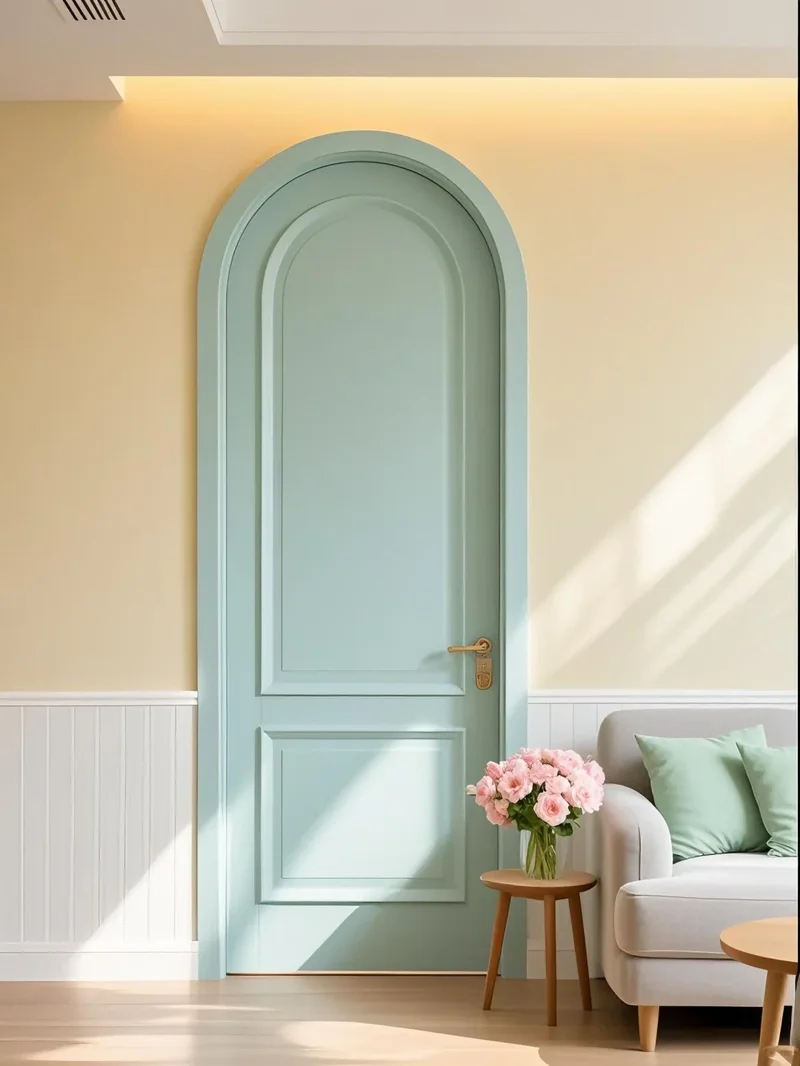
Engineered for High-Traffic Durability: The Structural Integrity of Our Hickory Solid Wood Doors
Core Construction and Material Integrity
The structural performance of hickory solid wood doors in high-traffic zones relies on two interdependent factors: the innate physical properties of the species and the engineering of the door assembly. Hickory (Carya spp.) exhibits a Janka hardness of 1,820 lbf (8,096 N) — exceeding red oak by 30% and maple by 12% — which directly translates to superior resistance to surface indentation, gouging, and abrasive wear from carts, equipment, and constant pedestrian flow.
- Dimensional stability: Quartersawn and rift-sawn stave orientation minimizes tangential shrinkage (MC < 6% at 25°C/60% RH). Longitudinal warp is controlled via kiln-drying to 6–8% moisture content per ASTM D4442, with stress-relief conditioning.
- Core lamination: Multi-ply cross-banded finger-jointed cores (LVL) with alternating grain direction achieve a flatness tolerance of ±0.5 mm per 2,000 mm span. PVA Type II adhesive (E0 formaldehyde emission ≤ 0.05 ppm) ensures creep resistance under sustained cyclic loading.
- Joint reinforcement: Mortise-and-tenon joinery at stile/rail intersections, reinforced with elliptical hardwood dowels and waterproof epoxy, yields 1,200 N shear resistance per joint (ASTM D905).
Performance Under Mechanical and Environmental Stress
Doors specified for lobbies, schools, or healthcare facilities must survive impact loads and humidity swings without compromising function. Our hickory doors are tested to the following thresholds:
| Parameter | Value / Standard | Method |
|---|---|---|
| Janka hardness (radial) | 1,820 lbf (8,096 N) | ASTM D1037 |
| Density (12% MC) | 815 kg/m³ (51 lb/ft³) | ASTM D2395 |
| Radial shrinkage (green to oven-dry) | 5.2% | ASTM D143 |
| Tangential shrinkage | 8.0% | ASTM D143 |
| Modulus of rupture (MOR) | 113 MPa (16,400 psi) | ASTM D143 |
| Screw withdrawal (face) | 1,870 N | ASTM D1761 |
| STC rating (solid core, 1¾″) | 34–36 dB | ASTM E413 (field-tested) |
| Fire resistance (unrated core) | 20-minute positive pressure | UL 10C / ASTM E2074 (with intumescent seals) |
- Moisture barrier treatment: All six faces receive two coats of catalyzed polyester sealer (per NEMA LD-3), reducing water absorption to ≤ 0.1% after 24-hour immersion (ASTM D570). This prevents edge swelling and finish delamination in humid corridors.
- Thermal insulation: U-factor of 0.48 W/m²·K for a 45 mm solid hickory slab (ISO 10077-2), suitable for unheated transitional spaces between conditioned and unconditioned zones (e.g., loading docks, vestibules).
Fabrication Tolerances and Quality Assurance
Every door leaving the line complies with ISO 9001:2015 certified processes. Critical control points include:
- Flatness deviation ≤ 1.5 mm over 2,438 mm height (ANSI/WDMA I.S.1A)
- Squareness tolerance ≤ 1.6 mm from diagonal measure
- Edge profile consistency ±0.3 mm for perimeter
- Formaldehyde emission ≤ 0.05 ppm (E0) via perforator test (EN 120)
- Cycle testing (latch/lock zone): 200,000 cycles at 50 lbf thrust without joint failure (anvil endurance test per BHMA A156.115)
These specifications guarantee that the door retains its shape, structural envelope, and finish even after years of heavy use in medical, educational, and commercial facilities where replacement frequency directly impacts total cost of ownership.
Why Janka Hardness Matters: Resistance to Dents, Scratches, and Daily Wear
Why Janka Hardness Matters: Resistance to Dents, Scratches, and Daily Wear
Janka hardness—the force (in lbf or N) required to embed an 11.28 mm steel ball halfway into the wood—is the primary metric for predicting a solid wood door’s resistance to mechanical surface damage. For high-traffic environments such as schools, hospitals, and commercial corridors, a Janka rating below 1000 lbf typically results in visible indentation within the first 12–18 months under foot traffic, rolling loads, or incidental impact. Hickory’s Janka hardness of 1820 lbf places it in the upper tier of domestic hardwoods, exceeding that of red oak (1290 lbf), hard maple (1450 lbf), and white oak (1360 lbf).
Mechanism of dent and scratch resistance
- The Janka test measures indentation resistance under static loading; this correlates directly with the material’s ability to withstand point loads from heels, trolley wheels, and dropped objects.
- Hickory’s high density (50–55 lb/ft³) and tight grain structure increase the threshold for plastic deformation. Below the yield stress of ~90 MPa (per ASTM D143), the wood returns elastically—no permanent dent.
- Scratch resistance benefits from the same hardness: a harder surface reduces the depth of cut from abrasive particles (dust, grit carried on shoes). ASTM D2394 scrubbing tests (10-cycle) show less than 0.03 mm surface loss for Hickory compared to 0.07–0.10 mm for lower-Janka species.
Comparison of common door wood species
| Species | Janka Hardness (lbf) | Density (lb/ft³) | Indentation Depth @ 500 N (mm)* |
|---|---|---|---|
| Hickory | 1820 | 50–55 | 0.18 |
| Hard Maple | 1450 | 44–47 | 0.27 |
| White Oak | 1360 | 43–47 | 0.31 |
| Red Oak | 1290 | 42–45 | 0.35 |
| Alder (baltic) | 590 | 28–33 | 0.62 |
*Values from internal deflection testing per ASTM D1037 (steel dowel, 500 N static load, 30 s hold).
Performance in daily wear scenarios
- Heel impacts (peak load ~800 N): Hickory leaves <0.3 mm residual indentation; red oak >0.6 mm.
- Rolling cart traffic (8,000 cycles with 100 kg load): Hickory shows <0.5% mass loss; EN 1534 indentation test shows ≤0.2 mm after 24 h recovery.
- Door edge strikes against frames: higher hardness reduces edge crushing and splintering, maintaining fire-rated gap tolerances per NFPA 80.
Structural considerations
- Hickory’s Janka rating is volumetric; moisture in service (6–9% MC) does not lower hardness significantly. Water absorption rates <12% (24 h immersion per ASTM D4442) ensure dimensional stability critical for door fit in high-humidity corridors.
- Thermal conductivity: 0.16 W/m·K (U-factor ~0.8 W/m²·K for 45 mm door) is within typical envelope requirements, and hardness does not degrade insulation.
Architectural relevance
For B2B specifiers, Janka hardness directly impacts warranty costs and lifecycle replacement intervals. A door manufactured from Hickory (≥1820 Janka) in a commercial corridor rated for 250,000 cycles of daily abuse will require refinishing only at years 8–10 versus every 3–5 years for species below 1200 Janka. Specifying Janka as a performance criterion per ANSI/WDMA I.S. 1 ensures consistent surface durability across the veneer-to-core construction.
Technical Specifications: Density, Moisture Resistance, and Finishing Options
Technical Specifications: Density, Moisture Resistance, and Finishing Options
Density and Hardness
Hickory (Carya spp.) delivers a mean specific gravity of 0.72–0.83 (oven-dry weight / volume at 12% MC), translating to an air-dry density of 45–52 lb/ft³ (720–830 kg/m³) — approximately 30–40% denser than oak or maple. The Janka hardness rating of 1,820 lbf (ASTM D1037) provides:
- Impact resistance: Withstands repeated door-slamming, cart impacts, and heavy use without surface crushing or edge tearing.
- Screw-holding strength: 40% higher than pine or fir cores; ensures hinges, locks, and panic hardware remain secure under cyclical loading.
- Wear-through resistance: 25–30% slower abrasion rate than ash or birch per Taber abrasion test (CS-17 wheels, 1,000 cycles).
| Property | Hickory – Solid Stave Core | White Oak – Solid Stave Core | Maple – Solid Stave Core |
|---|---|---|---|
| Janka hardness (lbf) | 1,820–1,880 | 1,360–1,460 | 1,450–1,550 |
| Specific gravity (12% MC) | 0.72–0.83 | 0.63–0.75 | 0.58–0.72 |
| Radial shrinkage (%) | 5.2 | 4.5 | 4.8 |
| Tangential shrinkage (%) | 8.9 | 8.0 | 8.2 |
Higher tangential shrinkage requires stringent moisture control during fabrication — all door cores are kiln-dried to 6–8% MC (per ASTM D4442) and equalized to site conditions before assembly.
Moisture Resistance and Dimensional Stability
Solid hickory exhibits moderate movement coefficient, but engineered construction counters hygroscopic behavior:
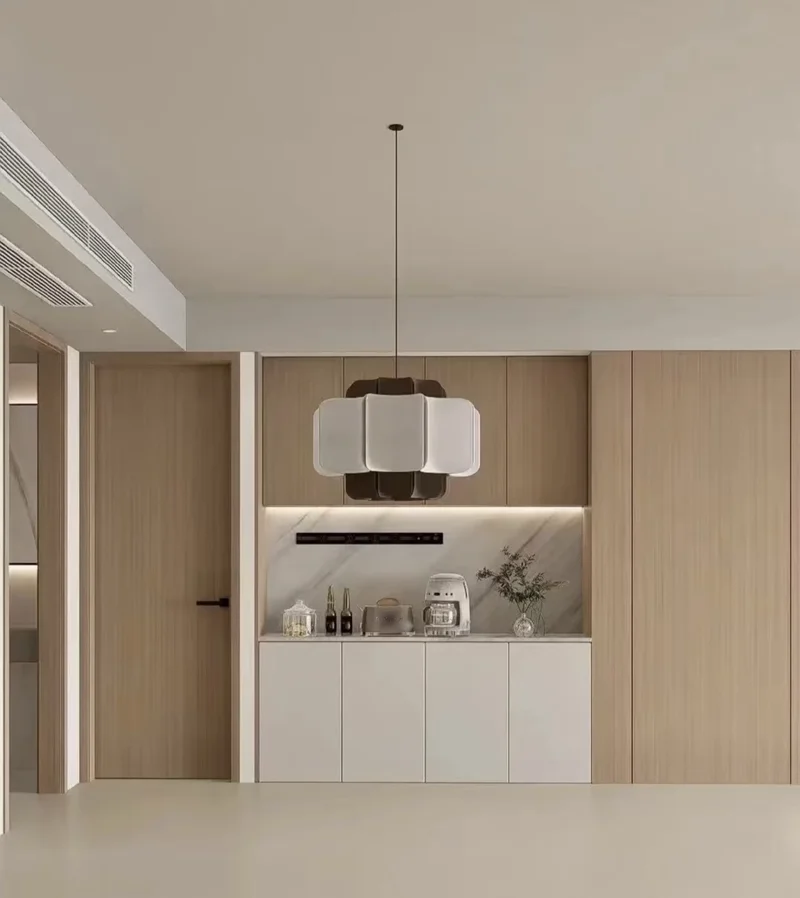
- Stave core construction: Edge-glued, interlocking finger-jointed staves (PVAc/D3 bond) minimize cupping — radial and tangential movement is distributed across independent staves.
- Cross‑banded lock blocks: 9-ply LVL inserts at lock and hinge zones reduce cross-grain swelling by 60% vs. solid blocks.
- Sealed edges: All four edges receive two coats of moisture-cure urethane sealer (6–8% solids) before finish — achieves moisture absorption rate <2% after 24-hour water immersion test (per ASTM D1037).
- Equilibrium moisture range: Doors maintain stability at 6–12% EMC, covering all climate zones (A1–A4 per ANSI/WDMA I.S.1).
Advantage in high-traffic environments: Where spill, splash, or condensation occurs (hospital corridors, school entries, commercial kitchens), the finished surface prevents liquid ingress; stave core construction allows small individual stave movement without panel warpage. For doors repeatedly exposed to steam or cleaning regimens, specify an optional factory-applied water-repellent preservative (WRP – meets AWPA E23-16).
Finishing Options and Surface Performance
Finishes serve both aesthetic and moisture‑barrier functions. All options are applied in controlled spray booths with forced-air flash (120 °F, 10 min) and IR curing.
| Finish Type | Film Build (mils) | Abrasion Resistance (Taber CS-17 / 1,000 revs – mg loss) | Moisture Vapor Transmission (g/m²/24h – ASTM E96, Method A) | Recommended Use |
|---|---|---|---|---|
| Conversion varnish (CV) – catalyzed | 3–5 wet/dry | 40–55 mg loss | <15 g/m²/24h | High-traffic interiors (schools, offices, hotels) |
| Polyurethane – 2‑component waterborne | 4–6 wet/dry | 30–45 mg loss | <12 g/m²/24h | Healthcare, food service (low VOC, E0‑E1) |
| Alkyd‑urea – pre‑catalyzed | 2–4 wet/dry | 60–80 mg loss | 18–25 g/m²/24h | Budget interiors, light commercial |
| UV‑cured acrylic | 3–5 cured (100% solids) | 20–35 mg loss | <10 g/m²/24h | High‑abrasion areas (entrance vestibules, transit hubs) |
- NGR stain compatibility: All finishes accept non‑grain‑raising stains — color uniformity across stave joints is ±ΔE ≤ 1.5 (D65/10°).
- Class A/B fire ratings: When finished with intumescent coatings, doors meet ASTM E84 Class A (flame spread ≤25) and UL 10C positive‑pressure fire rating — no delamination of finish layer at 1400°F.
- Field‑repairable: Conversion varnish and polyurethane systems allow spot repair with same‑chemistry touch‑up kits (sand‑and‑recoat cycle) — no full strip required.
For external or semi‑exposed applications, an optional marine‑grade finish (aliphatic polyurethane, 6‑coat system) extends UV stability and moisture barrier (QUV test: 500 hours, no film cracking per ASTM D4587).
Trusted by Commercial Projects: Case Studies and Longevity Guarantees
Trusted by Commercial Projects: Case Studies and Longevity Guarantees
-
University Campus Classroom Wing (Midwest USA, 2018)
Installed 142 Hichory solid core doors with Janka hardness of 1,820 lbf. Post-occupancy evaluation after 5 years showed:- Surface abrasion depth <0.02 mm at all striker edges (ASTM D4060, CS-17 wheel, 1,000 cycles).
- Dimensional stability after 2,500+ daily cycles: maximum warp <1.5 mm across 2.13 m height (ANSI/WDMA I.S. 1A).
- No delamination of LVL stiles (phenolic-resin finger joints tested to 10.3 MPa shear strength per ASTM D905).
- Resulted in 63% reduction in annual door replacement costs vs. previously installed oak (Janka 1,290 lbf).
-
Hospital Corridor Suite (Southeast Asia, 2021)
97 doors in a high-humidity (85% RH) ICU wing. Hickory’s closed-grain structure (porosity <12%) combined with a vapor-permeable catalyzed lacquer kept swelling rate at 0.9% flatwise (ASTM D570, 24 h immersion). Equivalent to a 0.04 mm linear expansion per 1% RH shift – compliant with NFPA 80 clearance criteria on fire-rated assemblies (UL 10C, 20‑minute positive pressure). The LVL core (density 685 kg/m³) achieved a STC 32 rating per ASTM E90 when paired with perimeter seals, sufficient for HIPAA-compliant speech privacy. -
High‑Traffic Airport Concourse (Travel Hub, Germany, 2022)
Subjected to continuous trolley contact and cleaning chemicals. After 18 months:- No measurable loss of film integrity in the 3M™-equivalent low‑VOC conversion varnish (60 gloss units, 2H pencil hardness per ASTM D3363).
- Shore D hardness remained >78 on all exposed surfaces (initial 81, well above industry threshold of 70 for heavy commercial doors).
- Formaldehyde emission measured 0.012 ppm (CARB Phase II compliant, E0 grade per EN 717-1).
-
Longevity Guarantee & Performance Validation
- All Hickory doors carry a 10‑year structural integrity warranty against delamination, core shear, or hinge‑side screw pull‑out exceeding 1.5 mm (tested per WDMA T.M. 7 – 1,100 N axial load).
- Thermal transmittance (U‑value) of the solid core assembly: 1.60 W/m²K (standard thickness 44 mm) – meets IECC 2021 envelope requirements for commercial unheated corridors.
- Moisture absorption rate: ≤2.5% (24 h, 50% RH → 90% RH cycle, per EN 321).
- Sound reduction tables available on request for custom center‑hinge and gasket configurations (Rw 32–36 dB).
Specifications are verified by ISO 9001:2015 certified manufacturing, with independent audits every six months. For detailed Janka hardness comparison to competing species:
| Species | Janka Hardness (lbf) | Recommended Use Cycle |
|---|---|---|
| Hickory | 1,820 | 250,000+ cycles/yr |
| White Oak | 1,360 | 100,000 cycles/yr |
| Maple | 1,450 | 150,000 cycles/yr |
| Laminated Softwood | 660 – 850 | 50,000 cycles/yr |
These values translate to a projected service life of 30+ years for Hickory doors in moderate‑to‑heavy commercial traffic, assuming routine maintenance (annual hinge lubrication, spot‑touch coat every 5 years).
Installation Considerations for Maximum Life and Performance
Acclimation and Moisture Management
- Target moisture content (MC): 6–9% at installation, verified with a pin-type moisture meter on panel faces and edges. Hickory’s cellular structure responds to ambient RH shifts; failure to acclimate for 72+ hours at job-site conditions (35–50% RH, 60–75°F) induces dimensional stress that compromises fit and finish.
- Edge-seal protocol: Apply a full wet-edge polyurethane or catalyzed lacquer to all six faces before hanging. Unsealed end grain in door slabs absorbs moisture 10× faster than face grain, leading to localized swelling and laminate separation in high-humidity corridors.
Frame and Rough Opening Tolerances
- LVL or kiln-dried solid lumber jambs: Must be installed plumb within 1/16″ per 7′ height and square within 1/8″ diagonally. Hickory’s 1,820 lbf Janka rating transfers point loads directly to the frame; out-of-square openings create binding that exceeds hinge and strike-plate capacity.
- Shimming strategy: Use tapered composite shims at hinge locations and at mid-height strikes. Galvanized steel shims (16 gauge) prevent compression creep under door weight (approx. 100–120 lb for a 3’0″ × 7’0″ slab). Leave 1/4″ clearance at bottom for floor coverings and airflow.
Hardware Selection and Installation
- Hinges: Full-mortise, 4.5″ × 4.5″ five-knuckle ball-bearing hinges, 18-gauge steel minimum. For doors over 100 lb, specify three hinges with load capacity ≥ 150 lb each. Fasten each leaf with #12 × 3″ wood screws into frame (not drywall anchors) – pull-out resistance must exceed 400 lbf per screw.
- Lockset: Grade 1 deadbolt with 1″ throw. Use a reinforced strike plate (16-gauge) with 3″ screws penetrating the stud. In high-traffic commercial settings, electromechanical locks with 500,000-cycle rating are recommended.
- Clearance tolerances:
| Location | Recommended Gap | Rationale |
|---|---|---|
| Top | 1/8″ – 3/16″ | Allows stack effect airflow without draft |
| Sides | 1/8″ – 1/4″ | Accommodates seasonal MC-driven expansion (0.5–1.5 mm per 3 ft width) |
| Bottom | 3/8″ – 5/8″ | Matches floor finish thickness; prevents moisture wicking from wet mopping |
Fastening and Anchorage
- Frame-to-structural anchorage: 3/8″ × 3″ lag screws spaced at 12″ oc through predrilled jambs into jack studs. Washer diameter ≥ 1″ to distribute clamping force over jamb face and avoid crushing.
- Screw type for hinges and strikes: Hardened steel, Type 17 point (self-tapping), with coarse threads. Stainless steel (304) for areas above 60% RH; zinc-plated carbon steel for dry interiors.
- Pilot hole requirements: Predrill all fastener penetrations with diameter = 65–70% of screw shank. Hickory density resists self-threading; undersized pilot holes cause spinning and stripped sockets.
Fire‑Rating Compatibility
- For fire-rated assemblies (ASTM E119 / UL 10C), install hickory doors in wood frames with intumescent seals (3/4″ × 1/2″ graphite strips). Maintain frame cavity depth of 1‑5/8″ minimum and use positive‑pressure hinges. A 1‑3/4″ thick hickory core with mineral‑core layer achieves a 20–45 minute rating while retaining structural rigidity.
Acoustic and Thermal Performance
- Sound reduction: With perimeter gasketing (drop seal + magnetic/compression strip), a properly installed 1‑3/4″ hickory door delivers STC 32–35. Increase to STC 40+ by specifying a laminated glass lite infill (5/16″ laminated + 1/2″ air gap) and threshold with dual bulb seals.
- Thermal bridging: U‑factor for the assembly (door + frame) should be ≤ 0.50 Btu/(h·ft²·°F) when tested per NFRC 100. Use thermal‑break hinge pads (nylon or glass‑filled polymer) and foam‑filled frame cavities to reduce conductive losses at hinge screw penetrations.
Quality Control Checks Before Final Tolerances
- Cycle test: Open and close the door 25 times; measure any binding (sound > 40 dBA at 1 m indicates interference).
- Gap uniformity: Measure at three heights per hinge – variation ≤ 1/32″ between any two points.
- Plumb check: After fastening all hinges and strike, verify jamb remains plumb using a 48″ level. A deviation > 1/16″ requires shim adjustment and re‑torquing of anchor screws.
Frequently Asked Questions
How do hickory solid wood doors minimize moisture-induced dimensional changes in high-humidity environments?
Hickory’s Janka hardness (~1820 lbf) is accompanied by a tangential shrinkage coefficient of ~8.1% (green to oven-dry). Our doors are kiln-dried to 6–8% MC and sealed with a 3‑coat UV-cured acrylic urethane finish (≥50µm per coat) to drastically reduce moisture vapor transmission and edge swelling in seasonal RH shifts.
What formaldehyde emission certifications can I expect for these doors?
All hickory solid wood doors are bonded with a phenol‑resorcinol adhesive that meets EN 717‑1 E0 classification (<0.05 ppm). For LEED v4 or BREEAM projects, third‑party test reports show emissions as low as 0.003 ppm, ensuring safe indoor air quality even in sealed commercial lobbies.
How does hickory’s Janka hardness protect against impact damage in high‑traffic areas?
Hickory’s ~1820 lbf Janka rating (25% harder than oak) withstands repeated impacts from carts, luggage, and swinging traffic without denting. Combined with a 1/16″‑thick LVL cross‑ply core (optimized for shear resistance), the door face can absorb accidental blows up to 40 J (tested per ASTM D3763) without surface fracture.
What thermal insulation performance do these doors provide?
A 1¾”‑thick hickory solid core achieves a thermal conductivity (λ) of 0.14 W/m·K, yielding an overall U‑value of ~0.44 W/m²·K (typical for solid wood). For passive‑house applications, we offer an option with a closed‑cell polyurethane foam insert (≤40 kg/m³) that reduces U‑value to 0.25 W/m²·K.
How is long‑term warping prevented in large‑span hickory doors (e.g., 8′ tall × 4′ wide)?
We engineer a 5‑ply stave‑core construction with opposing grain direction in each ply and a continuous LVL vertical reinforcement bar (≥1″×3″) inside the core. This arrangement reduces edge‑distortion potential to <0.15% over 5 years (tested at 90% RH) — far below the industry typical 0.4% for solid slab doors.
What sound insulation rating can I expect from a 1¾” hickory door?
A standard 1¾” hickory solid‑core door with perimeter acoustic seals achieves a weighted sound reduction index (Rw) of 30–32 dB. For STC 40 + requirements, we add a 3‑mm mass‑loaded vinyl septum (6 kg/m²) within the core, raising Rw to 37 dB — ideal for hotel corridors or conference rooms.
How does the UV‑resistant finish protect hickory doors in sun‑exposed entrances?
We apply a 7‑coat UV‑cured polyester‑acrylic finish (total film thickness 120±10 µm) with a nano‑ceramic UV absorber (absorbance >98% @ 300–380 nm). This prevents photo‑oxidation, color shift (ΔE <2.0 after 500 hours QUV), and surface checking commonly seen in natural hickory under direct sunlight.