Best Insulated Sectional Garage Doors for Cold Climates: Keep Your Garage Warm & Efficient
In regions where winter’s chill bites deep and snow lingers for months, maintaining a warm, energy-efficient garage isn’t just a comfort—it’s a necessity. Sectional garage doors insulated for cold climates offer a powerful solution, combining structural integrity with advanced thermal performance to protect your space, vehicles, and stored belongings from extreme temperatures. Engineered with high R-value insulation, durable weather sealing, and robust materials, these doors minimize heat loss, reduce energy costs, and enhance indoor comfort—especially in attached garages where temperature transfer can impact your home’s overall efficiency. Beyond insulation, modern designs integrate sleek aesthetics with smart technology, ensuring reliability without sacrificing style. Whether you’re battling subzero temperatures or frequent freeze-thaw cycles, choosing the right insulated sectional garage door is a strategic investment in long-term performance, durability, and energy savings. Discover how the best-in-class options are redefining resilience in the face of harsh winter conditions.
Why Insulated Sectional Garage Doors Are Essential in Cold Climates
- High thermal performance
- Structural integrity under extreme conditions
- Condensation mitigation
- Energy efficiency and cost control
- Protection of stored assets and equipment
In cold climates, insulated sectional garage doors are not a luxury—they are a necessity. The primary function of insulation is to minimize heat transfer between the interior and exterior environments. Without adequate insulation, garages act as thermal bridges, rapidly losing heat to the outside. This compromises not only comfort but also the efficiency of any heating system serving adjacent living spaces or workshops.
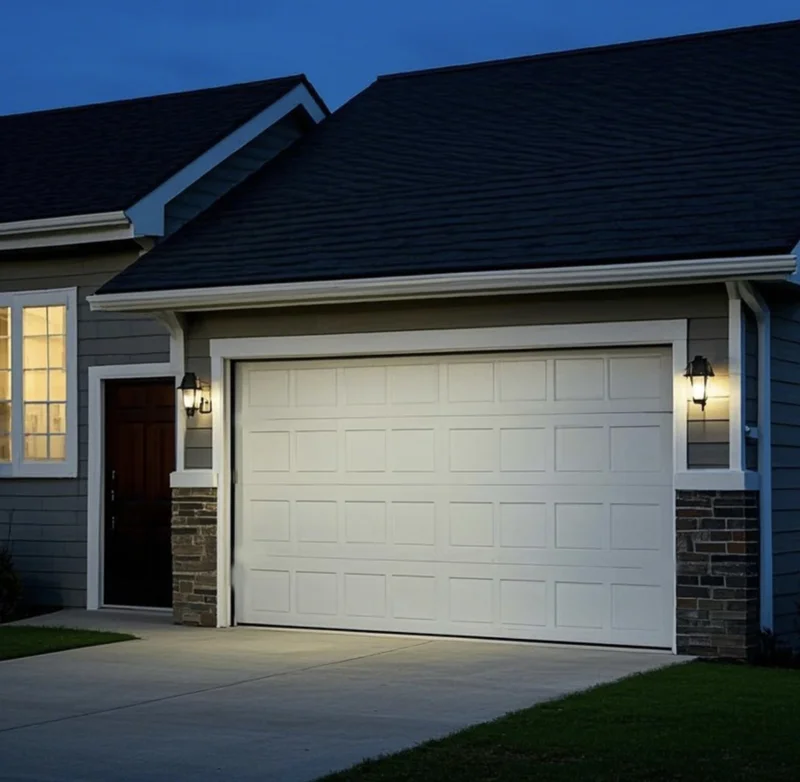
Thermal resistance is measured by R-value, and in cold regions, garage doors should have an R-value of at least 12–18. High-density polyurethane foam insulation, commonly used in premium sectional doors, delivers superior R-values per inch compared to alternatives like polystyrene. This ensures consistent thermal performance without adding excessive weight.
Beyond temperature regulation, insulated doors maintain structural rigidity in freezing conditions. Non-insulated steel doors are prone to contraction, warping, and increased stress on hinges and tracks due to thermal cycling. Insulated doors resist these effects, ensuring long-term operational reliability and reducing maintenance frequency.
Another critical factor is condensation control. In cold climates, temperature differentials often lead to moisture accumulation on cold surfaces. Insulated doors maintain surface temperatures above the dew point, significantly reducing the risk of rust, mold, and degradation of door components or stored contents.
Energy efficiency extends beyond the garage itself. Many homes have garages attached to conditioned spaces. A poorly insulated door allows cold air infiltration, forcing HVAC systems to work harder, increasing energy consumption and utility costs. Studies show that upgrading to a properly insulated sectional door can reduce heating loads by up to 20% in extreme climates.
Additionally, vehicles, tools, batteries, and other equipment stored in the garage benefit from stable temperatures. Lithium-ion batteries, for example, suffer reduced capacity and lifespan when exposed to prolonged cold. An insulated environment preserves functionality and longevity.
Ultimately, selecting a high-performance insulated sectional garage door in cold climates is a strategic investment in energy conservation, structural durability, and long-term cost savings. Performance should be evaluated not just on R-value, but on overall build quality, weather sealing, and material resilience.
Understanding R-Value: How Insulation Performance Impacts Garage Comfort
-
Understanding R-Value is essential when selecting an insulated sectional garage door for cold climates, as it directly correlates to thermal resistance and overall energy efficiency. R-Value measures an insulation material’s ability to resist heat flow—the higher the R-Value, the greater the insulating effectiveness. In practical terms, a door with a high R-Value minimizes heat transfer between the garage interior and the outside environment, maintaining stable indoor temperatures and reducing energy loss.
-
Garage doors are often the largest unconditioned openings in a home’s thermal envelope. Without adequate insulation, they can account for significant heat loss during winter months, especially in regions with prolonged sub-freezing temperatures. For cold climates, a sectional garage door with an R-Value of 16 or higher is strongly recommended. Doors rated at R-16 to R-19 typically use polyurethane foam insulation, which offers superior thermal performance compared to polystyrene (beadboard), commonly found in lower R-Value models.
-
It is critical to recognize that R-Value alone does not determine overall performance. Factors such as door construction, panel integrity, weatherstripping, and proper installation influence real-world efficiency. A high R-Value door with poor seals or thermal bridging through steel sections will underperform. Full-panel, thermally broken designs with reinforced edges and multi-point compression sealing optimize thermal performance by eliminating air infiltration and minimizing conductive heat loss.
-
For homeowners using the garage as a workshop, storage for temperature-sensitive items, or an extension of living space, maintaining thermal comfort is paramount. A well-insulated door not only enhances comfort but also supports energy efficiency in attached garages by reducing the load on adjacent home heating systems.
-
When evaluating products, verify that the published R-Value reflects the entire door assembly, not just the core insulation material. Some manufacturers report center-of-panel R-Values, which can be misleading due to edge and joint losses. Third-party testing and certification provide more accurate performance benchmarks.
-
Ultimately, investing in a high R-Value insulated sectional garage door is a strategic decision for long-term thermal performance, energy savings, and comfort in cold climate regions.
Top Materials and Construction Types for Winter-Ready Garage Doors
- Steel with polyurethane insulation
- Composite wood and steel with thermal breaks
- Fiberglass with insulated cores
Steel remains the dominant material for winter-ready garage doors due to its strength, durability, and compatibility with high-performance insulation. Fully insulated steel sectional doors with a minimum thickness of 1.5 inches and bonded polyurethane foam cores achieve R-values between R-12 and R-18, providing substantial thermal resistance. The seamless bond between steel skins and the foam core eliminates thermal bridging, ensuring consistent performance in subzero conditions. Look for models with thermal breaks in the end stiles and struts to further reduce heat transfer.
Composite construction—combining steel frames with real wood or wood-grain steel overlays—offers aesthetic versatility without sacrificing thermal performance. These doors incorporate thermal breaks between interior and exterior layers, preventing conductive heat loss. When paired with injection-molded polyurethane insulation, composite doors maintain structural integrity and thermal efficiency across extreme freeze-thaw cycles.
Fiberglass doors, while less common in severe cold, can perform effectively when engineered for insulation. High-quality fiberglass units feature reinforced panels with foamed-in-place polyurethane cores. Their non-conductive nature limits thermal bridging, and their resistance to warping ensures consistent seal integrity over time. However, attention must be paid to reinforcement and edge sealing, as poorly constructed fiberglass doors may delaminate under prolonged thermal stress.
Regardless of material, construction quality dictates winter performance. Look for:
| Feature | Importance |
|---|---|
| Double-weather stripping | Seals top and bottom joints, preventing cold air infiltration |
| Reinforced section joints | Minimize flexing and air leakage under wind load |
| Thermally broken hinges and rollers | Reduce conductive transfer through hardware |
Panel design also matters. Rabbeted or tongue-and-groove interlocks between sections create tighter seals than flat abutments. Doors with continuous vinyl weather stripping along section joints outperform interrupted seals. Finally, proper installation with a thermally broken subframe and insulated jamb system ensures the entire assembly functions as a unified thermal barrier.
Material selection must balance insulation, durability, and climate-specific performance. In regions with prolonged subzero temperatures and heavy snowfall, fully insulated steel or thermally broken composite doors provide the most reliable long-term efficiency and structural resilience.
Energy Efficiency and Cost Savings with Cold-Climate Garage Door Insulation
-
Thermal performance in cold climates hinges on minimizing heat transfer, and garage door insulation plays a pivotal role in achieving energy efficiency. In regions where temperatures consistently drop below freezing, uninsulated or poorly insulated garage doors contribute significantly to heat loss, increasing the energy burden on adjacent living spaces and HVAC systems.
-
Cold-climate garage door insulation is typically measured by R-value, which quantifies thermal resistance. High-performance insulated sectional doors for cold environments should have an R-value of at least R-16, with premium models reaching R-21 or higher. This level of insulation reduces convective and conductive heat transfer, maintaining stable interior temperatures and reducing strain on heating systems.
-
The construction of the door itself enhances efficiency. Sandwich-style steel doors with continuous foam cores—particularly polyurethane foam—deliver superior insulating properties compared to polystyrene or non-insulated designs. Polyurethane has a higher R-value per inch and adheres tightly to interior and exterior door skins, minimizing thermal bridging and air infiltration.
-
Proper sealing complements insulation. Integrated weatherstripping along the door’s perimeter and threshold seals out cold air, snow, and wind-driven moisture. Without effective sealing, even high R-value doors experience diminished performance due to air leakage.
-
Energy savings are both direct and indirect. A well-insulated garage reduces heat loss in attached homes, lowering heating costs by up to 10–20% in colder months. Additionally, temperature stability protects vehicles, electronics, and stored materials from thermal stress and condensation-related damage.
-
Long-term cost efficiency is further enhanced by reduced HVAC wear and improved system longevity. Though insulated sectional doors have a higher initial cost, the return on investment is realized through lower utility bills and increased comfort.
-
In commercial and residential applications alike, investing in high-R-value, tightly sealed sectional garage doors engineered for cold climates represents a technically sound strategy for energy conservation and operational cost reduction.
Installation and Maintenance Tips to Maximize Insulation Performance
-
Ensure precise alignment of sectional panels during installation to prevent air infiltration and maintain thermal continuity. Misaligned sections create gaps that compromise insulation performance, especially under wind pressure or thermal expansion.
-
Use a high-quality, low-expansion polyurethane foam sealant at perimeters and joints. Avoid overfilling, which can distort framing; instead, apply in controlled beads to seal gaps without compromising door operation.
-
Install weatherstripping at all door interfaces—bottom, sides, and top—using materials rated for low-temperature flexibility (e.g., EPDM rubber). Standard seals harden below freezing, leading to cracking and air leakage. Replace seals showing compression set or brittleness annually in extreme climates.
-
Verify that the garage door opener is properly calibrated to exert minimal force necessary for operation. Excessive pressure accelerates wear on hinges, rollers, and track systems, leading to misalignment and reduced insulation integrity over time.
-
Conduct quarterly inspections of panel joints and insulation cores. Look for delamination signs—dimpling, soft spots, or moisture ingress—particularly in doors with polyurethane cores. Replace compromised panels promptly to prevent thermal bridging.
-
Maintain a minimum 1/2-inch clearance between the garage floor and the bottom seal. Dirt, ice buildup, or uneven flooring can lift the door slightly, breaking the seal. Level the threshold or install a threshold ramp if necessary.
-
Lubricate rollers, hinges, and tracks semi-annually with a silicone- or lithium-based lubricant rated for sub-zero temperatures. Avoid petroleum-based products, which attract debris and degrade rubber components.
-
Monitor ambient humidity levels within the garage. Condensation within panel cavities indicates compromised seals and potential insulation degradation. Address ventilation issues or install a dehumidification system in tightly sealed, heated garages.
-
For electrically heated garages, ensure the door’s thermal performance (R-value) matches or exceeds wall insulation to prevent heat loss concentration at the door. Aim for R-values of 16 or higher in sustained sub-zero environments.
-
Train users to avoid leaving the door partially open during extreme cold. Prolonged exposure accelerates thermal shock and induces stress fractures in panel substrates and seals.
-
When replacing hardware, use thermally broken fasteners where applicable to reduce conductive heat loss through metal components penetrating insulated panels.
Frequently Asked Questions
What R-value is recommended for insulated sectional garage doors in cold climates?
For cold climates, a sectional garage door should have an R-value of at least R-16 to R-18 to provide effective thermal resistance. Higher R-values, such as R-20, are ideal in extreme cold regions like northern climates or areas with prolonged sub-zero temperatures, minimizing heat transfer and improving energy efficiency in attached garages.
How do polyurethane-insulated doors compare to polystyrene-insulated doors in cold weather performance?
Polyurethane-insulated doors offer superior thermal performance compared to polystyrene, with higher R-values per inch (typically R-6 to R-7 per inch vs. R-4 for polystyrene). Polyurethane also bonds structurally to the steel exterior, enhancing door strength, while polystyrene is often loosely fitted and provides less effective insulation in freezing conditions.
Are steel-reinforced insulated sectional garage doors necessary in snowy regions?
Yes, steel-reinforced frames and struts are critical in snowy regions to withstand heavy snow loads and prevent warping or structural failure. Reinforced doors maintain alignment under thermal stress and snow weight, ensuring long-term insulation performance and smooth operation during freeze-thaw cycles.
What type of weather sealing is most effective for preventing cold air infiltration around sectional garage doors?
High-density thermoplastic rubber (TPR) or EPDM rubber seals are most effective in cold climates, resisting cracking and maintaining flexibility below -30°F. Look for compression seals at the bottom and jamb seals with dual flaps—these create an airtight barrier against wind-driven snow and cold drafts.
Can insulated sectional garage doors help reduce ice dam formation on attached homes?
Yes, properly insulated and sealed garage doors minimize heat leakage from the garage into the attic space, reducing the risk of uneven roof temperatures that cause ice dams. Combined with proper attic insulation and ventilation, a high-R-value garage door contributes to balanced thermal performance across the building envelope.
What are the benefits of thermal breaks in insulated sectional garage door designs?
Thermal breaks—discontinuous insulation or non-conductive materials between interior and exterior steel panels—reduce thermal bridging. This prevents condensation, improves overall U-factor, and enhances energy efficiency, especially critical in cold climates where temperature differentials exceed 70°F.
Is a higher gauge steel better for insulated garage doors in freezing environments?
Yes, 24-gauge or 25-gauge steel offers optimal strength and dent resistance while allowing for better insulation integration. Thinner 27-gauge steel may be prone to buckling under ice expansion or thermal stress; 24-gauge provides durability without sacrificing insulating core thickness.
How does door thickness impact insulation performance in cold climates?
Sectional garage doors that are 1.75 to 2 inches thick accommodate more insulation material and higher R-values. Thicker doors reduce thermal bridging through hinges and tracks and provide greater structural rigidity, essential for maintaining tight seals in harsh winter conditions.
Should I choose a torsion spring system over extension springs for cold climate garage doors?
Yes, torsion spring systems are more reliable and safer for cold climates. They offer balanced lifting force, reducing strain on the insulated door’s structure during rapid temperature shifts, and are less prone to metal fatigue in freezing conditions compared to extension springs.
Can smart garage door openers improve energy efficiency in insulated cold-climate installations?
Yes, smart openers with usage monitoring and auto-close features prevent prolonged door openings, minimizing heat loss. When integrated with home energy management systems, they contribute to maintaining consistent indoor temperatures, particularly in attached garages with high-performance insulated doors.
What maintenance is required for insulated sectional garage doors in sub-zero environments?
Routine maintenance includes checking and lubricating hinges, rollers, and springs with cold-weather-rated silicone or lithium-based lubricants to prevent freezing. Inspect weather seals quarterly for cracks or compression set, and ensure tracks remain aligned to preserve insulation integrity and door seal.
Are there building code requirements for insulated garage doors in cold climate zones?
Yes, energy codes such as the International Energy Conservation Code (IECC) mandate minimum insulation R-values (e.g., R-12 to R-19) for garage doors in Climate Zones 5 through 8. Always verify local code requirements, as some jurisdictions enforce higher standards for homes in arctic or alpine regions.