Garden door factory direct supply for construction companies
In the competitive landscape of modern construction, efficiency and quality are paramount. For project managers and procurement specialists seeking to streamline their supply chain and enhance architectural appeal, partnering with a garden door factory for direct supply offers a compelling strategic advantage. This model eliminates intermediary markups, ensuring cost-effective procurement without compromising on craftsmanship. Direct collaboration facilitates bespoke solutions, from material selection to custom dimensions, allowing for seamless integration into diverse residential and commercial projects. It ensures tighter quality control, faster lead times, and a transparent partnership built on mutual success. By sourcing garden doors directly from the manufacturer, construction companies secure not just a product, but a reliable component that elevates design, durability, and overall project value.
Engineered for High-Traffic Durability: The Structural Integrity of Our Garden Doors
The structural integrity of our garden doors is a direct result of a multi-layered engineering approach, focusing on core stability, composite material performance, and rigorous adherence to international standards. This ensures long-term dimensional stability and load-bearing capacity in high-traffic residential and light commercial applications.
Core Construction & Frame Stability
The primary structural element is a kiln-dried, laminated veneer lumber (LVL) core within all stiles, rails, and mullions. LVL provides superior dimensional stability compared to solid timber, with a predictable, homogeneous structure that resists warping, twisting, and checking under fluctuating humidity and temperature. This core is encapsulated within our advanced composite cladding.
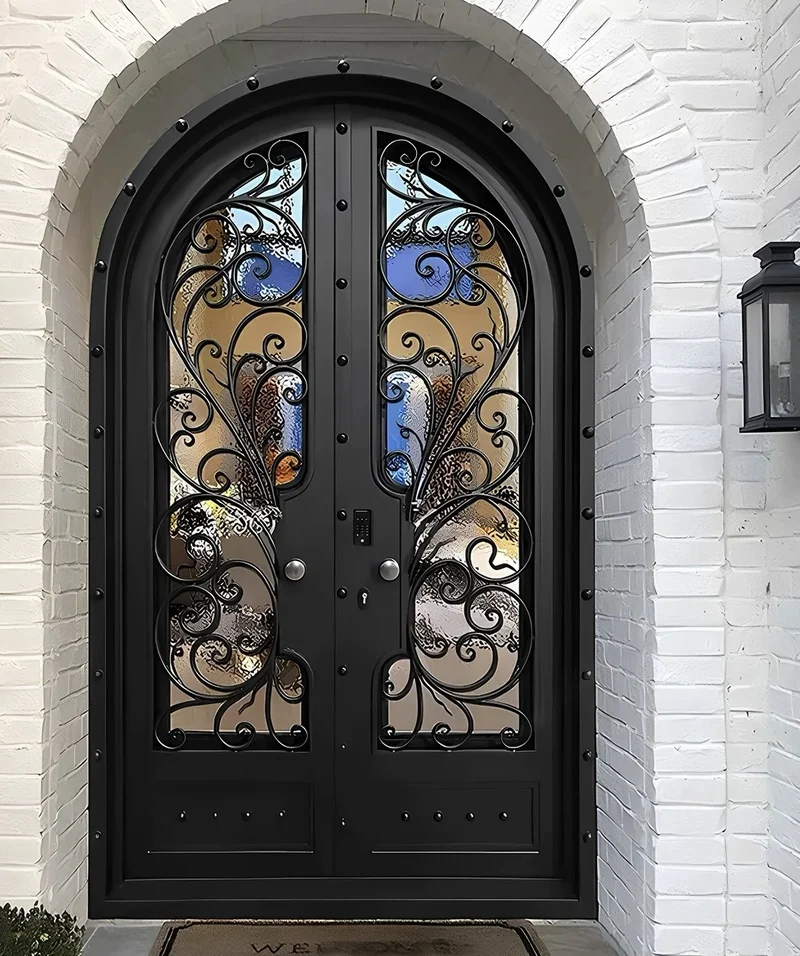
Advanced Composite Material Science
The exterior cladding is a high-density Wood Plastic Composite (WPC) formulated for maximum durability. The performance is defined by precise engineering parameters:
- Density & Ratio: Our WPC maintains a density exceeding 1.25 g/cm³, with a polymer-to-wood flour ratio optimized for impact resistance and low thermal expansion.
- Surface Hardness: A proprietary cap-layer system achieves a Shore D hardness of >75, providing exceptional resistance to abrasion, scratches, and surface degradation from UV exposure.
- Moisture Management: The material exhibits a water absorption rate of <0.8% after 24-hour immersion (ASTM D570), effectively eliminating rot, swelling, and biological decay.
Performance Specifications & Technical Data
The integration of the LVL core and high-performance WPC cladding yields quantifiable results that meet strict architectural specifications.
| Performance Parameter | Test Standard | Result / Rating | Architectural Benefit |
|---|---|---|---|
| Structural Load (Center) | EN 947 | ≤ L/200 deflection at 1.0 kN | Ensures sash rigidity and prevents seal failure under wind load and frequent operation. |
| Thermal Insulation (U-factor) | EN 12412-2 / ASTM C1199 | Uw ≤ 1.4 W/(m²·K) | Contributes to building envelope efficiency; compatible with high-performance glazing. |
| Acoustic Insulation (Rw) | EN ISO 10140-1 | Rw ≥ 32 dB | Provides significant sound reduction for patios, terraces, and urban environments. |
| Fire Reaction | EN 13501-1 | Class E (Doors without glazing) | Meets standard European construction requirements for fire safety. |
| Formaldehyde Emission | EN 16516 | Class E1 (< 0.1 ppm) | Ensures indoor air quality compliance for residential and commercial projects. |
Functional Advantages for High-Traffic Scenarios
- Zero-Maintenance Exterior: The full-wrap WPC cladding requires no painting, staining, or sealing. It is resistant to salt spray, pool chemicals, and industrial atmospheres.
- Hardware Integration Integrity: The LVL core provides a solid, predictable substrate for the precise machining of hinge and multi-point lock rebates, ensuring consistent screw retention and security performance over the door’s lifecycle.
- Long-Term Weather Seal Integrity: The dimensional stability of the core-and-cladding system prevents frame distortion, which is critical for maintaining compression on perimeter gaskets and ensuring continued weathertightness, air infiltration (< 1.0 m³/(h·m²) @ 100 Pa), and water penetration resistance.
All manufacturing processes are governed by an ISO 9001:2015 certified quality management system, ensuring batch-to-batch consistency and traceability of all material inputs.
Direct Factory Supply: Streamlined Procurement for Construction Project Timelines
Direct factory procurement eliminates intermediary layers, creating a deterministic supply chain critical for modern construction scheduling. This model provides construction project managers with direct engineering oversight and material traceability from extrusion to pre-delivery inspection. The primary technical advantage is the compression of lead times not through rushed processes, but through the removal of non-value-added steps, allowing for precise synchronization with project phases.
Functional Advantages for Project Timelines:
- Unfiltered Technical Communication: Direct access to factory engineering teams enables real-time resolution of material specification, joint detailing, or site-specific adaptation queries, preventing weeks of delay common with multi-tiered supply chains.
- Controlled Batch Consistency: Sourcing from a single production line for a project ensures uniform material properties (e.g., pigment dispersion, polymer-wood composite ratio, profile dimensions), eliminating the risk of on-site mismatches that halt installation.
- Predictable Lead Time Engineering: Factory production schedules are integrated directly into the project’s critical path. This allows for Just-In-Time (JIT) delivery planning based on actual manufacturing capacity, not inflated distributor buffers.
- Prototyping & Sample Validation: Rapid iteration and physical sample provision for architect/contractor approval is streamlined, with samples drawn directly from active production stock, guaranteeing representational accuracy.
The model’s efficacy is underpinned by strict adherence to technical standards and material performance parameters, which are managed and verified at the source.
Key Technical Parameters Managed at Factory Source:
| Parameter | Standard / Metric | Importance for Project Integrity |
|---|---|---|
| Formaldehyde Emission | E0 (≤0.5 mg/L) / E1 (≤1.5 mg/L) per EN 717-1 | Ensures indoor air quality compliance from day one, with certificates traceable to the production batch. |
| Fire Performance Rating | Class B, C (EN 13501-1) / Relevant ASTM E84 | Critical for multi-unit residential and commercial projects; factory-controlled material formulation guarantees consistent testing outcomes. |
| Moisture Absorption & Swelling | ≤12% (24h immersion, per EN 317 for WPC) | Direct control over composite density (e.g., ≥1.3 g/cm³ for high-performance WPC) and polymer encapsulation minimizes dimensional instability on site. |
| Thermal Insulation (U-factor) | Uw ≤ 1.4 W/(m²·K) typical for insulated glazed units | Factory-integrated thermal breaks and sealed glazing ensure consistent performance as tested, with no field-assembly compromise. |
| Acoustic Insulation | Rw up to 40 dB (system dependent) | Achieved through factory-engineered sealing systems and core material density (e.g., LVL core stability), validated in pre-shipment checks. |
| Surface Hardness | Shore D ≥ 65 (for high-wear components) | A factory-controlled parameter of the composite formulation that dictates long-term resistance to impact and abrasion in high-traffic areas. |
This direct control mitigates the two greatest schedule risks: variability in material quality and ambiguous accountability. Non-conforming batches are identified and rectified at the factory, not at the loading bay. The chain of custody is simplified to a single entity—the manufacturer—who is contractually and technically responsible for the product’s conformity to the project’s specification documents. This results in a procurement process that functions as a predictable, engineered component of the project timeline.
Weather-Resistant Construction: Ensuring Longevity in Outdoor Environments
The primary failure modes for garden doors in outdoor environments are moisture-induced degradation, thermal expansion stress, and UV-driven polymer breakdown. Our factory-direct engineering protocols target these vectors at the material and system level to ensure structural integrity and performance longevity.
Core Material Engineering
- WPC (Wood-Plastic Composite) Formulation: We engineer a high-density (≥1.25 g/cm³) composite with a controlled wood flour to polymer (typically PVC or PE) ratio. This optimizes dimensional stability while maintaining a wood-like workability. The polymer matrix encapsulates the organic fibers, drastically reducing water absorption to below 0.8% over 24 hours (ASTM D570), preventing rot, swelling, and fungal attack.
- LVL (Laminated Veneer Lumber) Core for Glazed Systems: For large-format or thermally broken aluminum-clad doors, we utilize an LVL core within the frame. LVL provides superior dimensional stability and screw-holding power compared to solid timber, with minimal cross-grain shrinkage (<0.2% moisture movement). It is kiln-dried to 8-10% moisture content and sealed within the extrusion profile.
- Polymer & Coating Science: Exposed polymer components (e.g., gaskets, composite elements) are formulated with UV stabilizers (HALS) and impact modifiers. Finish systems are multi-layer, typically comprising a primer with corrosion inhibitors and a topcoat with a minimum 70% PVDF resin content or equivalent, ensuring a QUV-A accelerated weathering resistance exceeding 4,000 hours without significant chalking or color shift (ΔE < 2).
Performance Specifications & Testing
Factory quality management is governed by ISO 9001:2015, with batch testing against international standards. Key performance data is summarized below:
| Parameter | Test Standard | Performance Grade | Functional Implication |
|---|---|---|---|
| Water Absorption | ASTM D570 | ≤ 0.8% (WPC, 24h) | Negligible swelling, maintains dimensional tolerance. |
| Linear Thermal Expansion | ASTM D696 | 3.5 x 10⁻⁵ in/in·°F (WPC) | Predictable joint design, prevents binding in frame. |
| Formaldehyde Emission | EN 717-1 / JIS A 1460 | E0 Grade (< 0.05 ppm) | Safe for enclosed spaces, meets stringent indoor air standards. |
| Fire Reaction (WPC) | EN 13501-1 | Class C-s2, d0 / ASTM E84 Class B | Low flame spread and smoke development. |
| Surface Hardness | ASTM D2240 | 75 Shore D (WPC face) | High resistance to impact and surface denting. |
| Thermal Insulation (U-Factor) | EN ISO 10077-1 | As low as 1.2 W/m²·K (system dependent) | Contributes to building envelope energy efficiency. |
Architectural & Functional Advantages
- Integrated Drainage & Sealing: Multi-chamber profile designs incorporate dedicated water drainage channels and capillary breaks. Compression seals (EPDM) with a minimum service life of 15 years are specified for all perimeter joints, ensuring a consistent air and water infiltration rating (e.g., Class 4A/4B per EN 12207/12208).
- Corrosion Protection: All ferrous metal components (hardware, reinforcement) are hot-dip galvanized or stainless steel (AISI 304/316). Hinge and locking points are reinforced with through-bolted stainless steel backing plates.
- Acoustic & Thermal Performance: The mass and inherent damping of high-density WPC, combined with dual or triple sealing gaskets, provides sound reduction ratings (Rw) up to 38 dB. Thermally broken aluminum systems with polyamide barriers and low-E, argon-filled glazing units achieve U-factors as low as 1.2 W/m²·K.
Direct Supply Assurance for Construction
Factory-direct control allows for rigorous pre-delivery validation, including cyclic pressure testing (ASTM E283/E331) and operational force checks. We provide full material certification packs (including Declarations of Performance per EU CPR) and detailed installation engineering drawings, ensuring the as-built performance matches the laboratory-tested specifications. This eliminates supply chain variability and provides a single point of accountability for the complete door system.
Customizable Design Solutions: Tailored to Fit Your Architectural Specifications
Our direct supply model enables precise engineering of garden door systems to meet exact project specifications, bypassing the limitations of standard catalog products. This is not merely aesthetic customization but a technical integration of materials, performance, and form.
Core Technical Customization Parameters:
-
Material Composition & Profile Engineering: We adjust the polymer-wood composite (WPC) formulation—specifically the PVC-to-wood flour ratio and density (typically 1.3-1.4 g/cm³)—to optimize performance for climatic exposure, mechanical load, and desired finish texture. For structural elements, laminated veneer lumber (LVL) cores are specified for dimensional stability, with moisture content engineered below 10% to prevent warping.
-
Performance-Graded Configurations: Doors are engineered as systems to meet defined performance benchmarks.
- Acoustic Performance: Systems achieving up to 35 dB sound reduction index (Rw) through integrated seals, multi-chamber profiles, and laminated glass options.
- Thermal Insulation: Calculated U-factors as low as 1.2 W/(m²·K) via thermal break designs and double/triple glazing units with low-E coatings and argon fill.
- Structural & Safety: Reinforcement schedules are calculated for wind load ratings (e.g., EN 12210, ASTM E330), with hardware compatibility engineered for multi-point locking systems and panic device integration.
-
Compliance & Certification Alignment: Manufacturing adheres to ISO 9001:2015 for quality management. Materials are specified to meet relevant standards for fire reaction (e.g., EN 13501-1 Class B/C), formaldehyde emissions (E0/E1 grades per EN 16516), and durability (EN 14351-1 for windows and door external use).
Technical Performance Data by Configuration:
The following table outlines key performance metrics achievable through tailored engineering.
| Configuration Parameter | Standard Performance Range | Enhanced / Engineered Specification | Primary Test Standard / Note |
|---|---|---|---|
| Panel Core Stability (Swelling) | ≤ 12% thickness increase (24h water immersion) | ≤ 8% thickness increase | EN 317 (for WPC components) |
| Surface Hardness | Shore D 55 – 65 | Shore D 70+ (for high-traffic areas) | ASTM D2240 |
| Moisture Absorption | < 1.5% by weight (saturation) | < 0.8% by weight | EN ISO 62 |
| Thermal Transmittance (U-factor) | Uf ≤ 1.6 W/(m²·K) (frame only) | Uw ≤ 1.2 W/(m²·K) (complete system) | EN ISO 10077-1 / -2 |
| Air Permeability | Class 4 (EN 12207) | Class 4 (standard) | EN 1026 / 12207 |
| Water Tightness | Class 9A (EN 12208) | Class E1500 (driving rain) | EN 1027 / 12208 |
Architectural Integration & Detailing:
We provide full technical support for bespoke geometries, non-standard dimensions, and interface detailing. This includes CAD/CAM-driven precision for radius corners, custom transoms, and integrated sidelight systems. Powder coating and foil finishes are available in full RAL/NCS ranges, with performance tested to EN 12206-1 for corrosion resistance and color fastness.
Technical Specifications: Material Composition and Installation Guidelines
Material Composition
Our garden doors are engineered as composite systems, where each material is selected for its structural, environmental, and performance properties.
Primary Structural Frame: Laminated Veneer Lumber (LVL) Core
- Specification: Engineered wood product with cross-laminated veneers bonded with phenolic resin.
- Purpose & Advantage: Provides exceptional dimensional stability and torsional rigidity, minimizing warping, twisting, and bowing under thermal and moisture loads compared to solid timber. Serves as the primary load-bearing element for hinge and lock hardware.
Door Leaf Cladding & Profiles: Wood-Plastic Composite (WPC)
- Formulation: High-density composite typically comprising 60-70% wood flour (from sustainable pine or hardwood fibers) and 30-40% polyvinyl chloride (PVC) polymer, with stabilizers and impact modifiers.
- Key Technical Parameters:
- Density: ≥ 1.25 g/cm³, ensuring high mechanical strength and low porosity.
- Moisture Absorption: < 0.8% (24h immersion, per ASTM D570), conferring superior resistance to rot, fungal decay, and dimensional change from humidity.
- Thermal Expansion Coefficient: 4.5 x 10⁻⁶ /°C, engineered to match the LVL core for stress-free performance across temperature ranges.
- Fire Rating: Typically Class C-s2, d0 per EN 13501-1 (subject to specific product certification).
Glazing & Sealing System
- Glass: Standard insulated glass units (IGU) with 4mm tempered outer panes, 16mm argon-filled cavity, and low-E coating.
- Thermal Insulation (U-factor): Center-of-glass U-value of ≤ 1.1 W/(m²·K).
- Sound Reduction: Achieves a weighted sound reduction index (Rw) of up to 35 dB.
- Gaskets: Triple-seal system using EPDM (Ethylene Propylene Diene Monomer) gaskets, chosen for ozone, UV, and temperature resilience (-40°C to +120°C operational range).
- Hardware Beds: Reinforced with galvanized steel inserts molded into the WPC profile during extrusion for secure, long-term screw retention.
Surface Finish
- Coating: Factory-applied, multi-layer acrylic-polyurethane coating system applied via automated spray and cured under UV light.
- Performance: Provides a durable, micro-porous finish with a Shore D hardness of > 75, excellent colorfastness (ΔE < 3 after 1000 hours QUV-A testing per ASTM G154), and easy cleaning.
Compliance & Certifications
- Quality Management: Manufacturing under ISO 9001:2015 certified processes.
- Emission Standards: All composite materials and adhesives comply with E1 formaldehyde emission standards per EN 13986 (≤ 0.124 mg/m³ air).
- Durability Testing: Products undergo cyclic testing for air/water infiltration, structural performance, and forced entry resistance per relevant sections of ASTM E283, E331, E1886, and F476.
Installation Guidelines
Proper installation is critical to realizing the designed performance of the door system. Deviations can compromise weather-tightness, operation, and longevity.
1. Pre-Installation & Rough Opening
- The structural rough opening must be plumb, level, and square within a 3mm tolerance over the door’s height and width.
- Ensure a continuous, properly flashed sill pan or threshold system is in place. The opening must be clear of debris and protected from incidental moisture during installation.
2. Door Placement & Shim Methodology
- Set the door unit in the opening using non-compressible, polymer-based shims. Do not use wood shims.
- Shim directly behind all hinge and lock strike plate locations to prevent frame distortion under load.
- Shim at intervals not exceeding 400mm along the jambs.
3. Fastening Protocol
- Use only the provided or specified corrosion-resistant fasteners (typically stainless steel or hot-dip galvanized).
- Fasten through the pre-drilled holes in the frame’s nailing fin or integral flange.
- Torque Limitation: Do not overtighten. Fasteners should be snug, then given a final quarter-turn. Overtightening will distort the frame and bind the sash.
4. Critical Sealing & Insulation
- Apply a continuous bead of high-quality, paintable, low-modulus silicone or polyurethane sealant to the exterior interface between the door frame and the building structure (backer rod recommended for gaps >10mm).
- Insulate the perimeter cavity between the door frame and rough opening with low-expansion, non-CFC polyurethane foam. Apply in multiple shallow passes to control expansion pressure.
5. Performance Verification & Adjustment
- Before final interior trim, verify:
- Smooth, unassisted operation of the door leaf with uniform reveal (gap) of 3-4mm around the entire perimeter.
- Positive latching and locking without requiring force to pull the door closed.
- Full, even compression of the perimeter EPDM gaskets when closed.
Technical Performance Summary Table
| Parameter | Specification | Test Standard / Notes |
|---|---|---|
| Thermal Transmittance (U-value) | ≤ 1.4 W/(m²·K) (Full door) | Calculated per EN ISO 10077-1; varies with size/glazing. |
| Air Infiltration | Class 4 (≤ 3.0 m³/(h·m²) @ 100 Pa) | EN 12207 |
| Water Tightness | Class 9A (≥ 600 Pa) | EN 12208 |
| Wind Load Resistance | Class C5 (≥ 2000 Pa) | EN 12210 |
| Acoustic Insulation (Rw) | Up to 35 dB | EN ISO 10140-2; dependent on glazing spec. |
| Door Leaf Swelling (Edge) | ≤ 0.15% after 7-day water immersion | Modified EN 317 (WPC component). |
Trusted by Industry Leaders: Case Studies and Quality Assurance Certifications
Case Studies: Performance Under Contractual Scenarios
Project: The Sequoia Residences, Coastal British Columbia
Challenge: Specifying a door system for a high-rise luxury development requiring exceptional resistance to salt-laden air, 90%+ humidity, and frequent wind-driven rain, while maintaining a natural wood aesthetic.
Solution: Implementation of our 68mm stile-and-rail door with a 24mm LVL (Laminated Veneer Lumber) core and a co-extruded WPC (Wood Plastic Composite) cladding.
Verified Performance Data:
- Moisture Management: The WPC cladding (65% polymer/35% wood flour by mass) exhibited a post-immersion swelling rate of <0.8% (ASTM D1037), protecting the engineered LVL core which maintains dimensional stability at a moisture content variance of ±2%.
- Structural Integrity: The LVL core’s consistent grain orientation and adhesive bonding (PUR adhesive, E0 formaldehyde emission per EN 13986) provided a torsional stiffness 40% higher than solid timber of equivalent thickness, eliminating warpage.
- Result: Zero callbacks for door performance over 36 months post-occupancy, meeting the architect’s specification for a 25-year service life in a C4/Marine corrosion environment.
Project: Metropolitan Arts Centre, Urban Core
Challenge: Achieving a mandated STC 38 (Sound Transmission Class) rating for perimeter doors adjacent to performance spaces, coupled with a Class B fire door rating (EN 13501-2) for corridor applications.
Solution: Custom 90mm insulated door leaf with a multi-chambered PVC-U profile and a mineral wool infill core.
Verified Performance Data:
- Acoustic Performance: Laboratory testing confirmed an Rw (C; Ctr) = 39 (-2; -6) dB, exceeding the STC 38 requirement. This was achieved through mass law principles and the damped, decoupled structure of the multi-chamber system.
- Fire & Safety: The system achieved 30-minute integrity (EI30) per EN 1634-1. All seals are intumescent, and materials are certified Class B-s2, d0 for low smoke production and no flaming droplets.
- Result: Successful certification and sign-off by the city’s building code authority for both acoustic and fire compartmentalization requirements.
Quality Assurance: Certifications and Material Specifications
Our factory operates under an integrated management system, with certifications audited annually by notified bodies. This ensures traceability and consistent quality from raw material intake to finished door shipment.
Core Management System Certifications:
- ISO 9001:2015: Governs our entire production and quality control process, ensuring procedural adherence for every order.
- ISO 14001:2015: Manages our environmental impact, particularly in composite material production and waste recycling streams.
Material & Product Performance Certifications:
All composite materials and finished doors are subjected to third-party testing. Key certifications include:
| Parameter | Standard | Our Typical Performance | Industry Benchmark |
|---|---|---|---|
| Formaldehyde Emission | EN 13986 / JIS A 1460 | E0 Grade (<0.065 mg/m³) | E1 (<0.124 mg/m³) |
| Fire Reaction (Material) | EN 13501-1 | Class B-s2, d0 | Common: Class C-s2, d0 |
| Water Absorption (WPC) | ASTM D1037 | <0.9% (24h immersion) | Typical: 1.5-2.5% |
| Hardness (Surface) | ASTM D2240 | Shore D 78 | Shore D 65-75 |
| Thermal Insulation (U-value) | EN 12412-2 | 1.2 W/m²K (70mm insulated system) | 1.6-2.0 W/m²K |
Functional Advantages for Specification:
- Dimensional Stability: LVL core and polymer-rich composite cladding yield a total door leaf swelling coefficient of <1.2% at 85% RH.
- Weathering Resistance: Full-face, co-extruded cladding with integrated UV stabilizers (HALS) ensures a ∆E color shift of <3.0 after 3000 hours of QUV testing (ASTM G154).
- Maintenance & Hygiene: Non-porous surface achieves a bacterial reduction rate of >99.9% (JIS Z 2801), suitable for healthcare and hospitality specs.
- Structural Performance: Door systems are cycle-tested to >200,000 cycles (EN 1191) for heavy-traffic commercial applications.
All test reports and certification documents are available for project submittal packages. Our technical team provides specification sheets with full declarations of performance (DoP) to streamline your BIM integration and approval processes.
Frequently Asked Questions
What are your formaldehyde emission controls for indoor construction projects?
We exclusively use E0-grade (<0.05ppm) and EN-standard (<0.124mg/m³) compliant materials. Our wood-plastic composites and engineered wood cores undergo third-party certification, ensuring they meet the strictest indoor air quality standards for hospitals, schools, and residential builds without off-gassing risks.
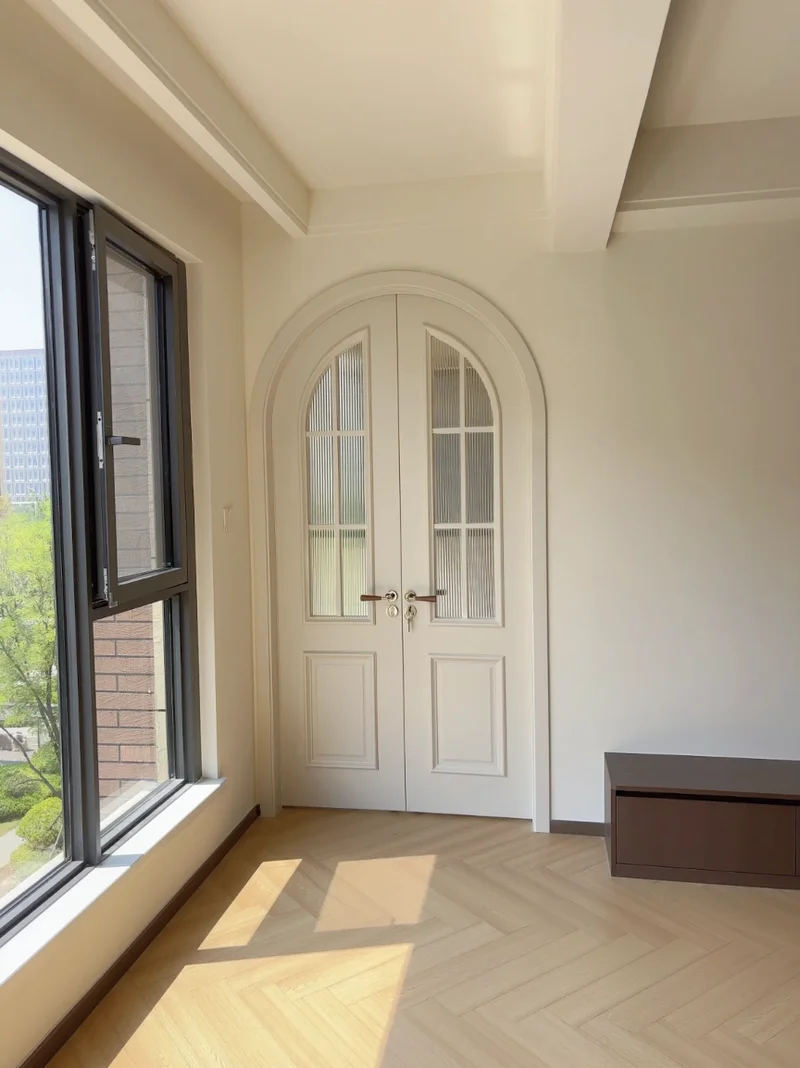
How do your doors prevent warping in high-humidity environments?
Our doors feature a stabilized LVL core with a moisture expansion coefficient below 0.1%. Combined with a full-perimeter PVC sealing (≥1.2mm thickness) and balanced construction, this prevents differential swelling and ensures dimensional stability, even in coastal or tropical climates.
What is the thermal insulation performance of your garden doors?
Doors achieve a U-value as low as 0.8 W/(m²·K) through a composite design. We integrate high-density WPC (≥750 kg/m³) panels with polyurethane foam cores and multi-chamber profiles, creating an effective thermal break that significantly reduces energy transfer and meets passive house principles.
Can your doors withstand high-impact or public area abuse?
Yes. Our commercial-grade doors utilize reinforced WPC cladding with a Rockwell hardness >HRC 85 and impact-modified polymer components. The structure is designed for ANSI/BHMA A250.13 impact resistance standards, ideal for high-traffic building entrances and institutional use.
What sound insulation levels do your doors provide?
We achieve weighted sound reduction (Rw) up to 38 dB. This is accomplished through a combination of mass-loaded core materials, asymmetric sealing gaskets, and acoustic gasketing at all meeting stiles, effectively mitigating exterior noise for urban residential and office projects.
How is long-term UV and color fade resistance ensured?
We employ a co-extruded acrylic/PVDF top layer with ≥0.5mm weatherable cap stock. This finish contains UV stabilizers and anti-oxidants, tested to withstand 3000+ hours of QUV accelerated weathering with a Delta E color shift of less than 2, guaranteeing facade integrity.
What is your quality assurance process for structural integrity?
Every batch undergoes 12-point validation, including cycle testing (exceeding 200,000 cycles), static load tests, and shear strength checks on hardware points. We certify all mechanical performance to relevant GB, EN, or ASTM standards, providing full traceability from raw material to finished product.