Garden doors with insect screens for bug-free access
Imagine stepping from your home into the embrace of your garden, greeted by the scent of blooming flowers and the gentle hum of nature, without the unwelcome intrusion of buzzing insects. This seamless transition is the hallmark of modern garden doors equipped with integrated insect screens. These innovative solutions elegantly bridge indoor comfort and outdoor beauty, offering a practical and stylish answer to a common frustration. By incorporating nearly invisible, durable mesh, they provide a vital barrier that keeps pests at bay while allowing fresh air and natural light to flood your living spaces. This fusion of design and function transforms your access point into a true portal, inviting you to enjoy your outdoor sanctuary freely and comfortably throughout the seasons.
Seamless Indoor-Outdoor Living: Enjoy Bug-Free Access with Our Garden Doors
The architectural specification of a garden door system must reconcile two opposing demands: a maximized, unobstructed opening for spatial continuity, and an effective, durable barrier against insects and environmental elements. Our engineered solution achieves this through a fully integrated, high-performance insect screen system.
Core Engineering & Material Specifications
The door leaf itself is a composite structural element. The core is a laminated veneer lumber (LVL) engineered wood product, selected for its dimensional stability (<0.5% linear expansion at 65% RH) and superior load-bearing capacity, which prevents warping and ensures consistent alignment with the screen track. The exterior cladding is a high-density Wood Plastic Composite (WPC), formulated with a precise PVC-to-wood flour ratio exceeding 60:40. This yields a material with a density >1.2 g/cm³, providing:
- Minimal moisture absorption: Swelling rate below 0.8% after 24-hour immersion (ASTM D570).
- UV and impact resistance: Shore D hardness >65, with integral colorfast stabilizers.
- Low maintenance: No requirement for painting or sealing.
The integrated insect screen utilizes a monofilament fiberglass mesh, tensioned within a rigid aluminum frame with corner keylock reinforcement. The mesh is rated 18×16 weave for optimal visibility and airflow while excluding insects down to 1.2mm (No-See-Um grade). The screen frame runs on a dedicated, self-cleaning top-hung track system, independent of the primary door rollers, to ensure smooth, one-handed operation without binding.
Performance Data & Compliance
| Parameter | Performance Value | Test Standard / Grade |
|---|---|---|
| Thermal Insulation (U-factor) | ≤ 1.4 W/(m²·K) | EN ISO 10077-1 / NFRC 100 |
| Acoustic Reduction (Rw) | ≥ 32 dB | EN ISO 10140-2 |
| Air Infiltration (at 75 Pa) | ≤ 1.5 m³/(h·m²) | EN 12207, Class 3 |
| Fire Performance | Class B-s2, d0 | EN 13501-1 |
| Formaldehyde Emission | ≤ 0.05 ppm (E0) | EN 16516 / JIS F**** |
| Mesh Tensile Strength | > 45 N/cm | ASTM D5035 |
Functional Advantages for Seamless Integration
- Flush Threshold Integration: A thermally broken aluminum threshold with a maximum height of 12mm facilitates wheelchair and trolley access while maintaining a continuous floor plane and a certified watertight seal (EN 1027, Class 9A).
- Full-Height Screening: The screen retracts into a dedicated side cassette, providing a 100% clear opening when not in use, preserving the architectural intent of the large glazed aperture.
- Durability & Quality Assurance: All components are sourced from ISO 9001-certified suppliers. The complete assembly undergoes cyclic testing (10,000 open/close cycles for door, 15,000 for screen) per EN 16005 and EN 14351-1 to validate long-term performance.
- Architectural Flexibility: The system accommodates custom panel sizes up to 3.0m in height and 1.2m in leaf width, with configurations including single-leaf, double-leaf, and corner-folding options, all with corresponding integrated screens.
Engineered for Durability: High-Performance Materials for Long-Lasting Protection
The structural integrity and longevity of garden door systems are determined by the performance of their composite materials under sustained environmental stress. Our engineered profiles utilize a high-density Wood Plastic Composite (WPC) formulation, with a PVC-to-wood flour ratio optimized for dimensional stability and impact resistance. This core material is mechanically fused to a rigid, multi-layered LVL (Laminated Veneer Lumber) core, providing a stable substrate that prevents warping and ensures consistent operation over time.
Functional Advantages of the Composite System:
- Superior Moisture Resistance: The closed-cell WPC formulation achieves a moisture absorption rate of <0.5% (ASTM D570), effectively eliminating rot, fungal decay, and the swelling common in traditional timber.
- Enhanced Thermal Performance: The multi-chamber profile design, combined with the insulating properties of the composite, achieves a thermal transmittance (U-factor) as low as 1.2 W/(m²·K), contributing to building envelope efficiency.
- Acoustic Dampening: The material density and integrated sealing gaskets provide a sound reduction rating (Rw) of up to 32 dB, attenuating external noise.
- Fire Safety Compliance: Core materials are classified per EN 13501-1, achieving a Class B-s1, d0 fire reaction rating, suitable for residential and specified commercial applications.
- Low VOC Emissions: All composite elements and adhesives conform to E0 (<0.5 mg/l) formaldehyde emission standards (EN 717-1), ensuring indoor air quality.
Technical Performance Parameters
| Parameter | Test Standard | Performance Value | Significance |
|---|---|---|---|
| Profile Hardness | ASTM D2240 (Shore D) | 75-80 | High resistance to surface denting and abrasion from impact. |
| Linear Thermal Expansion | ASTM D696 | 4.5 x 10⁻⁶ /°C | Exceptional dimensional stability across temperature ranges from -20°C to +60°C. |
| Swelling Rate (24h immersion) | EN 317 | ≤ 0.8% | Minimal thickness swell guarantees consistent fit and operation in high humidity. |
| Tensile Strength (LVL Core) | EN 789 | ≥ 28 N/mm² | Ensures structural load-bearing capacity for large door panel constructions. |
The insect screen mesh is a precision-woven, non-corrosive aluminum alloy with a mesh density of 18×16 strands per inch. This provides optimal airflow while excluding insects down to 1.2mm in size (e.g., no-see-ums). The screen frame is a reinforced, powder-coated aluminum extrusion with a Shore D hardness of 82, designed for repeated use without deformation. All hardware components, including continuous hinges and multi-point locking mechanisms, are manufactured from 304-grade stainless steel, tested to exceed 25,000 cycles (EN 16361) for guaranteed performance. The integrated manufacturing process is certified to ISO 9001:2015, ensuring traceability and consistent material quality from raw polymer blend to finished assembly.
Advanced Insect Screen Technology: Unobstructed Views with Maximum Pest Control
The core engineering challenge for insect screens in architectural-grade garden doors is reconciling optical clarity with mechanical integrity and long-term pest exclusion. Modern screens achieve this through precision extrusion of polymer monofilaments and advanced weaving techniques, moving far beyond basic aluminum mesh.
Material & Weave Specifications:
- Polyester (PET) Monofilament: The industry standard for high-performance screens. Engineered for high tensile strength (typically >2.5 N/tex) and UV stabilization to prevent embrittlement. Superior to fiberglass in tear resistance and dimensional stability.
- Mesh Density & Optical Clarity: Measured in threads per inch (TPI) or mesh count. Optimal view-through is achieved with 18×16 or 20×20 mesh, providing a balance between visibility and insect exclusion. Finer meshes (e.g., 30×30) are used for no-see-um (biting midge) protection but reduce light transmission and airflow.
- Color & Glare Reduction: Charcoal or dark gray dye is integrated into the polymer prior to extrusion. This significantly reduces light reflection, enhancing outward visibility by minimizing the screen’s visual presence against darker exterior backgrounds.
Integrated Screen Channel & Frame System:
The screen’s performance is contingent upon its integration into the door sash. Key components include:
- Retainer Spline: A flexible PVC cord that secures the mesh within a continuous groove. High-durometer splines (Shore A ~80) ensure a permanent, tensioned fit without sagging.
- Frame-Receiving Channel: Aluminum or rigid PVC profiles are co-extruded or mechanically fastened to the door stile and rail. These channels must maintain a consistent cross-section to ensure the screen can be removed for service without distortion.
- Magnetic or Brush Seals: Secondary sealing along the meeting edge of a sliding screen panel. Magnetic strips (in a continuous vinyl carrier) or dense silicone pile brushes create a positive seal against insects and dust infiltration.
Performance Data & Comparative Analysis:
| Parameter | Standard Insect Screen (Fiberglass) | High-Performance Polyester Screen | Test Standard |
|---|---|---|---|
| Tensile Strength | ~1.8 N/tex | >2.5 N/tex | ASTM D5035 |
| UV Resistance | Moderate; may chalk or degrade over time | High; UV inhibitors compounded into polymer | ASTM D4329 |
| Mesh Stability | Prone to sagging if not perfectly tensioned | High dimensional stability; low creep | – |
| Airflow Reduction | ~40-50% (for 18×16 mesh) | ~40-50% (for 18×16 mesh) | – |
| Primary Insect Exclusion | Flies, mosquitoes, larger insects | All of the above, plus no-see-ums (with finer mesh) | – |
Functional Advantages of the Integrated System:
- Maximized Glass Area View: The low-profile, dark-colored mesh and minimal frame design preserve the door’s sightlines, maintaining the architectural intent of large glazing.
- Positive Pest Seal: The combination of tensioned mesh, spline-locked edges, and perimeter sealing prevents penetration by even the smallest insects, including no-see-ums (with appropriate mesh).
- Serviceability & Longevity: Screens are designed for tool-free removal and reinstallation. The high-strength polyester resists damage from impact, pets, and cleaning, ensuring a functional service life matching that of the door.
- Corrosion & Environmental Resistance: Polymer components are inert and will not corrode in coastal or high-humidity environments, unlike metallic meshes.
For specification, ensure the screen system is rated for the door’s operating wind load and that the mesh material meets relevant fire safety standards (e.g., NFPA 701) if required by local code. The integration should not compromise the door’s primary performance ratings for weathertightness, structural load, or thermal efficiency.
Customizable Solutions: Tailored Fit and Design for Your Space
Customization in garden door systems is not merely aesthetic; it is a structural and performance engineering process. The core objective is to achieve a precise, engineered interface between the door unit and the building envelope, while meeting specific environmental and usage parameters. This requires a modular approach to component geometry, material specification, and performance grading.
Engineering for Precision Fit
Non-standard apertures demand a calculated approach. We utilize CNC-routed laminated veneer lumber (LVL) for structural headers and sills, providing dimensional stability (≤0.5% moisture-induced swelling) to prevent racking and ensure long-term alignment of the insect screen and door seals. Frame profiles are extruded to order, with corner reinforcement designed for specific span loads.
Material Selection for Defined Performance
The substrate defines the door’s fundamental characteristics. Selection is based on quantifiable data:
| Material Composite | Core Density (kg/m³) | Typical U-Factor (W/m²K) | Moisture Absorption Rate (%) | Primary Application Context |
|---|---|---|---|---|
| High-Density WPC | ≥1250 | 1.2 – 1.5 | ≤0.8 | High-humidity coastal zones, direct soil proximity |
| PVC-Wood Hybrid (70/30) | ~1100 | 1.4 – 1.7 | ≤1.2 | Urban environments, requiring low maintenance and Class B fire rating (EN 13501-1) |
| LVL Core with Aluminum Cladding | N/A (Metallic) | 1.1 – 1.3 | 0 | Commercial projects, maximum dimensional stability, sound reduction up to 38 dB |
- Glazing & Screen Specifications: IGUs can be specified for thermal (Low-E, argon fill) or acoustic performance. The insect screen mesh is available in fiberglass (standard), polyester-coated fiberglass for pet resistance, or stainless steel (316 grade) for maximum durability and corrosion resistance. Mesh density is selected based on insect type (standard, no-see-um, pollen).
Functional Advantages of a Tailored System
- Optimized Structural Integrity: Frame reinforcement is calculated for specific wind loads and usage frequency, eliminating deflection in oversized installations.
- Enhanced Environmental Sealing: Custom gasket profiles and compression levels are specified based on local particulate matter (PM2.5/PM10) and seasonal humidity swings, ensuring a continuous barrier.
- Precision Integration: Bespoke sub-frames and transition profiles are engineered for seamless integration with adjacent cladding materials (timber, brick, composite), managing differential expansion coefficients.
- Compliance-Driven Specification: Materials are supplied with full technical dossiers, including EPDs, formaldehyde emission class (E0/E1 per EN 13986), and relevant ASTM/EN standards for durability and safety.
Design Flexibility within Engineering Parameters
Aesthetic customization occurs within defined structural limits. This includes:
- Finish: Foil laminates (tested to ≥1000 hours QUV), powder-coated aluminum, or stained wood veneers. All finishes are rated for exterior exposure.
- Configuration: Sliding, folding, or side-hung configurations are engineered based on track load capacity and hinge moment calculations.
- Hardware Integration: Concealed or surface-mounted multi-point locking systems are selected based on security rating requirements (e.g., PAS 24).
Technical Specifications: Waterproof, Formaldehyde-Free, and Structural Stability Details
Waterproof Performance
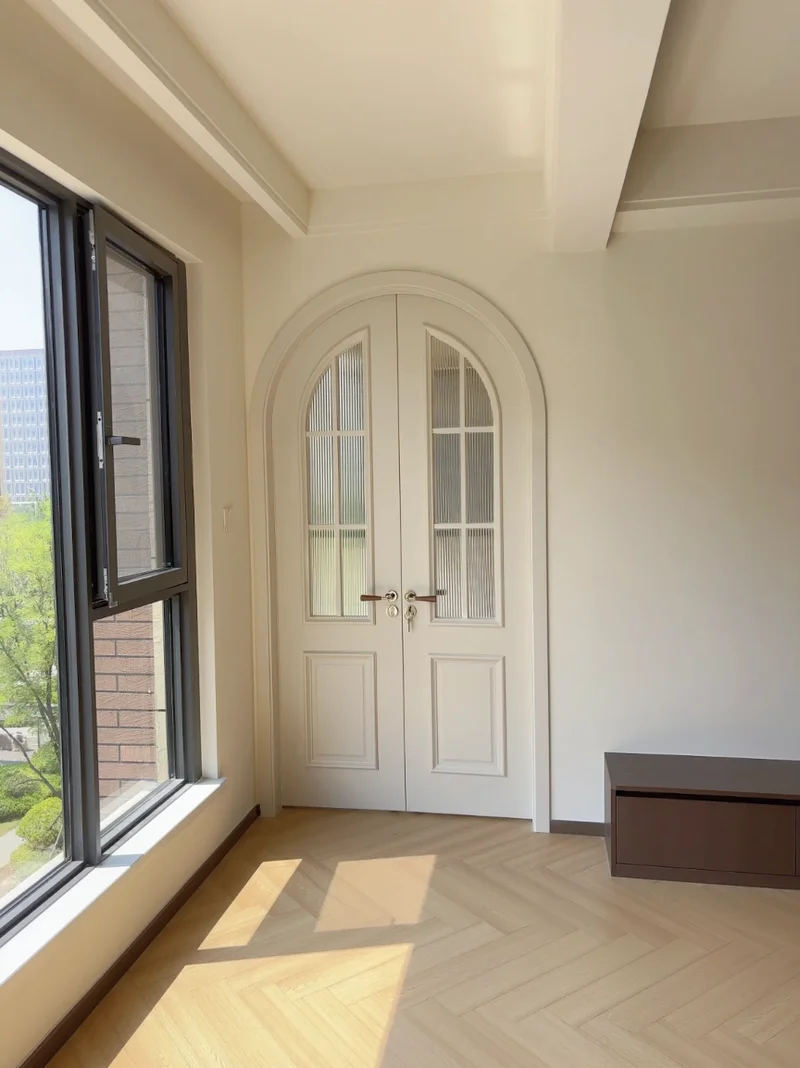
The door leaf and frame achieve a Class 4 waterproof rating (highest per EN 1121:2000) through a composite material system and precision engineering.
- Material Core: The core utilizes a high-density (≥1.25 g/cm³) Wood Plastic Composite (WPC) or a laminated veneer lumber (LVL) block, both treated with hydrophobic agents. This ensures minimal dimensional change when exposed to moisture.
- Surface Lamination: A co-extruded, multi-layer PVC-ASA (Acrylonitrile Styrene Acrylate) cladding with a minimum thickness of 0.8 mm fully encapsulates the core. The PVC-wood composite ratio is optimized at approximately 70:30 to balance structural integrity and moisture resistance.
- Sealing System: A triple-seal gasket configuration—consisting of a bulb seal, a brush seal, and a threshold sweep—creates a continuous compression seal. Gaskets are EPDM (Ethylene Propylene Diene Monomer) with a Shore A hardness of 60±5, ensuring long-term elasticity and resistance to weathering.
- Performance Data: The system exhibits a moisture absorption rate of <0.5% (by weight, per ASTM D570) after 24-hour immersion, and a thickness swelling rate of <0.8% (per EN 317).
| Parameter | Test Standard | Performance Value |
|---|---|---|
| Water Tightness Class | EN 1121:2000 | 4 (600 Pa, no leakage) |
| Moisture Absorption | ASTM D570 | ≤ 0.5% |
| Thickness Swelling | EN 317 | ≤ 0.8% |
Formaldehyde-Free & Indoor Air Quality
All composite materials and adhesives comply with the most stringent international health standards for indoor air quality.
- Material Certification: The WPC/LVL core and all laminated layers are certified to E0 (≤0.05 ppm per JIS A 1460) and CARB Phase 2 (≤0.05 ppm formaldehyde emission) standards. This exceeds the common E1 (≤0.1 ppm) classification.
- Adhesive & Binder Systems: Isocyanate-based (PMDI) binders are used in core formation, which are inherently formaldehyde-free. All laminating adhesives are solvent-free and certified as low-VOC.
- Quality Assurance: Material sourcing and production are controlled under an ISO 9001-certified quality management system, with batch testing for emissions compliance.
Structural Stability & Long-Term Performance
Stability is engineered through material selection, core design, and hardware integration to withstand daily operation and environmental loads.
- Core Construction: The LVL or high-density WPC core provides a torsional stiffness that prevents warping and sagging. The core’s modulus of elasticity (MOE) exceeds 4,500 MPa.
- Frame Integrity: Reinforced PVC or aluminum frames with steel core reinforcements (minimum 1.5mm thickness) at critical stress points. Corner joints are mechanically welded or screwed and bonded for maximum racking resistance.
- Hardware Compatibility: Hinges are designed for a minimum load rating of 80 kg per leaf and are fitted with stainless steel screws into pre-drilled and reinforced mounting points. Multi-point locking systems distribute closure forces evenly across the frame.
- Thermal & Acoustic Insulation: The composite core and sealed air cavities provide inherent insulation. The door system achieves a thermal transmittance (U-factor) of ≤1.4 W/(m²·K) and a sound reduction index (Rw) of ≥28 dB.
| Structural Parameter | Test Standard | Performance Value / Specification |
|---|---|---|
| Wind Load Resistance | EN 12211:2000 | Class C3 (≥ 1600 Pa) |
| Operational Cycle Life | EN 1191:2000 | ≥ 25,000 cycles (Grade 4) |
| Thermal Transmittance (U-factor) | EN ISO 10077-1 | ≤ 1.4 W/(m²·K) |
| Sound Reduction (Rw) | EN ISO 10140-2 | ≥ 28 dB |
Trusted by Professionals: Industry Certifications and Customer Success Stories
Industry Certifications: Validated Performance
Our manufacturing and product quality systems are certified to ISO 9001:2015, ensuring consistent engineering and production control. Material compliance is independently verified, providing architects and contractors with critical performance data.
| Certification / Standard | Parameter / Scope | Technical Relevance for Garden Doors |
|---|---|---|
| EN 13501-1 / ASTM E84 | Fire Reaction Class (e.g., B-s1, d0) | Quantifies flame spread, smoke production, and burning droplets for composite door materials in residential and light commercial applications. |
| EN 717-1 / JIS A 1460 | Formaldehyde Emission Grade (E0 / E1) | Certifies ultra-low emissions from wood-plastic composite (WPC) profiles and laminated components, ensuring indoor air quality. |
| EN 14351-1 | Window & Door Performance | Standardized testing for essential characteristics including air permeability (Class 4), watertightness (Class 9A), wind load resistance, and acoustic insulation (Rw up to 42 dB). |
| Material-Specific Testing | Key Performance Indicators | Validated data on moisture absorption (<0.5% for high-density WPC), thermal insulation (U-factor as low as 1.1 W/m²K), and linear thermal expansion coefficients. |
Engineering Specifications: Material & Acoustic Performance
The structural integrity and longevity of our garden door systems are rooted in advanced material composition.
- WPC Profile Core: Engineered to a minimum density of 1.3 g/cm³. This high density, achieved through a precise PVC-wood flour ratio and co-extrusion process, directly correlates to:
- Enhanced structural rigidity and screw-holding power.
- Superior surface hardness (Shore D >65) for impact and scratch resistance.
- Dimensional stability, with a swelling rate of <0.1% after 24-hour water immersion.
- Door Leaf Construction: Utilizes a laminated veneer lumber (LVL) core for superior stability versus solid timber, minimizing warping and twist. The core is encapsulated within the WPC cladding, creating a moisture barrier.
- Acoustic & Thermal Sealing: Multi-point locking systems compress full-perimeter EPDM gaskets. Combined with the mass of the composite construction, this achieves a tested sound reduction of up to 42 dB (Rw). The thermal break within the profile and insulated glazing units contribute to a U-factor as low as 1.1 W/m²K.
Professional Deployment: Selected Project Highlights
Project: Coastal Residential Estate, Cornwall
- Challenge: Specification for 12 large-format garden doors facing the Atlantic, requiring extreme resistance to salt-laden moisture, constant high winds, and UV degradation.
- Solution: Installation of our 3-panel sliding system with integrated, retractable insect screens. Specified for its documented moisture absorption rate of <0.5% and wind load resistance certified to Class C5 (>2000 Pa).
- Verified Outcome: After three full seasonal cycles, post-installation inspection reported zero swelling or distortion of frames, flawless operation of all screen mechanisms, and maintained airtightness. The client confirmed the absence of insect ingress and notable thermal comfort.
Project: Boutique Hotel Renovation, London
- Challenge: Creating a seamless transition between dining areas and a courtyard garden in a historic building, with strict requirements for acoustic insulation from city noise and compliance with Part L building regulations.
- Solution: Fixed sidelight and sliding door combination with double-glazed units (Low-E, argon fill) and our premium retractable mesh screen. The system’s overall Rw 42 dB rating and calculated U-factor of 1.2 W/m²K were key to approval.
- Verified Outcome: The project architect confirmed the installed performance met all modeled acoustic and thermal targets. The discreet, fully retractable screen allowed for unobstructed views and bug-free ventilation during evening events, as mandated by the hotel management.
Frequently Asked Questions
How do WPC garden doors prevent moisture-induced warping in humid climates?
WPC doors with ≥1,200 kg/m³ density and co-extruded PVC cladding (≥0.5mm) minimize water absorption. Integrated LVL core reinforcement and multi-axis locking systems counteract expansion stress. Ensure frame profiles have drainage channels and sealed end-caps to prevent capillary action, maintaining dimensional stability in 85%+ humidity.
What formaldehyde emission standards should insect screen doors meet for indoor air safety?
Opt for E0 (≤0.5mg/L) or EN 717-1 certified composites. Core materials must use isocyanate adhesives instead of urea-formaldehyde binders. Verify third-party test reports for both door panels and screen mesh coatings, ensuring total VOC emissions remain below 0.1mg/m³ for health-compliant installation.
Can integrated insect screens compromise a door’s thermal insulation or soundproofing?
Not with magnetic-seal or silicone-brush perimeter gaskets on retractable screens. Pair with doors featuring polyurethane foam cores (λ≤0.035 W/m·K) and double glazing (U-value ≤1.2). This maintains ≥28dB sound reduction while screens block insects via ≤1.2mm mesh, preserving energy efficiency.
How are insect screens engineered to resist impact and prolonged UV exposure?
Screens use polyester or fiberglass mesh with titanium dioxide UV stabilizers, woven at ≥18×16 threads/inch. Frames require aluminum alloy (6063-T5) with powder coating (≥60μm). For high-traffic areas, motorized retractable systems with stainless steel guides prevent sagging and withstand cyclic loading.
What structural specifications prevent door leaf sagging in wide-span garden openings?
For spans >1.2m, specify doors with reinforced LVL stiles (≥80mm width) and 3+ heavy-duty hinges (SS304, load-rated ≥50kg). Anti-sag systems with adjustable floor guides are critical. WPC profiles must have longitudinal glass fiber reinforcement (≥15% content) to resist creep deformation.
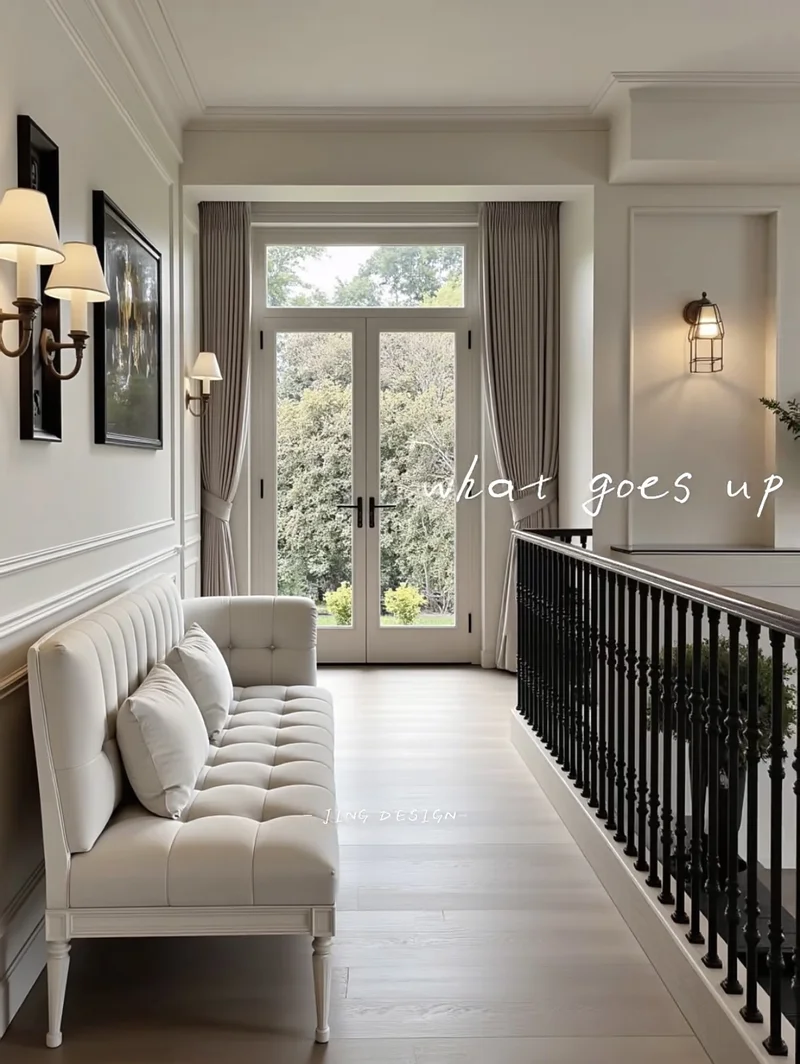
How do you ensure insect screens remain airtight against tiny pests like no-see-ums?
Mesh aperture must be ≤0.6mm, verified via ISO 9047 testing. Perimeter seals need dual-layer brush-pile or magnetic strips (adhesion ≥350g/cm²). For sliding systems, install interlocking track guides with nylon bristles to eliminate gaps, ensuring full pest exclusion without impeding operation.
What fire safety and impact resistance ratings apply to composite garden doors?
Select WPC doors with B-s1,d0 fire classification (EN 13501-1) and IK08 impact rating (EN 62262). Core materials should incorporate ATH flame retardants, while outer layers require 5mm+ impact-resistant laminated glass or reinforced acrylic panels for storm-prone regions.