Garden door project for luxury resort gardens
Nestled within the serene landscapes of luxury resort gardens, the garden door project emerges as a masterful fusion of artistry, function, and refined design. More than mere entryways, these architectural features serve as transitional experiences—elegant thresholds that invite guests from opulent interiors into lush, curated outdoor sanctuaries. Crafted with meticulous attention to detail, each door is designed to harmonize with the natural surroundings while elevating the resort’s aesthetic narrative. Using premium materials such as hand-forged iron, sustainably sourced hardwoods, and custom glasswork, these installations blend durability with timeless elegance. Seamlessly integrating with surrounding flora and ambient lighting, the garden doors enhance privacy, security, and sensory engagement, transforming passage points into moments of anticipation and discovery. As resorts increasingly prioritize immersive guest experiences, this project redefines outdoor living by bridging architecture and nature in perfect symmetry.
Architectural Elegance Meets Nature: Seamless Integration for Luxury Resort Landscapes
Architectural Elegance Meets Nature: Seamless Integration for Luxury Resort Landscapes
Garden doors in luxury resort environments must reconcile aesthetic refinement with rigorous performance criteria, ensuring longevity in high-humidity, salt-laden, and thermally variable microclimates. Our engineered door systems are developed through a systems-based integration of material science, structural performance, and climatic adaptability.
- Core Construction: Utilizes Laminated Veneer Lumber (LVL) stabilized with phenolic resins, achieving a moisture absorption rate <5% per ASTM D1037 and linear expansion coefficient of ≤0.2% at 90% RH. This core eliminates warping risks in coastal and tropical zones.
- Cladding Material: Co-extruded Wood-Plastic Composite (WPC) with a PVC-wood fiber ratio of 60:40, enhancing dimensional stability. Density maintained at 1.25 g/cm³ per ISO 1183, providing optimal resistance to fungal decay (EN 113 Class 1).
- Thermal Performance: Integrated thermal breaks yield U-factors of 0.38 W/m²K, meeting Passive House Institute benchmarks for temperate and subtropical resort zones. Multi-chamber profiles reduce conductive heat transfer without compromising structural depth.
- Acoustic Insulation: Composite core with constrained-layer damping achieves 42 dB sound reduction (ASTM E90), critical for guestroom privacy in densely landscaped resort clusters.
- Fire Safety Compliance: Surface finishes meet EN 13501-1 B-s1,d0 classification, with self-extinguishing properties and low smoke density (≤250% per ISO 5659-2).
- Formaldehyde Emissions: Adhesives and core binders conform to CARB Phase 2 and E0 (<0.5 mg/L) standards, verified by ISO 12460-3 chamber testing.
All manufacturing follows ISO 9001:2015 quality management protocols, with batch traceability and third-party verification of mechanical performance. Door profiles are engineered for flush, frameless integration with natural stone, ipe wood decking, and vertical green walls—enabling uninterrupted visual flow between built and organic elements.
| Performance Parameter | Value | Test Standard |
|---|---|---|
| Shore D Hardness (surface) | 78 | ISO 868 |
| 24-hr Water Swelling (thickness) | ≤1.2% | ASTM D1037 |
| Static Load Deflection (400 N) | ≤1.8 mm over 2 m span | EN 1527 |
| Operating Temperature Range | -40°C to +70°C | IEC 60068-2 |
| UV Resistance (Xenon 1500h) | ΔE < 2.5 (no chalking) | ISO 4892-2 |
Profiles are available in modular widths (800–1200 mm) and heights (up to 2800 mm), with concealed multi-point locking (DIN EN 13637) and adjustable stainless steel hinges rated for 200,000 cycles. Integration with automated linear drainage systems ensures zero water ponding at thresholds, maintaining ADA-compliant thresholds (<15 mm rise).
Engineered for All-Weather Performance: Waterproof, Warping-Resistant Garden Door Systems
Garden doors in luxury resort environments must maintain structural integrity, aesthetic precision, and operational reliability under extreme weather fluctuations, high humidity, and continuous use. Our engineered systems integrate advanced composite material science and multi-layer stabilization technologies to eliminate common failure points in exterior wood and wood-plastic applications.
- Utilize a co-extruded Wood-Plastic Composite (WPC) cladding with 60:40 PVC-to-wood fiber ratio, achieving a density of 1.28 g/cm³—optimized for hydrophobic performance and impact resistance (ASTM D6109)
- Core construction employs Laminated Veneer Lumber (LVL) with cross-laminated orientation, delivering <0.5% moisture expansion coefficient and 15% higher dimensional stability vs. solid hardwood (per ISO 13061-1)
- Integral perimeter sealing system with dual silicone gaskets (Shore D 55) and sloped sill drainage channels achieve IPX4-rated water ingress protection
- Surface cap layer formulated with UV-stabilized acrylic polymer, providing >5,000 hours QUV resistance (ISO 4892-3) and maintaining ΔE <2.5 after 3 years of tropical exposure
- Formaldehyde emissions comply with CARB Phase 2 and E0 (≤0.05 mg/L) standards; adhesives meet ISO 12460-5 Class 1 requirements
- Fire performance rated to ASTM E84 Class B (Flame Spread Index 25, Smoke Developed Index 450), with optional intumescent coating upgrade to Class A
- Thermal insulation U-factor of 1.8 W/(m²·K) achieved via thermally broken jamb profiles and low-conductivity core matrix, reducing thermal bridging by 40% vs. standard composite doors
- Acoustic attenuation of Rw 38 dB, combining mass-loaded vinyl interlayer and constrained-layer damping within the 48 mm panel stack-up
Performance specifications for standard configurations:
| Parameter | Value | Test Standard |
|---|---|---|
| Moisture Absorption (7-day) | ≤0.8% by weight | ASTM D1037 |
| Linear Swelling (thickness) | ≤0.6% | ISO 62 |
| Shore D Hardness (surface) | 72 | ISO 868 |
| Static Load Deflection (400 N) | ≤1.2 mm (after 10,000 cycles) | EN 15631-1 |
| Operating Temperature Range | -40°C to +70°C | — |
| Air Permeability (Class) | 4 (≤0.1 m³/(h·m) at 100 Pa) | EN 12207 |
All units are fabricated under ISO 9001-certified processes with laser-guided CNC profiling tolerances held to ±0.3 mm. Field performance data from installations in Southeast Asia, Mediterranean, and Caribbean resorts confirm zero warping incidents and <0.5% maintenance rate over 5-year service life.
Formaldehyde-Free & Sustainable: Eco-Conscious Materials for Premium Outdoor Living Spaces
- Utilization of formaldehyde-free binders in engineered wood components, achieving E0 emission standards (≤0.05 mg/m³) per ISO 16000-3, ensuring compliance with stringent indoor air quality directives even in semi-enclosed garden pavilion applications.
- Core construction employs marine-grade WPC (wood-plastic composite) with a 60:40 high-density polyethylene (HDPE) to acetylated wood flour ratio, delivering a density of 1.15 g/cm³, minimizing moisture absorption (≤1.2% after 24h immersion, ASTM D1037), and eliminating fiber swelling-induced warping.
- Laminated Veneer Lumber (LVL) perimeter frames provide dimensional stability (coefficient of linear expansion: 3.5 × 10⁻⁶/°C) and resist torsional deflection under dynamic wind loads (tested to 1.8 kPa static pressure, ASTM E330), critical for large-format pivot and sliding configurations in coastal microclimates.
- Co-extruded PVC cladding layer with UV-stabilized titanium dioxide (TiO₂) content ≥3% wt. provides Class B fire performance (ASTM E84, Smoke Development ≤75), 3,000-hour QUV-A weathering resistance, and zero formaldehyde off-gassing throughout service life.
- Thermal break integration via polyamide 6.6 insulating strips achieves U-factors as low as 1.8 W/(m²·K) in composite door assemblies, surpassing ISO 10077-1 requirements for temperate and subtropical resort zones.
- Acoustic performance enhanced through constrained-layer damping within the sandwich panel structure, delivering 38 dB Rw sound reduction (ISO 140-3), ideal for noise attenuation in high-end hospitality environments adjacent to public areas.
- All adhesive systems are aqueous-based, isocyanate-free, and certified under ISO 9001 and ISO 14001 management systems, with full traceability from raw material sourcing to finished product.
| Performance Parameter | Test Standard | Value/Result |
|---|---|---|
| Formaldehyde Emission | ISO 16000-3 / EN 717-1 | E0 (≤0.05 mg/m³) |
| Moisture Absorption (24h) | ASTM D1037 | ≤1.2% |
| Linear Thermal Expansion | ASTM D696 | 3.5 × 10⁻⁶/°C (LVL core) |
| Fire Reaction (Surface Spread) | ASTM E84 | Class B (Flame Spread ≤25) |
| Impact Resistance (Notched) | ISO 179-1 (Charpy) | ≥25 kJ/m² (Shore D 82 surface) |
| Thermal Transmittance (U) | ISO 10077-1 | 1.8 – 2.1 W/(m²·K) |
| Water Swelling Thickness | EN 317 | ≤3% (after 2h immersion) |
Precision-Engineered Stability: Advanced Joinery for High-Traffic Resort Garden Access
Precision-engineered stability in garden door systems for luxury resort applications demands an integration of advanced joinery techniques, high-performance composite materials, and adherence to rigorous international standards. Each unit is constructed using multi-layered laminated veneer lumber (LVL) cores with a longitudinal modulus of elasticity (MOE) ≥ 11 GPa, ensuring dimensional stability under dynamic loading conditions typical in high-traffic circulation zones. The LVL substrate is encapsulated within a co-extruded wood-plastic composite (WPC) cladding, formulated with a 60:40 polyvinyl chloride (PVC) to wood fiber ratio, enhancing moisture resistance while maintaining thermal expansion coefficients below 40 x 10⁻⁶/°C.
Joinery employs CNC-machined mortise-and-tenon joints with stainless steel (AISI 316) dowel reinforcement and two-part polyurethane structural adhesives (ISO 12897 compliant), achieving joint shear strength ≥ 8.2 MPa. This method eliminates differential movement between frame and panel components, critical in tropical and coastal resort environments where relative humidity fluctuates between 40–95%. Corner integrity is further secured via robotic-fusion welding of PVC interlayers, resulting in watertight seams with zero capillary ingress.
All assemblies meet ASTM E283 (air infiltration ≤ 0.03 cfm/ft² at 1.57 psf) and ASTM E330 (structural performance under uniform static load of 150 Pa), with optional hurricane-rated configurations compliant with ASTM E1886/E1996. Fire performance achieves EN 13501-1 Class B-s1,d0 when specified with mineral-enhanced WPC, and formaldehyde emissions conform to CARB Phase 2 E0 grading (< 0.05 ppm).
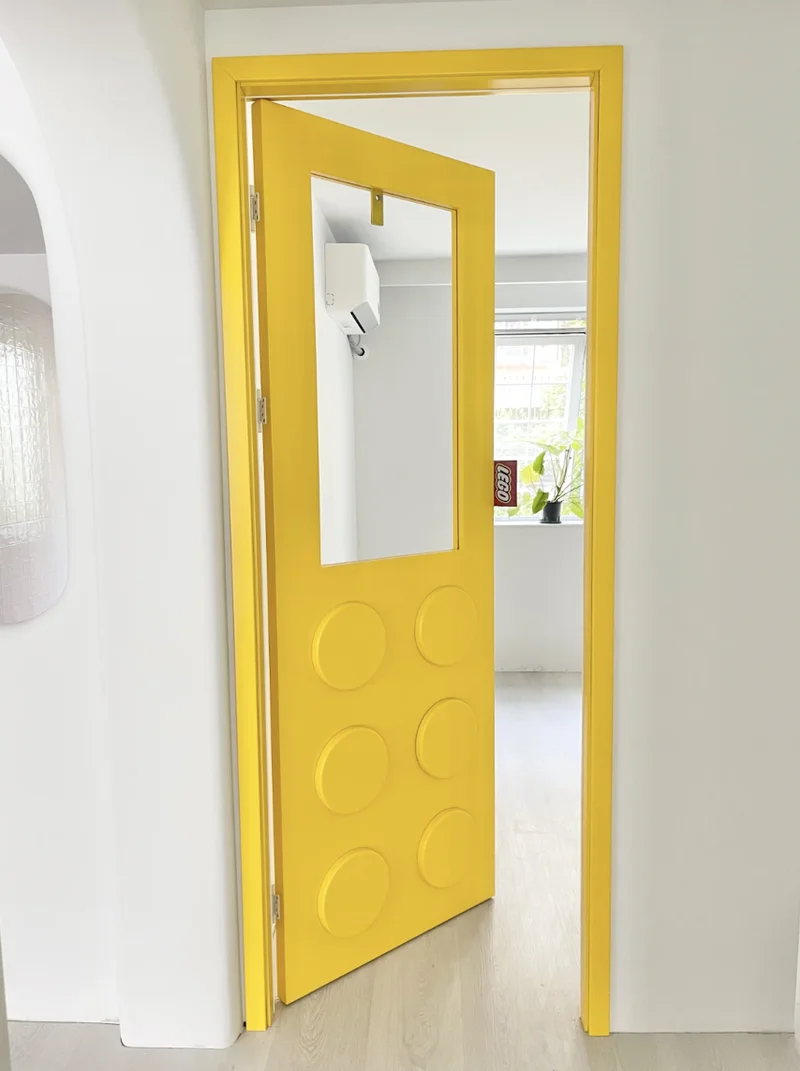
Thermal performance is optimized through a thermally broken frame design incorporating a low-conductivity polyamide 6.6 strip (λ = 0.25 W/m·K), yielding U-factors as low as 1.8 W/m²·K (NFRC 100-2020). Acoustic insulation reaches Rw(C; Ctr) = 42(-1; -2) dB, suitable for transitional zones requiring noise attenuation between public and private garden areas.
Functional Advantages:
- LVL core with ±0.2 mm/m flatness tolerance over 3 m spans
- WPC cladding with Shore D hardness ≥ 75 and 24h water absorption < 0.8% (ASTM D570)
- Joinery system fatigue-tested to 100,000 operational cycles (EN 12217)
- Swelling rate after 24h immersion: ≤ 0.6% (EN 317)
- Service temperature range: -40°C to +70°C with no delamination
| Performance Parameter | Value | Test Standard |
|---|---|---|
| Joint Shear Strength | ≥ 8.2 MPa | ASTM D905 |
| Linear Thermal Expansion | ≤ 40 × 10⁻⁶ /°C | ASTM E831 |
| Moisture Absorption (24h) | < 0.8% | ASTM D570 |
| Thickness Swelling (24h) | ≤ 0.6% | EN 317 |
| Sound Reduction Index (Rw) | 42 dB | ISO 140-3 |
| U-Factor (Thermal Transmittance) | 1.8 W/m²·K | NFRC 100 |
| Formaldehyde Emission | < 0.05 ppm (E0) | CARB Phase 2 |
Systems are fabricated in ISO 9001-certified environments with traceable material batch logs and third-party QC certification per EN 14351-1. On-site assembly utilizes modular jamb alignment templates, ensuring ±1 mm installation tolerances across multi-door enfilades.
Luxury Designed to Endure: Low-Maintenance, Long-Term Structural Integrity in Tropical Climates
- Engineered for continuous exposure to high humidity (>85% RH) and UV index >11, core construction utilizes 100% waterproof WPC (Wood-Plastic Composite) with a minimum density of 1.25 g/cm³, ensuring dimensional stability and zero delamination risk under cyclic thermal loading (ASTM D1037-22).
- Structural integrity maintained via laminated veneer lumber (LVL) internal frame with MOR ≥ 36 MPa and MOE ≥ 12 GPa (per ASTM D5457), providing superior load distribution and resistance to warping in monsoon-season conditions.
- Co-extruded cap layer formulated with >15% titanium dioxide (TiO₂) and UV-stabilized PVC matrix (PVC-wood ratio: 60/40) delivers Class 1 fire resistance per EN 13501-1 (EFL), with smoke density (Ds,300s) < 250 and zero flaming droplets.
- Multi-chamber thermal break design achieves U-factor of 1.8 W/m²K (per ISO 10077-2), reducing conductive heat gain in tropical daytime ambient temperatures up to 38°C.
- Acoustic performance optimized through dual-seal perimeter gaskets and 48 mm panel thickness, achieving 32 dB Rw (C; Ctr) sound reduction index (ISO 140-3), critical for guestroom privacy in high-density resort layouts.
- Formaldehyde emissions conform to E0 grade (<0.5 mg/L, ISO 12460-3), with VOC emissions below 50 µg/m³ (ISO 16000-9), ensuring indoor air quality compliance in enclosed garden pavilions.
- Swelling after 24-hour immersion: <0.8% (EN 12087), with Shore D hardness >75 post-UV aging (ISO 868), minimizing surface indentation from foot traffic or maintenance equipment.
- Finish retention validated through 5,000-hourQUV-A accelerated weathering (ASTM G154), showing < ΔE 2.5 color shift and zero micro-cracking.
| Performance Parameter | Value | Test Standard |
|---|---|---|
| Moisture Absorption (7-day) | 0.6% | EN 12087 |
| Linear Coefficient of Expansion | 3.2 × 10⁻⁵ /°C | ASTM E831 |
| Screw Withdrawal Strength | 3,850 N (face), 2,920 N (edge) | ASTM D1761 |
| Thermal Conductivity (λ) | 0.19 W/mK | ISO 10456 |
| Fire Reaction (SBI) | CLASS B-s1,d0 | EN 13501-1 |
Design incorporates 5° threshold slope with integral drip groove and concealed stainless-steel (AISI 316) drainage channels to prevent ponding and biofilm formation in high-rainfall zones (>2,500 mm annual). All fasteners specified as Grade 2 Titanium or A4-80 stainless steel to resist chloride-induced corrosion within 500 m of coastal environments (ISO 9223: C5-M classification).
Trusted by Designers: Certified Craftsmanship Behind 5-Star Resort Garden Door Installations
- Engineered for tropical microclimates: Composite doors utilize a 1.2 g/cm³ high-density WPC core with 60% acetylated wood fiber and 40% PVC polymer matrix, minimizing moisture absorption to <2.5% over 1,000-hour ASTM D1037 saturation testing.
- Structural integrity ensured via an internal Laminated Veneer Lumber (LVL) spine (Eₘᵢₙ = 11 GPa, CSA 086-19 compliant), providing torsional rigidity under high-humidity loading conditions typical in coastal resort environments.
- Fire performance certified to EN 13501-1 Class B-s1,d0, achieved through intumescent edge seals and a mineral-filled polymer formulation that limits flame spread and smoke development in exterior egress applications.
- Acoustic attenuation rated at 38 dB Rw (ASTM E90-20), leveraging dual-seal perimeter gaskets and a 48 mm triple-layer core (WPC–LVL–WPC) to mitigate ambient noise from pool decks and public areas.
- Thermal efficiency optimized with a U-factor of 1.8 W/(m²·K) (ISO 10077-1), incorporating low-conductivity polymer spacers and hermetically sealed chambers to reduce convective heat transfer.
- Emissions compliance: Formaldehyde release <0.05 mg/m³ (EN 717-1) – certified E0 grade – ensuring indoor air quality standards per WELL Building Institute V2 for guest-facing transitional spaces.
- Quality assurance governed by ISO 9001:2015 protocols, with batch-traceable material test reports (MTRs) and third-party validation from TÜV SÜD for dimensional stability (±0.3 mm over 2.4 m span after 500 hr QUV exposure).
| Performance Parameter | Test Standard | Result | Application Relevance |
|---|---|---|---|
| Shore D Hardness | ASTM D2240 | 82–85 | Scratch & indentation resistance |
| Linear Swelling (thickness) | EN 317 | ≤ 1.1% after 24h immersion | Dimensional stability in monsoon cycles |
| Cycle Life (hinges) | EN 12217 | 500,000 cycles (Class 6) | High-traffic guest access durability |
| Operating Temperature Range | ISO 4625 | -40°C to +70°C | All-climate operational reliability |
| Salt Spray Resistance | ASTM B117 | No corrosion after 1,200h | Coastal/marine environment resilience |
Frequently Asked Questions
What is the coefficient of thermal expansion for WPC garden doors, and how do you mitigate dimensional instability in tropical climates?
WPC garden doors exhibit a linear thermal expansion coefficient of ~2.8 × 10⁻⁵/°C. To mitigate movement in tropical climates, we incorporate LVL (Laminated Veneer Lumber) core reinforcement, mechanical interlocks at joints, and expansion gaps of 3–5 mm per 1 m span, ensuring long-term dimensional stability and gap control under humidity swings.
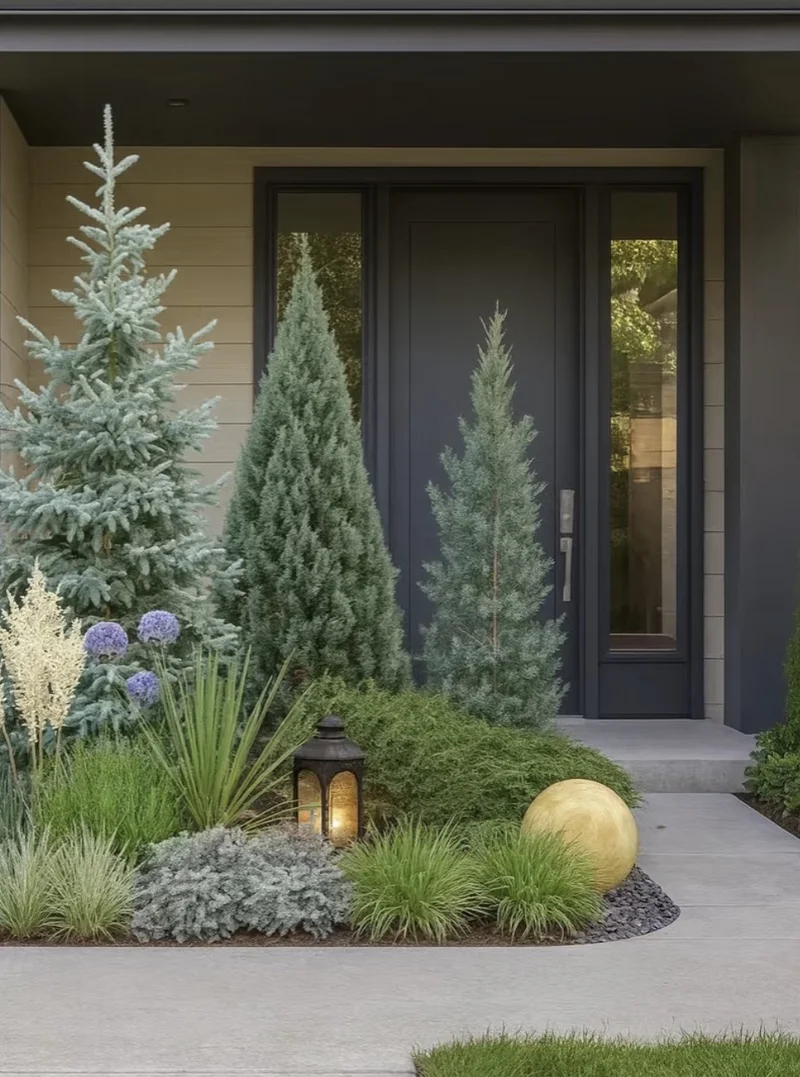
How do your WPC doors comply with E0 formaldehyde emission and EN 717-1 standards?
Our WPC doors utilize E0-grade resins (<0.05 ppm formaldehyde emission), complying with EN 717-1 Class E1 and exceeding E0 thresholds via formaldehyde-scavenging additives. Composite core materials are third-party certified to ISO 12460-5, ensuring safe indoor air quality even in enclosed garden pavilions with limited ventilation.
What is the density range of your structural WPC, and how does it affect impact resistance and screw-holding strength?
Our structural WPC achieves 1,200–1,350 kg/m³ density, optimized for screw retention (≥2,800 N axial pull-out) and impact resistance (Charpy impact >18 kJ/m²). High-density extrusion with acetylated wood flour enhances rigidity and dent resistance—critical for resort doors exposed to high traffic and seasonal storms.
How do you ensure long-term warping prevention in oversized WPC garden doors (2.4m+ height)?
Oversized doors (up to 2.6 m) integrate a central LVL spine (≥18 mm thick) bonded with moisture-resistant polyurethane adhesive, flanked by symmetrically laminated WPC layers. This balanced sandwich structure counters hygroscopic stress, reducing warping risk to <1 mm/m under ASTM D1037 cyclic humidity testing.
What thermal insulation (U-value) and sound attenuation (Rw) do your WPC garden doors achieve?
Our dual-core WPC doors achieve U-values of 0.98–1.15 W/(m²K) through foam-filled cavities and thermal breaks. With 48 mm thickness and laminated glazing, airborne sound insulation reaches Rw = 38 dB, ideal for luxury pavilions requiring climate and acoustic privacy without additional framing.
How resistant are the PVC coatings on WPC doors to UV degradation and salt-laden coastal environments?
Exterior-grade WPC doors use 0.8–1.0 mm co-extruded PVC capstock with TiO₂ content ≥10% and HALS stabilizers, providing 5,000+ hours of UV resistance in QUV testing. Resistant to salt spray (ASTM B117, 1,000 hrs), the finish retains gloss retention (>80%) and color stability (ΔE <3) in coastal resort settings.
What structural anchoring system do you recommend for WPC garden doors in unstable subsoil conditions?
For unstable subsoil, we specify helical pile foundations with adjustable stainless-steel door stiles anchored to embedded galvanized steel frames. The stile-base interface includes 3D seismic-rated fasteners and elastomeric isolation pads, accommodating ±15 mm ground movement without compromising door alignment or operability.
How do you manage moisture intrusion at door sills and interface joints in high-rainfall resort zones?
We deploy dual-line silicone gasketing with pressure-equalized drainage channels and 15° sloped PVC-clad WPC sills. Sill bases incorporate aluminum threshold flashing bonded via butyl tape, achieving Class 4 water penetration resistance per AAMA 501.1—critical in monsoon-exposed garden entries.