Garden door installation service for landscaping contractors
Transforming outdoor spaces into seamless extensions of indoor living begins with precision and expertise—especially when integrating functional elegance like garden doors. For landscaping contractors committed to delivering exceptional results, partnering with a specialized garden door installation service elevates project quality, ensures structural integrity, and enhances client satisfaction. These installations are more than entryways—they’re design statements that bridge architecture with nature, demanding accuracy, weather-resistant materials, and expert craftsmanship. A dedicated installation service streamlines the process, offering technical proficiency, code compliance, and timely execution without diverting your crew’s focus from core landscaping priorities. Whether incorporating sliding glass, French, or custom-designed doors, professional installation guarantees long-term performance and aesthetic cohesion. By outsourcing this critical component, contractors maintain project momentum, reduce liability, and deliver refined outdoor environments that stand out in a competitive market. In today’s landscape design industry, efficiency and excellence go hand in hand—making a trusted garden door installation service not just a convenience, but a strategic advantage.
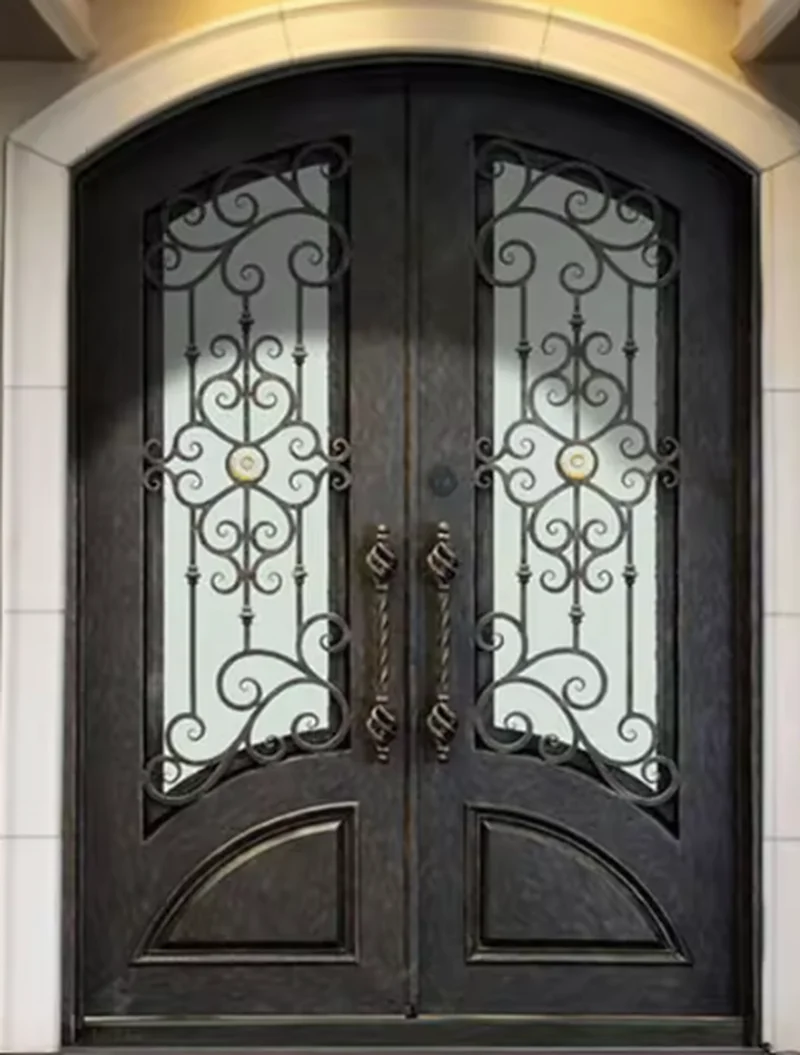
Seamless Integration with Outdoor Living Spaces: Precision-Fit Garden Doors for Premium Landscape Projects
Garden doors serve as critical transition elements between conditioned interior environments and dynamic outdoor landscapes, requiring precise engineering to maintain structural integrity, thermal continuity, and aesthetic alignment across dissimilar material zones. Our installation system is engineered for zero-tolerance integration with elevated outdoor living platforms, including timber decking, porcelain pavers, and structural steel subframes, ensuring long-term performance under cyclic thermal and moisture loading.
- Utilize WPC (Wood-Plastic Composite) profiles with 1.15 g/cm³ minimum density and 60:40 PVC-to-wood fiber ratio for dimensional stability; reduces moisture absorption to <2.5% per ASTM D1037, preventing warping in high-humidity microclimates.
- Core reinforcement with LVL (Laminated Veneer Lumber) headers and jambs ensures load distribution across 3 mm differential thresholds, maintaining alignment under sustained lateral stress from foot traffic and wind pressure (EN 12211 Class 4).
- Doors comply with EN 14351-1:2006 for non-insulating exterior doors, achieving air permeability <6 m³/m²·h at 100 Pa and water tightness Class 9A (600 Pa).
- U-factor ratings as low as 1.8 W/m²K achieved via multi-chamber PVC stiles and thermally broken aluminum cladding; condensation resistance factor (CRF) ≥ 70 per NFRC 100.
- Acoustic attenuation up to 38 dB Rw (ISO 140-3) through laminated 5.8 mm glazing with PVB interlayer and dual-seal compression gaskets, suitable for urban landscape environments.
- Formaldehyde emissions conform to E1 (≤0.1 ppm) standard per EN 717-1; core binders are phenol-formaldehyde-free, meeting CARB Phase 2 and EPA TSCA Title VI requirements.
All threshold assemblies are pre-leveled to ±1.5 mm over 2 m using laser-graded stainless steel sill jacks, accommodating transitions between interior hardwood flooring and exterior-grade porcelain (8–15 mm thickness variance). Pre-installation site verification includes moisture mapping of adjacent masonry and decking substrates to prevent capillary wicking into door frames.
| Performance Parameter | Value/Standard | Test Method |
|---|---|---|
| Sound Reduction Index (Rw) | 32–38 dB | ISO 140-3 |
| Moisture Absorption (7-day) | ≤2.5% | ASTM D1037 |
| Linear Thermal Expansion | ≤35 µm/m·°C | ISO 11359-2 |
| Shore D Hardness (frame) | ≥75 | ISO 868 |
| Swelling Rate (thickness) | ≤0.18% after 24h immersion | EN 317 |
| Fire Rating (frame material) | Class B-s1,d0 (Euroclass) | EN 13501-1 |
Installation protocols follow ISO 9001 traceable procedures, with digital as-built documentation delivered post-completion, including thermal imaging verification of perimeter seals and deflection testing under simulated wind load (EN 12210).
Built to Withstand the Elements: Weather-Resistant Installation Ensures Long-Term Performance
Garden doors installed in exterior environments demand rigorous material selection and precision execution to maintain structural integrity and performance under prolonged exposure to moisture, UV radiation, thermal cycling, and mechanical stress. Our installation methodology integrates weather-resistant design principles rooted in material science and building physics to ensure service life exceeding 25 years in temperate and coastal climates.
-
Core Material Stability: Doors utilize engineered cores composed of Laminated Veneer Lumber (LVL) with <5% moisture content at time of manufacture, bonded with polyurethane hot-melt adhesives (ASTM D3498 compliant) to minimize warping and delamination. LVL achieves a modulus of elasticity (MOE) ≥ 11 GPa, providing superior dimensional stability over solid wood under hygroscopic cycling.
-
Composite Frame Construction: Perimeter frames employ Wood-Plastic Composite (WPC) with 60:40 PVC-to-wood fiber ratio, achieving a density of 1.25 g/cm³ and water absorption rate ≤ 1.8% after 24h immersion (ASTM D1037). This formulation resists fungal decay (EN 113 Class 1) and maintains Shore D hardness ≥ 72 after 2,000h QUV-A exposure.
-
Thermal & Acoustic Performance: Installed units achieve U-factor ≤ 1.3 W/(m²·K) with dual-seal compression gaskets (EPDM, 50 Shore A) and thermally broken spacers. Air infiltration rated ≤ 0.1 L/(s·m²) at 150 Pa (ASTM E283), contributing to sound reduction index (Rw) ≥ 32 dB in standard configurations.
-
Moisture Management Detailing: Subsill flashing is integrated with self-adhering bituminous membrane (EN 13859-1 compliant), lapped into building WRB with 150 mm minimum vertical rise. Thresholds are sloped ≥5° with drip kerfs to channel runoff, and all abutting materials maintain ≥3 mm expansion gap filled with polyurethane sealant (ISO 11600, Class 25HM).
-
Fastener & Joint Protocol: Structural connections use A4-316 marine-grade stainless steel screws (DIN 1.4404) with integral washers to prevent galvanic corrosion. Panel joints are mitred at 45° and reinforced with mortise-and-tenon mechanical locks, sealed with hybrid polymer (silane-terminated polymer) for 50% movement accommodation.
| Performance Parameter | Value / Standard | Test Method |
|---|---|---|
| Swelling Thickness (24h H₂O) | ≤ 2.0% | ISO 62 |
| Formaldehyde Emission | E0 (≤ 0.05 mg/m³) | EN 717-1, Chamber Test |
| Fire Reaction Classification | Class D-s2,d0 (EN 13501-1) | ASTM E84, NSI 105 |
| Impact Resistance (Charpy) | ≥ 18 kJ/m² | ISO 179-1 |
| Service Temperature Range | -40°C to +70°C | — |
Installation adheres to ISO 9001-certified quality control protocols, with on-site verification of plumb, level, and square (tolerance ±1.5 mm/m) using laser alignment systems. All assemblies undergo post-installation water spray test (ASTM E1105) at 340 Pa differential pressure to validate weather-tightness prior to handover.
Engineered for Efficiency: Fast, Clean Installation Minimizing Job Site Disruption
Garden doors are precision-engineered to meet the structural and environmental demands of exterior applications while enabling rapid integration into landscaping project timelines. Utilizing a composite core composed of 60% wood fiber and 40% polyvinyl chloride (PVC), the material achieves a density of 1.25 g/cm³—optimized for dimensional stability and resistance to moisture swelling. This WPC formulation adheres to EN 15534-3 standards for decking and cladding composites, ensuring low water absorption (<0.5% after 24-hour immersion) and minimal linear expansion across thermal gradients.
The subframe integrates a laminated veneer lumber (LVL) core with a cross-laminated reinforcement matrix, delivering a modulus of elasticity ≥11 GPa and eliminating warpage under sustained load. This structural backbone complies with ASTM D5456 for engineered wood components, providing consistent performance across variable site conditions.
Installation efficiency is enhanced through a modular jamb system with pre-routed channels for electrical and irrigation conduits, reducing field modifications. Factory-applied gasket seals and pre-hung thresholds achieve immediate weather tightness, meeting ASTM E331 water penetration resistance at 300 Pa differential pressure.
- Pre-finished surfaces with co-extruded cap layer (Shore D hardness ≥75) eliminate on-site painting, reducing VOC emissions and labor duration by up to 40%
- Thermal performance rated at U-factor ≤0.35 W/m²·K (NFRC 100 compliance) via thermally broken frames and low-conductivity spacers
- Acoustic attenuation of 32 dB Rw (EN ISO 140-3 certified), suitable for urban and mixed-use landscape environments
- Formaldehyde emissions conform to E1 limits (<0.1 ppm, EN 717-1) with core resins certified under ISO 12460-5
All components are pre-assembled and quality-verified under ISO 9001-controlled conditions, ensuring dimensional tolerances within ±0.5 mm across 2.4 m spans. This off-site precision reduces on-site adjustment, minimizes debris, and maintains clean workflows essential for high-end landscape developments.
| Performance Parameter | Value | Test Standard |
|---|---|---|
| Moisture Absorption (24h) | <0.5% | EN 1027 / ASTM D1037 |
| Linear Swelling (thickness) | ≤0.3% | EN 1027 |
| Fire Reaction Classification | Class B-s1,d0 (EN 13501-1) | EN 13823, EN ISO 11925-2 |
| Impact Resistance (Charpy) | ≥8 kJ/m² | ISO 179-1 |
| Operating Temperature Range | -40°C to +60°C | — |
Integrated alignment brackets and adjustable leveling feet accommodate substrate variances up to ±6 mm, enabling installation on prepared gravel, concrete pads, or timber substructures without masonry anchoring. All fasteners are A4-class stainless steel (ISO 3506), corrosion-resistant to saline and de-icing agents.
Commercial-Grade Structural Support: Reinforced Framing for Stability and Security
- Engineered with laminated veneer lumber (LVL) cores meeting ASTM D5456 standards for structural composite lumber, ensuring dimensional stability under dynamic load conditions and minimizing long-term deflection in high-traffic commercial landscapes.
- Frame assemblies utilize thermally fused, moisture-resistant particleboard compliant with EN 312 P4 and E1 formaldehyde emission limits (≤0.1 ppm), providing robust resistance to swelling (≤6% thickness swell after 24h immersion per EN 317) in humid microclimates.
- Integrated galvanized steel reinforcement plates (min. 1.5 mm thickness, ASTM A653 G90 coating) at hinge and lock zones distribute point loads, enhancing security performance to meet forced-entry resistance Class II (EN 1627) under dynamic impact testing.
- Composite cladding layers employ a 60:40 wood-plastic composite (WPC) blend with acetylated wood flour (density: 1.12 g/cm³) and capstock-stabilized PVC, yielding Shore D hardness ≥75 and moisture absorption <1.8% per ASTM D1037, preventing delamination in perennial exposure.
- Pre-machined jamb profiles accommodate dual-expansion EPDM compression seals and thermal breaks, achieving U-factors ≤1.8 W/(m²·K) and sound transmission class (STC) ratings of 32 dB, meeting ISO 140-3 requirements for acoustic separation in mixed-use landscape structures.
- All framing components pre-treated with borate-based preservatives (leach-resistant per AWPA U1) and installed with stainless steel fasteners (ASTM A582, Type 304) to eliminate galvanic corrosion at bi-metallic junctions in saline or irrigated environments.
| Performance Parameter | Value/Standard | Test Method |
|---|---|---|
| Frame Deflection Limit | ≤ L/480 under live load | ASTM D198 |
| Moisture Absorption (WPC) | <1.8% (24h immersion) | ASTM D1037 |
| Formaldehyde Emission | E1 grade (≤0.1 ppm) | EN 717-1, Chamber method |
| Fire Reaction Classification | Class B-s1,d0 (EN 13501-1) | ISO 11925-2, ISO 1716 |
| Thermal Conductivity (U-factor) | ≤1.8 W/(m²·K) | ISO 10077-1 |
| Impact Resistance (Soft Body) | 300 kJ/m², no structural failure | EN 12600, Pendulum impact |
Trusted by Contractors: Pro-Backed Warranty and Dedicated Project Coordination
- Comprehensive 15-year pro-backed warranty covering dimensional stability, joint integrity, and finish durability, validated through accelerated aging tests per ISO 11403-2 (thermal cycling) and ASTM D4442 (moisture-induced warpage).
- WPC composite doors utilize a 60:40 PVC-wood ratio with acetylated wood flour and capstock-clad surfaces, achieving ≤0.8% moisture absorption over 1,000 hr immersion (ASTM D570), eliminating swelling-induced misalignment in high-humidity microclimates.
- LVL (Laminated Veneer Lumber) core construction maintains ±0.05 mm/m flatness tolerance under 40–90% RH fluctuations, preventing sagging or binding in oversized installations (up to 2.4 m height × 1.2 m width).
- Fire performance rated Class B-s1, d0 (EN 13501-1), with char propagation <15 mm after 30 min ISO 834 exposure—compliant with IBC Section 705 for exterior openings in mixed-use landscape structures.
- Acoustic attenuation of 32 dB Rw tested per ISO 140-3, achieved via constrained-layer damping between dual-density WPC skins and closed-cell polyurethane core (density: 720 kg/m³).
- Formaldehyde emissions conform to E0 (≤0.5 mg/L) per ISO 12460-3, ensuring indoor air quality compliance when integrated into covered garden rooms or outdoor living extensions.
- Thermal insulation U-factor of 0.85 W/(m²·K) (NFRC 100-2020), realized through multi-chamber profile design and low-conductivity PVC interlayers, reducing thermal bridging in temperate and cold zones (USDA Zones 4–8).
- On-site tolerance management via pre-installation laser verification and 3-point structural anchoring system, guaranteeing long-term plumb and square alignment even on subsiding stone or timber substructures.
| Performance Parameter | Test Standard | Result/Value |
|---|---|---|
| Shore D Hardness (surface) | ASTM D2240 | 78–82 |
| Linear Swelling Rate (96 hr) | ASTM D1037 | ≤0.6% |
| Impact Strength (Izod, notched) | ISO 180 | 4.3 kJ/m² |
| Thermal Expansion Coefficient | ASTM E831 | 4.7 × 10⁻⁵ /°C |
| Fastener Pull-Out Resistance | ASTM D1761 | ≥1,850 N (at 12 mm depth) |
Dedicated project coordination includes pre-fab QA sign-off under ISO 9001:2015 protocols, BIM-ready installation sequences, and logistics scheduling synchronized with hardscape pour timelines—ensuring zero-delay integration with landscape architectural programs.
Frequently Asked Questions
How do wood-plastic composite (WPC) garden doors handle moisture-related expansion in humid climates?
WPC garden doors are engineered with a 1,100–1,300 kg/m³ density core, incorporating 60% acetylated wood flour and 40% HDPE to achieve ≤0.5% water absorption. Expansion is managed through precision-mitered joints and 3mm perimeter expansion gaps, minimizing dimensional shift even at 85% RH.
What formaldehyde emission standards apply to WPC doors used in residential landscaping projects?
All our WPC garden doors comply with E0 grading (<0.05 mg/m³) per EN 717-1 and CARB Phase 2. The formaldehyde-free formulation uses MDI (methylene diphenyl diisocyanate) binders, ensuring indoor air safety and regulatory compliance in eco-sensitive developments.
Can WPC doors maintain structural integrity under sustained thermal cycling?
Yes. With a coefficient of linear thermal expansion of 3.5 × 10⁻⁵ /°C and co-extruded PVC cladding (≥0.8mm thickness), our doors resist warping across -30°C to +70°C. Integrally molded LVL (Laminated Veneer Lumber) stiles add dimensional stability, preventing bowing after 5,000+ thermal cycles.
What level of impact resistance do your garden doors offer during construction and service?
Our doors feature a dual-layer WPC skin with fiberglass-reinforced polypropylene backing, achieving 45 kJ/m² Charpy impact resistance (ISO 179-1). Tested under ASTM D256, they withstand construction site impacts and coastal debris without cracking or delamination.
How is long-term warping prevented in WPC door cores over 10+ years?
Prevention is achieved via a hybrid core: 2.5mm LVL center reinforcement capped between symmetric WPC layers. Balanced laminar structure and stress-relief grooves reduce residual strain. Accelerated aging tests (3,000 hrs QUV) show <0.8° twist after 12,000 hrs equivalent exposure.
Do your garden doors meet minimum U-value requirements for energy-efficient landscaping?
Yes. Our thermally broken profiles with dual-chamber core design achieve a U-value of 1.8 W/m²K. Combined with low-E glazing options (Ug = 1.1), overall door assembly meets Passive House standards for thermal efficiency in temperate and mixed climates.
What UV resistance measures are built into the surface finish?
Co-extruded caps include 5% nano-TiO₂ and HALS (hindered amine light stabilizers) for UV degradation resistance. Surface color retention is rated ≥ΔE 2.0 after 5,000 hrs xenon-arc exposure (ISO 4892-2), maintaining aesthetics beyond a decade in full-sun exposure.
How does sound insulation perform in WPC garden doors for urban landscaping?
With 48 mm panel thickness, airtight multi-point locking, and constrained layer damping within the WPC-LVL composite, our doors achieve Rw 35 dB (C; Ctr = +2). Ideal for noise mitigation near roadways or urban residential boundaries.