Garden doors export to Middle East with heat resistance
As the Middle Eastern sun blazes with relentless intensity, the demand for architectural solutions that marry elegance with endurance has never been greater. For exporters of premium garden doors, this presents a significant and sophisticated opportunity. The region’s discerning homeowners and developers are increasingly seeking more than just aesthetic appeal; they require products engineered to withstand extreme thermal stress without compromising on style or structural integrity. Successfully exporting to this vibrant market hinges on a deep understanding of these unique climatic challenges. This article explores the critical considerations for supplying garden doors that offer superior heat resistance, ensuring they remain beautiful, functional, and durable cornerstones of outdoor living spaces, from luxurious private villas to ambitious commercial developments across the Gulf.
Withstanding Middle Eastern Climates: How Our Heat-Resistant Garden Doors Enhance Outdoor Living
The extreme thermal cycling, high UV radiation, and abrasive sand loads characteristic of Middle Eastern climates demand a door system engineered beyond conventional residential specifications. Our garden doors are designed as a composite architectural assembly, where each material and interface is selected and tested for long-term performance under sustained thermal stress.
Core Material Science & Stability
The structural integrity under heat is paramount. We utilize a multi-layered engineered core:
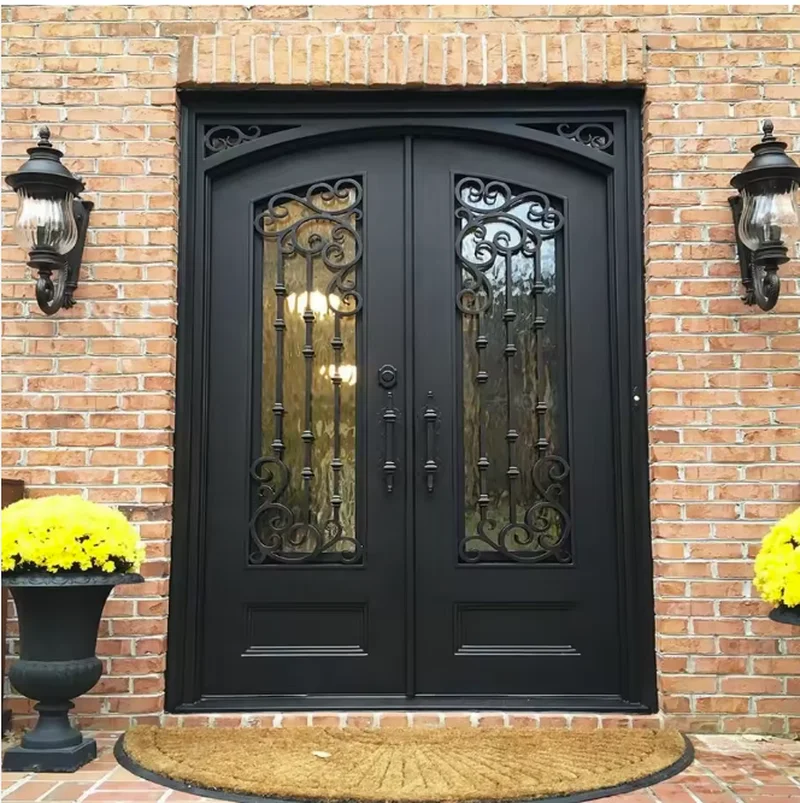
- LVL (Laminated Veneer Lumber) Core: Provides superior dimensional stability compared to solid timber or particle-based cores. Its cross-laminated structure minimizes linear expansion and warping, maintaining alignment and operability in temperatures exceeding 45°C (113°F).
- High-Density WPC (Wood-Plastic Composite) Cladding: Our exterior cladding is formulated with a high wood flour content and polymer matrix optimized for a low thermal expansion coefficient. A density of ≥1.2 g/cm³ ensures minimal heat-induced softening and provides inherent resistance to sand abrasion.
- PVC-Alloy Seals & Inserts: All perimeter and meeting stile seals are made from a modified PVC compound with high Shore D hardness (65-70) to resist deformation under direct sun exposure, ensuring consistent compression and air/water infiltration performance.
Performance Specifications & Testing
All components are validated against international standards relevant to thermal and fire performance in arid environments.
| Parameter | Specification | Test Standard | Relevance to Climate |
|---|---|---|---|
| Thermal Insulation (U-factor) | ≤1.2 W/m²K | EN ISO 10077-1 | Reduces heat transfer, maintaining interior thermal comfort. |
| Fire Reaction (Surface) | Class B-s1, d0 (EN) / Class C (ASTM E84) | EN 13501-1 / ASTM E84 | Inhibits flame spread on the exterior facade. |
| Formaldehyde Emission | E0 Grade (≤0.5 mg/L) | EN 16516 / JIS F**** | Ensures indoor air quality is not compromised when doors are closed. |
| Moisture Absorption (WPC) | ≤0.8% (24h immersion) | ASTM D570 | Guarantees dimensional stability during rare but intense rainfall or cleaning. |
| Swelling Rate (Thickness, 24h) | ≤1.5% | EN 317 | Critical for seal integrity and operation after humidity events. |
Functional Advantages for Enhanced Outdoor Living
- Sustained Operability: Precision-machined hardware interfaces on a stable LVL core ensure smooth operation without binding or stickiness, even after prolonged exposure to peak summer heat.
- Acoustic & Thermal Barrier: The composite construction, combined with multi-chamber gasketing, achieves sound reduction of ≥28 dB (Rw) and the low U-factor, creating a definitive barrier between climate-controlled interiors and outdoor living spaces.
- UV & Colorfast Integrity: Full-depth, co-extruded acrylic/PVDF coatings on WPC cladding provide a 10-year fade resistance warranty, with a Delta E value of <2 after 3000 hours of QUV-B testing (ASTM G154).
- Maintenance & Corrosion Resistance: The integrated system eliminates surface wood grain, preventing cracking and splintering. All exposed metal hardware, including rollers and locks, is stainless steel (AISI 304 minimum) or features a certified powder coating for salt and humidity resistance.
Architectural Assurance
Our manufacturing process is certified to ISO 9001:2015 for quality management, with batch testing of raw materials for thermal performance metrics. For specifiers, we provide detailed technical data sheets (TDS) and material safety data sheets (MSDS) to facilitate seamless integration into project specifications and compliance with regional building codes.
Engineered for Durability and Aesthetic Appeal: Key Features of Our Export-Ready Garden Doors
Core Material Composition & Structural Integrity
The door’s performance is rooted in a proprietary, high-density Wood Plastic Composite (WPC) cladding and a stabilized laminated veneer lumber (LVL) core. This engineered synergy is critical for withstanding the Middle East’s thermal cycling and high UV load.
- High-Density WPC Cladding: Formulated with a 60:40 wood flour to PVC ratio and a density exceeding 1.25 g/cm³. This minimizes moisture absorption (<0.8% per 24h immersion, ASTM D570) and provides inherent resistance to thermal expansion, warping, and insect infestation.
- Stabilized LVL Core: The multi-directional, phenolic-bonded LVL core provides exceptional dimensional stability, with a thickness swelling rate of <8% after 24-hour water immersion (EN 317). It ensures structural rigidity and prevents sagging in large door panels.
- Advanced Co-extruded Capstock: A full-wrap, UV-stabilized polymer capstock is co-extruded over the WPC substrate. This layer carries the color and grain texture, providing a Class A fire rating (ASTM E84) surface and exceptional resistance to fading, with a Delta E color shift of <2.5 after 3,000 hours of accelerated QUV testing (ASTM G154).
Performance Specifications for Extreme Environments
Our doors are validated against international standards to guarantee performance in high-heat, high-humidity coastal regions and arid desert climates.
| Parameter | Test Standard | Performance Value | Benefit for Middle East Climate |
|---|---|---|---|
| Thermal Insulation (U-factor) | EN ISO 10077-1 | ≤1.4 W/m²K | Reduces heat ingress, lowering cooling loads and enhancing interior comfort. |
| Sound Reduction (Rw) | EN ISO 10140-1, -2 | 28 dB | Attenuates external noise from urban or industrial environments. |
| Fire Performance (Surface) | ASTM E84 / EN 13501-1 | Class A / B-s1, d0 | Meets stringent commercial and residential safety standards. |
| Formaldehyde Emission | EN 16516 / JIS A 1460 | E0 Grade (<0.05 ppm) | Ensures superior indoor air quality and compliance with health regulations. |
| Hardness (Surface) | ASTM D2240 (Shore D) | ≥75 | Resists scratching, abrasion, and impact from wind-blown debris. |
Architectural & Functional Advantages
- Integrated Thermal Break & Seal System: A multi-chambered, glass-fiber reinforced PVC frame profile with a polyamide thermal break creates a continuous barrier against heat transfer. Triple EPDM gaskets (perimeter, interlock, and threshold) ensure an airtight seal, tested to air permeability Class 4 (EN 12207) and watertightness Class 9A (EN 12208).
- Hardware Compatibility & Security: Pre-engineered, reinforced hardware pockets accommodate multi-point locking systems (meeting PAS 24:2016 or equivalent) and heavy-duty continuous hinges, ensuring long-term operational reliability and forced-entry resistance.
- Low-Maintenance Aesthetics: The through-body color and wood-grain texture of the capstock require no painting or sealing. A simple wipe-down with a damp cloth is sufficient for maintenance, eliminating lifecycle repainting costs.
- Quality Assurance: Full traceability from raw material to finished product under ISO 9001:2015. Each batch is tested for key performance indicators, ensuring every door shipped meets the documented technical specifications for export.
Technical Specifications: Materials and Construction for Superior Heat and Weather Resistance
Core Material Composition
- Primary Frame & Sash: Engineered from high-density Wood Plastic Composite (WPC) with a minimum density of 1.25 g/cm³. The optimized PVC-to-wood-flour ratio ensures dimensional stability under thermal cycling while providing a substrate with superior UV and impact resistance compared to traditional timber or pure uPVC.
- Structural Core: Doors utilize a laminated veneer lumber (LVL) core within all stiles and rails. LVL provides exceptional mechanical strength and stability, with a coefficient of thermal expansion below 0.000015/°C, preventing warping or binding in extreme desert heat.
- Glazing Bead & Hardware Reinforcement: Reinforced with galvanized steel or aluminum alloy inserts, providing the structural integrity required for large panel sizes and heavy, low-emissivity glass units, even under sustained wind loads.
Performance Specifications & Construction
- Thermal Insulation: The integrated multi-chamber profile system, combined with the low-conductivity WPC material and LVL core, achieves a thermal transmittance (U-factor) as low as 1.2 W/m²K. This significantly reduces thermal bridging and condensation risk.
- Weather & Seal Integrity: Triple EPDM (Ethylene Propylene Diene Monomer) gaskets, with a Shore A hardness of 70±5, form a continuous compression seal. This system is tested to withstand a pressure differential of ≥600 Pa (Class 4, EN 12207) and offers a watertightness rating of ≥300 Pa (Class 5A, EN 12208).
- Acoustic Performance: The mass-spring-dampening effect of the composite profile, combined with asymmetric insulated glass unit (IGU) cavities, delivers sound reduction up to 35 dB (Rw).
- Surface Durability: All exterior surfaces are finished with a minimum 5-coat system: primer, base coats, and a final topcoat with integrated UV absorbers and stabilizers. The finish exceeds 600 hours of QUV-B accelerated weathering testing (ASTM G154) without significant color shift (Delta E < 2.0) or loss of gloss.
Critical Technical Data
| Parameter | Specification | Standard / Test Method | Performance Implication |
|---|---|---|---|
| Profile Heat Resistance | Vicat Softening Point ≥ 85°C | ISO 306 | Maintains shape and seal integrity at extreme ambient temperatures. |
| Linear Thermal Expansion | ≤ 0.065 mm/m·K | ISO 11359-2 | Minimal gap fluctuation between door and frame, ensuring consistent operation. |
| Moisture Absorption | ≤ 0.8% (24h immersion) | ISO 62 | Negligible swelling, preventing operational failure in high-humidity coastal regions. |
| Fire Performance | Class B-s1, d0 (Reaction to Fire) | EN 13501-1 | Low flammability and minimal smoke emission. |
| Formaldehyde Emission | E0 Grade (< 0.05 ppm) | JIS A 1460 / EN 717-1 | Ensures indoor air quality and compliance with stringent health standards. |
| Hardness (Exterior Face) | Shore D 75 | ISO 868 | High resistance to scratching, abrasion, and impact from blown debris. |
Construction & Quality Assurance
- Precision Engineering: All profiles are mitred and welded using computerized CNC systems, ensuring corner integrity with tensile strength exceeding 4,500 N (tested per EN 514).
- Hardware Compatibility: Frames are pre-milled and reinforced to accept multi-point locking systems (minimum 3-point, rated to class RC2/RC3 EN 1627) and heavy-duty, corrosion-resistant hinges (tested to >25,000 cycles EN 16361).
- Quality Management: Manufacturing processes are certified to ISO 9001:2015, with batch testing for key material properties (density, impact strength, colorfastness) to guarantee consistency.
Customizable Solutions for Middle Eastern Markets: Sizing, Finishes, and Installation Support
Customizable Sizing & Structural Integrity
Our engineering approach prioritizes structural integrity under thermal load. Standard and custom oversized dimensions are supported by a reinforced LVL (Laminated Veneer Lumber) core, chosen for its superior dimensional stability (<0.5% linear expansion at 65°C) compared to solid timber. Panel construction utilizes a high-density Wood-Plastic Composite (WPC) core with a minimum density of 1.25 g/cm³, ensuring minimal thermal bowing and long-term rigidity in desert climates.
Standard Size Range & Technical Parameters:
| Parameter | Sliding Door | Hinged (French) Door | Folding Door System |
|---|---|---|---|
| Max Single Panel Width | 1400 mm | 1000 mm | 750 mm |
| Max Single Panel Height | 2800 mm | 2600 mm | 2800 mm |
| Typical Glazing | 24-32 mm Insulated Glass Unit (IGU) | 24 mm IGU | 24-32 mm IGU |
| Core Material | High-Density WPC / LVL Hybrid | LVL Reinforced | High-Density WPC |
| Key Structural Metric | Track load rating: ≥ 150 kg/panel | Hinge cyclic test: >100,000 cycles | Top-hung system deflection: < L/500 |
- Oversized & Custom Configurations: For monumental openings, we employ engineered aluminum reinforcement sub-frames and calculate hinge moment capacity to prevent sag. All custom sizes undergo Finite Element Analysis (FEA) simulation for wind load (up to Class 4, EN 12211) and thermal stress distribution.
Advanced Finishes for Harsh Climates
Finishes are engineered as a composite system for UV resistance, heat reflection, and abrasion protection. The base material formulation is critical.
- WPC/PVC Compound Specification: Our exterior-grade cladding uses a PVC-wood flour ratio optimized for low thermal expansion (coefficient ≤ 50 x 10⁻⁶/K) and a Shore D hardness of ≥ 75. The formulation includes UV stabilizers (HALS) and infrared-reflective pigments to reduce surface temperature gain by up to 15°C compared to standard dark finishes.
- Multi-Layer Coating System: Applied via automated spray, the system comprises:
- Primer: Etching primer for adhesion > 3.5 MPa (ASTM D4541).
- Basecoat: Acrylic-polyurethane hybrid with ceramic microspheres for added insulation.
- Topcoat: Aliphatic polyurethane with 70+ gloss retention after 3000 hrs QUV-A exposure (ASTM G154).
- Color & Texture Portfolio: Available in full RAL spectrum. Standard textures include woodgrain embossed (≤ 50 Ra roughness) and smooth. For high-abuse areas, a 400-micron laminate finish with a Class 1 fire rating (EN 13501-1) is recommended.
Technical Installation & Performance Support
We provide engineered installation protocols to ensure the designed performance metrics are achieved on-site, backed by full documentation.
- Pre-Installation Documentation: Submittal packages include:
- Structural Calculations: For wind load and header design.
- Thermal Break Details: Illustrating the continuous polyamide barrier in door frames, achieving a U-factor of ≤ 1.2 W/m²K for the complete door assembly.
- Material Certifications: ISO 9001 manufacturing, E0 (<0.5 mg/L) formaldehyde emission (EN 16516), and relevant fire performance reports.
- Climate-Specific Installation Kits: Kits include:
- Thermally Stable Sealants: Polysulfide-based, with elastic recovery >85% and serviceable from -20°C to +90°C.
- Stainless Steel Hardware: AISI 316 grade for coastal regions.
- Adjustable Sill Systems: With integrated drainage for rare but intense rainfall.
- Performance Validation: Post-installation, we advise on verifying:
- Air Infiltration: ≤ 1.5 m³/(h·m²) at 100 Pa (EN 12207).
- Sound Reduction: Achieves up to 35 dB (Rw) with acoustic gasket design.
- Water Tightness: Maintains integrity up to 600 Pa (EN 12208).
Trusted Export Partner: Quality Assurance, Certifications, and Reliable Supply to the Middle East
Our partnership is built on a foundation of rigorous, audited quality control and a deep understanding of the material performance required for Middle Eastern climates. We manage the entire supply chain, from polymer compounding and core lamination to final assembly, ensuring every component meets our engineered specifications for heat resistance and structural longevity.
Core Quality Assurance Protocols:
- Material Specification & Sourcing: All WPC (Wood-Plastic Composite) profiles are engineered to a minimum density of 1.3 g/cm³, with a precise PVC-to-wood flour ratio optimized for thermal stability and low linear expansion. LVL (Laminated Veneer Lumber) cores are kiln-dried to ≤8% moisture content and stress-graded for dimensional stability under thermal load.
- In-Line Production Testing: Continuous monitoring of extrusion parameters (melt temperature, puller speed) ensures consistent profile density and wall thickness. Automated checks on glass insulation units verify seal integrity and argon fill levels (>90%) for optimal thermal performance.
- Batch Validation & Traceability: Every production lot is sampled for destructive testing, including heat cycling (70°C to -10°C, 100 cycles) and pressure simulation. Full traceability from raw material batch to finished door is maintained.
Certifications & Compliance: Our manufacturing system is certified to ISO 9001:2015 for quality management. Materials comply with international standards for safety and performance, which are prerequisites for major projects in the region.
| Certification / Standard | Scope / Parameter | Compliance / Performance Grade | Relevance to Middle East |
|---|---|---|---|
| EN 13501-1 / ASTM E84 | Fire Reaction (Surface Spread of Flame) | Class B-s1, d0 / Class A | Mandatory for high-rise residential and commercial applications. |
| EN 14351-1 / ASTM C1036 | Window/Door Performance Standard | Compliant for air/water/wind resistance & thermal transmittance. | Basis for technical submission to consulting engineers. |
| Formaldehyde Emissions | Indoor Air Quality | E0 Grade (≤0.5 mg/L, per JIS A 1460/EN 717-1) | Ensures safe indoor environments in sealed, air-conditioned spaces. |
| Thermal Insulation | Center-of-Glass & Door U-factor | Ug ≤ 1.1 W/m²K (with Low-E, Argon) | Critical for reducing cooling load and energy consumption. |
Reliable Supply Chain to the Middle East:
- Inventory Strategy: We maintain a strategic buffer stock of high-demand profiles, hardware, and glass units in bonded warehouses, enabling rapid turnaround for standard configurations.
- Logistics Expertise: All shipments are containerized using custom-designed protective framing to prevent transit damage. Documentation packages are prepared to full GCC (Gulf Cooperation Council) customs and standards compliance requirements.
- Technical Support: We provide project-specific technical data sheets, material submittal packages, and on-call engineering support to facilitate approval processes with local authorities and consultants.
Frequently Asked Questions
What are the critical material specifications for preventing warping in Middle Eastern heat?
For long-term stability, specify doors with a WPC density exceeding 1,200 kg/m³ and an LVL (Laminated Veneer Lumber) core. This combats thermal expansion. The assembly must use multi-point locking and stainless steel hardware anchored into the frame to distribute stress and prevent differential movement, which is the primary cause of warping.
How do you ensure compliance with formaldehyde emission standards for indoor air quality?
Insist on certified E0 or EN 13986-compliant materials, which mandate formaldehyde emissions below 0.065 mg/m³. Require full documentation from suppliers, including test reports from accredited labs like SGS or Intertek. This is non-negotiable for projects adhering to WELL or LEED standards, ensuring occupant health and regulatory compliance.
What thermal insulation properties should a garden door have for desert climates?
Opt for doors with a polyurethane foam core achieving a U-value below 1.2 W/m²K. The design must include thermal breaks in the frame and double or triple glazing with low-E coating. This significantly reduces heat transfer, maintaining interior comfort and lowering HVAC energy consumption by up to 30% in extreme ambient temperatures.
What impact resistance is required for doors in sandy, high-wind regions?
Doors must withstand impact per ANSI 97.1 or equivalent. Specify a reinforced structure with aluminum or steel internal stiles and a minimum 2mm thick, mar-resistant PVC or acrylic finish. This protects against sand abrasion and potential projectile damage during seasonal storms, ensuring durability and safety.
How is moisture expansion managed to prevent operational failure?
The critical metric is the coefficient of linear thermal expansion, which should be ≤ 4.0 x 10⁻⁵ /°C for WPC composites. Engineering solutions include integrated drainage channels in the sill, hydrophobic sealants on all joints, and a minimum 5-coat UV-resistant finish to prevent moisture ingress and swelling that leads to jamming.
What sound insulation performance is achievable for urban Middle Eastern settings?
A well-constructed door with a sealed multi-chamber profile and laminated glass can achieve a Sound Transmission Class (STC) rating of 35-40 dB. Key is the use of compression seals and magnetic gaskets to eliminate air gaps, effectively reducing noise from traffic and urban activity for residential and hospitality projects.
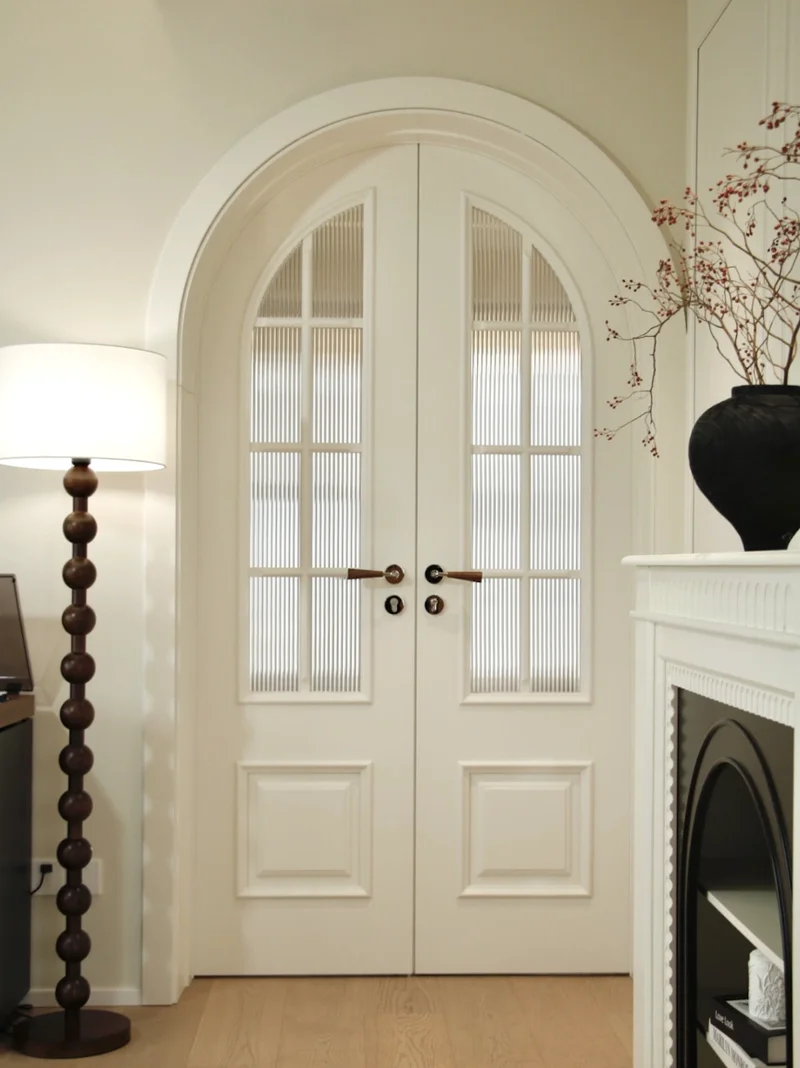
What finishing processes guarantee long-term color stability under intense UV exposure?
Demand a multi-stage process: chromate pretreatment, electrostatic powder coating or 70-micron PVDF (Kynar 500®) liquid coating, followed by a UV-cured topcoat. This system provides a 10-year warranty against fading and chalking, maintaining aesthetic integrity under direct solar radiation exceeding 1,000 W/m².