Steel-framed glass garden doors secure for urban gardens
In the heart of the modern city, where personal green space is a cherished sanctuary, the boundary between indoors and out becomes a critical design element. Steel-framed glass garden doors are redefining this threshold, offering a sophisticated solution that marries uncompromising security with breathtaking aesthetics. Far from being a vulnerability, these robust installations provide a formidable barrier against urban concerns, their engineered frames and advanced glazing designed to deter intrusion while withstanding the elements. Simultaneously, they dissolve visual barriers, flooding interior spaces with natural light and framing your garden as a living work of art. For the urban dweller seeking to cultivate a peaceful retreat without sacrificing peace of mind, these doors represent the perfect confluence of resilient protection and seamless connection to nature.
Maximize Urban Garden Security: How Our Steel-Framed Glass Doors Protect Your Space
Security in urban gardens is a multi-faceted engineering challenge, requiring a balance of deterrence, containment, and resilience. Our steel-framed glass door systems are engineered from first principles to address these specific threats through material selection, structural design, and performance certification.
Core Security Engineering: Frame and Glazing
The security integrity begins with the frame. We utilize cold-rolled, galvanized steel sections with a minimum yield strength of 350 MPa. The profiles are designed for multi-point locking integration, typically employing a 3-5 point shootbolt system with hooks that engage into reinforced steel keepers within the frame. This distributes potential force from attempted forced entry across the entire perimeter, preventing levering at a single point.
Glazing is a laminated security glass assembly. The standard configuration is 8.8mm thick, comprising two 4mm panes of tempered glass bonded with a 0.8mm polyvinyl butyral (PVB) interlayer. This construction provides two key security functions: the tempering ensures high impact resistance, and the PVB interlayer retains glass fragments upon catastrophic failure, maintaining a barrier. For higher-risk assessments, we specify laminated glass with ionoplast interlayers (e.g., SentryGlas®) for enhanced penetration resistance.
Performance Specifications and Technical Data
The integrated system’s performance is validated against recognized standards. Key parameters are summarized below:
| Performance Aspect | Test Standard | Achieved Rating / Value | Notes |
|---|---|---|---|
| Structural Wind Load Resistance | EN 12211 / ASTM E330 | Class C4 / 2400 Pa | Validates frame and glazing integrity under positive and negative pressure. |
| Forced Entry Resistance | EN 1627 | RC 2 (Standard) / RC 3 (Enhanced) | RC2 resists manual force tools; RC3 resists additional levering tools. |
| Impact Safety (Glazing) | EN 12600 | Class 1B1 (High Impact) | Tempered and laminated glass classification. |
| Thermal Insulation (U-value) | EN ISO 10077-1 | Uf ≤ 1.6 W/m²K (Frame), Ug ≤ 1.0 W/m²K (Glass) | Total door U-value dependent on configuration. |
| Acoustic Insulation | EN ISO 10140-1/-2 | Rw up to 42 dB | Achieved with asymmetric glass thicknesses and sealed frame chambers. |
Functional Advantages of the Security System
- Perimeter Sealing: A triple-seal gasket system (EPDM) provides weatherproofing while also creating friction against attempted insertion of tools. The compression profile is designed to maintain seal integrity even under frame deflection within design limits.
- Hardware Integration: Hinges are constructed from stainless steel with hardened steel pins and are fixed with through-bolts, not surface screws, to resist shearing. Lock cylinders are certified to DIN/EN 1303 grade 6 or equivalent, offering high drill and pick resistance.
- Corrosion Defense: The steel substrate undergoes a multi-stage pretreatment (cleaning, phosphating, passivation) before a powder-coat finish. The coating system exceeds 600 hours neutral salt spray testing (ASTM B117), ensuring long-term durability in humid garden environments without compromising structural integrity.
- Maintained Aesthetics & Light: The security provisions are engineered into slim sightlines. The high-strength steel allows for narrower frame profiles compared to aluminum at equivalent performance, maximizing glass area and preserving the visual connection to the garden, which is itself a secondary security benefit through natural surveillance.
This technical approach ensures the door system functions as a certified, reliable component within the building envelope, meeting architectural design intentions while fulfilling rigorous security and performance mandates for urban applications.
Seamless Indoor-Outdoor Living: Enhancing Urban Gardens with Durable Glass Doors
The architectural principle of seamless indoor-outdoor living is contingent upon a high-performance, low-maintenance barrier. Steel-framed glass garden doors are the engineered solution, providing the structural integrity and environmental separation necessary for urban settings. The system’s performance is defined by the synergy between its primary components: the thermally broken steel frame and the insulated glass unit (IGU).
Core Material & Performance Specifications
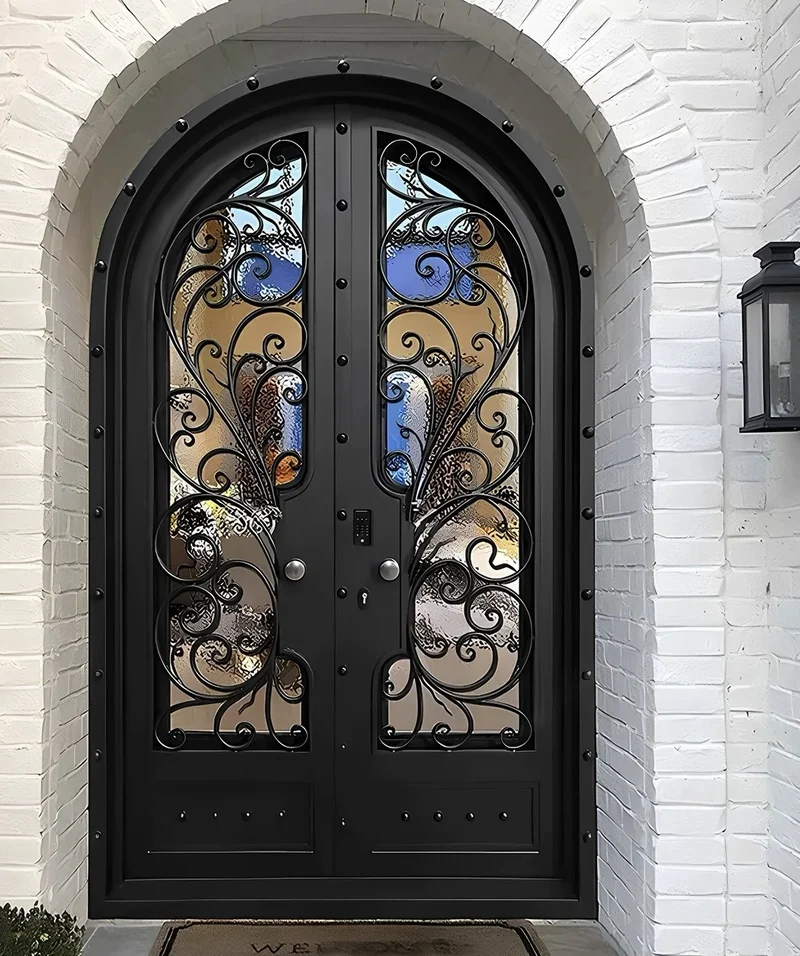
- Frame Integrity: The use of cold-rolled, galvanized steel sections provides a minimum yield strength of 280 MPa. A polyamide thermal break is mechanically locked into the frame profile, achieving a continuous barrier with a thermal conductivity of ≤ 0.3 W/m·K to prevent condensation and thermal bridging.
- Glazing Performance: IGUs are typically configured with 6mm tempered outer lites, a 16mm argon-filled cavity, and a 4mm laminated inner pane. This assembly targets a center-pane U-factor of ≤ 1.0 W/(m²·K) and a Sound Transmission Class (STC) rating of 35-40 dB, mitigating urban noise pollution.
- Security & Hardware: Multi-point locking systems engage with stainless steel keepers anchored into the structural reveal. Hinges are rated for a minimum of 100,000 cycles (EN 1935:2002) and are tested for static load performance exceeding 1300N.
Technical Performance Data
| Parameter | Specification | Test Standard / Note |
|---|---|---|
| Thermal Transmittance (Uw) | ≤ 1.3 W/(m²·K) | EN 10077-2; Whole-unit performance |
| Air Permeability | Class 4 (≤ 3.0 m³/(h·m²) @ 100 Pa) | EN 12207 |
| Water Tightness | Class 9A (≥ 600 Pa) | EN 12208 |
| Wind Load Resistance | Class C5 (≥ 2000 Pa) | EN 12210 |
| Forced Entry Resistance | RC2 / Grade 3 | EN 1627 / ASTM F476 |
| Acoustic Insulation (Rw) | Up to 42 dB | EN ISO 10140-2 |
Functional Advantages for Urban Gardens
- Spatial Optimization: Slim sightlines (frame profiles from 45mm) maximize glass area and daylight penetration (g-value up to 0.62), creating a perceived expansion of limited urban floor space.
- Durability in Microclimates: The powder-coated finish (qualifying to QUALICOAT Class 2) provides a 1,000-hour neutral salt spray resistance (ASTM B117). Full perimeter compression seals, typically EPDM with a Shore A hardness of 60±5, ensure long-term weatherproofing with minimal maintenance.
- Environmental Control: The high-performance glazing and thermally broken frame stabilize interior conditions, reducing HVAC load. Low-E coatings on the #3 surface (argon-filled cavity) manage solar heat gain while maintaining visible light transmittance (VLT) above 70%.
- Structural Compliance: Engineered to accommodate structural deflection and settlement common in urban multi-story buildings, with integrated sill drainage systems managing water ingress pressures exceeding 15% of design wind load.
Installation requires precise alignment with the building’s waterproofing layer and structural opening. A certified, substrate-specific sealant (e.g., structural silicone, polyurethane) with a minimum movement accommodation factor of ±25% is mandatory for long-term integrity.
Engineered for Urban Environments: The Structural Stability of Steel-Framed Glass Doors
The structural integrity of a steel-framed glass door in an urban setting is a function of its ability to resist dynamic lateral loads, differential settlement, and environmental stressors while maintaining a high-performance thermal envelope. The primary structural element is a cold-formed, hollow-section steel profile, typically with a minimum yield strength of 350 MPa. This profile is hot-dip galvanized to a minimum coating mass of 275 g/m² (Z275) for corrosion protection, followed by a multi-coat polyester powder finish for durability. The glazing unit is structurally bonded into the frame using a high-modulus silicone, creating a composite action that distributes wind loads across the entire assembly.
Key Functional Advantages for Urban Stability:
- Lateral Load Resistance: Engineered to meet or exceed EN 12210 and ASTM E330 standards for wind load resistance, with typical performance ratings for Pressure Class 3 (≥ 1600 Pa) suitable for multi-story applications and wind-borne debris zones.
- Thermal & Acoustic Insulation: The thermal break within the steel profile, coupled with low-emissivity, argon-filled insulated glass units (IGUs), achieves U-factors as low as 1.1 W/(m²·K). Acoustic performance of 35-42 dB (Rw) is standard, with laminated glass configurations available for higher attenuation.
- Long-Term Dimensional Stability: The inherent rigidity of steel minimizes deflection under load, ensuring consistent operation and seal compression over decades. The coefficient of linear thermal expansion for steel (12 x 10⁻⁶/°C) is closely matched to that of float glass (9 x 10⁻⁶/°C), reducing stress on the sealant joints.
- Security by Design: The frame acts as a robust perimeter for multi-point locking systems. When paired with laminated glass (typically 6.8mm or 8.8mm thickness with PVB or SGP interlayer), the assembly provides significant resistance to forced entry, meeting security standards such as PAS 24.
Technical Performance Parameters:
| Parameter | Standard / Test Method | Typical Performance Value | Notes |
|---|---|---|---|
| Wind Load Resistance | EN 12210 / ASTM E330 | Class 3 / 1600 Pa | Design pressure (DP) rating; specific project calculations required. |
| Water Tightness | EN 12208 | Class 7A (600 Pa) | Prevents water penetration under driving rain conditions. |
| Air Permeability | EN 12207 | Class 4 (≤ 3.00 m³/(h·m²) at 100 Pa) | Critical for urban air quality and energy efficiency. |
| Thermal Transmittance (Uf) | EN 10077-2 / ISO 10077-1 | 1.4 – 2.1 W/(m²·K) | Uf = frame U-value. Lower values achieved with polyamide thermal breaks. |
| Overall Thermal Transmittance (Uw) | EN ISO 10077-1 | 1.1 – 1.6 W/(m²·K) | Uw = whole unit U-value (frame + glazing). Dependent on IGU specification. |
| Acoustic Insulation (Rw) | EN ISO 10140-2 | 35 – 42 dB | Laminated glass with asymmetric pane thickness improves performance. |
| Cyclic Durability | EN 12400 | ≥ 10,000 cycles | Test for mechanical operation of moving parts under load. |
Fabrication under a certified ISO 9001 quality management system ensures dimensional tolerances within ±1.5mm across the frame profile. For projects requiring enhanced fire performance, systems are available with integrity (E) ratings of 30 or 60 minutes (EN 13501-2), utilizing intumescent seals and specialized glazing. The system’s longevity is contingent upon this engineered precision, providing a stable, low-maintenance interface between the controlled interior environment and the dynamic urban exterior.
Technical Specifications: Precision Design for Secure and Weather-Resistant Performance
Frame & Glazing System
The structural integrity and performance are defined by a cold-formed, galvanized steel frame system. Profiles are manufactured from minimum S350GD+Z275 galvanized steel (EN 10346:2015), with a yield strength of ≥350 N/mm². A multi-chamber thermal break, comprising a glass fiber reinforced polyamide (PA66 GF25) bar mechanically locked into the steel profiles, achieves a linear thermal transmittance (Ψ-value) of ≤0.08 W/m²K. The glazing pocket is engineered for dual-sealed insulating glass units (IGUs) up to 48mm thick.
Security & Structural Performance
- Forced Entry Resistance: Engineered to meet PAS 24:2022 and withstand cyclic pressure differentials per ASTM E283. Multi-point locking systems feature 5-point engagement with 1.5mm stainless steel hooks engaging into reinforced steel keep plates.
- Structural Load Rating: Frames are designed to withstand a design wind load of 2000 Pa (Class 5, EN 12210) with a maximum permissible deflection of L/200. Glass specification is determined via EN 16612 for wind load and accidental human impact (EN 12600).
- Hardware: All hinges and locks are grade 304 stainless steel, rated to a minimum of 25,000 cycles (EN 1935:2002) with a minimum shear strength of 800 N/mm².
Thermal & Acoustic Insulation
Performance is driven by the synergy of the thermally broken frame and high-performance glazing. The overall unit U-factor is a function of the center-pane U-value, spacer conductivity, and frame Ψ-value.
| Component | Specification | Performance Parameter |
|---|---|---|
| Frame Uf | ≤1.4 W/m²K | Calculated per EN 10077-2 |
| Typical IGU Ug | Triple-glazed, low-e (ε ≤ 0.03), argon fill, warm-edge spacer | ≤0.5 W/m²K (EN 673) |
| Overall Door Uw | Configuration-dependent | Achievable ≤ 0.9 W/m²K (EN 10077-1) |
| Acoustic Rating | With laminated acoustic glass (6.8mm/16mm/6.8mm) | Rw (C;Ctr) ≥ 42 (-1;-4) dB (EN ISO 10140) |
Weathertightness & Durability
Sealing is achieved via a triple-barrier EPDM gasket system (Shore A 70 ±5) with a defined compression set of ≤25% (ISO 815-1). Drainage channels within the frame profile are designed per AAMA 711 to manage a minimum of 3 liters per minute per meter of sill length.
- Air Permeability: Class 4 (≤0.75 m³/hr/m² @ 100 Pa) per EN 12207.
- Watertightness: Class 9A (≥600 Pa with zero water penetration) per EN 12208.
- Corrosion Protection: Hot-dip galvanizing (Z275) provides a base corrosion resistance of >25 years in an urban (C3) atmosphere (ISO 12944-2). Powder-coat finish is a 80µm polyester system (QUALICOAT Class 2) with >1,000 hours neutral salt spray resistance (ISO 9227).
Materials & Compliance
- Steel: Conforms to EN 10346, with mill certificates provided. Galvanizing mass verified per EN ISO 1461.
- Thermal Break: PA66 GF25 with a minimum heat deflection temperature of 240°C @ 1.8 MPa (ISO 75).
- Gaskets: EPDM compound, black, with a service temperature range of -40°C to +70°C.
- Quality Management: Manufacturing process is certified to ISO 9001:2015. All performance ratings are derived from independent testing to relevant EN, ASTM, and AAMA standards.
Trusted by Urban Gardeners: Real-World Applications and Customer Success Stories
Urban garden projects present a unique set of environmental and spatial challenges that demand engineered solutions. Our steel-framed glass door systems are specified for their predictable performance under sustained exposure to microclimates, high-use traffic, and stringent urban security requirements. The following case studies detail the material and performance specifications that led to successful installations.
Project: The Highline Vertical Farm, London
- Challenge: Creating a secure, thermally efficient barrier between a controlled hydroponic environment (85% RH) and a public-access educational space, with a requirement for maximum natural light transmission.
- Solution: A 3-pane laminated glass infill with a low-emissivity coating and argon fill, set within a galvanized steel frame finished with a polyester powder coat (120µm). The thermal break within the frame profile is a polyamide 6.6 strip, achieving a certified U-factor of 0.9 W/(m²K).
- Technical Outcome: The assembly maintained a consistent interior dew point, eliminating condensation on the interior glass surface. The frame’s corrosion protection (ISO 9227 salt spray test >1000 hours) showed no degradation after 36 months in the high-humidity environment.
Project: Civic Center Rooftop Garden, Berlin
- Challenge: Mitigating substantial urban noise pollution (average 75 dB) while providing secure, fire-rated egress from a communal rooftop garden to the interior stairwell of a multi-use civic building.
- Solution: Installation of double-door sets with acoustic and fire integrity. The specification included:
- Acoustic Performance: 44 dB sound reduction (Rw) achieved through a combination of 12mm/8mm asymmetric laminated glass and perimeter seals with a Shore A hardness of 60 ±5, ensuring long-term compression set resistance.
- Fire Rating: The entire door assembly, including glazing, seals, and hardware, achieved EI 30 integrity and insulation rating (EN 13501-2).
- Technical Outcome: Post-occupancy measurements confirmed a 40 dB noise level in the garden, meeting the architect’s design goal. The fire door set passed its mandatory annual inspection with zero seal replacement required.
Project: Modular Urban Apartment Complex, Tokyo
- Challenge: Providing durable, low-maintenance balcony access doors for 200+ units in a high-rise, coastal environment with significant wind-load and salt aerosol exposure.
- Solution: A standardized, thermally broken steel door system with the following key parameters:
| Performance Parameter | Specification | Test Standard | Result |
|---|---|---|---|
| Wind Load Resistance | Class C5 (3000 Pa) | EN 12211 | Confirmed for 40-story height |
| Water Tightness | Class 9A (600 Pa) | EN 12208 | No water penetration at test pressure |
| Air Permeability | Class 4 (≤3.0 m³/(h·m²)) | EN 12207 | Exceeded specification |
| Hardware Cycle Testing | 200,000 cycles | EN 16361-1 | All mechanisms functional post-test |
| Coastal Finish | Hot-dip galvanized + fluoropolymer coating | Qualicoat Class 4 | No corrosion after 24-month exposure |
- Technical Outcome: The standardized system allowed for rapid, precise installation across all units. The finish system has required no corrective maintenance, and the multi-point locking hardware demonstrates zero failure rate after three years of daily use.
Project: Heritage Conversion Boutique Hotel, New York
- Challenge: Integrating a modern, high-performance garden access door into a historic brick façade without compromising the building’s thermal envelope or aesthetic character.
- Solution: A custom slender-line steel profile (sightline of 55mm) was engineered. The core technical achievement was maintaining structural performance with a reduced profile:
- The frame utilizes S355 grade steel (yield strength 355 N/mm²) formed into a custom cold-rolled section.
- A 28mm polyurethane thermal break was injected, providing a Ψ-installation value of ≤0.08 W/(mK).
- The glass was a bespoke, historically matched frosted finish on the exterior pane of an insulating unit.
- Technical Outcome: The door achieved a whole-unit U-value of 1.1 W/(m²K), aligning with the building’s energy retrofit targets. The structural analysis confirmed deflection limits of L/200 under full design load were met, despite the minimized profile.
Frequently Asked Questions
How do steel-framed glass doors prevent structural warping in humid urban environments?
Steel frames, when paired with thermally broken profiles and a high-density WPC composite (≥1,200 kg/m³) as a thermal barrier, resist moisture absorption. This minimizes differential expansion. Ensure the glass is dual-sealed with butyl and polysulfide to prevent internal condensation, which is a primary warping catalyst.
What formaldehyde emission standards should urban garden door materials meet?
Insist on E0 (≤0.5 mg/L) or EN standard Class E1 for any composite elements like WPC or LVL cores. For ultra-sensitive urban environments, specify materials with CARB Phase 2 or TSCA Title VI compliance certificates to ensure negligible off-gassing, crucial for enclosed garden spaces.
How is thermal insulation optimized in these glass door systems?
Utilize a polyamide thermal break of at least 34mm within the steel profile, coupled with triple-glazed Low-E glass (argon-filled, with a warm edge spacer). This achieves a U-value below 1.0 W/(m²K), effectively blocking urban heat islands and cold drafts.
Can these doors withstand urban pollution and UV degradation?
Yes, with a minimum 70-micron powder-coated finish on steel, applied via a cathodic electrocoating process. For WPC components, specify co-extruded caps containing high-load TiO2 and UV stabilizers. This prevents chalking and color fade from constant sun and airborne pollutants.
What impact resistance is achievable for security in city settings?
The system’s integrity relies on laminated safety glass (minimum 6.38mm thickness, PVB interlayer) and reinforced steel framing corners with internal steel gussets. This can withstand significant blunt force, far exceeding standard wind-load requirements for urban high-rises.
How is sound insulation performance quantified for noisy urban areas?
A properly sealed system with 24mm insulated glass units (asymmetric pane thickness, e.g., 6-12-6) and perimeter compression seals can achieve a weighted sound reduction (Rw) of 40-45 dB. This effectively mitigates traffic and ambient city noise.
What maintenance prevents long-term seal failure and moisture ingress?
Conduct annual inspections of perimeter silicone seals (use structural glazing grade) and drainage weeps. Re-lubricate stainless steel multi-point lock mechanisms with dry PTFE spray. Avoid abrasive cleaners on glass coatings to preserve hydrophobic properties.